This site is no longer updated

Please use the links in the sidebar to visit the new sites!

Showing posts with label Powys. Show all posts

Tuesday, 1 November 2016

FMQs : Autism, Teachers & Fireworks


Same stuff; different week. You know the drill.

Thursday, 29 September 2016

AMs press for "decisive action" on Bovine TB

(Pic : The Guardian)
The issue of precisely how to deal with Bovine tuberculosis is one of the longest-running sagas in post-devolution Wales, and something that has become a serious threat to the livelihoods of dairy and beef farmers, even if they're compensated for the loss of livestock.

Saturday, 3 September 2016

Why was the Commonwealth Games bid ditched?

Not coming to a town or city near you....
(Pic : ITV Wales)

Towards the end of July, Economy & Infrastructure Secretary, Ken Skates (Lab, Clwyd South), announced that a speculative Welsh bid to host the 2026 Commonwealth Games would not go ahead following a feasibility study - a 12-page summary of which was released on July 26th (pdf).

Thursday, 26 November 2015

Returning Your Deposits

(Pic : buzzfeed.com)


Yesterday, the Conservatives held a debate on something that blights all communities, and likely to be a perennial issue on the doorstep : littering, fly-tipping, graffiti and dog shit.

Wednesday, 8 July 2015

Downloading (22% - 2 years left)....


With the Wales Audit Office recently giving Superfast Cymru a thumbs up,
the minister in charge provided an update to AMs on progress to date.
(Pic : recombu.com)

The Superfast Cymru scheme is a £425million partnership between BT and the Welsh Government which aims to provide high-speed broadband (generally defined as somewhere between 20-50 Megabits/second) to every home and business in Wales – particularly those in hard to reach areas.

Good internet connections have become an everyday necessity regardless of where you live, while for rural businesses in particular – who often endure poor mobile and internet connections - it's essential, especially as farming payments have increasingly moved to online-only management (see also : The Green, Green Glas of Home).

In general terms, the scheme focuses on upgrading, or installing new, green BT roadside cabinets with fibre optics connections to telephone exchanges. Fibre optic cables enable much faster download speeds and can carry more information as signals are sent as pulses of light. They're also less susceptible to environmental damage.

Yesterday, Deputy Minster for Skills & Technology, Julie James (Lab, Swansea West) updated the National Assembly on progress being made by the programme.


The Deputy Minister started by saying the scheme meant Wales was moving into a position where every business and home has access to superfast broadband, as outlined in the Programme for Government (clip) - the aim of the scheme being to bring high-speed broadband to areas where the market wouldn't go. With it crucial to becoming a "truly digital nation", a big push is needed to reach the last 3-4% of premises. This includes using mobile technology like 4G, and a new scheme based on this will be launched later this year.

Without intervention, it's said 480,000 premises wouldn't have access to superfast broadband. With 79% of Welsh homes and businesses having access so far, Wales is ahead of the EU average. The scheme has created 250 jobs and provided a number of apprenticeships and work experience placements, while the Wales Audit Office (WAO) have said Superfast Cymru is making "reasonable progress".

The Superfast Cymru website will be revamped to give residents more certainty on when they would be connected. Plus, the contract has been extended to June 2017, with additional public funding of of £19million, in order to target an extra ~45,000 premises (and specifically 2,500 businesses). Swansea is also being used by BT as a testbed for 500Mbits/second ultra-fast broadband (G. fast).

There was a need to ensure people take up superfast broadband. So far, 22% of customers have taken it up within a year of it being available - the highest take-up rate in the UK. The target is for 50% take-up by 2024. Claw back agreements mean that once the scheme breaks even, the Welsh Government get some extra money back.

Shadow Economy Minister, William Graham (Con, South Wales East), said significant problems remain – mentioning issues on Deeside enterprise zone specifically (clip) - though the project demonstrates effective public-private cooperation. He hoped there was no complacency as Wales is likely to be ahead of other countries for only a short period of time, with a number of "not spots" remaining, including in around Cardiff, citing an example of a business leasing a line for broadband at a cost of £20,000.

The Deputy Minister said Wales was second only to Cornwall in take-up though roll-out has been faster than the rest of the UK. She acknowledged difficulties, suggesting alternative technologies could address problems on Deeside. Superfast Cymru only covers areas which are commercially unviable, and it won't be until the end of the programme that those involved will be able to see if something can be done for "not spots" in commercially viable areas like Cardiff.

Plaid Cymru economy spokesperson, Rhun ap Iorwerth (Plaid, Ynys Môn), said it was right to aim for universal roll-out to ease the transition into a digital economy (clip). He suggests his constituents would be surprised by the WAO's positive assessment as they, and other rural areas, wait for upgrades. He asked : Could 4G services be brought into Superfast Cymru instead of relying on mobile companies? Whether the extension to 2017 includes the whole scheme or just the 45,000 additional premises? We should aim for greater take-up than 50%, but is there a danger Wales could lag behind once faster broadband speed benchmarks are set?

The Deputy Minister said the additional premises wouldn't disrupt other parts of the programme. 4G is being looked at, as well as other technologies, to produce superfast speeds. She accepted the point on take-up, but Wales was doing well compared to other countries.

David Rees AM (Lab, Aberavon) stressed the importance of delivering broadband to businesses, with particular concerns over business parks in his area (clip), especially those which are surrounded by residential areas eligible for Superfast Cymru but are themselves being left out. He asked what speeds people can expect and whether the new infrastructure can deliver 500Mbit/s in the future? Also, which ISPs provide superfast broadband to ensure businesses have a choice?

The Deputy Minister explained the business park situation by saying that because EU funds are being used, a "market failure" has to be proven to justify state intervention, so that's why business parks are last in the queue not first. On speeds, there's a floor of 28Mbit/s but businesses can pay extra for faster speeds. Superfast Cymru is being delivered as wholesale with individual ISPs providing services (in the same way as energy companies).

It's not just rural areas suffering from poor broadband speeds. Some parts of Cardiff just a
stone's throw from the Assembly are "not spots" but are ineligible for Superfast Cymru.
(Pic : The Guardian)
Eluned Parrott AM (Lib Dem, South Wales Central) said the programme was a lot like "trying to hit a moving target" as things change quickly and it needs to be future-proofed (clip). Eluned suggested that mobile technology might not be suitable due to poor mobile coverage in parts of Wales, as well as planning issues surrounding mobile phone masts. She added that parts of Cardiff, including her own regional office in Roath, have connection issues meaning her staff are "devastated" that they can't watch her on Senedd TV. One other issue raised was the fact many new-build estates aren't covered by Superfast Cymru because despite the lines being installed, BT's broadband department haven't been told and don't realise the new homes exist.

Julie said future-proofing was one of the reasons for the claw back agreement so BT and the Welsh Government can keep re-investing. Following meetings with mobile operators, she expects widespread 4G coverage "within the next couple of years", though planning issues are very complicated and need discussions with the UK Government. She finished by saying that BT aren't the only company rolling out infrastructure improvements as there are other commercial operators – like Virgin Media - doing so too.

Russell George AM (Con, Montgomery) asked two questions (clip) : why information on specific premises falling outside the scope of Superfast Cymru wasn't available? And what the budget was to market superfast broadband? Julie explained that information was based on postcodes, not individual addresses, and £1.5million was available for marketing.

Elin Jones AM (Plaid, Ceredigion) said "no other issue causes as much frustration in Ceredigion" than poor broadband (clip). She was pleased the website was being updated, but wanted to know if premises in her constituency would be updated by 2016, or whether they would be part of the additional 45,000 premises set to be upgraded by 2017?

The Deputy Minister said 41.35% of premises have been completed in Ceredigion, so BT weren't even halfway yet. The website would be updated to include accurate information based on distance from cabinets.

As a former Deputy Minister for Skills & Technology, Jeff Cuthbert AM (Lab, Caerphilly) said he was familiar with the problems (clip), such as trying to locate cabinets in urban areas. He asked for confirmation that "disadvantaged communities aren't overlooked" by the scheme?

Julie said a successor to the Communities 2.0 programme is up and running, and the Welsh Government were working to ensure no communities are left out.

Kirsty Williams AM (Lib Dem, Brecon & Radnor), wanted to ensure the information (clip) on the website is "useful" as she's struggled to get answers on from BT on behalf of constituents, but in particular Dan yr Ogof Showcaves, who developed an app on the presumption that broadband would be available this year, but will be delayed until 2016. She also said cabinet upgrades had led to poorer internet speeds in some areas.

The Deputy Minister pledged to look into problems as a worse performance was certainly not intended. She agreed on the need for useful information, and as the scheme progresses it's becoming easier to provide information based on distance from a cabinet. Julie added that BT sometimes had to deal with situations beyond their control and can't always give accurate timescales for broadband upgrades. However, she's asked BT to be more specific when telling the public about difficulties they're having (i.e planning delays).

Janet Finch-Saunders AM (Con, Aberconwy) asked what steps were being taken to consult with the community, citing an example where residents in Dolwyddelan (clip) were quoted £2,000 by BT to move a new cabinet to another location as it was close to community planters and chapel gates. The Deputy Minister said she couldn't comment on individual cases.

Finally, Mark Isherwood AM (Con, North Wales) asked (clip) about superfast broadband for rural schools and whether rural schools are a priority, to which the Deputy Minister said primary schools aren't part of Superfast Cymru but a separate programme.

Will widespread instrastructure upgrades lead to better offers for consumers?
(Pic : recombu.com)
Superfast Cymru isn't without critics – in particular the Pirate Party (Pirate Party : Hoising the Jolly Roger above Wales), who've criticised the technology and high prices of superfast services.

Broadly-speaking I'd say it's a good idea, though I'd share concerns over whether this will be outdated 10-15 years down the line when, presumably, G.fast becomes the norm. The clawback agreement is, therefore, a sensible part of the scheme.

The issue is take-up. 22% doesn't sound that impressive on the face of it (though I was actually surprised it's that high). Households and businesses have to actually sign up to the superfast (often advertised as "fibre") services which come at a premium, sometimes being three times more expensive than cable broadband, the latter of which might come free with a subscription media package.

Hopefully once the infrastructure is in place the ISP subscription costs will come down, and I'm going to presume cost and usage limits are currently the biggest barrier to take-up.

Friday, 8 May 2015

Westminster 2015 : The Results

(Pic : Reuters via The Guardian)

First thing's first - I can rip my crap predictions up. Predicting is a mug's game as the polling companies are finding out to their cost. As has been said elsewhere, it's the most surprising result in a UK election since 1992, even 1945.

Sunday, 26 April 2015

Westminster 2015 : The Welsh Battlegrounds

Which Welsh seats are going to be keenly-fought over?
(Pic : BBC)
As we're now into the last fortnight of the 2015 election campaign, it's time to take a closer look at where in Wales the fight for votes might be keenest, and which seats might be more likely to change hands.

Wednesday, 22 April 2015

Flying Doctors set to take to the sky

It's happened! It's actually happened! A common sense, practical
idea on ambulance services from the Welsh Government.
(Pic : EMRTS Cymru)

After a longer than usual Easter recess, the National Assembly has returned for summer term. Although the election will be on everyone's minds, it's important to remember that AMs still exist, and I'm sure many of you are as bored of the election as I am by now.

Tuesday, 7 April 2015

Westminster 2015 : The Key Issues in Wales

What are likely to be the main issues for Welsh voters?
(Pic : Click on Wales)

The first debate's out of the way, I've given my verdict on the Coalition and the manifestos are going to be released over the next few weeks (I'll look at them in more detail once their all out, though UKIP are dragging their heels by the looks of it) - which means it's time to focus on some of the issues that might be fought over in Wales.

Sunday, 4 January 2015

The Parc Slip Monster

Celtic Energy's inability to fill a hole they dug has left
a murky "lake" for local communities to deal with.
(Pic : BBC Wales)

Just before Christmas, the issue of open-cast mining in south west Wales reared it's head again after an intervention by a group of Assembly Members, worried about faltering restoration plans at two former mines.

Caerphilly-based Celtic Energy – listed on the recent Western Mail Top 300 as the 56th largest company by turnover in Wales - transferred ownership of four open-cast sites to British Virgin Islands registered subsidiary, Oak Regeneration. The two largest sites are Parc Slip near Kenfig Hill - which straddles the border between Neath Port Talbot (NPT) and Bridgend (BCBC) – and East Pit near Cwmllynfell in the Amman Valley.

Oak Regeneration are tasked with restoring the two sites following the expiration of mining licences. They propose to develop a garden village at Parc Slip and a resort at East Pit. In order to fund these works, Oak Regeneration were pressing for further extensions to mining licences.

There's a huge coal seem stretching from Margam to Pencoed. Most of it is under the Cefn Hirgoed Common and Sarn, so the only realistic extraction point is towards the Margam end, which has either been open-cast already or is farmland.

Extensions to mining licences are often highly-controversial and strongly opposed in local communities as it's a particularly dirty and noisy industry and renders previously open-access land useless for decades (more at the end of Digging deep into deals done dirt cheap).

Perhaps Oak Regeneration hoped the "ambitious" restoration proposals would swing licence decisions and public opinion in their favour, to the point that some local councillors were won over by the plans. Both NPT and BCBC dilly-dallied on issuing enforcement notices (as the respective planning authorities), which would legally-bind the company to immediately start work on restoring the sites back to normal. Mining even continued at East Pit after the licence expired.

The Serious Fraud Office (SFO) intervened and several Oak Regeneration directors found themselves in court accused of attempting to defraud Bridgend, NPT and Powys councils. In February 2014 the case was dismissed, and an attempt to restart the case failed late last year. By the looks of it the SFO tried altering the charges after the case went to court, but because no money changed hands there was little hard evidence to implicate the defendants.

The cost of restoring both mines is estimated to be £157million, but Oak Regeneration are reported to have only set aside a paltry £8million. Unless extensions to mining licences are granted, it's likely that the resulting enforcement notices would bankrupt Oak Regeneration, and the cost of restoring the mines will fall on NPT, BCBC and the Welsh Government.

Although she wasn't mentioned in relation to the intervention, Bethan Jenkins AM (Plaid, South Wales West) is one of the few AMs who has spoken out consistently on this and has campaigned on open-cast mining since she was first elected.

It's also right to say she's often given short shrift by Welsh Government ministers – usually Carl Sargeant (Lab, Alyn & Deeside) and previously John Griffiths AM (Lab, Newport East) – when pressing for answers in the Assembly.

Since it's become more obvious that the sites are unlikely to be restored, the rest of the AMs in South Wales West have caught up Keystone Cops style – up to and including Carwyn Jones himself (though he did know about this).


The AMs are calling for Celtic Energy - Oak Regeneration's parent company - to stump up the restoration money. Celtic Energy have sung from the same hymn sheet as Oak Regeneration : extend mining licences to raise restoration funds. In light of falling coal prices it's unlikely to raise enough.


It isn't limited to this part of Wales either. Although Bethan's the most prominent campaigner on this issue in the Assembly, others – like Lynne Neagle AM (Lab, Torfaen) - have expressed concerns about a proposed open-cast mine near Fart Egg in her constituency, while protests against the Ffos-y-fran mine on the outskirts of Merthyr have rumbled for the best part of 25 years.

This isn't a particularly popular industry, regardless of whether it provides jobs or not.


This is why Wales can't have nice things....

Is this what we're getting?
Nope, think again....
(Pic : bridgendbites.com)

There's been a clear lack of foresight by the local authorities, the mining companies and the Welsh Government which - unless a solution is found - could leave a scar on the landscape that will last generations.

Open-cast mines can be and are restored successfully, demonstrated (ironically) at Parc Slip.

The eastern half of Parc Slip open-cast, on the outskirts of Tondu, was fully restored in the 1980s-1990s and is now a popular nature reserve (pictured above). If you went there today you would barely know it used to be a mine. To the west, there's a poorly fenced-off moonscape and a massive hole filling with water. I don't know what East Pit is like, but I'm presuming it's similar.

There are obvious safety concerns.
Depending on the rocks around it, the water is likely to be either very acidic or very alkaline, so there's no way it can be treated to become a pleasant "lake". It'll either have to be back filled or pumped out and disposed of properly. The water's also so blue it looks like a tropical lagoon, but anyone tempted to take a dip during the summer would be swimming in bleach.

Back in 2013, Cllr. Luke Ellis (Lab, Pyle) warned people to stay away after reports of trespassing, but the water's even higher now. So greater efforts will need to be made to keep people away.

Then there's the flooding risk. It's taken about 5 years to fill 60-70 metres of mine workings. Judging by what I've seen there's only another two to three years left until there's a real threat the "lake" will be over-capacity.

If the "lake" breached, the River Kenfig (which is right next to the mine and the only obvious place for the water to go) is too small to cope, so it could cause flooding downstream in Pyle and North Cornelly. That's bad enough on it's own, but it would be an ecological disaster too, as polluted water will head for Kenfig Burrows - a Site of Special Scientific Interest.

Open-cast mining is safer than drift and deep mining at the expense of the environment. Having said that, as long as power stations like Aberthaw and key industries like the Port Talbot steelworks continue to need coal, it's better to source that coal locally and move it by rail than import it.

In the medium to long-term, Aberthaw power station (and other coal-fired power stations around the UK) will either be replaced or close due to poor emissions standards, while TATA are/were considering opening a drift mine in Margam. Therefore, it looks as though open-cast doesn't have much of a future.

Celtic Energy and Oak Regeneration have been underhand, having sold NPT, BCBC and the Welsh Government magic beans. The latter can't say they weren't warned either.

This has always been about extending mining licences. The regeneration projects are a pipe dream that companies are under no obligation to deliver.
Housing developments, which Celtic Energy have been plugging since the AMs' intervention, are moot. Nobody seriously thinks Oak Regeneration - a company without a pot to piss in - would be able to oversee a garden village (which would probably cost £450-500million) at Parc Slip, do they? We'll be lucky if they grow trees there again.

So you can see what's going to happen. It'll either be left as it is for the foreseeable future and become a potential serious environmental hazard. Or, there'll be no choice but to extend mining licences to prevent NPT and BCBC, probably the Welsh Government too, being left with a massive clean up bill as Oak Regeneration go bust. I wouldn't want to see that happen because costs will be be passed on to taxpayers.

A Machiavellian part of me does want that to happen though, because the Welsh Government have been complacent on open-cast mining for years (minerals policy is devolved - MTAN). A nice big bill to bail out a dodgy offshore company would be just the kick up the backside they desperately need.


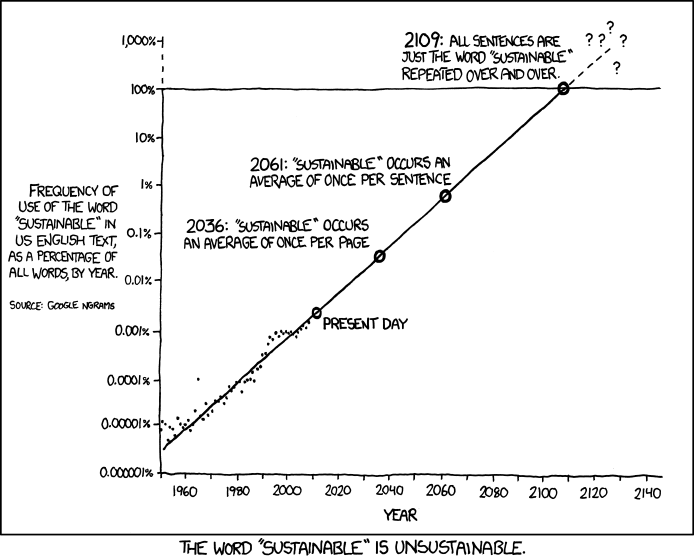
This is why I get annoyed when politicians say "sustainable" because, as the Welsh Government often prove, they don't practice what they preach. There's absolutely nothing "sustainable" about what's happening at Kenfig Hill.
Maybe they won't see open-cast as such a neighbourly industry anymore and start to think about proper regulation, including absolute cast-iron guarantees (perhaps backed by legislation) of financing for restoration projects before mining licences are granted.

Ultimately, the reason why governments introduce so much of the "obstructive red tape" businesses complain about is because some companies continuously breach the trust of local communities this way.


Right, what are we going to call it?

"
Lake Sargeant"? "Llyn Carwyn"?

Wednesday, 22 October 2014

Building a better Wales from the bottom up

Leanne Wood's "Greenprint" idea has been developed further into
 wider reforms of how our communities and neighbourhoods tick.
(Pic : Rhondda Plaid Cymru)

Earlier this week, Plaid Cymru unveiled the latest in a series of discussion and policy papers, this time a comprehensive report (pdf), which was jointly launched by Plaid Cymru's Shadow Cabinet member for the Environment & Energy, Llyr Gruffydd AM (Plaid, North Wales) and Arfon MP, Hywel Williams.

It addresses, and provides an alternative to, the Future Generations Bill, parts of the Planning Bill and maybe even some aspects of the Williams Commission and "The Greenprint".

You could say it's Plaid Cymru's version of the "Big Society".

The Rationale

As regular readers will know, I'm not a fan of the word "sustainable" (in all its guises) and I'm going to do my best to avoid using it from here on in.

The broad aim of the policy paper is to draft new ways for our communities to work; but instead of being a top-down exercise where a central body or authority prescribes what communities should do, Plaid Cymru would much rather (in some aspects) it was the other way around, with communities taking more control over their own direction, whilst retaining a collective spirit – what Plaid have long called "decentralised socialism".

There are a number of challenges – depletion of resources & climate change, demographic change, increasing demand on public services. But there are also opportunities, like digital technologies, participatory democracy and a Basque-style collective economics, which can help meet these challenges in innovative ways.

The paper is split into three key themes : "empowering communities", alternative forms of investment and supporting infrastructure development.

The Community

Plaid advocate stronger community councils and
new forms of democratic participation.
(Pic : via todayinscocialsciences.blogspot.co.uk)

  • A National Community Development Programme (Connected Communities) which would be based off existing third sector infrastructure and help develop local social networks and co-ordinate local schemes.
  • A Strategy and Integration Unit within the Welsh Government, which would guide longer-term thinking across all government departments and would be directly responsible to the First Minister.
  • A Social Innovation Hub which would bring together people from different sectors and with different experiences to come up with innovative new ideas for public service delivery.
  • A review of at what level powers should reside in local government, including stronger community councils and the introduction of Single Transferable Vote (STV) in local elections.
  • A pilot of participatory democracy – starting with local budgets – and a digital government programme/Digital Wales fund which would encourage the use of new technologies to improve democratic engagement, promote open government and improve public service delivery (there's a related piece on this from the National Assembly blog covering the recent GovCampCymru 2014).

Communities actively supporting each other is a vital part of well-being.

These "active community" projects do work. Plaid give an example of a "time bank" in the Ely area of Cardiff (where people volunteer in exchange for time credits they can "spend" locally) which has made people feel better about themselves, enabled people to get to know each other better and given people the impression that they're actively improving their communities.

Plaid call for a shift in public sector thinking, where the public sector will work with communities instead of imposing decisions on them unilaterally, perhaps even ceding some control too.

This would require a review of what powers should reside where (something the Williams Commission largely looked over). But it would also mean changing how communities are governed, and Plaid propose a limited form of participatory democracy where decisions are made collectively instead of by representatives or officials.

Investment

Plaid would like to shift the focus of Communities First from
whole communities towards individual families.
(Pic : BBC Wales)

  • A Prevention Fund to ensure citizens don't go on to need more complicated and expensive public services.
  • Promotion of alternative forms of finance, and the creation of a Community Investment Fund to underwrite or match fund alternative investments.
  • Use public sector pension schemes to support long-term local investments (in particular housing), with a tax-relief scheme for social enterprises - if the powers are devolved (see : The Collective Entrepreneur).
  • A Welsh "Green Book" which will "put sustainable development at its core".
  • Legislative measures to improve the amount of domestic public procurement, with the aim of 75% of public contracts going to Welsh companies (currently 52%) (see : Public Procurement Reform & Plaid's "Plan C")
  • Shift the focus of the £40million Communities First programme from deprived areas to deprived families.

The second theme focused on investment in light of "shrinking public finances". Although the paper says there's a lot happening already, Plaid believe things can go further. Alternative forms of finance which were discussed include crowd-sourcing, community banking/community bonds, credit unions, social impact bonds and the third sector's Community Investment Fund.

They cite the specific example of the Llangattock hydroelectricity scheme where 100 investors raised £270,000 in a co-operative scheme to generate energy, with a return of between 5-8% per year.

Examples were also given of public sector pension schemes being used to invest in the local community. Islington Council invested £20million of its £800million pension fund in housing, while there are talks about pooling the pension funds across all of London's local authorities. The Welsh local government pension scheme controls around £9billion in assets, and Plaid believes this could be used in a similar way.

Most of the rest of the discussion was about financial incentives and alternative business models. The Basque co-operative conglomerate, Mondragon, are brought up again as a model worthy of consideration, while a co-operative investment fund is mooted as a way to tie existing co-ops together in Wales to eventually create something on the same scale.

There's backhanded praise for the Treasury's "Green Book", which is used to "provide guidance to UK Government departments on putting together a robust business case to support policy change". Plaid believe a Welsh equivalent, which would come with a Welsh Treasury, should take into account social and environmental costs and benefits.

Infrastructure

Plaid Cymru would extend the number of developments that wouldn't require planning permission,
and would also like to see a simplified way for communities to financially benefit from developments.
(Pic : hip-consultant.co.uk)

  • Using the reformed/stronger community councils to guide the development of neighbourhood-level infrastructure.
  • Stronger standards on energy efficient and design, as well as mandatory Welsh language impact assessments for infrastructure projects.
  • Simply the planning process and extend permitted development rights (i.e. changes to homes that don't require planning permission).
  • Simplify Section 106 agreements so they're more transparent and create a new system of financial incentives/community benefit schemes.
  • Possible legislative measures to give community bodies a right to purchase disused buildings, probably part of a wider-reaching Infrastructure Bill.

Infrastructure development is often led from "the top", so it was a real challenge to come up with ways in which this could be managed from "the bottom-up". The priorities might be different. An example's given where a community with a lot of older people might prioritise things like public toilets and seating – at relatively low cost – to create "age-friendly neighbourhoods".

Housing was picked out for special focus. At the moment, new housing developments are guided by centralised population estimates, meaning large numbers of houses are often built wherever the land is available with little thought given to how those communities would be planned, or what impact such developments have on the people already living there – including the Welsh language. Survey findings showed that higher-quality developments often endure less opposition. In terms of affordability, I've long supported things like modular/pre-fabricated homes.

Bringing old buildings back into community use was one of the key tenets of the Greenprint, and it returns again. The paper cites an example of community members in Llan Ffestiniog who received assistance to reopen a local pub; while there are other, more high-profile, examples like the Saith Seren in Wrexham.

Bottoms up?

Unfortunately, Welsh politics is a bit tied up at the moment.

The announcement has been overshadowed somewhat, with the Welsh political establishment and media sent into fits of existential despair and near paralysis by an awe-inspiring trolling masterclass from the Daily Mail. The funniest thing about the whole event is that It's not even about the Welsh Government, it's about Ed Miliband.

Anyway, it's nice to be Mr Positive for a change, while the title is in no way a reference to last week's post.

I'm pleased to say this is firmly grounded on Planet Earth, and – once again – there's a lot to like and take from one of these papers. Keep 'em coming.

The biggest omission is detailed costings, and without that information this hits a very big brick wall. That information could easily be provided if Plaid are in a position in government to see this through though, which is perhaps a much harder task.

Another bump in the road could be psychology. People "coming together" is very "jolly hockey sticks", but introverted people like myself (who make up at least a third of the population) are unlikely to be as enthusiastic in the absence of an incentive.

For example, I often find people who try to pester or guilt me into doing something – on a wider level this includes (often self-appointed) "community leaders" and chuggers - incredibly annoying, patronising and draining. So traditional campaigning and community "call to arms" usually don't work with people like me.

Therefore, the widespread use and normalisation of things like "time banking" is critical, and hopefully that would be something Plaid's "Connected Communities" proposal would be able to oversee at a national level.

That's not to fault what's in it. In fact, I agree with most of it in principle and I can't think of much in there I disagree with. I've long supported direct democracy for example (Local Sovereignty II :The Community), and what Plaid propose is a good start – though I believe representative democracy is a hindrance at the lowest level.


They key to this is, as Plaid have said themselves, a "culture shift" in the Welsh public sector and I'd question if they (the public sector) are really brave enough to do some of the things recommended in this report.

Alright, it's not exactly a riveting read, and is so full of public sector buzzwords it makes me want to leave thesauruses around the Assembly estate like those little bibles. However, it's a damned side more intellectually honest than the Future Generations Bill, and the vision is significantly more coherent, practical and innovative.

....and I've only used "sustainable/sustainability" three times, one of which is a direct quote and the other two being myself complaining about it. It appears in the report around 92 times.

Tuesday, 7 October 2014

Why are Welsh ambulance response times so poor?

The Wales Ambulance Service Trust (WAST) has failed to hit and maintain its response time targets (65% of the most serious [Category A] 999 calls responded to within 8 minutes) for around 24 months in a row.

The latest figures, from August 2014 (pdf), show that 56.9% of Category A calls were responded to within 8 minutes; that rises to 66.8% within 10 minutes and 83% at 15 minutes. That means for 17% (almost 1 in 5) of life-threatening calls in Wales, an ambulance takes near double the target time to reach the patient. Summer is traditionally quiet in terms of demand for ambulance services, so these figures are particularly bad.

Although this is one of those issues which Assembly Members get very hot under the collar about, nobody's ever considered the precise reasons why the ambulance service is missing its targets so consistently. Opposition AMs huff and puff over the figures and turn it into a political football, while ministers almost never give straight answers.

Most of this is going to be guesswork and inductive reasoning with very little hard evidence to back it up. But I do believe that – concerns from the McClelland Review about management aside - some of the reasons might not be sexy enough for politicians to score points off each other in the Senedd chamber or press, but do make sense.

Where are the problems?

Before considering why response times are poor, it's worth looking at performances at a local level to see if there are any patterns we can draw conclusions from. As you can see from the map below, response times vary wildly across Wales.

Ambulance response times by local authority - August 2014
(Pic : StatsWales/Welsh Government)

Four local authorities actually hit or exceeded the target – Swansea (65.1%), Conwy (65.9%), Bridgend (69.3%) and Wrexham (70.3%). Neath Port Talbot (62.8%) and Denbighshire (63%) came close. So despite criticism elsewhere, it looks like ambulance response times in the Abertawe Bro Morgannwg local health board are significantly better than the rest of Wales.

In terms of poor responses, there are two distinct clusters.

The first cluster are rural local authorities, with Monmouthshire (50%), Anglesey (51.5%) Powys (53.3%), Vale of Glamorgan (53.5%) and Carmarthenshire (54.7%) standing out, with the likes of Pembrokeshire, Ceredigion and Gwynedd not doing much better.

The second cluster consists of Cardiff (58.1%) and the south Wales valleys. Response times in Caerphilly (44.8%), Rhondda Cynon Taf (46.4%), Torfaen (47.6%), Merthyr Tydfil (51.3%) and Blaenau Gwent (52.8%) are much, much worse than the rest of Wales. The difference between bordering local authorities like Bridgend and RCT is stark, though – as I'll come to – there may be unorthodox explanations as to why this is the case.

What might the problems be?

These aren't exactly ambulance friendly street layouts.
(Pic : Wales Online)
The quality of the road network - The poorest response times are in the south Wales valleys where there are a lot of very narrow side streets consisting of tightly-packed terraced houses, usually on steep inclines. There's often very little room to park if you live on these roads, let alone enough room to attempt to get an ambulance up them at high speed.

Local authorities which have the better response times, like Swansea, Bridgend and Wrexham, are quite car-friendly. Swansea city itself, for example, has been designed with road traffic in mind since the Luftwaffe flattened it, while Bridgend and Wrexham have large housing estates served by high-quality spine roads and dual carriageways.

So as much as AMs might want to pin the blame on the government or the WAST's management team, it could be equally down to dodgy junctions, potholes, poor car parking, ill-considered one-way systems or unnecessary sets of traffic lights and speed humps.

Perhaps consideration should be given to the creation of designated "ambulance-friendly routes" in the valleys that are cleared of any and all obstructions where practical.

Rurality and the distance travelled to 999 calls – This is something you can easily infer from the map, and it's so blindingly obvious even the harshest critic of the Welsh NHS will have to accept it as an unavoidable hazard.

The further you are from a hospital or ambulance station, the longer the ambulance will take to reach you – simple. The problem will be more acute in north west, mid and west Wales (as well as some south Walian local authorities like Monmouthshire and Vale of Glamorgan). The catchment areas for Ysbyty Gwynedd and Bronglais Hospital, for example, are huge, and often cover difficult terrain.

Farming and fishing are probably the most dangerous jobs around. Workers in these sectors are at higher risk of suffering serious accidents, and these jobs are also more densely concentrated in these areas.

Also, people who move to idyllic-looking farmhouses to retire don't factor in that – as they get older and inevitably get sicker too - ambulances might struggle to reach them at the end of gravel tracks off a picturesque winding B-road in the Welsh Desert. And air ambulances might be tied up elsewhere.

Ambulances are too heavy and too slow
- In 2013, around £9.5million was spent upgrading the Welsh ambulance fleet. Although they now carry very high-tech (and heavy) equipment – before factoring in the weight of paramedics themselves and patients – the ambulances are still glorified transit vans that can't negotiate corners particularly well and accelerate slowly. Over longer distances this will add up.

If you want an analogy, it's a bit like refurbishing the interior of a train or bus to business class standards, but the bus/train itself remaining a clapped out diesel from the 1970s.

There's little the Welsh Government and Ambulance Trust can do here, and the onus is on ambulance manufacturers to create faster, lighter vehicles. Perhaps there should be more use of motorbikes and cars for first responders, while using larger ambulances solely to transport patients to hospital and stabilise complicated conditions.

There's at least 8 ambulances I can see that can't go on another urgent 999 call.
(Pic : Morriston Hospital via cardifflocalguide.co.uk)
Delayed transfers at Accident & Emergency departments – Now this is something you really can criticise the Welsh Government for. It's their job to ensure there are enough medical staff, and that hospitals are well-resourced enough, to see whoever comes through the door.

Every minute an ambulance spends outside A&E departments waiting to discharge patients is a minute that ambulance is out of action. There are acute problems in Cardiff in particular, and it occasionally happens at other hospitals, such as Morriston Hospital in Swansea and Princess of Wales Hospital, Bridgend.

With the forthcoming centralisation of specialist services in south Wales, I'll actually expect this problem to get worse, as treating capacity hasn't been dealt with. They might stand a chance of being seen by staff quicker, but as far as I can tell there'll be the same number of beds to treat them.

This is the main reason why, in my opinion, you end up hearing of extreme cases of people waiting hours for an ambulance to show up. It's simply because all the ambulances are tied up outside A&E departments waiting to offload patients.

Compassion fatigue & "false alarms" - "Compassion fatigue" is a mild form of post traumatic stress disorder that affects people who deal with harrowing things every single day (like paramedics and A&E doctors), and it even affects the general public when we're bombarded with bad news or sob stories. We eventually get used to it to such an extent we don't care anymore. How many times have we been told the Wales Ambulance Trust are over-worked, under-staffed and poorly-managed?

For medical staff this becomes cynicism and a lack of genuine compassion for patients. This in turn may lead to complacency in care and poor morale. I doubt you would ever get paramedics to admit it because the trade unions will go ballistic and on the defensive. But I'm willing to bet on some calls they'll let standards slip because they've had enough crap for one day.

Then there are people calling for an ambulance when they don't really need one, tying up more resources. It's easy to criticise people who do this as time-wasters or hypochondriacs, but it's often better to be safe than sorry. Welsh Government public information campaigns on this have clearly failed.

The McClelland review recommended that the 8 minute target be ditched.
- something AMs have conveniently forgotten.
(Pic : Telegraph and Argus)
The targets are too ambitious – Not all Category A 999 calls need to be responded to within 8 minutes. With improved medicines and treatments, things that would've once killed people – like heart attacks and strokes – are now increasingly survivable, even if a patient doesn't reach hospital in the "golden hour" (which some academics and medics have called a "myth").

That's no reason to be complacent, and there is evidence that suggests the sooner an ambulance reaches a patient who's suffering a heart attack, the greater the chance of survival (Pell, Sirel, Marsden et. al 2001).

However, just to point out how silly the 8 minute target is (as pointed out in the McClelland review), if an ambulance reaches a patient within 8 minutes and they die, they've met the target. If they reach them in 8 minutes 30 seconds and save the patient's life, they've missed the target. That's ridiculous, and no wonder paramedics must hate their job (Price, 2006) when those are the twisted standards they're held to by managers and politicians.

Echoing what was said in the McClelland review, the target should be based around the patient's outcome (for argument's sake, all Category A patients should be admitted to hospital within 40 minutes of the 999 call with a chance of survival), not a stopwatch.

What are the Welsh Government doing about it?
                                  

You've got to say that if these are the sorts of problems facing the ambulance service, then there's very little the Welsh Government can do other than implementing some of the recommendations from the McClelland report and keeping their fingers crossed.

Ditching the 8 minute target – however rational it would be - would be an absolute god-send to opposition AMs. It would probably send the Tories in particular into screams of ecstasy on the Senedd benches, as it'll be on every election leaflet in 2016, accompanied by a photo of an elderly actor/actress having a "chest-clutcher" on the stairs. So it's unlikely to happen due to politics, even if shifting the goal posts is in vogue at Cathays Park.

However, in the last fortnight or so, the new Deputy Minister for Health, Vaughan Gething (Lab, Cardiff S. & Penarth), made a major announcement on this.

The Welsh Government have earmarked around £5million towards the creation of an Emergency Medical Retrieval and Transfer System (EMTRS) service. In English, that means an expansion (you could even say a part-nationalisation) of the Wales Air Ambulance - dubbed "Flying Doctors" after the cheesy 1980s Australian drama, though it's probably more comparable to M.A.S.H. It'll operate for 12 hours a day, and will be based in Swansea and Welshpool.

The idea's that trained doctors and consultants will be airlifted to serious incidents with equipment so patients can be treated at the scene instead of waiting for an ambulance to take them to hospital to be treated. If it works, it's said 95% of the population will now be within 30 minutes of doctor-led emergency care.

The EMTRS is probably an act of desperation, but as an idea it's incredibly sensible, practical and I'm surprised it hasn't been attempted a lot sooner.

Wednesday, 1 October 2014

Welsh Budget 2015-16


Yesterday, Finance Minister, Jane Hutt (Lab, Vale of Glamorgan), introduced the draft budget for 2015-16 to the National Assembly.

The details are available here, and – as usual – I'm comparing the overall changes to the supplementary budget passed in June 2014 (pdf), which I believe is a more accurate reflection of what's actually being spent and where. Other commentators and mainstream media outlets have other methods. The really important document is the budget spending tables (pdf) – which detail the line-by-line spending plans.

Department Draft Budget 2015-16 Change from 2014-15 Supplementary
Budget plans (total spending)
Health & Social Services £6,818million +£241million
Local Government £4,428million -£194million
Education & Skills £2,054.3million +£18.9million
Economy, Science & Transport £1,157.3million +£30.5million*
Communities & Tackling Poverty £737.5million +£69.7million**
Natural Resources £407.3million -£32.8million
Central Administration £328.4million -£19.7million


* Sport, Culture and Heritage budgets now fall under Economy, Science & Transport.
**Housing and Regeneration budgets have been attached to the Communities & Tackling Poverty portfolio.


All in all, everything's similar to last year.

The Winners

Are Welsh Labour chucking money at NHS problems again
when policy might be the bigger issue?
(Pic : Yahoo Money)
In short, the NHS....again. They were one of the big winners last year too and it hasn't really made much of a difference. That's telling me problems in the NHS are coming down to government and local health board policy as much as the money.

Health services will be getting a boost totalling £425million over the next two years, with the vast bulk of that this year – some £235million – coming in to deliver core NHS services. The Food Standards Agency also gets a moderate £490,000 boost.

The budgets for the major public inspectorates in Wales – Estyn, Healthcare Inspectorate Wales, Care & Social Service Inspectorate – have been frozen, while there's a £100,000 boost to domestic violence programmes – which will receive at least £4.1million in total this year.

There's been a capital boost to housing programmes, with an extra £30million available to improve the supply and quality of affordable housing, £10million of that going towards bringing empty properties back into use.

In one of the few economic development areas to remain unscathed, science programmes have received an extra £2.4million. Also, a new discount travel scheme for 16-18 year olds is being launched with an initial budget of £5million, perhaps to offset cuts to school transport for sixth formers  and HE students by local authorities (as proposed in Bridgend and elsewhere). There's also an extra £30.4million in capital funding for new road and rail schemes.

Historic monuments get an extra £2.6million in day-to-day funding, offset by a £725,000 cut in capital funding.

There's been a significant boost to funding for education standards - £110million (though I'm not sure if it's a churning of current spending or not). Welsh language education has seen a £4.1million boost (though funding for the Welsh language itself has been cut by £400,000). The capital funding for schools has been frozen.

There's a £6.2million boost to the planning system, probably a result of the forthcoming Planning Bill (more on that from me next week, hopefully). There's also a £7million boost to climate change capital budgets.

The Losers

Local Government has been hit by sharp cuts yet again, though
perhaps not as badly as last year.
(Pic : Wales Online)
Local Government gets battered....again. There's an £82.8million cut to the core funding to local authorities, but it's less than the £128million cuts last year. There's also a £1.8million cut to collaboration budgets, which is a real surprise considering the Welsh Government are pushing for voluntary mergers.

The WLGA have issued another gloomy prediction that cuts could lead to "comprehensive service failures". The threat posed to services like libraries, the arts and community facilites is stark.

Fire and rescue services see a £1.75million cut to revenue and capital budgets, possibly due to the reorganisation of services that's currently taking place.

Despite the headlines, there are significant cuts to the health and social service budget too – most notably a £6.4million cut to targeted NHS services, a £5million cut to hospice support, a £2.9million cut to immunisation programmes (which seems incredibly stupid) and a £5.5million cut to children and adult social services.

Programmes aimed at tackling poverty have also been hit to the tune of £3.3million, offset by a £2million boost to capital programmes. Supported housing sees a £6.4million cut (these cuts were partially suspended in the Plaid-Lib Dem deal last year). Housing regeneration schemes have also been cut by £1.5million.

There are a raft of cuts across economic development and transport, mostly offset with capital funding boosts – a £4.7million cut to entrepreneurship, £5.3million cut to innovation, £1.7million cuts to IT infrastructure (but £10million extra capital funding), a £2.5million cut to trunk roads (and a £30million capital funding cut).

One of the biggest losers here was sustainable travel – getting it to the tune of £23.3million in its revenue budget (but receiving an extra £29.6million in capital funds for new projects). Libraries and museums get a modest £525,000 cut to budgets (offset by an extra £500,000 in new capital funding).

Funding for the school curriculum has been hit to the tune of £88million, and there's another cut to post-16 education (£24.1million). Funding for skilled workforce programmes has been cut by £11.2million. There've also been sizable cuts to education participation programmes amounting to £13.3million (offset by a boost to post-16 learner support).

Natural resources has been hit fairly hard too. There's a £7.4million cut to Bovine TB programmes, a £4.6million cut to the climate change budget and a £4.5million cut to the environment budget generally (mostly falling on Natural Resources Wales presumably).

As you might expect, the Welsh Government is trimming its own hair too, with cuts to the central administration budget, which include a £2million to its own running costs, and a £1.8million cut to central programmes like invest to save.

Kirsty Williams 233,000,000 Plaid Cymru 0

Plaid Cymru's budget pull-out could also turn out to be as significant as the announcement itself - but only if Leanne Wood can convince the Lib Dems to follow suit. Although the Lib Dems aren't happy either, it looks like they're going to continue negotiations. So it's nothing more than a statement of principle for now.
- See more at: http://oggybloggyogwr.blogspot.co.uk/2014/07/newport-m4-smell-glove.html#sthash.06akrz7m.dpuf
Has Plaid Cymru's "principled stand" on the Newport bypass been a
strategic mistake the Welsh Lib Dems have taken advantage of?
(Pic : BBC Wales)

Labour don't have a majority in the National Assembly – something they always seem to forget – so to pass the budget they need to agree a deal with at least one member of the opposition.

A Labour agreement with the Tories was always a non-starter, but – for giggles – I'd imagine their price for supporting the budget would've been a Keogh-style investigation into the Welsh NHS. The extra cash for the NHS was welcomed, but Shadow Health Minister, Darren Millar (Con, Clwyd West) said, "it's all too little, too late".

July 17th : "Plaid Cymru's budget pullout could also turn out to be as significant as the announcement itself, but only if Leanne Wood can convince the Lib Dems to follow suit."

As you might remember, Plaid Cymru withdrew from budget negotiations after the Welsh Government approved the M4 Newport bypass. Petulant or principled? A little of both. Last time around they managed to get extra funding for intermediate care and supported housing. This time they got bugger all because they're trying to....what exactly?

The funding for the Newport bypass won't come for a while yet, so I'm not sure what point they're trying to prove now other than that they really, really don't like the idea (they debated it again today - you can watch it here). We get it. At least they can't be accused of hypocrisy.

Unfortunately, this hasn't been handled well from the start - by both sides - but it's as though Plaid are turning into the Green Party on steroids.

Unless something dramatic happens on the M4 front - or they get into government themselves - Plaid are (effectively) locked in to opposing every budget for the next decade because the bypass will probably show up in every budget for that long a period of time.

So the Welsh Government were left with only one option, and before the draft budget was published, they'd reached an agreement reportedly worth £233million with the Welsh Lib Dems to commit extra funding to the Pupil Deprivation Grant (which will rise from £918 to £1,050 per pupil), and complete the £60million Eastern Bay Link Road (which will link Cardiff Bay to eastern Cardiff and the M4).

The Lib Dems (supposedly) oppose the M4 bypass too, managing to get a caveat not to commence construction before the 2016 Assembly elections. Construction was very unlikely (if not impossible) to start before then anyway, so the Welsh Lib Dems can support the budget and get some goodies without supporting the bypass. That's how you do this the smart way.

In addition, they've also secured £10million towards an unspecified transport project in north Wales (which seemed a bit odd to me) and £5.3million for Llandrindod Wells Hospital.

Although the party's prospects might not be looking good overall, they've chalked up quite a bit over the last few years in terms of funding commitments, while the Eastern Bay Link road is arguably as important as sorting out the Newport problems. Well played, Kirsty.


Tuesday, 2 September 2014

NHS Wales : Who watches the watchers?

Welsh Labour might've been concerned about Ann Clwyd MP giving
evidence to an Assembly committee, but the inquiry produced
productive and sensible proposals for the NHS complaints system.
(Pic : BBC Wales)

While there's a lull in Assembly activity until AMs return from recess, it's worth returning to the committees and what has become one of the more high-profile and contentious inquiries of the Fourth Assembly due to the dirty laundry it aired and embarrassment caused to the Welsh Government.

The Assembly's Health & Social Care Committee undertook a short inquiry on the last day of the Assembly year (16th July) into the NHS Wales complaints system. As a result, Committee chair David Rees AM (Lab, Aberavon) sent a 17-page letter (pdf) to Health Minister Mark Drakeford (Lab, Cardiff West) on August 5th outlining the key issues raised during their investigation.

The inquiry made headlines for more than one reason, the most notable headline being that Labour MP for Cynon Valley, Ann Clwyd, accepted an invitation to give oral evidence following well-publicised personal experiences of patient care at Cardiff's University Hospital.

It was doubly pertinent as the complaints system was one of the main grievances arising from the Andrews Report into care standards at the Princess of Wales Hospital and Neath Port Talbot Hospital in Abertawe Bro Morgannwg Local Health Board (Abertawe Bro Morgannwg : Trusted to care?).

The Key Issues

Fear of reprisals against whistle-blowers and inadequate resources to deal
with complaints were just a few of the concerns thrown up by the inquiry.
(Pic : Daily Mail)
Insufficient independent regulation of complaints – The police, for example, have the Independent Police Complaints Commission (IPCC), but there's no similar body for NHS complaints. The need for such a body was highlighted for those cases where complaints handled by local health boards (LHBs) don't result in any concrete actions. LHBs accept the need for an independent regulator, while the Welsh Government have launched a review of the functions of Healthcare Inspectorate Wales (HIW) as a result of a previous committee inquiry. The Committee recommended that independent complaints regulation be considered by the Health Minister if LHB governance arrangements are "inadequate".

The role of Community Health Councils (CHCs) – This was another area picked out for criticism in the Andrews Report and I've often said myself that I consider CHCs to be largely useless; both as a mechanism of accountability for LHBs and as a result the paralysis caused by a Welsh obsession with setting up committees instead of coming up with new policies. The performance of CHCs was "variable", and there were calls for improved training, improved leadership and greater public awareness of what CHCs are supposed to do (represent patient's views).

Accountability & Leadership – There were two parts to this. The first part dealt with local health boards and trusts. It's said there've been insufficient resources made available to improve management, and a "gap" had developed between the complaints process and boardrooms. Ann Clwyd agreed that the responsibility ultimately lay with LHBs, calling for more openness in how they operate and use of easy to understand language. LHBs have taken steps to improve matters down the years, such as : "ward walks", proactively encouraging patient and staff feedback, meeting with complainants etc. This was welcomed, but the Committee recommended that LHBs take complaints more seriously.

The second part looked at the Welsh Government's role. It was agreed that complaints handling should be considered alongside financial and clinical targets when evaluating the performance of individual LHBs.

Sharing best practice – Due to the variation in performance between individual LHBs, the importance of sharing examples of good complaints handling was flagged up. LHBs said they were keen to learn from each other, but there were concerns that the structure of NHS Wales prevented quick sharing of new ideas.

Staff concerns – UNISON warned that complaints handlers were "under-resourced" and subsequently "under immense pressure". Staff need to be highly trained due to the complex situations they deal with, ranging from dealing with bereaved relatives to co-ordinating complicated clinical information. Cardiff and Vale LHB were, therefore, open to the idea of a national complaints team to deal with the most complex cases. Poor communication from front-line staff was also flagged up as a reason for complaints relating to poor customer service.

Primary care complaints – The current complaints system didn't adequately cover GPs and dentists. LHBs and the British Medical Association (BMA) said that the focus was often on secondary (hospital) care and was therefore not useful enough for primary care. The Committee asked for reassurances from the Health Minister that recommendations from various reviews will apply to all levels of the NHS.

Recording of incidents and complaints – Ann Clwyd said many minor complaints could be "resolved by the bedside". It was also said that lots of minor complaints could be a symptom of bigger issues that could lead to "catastrophic disasters" down the line. The BMA, however, added that logging every minor complaint would be "burdensome". The Committee recommended comment books as a way to log smaller complaints.

Staff support – It's said a "blame culture" in the NHS makes staff afraid to speak out when things are going wrong, with nurses said to be reluctant to fill out incident reports or give their names. Abertawe Bro Morgannwg LHB have subsequently instituted a "See it, say it" campaign to encourage staff, patients and relatives to report issues. Ann Clwyd added that honesty was important so everyone feels they're empowered enough to speak out if something is wrong. Staff should also be able to raise issues openly, but it's said 44% of staff would think twice before whistle-blowing for fear of reprisals.

Complaints data – There's little analysis of complaints data at an all-Wales level and such data is rarely made public. There was support for making complaints data available to the public via the My Local Health Service website – as long as individuals can't be identified.

Response times to complaints – LHBs recognise their response times (there's a 30 day target to issue a final response to a complaint) simply aren't good enough. However, they say quality of response is as important – if not more so – than speed. Face-to-face contact with complainants was said to be important too, as well as maintaining communication with complainants throughout the process. In Powys LHB they've tried to do this by contacting complainants as soon as a complaint has been received to tell them it's being dealt with.

Time for an Independent NHS complaints regulator?

After the committee's recommendations, has the time now come for a national
NHS complaints system to help prevent sad scenes like this being repeated?
(Pic : Wales Online)
The Health Minister hasn't responded to the letter yet, and I presume he'll respond to the committee once the Assembly returns from recess. Most of the recommendations and suggestions from the inquiry are common sense and it's depressing and frustrating that a lot of this hasn't already been done. It could've saved the Welsh Government, AMs, LHBs and families a lot of trouble.

The Public Services Ombudsman is supposed to act as an independent regulator (of sorts), but I suppose we should consider whether all but the most minor NHS complaints need to be dealt with independently at an all-Wales level - perhaps as part of Healthcare Inspectorate Wales' remit. I don't think LHBs and CHCs can be trusted to deal with complaints anymore as too many people have been let down by the current system and there's too much variation between health boards. It's also putting too much pressure on front line staff.

All that was hinted at in the inquiry, and having a team of fully-professional complaints handlers and analysts might take the heat off front-line staff and make it easier to notice trends and patterns which indicate deeper problems at specific hospitals. Making senior charge nurses (aka. matrons) the single point of contact for minor complaints on each ward might make things easier too.

Hopefully it would all feed in to a single transparent complaints system that people know won't be bogged down and shuffled around on bits of paper in board meetings, will be independent of LHBs and won't victimise either staff or complainants.

If the Welsh NHS can start to deal with complaints with candour - and, more importantly, actually deal with problems no matter how small - maybe it'll begin to rebuild the trust that's been lost over the last few years.