This afternoon saw the final FMQs before the local elections on Thursday and the first since the announcement of the forthcoming UK general election.
This site is no longer updated
Please use the links in the sidebar to visit the new sites!
Showing posts with label WAO. Show all posts
Tuesday, 2 May 2017
FMQs: Gaffes, Circuit of Wales & Borrowing
By OwenTuesday, May 02, 2017BlaenauG, BudgetUK, BudgetWG, Cons, FirstMin, Fiscal Policy, FMQs, HMT, Labour, Medicine, MotorSp, Plaid, Policing, Tax, UKIP, Universities, WAOView Comments
This afternoon saw the final FMQs before the local elections on Thursday and the first since the announcement of the forthcoming UK general election.
Saturday, 12 November 2016
Carmarthenshire's Roll of Dishonour
By OwenSaturday, November 12, 2016Assembly, Blogosphere, Cabinet, Carms, Courts, Independents, Labour, Pembs, Plaid, Regs, WAO, WWSCView Comments
This weekend, people will gather near monuments which, in some cases, will list the names of those who willingly and unwillingly sacrificed their lives in conflict.
Tuesday, 2 February 2016
The Great Cardiff Airport Swindle?
By OwenTuesday, February 02, 20164FirstMin, 4WGEcon, Air, Buses, Cardiff, Catalonia, CivServ, Fiscal Policy, Tourism, Vale, WAOView Comments
![]() |
| Were the Welsh Government diddled when they nationalised Cardiff Airport in 2013? (Pic : Wales Online) |
As others have said, the Welsh Government's reputation when it comes to spending public money has taken a big hit over the last few days, and brings what I said in Wales reacts to steel job cuts all the more into focus:
Wednesday, 27 January 2016
Dirty Deeds Done Dirt Cheap V : The Inquiry
By OwenWednesday, January 27, 20164Assembly, 4INQ, 4PAC, 4WGCom, 4WGEcon, Bridgend, Cardiff, ChanIsles, CivServ, EU, Housing, Labour, Planning, Regeneration, RIFW, WAO, WGSView Comments
![]() |
| (Pic : BBC Wales) |
Tuesday, 13 October 2015
A Comprehensive Review of Welsh Law-Making
By OwenTuesday, October 13, 20152011Ref, 4Assembly, 4Cabinet, 4CLAF, 4Commission, 4FIN, 4FirstMin, 4INQ, 4White Papers, CivServ, Constitution, Iaith Gymraeg, Northern Ireland, Regs, Scotland, UK Parliament, WAO, Welsh LawView Comments
| We voted to give AMs law-making powers in 2011, so how has the process been handled since? (Pic : National Assembly of Wales) |
Making new laws is the National Assembly's most important function, though it's a role that – apart from a few high-profile cases like the Human Transplantation Act 2013 – draws little in the way of media coverage or scrutiny.
Wednesday, 15 July 2015
Dirty Deeds Done Dirt Cheap IV : Endgame?
By OwenWednesday, July 15, 20154Cabinet, Bridgend, Cardiff, CivServ, Cons, EU, EUCOM, Labour, Monmouth, Plaid, Planning, Regeneration, RIFW, WAO, WrexhamView Comments
![]() |
| After a wait of years, the Wales Audit Office has finally delivered its verdict on the RIFW land sale scandal. (Pic : BBC Wales) |
It's been three years
in the making, but at long last the Wales Audit Office have delivered
their verdict on the Regeneration Investment Fund for Wales (RIFW)
and the sale of land parcels to an offshore company, South Wales Land
Developments (pdf).
It doesn't make good reading for the Welsh Government. At all.
It's so serious it warranted a special episode of Week In, Week Out : The Big Welsh Land Scandal? which will be broadcast tonight at 10:35 (iPlayer link).
A Brief Recap
It doesn't make good reading for the Welsh Government. At all.
It's so serious it warranted a special episode of Week In, Week Out : The Big Welsh Land Scandal? which will be broadcast tonight at 10:35 (iPlayer link).
A Brief Recap
![]() |
| The core issue is how or why RIFW sold widely-known lucrative development land (like Lisvane, above) for significantly less than its proper value. (Pic : Wales Online) |
- Dirty deeds done dirt cheap (18.9.12)
- Digging deep into dirty deals done dirt cheap (11.2.13)
- Dirty deeds done dirt cheap – Round III (17.7.13)
RIFW was established as an arms-length public body by former Deputy First Minister, Ieuan Wyn Jones. Its primary goal was to sell Welsh Government-owned land to raise match funds for regeneration projects in the EU Objective One area (West Wales & The Valleys).
In 2012, RIFW sold a parcel of 15 pieces of land to South Wales Land Developments (SWLD), which was based in the tax haven of Guernsey. This includes land in Bridgend (Pyle and Brackla Industrial Estate), Lisvane in Cardiff (now being developed as Churchlands), Wrexham and Llandudno Junction.
Former police officer and Conservative AM for South Wales West - now MP for Gower - Byron Davies, referred the sale to the Wales Audit Office (WAO). It was understood the land was sold for a total of just £20.6million.
There's nothing controversial about that in itself; however, because the land was certain to be developed for housing – particularly the Cardiff plot – the actual value of the land would've risen considerably, meaning RIFW (effectively the Welsh Government) sold lucrative land for significantly less than it was worth. From the Cardiff land alone, at the time it was estimated the Welsh Government will have missed out on a potential ~£120million.
There were "claw back clauses" inserted into the deal to ensure that if the value of the land rose, the Welsh Government would get some extra money back, but the exact details were unclear. The implication was that the land was deliberately or accidentally undervalued, the sale was rushed unnecessarily or that someone passed insider information to SWLD.
The Welsh Government suspended RIFW projects in February 2013 (except one in Neath town centre) and ordered two internal investigations. The Wales Audit Office also referred the deal to the Serious Fraud Office (SFO).
The WAO Report Key Findings
1. The RIFW Concept
- The RIFW concept was "innovative", but the requirement to sell property distracted RIFW from its core purpose. There's no criticism of the concept, and WAO actually praise it – particularly providing regeneration funding in a period when accessing finance was difficult. Because there were (supposed) deadlines on the EU component of funding, the need to generate funding from land sales should've been acknowledged as a risk and perhaps distracted officials from the task of working on regeneration projects themselves.
- Progress was slower than expected. The Welsh Government underestimated how long it would take to establish the fund, many projects were not deemed "investment ready", and there were delays as officials worked with interested developers to develop more robust plans – compounded by the economic conditions at the time.
2. Welsh Government Oversight
- The Welsh Government failed to set out the oversight mechanisms for RIFW as an "arms-length body". RIFW was established as a limited liability partnership (LLP), wholly owned by the Welsh Government, with Welsh Ministers and officials as board members – having obtained legal advice to ensure it complied with EU law.
- Amber Infrastructure Limited and Lambert Smith Hampton acted as independent fund and investment managers respectively. But because RIFW didn't have a chief executive, it was unclear who was accountable as all executive functions were carried out by Amber. This is described as a "complicated contractual arrangement" which hampered oversight.
- RIFW would've appeared in the Welsh Government accounts and should've subsequently been subject to scrutiny from the Welsh Government's Corporate Governance Committees – but it never featured at committee meetings.
- It was unclear where legal responsibility stopped because RIFW crossed a boundary between the Welsh Government and an entirely private company – this should've been cleared up in unambiguous guidance which was never issued.
- The Welsh Government were represented at board meetings by an "observer", who expressed no concerns over the land sales. This involvement in itself would've compromised the "arms-length" nature of RIFW and could be interpreted as tacit Welsh Government approval of the sales.
- Further oversight was hindered by departmental reorganisations between 2011-2012 following the 2011 Assembly elections, where responsibility for regeneration shifted and officials who were familiar with RIFW's work were moved. Vital information wasn't transferred with them.
- RIFW's board was too small, meaning absences impacted performance and the large amount of work the board needed to get through placed burdens on all board members, many of whom were unpaid. An independent board member rarely participated due to a conflict of interest.
- These weaknesses aren't contained to RIFW, as the Welsh Government internal investigation findings (Lloyd report) are relevant to other "arms-length" bodies.
- Actions undertaken by the Welsh Government since the issue was raised (i.e. internal investigations and taking direct control of the fund) are described as "appropriate".
3. Value for Money
- 23 plots were drawn up to be transferred to RIFW in 2009, it was estimated their total value was between £29.8-£35.6million (the higher figure being optimistic/"hope value").
- The plots were transferred in 2010, however many of them were said to be unready for marketing and sale, plus information was inaccurate with "unresolved issues" at some sites.
- It's acknowledged that many of the sites had "long-term development potential" if included in Local Development Plans, so a quick sale would minimise returns. RIFW weren't advised to keep hold of high-value land (like Lisvane) and were pressured to sell quickly because of various deadlines (explained later).
- The Welsh Government published information that became known within the Welsh property industry (i.e. land values, cash requirements) and subsequently weakened their negotiating hand. This information was circulated to six unnamed property companies with interests in Wales, or clients with interests in Wales.
- There was no December 2015 deadline to sell the land to meet EU match-funding requirements. Some high-value assets could've been held back for the second phase of RIFW beyond 2015. RIFW only had to raise ~£6million to meet the requirement because it was established with £9.4million in cash and had to meet a match-funding target of £15.4million. They were also wrong to assume they needed to invest £55million in the first phase by 2015.
- The plan for a phased sales was abandoned when they received a written £23million offer from Guernsey-based GST Investments for all of the land. GST were operated by Barclays on behalf of Peter's Foods Sir Stanley Thomas, and were represented in negotiations by Langley Davies. Rightacres also submitted a bid of £17.7million.
- After torturous negotiations, the sale was agreed for £20.65million, which didn't reflect the market value. Only two voting board members were present at the meeting which accepted the deal. In 2012, the purchaser changed from GST Investments to newly-registered South Wales Land Developments, also in Guernsey - the sale value increasing to £21.75million. These changes weren't properly reported to the RIFW board.
- There was no independent valuation or open marketing as well as weak professional advice. Phased disposals (instead of selling the sites in one swoop) could've yielded at least an extra £9.2million (£30.9million in total based on District Valuer estimates).
- The sales agreement didn't allow RIFW to benefit from increases in value. Only sites in Lisvane and Monmouth had "claw back" clauses which entitled the Welsh Government to a share of future profits – potentially worth £20.7million at 2013 prices. It's unclear how much they could've clawed back from other sites which are now being developed, like Pyle and Brackla.
- The sale of public assets at significantly below market value could be interpreted as unlawful "state aid". The Welsh Government should discuss whether the EU Commission should be informed by the UK Government.
4. Conflicts of Interest
- Lambert Smith Hampton (Investment Manager) – After the sale in March 2012, LSH were appointed as managing agents for SWLD at some sites, including Brackla Industrial Estate (though that sale was conducted after they were appointed). There's no evidence of improper conduct, but there was a clear conflict of interest which breached their investment manager agreement.
- Jonathan Geen (Independent Board Member) – As a solicitor he had undertaken work for one of the potential purchasers. He immediately notified the board and left the meeting, though later got permission from the board to act for the purchaser. Again, there was no improper conduct and he took no part in any sales decisions. However, the WAO say it would've been more appropriate to turn down Mr Geen's request to act for a purchaser due to the board's small size.
What does this mean?
![]() |
| If any crime's been committed here it's criminal incompetence. (Pic : Wales Online) |
There were two main scenarios as to what this constitutes : fraud, or incompetence. According to the report, the SFO have decided it's not something which "falls within their remit for investigation" unless further information is brought to South Wales Police or the SFO themselves.
That leaves one other scenario, doesn't it?
I suspect it boils down to the misinterpretation of the December 2015 EU match-funding deadline – the deadline that never really existed in the WAO's verdict. That's presumably why quick sales were pushed so hard and why a sale of all of the sites in one package looked tempting.
RIFW was clearly a good idea which was rendered dysfunctional by its own governance arrangements. SWLD saw an open goal to make money and took it – you can't blame them either. From their end, apart from moral questions that surround being based in a tax haven, everything they've done sounds above board.
The WAO say the value of the Lisvane land, originally estimated by King Sturge, may not be as high as the often-quoted £120million figure because not all of the land can be developed – only about 58-63% can (a proportional £69.6-£75.6million).
The only hard figure of how much the Welsh Government "lost" is in the region of £9-15million (the difference between the sale price and the most optimistic actual values); but when you factor in all the parcels of land without "claw back" agreements, plus the potential value of the workable land in Lisvane alone, you're looking at something approaching £90-100million.
The National Assembly's Public Accounts Committee have also announced today they'll hold an inquiry into RIFW, so it's not quite over yet. The current Natural Resources Minister, Carl Sargeant (Lab, Alyn & Deeside), will be in the firing line as the last minister in charge of RIFW, but due to reshuffles he can argue this is something he inherited from others.
Politicians and civil servants are human and will err from time to time - sometimes at great cost. The price we pay for democracy is that the right person for the job won't necessarily be the one elected or appointed.
Is this the worst blunder involving public funds in the devolution era? It's got to be up there.
Wednesday, 8 July 2015
Downloading (22% - 2 years left)....
By OwenWednesday, July 08, 20154Assembly, 4Plenary, 4WGEcon, BT, Business, Cardiff, Ceredigion, Cons, Conwy, Cornwall, Energy, EU, Flint, Housing, Internet, Labour, Lib Dems, Plaid, Powys, WAOView Comments
![]() |
| With the Wales Audit Office recently giving Superfast Cymru a thumbs up, the minister in charge provided an update to AMs on progress to date. (Pic : recombu.com) |
The Superfast Cymru scheme is a £425million partnership between BT and the Welsh Government which aims to provide high-speed broadband (generally defined as somewhere between 20-50 Megabits/second) to every home and business in Wales – particularly those in hard to reach areas.
Good internet connections have become an everyday necessity regardless of where you live, while for rural businesses in particular – who often endure poor mobile and internet connections - it's essential, especially as farming payments have increasingly moved to online-only management (see also : The Green, Green Glas of Home).
In general terms, the scheme focuses on upgrading, or installing new, green BT roadside cabinets with fibre optics connections to telephone exchanges. Fibre optic cables enable much faster download speeds and can carry more information as signals are sent as pulses of light. They're also less susceptible to environmental damage.
Yesterday, Deputy Minster for Skills & Technology, Julie James (Lab, Swansea West) updated the National Assembly on progress being made by the programme.
The Deputy Minister started by saying the scheme meant Wales was moving into a position where every business and home has access to superfast broadband, as outlined in the Programme for Government (clip) - the aim of the scheme being to bring high-speed broadband to areas where the market wouldn't go. With it crucial to becoming a "truly digital nation", a big push is needed to reach the last 3-4% of premises. This includes using mobile technology like 4G, and a new scheme based on this will be launched later this year.
Without intervention, it's said 480,000 premises wouldn't have access to superfast broadband. With 79% of Welsh homes and businesses having access so far, Wales is ahead of the EU average. The scheme has created 250 jobs and provided a number of apprenticeships and work experience placements, while the Wales Audit Office (WAO) have said Superfast Cymru is making "reasonable progress".
The Superfast Cymru website will be revamped to give residents more certainty on when they would be connected. Plus, the contract has been extended to June 2017, with additional public funding of of £19million, in order to target an extra ~45,000 premises (and specifically 2,500 businesses). Swansea is also being used by BT as a testbed for 500Mbits/second ultra-fast broadband (G. fast).
There was a need to ensure people take up superfast broadband. So far, 22% of customers have taken it up within a year of it being available - the highest take-up rate in the UK. The target is for 50% take-up by 2024. Claw back agreements mean that once the scheme breaks even, the Welsh Government get some extra money back.
Shadow Economy Minister, William Graham (Con, South Wales East), said significant problems remain – mentioning issues on Deeside enterprise zone specifically (clip) - though the project demonstrates effective public-private cooperation. He hoped there was no complacency as Wales is likely to be ahead of other countries for only a short period of time, with a number of "not spots" remaining, including in around Cardiff, citing an example of a business leasing a line for broadband at a cost of £20,000.
The Deputy Minister said Wales was second only to Cornwall in take-up though roll-out has been faster than the rest of the UK. She acknowledged difficulties, suggesting alternative technologies could address problems on Deeside. Superfast Cymru only covers areas which are commercially unviable, and it won't be until the end of the programme that those involved will be able to see if something can be done for "not spots" in commercially viable areas like Cardiff.
Plaid Cymru economy spokesperson, Rhun ap Iorwerth (Plaid, Ynys Môn), said it was right to aim for universal roll-out to ease the transition into a digital economy (clip). He suggests his constituents would be surprised by the WAO's positive assessment as they, and other rural areas, wait for upgrades. He asked : Could 4G services be brought into Superfast Cymru instead of relying on mobile companies? Whether the extension to 2017 includes the whole scheme or just the 45,000 additional premises? We should aim for greater take-up than 50%, but is there a danger Wales could lag behind once faster broadband speed benchmarks are set?
The Deputy Minister said the additional premises wouldn't disrupt other parts of the programme. 4G is being looked at, as well as other technologies, to produce superfast speeds. She accepted the point on take-up, but Wales was doing well compared to other countries.
David Rees AM (Lab, Aberavon) stressed the importance of delivering broadband to businesses, with particular concerns over business parks in his area (clip), especially those which are surrounded by residential areas eligible for Superfast Cymru but are themselves being left out. He asked what speeds people can expect and whether the new infrastructure can deliver 500Mbit/s in the future? Also, which ISPs provide superfast broadband to ensure businesses have a choice?
The Deputy Minister explained the business park situation by saying that because EU funds are being used, a "market failure" has to be proven to justify state intervention, so that's why business parks are last in the queue not first. On speeds, there's a floor of 28Mbit/s but businesses can pay extra for faster speeds. Superfast Cymru is being delivered as wholesale with individual ISPs providing services (in the same way as energy companies).
Eluned Parrott AM (Lib Dem, South Wales Central) said the programme was a lot like "trying to hit a moving target" as things change quickly and it needs to be future-proofed (clip). Eluned suggested that mobile technology might not be suitable due to poor mobile coverage in parts of Wales, as well as planning issues surrounding mobile phone masts. She added that parts of Cardiff, including her own regional office in Roath, have connection issues meaning her staff are "devastated" that they can't watch her on Senedd TV. One other issue raised was the fact many new-build estates aren't covered by Superfast Cymru because despite the lines being installed, BT's broadband department haven't been told and don't realise the new homes exist.
Julie said future-proofing was one of the reasons for the claw back agreement so BT and the Welsh Government can keep re-investing. Following meetings with mobile operators, she expects widespread 4G coverage "within the next couple of years", though planning issues are very complicated and need discussions with the UK Government. She finished by saying that BT aren't the only company rolling out infrastructure improvements as there are other commercial operators – like Virgin Media - doing so too.
Russell George AM (Con, Montgomery) asked two questions (clip) : why information on specific premises falling outside the scope of Superfast Cymru wasn't available? And what the budget was to market superfast broadband? Julie explained that information was based on postcodes, not individual addresses, and £1.5million was available for marketing.
Elin Jones AM (Plaid, Ceredigion) said "no other issue causes as much frustration in Ceredigion" than poor broadband (clip). She was pleased the website was being updated, but wanted to know if premises in her constituency would be updated by 2016, or whether they would be part of the additional 45,000 premises set to be upgraded by 2017?
The Deputy Minister said 41.35% of premises have been completed in Ceredigion, so BT weren't even halfway yet. The website would be updated to include accurate information based on distance from cabinets.
As a former Deputy Minister for Skills & Technology, Jeff Cuthbert AM (Lab, Caerphilly) said he was familiar with the problems (clip), such as trying to locate cabinets in urban areas. He asked for confirmation that "disadvantaged communities aren't overlooked" by the scheme?
Julie said a successor to the Communities 2.0 programme is up and running, and the Welsh Government were working to ensure no communities are left out.
Kirsty Williams AM (Lib Dem, Brecon & Radnor), wanted to ensure the information (clip) on the website is "useful" as she's struggled to get answers on from BT on behalf of constituents, but in particular Dan yr Ogof Showcaves, who developed an app on the presumption that broadband would be available this year, but will be delayed until 2016. She also said cabinet upgrades had led to poorer internet speeds in some areas.
The Deputy Minister pledged to look into problems as a worse performance was certainly not intended. She agreed on the need for useful information, and as the scheme progresses it's becoming easier to provide information based on distance from a cabinet. Julie added that BT sometimes had to deal with situations beyond their control and can't always give accurate timescales for broadband upgrades. However, she's asked BT to be more specific when telling the public about difficulties they're having (i.e planning delays).
Janet Finch-Saunders AM (Con, Aberconwy) asked what steps were being taken to consult with the community, citing an example where residents in Dolwyddelan (clip) were quoted £2,000 by BT to move a new cabinet to another location as it was close to community planters and chapel gates. The Deputy Minister said she couldn't comment on individual cases.
Finally, Mark Isherwood AM (Con, North Wales) asked (clip) about superfast broadband for rural schools and whether rural schools are a priority, to which the Deputy Minister said primary schools aren't part of Superfast Cymru but a separate programme.
![]() |
| Will widespread instrastructure upgrades lead to better offers for consumers? (Pic : recombu.com) |
Broadly-speaking I'd say it's a good idea, though I'd share concerns over whether this will be outdated 10-15 years down the line when, presumably, G.fast becomes the norm. The clawback agreement is, therefore, a sensible part of the scheme.
The issue is take-up. 22% doesn't sound that impressive on the face of it (though I was actually surprised it's that high). Households and businesses have to actually sign up to the superfast (often advertised as "fibre") services which come at a premium, sometimes being three times more expensive than cable broadband, the latter of which might come free with a subscription media package.
Hopefully once the infrastructure is in place the ISP subscription costs will come down, and I'm going to presume cost and usage limits are currently the biggest barrier to take-up.
Wednesday, 18 March 2015
The Green, Green Glas of Home
By OwenWednesday, March 18, 20154Assembly, 4INQ, 4PAC, 4WGNatR, Conserv, Energy, EU, Farming, NRW, Unions, WAO, Waste, WaterView Comments
![]() |
| The National Assembly's Public Accounts Committee have said that while the Glastir scheme is well-intentioned, there are problems with how it's been managed. (Pic : Nanhoron Estate) |
Friday, 7 November 2014
Carmarthenshire : The Rot Laid Bare
By OwenFriday, November 07, 2014Blogosphere, Carms, Civil Liberties, Courts, Labour, LGS, Local Gov, Pembs, Plaid, Planning, Unions, WAO, Williams, WLGA, WWSCView Comments
The eagerly-anticipated Welsh Local Government Association (WLGA) report into the governance arrangements, culture and practices at Carmarthenshire Council (CCC) has been published (pdf).
Jonathan Edwards MP and Rhodri Glyn Thomas AM (both Plaid, Carms E. & Dinefwr) issued a joint statement. The Western Mail describe the report as "damning", while the Carmarthen Journal put a slightly positive spin on it.
Meanwhile, as you might expect, the Carmarthenshire blogosphere are keen to give their own views. The full list of recommendations is available on Carmarthenshire Planning – as well as Jacqui's thoughts on the report itself. Y Cneifiwr provided an extensive account of the report, adding his scepticism whether things can change due to the political leadership, and Pat Racher from West Wales News Review calls for CCC's councillors to "wake up and take control of the wheel".
The report's 39 recommendations can be summarised as :
- CCC should implement an immediate managerial "cultural change programme" to promote transparency and openness.
- CCC should review its media and public engagement protocols, and promote/support the use of social media by councillors.
- CCC should hold an annual register of interests (published on its website).
- The Local Service Board (LSB) should consider broadcasting its meetings and update its website regularly.
- CCC should introduce a new constitution and provide guides for councillors and the public.
- The new constitution should :
- allow councillors to ask supplementary questions
- relax requirements for signatories for motions
- should not allow motions to be referred to another committee or the Executive Board
- place greater prominence on the role of Chair
- CCC should promote the opportunity for the public to table questions at council meetings, have an online petition system, review its approach to the public gallery and commit to continuing council meeting broadcasts.
- CCC should publish the Executive Board's forward work programme, consider broadcasting Executive Board meetings, allow non-executive members to remain for exempt items and allow non-executive members to be present for decision meetings.
- Executive Board members should only attend scrutiny committee sessions when invited, and their role should be confined to presenting policy and reports.
- CCC should revise its "call-in" procedures.
Culture, Leadership & Values
![]() |
| The report hints at a "leadership clique" that - directly or indirectly - placed barriers on moves towards openness and transparency. (Pic : Carmarthenshire Planning) |
However, the report says there were several "behavioural, cultural and procedural barriers to achieving the Council's ambition", and rebuilding relationships will take some time. For starters, the change will have to be councillor-led with officers only offering support.
Interviewees spoke of "internal tensions" between councillors, and a lack of trust was said to be a key theme, partly due to the fact wards, Assembly and UK Parliament seats in the authority are hotly contested meaning the political groups are often at each others throats.
CCC's constitution has contributed to problems, with limited opportunities to "call-in" decisions and ask supplementary questions as well as restrictions on tabling motions. It's said the constitution "is neither conductive to nor encourages challenge from within the council".
In terms of the relationship between the Executive Board (Cabinet) and officers, it's described as "constructive and positive". But it's implied the Executive Board are distrustful of non-executive members and non-executive members were equally hostile to officers, with the role of officers and Executive Board members "becoming confused".
This suggests a "ruling clique", and many responses focused on the role of the Chief Executive, Mark James – who has a much higher profile and role in council affairs than he should, resulting in media attention focusing on unelected officers as opposed to the elected Executive Board. There's a culture of defensiveness, where CCC, "doesn't deal with negativity well", and was "deemed to react....aggressively to challenge, particularly from the media".
Relations with the Media & Public Engagement
![]() |
| "Do you agree or disagree that you can influence decisions in your local authority?" (Pic : National Survey for Wales) |
There are "a number of local bloggers with a particular interest in the business of the authority" with a "disproportionate interest in the activities and perceived influence of bloggers in Carmarthenshire" amongst interviewees – mostly as a result of the libel trial and its outcome. The report says things like social media can be a double edged sword as it's a tool for engagement, but also the accuracy of reporting is likely to fall short of mainstream media standards.
In terms of wider public engagement, Carmarthenshire residents are amongst the least likely in Wales to say they can influence the authority's decisions and "do not feel empowered" – Bridgend doesn't do much better, by the way.
The Council's Workings
There were concerns about senior officer appointments, especially appointment of senior officers on an interim basis. The current management team is described as "stable", but several senior officers are seeking severance agreements, and this "upheaval" is described as "unprecedented in a Welsh local government context".
Although there was praise for councillor training, the report said it wasn't "member led or designed", with mixed attendance levels at training sessions because they're inconveniently timed. There were also concerns that the Business Management Group was an "unconstitutional decision-making forum" which didn't take minutes and excluded non-executive members.
Council Meetings
![]() |
| Although recent reforms have been praised, the council's constitution placed unnecessary restrictions on the public and councillors. (Pic : The Telegraph) |
Many councillors are dissatisfied with council meetings, and believe they should be the "crucible for local democratic debate" and "focus for public engagement", as opposed to the current stage-managing. Some also believe that meetings should be held at a time that's convenient for the public and should be as long as they need to be (there's a limit of 3 hours, and standing orders need to be suspended to go beyond that).
CCC were praised for starting to take questions on notice, but lack of supplementary questions was described as "peculiar" and "inconsistent with other local authorities".
The rules for motions on notice are described as "restrictive" by requiring seven signatures, while opposition councillors were concerned they couldn't table motions on controversial issues, as the scope of motions was often set out by senior officers.
Then there's the public gallery. CCC infamously take a register of details for people attending in the gallery "for fire safety purposes", which the review team said could be seen as "officious" and "deter people from attending". There was also the issue of members of the public filming meetings – which is allowed in England, but there are concerns that it could be "disruptive".
The issue of the Chief Executive "advising" the Chair was also raised, with varying policies across Wales. Some councils have a monitoring officer to provide constitutional advice, and the role of other officers is to advise on policy. In CCC's constitution the "Proper Officer" – who just so happens to be the Chief Executive – has a role in determining the validity of motions and questions. The review team believe this responsibility should be the Chair's.
The Executive Board & Scrutiny
![]() |
| Carmarthenshire's Executive Board are secretive, hold too much power and the call-in processes for scrutiny committees were roundly criticised. (Pic : Carmarthens Journal) |
The Wales Audit Office say the issue of "exempt items" needs particular improvement, with some authorities said to be "working towards a more open approach" where fewer items are considered exempt.
The review team were "surprised" that non-executive members had to leave Executive Board meetings, along with the press and members of the public, during the discussion of "exempt items". Only 5 other councils do this, and of those, some are reconsidering the policy while others say exempt items are rare.
There were concerns over transparency of Executive Board decision meetings, with no opportunity to call-in decisions and seemingly sweeping powers to Executive Board members to approve spending – including the recent "Meryl's Millions" (c/o Y Cneifiwr). There were also concerns that decisions were rubber-stamped during the Executive Board meetings and the real discussions took place in behind closed door "pre-meetings".
Although there were said to be good examples of scrutiny work - and such work was often highly-regarded - there were also major worries.
The arrangements for Executive Board members attending committee meetings seems unclear, with some attending even if not invited, while others are unsure if they should attend at all. Best practice is for Executive Board members to only attend when invited so the relationship between the Board and committees doesn't become "cosy" and impact objective scrutiny.
Scrutiny committees also have the power to "call-in" decisions. However, CCC's call-in procedures are arranged in such a way it makes it very difficult to trigger one, which requires the approval of more than half of a committee's membership within a three day deadline. Other local authorities have more relaxed requirements and longer deadlines, while CCC's is described as "onerous".
Winds of Change?
The first step towards recovery is admitting you have a problem. In many ways the commitment to reform from CCC is admirable, so I won't be too snide.
As Jacqui Thompson said, although the language of the report was "professional and polite", when you read between the lines, the report paints a picture of a local authority that's no longer fit for purpose, stuck in a self-congratulatory bubble and keeps digging itself into holes.
It's a shame its taken court cases, legal injunctions and the full force of the Wales Audit Office to get things done, when Jacqui herself and others (up to and including councillors) have flagged up these issues and have been calling for the measures outlined in the report for the best part of a decade.
If this review had happened years ago, CCC really would be towards the top-performing local authorities in Wales. But there was a breakdown in trust due to the paranoid and excessively autocratic rule of Mark James, the Executive Board and other senior officers.
Ultimately, we're only here because of a domino effect caused by #DaftArrest (perhaps earlier), and because a handful of concerned citizens, politicians and whistleblowers kept picking away at the council's record in the face of legal threats, obfuscation and a distinct lack of action and concern from the Welsh Government.
If – and it's a big if – these changes are implemented then it'll be a (Pyrrhic) victory for long-standing "critics", and arguably the most significant thing the Welsh blogosphere has ever contributed to, as a reformed Carmarthenshire will likely be a model post-Williams Commission local authorities will work from.
Jacqui Thompson and others are vindicated. Although there's not much anyone can do about the libel verdict, if CCC are keen to pursue the reform agenda, they should admit the libel action was on behalf of CCC as a whole (which is unlawful), negotiate a token settlement with the Thompsons which would allow them to keep their home, and allow Mark James to move on to pastures new with a bit more dignity than his Pembrokeshire counterpart.
The libel cases, the bluster in the press and the defence of the indefensible – it wasn't worth it, was it?The political leadership of Carmarthenshire Council now face a critical choice.
On one hand, there's a chance to create a "New Model Council", and after all the mistakes they've made, Kevin Madge et. al. can restore some pride and gain respect by leading the reforms, and perhaps even going above and beyond the recommendations in the report.
On the other hand, CCC can dismiss the recommendations or take a "pic n' mix" approach, which after the positive feedback from the WLGA will result in them losing friends and credibility pretty quickly, and put a return of Dyfed firmly back on the table.
Based on their track record so far, I think you all know which way this is going to go....
Sunday, 2 March 2014
Bandits control the Wild West
By OwenSunday, March 02, 2014Blogosphere, Carms, Courts, Independents, Labour, LGS, Pembs, Plaid, S4C, WAO, WLGA, WWSCView Comments
![]() |
| Carmarthenshire folk don't take kindly to varmint auditors. (Pic : via angelfire) |
We've already seen Pembrokeshire Council's (PCC) Indians protect their chiefs - another round of that next week - but Carmarthenshire's cowboys and cowgirls (CCC) had an opportunity to restore natural order to their territory earlier this week.
The council instead hanged the sheriff by choosing to "note" – effectively reject - the Wales Audit Office (WAO) report into unlawful indemnity funding, whilst accepting they made mistakes on that and the pension payments – with nobody taking responsibility, naturally.
The broad message coming out of the meeting was identical to that of Pembrokeshire - "We haven't done anything wrong, but we won't do it again."
Y Byd ar Bedwar
Ahead of the meeting, S4C's Y Byd ar Bedwar provided a decent summing up of the issues in Pembrokeshire and Carmarthenshire (available here with English subtitles), with contributions from Carmarthen Planning's Jacqui Thompson and Y Cneifiwr. Both Mark James and Bryn Parry-Jones had an opportunity to put their side of the story across but turned it down.
Former Chair of CCC, Cllr. Sian Thomas (Plaid, Penygroes), said she "could see the erosion of democracy within the county council". Although it was her job to ensure councillors could have their say, she feared she would be corrected or overruled by the executive.
To put that in context, imagine if the head of the Welsh Government civil service attended meetings of the National Assembly, was looking over the shoulder of the Presiding Officer, telling her who should and shouldn't speak, for how long and on what basis.
Although it's standard practice for senior officers to attend council meetings, that's how bad things have been in Carmarthenshire for many years. But don't worry, because they're the best local authority in Wales.
"At the end-a the day...."
| Outfits from Debenhams.... (Pic : lightmasterstudios.co.uk) |
After a failed attempt by Cllr. Emlyn Dole (Plaid, Llannon) to – under CCC's constitution – remove Tim Kerr QC from proceedings, it moved on to statements on behalf of the WAO and Tim Kerr himself.
The auditor, Anthony Barrett, said "the law is very clear" that no funding can be provided for a counterclaim, there were failures in governance and procedure, and he called on CCC to withdraw the indemnity.
Tim Kerr QC – not as cheery as he was in Pembrokeshire, this was Serious Tim – repeated the assertions in his November 2013 legal advice (covered here).
That being :
- the WAO doesn't have an authoritative voice in law.
- the Welsh Governments 2006 Order didn't remove powers to indemnify officers under Section 111 of the Local Government Act 1972.
- CCC wasn't "a litigious council" because they were sued.
- there were no procedural flaws.
Cllr. Darren Price (Plaid, Gorslas) said officers failed to be cautious, adding that the public would expect someone earning £200k to fund legal proceedings themselves. He said guidance clearly prevents individuals undertaking legal proceedings,and that by ignoring it, CCC were questioning the legitimacy of Welsh Government. He posed the question - "Was it really worth it?"
Cllr. Sian Caiach (People First, Hengoed) argued that officers had been used as a proxy to undertake a libel case on behalf of the council through a legal loophole. This action undermined both free speech and the authority of the Welsh Government.
Council Leader, Kevin Madge (Lab, Garnant), tried to make a statement, but proceedings were interrupted as CCC invited Sunn O))) to perform an impromptu concert.
After some bowel-loosening drone metal, he continued, saying he wanted to set up cross-party group to overview governance, led by the WLGA (aka. "Form a committee" - Welsh solution to everything).
Kevin was "appalled and disgusted by some of the things said about Mark James", and it was right - as an employer - to support him as part of their duty of care. The court judgement backed that decision, and only the courts can determine the interpretation of law with regard the legality of the indemnity.
Then the leader of the "Independents" - Cllr. Meryl Gravell (Ind, Trimsaran) – admonished the "disgraceful content on blogs", saying five defamatory blogs constituted "exceptional circumstances" (when it was later confirmed that "exceptional circumstances" has no clear cut definition and evolved from case law). She wagged fingers at people around the chamber, saying that it was all those who committed the grievous crime of speaking to the media who brought the council into disrepute.
Later, Cllr. Giles Morgan (Ind, Swiss Valley) – Martin Bell minus ethics – described the Thompson case as a "crusade against council officers", saying people who talk about the council as if they're down the pub are "reprehensible" (unless they're actually down the pub, I presume - or is that where CCCs lawyers are heading next?).
Though Giles did accept that Mark James should've left the meeting. Which....would render the process unlawful on its own. Which means having to accept the WAO report.
An impassioned speech from Cllr. Glynog Davies (Plaid, Quarter Bach) said the "plain English" guidance cautioned against awarding the indemnity and bans using funds to undertake a claim. The Executive Board say they didn't get independent legal advice because of their "knowledge of the blogger", and he asked whether the decision was morally correct? Cllr. Linda Evans (Plaid, Llanfihangel-ar-Arth) asked if advice from the barrister representing Mark James – Adam Speker – counted as "independent advice"?
The answer to both questions was, of course, "yes".
CCC moved to "note" the report, suspend part of constitution relating to indemnity funding, and called for Welsh Government to clarify the law. As a result, there's an outside chance the WAO could take the council to the High Court.
The pensions and no-confidence debates were staid. However, it was broadly accepted CCC got things wrong - even by Meryl Gravell.
Cllr. Anthony Jones (Lab, Llandybie) said senior executive pay was "out of kilter" and immoral, calling for the Welsh Government to intervene and issue clear guidance. It's worth pointing out that the National Assembly's Public Accounts Committee are undertaking an inquiry into senior management pay.
Kevin Madge's broad defence was, "I was doing it all in good faith."
The no-confidence debate had something to do with bungalows and Debenhams. Also, it included one of the most bizarre statements I've ever heard - that Carmarthenshire was "unscathed by the recession". This report from the Wales Rural Obervatory (pdf) – sorry, Jac – indicates otherwise, with Carmarthenshire suffering relatively badly compared to other rural authorities.
Although the mother hens of the Independents looked as though they were "Waiting until Great Birham Wood to high Dunsinane Hill shall come against him", Kevin Madge et. al - as expected - saw off the no-confidence vote comfortably.
Plaid left with their tail tucked between their legs having "stood up for taxpayers", Labour-"Independents" rallied behind themselves, but ultimately CCC remains led by someone who can't command gravitas however decent, if misguided, a bloke he comes across as.
"Where seldom is heard a discouraging word"....
![]() |
| Mark James wasn't there in person, but he was in spirit. (Pic : via photobucket) |
When you weigh up the sums of money involved, the lack of any reimbursement, disregard for normal procedure, the bloody mindedness of both authorities in the face of public criticism and most importantly of all - basic morality - they're guilty as sin. That often counts for more.
The reason Carmarthenshire has gone so far down this road is because small mistakes haven't been acknowledged properly or corrected, officers and senior councillors come to think they're always in the right, then the mistakes get bigger and bigger and bigger - what Pat Dodd Racher described on West Wales News Review as "a bubble of self-congratulation".
CCC had a golden opportunity to start its healing process by taking full accountability for what they did, but they fluffed the test.
If those at the top had done the decent thing and resigned, still co-operating with any cross-party investigation into procedures at the council, that would've been praiseworthy and honourable.
Instead, far from drawing a line under the matter, I suspect they've just made things worse.
If Gloucestershire Police and CPS decide there's a criminal case to go forward, CCC have just done something monumentally stupid. I'd also be surprised if Carmarthenshire survives local government reorganisation now, because they've publicly undermined the Welsh Government's authority.
We're talking about one of the largest local authorities in Wales effectively slipping into administrative anarchy by forming their own interpretation of Welsh Government guidance and orders, even when it's been made crystal clear that what CCC has done was contrary to them.
They've made AMs and MPs from all parties look like chumps. They blatantly disrespected Anthony Barrett and the Wales Audit Office. They've spat in Lesley Griffiths' coffee, farted in Carl Sargeant's face and kicked Carwyn Jones in the balls. They've made the National Assembly look like muscleless wonders and left a flaming bag of dog poo on the steps of Cathays Park.
The Welsh Government can either restore good order themselves by sending in more sheriffs, or they can let it go, giving other local authorities in Wales a green light to try the same thing in future.
Monday, 10 February 2014
Carmarthenshire Goes Rogue
By OwenMonday, February 10, 20144Assembly, 4PET, 4WGPub, Anglesey, Blogosphere, Carms, Courts, Independents, Labour, LGS, Local Gov, Pembs, Plaid, UK Law, WAO, Welsh Law, WWSCView Comments
The fallout from two critically damaging Wales Audit Office (WAO) reports continues – I don't need to tell you to follow the Carmarthenshire blogs and South Wales Guardian there – with an extraordinary general meeting of CCC due to be held on 27th February to discuss them.
The opposition Plaid Cymru group seek to table motions of no confidence in senior officers and members of the Executive Board - which decided to award the pension payments and indemnity in the first place.
The recent intervention of Keith Davies AM (Lab, Llanelli), who's joined calls for Mark James to be suspended, is significant because – as Carmarthenshire Planning has said – he's the first senior Labour figure to voice that opinion and could – as Y Cneifiwr has said – give some Labour councillors a "green light" to back a motion of no confidence or abstain.
I don't know much about internal Carmarthenshire politics, but judging by the numbers it's likely any motions of no-confidence will need at least 10 votes from Lab-Ind, or abstentions, to succeed. Easier said than done.
I'm sure many councillors would've wanted an immediate extraordinary meeting, but it was perhaps the right decision to give the debate some breathing room, even if it extends the headlines for several weeks.
You would've expected suspensions of the senior officers involved too because of the seriousness of the judgements. It's the sensible thing to do – to protect the officers as much as the reputation of the council - but CCC are delicate little flowers and are never, ever, ever wrong!
The formal responses from CCC have been quite astonishing and have read like North Korean news bulletins.I expected a rebuff, but not to these levels.
Caerphilly took it on the chin, but unfortunately it's since descended into an unedifying "tu quoque" bun fight between Labour and Plaid Cymru. It looks like Pembrokeshire are dilly-dallying – though the former Council Leader, John Davies, has been big enough to admit they were wrong. Neither have reached anywhere near the same levels of petulant delusion as Carmarthenshire.
It's an old trick Fungus used at Manchester United – make "your side" (Labour & Independents) think the whole world's against you and it'll create a siege mentality where everyone will pitch together and dig in to win whatever the cost. Fungus was also often described as a Stalinist. And, as history has taught us, sometime an autocrat can get you to do what they want just by being in the same room and looking at you.
The Legal Advice
Aside from the publication of the WAO reports themselves, preliminary police involvement and the intervention of Keith Davies, the biggest development since has been the publication of two pieces of legal advice CCC received in relation to the indemnity funding. As far as I can tell there's been nothing relating to the pension payments, though Pembrokeshire Council are due to debate that later this week.
The first set of legal advice from 2008, by James Goudie QC (pdf), suggests the 2006 Order didn't override clauses in the Local Government Act 1972 (Section 111) which grants local authorities any and all powers to discharge their functions – what West Wales News Review described as a "Get Out of Jail Free Card".
Basically, if CCC want to ignore the 2006 Order, they believe a certain interpretation of the 1972 Act and how the 2006 Order relates to it gives them the power to do so.
As far as I can tell though, that would only be the case had Wales voted no to devolution in 1997.
The auditor said the 2006 Order provided a statutory code to Welsh local authorities outlining precisely when a Welsh local authority can indemnify officers in libel defences, explicitly prohibiting their use to undertake a claim.
Last time I checked, Carmarthenshire was in Wales and the National Assembly has responsibility for most aspects of local government within Wales. What the Welsh Government says in that regard, goes.
Although James Goudie QC disagrees with this, he says in no uncertain terms that "the restrictions in the 2006 Order and the Welsh Assembly Guidance on the bringing of defamation are a weighty factor against granting an indemnity" and that "it will be extremely rare for such a decision by the Council to be reasonable."
The broad conclusion of the 2008 legal advice was, therefore, "even if you can do it – don't". A common sense cautious approach could've interpreted it as advising against awarding the indemnity quite easily.
The Executive Board were apparently told there was unequivocal support in favour of granting the indemnity – which was bullshit, as there in black and white in the legal advice itself.
The second set of advice, from Timothy Kerr QC (pdf), is retrospective and doesn't add anything new. It's basing the lawfulness of the indemnity, largely, on the (for now) successful outcome at the High Court and on similar grounds to the Goudie advice (Section 111 powers).
The outcome isn't important. The lawfulness of the indemnity when it was originally granted is. Therefore, the 2008 advice trumps anything after it.
The WAO reports were written with full knowledge of both sets of legal advice and other unpublished correspondence, so I doubt the publication of the advice damages the credibility of Anthony Barrett's reports at all. It's now CCC's word against the WAO and will almost certainly head for the courts unless "something else" happens.
When it comes to matters of public finance, I know whose unqualified opinion I believe carries more weight.
Carmarthenshire : Rogue State?
| We deal with upstart rebel territories a bit differently nowadays. (Pic : themiscollection.com) |
By resorting to a justification based on the 1972 Act, they're effectively saying the 2006 Order isn't worth the paper it was written on. I hope Lesley Griffiths, the First Minister, AMs and civil servants in Cathays Park can see that. Their rather timid response to date shows they perhaps don't.
If CCC are given an opportunity to overturn WAO reports in relation to remuneration and indemnities, it could lead to challenges under the 1972 Act provisions to all sorts of Orders issued by the Welsh Government. It undermines both the devolution of local government, and the mandate Welsh Ministers have from the Welsh electorate to make regulations in that area.
That's before considering the serious damage it would do to the Wales Audit Office's reputation.
Carmarthenshire are, in effect, trying to seize control of some aspects of local government finance from the Welsh Government via a loophole that shouldn't even be there.
In less-enlightened times, if a local fiefdom were undermining the authority of the central government and its public servants in such an insolent manner, legions of knights would now be crossing the Loughor and heads would be put on spikes.
We're no stranger to this. Senior officers in Carmarthenshire are in danger of joining the long list of shit heel petty princes who paid the price for getting ideas above their station, having little care for the damage it could do Wales as a whole.
Councillors have been left in a tough position. Many will be swayed by the legal advice, but if they focus on the first set alone, and fully comprehend it, they'll realise the case for awarding the indemnity was likely to have been exaggerated beyond recognition.
I even feel sorry for Executive Board members. They still have to go for their own incompetence, but they've been done up like kippers by people they surely trusted. The sillier ones will still trust them, and will be standing there alongside the officers when the inevitable happens one day.
This is in danger of becoming a national embarrassment, and because of CCC digging their heels in, is more serious than it otherwise would have been.
A failure to, at the very least, suspend those involved temporarily means Carmarthenshire may as well be considered a rogue local authority that's become a law unto itself, needing to be brought to heel in the same way Anglesey was.
This isn't just about the credibility of CCC now, but about the credibility of Welsh local government and some of our most important public institutions.
When it rains....
I doubt anyone will have noticed this, but another sign of both the implosion within CCC's bunkers and contempt they hold the National Assembly and Welsh Government has come from an unexpected source.
The National Assembly's Petitions Committee recently discussed a petition to list the former ground of Llanelli RFC and Scarlets - Stradey Park - which has been eyed up for a controversial housing development (since under construction, apparantly).
The petition itself was closed after Culture Minister, John Griffiths (Lab, Newport East), said no more could be done (pdf).
Here's edited version of what was said at the Committee meeting last week on this petition :
(Chair) William Powell AM (Lib Dem, Mid & West Wales) : We....received a response from the Minister for Culture....and from Carmarthenshire County Council....I think it would be fair to say that we found a degree of churlishness from the local authority. I have had sight of e-mails from the local authority officers that fall some way short of courtesy to the team that supports this committee and to us. I think we should put on record that that is regrettable. Possibly, we might wish to bring these matters regarding the curt and somewhat inappropriate tone of the correspondence to the attention of the leader or chief executive of Carmarthenshire council.
Joyce Watson AM (Lab, Mid & West Wales) : I think courtesy is the least that anyone can expect. Are you telling me that what is printed here—I read this a few times—is what you received? Was this it?
(Clerk) Mr George : No, this was the second response that we received. The first response was shorter than this.
William Powell AM : I believe that it was, ‘No, no and no’
Joyce Watson AM : That sounded -
Mr George : I went back to say that the response was likely to be put before the committee and, maybe, they wanted to reconsider. We then got this response instead.
Joyce Watson AM : ....I move that we write to the leader of the authority, Councillor Kevin Madge, and to the chief executive.
William Powell AM : Mr Mark James.
Joyce Watson AM : We should simply say that, in our opinion, it is not normally the way we receive correspondence from those that we ask questions of. For as long as I have been on this committee....I have not seen anything so brief, so blunt and which lacks complete engagement, quite frankly.
William Powell AM : It may, at the least, flag-up some sort of training need and the need for people to be called to account.....it would be useful for us to write to the chief officer and the leader of Carmarthenshire....just to flag up that matter, because it shows a discourtesy to the committee, to our team and, indeed, to the petitioners to have adopted such a tone.
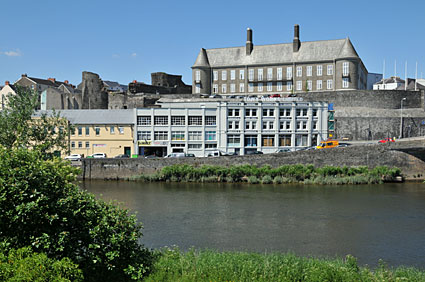
It's unclear precisely who sent the "No, no and no" response, though the Head of Planning at Carmarthenshire Council is Eifion Bowen. You can read a tidied-up of CCC's curt and disrespectful response to both a National Assembly Committee and more than 4,000 petitioners here (pdf).
Thursday, 30 January 2014
The Rotten Borough - Carmarthenshire's Smoking Gun
By OwenThursday, January 30, 20144Assembly, Caerphilly, Carms, Civil Liberties, Cons, Crime, England, Labour, LGS, Local Gov, Pembs, Plaid, WAO, WWSCView Comments
It's quite fitting that Romania can now play a full part in the EU, as today has a.....pre-Christmas 1989, Bucharest feel about it.
It's already been covered comprehensively by Y Cneifiwr, Carmarthenshire Planning, Wales Eye and Inside Out; as well as BBC Wales, South Wales Evening Post and Western Mail.
It's only right – because of the wider impact this pathetic county's actions have had on political criticism in Wales – that I add my own voice to the chorus of condemnation.
As covered back in September/October, the Wales Audit Office believed two decisions taken by Carmarthenshire Council (CCC) were unlawful. Those two decision were; pension arrangements for senior officers (also implicating Pembrokeshire – more from Cllr. Jacob Williams), and the granting of indemnity funding to Chief Executive, Mark James, to undertake a counter libel action against Carmarthenshire Planning's Jacqui Thompson.
As you can understand, the thought that such upstanding public servants would engage in something....."unlawful"..... (synomyms and related words : illegal, criminal, actionable, corrupt, nefarious, prohibited, outlawed, illegitimate, illicit)....came as a terrible shock.
Today, the Wales Audit Office's Anthony Barrett published two separate public interest reports into the decisions. They make pretty damning reading for Carmarthenshire Council. So damning, it could be the beginning of the end for many.
The Pensions Arrangement (pdf)
It's already been covered comprehensively by Y Cneifiwr, Carmarthenshire Planning, Wales Eye and Inside Out; as well as BBC Wales, South Wales Evening Post and Western Mail.
It's only right – because of the wider impact this pathetic county's actions have had on political criticism in Wales – that I add my own voice to the chorus of condemnation.
As covered back in September/October, the Wales Audit Office believed two decisions taken by Carmarthenshire Council (CCC) were unlawful. Those two decision were; pension arrangements for senior officers (also implicating Pembrokeshire – more from Cllr. Jacob Williams), and the granting of indemnity funding to Chief Executive, Mark James, to undertake a counter libel action against Carmarthenshire Planning's Jacqui Thompson.
As you can understand, the thought that such upstanding public servants would engage in something....."unlawful"..... (synomyms and related words : illegal, criminal, actionable, corrupt, nefarious, prohibited, outlawed, illegitimate, illicit)....came as a terrible shock.
Today, the Wales Audit Office's Anthony Barrett published two separate public interest reports into the decisions. They make pretty damning reading for Carmarthenshire Council. So damning, it could be the beginning of the end for many.
The Pensions Arrangement (pdf)
- The agreement to pay cash sums instead of pension payments to senior staff who opted-out of the Local Government Pension Scheme (LGPS) - to mitigate effects of changes to tax relief on pensions - was ultra vires (beyond their power).
- The Executive Board of CCC, which made the decision and includes senior councillors, were wrongly informed that officers would have to leave the LGPS as a result of changes to the law.
- Although CCC maintain that they have the power to enter into particular financial arrangements with their employees, the Auditor believes the powers can't be used to get around pensions legislation. In shorthand terms, this was a tax avoidance scheme.
- The Executive Board failed to take into account all relevant considerations. They also failed to provide evidence that supported their claims that not approving the cash payments would prevent the recruitment of high-calibre senior staff.
- They also failed to take equalities duties into account, and the decision "constituted indirect discrimination" on age and sex grounds because senior staff – mostly older men – would benefit disproportionately from the cash payments compared younger staff and women. As nobody complained within the legal timescale, it was "indirect" discrimination rather than outright.
- The item approving the payments didn't appear on the Executive Board agenda, therefore couldn't be scrutinised by the public. This breached regulations and "had no reasonable basis". CCC defend leaving the item off as one of their assistant chief executives – who believed it had to be addressed before the next meeting - was very busy at the time, so it didn't need to be treated as a formal urgent item. The Auditor disagrees.
- The report itself was drafted and presented by a senior officer who had a disqualifying personal interest as they would've benefited from the cash payments – rendering it an unlawful decision just by their mere presence.
- £28,750 was paid to Mark James in lieu of pension contributions across 2012-13 and 2013-14, though it's unclear if it's been paid back. The equivalent sum for Pembrokeshire is over £50,000.
- CCC has since rescinded the cash payments, so the Auditor recommends CCC address procedural weaknesses.
The Libel Indemnity (pdf)
- The decision to award indemnity was contrary to the Local Authorities (Indemnities for Members and Officers) Order 2006, as indemnities can only be used to defend a defamation claim not bring a counter claim. CCC can't fall back on previous laws dating from 1972 either.
- The Welsh Government's legal advice - when the regulations were issued - clearly warns local authorities "to use common sense" and generally avoid funding defamation proceedings from the public purse.
- Mark James participated in the decision to award the indemnity and didn't declare an interest, which even by his very presence makes the decision unlawful.
- CCC apparently held an off the record "pre-meeting" - which Mark James didn't attend - to go over the details before the formal Executive Board meeting, and therefore CCC believe Mark James didn't participate in the decision-making process and board members were fully-informed of the issues. The auditor doesn't buy it, saying this raises concerns about openness and transparency of decision-making processes.
- The Executive Board failed to take advice from the Wales Audit Office into account, failed to consider the likelihood of the law suit's success and failed to consider a (presumably) "no win, no fee" funding arrangement for the libel action.
- The Executive Board only saw what's been described elsewhere as a "sexed-up dossier" of legal advice on the indemnity funding, not the full advice which was significantly more cautious.
- Treating the matter as an "urgent item" was questionable, and again CCC use the excuse that a decision was needed before the next meeting, which contravened regulations and prevented public scrutiny. There was, however, enough time for the item to be introduced the standard way – at least three days before the meeting.
- A total of £26,426 has been spent on external legal advice since 2012-13, but it's unclear how much this will eventually cost CCC.
- The Auditor recommends the libel indemnity funding be withdrawn immediately.
The Reaction
Rhodri Glyn Thomas AM and Jonathan Edwards MP (both Plaid, Carms E. & Dinefwr) have called for senior resignations, the former believing the authority should also be placed in special measures. Shadow Local Government Minister, Janet Finch-Saunders (Con, Aberconwy), said it highlights the need to rein in senior executive pay.
The local Plaid Cymru group leader, Peter Hughes Griffiths (quoted via Y Cneifiwr), has called for a rainbow coalition to "take control of the situation".
No political capital can be made out of this as it's much a fault of councillors as officers. A power-sharing agreement between an old, venal regime and upstart rebels wouldn't change things. There needs to be a clear-out, and those involved don't deserve the dignity of quietly walking away into retirement.
Not only does this highlight at least two substantial failings of governance and procedure that opened the door to possible misconduct in public office, it also underlines that the governance structure at CCC is neither working, transparent or 100% kosher.
The positions of senior officers and councillors at Carmarthenshire are now untenable. As Jacqui herself said, there are clear parallels with the fraud investigation in Caerphilly, and this should, ideally, be investigated by a police force from outside Wales. Just to underline the seriousness, if this falls under the definition of fraud or misconduct in public office - totalling over £50,000 - we're talking prison sentences.
I concur with Rhodri Glyn Thomas that there's a strong case for placing Carmarthenshire into special measures and run directly by commissioners as soon as practically possible.That requires Welsh Government involvement, so we shouldn't get our hopes up.
There's also a need for a full inquiry – possibly involving Pembrokeshire and Caerphilly too - which could serve as further evidence when considering reforms to how local government works in Wales, something broadly ignored by the Williams Commission. The National Assembly's Public Accounts Committee could do that, and it looks like the Chair, Darren Millar AM (Con, Clwyd West), is ready to go.
People start making mistakes when they think they're invincible and beyond reproach.
Far from a "sustained campaign of harassment", words Jacqui Thompson has used to describe some actions of Carmarthenshire – which apparently damaged Mark James' feelings and reputation to to the tune of tens of thousands of pounds, possibly resulting in Jacqui's future homelessness – were embellishments of a cold, dark truth. I think we all knew that, but if the law's often an ass, defamation laws are a haemorrhoid.
As she heads towards some semblance of vindication, Jacqui Thompson's not only owed a full apology from Carmarthenshire Council, she's owed justice.
What we're NOT allowed to say about Carmarthenshire Council
![]() |
| It's time to play the music! It's time to light the lights! |
So, it's worth noting the warning recently issued by Carmarthenshire's (outside chance of soon being ex-) Council Leader, Kevin Madge (Labour).
All of us should realise that we're here to listen and nod along to anything anyone in elected (or unelected) office says or does. As they cock their legs on their plush leather seats, we should bend over in tribute, gratefully receiving their rose-scented farts - of both brain and bowel.
Heeding Kevin's advice, it's best - for public information purposes - that I outline the sort of things we're not allowed to say about this illustrious local authority.
We can't say, for example, that Carmarthenshire Council is a festering tumour on democracy in Wales, and perhaps the biggest single threat to it since the Battle of Britain.
It would be wrong to insinuate that some Carmarthenshire councillors are walking, breathing proof of evolution from lesser forms of primate - senior councillors and officers acting as silverbacks at the head of a pack of Homo Moridunum.
It would be totally wrong to suggest they're also proof that age doesn't make you wiser, or more competent, and that – unless you've proven you can handle public responsibilities - sometimes retirement or your student days are best spent in a garden or library, not a council chamber or committee room.
It's incorrect to say that many councillors are about as much use at their desks as a gonk, or that I've dissected cadavers with more self-awareness of both where they are and what responsibilities they have to the public.
I shouldn't give the impression to any readers that many councillors are people elevated above their station. Or, that many are paper candidates who walk their way though elections because of first past the post, but who aren't trusted to take control of matters of any real importance. This is highlighted by CCC making the fastest attempt by authorities to offload management of public toilets since rumours of an e-coli outbreak circulated at the British Vindaloo Festival
Then, one day, because the number of competent elected members are few, or because the wrong party's in power at the wrong time, Forrest Gump becomes your Council Leader. Meetings are reduced to a night at the world's dullest cinema, and councillors are appointed to senior positions lacking the faculties or bravery to question officer's decisions properly.
It would be wrong to point out that the Independent "group" – vipers in grandparent's clothing - con us into believing that all non-affiliated members would share exactly the same ideals at exactly the same time. That doesn't sound like a political party to me at all; subjecting themselves, and everyone else, to political manoeuvring and clandestine backstabbing that would make New York's Five Families blush, bending quicker than a rubber tree in a hurricane.
It would be wrong to say Carmarthenshire residents are seen as mushrooms by their local council because – after all - mushrooms need to be fed bullshit and kept in the dark.
It would be libellous to suggest that CCC is corrupt. They're not corrupt. They're not clever or competent enough to be corrupt, as it takes skill to be bent and get away with it.
It would verge on harassment to say there's anything dodgy about Parc-y-Scarlets and other developments, or that Carmarthenshire residents should ask the people of Boston in Lincolnshire how that will pan out.
I can't say that senior officers are bullies. Because one characteristic of bullies is that they get others to fight their battles for them – up to and including the resources of an entire council. This hasn't happened in Carmarthenshire. Nope.
I pour scorn - as the legal system continues to do so - on anyone who would dare criticise the best local authority in Wales. Shame on you.