





As you probably all
know, census data released at the end of 2012 showed a 1.8% decline in the Welsh-speaking population compared to 2001.
As far as I'm concerned, there are other issues and statistics that are perhaps more worrying – in particular working age people without qualifications and those with a long-term limiting illness. I'll return to those at a later date, as I doubt there's enough to work off as yet.
Today though, I'm going to sift through the numbers and patterns and try and come up with explanations for the decline.
The decline : Where? & By how much?
There are two key statistics here.
Firstly, Welsh-speakers as a percentage of the population. Using the raw figures provided by Syniadau, I've drawn up maps to illustrate the changes visually.
There's clearly a heartland consisting of Anglesey, Gwynedd, Ceredigion and Carmarthenshire, commonly referred to as "Y Fro Gymraeg". The Welsh-speaking population is comfortably above 40% in each of them, but only Anglesey and Gwynedd remain majority Welsh-speaking local authorities compared to 2001. That's the first worrying development.
However, counties like Conwy, Pembrokeshire, Powys and Neath Port Talbot form a looser "hinterland" where there's a sizable minority of Welsh-speaking residents (between 15-25% of the population).
Next it's worth looking at how the figures have changed compared to 2001. Carmarthenshire and Ceredigion stand out in particular, with Carmarthenshire experiencing the sharpest fall at 6.4%. A vast bulk of Welsh local authorities saw falls over the period, however the fall is more marked in "Y Fro" and the "hinterland" than elsewhere. Neath Port Talbot saw the sharpest fall in south Wales for example at 2.7%.
You could argue the figures stood up well in south east Wales and south Wales central. The only local authority that saw a rise was Monmouthshire, while numbers held up in Cardiff, Caerphilly and Rhondda Cynon Taf. Though all local authorities saw falls in those able to read, speak and write Welsh.
The second key figure is
the number of Welsh-speakers in physical terms. A population
percentage gives you a good idea of the "density" of
Welsh-speakers, but in terms of actual numbers there's a more even
spread.
As you might expect, the vast majority of Welsh-speakers live in Y Fro. Carmarthenshire has the most Welsh-speakers overall, closely followed by Gwynedd. But Swansea, Rhondda Cynon Taf and Cardiff have very large Welsh-speaking communities despite being outside Y Fro. Cardiff, in fact, almost has as many Welsh-speaking residents as Anglesey.
Next, the change in Welsh-speaker numbers compared to 2001.Ceredigion and south west Wales have seen the sharpest falls. However, falls in the north east – in particular Anglesey - don't seem that pronounced.
When you look at the south it's a different picture. The numbers have held up well in Bridgend, RCT and Newport, while there were increases in Vale of Glamorgan, Caerphilly, Monmouthshire and Cardiff. Cardiff seeing the sharpest rise at more than 4,000.
Overall, Wales has lost just over 20,000 self-identifying Welsh-speakers since 2001. That makes Cardiff's 4,000 rise quite an achievement, rather than something to be derided.
The decline : How? & Why?
Mortality – Y Fro counties aren't only the most Welsh-speaking, but also amongst the "oldest". Based on 2012 mortality rates (6,236 per million) ~3,500 Welsh-speakers will have died in Wales each year, and ~35,000 since 2001. Clearly, there haven't been enough replacements for them. It's even worse in Carmarthenshire and Neath Port Talbot, where the percentage of people with poor health is way above the Welsh average. Logically, that would lead to more people dying younger at the top end of the demographic tree and proportionally more Welsh-speakers amongst them.
Migration patterns within Wales – Using this tool from the ONS, you can see where people moving to Welsh local authorities are coming from. In Anglesey, most inward migrants came from Gwynedd. In Ceredigion the vast, vast bulk come from Welsh local authorities. It's similar in Carmarthenshire.
It's also the opposite. For example, 1080 people moved to Cardiff from Ceredigion, Gwynedd and Carmarthenshire. How many were Welsh-speakers? The odds are quite a few. Which local authority saw the sharpest rise in the physical number of Welsh-speakers again?
A non Welsh-speaking Welsh person moving to an Y Fro county is going to have the same effect on Welsh-speaking statistics as someone moving from England. That might be an uncomfortable fact for some nationalists, but it's the truth.
Inward migration – There's a clear pattern of small numbers of people from a large number of English authorities moving to Wales. They don't look much in isolation on the viewer, but added together they do tot up to a significant number. Discounting those already here, English in-migration "tops-up" a decline in Welsh-speakers disproportionately. In addition, Carmarthenshire (especially Llanelli) has seen large numbers of eastern European migrants settling there since 2004. I'm willing to bet none of them can speak Welsh either. You can't ignore that it's a contributing factor, but it's simplistic to put all of the emphasis on this point alone.
Outward migration – What about those heading in the opposite direction? It's unclear how many Welsh-speakers there are resident in England (or I simply couldn't be bothered to find out), but there are, in many cases, at least as many Welsh people moving to England than there are incoming. The south, however, seems relatively self-contained. It's far more pronounced in Y Fro and counties like Powys, where it's perhaps easier to head east-west than north-south.
Increased student numbers since 2001 – I actually think this is an overlooked, but key reason behind the proportional decline. I'm willing to bet a lot of the transient population are full-time students, including English students studying at Welsh universities and vice versa. Even if it's only a few thousand moving in either direction, it's enough to knock a big chunk off the Welsh-speaking population in sparsely populated counties in Y Fro and elsewhere. Even more so if they don't return.
Over-estimation of Welsh-speakers in 2001 – Maybe people then were caught up in the patriotic fervour of devolution and "Cool Cymru" and over-estimated their Welsh-speaking ability. Now the national question is settled to a certain extent, people might not be as keen to express their national identity through their ability in the language. It could also mean Welsh-learners no longer regard themselves as proficient in 2011 as they were in 2001 – probably through lack of use.
"O bydded i'r hen iaith barhau"
There's one big glimmer of hope, but we'll have
to be patient. Look at this graph from the Welsh Language Commissioner, also
posted on Blog Menai.
The demography of Welsh-speakers is very heavily in favour of younger generations in practically all local authorities. Perhaps that's due to the expansion of Welsh medium education. Perhaps Welsh-speakers are having more children or are more settled.
The drawback is that Wales is generally older in terms of sheer numbers. Migration by retirees (including within Wales itself) will have an impact, but simple demographics are the big issue here. If anglophone monoglot over 65s disappeared for whatever reason Logan's Run style, it's possible Wales would have a ~30% Welsh speaking population, Y Fro would be solidly Welsh-speaking and even places like Cardiff and Blaenau Gwent would have 20-30% of the population with some ability in Welsh.
I think the changes to the number of Welsh-speakers could be compared to an incoming tide. The first wave comes in a certain distance, then retreats. The next wave comes in even further and stronger, then retreats.
But there's still an awful lot left to do to, not to "preserve" the Welsh language, but ensure it remains a living language. The living bit is much, much more important.
End "Meta-Welsh" – Or, to put it bluntly, Welsh language activists have become so self-referential about Welsh itself, they've dropped the ball over the last 10 years. It shouldn't be reduced to something you talk about at a dinner party, a protest rally or in a seminar. Welsh shouldn't be some sort of geeky hobby for enthusiasts.
If the future of Welsh is going to be constant arguments over status, "conservation", legislation and commissioners – nothing ordinary folk care about - we might as well give up now. It hasn't worked in Ireland, it won't work here.
Mainstream the use of Welsh – You should be able to buy your groceries in Pwllheli in Welsh – end of. The job of ensuring you can now rests with the Welsh Language Commissioner. There's no need to go over the top outside of Y Fro, but once a Welsh-speaking population reaches a certain level, or number, there should be an expectation that basic services would be available – and more importantly, used – in Welsh. Even if it's only a token "Derek the Weather" gesture.
"Cwl Cymraeg" – The future of Welsh lies with the Cyw crowd and 20/30-somethings, not the Dechrau Canu, Dechrau Canmol crowd. Although there are some "edgy" Welsh language artists out there, Welsh language culture as a whole gives the impression of being very conservative. Cymraeg needs a pulse. We need more contemporary Welsh language entertainment and literature to make it alive and appear like something monoglots are missing out on. It needs more slang, for example. It needs to be worth the artist's time though. Note the disagreement between Radio Cymru and musicians.
Change how Welsh is taught in English-medium (secondary) schools - Welsh has to be desirable to speak and learn, and I don't think that comes down to compulsion. I think instead of the pointless, token Welsh language GCSE Short Course, it should become like the (proposed) Scottish-style "Welsh Studies".
It should be bilingual, but actually putting it in a context, be that historical, political, cultural or sociological. The emphasis on teaching Welsh (as a second language) should be heavily weighted towards English medium primary schools, where language teaching is a bit more effective as brains develop.
Promote the
benefits of a bilingual education – This doesn't just include the
obvious cognitive one of being able to speak more than one language,
but employment, cultural and social opportunities. Most of the world
is bilingual. Pupils attending Welsh-medium schools also learn
English to native-speaker standards anyway. Secondary school pupils
also learn other languages alongside Welsh and English as part of the
curriculum – though both Plaid and the Conservatives have
discussed introducing a third language at primary school level
recently.
That little fact means it's easy to lock those who have "issues" with Welsh language education in very amusing circular arguments. I wish people would do it more often, and it makes it far easier to uncover their true motivation(s).
An Y Fro baby boom – If Welsh is going to survive as a living language, more children in the heartland need to be brought up in Welsh-speaking households, who in turn might move to other parts of Wales and top up Welsh-speaking communities there. More Welsh-speaking young people might put off elderly, anglophone white-flighters moving to rural Wales in the first place. But there's another big problem....
An Y Fro economic miracle – There are economic reasons for the decline of Welsh. With the economy of West Wales & The Valleys continuing to lag, and there being natural penalties for living in a sparsely populated area, there needs to be a reason to retain working-age people and provide them with jobs. I call this a "miracle" because that's the scale of the challenge. What industries could Y Fro specialise in? Energy? Agricultural science? It has to be more than seasonal tourist jobs.
Link planning (economic and social) and housing to the Welsh language – This doesn't necessarily mean prioritising Welsh-speakers for housing. It could simply mean more cheaper, affordable housing and the creation of a "Welsh-speaking city" somewhere in Y Fro with enough clout to pull younger people towards it. That could be Aberystwyth, it could be Bangor, it could be a planned expansion of a town like Porthmadog.
Create a model for a successful Welsh-speaking infrastructure, learn from it, then replicate it elsewhere.
As far as I'm concerned, there are other issues and statistics that are perhaps more worrying – in particular working age people without qualifications and those with a long-term limiting illness. I'll return to those at a later date, as I doubt there's enough to work off as yet.
Today though, I'm going to sift through the numbers and patterns and try and come up with explanations for the decline.
The decline : Where? & By how much?
There are two key statistics here.
Firstly, Welsh-speakers as a percentage of the population. Using the raw figures provided by Syniadau, I've drawn up maps to illustrate the changes visually.
 |
| Welsh-speaking population per local authority 2011 (Click to enlarge) |
There's clearly a heartland consisting of Anglesey, Gwynedd, Ceredigion and Carmarthenshire, commonly referred to as "Y Fro Gymraeg". The Welsh-speaking population is comfortably above 40% in each of them, but only Anglesey and Gwynedd remain majority Welsh-speaking local authorities compared to 2001. That's the first worrying development.
However, counties like Conwy, Pembrokeshire, Powys and Neath Port Talbot form a looser "hinterland" where there's a sizable minority of Welsh-speaking residents (between 15-25% of the population).
 |
| Change in % of Welsh-speakers compared to 2001 (Click to enlarge) |
Next it's worth looking at how the figures have changed compared to 2001. Carmarthenshire and Ceredigion stand out in particular, with Carmarthenshire experiencing the sharpest fall at 6.4%. A vast bulk of Welsh local authorities saw falls over the period, however the fall is more marked in "Y Fro" and the "hinterland" than elsewhere. Neath Port Talbot saw the sharpest fall in south Wales for example at 2.7%.
You could argue the figures stood up well in south east Wales and south Wales central. The only local authority that saw a rise was Monmouthshire, while numbers held up in Cardiff, Caerphilly and Rhondda Cynon Taf. Though all local authorities saw falls in those able to read, speak and write Welsh.
 |
| Number of Welsh-speakers per local authority 2011 (Click to enlarge) |
As you might expect, the vast majority of Welsh-speakers live in Y Fro. Carmarthenshire has the most Welsh-speakers overall, closely followed by Gwynedd. But Swansea, Rhondda Cynon Taf and Cardiff have very large Welsh-speaking communities despite being outside Y Fro. Cardiff, in fact, almost has as many Welsh-speaking residents as Anglesey.
Next, the change in Welsh-speaker numbers compared to 2001.Ceredigion and south west Wales have seen the sharpest falls. However, falls in the north east – in particular Anglesey - don't seem that pronounced.
 |
| Change in the physical number of Welsh-speakers compared to 2001 (Click to enlarge) |
When you look at the south it's a different picture. The numbers have held up well in Bridgend, RCT and Newport, while there were increases in Vale of Glamorgan, Caerphilly, Monmouthshire and Cardiff. Cardiff seeing the sharpest rise at more than 4,000.
Overall, Wales has lost just over 20,000 self-identifying Welsh-speakers since 2001. That makes Cardiff's 4,000 rise quite an achievement, rather than something to be derided.
The decline : How? & Why?
 |
| "Rural down-sizers" appear to be just as likely to be moving from other Welsh local authorities as from England. (Pic : Zoopla.co.uk) |
Mortality – Y Fro counties aren't only the most Welsh-speaking, but also amongst the "oldest". Based on 2012 mortality rates (6,236 per million) ~3,500 Welsh-speakers will have died in Wales each year, and ~35,000 since 2001. Clearly, there haven't been enough replacements for them. It's even worse in Carmarthenshire and Neath Port Talbot, where the percentage of people with poor health is way above the Welsh average. Logically, that would lead to more people dying younger at the top end of the demographic tree and proportionally more Welsh-speakers amongst them.
Migration patterns within Wales – Using this tool from the ONS, you can see where people moving to Welsh local authorities are coming from. In Anglesey, most inward migrants came from Gwynedd. In Ceredigion the vast, vast bulk come from Welsh local authorities. It's similar in Carmarthenshire.
It's also the opposite. For example, 1080 people moved to Cardiff from Ceredigion, Gwynedd and Carmarthenshire. How many were Welsh-speakers? The odds are quite a few. Which local authority saw the sharpest rise in the physical number of Welsh-speakers again?
A non Welsh-speaking Welsh person moving to an Y Fro county is going to have the same effect on Welsh-speaking statistics as someone moving from England. That might be an uncomfortable fact for some nationalists, but it's the truth.
Inward migration – There's a clear pattern of small numbers of people from a large number of English authorities moving to Wales. They don't look much in isolation on the viewer, but added together they do tot up to a significant number. Discounting those already here, English in-migration "tops-up" a decline in Welsh-speakers disproportionately. In addition, Carmarthenshire (especially Llanelli) has seen large numbers of eastern European migrants settling there since 2004. I'm willing to bet none of them can speak Welsh either. You can't ignore that it's a contributing factor, but it's simplistic to put all of the emphasis on this point alone.
Outward migration – What about those heading in the opposite direction? It's unclear how many Welsh-speakers there are resident in England (or I simply couldn't be bothered to find out), but there are, in many cases, at least as many Welsh people moving to England than there are incoming. The south, however, seems relatively self-contained. It's far more pronounced in Y Fro and counties like Powys, where it's perhaps easier to head east-west than north-south.
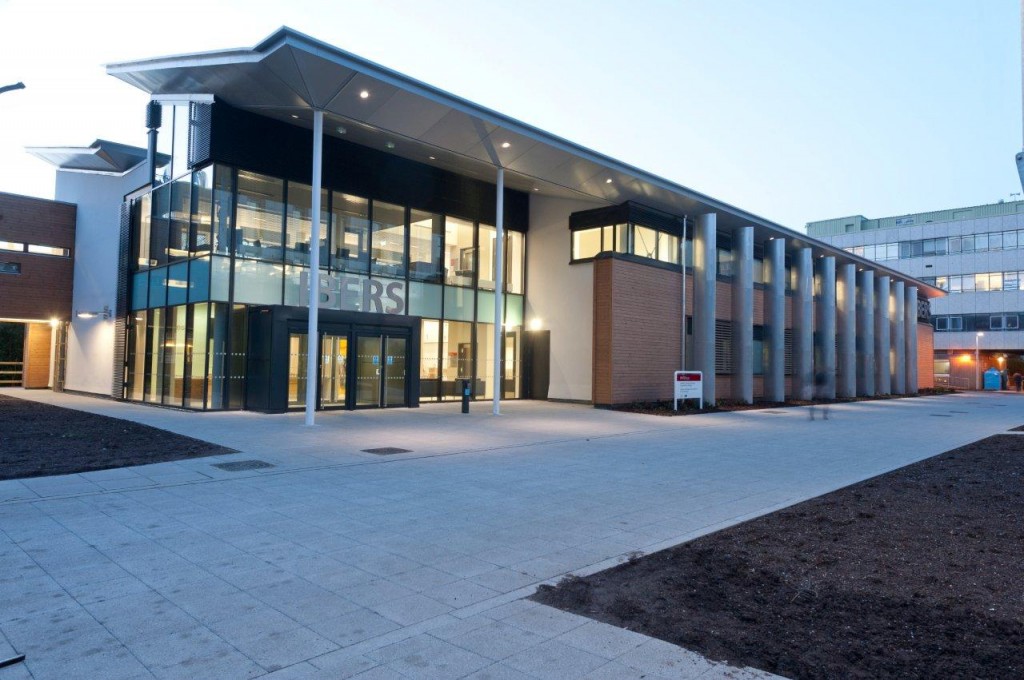 |
| Has Blair government university expansion led to a more transient Welsh-speaking population in their 20s? (Pic : Austin Company) |
Increased student numbers since 2001 – I actually think this is an overlooked, but key reason behind the proportional decline. I'm willing to bet a lot of the transient population are full-time students, including English students studying at Welsh universities and vice versa. Even if it's only a few thousand moving in either direction, it's enough to knock a big chunk off the Welsh-speaking population in sparsely populated counties in Y Fro and elsewhere. Even more so if they don't return.
Over-estimation of Welsh-speakers in 2001 – Maybe people then were caught up in the patriotic fervour of devolution and "Cool Cymru" and over-estimated their Welsh-speaking ability. Now the national question is settled to a certain extent, people might not be as keen to express their national identity through their ability in the language. It could also mean Welsh-learners no longer regard themselves as proficient in 2011 as they were in 2001 – probably through lack of use.
"O bydded i'r hen iaith barhau"
 |
| If we're careful, Welsh might have a very bright future indeed. But the vast bulk of Welsh-speakers in numerical terms are older. (Pic : Welsh Language Commissioner via Blog Menai) (Click to enlarge) |
The demography of Welsh-speakers is very heavily in favour of younger generations in practically all local authorities. Perhaps that's due to the expansion of Welsh medium education. Perhaps Welsh-speakers are having more children or are more settled.
The drawback is that Wales is generally older in terms of sheer numbers. Migration by retirees (including within Wales itself) will have an impact, but simple demographics are the big issue here. If anglophone monoglot over 65s disappeared for whatever reason Logan's Run style, it's possible Wales would have a ~30% Welsh speaking population, Y Fro would be solidly Welsh-speaking and even places like Cardiff and Blaenau Gwent would have 20-30% of the population with some ability in Welsh.
I think the changes to the number of Welsh-speakers could be compared to an incoming tide. The first wave comes in a certain distance, then retreats. The next wave comes in even further and stronger, then retreats.
But there's still an awful lot left to do to, not to "preserve" the Welsh language, but ensure it remains a living language. The living bit is much, much more important.
End "Meta-Welsh" – Or, to put it bluntly, Welsh language activists have become so self-referential about Welsh itself, they've dropped the ball over the last 10 years. It shouldn't be reduced to something you talk about at a dinner party, a protest rally or in a seminar. Welsh shouldn't be some sort of geeky hobby for enthusiasts.
 |
| Would the future of Welsh be more secure if activists dropped placards and more of them picked up a guitar or wrote Welsh-language novels and television/radio shows? (Pic : ITV Wales) |
If the future of Welsh is going to be constant arguments over status, "conservation", legislation and commissioners – nothing ordinary folk care about - we might as well give up now. It hasn't worked in Ireland, it won't work here.
Mainstream the use of Welsh – You should be able to buy your groceries in Pwllheli in Welsh – end of. The job of ensuring you can now rests with the Welsh Language Commissioner. There's no need to go over the top outside of Y Fro, but once a Welsh-speaking population reaches a certain level, or number, there should be an expectation that basic services would be available – and more importantly, used – in Welsh. Even if it's only a token "Derek the Weather" gesture.
"Cwl Cymraeg" – The future of Welsh lies with the Cyw crowd and 20/30-somethings, not the Dechrau Canu, Dechrau Canmol crowd. Although there are some "edgy" Welsh language artists out there, Welsh language culture as a whole gives the impression of being very conservative. Cymraeg needs a pulse. We need more contemporary Welsh language entertainment and literature to make it alive and appear like something monoglots are missing out on. It needs more slang, for example. It needs to be worth the artist's time though. Note the disagreement between Radio Cymru and musicians.
Change how Welsh is taught in English-medium (secondary) schools - Welsh has to be desirable to speak and learn, and I don't think that comes down to compulsion. I think instead of the pointless, token Welsh language GCSE Short Course, it should become like the (proposed) Scottish-style "Welsh Studies".
It should be bilingual, but actually putting it in a context, be that historical, political, cultural or sociological. The emphasis on teaching Welsh (as a second language) should be heavily weighted towards English medium primary schools, where language teaching is a bit more effective as brains develop.
 |
| It's impossible not to like this. But when Cyw's viewers get older, they'll need more Welsh-language media that reflects modern Wales. Welsh needs to become a little bit more ballsy. (Pic : BBC Wales) |
That little fact means it's easy to lock those who have "issues" with Welsh language education in very amusing circular arguments. I wish people would do it more often, and it makes it far easier to uncover their true motivation(s).
An Y Fro baby boom – If Welsh is going to survive as a living language, more children in the heartland need to be brought up in Welsh-speaking households, who in turn might move to other parts of Wales and top up Welsh-speaking communities there. More Welsh-speaking young people might put off elderly, anglophone white-flighters moving to rural Wales in the first place. But there's another big problem....
An Y Fro economic miracle – There are economic reasons for the decline of Welsh. With the economy of West Wales & The Valleys continuing to lag, and there being natural penalties for living in a sparsely populated area, there needs to be a reason to retain working-age people and provide them with jobs. I call this a "miracle" because that's the scale of the challenge. What industries could Y Fro specialise in? Energy? Agricultural science? It has to be more than seasonal tourist jobs.
Link planning (economic and social) and housing to the Welsh language – This doesn't necessarily mean prioritising Welsh-speakers for housing. It could simply mean more cheaper, affordable housing and the creation of a "Welsh-speaking city" somewhere in Y Fro with enough clout to pull younger people towards it. That could be Aberystwyth, it could be Bangor, it could be a planned expansion of a town like Porthmadog.
Create a model for a successful Welsh-speaking infrastructure, learn from it, then replicate it elsewhere.


