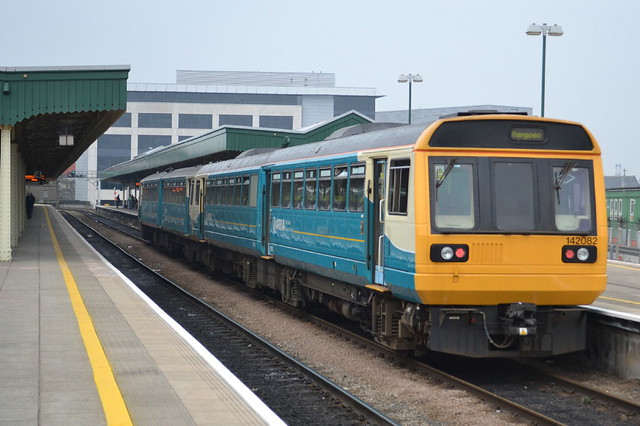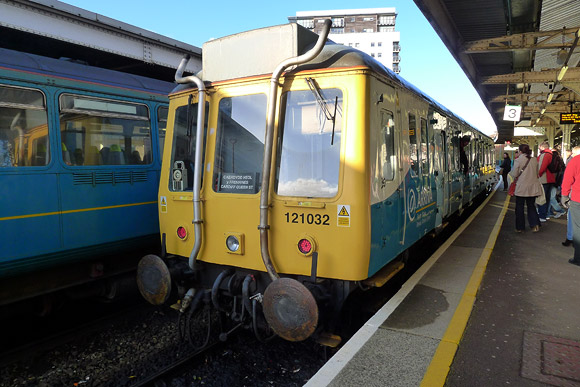
In about ten weeks weeks time, those of us who will bother to vote will elect a new Assembly and a "new" Welsh Government. My 2016 election coverage starts today with a mini series over three weekends focusing on three key areas of devolved public policy and how they've changed over the last five years : the economy, health and education.
This site is no longer updated
Please use the links in the sidebar to visit the new sites!
Showing posts with label PubServ. Show all posts
Sunday, 28 February 2016
Fourth Assembly In Focus : Economic Profile 2016
By OwenSunday, February 28, 20164WGEcon, Banks, Business, Election 2016, EmpSk, Fiscal Policy, Industry, Labour, ProfServ, PubServ, Rail, Roads, Science, SteelSOS, Trade, WEP, YPeopView Comments
In about ten weeks weeks time, those of us who will bother to vote will elect a new Assembly and a "new" Welsh Government. My 2016 election coverage starts today with a mini series over three weekends focusing on three key areas of devolved public policy and how they've changed over the last five years : the economy, health and education.
Tuesday, 8 September 2015
Network Rail - Taking the Welsh Government for a ride?
By OwenTuesday, September 08, 20154WGEcon, BudgetWG, Cardiff, Cons, DfT, England, Labour, NetwR, Powers, PubServ, Rail, Scotland, Swansea, WrexhamView Comments
![]() |
| The project to redouble a section of track between Wrexham and Chester is an example of Network Rail over-promising and under-delivering when it comes to Welsh railways. (Pic : rmweb.co.uk) |
Network Rail's relationship with devolved Wales has always been somewhat awkward. They now have a department responsible for rail infrastructure in Wales, but they're not directly answerable to either the Welsh Government or National Assembly.
Tuesday, 20 January 2015
Making tracks in west Wales
By OwenTuesday, January 20, 2015Cardiff, Carms, Ceredigion, Cons, Conserv, Gwynedd, Ireland, Labour, Lib Dems, Plaid, Planning, PubServ, Rail, Swansea, UniversitiesView Comments
![]() |
| There are growing calls to reopen a railway between Aberystwyth and Carmarthen. (Pic : BBC Wales) |
At the moment, Carmarthen-Lampeter-Aberystwyth is served by the T1 TrawsCymru long-distance bus service, which has been criticised for excessively long journey times. Despite the existence of this service, there has been talk of reopening the line for several years (related 2009 post from Syniadau with a video showing one option for the route), but a formal campaign – Traws Link Cymru – was formed in the last year or so to lobby in favour of the project (website with project overview here).
The campaign is gathering pace, with a official statements of support from : Carmarthenshire Council, numerous community and town councils along the former route and a large number of AMs and MPs. Campaigners are also set to meet the Welsh Secretary, Stephen Crabb MP (Con, Preseli Pembs.), at some point. A (relatively) well-attended public meeting was held earlier this month, with plans for further activities in the near future.
Simon Thomas AM (Plaid, Mid & West Wales) held a short debate in the National Assembly on this issue back in March 2014 (below). Meanwhile, Carwyn Jones has expressed his tacit support for the principle of the project during First Minister's Questions (I remember him saying it at least once but can't remember precisely when, so don't hold me to that). He gave no firm commitment for reasons which will become obvious.
An Irish Case Study
![]() |
| Ireland's Western Rail Corridor is a similar project, but is it an appropriate direct comparison? (Pic : paulsalveson.org.uk) |
Comparisons have been drawn to the Western Railway Corridor in the Republic of Ireland, which is a proposal to link Sligo and Limerick along Ireland's west coast. At the moment, all lines lead to Dublin in the same way Welsh railways go east-west. A section enabling trains to travel between Galway and Limerick opened in 2010 at a cost of around €107million (£84million at 2015 prices). The total cost of reopening the line to/from Sligo was, in 2004, estimated to be around €366million (£286million [2015]).
Since reopening, there's been criticism of low passenger numbers between Galway and Limerick (Galway alone is larger than Carmarthen, Lampeter and Aberystwyth combined, while Limerick is about twice the size of Llanelli). The service is subsidised by the Irish Government, with cheap online fares and tax incentives to encourage people to buy season tickets - but it's right to point out that service frequencies are very low indeed with maybe no more than 5 trains a day in each direction.
The crucial difference between Aber-Carms and the Western Corridor section is that, in Ireland's case, large sections of the track were already there and were used as a freight line. All the Irish Government needed to do was (re)build the infrastructure for passenger services (stations, improved track etc.). So the Western Corridor is more comparable to the reopening of the Vale of Glamorgan and Ebbw Vale lines.
Aber-Carms would be a major engineering project above and beyond that of the Borders Line in Scotland, and would arguably be the most extensive reopening of a railway on the island of Great Britain since the Beeching cuts. The old alignment is just over 90km long (56miles), and almost all of it has been pulled up apart from the Gwili railway on the outskirts of Carmarthen.
The Possible Route
![]() |
| Click to enlarge (Pic : Adapted from Google Earth) |
I would guess stations would/could be built at Glangwili Hospital, Bronwydd, Pencader, Llanybydder, Lampeter, Tregaron, Llanilar and Llanfairian. Some of the smaller stops would presumably be request stops like those on the Heart of Wales line.
The Benefits
The obvious one - it makes it a lot easier to get to Aberystwyth by public transport from the south and vice versa (Swansea, Cardiff and London) whilst reconnecting a large part of Carmarthenshire and Ceredigion to the rail network. Considering the relatively poor state of north-south road links in west Wales, journey times are likely to be competetive with road.
The catchment area, although rural, will be physically large with great opportunities to provide park and rides as well as linking with local bus services. Public transport provision is often poor in rural areas, so encouraging people out of their cars there is often ignored, as the emphasis is usually focused on urban areas. Reopening the line would have a knock-on positive impact on pollution and accident rates, with the A44 between Aberystwyth and Llangurig being the most dangerous road in the country and the A487 not faring much better.
Creating "commuter villages" in and around the three larger towns – Aberystwyth, Lampeter and Carmarthen – might spread out development and enable these villages to retain some of their local services like pubs and schools.
If this were combined with a Bangor-Porthmadog link and a re-engineering of Dovey Junction it would eventually connect four university towns. This would guarantee minimum passenger numbers, but also develop economic and academic links right along the west coast to compete with the "city universities".
In the long, long, long term, reopening this line could enable serious consideration being given to reconnecting Newcastle Emlyn, Aberaeron and Cardigan to the rail network.
The Challenges
![]() |
| Do not think for one second that this is going to be a simple case of lobbying for funds. There are serious challenges facing this campaign that need to be overcome. (Pic : Network Rail) |
Reinstating the old route – Most of the former route is development-free but there are areas where the route has been built on, mainly for homes or cycle paths. The route can be engineered to avoid these areas, but the old route will have been the most logical path in the first place (short of radically new alignments). This is down to the shortsightedness of planning authorities. Though there's a bit more protection for former railways nowadays, it's too late for this project.
Farm access and (negative) environmental impact – The former route is littered with crossings to and from farms. Network Rail are supposed to be phasing out level crossings, as they're not popular with transport unions and are a safety hazard. I don't think they'll take kindly to including so many unmanned crossings. They might have to be replaced by bridges, which is an added expense.
Reopening a railway may not be associated with environmental damage, but obviously there would be as the route crosses or passes near environmentally-sensitive areas.
The Cost-Benefit Analysis (CBA) – My personal opinion is that regardless of fiscal tests, as many former railways should be reopened for its own sake where practical (before I'm accused of being a buzzkill).Unfortunately, this is the primary reason why it won't happen.
The political will is there, and I suspect if all of the trackbed were still in place Welsh Government backing for the project would be stronger (and the price tag would probably be no more than £100-150million).
A full CBA (or cost-benefit ratio) usually costs around £20,000-30,000. If the ratio on return of investment is below 2:1 (for every £1 spent, there's a £2 economic return), public authorities won't consider it "high value". That's very technocratic, but it's supposed to prevent the creation of white elephants and discourage "pork barrel spending" , even if at the same time it puts a set of concrete shoes on socially-important projects like this.
A potential price tag of £650million has been bandied about, so this would have to (theoretically) have a wider economic impact of at least ~£1billion to get the levels of return on investment necessary to be approved.
Taking into consideration the relatively small catchment area (population wise) and likely low passenger numbers, the Carms-Aber rail link will fail any CBA instantly (as would my idea of reopening the Mid Wales line). You can have as much heavyweight political support as you want, but these tests determine whether big projects go ahead or not.
AMs and other senior politicians should be well aware of this, but they're not in a position to quibble (because they're pathologically unable to tell the truth and say "no" during an election year) so I'll have to play "the bad guy" for them.
Service levels – It's too early to say what sort of service levels people could expect if it were reopened. You would presume the service would mainly run as a shuttle between Carmarthen and Aberystwyth (due to lack of space on the south Wales mainline) with a few direct trains each day further beyond – probably to Swansea and/or Cardiff (which would make reopening the Swansea District Line for Cardiff-bound trains a higher priority in itself).
The old track alignment between Llanybydder and Strata Florida is remarkably straight and could enable high running speeds. This is offset by some very difficult terrain between Carmarthen and Pencader – though a diversion via Alltwalis has been mentioned. If the line were designed with an average running speed of between 60-70mph then it's possible to get the journey time down to nearly an hour (making Aber-Swansea ~1hr50mins, Aber-Cardiff ~2hrs30mins), but that requires a high quality route that will be expensive to engineer.
![]() |
| Click to enlarge (Pic : Adapted from Google Earth) |
Another option would be to use the path of the Vale of Rheidol narrow gauge railway for a few miles, then create a link to the "main route" south to Carmarthen. This would be rather expensive due to the landscape it would have to cross which requires several deep cuttings and/or short tunnels. It would provide an opportunity to build a station serving the Glanyafon Industrial Estate and with a footpath/cycle path it could link directly to Coleg Ceredigion - but at the expense of stations in Llanfairian and Llanilar.
A further option would be to tunnel under Penparcau, which is certainly doable but depending on the construction method and underlying geology would likely cost £50-60million on its own. This would probably be the best option, but I'm no engineer.
One of the only other options left, therefore, is to CPO the former route, which will mean demolishing several buildings and possibly more than 100 homes (because several blocks of flats have been built on the former line). This means legal challenges, local opposition and a significant additional cost. An alternative would be to allow some limited street-running, but I'm presuming this will be a heavy rail project.
You could create a new route following a ridge around Pen Dinas and going through a caravan park instead (perhaps on a viaduct), but that would be a significant engineering outlay like the tunnel.
Friday, 13 December 2013
Future of the Wales & Borders Rail Franchise
By OwenFriday, December 13, 20134Assembly, 4EPB, 4INQ, 4WGEcon, Business, Carms, Ceredigion, England, Fiscal Policy, Germany, Gwynedd, NetwR, Powys, PubServ, Rail, ScotlandView Comments
| Rail policy in Wales has significant cross-border impacts, and it's not expected that the franchise map would change in 2018. (Pic : Arriva Trains Wales) |
Before I wrap up for the year, it's worth returning to my "favourite Assembly committee" – Business & Enterprise – which launched their report on the future of the Wales & Borders rail franchise on Wednesday (pdf).
Rail services in Wales recently come under criticism from the Campaign for Better Transport, who claim services were poorly used compared to the rest of the UK and that Welsh rail passengers have lower service satisfaction. The franchise to run rail services in Wales and the Marches is up for renewal in 2018.
The Committee didn't come up with any recommendations as such. Instead, they produced a draft Charter for the franchise, based on an assumption that powers over the Wales & Borders franchise would be devolved.
The Current Franchise
The Wales & Borders franchise is currently run by Arriva Trains Wales (ATW), a subsidiary of Arriva UK, who are in turn owned by Deutsche Bahn. ATW was awarded a 15-year franchise in 2003, with Westminster retaining powers to award rail franchises via the Department of Transport.
The committee say most of the evidence they received was critical of ATW's performance. This includes reasons like:
- Lack of demand forecasting, provision for passenger growth and investment (by ATW).
- A failure to reflect Welsh Government priorities.
- Inadequate rolling stock, poor service standards and complex fare structures.
The Association of
Train Operating Companies (ATOC) said the franchise was awarded
during a time of increasing austerity, while the SWWITCH transport
consortium (covering south west Wales) said ATW had "performed
well given the limitations of the franchise".
ATW said the current franchise was effective, with significant passenger growth, record levels of passenger satisfaction and improvements in punctuality.
The current franchise agreement (pdf) meant ATW only had to invest £400,000 over 15-years (what numpty drew that up!?). They say they invested £30million (p3 2.7).
Passenger Focus disagreed with ATW's assessment, saying that although some aspects were "good", there was no planning for future growth and the franchise contract was "flawed from the start".
The committee took evidence from Transport Scotland (the Scottish Government's transport agency). Railways are mostly (but not 100%) devolved to Scotland, and the ScotRail franchise is up for renewal in 2015, so they're going through the same process Wales is. They're including integrated transport provisions within their next franchise agreement, including linking rail services to active travel routes.
A New Franchise
Business Minister, Edwina Hart (Lab, Gower), told the committee that discussions over devolving further rail powers to Wales are "ongoing", while the Welsh and UK Governments have made it clear there should be further devolution of rail powers in both submissions to the Silk Commission. The UK Government are, in fact, actively pressing for devolution of railways, but it's unclear if that's to the same extent as Scotland.
The franchise map is unlikely to change as including English routes improves the franchise's "financial sustainability".
In terms of timescales; the procurement notice will be published in the EU in March 2017, tenders will be published in August 2017, the contract will be awarded in June 2018 and the franchise will come into effect in October 2018. The committee believes work needs to start now "to ensure deadlines are met".
In terms of the length of the franchise, the Department of Transport said long-term franchises were "not as attractive as they had once appeared". Edwina Hart said she would, however, prefer a "long-term relationship". Meanwhile, Railfuture suggested the current franchise should be extended so to enable a move towards a not-for-dividend business model.
Service Standards and Rolling Stock
Evidence suggested there needed to be minimum service
standards as part of any new franchise in terms of facilities,
rolling stock, integrated transport and dealing with complaints.
Passenger Focus suggested there needed to be "hard measures"
to tackle overcrowding and simplified fares, but "soft measures"
when it comes to service quality.
In Scotland, stations are monitored every four weeks for things like as cleanliness, toilets, timetables and customer service. Inspectors are given laptops to instantly record reports. Respondents believe something similar should happen in Wales.
Passenger groups said there needed to be more regular contact between themselves and train operators, suggesting the creation of a "franchise panel" of rail users. ATW agreed that any new franchise needed to "ensure passengers views are at the forefront" of operations.
In terms of new routes, there was an emphasis on connectivity with England, in particular Liverpool and Manchester Aiports, Birmingham and London. Within Wales, there were calls for improved services on the Cambrian Line between Birmingham and Aberystwyth, and calls for a reopening of a "north-south" rail line between Carmarthen and Aberystwyth, electrification of the north Wales coast line and light rail in unspecified towns and cities.
I think most people using Welsh railways agree that current trains are barely suitable for modern transport. Most are 40 years old and nearing the end of their useful life. Evidence pointed to a need for Wi-Fi, improved disabled access, better refreshment and toilet facilities, and better facilities for bikes.
As to where to get the trains from, there wasn't an agreement on whether rolling stock should be "cascaded" ("hand me downs") or bought new.
Transport expert, Prof. Stuart Cole, suggested the Welsh Government should become a "rolling stock company" in its own right, owning any Wales and Borders train fleet from 2018. Leasing company, Angel Trains (and ATW), said refurbishing old trains provided better value for money than completely new rolling stock.
Edwina Hart was open minded about either option, leaning towards refurbishment. While Plaid Cymru leader, Leanne Wood, has previously called for bespoke trains post-electrification.
It was generally agreed that the issue of rolling stock needed a "long-term strategy". However, Prof. Cole said any decision to lease or purchase new trains had to be in place by the end of 2014 as it takes up to 3 years for new trains to become available.
The Business Model
Three
potential management models for a new franchise were offered.
ATW said the current franchise was effective, with significant passenger growth, record levels of passenger satisfaction and improvements in punctuality.
The current franchise agreement (pdf) meant ATW only had to invest £400,000 over 15-years (what numpty drew that up!?). They say they invested £30million (p3 2.7).
Passenger Focus disagreed with ATW's assessment, saying that although some aspects were "good", there was no planning for future growth and the franchise contract was "flawed from the start".
The committee took evidence from Transport Scotland (the Scottish Government's transport agency). Railways are mostly (but not 100%) devolved to Scotland, and the ScotRail franchise is up for renewal in 2015, so they're going through the same process Wales is. They're including integrated transport provisions within their next franchise agreement, including linking rail services to active travel routes.
A New Franchise
Business Minister, Edwina Hart (Lab, Gower), told the committee that discussions over devolving further rail powers to Wales are "ongoing", while the Welsh and UK Governments have made it clear there should be further devolution of rail powers in both submissions to the Silk Commission. The UK Government are, in fact, actively pressing for devolution of railways, but it's unclear if that's to the same extent as Scotland.
The franchise map is unlikely to change as including English routes improves the franchise's "financial sustainability".
In terms of timescales; the procurement notice will be published in the EU in March 2017, tenders will be published in August 2017, the contract will be awarded in June 2018 and the franchise will come into effect in October 2018. The committee believes work needs to start now "to ensure deadlines are met".
In terms of the length of the franchise, the Department of Transport said long-term franchises were "not as attractive as they had once appeared". Edwina Hart said she would, however, prefer a "long-term relationship". Meanwhile, Railfuture suggested the current franchise should be extended so to enable a move towards a not-for-dividend business model.
Service Standards and Rolling Stock
| Minimum service standards on board trains and in stations should be part of any new franchise agreement. (Pic : Wales Online) |
In Scotland, stations are monitored every four weeks for things like as cleanliness, toilets, timetables and customer service. Inspectors are given laptops to instantly record reports. Respondents believe something similar should happen in Wales.
Passenger groups said there needed to be more regular contact between themselves and train operators, suggesting the creation of a "franchise panel" of rail users. ATW agreed that any new franchise needed to "ensure passengers views are at the forefront" of operations.
In terms of new routes, there was an emphasis on connectivity with England, in particular Liverpool and Manchester Aiports, Birmingham and London. Within Wales, there were calls for improved services on the Cambrian Line between Birmingham and Aberystwyth, and calls for a reopening of a "north-south" rail line between Carmarthen and Aberystwyth, electrification of the north Wales coast line and light rail in unspecified towns and cities.
I think most people using Welsh railways agree that current trains are barely suitable for modern transport. Most are 40 years old and nearing the end of their useful life. Evidence pointed to a need for Wi-Fi, improved disabled access, better refreshment and toilet facilities, and better facilities for bikes.
| There's clear need for a long-term strategy on rolling stock - whether "hand me downs" or brand new. (Pic : David Burrell via Flickr) |
As to where to get the trains from, there wasn't an agreement on whether rolling stock should be "cascaded" ("hand me downs") or bought new.
Transport expert, Prof. Stuart Cole, suggested the Welsh Government should become a "rolling stock company" in its own right, owning any Wales and Borders train fleet from 2018. Leasing company, Angel Trains (and ATW), said refurbishing old trains provided better value for money than completely new rolling stock.
Edwina Hart was open minded about either option, leaning towards refurbishment. While Plaid Cymru leader, Leanne Wood, has previously called for bespoke trains post-electrification.
It was generally agreed that the issue of rolling stock needed a "long-term strategy". However, Prof. Cole said any decision to lease or purchase new trains had to be in place by the end of 2014 as it takes up to 3 years for new trains to become available.
The Business Model
- A standard model – Train operators receive revenues and accept risks, with subsidy paid by the Welsh Government or a premium paid by the franchise holder.
- A concession model – Operators are paid a fee to run services specified by a franchise authority. Revenues are then received by that authority (similar to MerseyRail and London Buses).
- A not-for-dividend model (aka "Glas Cymru model") – This could include a state-owned, not-for-profit company operating at arms length from the Welsh Government, or a co-operative franchise.
There was no clear consensus on which
model would be best, though many respondents at a special "stakeholder event"
believed the not-for-dividend model was worthy of further
investigation. Railfuture outright supported it. Many though believed
the business model itself wasn't as important as service
delivery.
Prof. Cole believed that the traditional franchisee model would provide improvements to customers, but that the not-for-dividend model would be more popular. He also raised concerns there wasn't enough expertise within the Welsh Government to develop the franchise and procure things like rolling stock.
If the franchise moved to a not-for-dividend model, ATW say that there would be more management "by the Assembly", whereas if it's a for-profit business model, the operator takes on more of the management duties.They also believed that profit motive was essential to create economies of scale, saying that if the Welsh Government were considering a different business model, they should do so with their "eyes open to the risks".
ATOC produced evidence from KPMG that highlighted the benefits of competition between franchises, though its findings were questioned by a Leeds University study which said franchising has been "less successful, cost wise".
Edwina Hart said she was open-minded to a not-for-dividend company bidding to run the franchise, but would require the powers to enable that to happen. She did say though that "no substantial work" has been carried out by the Welsh Government to investigate a not-for-dividend model, which caused the committee concern.
There was also discussion on the benefits of integrating infrastructure (Network Rail functions) with train operations - dubbed a "deep alliance" - to help reduce costs overall. It means train operators and Network Rail could work together to improve efficiency and customer service in all aspects of rail operations.
The Draft Charter
The draft Charter (p34-36)
had 10 key points, building on the committee's integrated transport inquiry, summarised as :
Prof. Cole believed that the traditional franchisee model would provide improvements to customers, but that the not-for-dividend model would be more popular. He also raised concerns there wasn't enough expertise within the Welsh Government to develop the franchise and procure things like rolling stock.
If the franchise moved to a not-for-dividend model, ATW say that there would be more management "by the Assembly", whereas if it's a for-profit business model, the operator takes on more of the management duties.They also believed that profit motive was essential to create economies of scale, saying that if the Welsh Government were considering a different business model, they should do so with their "eyes open to the risks".
ATOC produced evidence from KPMG that highlighted the benefits of competition between franchises, though its findings were questioned by a Leeds University study which said franchising has been "less successful, cost wise".
Edwina Hart said she was open-minded to a not-for-dividend company bidding to run the franchise, but would require the powers to enable that to happen. She did say though that "no substantial work" has been carried out by the Welsh Government to investigate a not-for-dividend model, which caused the committee concern.
There was also discussion on the benefits of integrating infrastructure (Network Rail functions) with train operations - dubbed a "deep alliance" - to help reduce costs overall. It means train operators and Network Rail could work together to improve efficiency and customer service in all aspects of rail operations.
The Draft Charter
| The overriding aim of the Charter is to put passengers first. Haven't we heard all that before though? (Pic : BBC Wales) |
- Lobby the UK Government for devolution of powers and funding for railways so the Welsh Government is responsible for awarding the Wales & Borders franchise.
- Ensure the Welsh Government has the right expertise and funding in place to deliver an effective franchise and necessary rolling stock. This includes developing a rolling stock strategy "as a matter of urgency", factoring in electrification programmes.
- Base new routes on a detailed understanding of rail traffic flows in the franchise area, including cross-border routes.
- Take an early decision on the management model, clearly demonstrating how it would improve passenger satisfaction, service delivery and provide value for money.
- The Welsh Government, when drawing up the franchise, should clearly :
- Put passenger needs first and foremost.
- Require significant investment by the operator.
- Enhance performance monitoring based on the Scottish example, and enhance monitoring of services and environmental impacts.
- Simplify ticketing and fares, as well as provide high standards for station facilities and effective branding.
- Integrate with other modes of transport as well as walking and cycling routes.
- Develop a closer working relationship between the franchise holder and Network Rail.
All Aboard?
It looks like they've scored a hat trick.
In all honesty, from my own experience, rail services in Wales – while they could be significantly improved – aren't that bad. I have the luxury of living in an urban area though that's well served by routes, and it's clear rural Wales has serious problems. Rail services aren't as bad or as under pressure as bus services anyway. Following Scotland's lead when it comes to monitoring and maintaining standards of service is long overdue and a necessity.
You can't really argue with the Charter as outlined. It does seem a bit aspirational for now, and will need to be backed up with something concrete when it comes to awarding the franchise itself. That is however - in political terms - a long time away.
If there's one area you would point to a not-for-dividend/not-for-profit model working, it would be the railways. The former chair of the Assembly's Cross-Party Group on Rail, now Deputy Minister for Tackling Poverty, Vaughan Gething (Lab, Cardiff S. & Penarth), has led work on that before.
It's disappointing, but not surprising, that the Welsh Government have been lazy when it comes to investigating that model further. If Edwina Hart really wants to see that happen - I suspect that deep down, she might - she'll have to get her skates on. I suspect though that the next franchise will be awarded to an established company – simply because it's less risky. Typical Wales.
The overriding fact is that absolutely none of this matters without the devolution of prerequisite rail powers. That will have to happen by the end of 2014 at the latest judging by the timescales given in the report.
Thursday, 10 October 2013
Draft budget sends chill across local government
By OwenThursday, October 10, 20134Assembly, 4FIN, 4WGFin, BudgetWG, Business, Colleges, Cons, Fiscal Policy, Housing, Labour, Lib Dems, Local Gov, Medicine, Plaid, PubServ, Roads, Schools, Waste, WLGAView Comments
As you know, Finance Minister Jane Hutt (Lab, Vale
of Glamorgan) unveiled the draft Welsh budget for 2014-15 to the
National Assembly on Tuesday. All the relevant figures and details
can be found here, but it's worth giving the overall picture compared to the supplementary budget for 2013-14 (total expenditure, including annually managed expenditure) based off the budget tables (pdf).
| Department | Draft Budget 2014-15 | Change from 2013-14 Supplementary Budget plans (total spending) |
|---|---|---|
| Health & Social Services | £6,545million | +£136million |
| Local Government | £4,613million | -£95.9million |
| Education & Skills | £1,987million | -£46.6million |
| Economy, Science & Transport | £977.2million | +£37.1million |
| Housing & Regeneration | £464.6million | +£92.4million |
| Natural Resources & Food | £418.6million | +£23.2million |
| Central Administration | £349.7million | -£731k |
| Communities & Tackling Poverty | £212.7million | +£375k |
| Culture & Sport | £139.9million | -£1.1million |
The Good News
| The clear winner is the Welsh NHS, with other areas - like transport - receiving extra capital spending boosts. (Pic : BBC Wales) |
It's easier to make out
the red numbers in the budget than the black, but there are clear winners, particularly in terms of capital spending (one-off investments). Revenue budgets (operating budgets) across all areas except health don't make as nice reading.
There's an extra £225million in revenue and capital funding for delivery of NHS services, and the total cumulative extra funding is said to be around £570million over the next three years.
Local libraries received a £3.7million capital boost. There's also a £35million capital boost for programmes to mitigate climate change and tackle fuel poverty, an extra £7.5million towards flood defences, while post-16 learner support received a £30.9million capital funding boost too.
An extra £13million of capital funding has been made available for sustainable travel schemes - perhaps in response to the Active Travel Act - alongside an extra £30.7million for road and rail schemes and £8.2million for trunk roads. However, there've been cuts of around £19million to transport revenue budgets.
In a joint statement on Tuesday, the Welsh Government announced a £100million agreement with Plaid Cymru and Welsh Liberal Democrats, the specifics of which include :
There's an extra £225million in revenue and capital funding for delivery of NHS services, and the total cumulative extra funding is said to be around £570million over the next three years.
Local libraries received a £3.7million capital boost. There's also a £35million capital boost for programmes to mitigate climate change and tackle fuel poverty, an extra £7.5million towards flood defences, while post-16 learner support received a £30.9million capital funding boost too.
An extra £13million of capital funding has been made available for sustainable travel schemes - perhaps in response to the Active Travel Act - alongside an extra £30.7million for road and rail schemes and £8.2million for trunk roads. However, there've been cuts of around £19million to transport revenue budgets.
In a joint statement on Tuesday, the Welsh Government announced a £100million agreement with Plaid Cymru and Welsh Liberal Democrats, the specifics of which include :
- The Pupil Deprivation Grant has been increased by £35million (to £918 per pupil).
- The creation of a £50million Intermediate Care Fund to increase the number of patients being treated in the community instead of hospitals.
- £5.5million has been pledged to mitigate against cuts to the Supporting People Programme (supported housing for vulnerable adults), the budget being cut by a lesser £2.2million to £134.4million for 2014-15.
- An additional £9.5million for robotic cancer treatment (Da Vinci) and telemedicine in north and south west Wales.
Jane Hutt also announced £617.5million in general
capital spending priorities over the next three years on Wednesday,
including :
- £62million towards the proposed South Wales Metro.
- A combined £97million towards A465 duelling, Brynglas tunnels improvements and A55 improvements.
- £170million towards shared equity schemes and other housing projects.
- An extra £82million for Finance Wales.
- £38million towards Phase 2 of the Noah's Ark Children's Hospital, Cardiff.
- £90million towards Arbed energy efficiency and flood defences.
The Bad News
| Everyone knows local councils took a big hit, but we shouldn't overlook the scale of cuts made to post-16 education. (Pic : ITV Wales) |
The
widely-expected deep cuts to local government have arrived, and will
make grim reading for local authority finance departments, making it
even harder to explain away tax-friendly pension schemes and taxpayer-funded legal bills.
Local government support funding has been cut by £127.9million alone, with total cuts to local government services said to hit the £460million mark over the next three years – an average of £20.9million per council, though many will fare worse than that, few better.
The WLGA are - unsurprisingly - not pleased, describing the cuts as potentially "casting local public services as the poor relation of the Welsh public sector" and criticising the increased spending on the NHS. Cardiff Council's Cllr. Russell Goodway goes as far as to say some local authorities "could go bust", suggesting that two unnamed local authorities are in serious financial trouble.
The Western Mail report that the WLGA's Chief Executive told the Assembly's Communities, Local Government and Equalities Committee earlier today that local authorities should be able to absorb the cuts over the next few years, but if austerity drags on for much longer, then councils may struggle to provide services, warning that Russell Goodway's harbinger of doom statements were "fair comments."
It should be pointed out that while there are big spending boosts to health, that's offset by a £168.2million cut to targeted NHS services. Substance misuse and children's social services have had their revenue budgets frozen. Mental health policies and legislation have seen a £3.7million cut, while adult social services have seen a £36.1million cut.
A total of £77.6million of cuts have been made across education, in particular post-16 (-£49.1million) and universities (-£20million) offset mainly by the Pupil Deprivation Grant. There's another £7.2million of cuts to skilled workforce schemes too, in addition to £27.2million of cuts to programmes to boost education participation and reduce inequalities.
A total of £3.26million of cuts have been make to supported housing, including homelessness, offset somewhat by the Intermediate Care Fund and the smaller than planned cuts to the Supporting People Programme.
Arts Council for Wales funding and sport activities funds have been cut by £2.2million and £1.2million respectively. Science and innovation have taken a £1.7million hit (offset by a 200%+ increase in capital funding for science in the 2013-14 budget) while Rural Development Plan programmes have seen a £18.1million cut to revenue budgets.
Despite being in the midst of welfare reforms from Westminster, the Communities & Tackling Poverty budget has effectively been frozen, seeing £3.6million in revenue cuts and a £4million extra capital funds. That's unlikely to achieve anything significant.
The Assembly and Welsh Government face up to their own own cuts, with £13.7million in savings made to general running costs.
Winner - NHS. Loser - Everything else.
Local government support funding has been cut by £127.9million alone, with total cuts to local government services said to hit the £460million mark over the next three years – an average of £20.9million per council, though many will fare worse than that, few better.
The WLGA are - unsurprisingly - not pleased, describing the cuts as potentially "casting local public services as the poor relation of the Welsh public sector" and criticising the increased spending on the NHS. Cardiff Council's Cllr. Russell Goodway goes as far as to say some local authorities "could go bust", suggesting that two unnamed local authorities are in serious financial trouble.
The Western Mail report that the WLGA's Chief Executive told the Assembly's Communities, Local Government and Equalities Committee earlier today that local authorities should be able to absorb the cuts over the next few years, but if austerity drags on for much longer, then councils may struggle to provide services, warning that Russell Goodway's harbinger of doom statements were "fair comments."
It should be pointed out that while there are big spending boosts to health, that's offset by a £168.2million cut to targeted NHS services. Substance misuse and children's social services have had their revenue budgets frozen. Mental health policies and legislation have seen a £3.7million cut, while adult social services have seen a £36.1million cut.
A total of £77.6million of cuts have been made across education, in particular post-16 (-£49.1million) and universities (-£20million) offset mainly by the Pupil Deprivation Grant. There's another £7.2million of cuts to skilled workforce schemes too, in addition to £27.2million of cuts to programmes to boost education participation and reduce inequalities.
A total of £3.26million of cuts have been make to supported housing, including homelessness, offset somewhat by the Intermediate Care Fund and the smaller than planned cuts to the Supporting People Programme.
Arts Council for Wales funding and sport activities funds have been cut by £2.2million and £1.2million respectively. Science and innovation have taken a £1.7million hit (offset by a 200%+ increase in capital funding for science in the 2013-14 budget) while Rural Development Plan programmes have seen a £18.1million cut to revenue budgets.
Despite being in the midst of welfare reforms from Westminster, the Communities & Tackling Poverty budget has effectively been frozen, seeing £3.6million in revenue cuts and a £4million extra capital funds. That's unlikely to achieve anything significant.
The Assembly and Welsh Government face up to their own own cuts, with £13.7million in savings made to general running costs.
Winner - NHS. Loser - Everything else.
| Plaid and the Lib Dems managed to get valuable and practical things from their negotiations, but it's small beans in the wider budget context. (Pic : ITV Wales) |
There are loads of different methods for working out how good/bad the figures are, but my sub-heading seems to be the general consensus reached by everyone who glanced over said figures.
This is likely to be the last big splurge on the NHS until the block grant starts to rise again (unlikely this side of 2020). Although I'm sure Welsh Labour love splashing the cash on health, and the Welsh NHS will continue to deliver complex services, it's in danger of becoming a poorly-managed fiscal black hole. Something has to change or I think even the Welsh Government will start to lose patience with LHBs. I covered one minor measure earlier this week.
The local government cuts were no surprise, but I was shocked at the depth of the cuts to education. It looks as though a sizable chunk of post-16 and university funds have been sacrificed for the Pupil Deprivation Grant. I remain sceptical as to whether that actually works because of how it's being spent, not the principle of the fund itself. Schools certainly win, FE colleges and universities lose.
It seems the economy department has been hit too, but via a lot of smaller revenue cuts offset by capital funding boosts. You've also got to question what the point of the Communities and Tackling Poverty department is without policing in its portfolio, as it seems to be Social Services+1.
In political terms, the good news for the Welsh Government is that, obviously, passing the budget will be a formality without any long, drawn-out process as last year or the year before. Plaid and the Lib Dems will abstain on the formal budget motion whenever it's presented to the Assembly over the next few weeks.
As to whether the two parties got a good deal, I'd say it's reasonable, but far from brilliant when you take all of the numbers into consideration. Many things, like the Intermediate Care Fund, you would've expected the Welsh Government to have considered anyway. You suspect Leanne Wood and Kirsty Williams simply gave them a nudge.
On the other hand, although you would expect it, the Welsh Conservatives are left twiddling their thumbs. While their Westminster colleagues dilly dally over fiscal devolution, you would think that the Welsh branch would be pushing for tax powers ASAP to create a narrative for themselves.
Their response so far has been limp and predictable, with Shadow Finance Minister, Paul Davies (Con, Preseli Pembs.), saying that Plaid and the Lib Dems had propped up a "tired and lazy Labour government" and that only the Welsh Conservatives would protect the NHS blah, blah, blah etc.
One of their major bone of contentions – cuts to the Welsh NHS – has been blown out of the water this year, while the other opposition parties have managed to get tens of millions of pounds in agreements (some pretty significant, like the deprivation grant and expansion of apprenticeships) out of Welsh Labour over three budgets now.
The clear benefits of a lefty consensus, you could say.
Thursday, 26 September 2013
Two Cardiff visions, two different impressions
By OwenThursday, September 26, 2013Business, Cardiff, Housing, Labour, Lib Dems, Plaid, Planning, PubServ, Rail, Regeneration, Swansea, TourismView Comments
A coherent vision for Cardiff city centre and how
it links with the Cardiff Bay regeneration area has been a cause
célèbre for so many people, for so long, that it sounds
like a broken record each and every time it's brought up in the media.
In the last few weeks, we've seen further development of two visions. One from Cardiff City Council, the other from a group of citizens and thinkers called Imagine Cardiff.
Due to Cardiff's clout, and with the imminent launch of a strategic city region in south east Wales (I've outlined my own ideas for regional government before too), everywhere from Bridgend to the English border is counting on Cardiff city centre to be "the jewel in the crown".
Cardiff Council
The plans for the city centre, from a political viewpoint, boil down to two key schemes :
Now, that's all fine and dandy.
As for the problems, the previous Cardiff Council administration (Lib Dem-Plaid coalition) outlined their own vision for the city centre between 2008 and 2011. The incoming Labour administration scrapped it, and have since come up with....almost exactly the same plan. So that's several years work wasted for no reason.
Also, to date, the only major developments taking place within the area are a new campus for Cardiff & Vale College at Dumballs Road (due to open in 2015) and modest redevelopments of Cardiff Central and Queen Street stations.
Cardiff Council have since been buying up land in and around the city centre despite there being no firm plans in place. There doesn't appear to be any chance of a replacement for the central bus station any time soon (which was at least included in previous plans), and the whole thing seems to be rather disorganised, though there are legitimate concerns around the state of the economy.
Someone senior needs to have a quiet word as they're making a pig's ear of what should be one of the most exciting economic developments in Wales for the past 50 years.
It seems no one has a clue what's going on, or the timetables, apart from Russell Goodway himself (maybe Edwina Hart, but I suspect she's out of the loop too) and perhaps Cardiff Council's cabinet.
The previous administration – for all its faults, and there were plenty of them – at least gave us all some idea of what they wanted to do with the city centre. Come back Rodney "International" Berman. All is forgiven!
Imagine Cardiff
A concept report commissioned on behalf of the Imagine
Cardiff group, sponsored by Vaughan Gething AM (Lab, Cardiff S &
Penarth) and Jenny Rathbone AM (Lab, Cardiff Central) was unveiled to
much fanfare last week. The report itself is rather large, but
available here.
It's full of the sort of buzzwords you would expect – "progressive", "partnership", "stakeholders", "engage", "sustainable/sustainability" etc.
I don't care about that, only the meat. The vision includes:
In the last few weeks, we've seen further development of two visions. One from Cardiff City Council, the other from a group of citizens and thinkers called Imagine Cardiff.
Due to Cardiff's clout, and with the imminent launch of a strategic city region in south east Wales (I've outlined my own ideas for regional government before too), everywhere from Bridgend to the English border is counting on Cardiff city centre to be "the jewel in the crown".
Cardiff Council
The plans for the city centre, from a political viewpoint, boil down to two key schemes :
- The enterprise zone – In collaboration with the Welsh Government, and aimed at financial and professional services, the enterprise zone covers the area around the Millennium Stadium and Cardiff Central station (known as "Central Square"), Callaghan Square, the JR Smart Capital Quarter and Dumballs Road. Incentives include targeted business support and business rate relief schemes.
- Rebuilding Momentum – Tied to the enterprise zone, this (latest) 30-year masterplan focuses on key developments within the enterprise zone area; including high-density housing (6,400 units), a convention centre, more than 500,000 sqm of office space and a bus or tram-based light rapid transit system linking the city centre to Cardiff Bay.
Now, that's all fine and dandy.
As for the problems, the previous Cardiff Council administration (Lib Dem-Plaid coalition) outlined their own vision for the city centre between 2008 and 2011. The incoming Labour administration scrapped it, and have since come up with....almost exactly the same plan. So that's several years work wasted for no reason.
Also, to date, the only major developments taking place within the area are a new campus for Cardiff & Vale College at Dumballs Road (due to open in 2015) and modest redevelopments of Cardiff Central and Queen Street stations.
Cardiff Council have since been buying up land in and around the city centre despite there being no firm plans in place. There doesn't appear to be any chance of a replacement for the central bus station any time soon (which was at least included in previous plans), and the whole thing seems to be rather disorganised, though there are legitimate concerns around the state of the economy.
Someone senior needs to have a quiet word as they're making a pig's ear of what should be one of the most exciting economic developments in Wales for the past 50 years.
It seems no one has a clue what's going on, or the timetables, apart from Russell Goodway himself (maybe Edwina Hart, but I suspect she's out of the loop too) and perhaps Cardiff Council's cabinet.
The previous administration – for all its faults, and there were plenty of them – at least gave us all some idea of what they wanted to do with the city centre. Come back Rodney "International" Berman. All is forgiven!
Imagine Cardiff
| With the difficulties in closing or rebuilding railways, the likelyhood is that this is what would pull into the shiny new transport hub in Cardiff Bay - not a tram. (Pic : Urban 75) |
It's full of the sort of buzzwords you would expect – "progressive", "partnership", "stakeholders", "engage", "sustainable/sustainability" etc.
I don't care about that, only the meat. The vision includes:
- Wetland reserves at Bute Park and Parc Trelai.
- A 2km blue flag beach in Cardiff Bay based round the eastern edge of the barrage.
- A new urban village at Porth Teigr dubbed "Baltimore Village" (developed by B&B Enterprises by any chance?).
- A floating stage/outdoor performance area in Cardiff Bay.
- A 21st Century transport interchange in Cardiff Bay, along with circular tram system around the edge of Cardiff Bay, Penarth and Butetown, linking to a wider public transport network, including a Cardiff city centre circle line and branch lines to the rest of the city and the airport.
The cost estimates for their "core scheme"
– wetlands, beach, Baltimore village – is a rather "modest"
£175million. The cost of all of the vision is a rather more
substantial £972.1million (which I believe is an under-estimate),
and that doesn't include funds towards other developments like Porth
Teigr itself and Cardiff's Local Development Plan housing
requirements (alone estimated to be £6billion).
The intention would be for a "co-operative consultancy" made up of professionals to advise and work for an Imagine Cardiff community interest company. That's rather novel and I'm not sure if something like that has been done on this scale in Wales before, or the rest of the UK for that matter.
You can't fault the vision. All of the ideas put forward are brilliant and the artist's impressions are seductive (you can see a selection from architectural designer Alex Whitcroft here). The beach, the wetlands...great stuff!
I love the idea of a floating stage (though it would need a roof) and an artificial beach. The latter is very much achievable, depending on the questionable bathing quality of Cardiff Bay itself (overall water quality is surprisingly good).
But it is what it is....artificial. Fake. The whole of Cardiff Bay gives the impression of being a fairground for the middle classes with some shiny buildings dotted around it, turning its back on Butetown as if it were a bad smell.
It still needs some ironing out, however large chunks of this vision read like a bog-standard gentrified housing development with a few extras added that will probably never see the light of day.
For example, they'll have to drop all hope of a tram network as they outlined it. A tram going around the outer circle of Cardiff Bay would never be self-sustaining.You can walk it in an hour. Then there's the negative connotations of putting "affordable" housing right next to a working port.
The Cardiff
Bay branch line would need to be replaced, and it's incredibly
difficult – legally – to close a railway. There are plenty of
other things that need clearing up across Wales as well, unless the
"vision" is of a slam-door single car unit trundling into
shiny Roald Dahl station after the epic journey from a Cardiff Queen
Street bay platform, bellowing black diesel fumes at 6mph.
For the moment, that's all Network Rail have planned for it.
Cardiff isn't some sprawling metropolis, it's a compact city by European standards, and I doubt Cardiff really needs a high-density tram network. Instead, it needs to make better use of existing transport corridors - in particular railways - like filling in gaps in Roath, Ely, Rumney and St Mellons; and ideally at some point in the future completing a "circle line" from Coryton to Radyr.
Any rapid-transit system should probably be bus-based too. So not everything Cardiff Council are planning is bad. I know that's not very "glamorous", but Swansea has more claim to a tram system than Cardiff, especially as the corridor's in place via the bendy bus between Morriston and Singleton.
Swansea doesn't need a fake beach either.
The intention would be for a "co-operative consultancy" made up of professionals to advise and work for an Imagine Cardiff community interest company. That's rather novel and I'm not sure if something like that has been done on this scale in Wales before, or the rest of the UK for that matter.
You can't fault the vision. All of the ideas put forward are brilliant and the artist's impressions are seductive (you can see a selection from architectural designer Alex Whitcroft here). The beach, the wetlands...great stuff!
I love the idea of a floating stage (though it would need a roof) and an artificial beach. The latter is very much achievable, depending on the questionable bathing quality of Cardiff Bay itself (overall water quality is surprisingly good).
But it is what it is....artificial. Fake. The whole of Cardiff Bay gives the impression of being a fairground for the middle classes with some shiny buildings dotted around it, turning its back on Butetown as if it were a bad smell.
It still needs some ironing out, however large chunks of this vision read like a bog-standard gentrified housing development with a few extras added that will probably never see the light of day.
For example, they'll have to drop all hope of a tram network as they outlined it. A tram going around the outer circle of Cardiff Bay would never be self-sustaining.You can walk it in an hour. Then there's the negative connotations of putting "affordable" housing right next to a working port.
| A great beach, coherent waterfront development, potential for a tram network and renewable energy....Swansea says "hello". (Pic : guide2swansea.com) |
For the moment, that's all Network Rail have planned for it.
Cardiff isn't some sprawling metropolis, it's a compact city by European standards, and I doubt Cardiff really needs a high-density tram network. Instead, it needs to make better use of existing transport corridors - in particular railways - like filling in gaps in Roath, Ely, Rumney and St Mellons; and ideally at some point in the future completing a "circle line" from Coryton to Radyr.
Any rapid-transit system should probably be bus-based too. So not everything Cardiff Council are planning is bad. I know that's not very "glamorous", but Swansea has more claim to a tram system than Cardiff, especially as the corridor's in place via the bendy bus between Morriston and Singleton.
Swansea doesn't need a fake beach either.
Monday, 3 June 2013
Assembly Integrated Transport Inquiry (It's good, seriously!)
By OwenMonday, June 03, 20134Assembly, 4EPB, 4INQ, 4WGEcon, Buses, Carms, Ceredigion, Elderly, England, Gwynedd, Metro, NetwR, Planning, Poverty, Powers, PubServ, Rail6 comments
A few weeks ago, the
Assembly's Enterprise & Business Committee reported back on its inquiry into integrated transport in Wales. "Integrated
transport" generally refers to how easily you can connect
between different modes of public transport and your destination.
For example, Greater London has highly-integrated public transport thanks to initiatives like the Oyster Card, where you can simply hop on a bus straight after coming out of the Underground or railway station, without needing to buy a separate ticket for each.
The Committee (pdf) made a thorough and comprehensive 25 recommendations in total, summarised as:
For example, Greater London has highly-integrated public transport thanks to initiatives like the Oyster Card, where you can simply hop on a bus straight after coming out of the Underground or railway station, without needing to buy a separate ticket for each.
The Committee (pdf) made a thorough and comprehensive 25 recommendations in total, summarised as:
- Lobby the UK Government to devolve rail infrastructure powers (in line with Scotland), rail franchising and bus regulation. Also, use existing powers to "drive public transport integration."
- Use planning rules to encourage integrated transport, via the proposed Planning Bill and the the Active Travel Bill.
- Investigate whether existing powers over bus services are used effectively, and move towards bus regulation, with improvements to passenger information.
- Transport providers should co-ordinate their timetables, and "inter-modal integration" should be a key component of any new Welsh rail franchise contract from 2018.
- Develop a fully-integrated ticketing scheme on all forms of transport (like the Oyster Card).
- Give an update on progress made to improve access to public transport for disabled people, carried over from a previous inquiry by the Equalities Committee during the Third Assembly.
- Expand the "BwcaBus" scheme to parts of rural Wales not currently serviced by scheduled bus services, and increase support for other community transport services.
- Consideration be given to developing "Passenger Transport Executives" to deliver public transport services.
Next, there's the detail.
Powers & Planning
The Welsh Government wants a "fully integrated transport system" as part of its Programme of Government. University of South Wales' Prof. Stuart Cole - one of Wales' leading transport experts - pointed out that the current powers "severely limited" the Welsh Government's ability to come up with integrated transport solutions and invest in them. Although transport is "generally devolved", several key areas aren't, including:
- Rail infrastructure and regulation of rail services
- Registration and regulation of bus services
- Public service vehicle (PSV) operator licensing
Prof. Cole called for
the Traffic Commissioner's responsibilities to be devolved to Wales,
as well as regulation of bus services (also called for by Passenger
Transport Wales). Network Rail said devolution of rail powers would
"potentially" improve integrated transport, but would be
competing with other budgets.
Despite praise for Network Rail's administrative "devolution" to Wales, the former minister in charge of transport – Carl Sargeant (Lab, Alyn & Deeside) - pointed out that current rail legislation hampered his ability to deliver. He described devolution of bus regulation, rail powers and funding (in line with Scotland) as potentially "extremely helpful". The Committee concluded it would be difficult for the Welsh Government to deliver integrated transport without all of the right powers.
Concerns were raised that current Local Development Plans – like the controversial Cardiff LDP – weren't taking public transport seriously. Some expert submissions and witnesses described reopening old railway lines to serve big new residential developments as "needing to" happen, rather than merely"desirable".
Initiatives like the Active Travel Bill are designed to promote and enhance walking and cycling. Sustrans Cymru highlighted a lack of expertise, with lots of experience in local government when dealing with bus services, but not enough with regard active travel.
The bodies responsible for delivering and planning public transport are Wales' four Regional Transport Consortia – joint collaborations between local authorities. Witnesses said this model "works", but with room for improvement. Again, there are concerns about skills and expertise in local government, as well as variations between the differing boards.
The Welsh Government has the power to establish Joint Transport Authorities to deliver public transport on a regional level. Prof. Cole said he would prefer to see the transport consortia evolve to become these, with Network Rail coming to the same conclusion. Sustrans were sceptical, saying education (presumably to do with cycling) would fragment from transport functions. The WLGA said it might cost too much.
There's the option too of creating Passenger Transport Executives – like Transport for London and Transport for Greater Manchester. Wales doesn't currently have the power to create these, however.
Bus Services
The inquiry looked at whether competition rules
prevented bus companies integrating services with each other. First
Group denied it did, however the Association for Transport
Coordinators (ATC) said the rules led to "bus wars", while the threat of Competition Commission fines put bus companies off
co-ordinating their timetables, actively discouraging
co-operation. Presumably because there would be a danger of creating "monopolies" or creating the environment necessary for price-rigging.
The current arrangements are territorial, with one bus company saying bus operators were keen to "protect their turf" so to speak. The Chartered Institute for Logistics and Transport said bus companies want "light touch regulation", but competition has led to bus operators cherry-picking routes to maximise profits. They said a fully integrated bus network was, "not going to be done under competition."
First Group argued against the use of "quality contracts" – which would specify what bus services should be like and their operation – because it could destabilise bus operators and burden local taxpayers (to fund unprofitable, but "essential" services, presumably). Others, including transport consortia, agreed.
Prof. Cole said competition wasn't working properly, advocating "bus franchising" similar to the railways. The Welsh Government are intent on linking bus service funding to delivery, but have paradoxically cut bus funding by 25%.
Timetables, Ticketing & Passenger Information
Traveline Cymru is praised for its passenger
information services, however the ATC said public transport
information was "inconsistent and inadequate". It's said
Traveline could be improved by becoming a "one stop shop"
for travel information.
A lack of standardised travel information was a concern, one complaint suggested Ceredigion bus services "didn't have timetables!" Changes to bus timetables and services are said to be poorly relayed to the public. There were subsequent calls from passenger groups for more real-time information at bus stops (especially in rural areas) and at train stations.
Another complaint is the lack of co-ordination between bus and train timetables, meaning passengers could be left waiting for up to an hour to make a connection in some cases. Integrating the two would be difficult in rural areas with low service frequencies, and it's made worse as there's said to be very little communication between bus companies and Arriva Trains Wales towards doing this.
First Group were resolute that integrated timetables "don't work", and that while there would be benefits, linking timetables together "doesn't make sense". This claim was rejected by the committee, passengers, Arriva Trains Wales and various witnesses.
In terms of fares, Passenger Focus (and individual passenger responses) noted the complexity of fare systems and fares structures. The benefits of integrated ticketing – like the Oyster Card – were made clear. Oyster Card users in Greater London made up a third of public transport use in 1999-00, and it was pointed out that simpler ticketing results in a general "uplift" in public transport use.
Arriva Trains Wales are considering an integrated ticketing system, but are yet to decide if it'll be a smart card due to technological changes. The Welsh Government are introducing a smart card – GoCymru – to replace concessionary bus passes by 2014 on buses, and possibly 2018 on Welsh railways.
The committee concluded that passengers should be able to make journeys on multiple modes of transport with one ticket, based on a simplified price structure – effectively, a "Welsh Oyster Card" or equivalent.
Infrastructure
Witnesses pointed out the
need to be able to transfer easily between buses, trains and taxis.
It's seen as a key part of shifting people out of cars by reducing
the inconvenience of changing from one form of transport to
another.
Network Rail want to make the process of transferring from bus to rail "as smooth as possible", and support the creation of parkways/park and ride stations, linked to long-distance bus routes.
Passenger Focus also want car parking facilities improved at railway stations, something pointed out by other witnesses as an area to take advantage off once electrification is completed. Sustrans were against that, saying car parks fill up too quickly and are too large, and that improved facilities were needed for cycling and walking – on board and off public transport.
The UK rail industry needs to save £1billion, most of which is likely to come from staff redundancies – especially station staff. However, Arriva Trains Wales said they have no plans to close booking offices.
Accessibility for disabled people was raised by passengers, and examples were pointed out where one train station platform might be wheelchair accessible, but the other platform not. The committee wanted an update on progress made with regard an Assembly inquiry into disabled access to transport.
Community Transport
In areas poorly served by scheduled bus and train
services, demand-led and voluntary community transport is often used instead.
The BwcaBus scheme – where passengers pre-book the bus to pick them
up/drop them off – is used in Ceredigion and Carmarthenshire. It's
said to have been very successful, and it's suggested BwcaBus be
rolled out to other parts of rural Wales.
However, integrating community transport with scheduled transport services is a problem, but commercial bus companies are aware of the benefits of community transport. It's particularly important for parts of Wales where there's been a "market failure" by commercial operators to serve the isolated elderly and disabled adequately.
Some community transport operators say, however, they're treated as "second class" by commercial operators, and overlooked as an alternative provider. Gwynedd is said to be a model of community and commercial companies working together.
Community transport operators were also facing difficulties, as Welsh Government funding was hanging in the balance, or operating on a rolling month-by-month basis. The committee concluded there needed to be more certainty on long-term funding for these services, as they enable people to remain independent for longer.
Conclusions
I have the virtual equivalent of tears of joy in my eyes.
Calling for devolution of the right powers, bus regulation, co-ordinated timetables, GoCymru (could become a "Welsh Oyster Card"), Passenger Transport Executives....
This report went under the radar unfortunately - and completely undeservedly. There's been a mass outbreak of common sense. Come, let us bask in its wonder.
It's excellent work. My hat goes off to the AMs and everyone involved. The Assembly and its committees have come under criticism recently, but we should all be able to point to this as an example of all that "dull" and "grim" debate having a purpose. I'd go as far to say it's one of the best reports I've come across since starting the blog. I don't think I can add anything other than say, "They've nailed it".
First Group don't come across well based on some of their evidence, it has to be said. Ask bus users in south west Wales and I'd imagine they'll won't need committee evidence to tell them that.
Now I'm going to demonstrate how easily it is to go from optimism to cynicism when it comes to Welsh politics and Welsh public policy. It's probably why people, even supposed enthusiasts like myself, are turning off politics in the first place.
Despite a brilliant report, with many sensible recommendations, you wake up and realise how slowly the civil service work, how reluctant Welsh Ministers are to take control of anything, the fact these things were staring AMs and Ministers in the face ten years ago without anything being done and the fact there's little money left.
Many of these recommendations are also reliant on Westminster benevolently granting us powers in areas Wales should, by rights, have powers over anyway under the spirit of devolution. So, think 2026, not 2016.
The Welsh Government will no doubt "agree", or "agree in principle", with the recommendations, but any action will either be bogged down by vested interests, diluted by compromises, or kicked into the long grass. Reasons will be found to not implement most of this.
Despite praise for Network Rail's administrative "devolution" to Wales, the former minister in charge of transport – Carl Sargeant (Lab, Alyn & Deeside) - pointed out that current rail legislation hampered his ability to deliver. He described devolution of bus regulation, rail powers and funding (in line with Scotland) as potentially "extremely helpful". The Committee concluded it would be difficult for the Welsh Government to deliver integrated transport without all of the right powers.
Concerns were raised that current Local Development Plans – like the controversial Cardiff LDP – weren't taking public transport seriously. Some expert submissions and witnesses described reopening old railway lines to serve big new residential developments as "needing to" happen, rather than merely"desirable".
Initiatives like the Active Travel Bill are designed to promote and enhance walking and cycling. Sustrans Cymru highlighted a lack of expertise, with lots of experience in local government when dealing with bus services, but not enough with regard active travel.
The bodies responsible for delivering and planning public transport are Wales' four Regional Transport Consortia – joint collaborations between local authorities. Witnesses said this model "works", but with room for improvement. Again, there are concerns about skills and expertise in local government, as well as variations between the differing boards.
The Welsh Government has the power to establish Joint Transport Authorities to deliver public transport on a regional level. Prof. Cole said he would prefer to see the transport consortia evolve to become these, with Network Rail coming to the same conclusion. Sustrans were sceptical, saying education (presumably to do with cycling) would fragment from transport functions. The WLGA said it might cost too much.
There's the option too of creating Passenger Transport Executives – like Transport for London and Transport for Greater Manchester. Wales doesn't currently have the power to create these, however.
Bus Services
![]() |
| First Group dismiss "quality contracts" due to concerns about burdening local taxpayers. (Pic : Simon's Bus Photostream via Flickr) |
The current arrangements are territorial, with one bus company saying bus operators were keen to "protect their turf" so to speak. The Chartered Institute for Logistics and Transport said bus companies want "light touch regulation", but competition has led to bus operators cherry-picking routes to maximise profits. They said a fully integrated bus network was, "not going to be done under competition."
First Group argued against the use of "quality contracts" – which would specify what bus services should be like and their operation – because it could destabilise bus operators and burden local taxpayers (to fund unprofitable, but "essential" services, presumably). Others, including transport consortia, agreed.
Prof. Cole said competition wasn't working properly, advocating "bus franchising" similar to the railways. The Welsh Government are intent on linking bus service funding to delivery, but have paradoxically cut bus funding by 25%.
Timetables, Ticketing & Passenger Information
![]() |
| Information about bus service changes are said to be "poor", whilst real time information at bus stops is rarely found outside Cardiff. (Pic : sketharaman.com) |
A lack of standardised travel information was a concern, one complaint suggested Ceredigion bus services "didn't have timetables!" Changes to bus timetables and services are said to be poorly relayed to the public. There were subsequent calls from passenger groups for more real-time information at bus stops (especially in rural areas) and at train stations.
Another complaint is the lack of co-ordination between bus and train timetables, meaning passengers could be left waiting for up to an hour to make a connection in some cases. Integrating the two would be difficult in rural areas with low service frequencies, and it's made worse as there's said to be very little communication between bus companies and Arriva Trains Wales towards doing this.
First Group were resolute that integrated timetables "don't work", and that while there would be benefits, linking timetables together "doesn't make sense". This claim was rejected by the committee, passengers, Arriva Trains Wales and various witnesses.
![]() |
| The ticketless "GoCymru" card is being trialled on some bus services in Wales, with national roll out next year. (Pic : Squidcard.com) |
In terms of fares, Passenger Focus (and individual passenger responses) noted the complexity of fare systems and fares structures. The benefits of integrated ticketing – like the Oyster Card – were made clear. Oyster Card users in Greater London made up a third of public transport use in 1999-00, and it was pointed out that simpler ticketing results in a general "uplift" in public transport use.
Arriva Trains Wales are considering an integrated ticketing system, but are yet to decide if it'll be a smart card due to technological changes. The Welsh Government are introducing a smart card – GoCymru – to replace concessionary bus passes by 2014 on buses, and possibly 2018 on Welsh railways.
The committee concluded that passengers should be able to make journeys on multiple modes of transport with one ticket, based on a simplified price structure – effectively, a "Welsh Oyster Card" or equivalent.
Infrastructure
![]() |
| "Seemless" shift from one form of public transport to another is said to be key to encouraging its use. (Pic : © Eddie Reed via Geograph. Licenced for reuse under Creative Commons Licence) |
Network Rail want to make the process of transferring from bus to rail "as smooth as possible", and support the creation of parkways/park and ride stations, linked to long-distance bus routes.
Passenger Focus also want car parking facilities improved at railway stations, something pointed out by other witnesses as an area to take advantage off once electrification is completed. Sustrans were against that, saying car parks fill up too quickly and are too large, and that improved facilities were needed for cycling and walking – on board and off public transport.
The UK rail industry needs to save £1billion, most of which is likely to come from staff redundancies – especially station staff. However, Arriva Trains Wales said they have no plans to close booking offices.
Accessibility for disabled people was raised by passengers, and examples were pointed out where one train station platform might be wheelchair accessible, but the other platform not. The committee wanted an update on progress made with regard an Assembly inquiry into disabled access to transport.
Community Transport
![]() |
| Community Transport schemes like Bwcabus are key to providing services in areas abandoned by commercial public transport operators. (Pic : BBC Wales) |
However, integrating community transport with scheduled transport services is a problem, but commercial bus companies are aware of the benefits of community transport. It's particularly important for parts of Wales where there's been a "market failure" by commercial operators to serve the isolated elderly and disabled adequately.
Some community transport operators say, however, they're treated as "second class" by commercial operators, and overlooked as an alternative provider. Gwynedd is said to be a model of community and commercial companies working together.
Community transport operators were also facing difficulties, as Welsh Government funding was hanging in the balance, or operating on a rolling month-by-month basis. The committee concluded there needed to be more certainty on long-term funding for these services, as they enable people to remain independent for longer.
Conclusions
![]() |
I have the virtual equivalent of tears of joy in my eyes.
Calling for devolution of the right powers, bus regulation, co-ordinated timetables, GoCymru (could become a "Welsh Oyster Card"), Passenger Transport Executives....
This report went under the radar unfortunately - and completely undeservedly. There's been a mass outbreak of common sense. Come, let us bask in its wonder.
It's excellent work. My hat goes off to the AMs and everyone involved. The Assembly and its committees have come under criticism recently, but we should all be able to point to this as an example of all that "dull" and "grim" debate having a purpose. I'd go as far to say it's one of the best reports I've come across since starting the blog. I don't think I can add anything other than say, "They've nailed it".
First Group don't come across well based on some of their evidence, it has to be said. Ask bus users in south west Wales and I'd imagine they'll won't need committee evidence to tell them that.
Now I'm going to demonstrate how easily it is to go from optimism to cynicism when it comes to Welsh politics and Welsh public policy. It's probably why people, even supposed enthusiasts like myself, are turning off politics in the first place.
Despite a brilliant report, with many sensible recommendations, you wake up and realise how slowly the civil service work, how reluctant Welsh Ministers are to take control of anything, the fact these things were staring AMs and Ministers in the face ten years ago without anything being done and the fact there's little money left.
Many of these recommendations are also reliant on Westminster benevolently granting us powers in areas Wales should, by rights, have powers over anyway under the spirit of devolution. So, think 2026, not 2016.
The Welsh Government will no doubt "agree", or "agree in principle", with the recommendations, but any action will either be bogged down by vested interests, diluted by compromises, or kicked into the long grass. Reasons will be found to not implement most of this.
![]() |