

 |
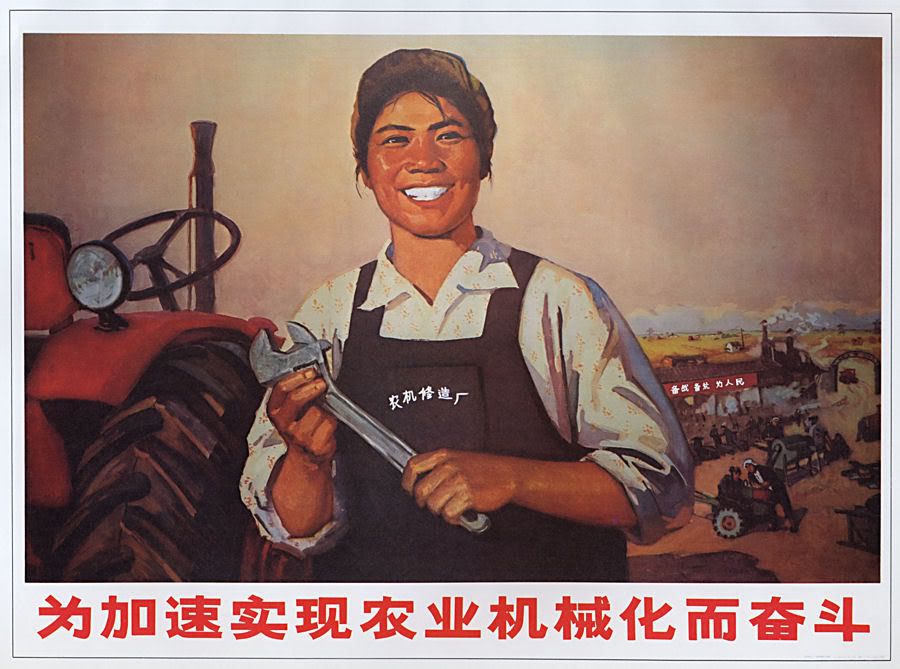
| Overturning a brash UK Government decision? Or abuse of process? Probably a mix of both. (Pic : via Ebay) |
When it was announced that the EnglandandWales Agricultural Wages Board (AWB) – which sets pay for around 13,000 agricultural workers in Wales – was to be wound up, the then (titled) Deputy Minister for Rural Affairs, Alun Davies (Lab, Blaenau Gwent), said in a written statement he would negotiate with his UK counterpart (DEFRA), asking for Wales to be excluded from the legislation disbanding it.
Clearly there's been some breakdown there, or – with weeks to go until the summer recess – he realised something needed to be done immediately.
The AWB was wound up by the UK Government on June 25th , and the orders regulating the AWB (and subsequently, agricultural workers' pay) will be revoked from October 1st this year.
The Welsh Government were, by their own account, left with three options : 1. Do nothing and leave agricultural workers with less protection than before, 2. Introduce legislation to effectively replace the AWB, or 3. Create an advisory system that wouldn't have the weight of the law behind it.
They've plumped for option two.
What are the Bill's aims?
The Bill itself is here (pdf), explanatory memorandum here (pdf).
- The Bill establishes a new Agricultural Advisory Panel for Wales, "preserving the terms and conditions" of the AWB, with a "flexible remit".
- The Panel will be responsible for promoting agricultural careers, advising the Welsh Government on farming matters and agricultural pay.
- It gives the Welsh Government direct powers to pass orders setting agricultural pay, terms and conditions.
- The Bill makes it an offence to deny agricultural workers holidays as specified in an order, meaning employers will be liable to a fine of up to £1,000.
The
explanatory memorandum says this isn't a replication of the AWB, and
they're expanding its remit – similarly to the Education Workforce
Council in the Education Bill.
Is this within the Assembly's powers?
The Llywydd says she believes the Bill falls within the Assembly's competence, but I still think it's unclear.
There are lots of references in the Bill to minimum wage laws, working time directives and terms and conditions. Toby Mason wondered whether this Bill – because this deals with employment law as much as the agricultural sector – will end up in the Supreme Court.
Schedule 7 of the Government of Wales Act 2006 clearly states that large aspects of agriculture and animal health are devolved, with the exception of things like animal testing, hunting with dogs and movement of animals and pesticides etc.
There's no specific exemption relating to agricultural workers' pay and working conditions, but the Bill's legitimacy depends on whether that falls under the definition "employment law" - which isn't devolved.
Also, under the Public Bodies Act 2011, the Welsh Government has to be consulted on any changes to public bodies working within a devolved area. However, under Schedule 1 of the Public Bodies Act, it clearly states that the UK Government has the power to specifically abolish the AWB, but also - interestingly - the power to transfer the functions of a public body to Welsh Ministers, giving the Welsh Government legal control over the AWB and its remit.
I'm not sure if that legal transfer of functions has happened. If it hasn't, then I think this Bill stands a chance of ending up in the Supreme Court, as it could be seen as unconstitutional.
I'll be more than happy for someone to clear this up.
An unprecedented step
According
to the Assembly Research Service (pdf), Ministers - under the Assembly's
standing orders - have the power to introduce "emergency
legislation" by asking for a motion that the Bill be treated as
an Emergency Bill. In this case, that was approved on July 2nd
thanks to Plaid Cymru abstentions.
Emergency Bills are usually only used to react to emergencies, major mistakes in legislation or to respond to events like court judgements (to close dangerous loopholes). For what this deals with, you've got to say that this seems an extreme step.
It waives several requirements, including a full explanatory memorandum (though one was graciously provided), changes to how and when amendments can be made by AMs, scrutiny by committee (instead its done by the whole Assembly) and it speeds up the legislative process significantly. The Assembly will only have two debates on this Bill before the final vote. The first debate was yesterday.
Considering that, on average, it takes around six months for a Bill to pass from introduction to becoming an Act, trying to do all that in the space of three weeks is extraordinary.
However, as long as AMs are on the ball, and their heads are firmly in the Siambr and not on a beach somewhere, I don't think there'll be too many problems. They should be able to cope with it, and I suspect the Bill will pass unimpeded.
Vaughan Roderick and William Powell AM (Lib Dem, Mid & West Wales) also questioned whether this constitutes an abuse of process, as Labour currently have a majority of one until the Ynys Môn by-election.
It comes across as though the Welsh Government have been caught with their trousers down - using the "emergency" banner to save face - and preventing effective critique of the legislation. But I don't think that was their intention from the start, it just came about that way. Maybe they're secretly hoping for a bit of fisticuffs with Westminster too, because....
Is this a Welsh Government Bill?
As you'll probably know, there's been a focus on Labour's relationship with the Unite union recently due to some shenanigans surrounding the Falkirk by-election.
What's makes this AWB situation interesting are snippets from Unite's political report, which was leaked by Guido Fawkes and linked by BBC Wales' David Cornock last week. On page 9 :
Is this within the Assembly's powers?
The Llywydd says she believes the Bill falls within the Assembly's competence, but I still think it's unclear.
There are lots of references in the Bill to minimum wage laws, working time directives and terms and conditions. Toby Mason wondered whether this Bill – because this deals with employment law as much as the agricultural sector – will end up in the Supreme Court.
Schedule 7 of the Government of Wales Act 2006 clearly states that large aspects of agriculture and animal health are devolved, with the exception of things like animal testing, hunting with dogs and movement of animals and pesticides etc.
There's no specific exemption relating to agricultural workers' pay and working conditions, but the Bill's legitimacy depends on whether that falls under the definition "employment law" - which isn't devolved.
Also, under the Public Bodies Act 2011, the Welsh Government has to be consulted on any changes to public bodies working within a devolved area. However, under Schedule 1 of the Public Bodies Act, it clearly states that the UK Government has the power to specifically abolish the AWB, but also - interestingly - the power to transfer the functions of a public body to Welsh Ministers, giving the Welsh Government legal control over the AWB and its remit.
I'm not sure if that legal transfer of functions has happened. If it hasn't, then I think this Bill stands a chance of ending up in the Supreme Court, as it could be seen as unconstitutional.
I'll be more than happy for someone to clear this up.
An unprecedented step
 |
| Emergency legislation has been used elsewhere - including the Scottish Parliament. It's just a question of whether this constitutes an "emergency" or not. (Pic : BBC Scotland) |
Emergency Bills are usually only used to react to emergencies, major mistakes in legislation or to respond to events like court judgements (to close dangerous loopholes). For what this deals with, you've got to say that this seems an extreme step.
It waives several requirements, including a full explanatory memorandum (though one was graciously provided), changes to how and when amendments can be made by AMs, scrutiny by committee (instead its done by the whole Assembly) and it speeds up the legislative process significantly. The Assembly will only have two debates on this Bill before the final vote. The first debate was yesterday.
Considering that, on average, it takes around six months for a Bill to pass from introduction to becoming an Act, trying to do all that in the space of three weeks is extraordinary.
However, as long as AMs are on the ball, and their heads are firmly in the Siambr and not on a beach somewhere, I don't think there'll be too many problems. They should be able to cope with it, and I suspect the Bill will pass unimpeded.
Vaughan Roderick and William Powell AM (Lib Dem, Mid & West Wales) also questioned whether this constitutes an abuse of process, as Labour currently have a majority of one until the Ynys Môn by-election.
It comes across as though the Welsh Government have been caught with their trousers down - using the "emergency" banner to save face - and preventing effective critique of the legislation. But I don't think that was their intention from the start, it just came about that way. Maybe they're secretly hoping for a bit of fisticuffs with Westminster too, because....
Is this a Welsh Government Bill?
As you'll probably know, there's been a focus on Labour's relationship with the Unite union recently due to some shenanigans surrounding the Falkirk by-election.
What's makes this AWB situation interesting are snippets from Unite's political report, which was leaked by Guido Fawkes and linked by BBC Wales' David Cornock last week. On page 9 :
The fight to save the AWB – despite the sterling efforts of the sector and a great deal of political support from Labour MPs and Peers the Government forced through their amendment to the Enterprise and Regulatory Reform Bill to push through the abolition of the Agricultural Wages Board. Working with the sector we will continue to raise this issue and will seek to influence Labour Party policy to commit to reversing this abolition.
Then, on page 14, right at the very end :
As with Scotland, Unite involvement and indeed leadership in Welsh politics is very notable. Not only do we have relationships with with the Welsh Assembly and its members, and with the First Minister which would serve as a very satisfactory model for Westminster, but we achieve very significant results, whether on issues such as blacklisting, support for public sector workers and strikes or broader social issues. Welsh government and relations between rade (sic) unions and party are what we would hope for and expect with a social democratic party – in no small measure due to the leadership of Unite and its Regional Committee in Wales.
I might be putting 2+2 together and coming up with 5, but "significant results"? Like emergency legislation to replace the AWB, you mean? Is this the Welsh Government's Bill, or Unite's?
Also, is it good for us that our First Minister and AMs are seen as loyal puppies?
Now, they have a point on the AWB. Unite represent some agricultural sector workers and the NFU have been pressing for it too. So I don't think in this particular case it's too much of a problem. Labour were in part founded by trade unions, so their influence shouldn't come as a shock.
It's as unsavoury as donor antics affecting other parties too, though trying to defend themselves off the basis of that is a little bit "tu quoque".
Despite that, we shouldn't underestimate the wider implications of vested outside interests theoretically exerting their influence to set the Welsh Government on a collision course with Westminster. A matter that could also be seen as an abuse of process, and a row that risks ending up in the Supreme Court.
It brings into question the relationship between Welsh politicians and trade unions – even if the closeness was an open secret (Welsh Labour and Unite share the same HQ building, while Plaid have long tried to court them with little success) - and even the credibility of the Welsh Government's leadership and decision-making.
Welsh Labour always gave the impression of being Fabian-minded, but clearly they're more Cretaceous than that. If Ed Miliband follows through with his proposed remodelling of Labour's union links, it'll probably put Labour's Welsh branch in an uncomfortable position.
In my personal opinion, trade unions, business/capital and political institutions/parties should keep each other at arm's length for the sake of balance - as in Germany and the Netherlands, for example. The government should act as a steadying hand, preventing things swinging in favour of one or two groups. It doesn't help to have a government seen to favour one over another.
If I don't want the country to be run by big business, I certainly don't want it run by the trade unions either. To prevent that, you need a government with a backbone. It's dangerous if all we're seen to have in Cardiff – exemplified by Unite's own hubris – is a collection of invertebrates.