This site is no longer updated

Please use the links in the sidebar to visit the new sites!

Showing posts with label Denbigh. Show all posts

Thursday, 29 September 2016

AMs press for "decisive action" on Bovine TB

(Pic : The Guardian)
The issue of precisely how to deal with Bovine tuberculosis is one of the longest-running sagas in post-devolution Wales, and something that has become a serious threat to the livelihoods of dairy and beef farmers, even if they're compensated for the loss of livestock.

Thursday, 26 November 2015

Returning Your Deposits

(Pic : buzzfeed.com)


Yesterday, the Conservatives held a debate on something that blights all communities, and likely to be a perennial issue on the doorstep : littering, fly-tipping, graffiti and dog shit.

Monday, 22 June 2015

Should the military recruit in Welsh schools?

(Pic : The Telegraph)
Last Friday, the National Assembly's Petitions Committee published a report (pdf) on a petition submitted by Cymdeithas y Cymod, which gathered a total of 1,074 signatures online and offline.

Wednesday, 17 June 2015

Back to the Future

"If my calculations are correct, when this baby hits 8 counties you're going to see some serious shit."

Today's post was originally going to be on the annual Programme of Government report, but due to a "dramatic" turn of events on local government reform I'll have to post it another time. There's a lot to get through.

Thursday, 4 June 2015

Tawel Fan : Betsi Cadwaladr's Shame

Little Ward of Horrors.
(Pic : BBC Wales)

Just so you've been warned, the following makes for depressing reading.

Within the last week, a catalogue of serious care failings were revealed in a damning report into the Tawel Fan mental health ward at Denbighshire's Glan Clwyd Hospital, which specialised in "care" for elderly patients with dementia. The ward closed in December 2013 as soon as the seriousness of the allegations became clear, and there are echos with what happened at the Princess of Wales and Neath Port Talbot Hospitals (Abertawe Bro Morgannwg : Trusted to Care?).

Tuesday, 12 May 2015

Westminster 2015 : The Post-Mortem

Why are we looking at five more Tory years when we could've had this?
(Pic : Wales Online)

In one final visit to the 2015 House of Commons election, it's worth looking in more detail at last Thursday's results in Wales - considering why it happened and what can be learned from it.

Friday, 8 May 2015

Westminster 2015 : The Results

(Pic : Reuters via The Guardian)

First thing's first - I can rip my crap predictions up. Predicting is a mug's game as the polling companies are finding out to their cost. As has been said elsewhere, it's the most surprising result in a UK election since 1992, even 1945.

Sunday, 14 September 2014

And then there were four?


Implementing the Williams Commission local government reforms will be one of the stories dominating the rest of the Fourth Assembly, and will play a big role in determining if the Welsh Government have truly delivered this term.

Back in June, the former Local Government Minister, Lesley Griffiths (Lab, Wrexham), said that the proposed reforms "had to deliver profound change". The First Minister himself has spoken quite strongly in favour of mergers (down to between 10 and 12 councils from the current 22) as soon as practically possible.

It's clear though that with a few exceptions – like Denbighsire and Conwy, which are actively exploring a voluntary merger – the proposals have received a frosty reception from the Welsh local government sector. Clearly one of the major concerns are the proposed upfront costs of the reforms; the Williams Commission put the figure at £100million (saving £60-80million per year afterwards), local government put it at £200million with a potential 15,000 job losses.

The Welsh Local Government Association (WLGA) – the body that represents local authorities – recently upped the ante by producing their own discussion paper (pdf) and alternative plan.

What are the WLGA's concerns?

Firstly, that there's no political consensus on the way forward in the Assembly, and with up to £877million in savings needing to be found in total by 2018, an £80million per year saving is described as being "academic".

Secondly, they're worried there'll be a disconnect between the local and the regional. Some of the proposed new local authorities may be too large to provide smaller communities with a "connection" but too small to provide scale.

The Williams Commission weren't convinced by collaboration between local authorities. However, WLGA present evidence submitted by former adviser to Rhodri Morgan, Paul Griffiths, suggesting that it works for some local services (social care, school improvement), and that the threat of "collaborate or merge" has created a presumption in local government that mergers are inevitable, so collaboration was never properly explored.

The English Example

The WLGA cite the example of the Greater Manchester Authority (GMCA). It's a collaborative regional authority made up of ten metropolitan borough councils. Each member authority sends one member to the GMCA, contributes towards its running costs and the GMCA takes responsibility and control of the Greater Manchester Integrated Transport Authority, as well as specific powers over things like economic development.

In Wales, we're attempting something similar through city regions. However, our city regions are essentially grand committees with no real teeth.

In England, the UK Government have proposed devolving "serious powers" over economic development, strategic planning, business rates collection, housing and training to the major cities and groups of counties. Both UK Labour and Conservatives are talking this up as a model of English devolution.

What do the WLGA propose for Wales?
A presumptive map of what the WLGA propose.
(Click to enlarge)
The WLGA propose the creation of four collaborative regional bodies :
  • North Wales
  • Mid & Central Wales (sic)
  • South West Wales
  • South East Wales

The map is presumptive and the WLGA don't specifically state which local authorities would be placed where. It's based off the collaborative boards the WLGA proposed back in 2005 and also pretty much falls in line with the regional transport consortia.

The WLGA propose that the regional bodies take responsibility for :
  • Transport planning and delivery
  • Strategic land use planning
  • Economic development
  • Regional tourism promotion
  • School improvement
  • Commissioning of health and social care services
  • Waste processing and management
  • IT services, payroll, pensions and back office/HR functions

They also propose that - supported by comments made by Prof. Gerald Holtham - taxes like stamp duty and landfill tax be "devolved" to these regional bodies.

They believe this would offer greater financial security for these services, a more strategic approach to service delivery and greater scale. The WLGA do, however, accept that redundancies would be inevitable but no figures are given. No figures for the set up costs are given either.

New primary legislation might be required from the National Assembly to make this happen. Or, the appropriate Welsh Minister might be able to make use of current executive powers to push the proposal through. In both cases it would likely require full Assembly approval.

When you get to the bits about how these regional would be governed, things begin to fall apart.

Based on the examples they give from England, the membership won't be elected, but appointed by the constituent local authorities. Some regional bodies in England include non-elected members, some have a "rotation" of appointed members, some have a membership that reflects the political make-up of the respective local authorities. So it'll be another board and committee for our wonderful local councillors to join.

A real alternative?

They say a good compromise is one that dissatisfies everyone equally.
Are the Welsh Government going to listen to this, though?
(Pic : Click on Wales)
With the appointment of Leighton Andrews as the new minister with responsibility for local government, I don't see the Welsh Government changing tact. The mergers are going to be pushed through whether the WLGA like it or not.

I've said it previously, but I wouldn't be surprised if we ended up with a further compromise that leads to some local authorities remaining as-is - I don't think the 10-12 number is set in stone. Some mergers will clearly be easier to do than others, while some local authorities might have a different preferred merger partner than those outlined by the Williams Commission (Bridgend and Vale of Glamorgan; Swansea & Neath Port Talbot etc.).

Also, *AWOOGA*  THIS SOUNDS OH SO FAMILIAR!   *AWOOGA*  I'm only 18 months ahead of the curve here, but I'm just a blogger after all.

Of course, it's not identical to what I (and Lyn Thomas previously) have said. I envisaged regional government being a tier of government in itself – an unashamed return to two-tier local government.

This proposal is half-way there, makes a moderate amount of sense, and deserves to be considered and listened to. It might be too late though.

Tuesday, 15 July 2014

National Assembly stands up for safe standing

They took their bloody time getting to it – this was originally raised as far back as February 2013 (Could safe standing be coming to Wales?) - but last Wednesday, the National Assembly debated a  cross-party motion on "safe standing" at football stadiums.

The motion :

  • Noted the "overwhelming appetite" amongst supporters to re-introduce terracing.
  • Called upon the Welsh Government to work with sports bodies to promote safe standing areas at football grounds.
  • Called upon the UK Government to consider a safe standing pilot in Wales.
The debate followed a visit of the Football Supporters Federation (FSF) Safe Standing Roadshow to the Senedd back in June, where AMs were able to see a demonstration model in order to properly inform their views.

What is "safe standing"?

AMs were recently able to see close-up how "safe standing" works.
(Pic : Football Supporters Federation)

I went over this last time around, but it's worth briefly covering again.

Terracing was phased out within top-flight EnglishandWelsh football grounds following the 1989 Hillsborough Disaster and subsequent Taylor Report. Most terraced areas were either rebuilt or, as many clubs have done, entire grounds were replaced with all-seater stadiums – the Liberty Stadium replacing The Vetch, for example.

Because standing is popular, yet forbidden, "safe standing" is seen as a way to address common concerns relating to terracing like overcrowding and crushing, allowing a reintroduction within modern stadiums. It usually takes the form of "rail seats", where rows of seats are connected to waist-high rails then folded away during games to create two rows of terracing (as shown in the photo above).

It would make surges impossible because every standing supporter would be near a rail and every two rows of spectators would be divided. This would also enable the authorities to better control numbers coming and going, and whenever the stadium needs to be converted to an all-seater format (i.e. for European competitions or concerts), the seats are simply unlocked.

The Debate (link)

The all-seater Liberty Stadium hosts both football and rugby, but it's argued that
there's a contradiction in that top flight football is explicity banned from using terracing.
(Pic : Daily Mirror)

Ann Jones AM (Lab, Vale of Clwyd), started by highlighting how stadiums have changed down the years.  Ann said it was contradictory that terracing is banned at top-flight football grounds, yet remains at grounds that host other sports - like St Helen's new stadium, Langtree Park (image), which has terracing for 8,000 fans; or closer to home, Cardiff Arms Park and Parc y Scarlets. She said, "football fans want, and deserve, a choice when it comes to sitting or standing", with 92% of fans surveyed (not explained further) supporting the reintroduction of terracing, with stewards at football games facing, "a thankless task....of trying to persuade their club’s most passionate supporters to sit down". Ann believed the Football Association of Wales (FAW) had an opportunity, "to show the fans....that there is a real chance to pioneer a trial period of safe standing within the Welsh Premier League."

Suzy Davies AM (Con, South Wales West) said she was sceptical due to the impact of the Hillsborough disaster and didn't want to "support anything that would jeopardise football grounds becoming welcoming places for children, women, people with particular vulnerabilities or disabilities." Suzy's also – in the proper Wenglish – "only a dwt", raising an overlooked issue in this debate of indirect discrimination against short adults.

After seeing the roadshow demonstration, Suzy changed her mind, as it was "completely different from the death-trap terraces that I remember", while measures can be put in place for disabled supporters. She didn't support a "rush to safe standing", but concluded by saying that it should be allowed as part of planned stadium refurbishments.

Clubs like Cardiff City have had serious problems with hooliganism, and both Mike Hedges AM
and Suzy Davies AM argued that all-seater stadiums have diversified football crowds.
(Pic : news.yahoo.com)

Mike Hedges AM (Lab, Swansea East) played devil's advocate and was the only AM who spoke out against safe standing. He acknowledged that standing at football games was popular, saying it would "increase the capacity of football grounds without the need for any additional building work". However, he said safe standing was an "oxymoron", citing "the surge; the crush; overcrowding; hooliganism; and the charge" and going into detail as to the causes of these, reminising about crowd problems at an FA Cup tie between Swansea Town and Arsenal in 1968.

Leader of the Opposition, Andrew Davies AM (Con, South Wales Central) – one of the more vocal supporters of safe standing - pointed out that if Mike had been to the FSF demonstration he would realise his views were 30 years out of date.

Mike countered by saying that all-seater stands had provided a more mixed set of spectators and improved crowd management, concluding that reintroducing terracing would be "a serious and retrograde step".

Big German clubs like Borussia Dortmund make routine use of safe standing,
wheeling out seats when they compete in European competitions.
(Pic : schwatzgelb.de)

Plaid Cymru's sport spokesperson, Bethan Jenkins AM (Plaid, South Wales West), cited safe standing's widespread use in the German Bundesliga, using the example of (it's pronounced "Bor-oo-see-ya", Bethan) Borussia Dortmund's Signal Iduna Park, which has a terraced capacity of ~27,000. She noted that these standing areas can be quickly converted to seated areas to meet UEFA competition requirements too.

Bethan said clubs like Dortmund use CCTV and ticketing information to control crowds and pick out trouble-makers, and even if terracing has a "perceived correlation with hooliganism....improvement in technology, policing tactics and crowd behaviour need to be taken into account."

Bethan also raised the long-held belief amongst supporters that safe standing could lead to cheaper tickets as standing areas accommodate more fans. She said another possible benefit would be allowing, "those people who know that they will become more passionate than other people....to be in that area together" (aka "singing sections" and Ultras). She called for a "fact-based public debate" and "a realisation that time has moved on".

Aled Roberts AM (Lib Dem, North Wales) made the grave mistake of bringing up Mickey Thomas's 1992 fluke. That's unparliamentary behaviour if ever I saw it. Despite his own experiences of terrace troubles during a match between Wrexham and Crystal Palace in the 1970s, he said safe standing "is shown to work" and is being introduced to the Polish Ekstraklasa despite serious hooliganism problems there. Aled said (I don't know if it's true or not) the UK Government had blocked legislation on this - and it's a difference within the Coalition - calling on Welsh Conservatives to lobby Whitehall Tories to change their mind.

In his response, Culture Minister John Griffiths (Lab, Newport East) said that as a Newport County supporter he often stands himself, but "we have seen major improvements to spectator safety and comfort as a consequence of....legislation (Football Supporters Act 1989) being introduced" emphasising the lack of clarity on the issue despite safe standing being popular with supporters.

He said it isn't a "straightforward matter to resolve" but "safety is paramount". All in all John remained neutral, believing the "matter of a pilot of safe standing in Wales is for clubs, owners and supporters to consider."

If safe standing were permitted, would a redeveloped White Hart Lane
be the first ground equipped with it?
(Pic : premierleague.com)

Andrew Davies spoke well and at length on all the issues covered. He paid tribute to his researcher Vincent Bailey, who lives in hope that - as Spurs look on jealously from under the shadow cast by the Emirates Stadium - a redeveloped White Hart Lane could have safe standing areas.

It's very rare to hear The Arsenal mentioned in the Senedd chamber (three times during the debate in fact), and I can say that all Arsenal supporters have fond memories of White Hart Lane too. 71, 2004.

Mike Hedges then raised a valid question; whether any police forces, safety officers or licencing authorities support safe standing? Andrew said he hadn't "heard of any that have objected to it". He added that there was a strong case to hold a trial specifically in Wales because the Liberty Stadium and Cardiff City Stadium have medium-sized capacities, and it would therefore be easier to trial it here than a larger ground like Old Trafford.

Andrew wound up the debate by saying, "We see it (terracing) at rugby, we see it at horse racing tracks where fans are allowed to stand and enjoy their sport, and I fail to see why football fans should be treated differently."

The motion was approved by 26 votes to 1 with 20 abstentions (including, bizarrely, Mike Hedges).

The Issues Raised

Even the most well-supported Welsh Premier League clubs - like Rhyl and Bangor City - don't
attract the sorts of crowds necessary to determine if safe standing really would be safe.
(Pic : lilywhites.northwalesblogs.co.uk)
  • Trialling safe standing in the Welsh Premier League – No offense to Ann Jones and her beloved Rhyl FC, but crowds in the Welsh Premier League are often measured in the hundreds, not tens of thousands. The only crush threat is the queue to the burger van. It wouldn't be a fair test. This would have to be trialled at a professional club in the higher tiers of the English pyramid – ultimately that means Cardiff or Swansea.
  • Short adults and disabilities - Being only 5ft7 myself I know all too well what it's like to get stuck behind a human barn door at a football match, and it's not as if they make stilettos in my size. The logical solution to this would be to make terraces steeper so everyone – even the vertically disadvantaged – can see over the row in front. But that might be too expensive and cause safety concerns. It shouldn't affect disabled people as most clubs have designated disabled areas or wheelchair spaces which offer a clear view of the pitch. Supporters would still have a choice to remain in a seated area too.
  • Policing & Crowd Control – I don't think Mike Hedges' arguments on this hold much water, except his question on whether police would back a return of terracing. I'd bet they wouldn't, and if terracing were reintroduced, police forces might consider charging clubs more to police games, deploying extra resources which would be better used elsewhere.
  • Safety Certificates & Licensing - Some grounds - especially in built-up areas, like Arsenal's Emirates Stadium - have strict controls on the number of spectators allowed in due to the geography around the stadium or issues like transport. Even if a safe standing area held more spectators, the total number of supporters in the stadium could still be capped by safety certificates, making it a wasted effort if the goal of safe standing is to increase crowds. At the very least clubs that install large banks of safe standing would have to reapply for safety certificates.
  • Ticket Prices & Costs – As I said last time, I don't think it's a given that ticket prices would automatically come down. Maybe smaller clubs would charge less to get people through the gates, but top-tier clubs might see it as an "experience" to sell to fans and the laws of supply and demand come into effect. Low ticket prices at German clubs are as much a result of how those clubs are owned (many are supporter-owned, and ownership by a single individual is banned) not just through the use of safe standing areas.
So, in the end, the National Assembly formally backed the promotion of safe standing and a pilot in Wales - though neither Welsh or British governments are bound by it. Whether a pilot goes ahead or not will likely come down to lobbying by the Culture Minister (who seems to want to wait for a cue from clubs) or a similar call in Westminster. I'm sure the campaign to bring back safe standing will see this support as useful too.

All of the speakers made valid and interesting points – for and against – demonstrating an ability to disagree with each other without resorting to the hyperbole and answer dodging that plagues other Assembly sessions. I'm a fan of these topical member's debates and, in my opinion, they should be held more often and are of more use than the usual Wednesday afternoon opposition debates.

Neither the Welsh Government or National Assembly have had the best of times over the last fortnight. This debate showed - even if the legislative session draws to a close with a dark cloud hanging over it – that maybe, just maybe, there's hope yet.

Saturday, 6 July 2013

Wales in an emergency : Fit for purpose?

The Welsh Government have been criticised for its civil
emergency arrangements by the Wales Audit Office. Now, the
Assembly's committees have had their say.
(Pic : BBC)
Earlier this week, the Assembly's Public Accounts Committee published its report into civil emergency arrangements in Wales, prompted by a critical Wales Audit Office report into some aspects of those arrangements, and partly in the wake of serious flooding in Denbighshire last year.

The report (pdf) made 14 recommendations; broadly speaking :
  • The Welsh Government should consider seeking new legislative and statutory powers in relation to civil emergencies.
  • Better training, self-assessment and monitoring of performances of emergency responders.
  • Improve representation of voluntary bodies on emergency planning committees.
What is a "civil emergency"?

An "emergency" is defined in the Civil Contingencies Act 2004 as any event that threatens, damages or endangers property, the environment or life. That could include serious flooding, major accidents (like plane and train crashes) and even up to and including war and terrorism.

On the ground, emergencies are dealt with by Category One responders (the emergency services, local authorities, health boards and environmental agencies) and Category Two responders (utilities, transport and communications companies).

The government's role - Welsh and UK - is to oversee operations, helping to manage responses or provide resources, like the military.

The difference between a "civil" and a "national" emergency, is the latter usually involves a formal  state of emergency being declared by the UK Government that suspends certain state functions. It's only been used once, AFAIK, and that was during the 1970s fuel crisis. We probably came close to it during the 2000 fuel protests too.

What prompted the inquiry?

As said at the start, this committee inquiry was prompted by a critical Wales Audit Office (WAO) report into this matter from December 2012.

Executive Powers & Devolution

Civil contingencies are a non-devolved matter. However, the Welsh Government would generally be expected to provide leadership for major emergencies in Wales, co-ordinating their response – when appropriate – with the UK Government as part of an agreement between the two governments.

The executive powers are – surprise, surprise – muddied in relation to Wales, while the Scottish Executive have some powers for themselves in this area, perhaps because policing and criminal justice are devolved (so they would be better placed to deal with public disorder issues, for instance).

Category One responders - like the fire service - currently
have to deal with awkward command arrangements during
a civil emergency in Wales.
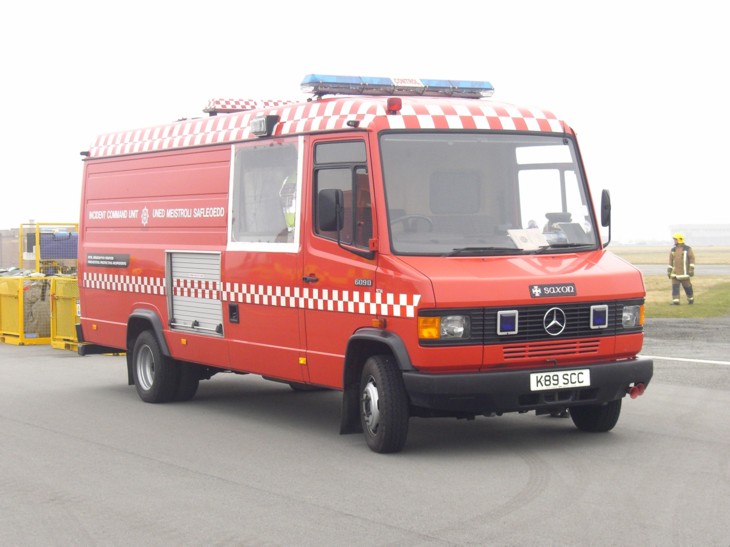
(Pic : Andrew Wright via fire-engine-photos.com)

This was just one major criticism picked up by the WAO, as it was unclear who was in charge, with the Welsh Government being able to support Category One responders, whilst not being responsible for managing or monitoring them.

On the ground, this meant that the different organisations would, "look to a range of government bodies for leadership" making the management of emergency responses unnecessarily complicated.

Of the many bodies giving evidence to the inquiry, it was generally expected that the Welsh Government should lead emergency responses within Wales.
The chair of the Wales Resilience Partnership, Sup.Int Claire Parmenter, said it would clear up matters. However, the WLGA said that they would oppose devolution of further executive powers due to increased administrative demands.

Implementation of the Civil Contingencies Act


The Civil Contingencies Act 2004 was brought in, mostly, because of the threat from terrorism in the wake of the 9/11 attacks. It updated emergency planning legislation, clearly set out who does what, and even led to a somewhat ill-fated public information campaign.

The Civil Contingencies Act 2004 updated older legislation
to meet modern emergency planning requirements
and new threats.
(Pic : West Yorkshire Fire Service)

You could say it contributed to public paranoia. In the main though, the powers have been used in relation to serious environmental emergencies like flooding, and were very effective in the response to the July 7th 2005 bombings in London. They clearly work.

The WAO found major failings in how Category One responders were implementing their Civil Contingencies Act duties, in particular inconsistent approaches by different bodies and a lack of monitoring of those obligations.

This matters because if emergency planning isn't done properly, when these situations do arise, it can lead to confusion if people don't know precisely who's giving the orders and on what basis, possibly putting lives or property in danger.

Regional Emergency Planning, Budgets & Training

The Welsh Government operate an emergency management fund to compensate local authorities for costs relating to emergency responses. Some emergencies exhaust these budgets rather quickly.

For example, the total cost of the 2011 Fforestfach tyre fire in Swansea was said to be £1.5million, with a grant of £1million from the Welsh Government, leaving a net cost to Swansea Council of £500k. Under the circumstances that would've been a big chunk of their emergency budget I would imagine. It's recommended that both local authorities and Welsh Government take relative exposure to certain risks into account when deciding their emergency budgets.

Emergency planning functions are said to be spread too thinly across too many organisations – a regular recurring theme in Welsh public policy – and should be restructured to a regional level.

*AWOOOOGA*  I'll just leave this here *AWOOOOGA*.

However, significant barriers would need to be overcome to enable that, and are still being investigated by the Welsh Government.

Emergency training exercises take place at UK level twice a year. There are also national-level training exercises in Wales, with few concerns about that training. In spite of that, it's said that Welsh responders aren't "taking full responsibility for assessing their performance" as set out by the UK Government. Could lazy assessment lead to lazy responses?

Social Media & Emergencies


Social media is said to have both positive and negative impacts. The obvious positives are that information can be sent out quickly by authorities. The negatives being that sometimes that information can be faulty, leading to rumours and mis-information being spread quickly too.


During the Gleision mine accident, it's said that information was sometimes spread faster than the emergency services dealt with issues on the ground – not exactly helpful.

The UK Government want to trial mobile alerts, which can be sent to a specific geographical area.

In north Wales, authorities are trying to map vulnerable people (i.e. elderly living on flood plains) so they know precisely who would need to be moved or sheltered during an emergency. I've mentioned something similar on flooding back in January, so I'm glad they've been thinking along the same lines.

Dull, but necessary


Yeah, not one of my most exciting blogs in a long list of not very exciting blogs, but
it's rare I can blog about defence issues in Wales without referring to independence.

One of the first duties of any government – devolved or not – is to protect the population. That's why  this inquiry and the WAO report were important.

Emergency planning is something that generally goes on behind the scenes, and we don't really notice it until it's needed. We've had several major incidents recently that have caused serious disruption or loss of life in Wales, including – as mentioned - serious flooding, M4 accidents, the Gleision mine accident and the measles epidemic.

Having skimmed through the report, I doubt there were major failings that could've put lives at risk, but obviously having a clearer understanding of who's in charge of what during an emergency would help enormously.

In terms of the civil response to emergencies themselves, like the report suggests, new ways of warning the public are essential if we want to prevent people putting themselves in harm's way in the first place. That also means all of us using things like Twitter responsibly to prevent rumours getting out of control, as well as treating government advice during emergencies with the utmost seriousness.

Wednesday, 10 April 2013

Vibrant & Viable Places - A new regeneration strategy

In the last month, the Welsh Government unveiled its latest
regeneration strategy, including more carefully targeted funding.
(Pic : BBC Wales)

A few days before the cabinet reshuffle, Communities and Tackling Poverty Minister, Huw Lewis (Lab, Merthyr Tydfil & Rhymney) laid a new Welsh Government regeneration strategy/framework/"thing" in front of the Senedd.

Entitled : Vibrant and Viable Places, it outlines the Welsh Government's new principles and approaches towards regeneration as a whole.

Recent Policy

The Welsh Government has/had seven key regeneration areas – including things like Communities First, EU programmes, Flying Start and Enterprise Zones - as well as more specific programmes like Newport Unlimited and the Valleys Regional Park initiative.

It's said that the benefits of this approach included more flexible funding, an ability to address specific local issues and use of partnerships in delivery across several different providers.

However, some of the drawbacks were said to be too rigid boundaries, a lack of clarity on the criteria for establishing regeneration areas, poor timing and co-ordination with regard funding and objectives which were far too broad, perhaps vague.

New policies that are being developed in relation to this include city regions for economic development, local growth zones (whatever the hell they are), a new round of European funding and Welsh Government legislation – including new planning, housing and sustainable development Bills.

How do the Welsh Government define "regeneration"?


“....an integrated set of activities that seek to reverse economic, social, environmental and physical decline to achieve lasting improvement, in areas where market forces will not do this alone without some support from government.”

Believe it or not, I think that's pretty much as clear a definition as you can get.

I just think the Welsh Government have failed to deliver on the "lasting improvement" aspect. While "integrated activities" gets bogged down in too many agencies and too many little schemes tied to overly ambitious targets.

For example, trying to contribute to the perfectly laudable goal of ending child poverty by 2020 by using European funds on projects like the well-meaning, but colossal failure, Genesis 2. That scheme provided plenty of "mentoring", "raising self-esteem" and "advisers" but very few jobs.

Under the new approach, the Welsh Government want to achieve three key outcomes :
  1. Prosperous Communities – More jobs, better transport, better internet access, private sector investment, successful town centres and coastal towns, sustainable development.
  2. Learning Communities – Improved skills, "higher aspirations" and "a belief in a better future."
  3. Healthier Communities – Safer, healthier, more environmentally pleasing. Better houses.

They're going to closely monitor outcomes here, including reductions in long-term unemployment, reductions in people experiencing poor health etc.

Who's going to do it?

The report acknowledges that private sector involvement is shaky at the moment, and "hard to achieve", but this was the first area they want to look at. They want to attract the private sector by bringing in "good quality development(s)" and providing things like business mentoring and joint working between public and private sector.

In a somewhat surprising move, it looks as though the third sector is being (quite rightly) brushed aside somewhat. Third sector bodies will only be involved at "the right level and at the right time". There's a special focus here on registered social landlords – which ties in with their focus on "coastal communities" – who can deliver capital projects and already have a relationship with their communities. I don't know why faith groups are outlined as "disadvantaged or excluded" though.

Most of the detailed focus though, is on the public sector. Local authorities are said to be the leading organisation here, as they generally lead regeneration efforts anyway. However, the report says that regeneration will have to be "seen in the context of wider regional economies" and "regional working." Collaboration, then. They do also say, somewhat paradoxically, that they want town and community councils more actively involved in regeneration decision-making though.

Using my recent posts on local government as a guide, this sort of thing would probably be done by single provincial assemblies and governments, not 6-7 unitary authorities working together putting councillors and appointees on various regional boards. Just saying/plugging.

The Welsh Government itself will be actively involved in areas such as housing - especially good quality, environmentally friendly housing. Huw Lewis outlined his white paper on this last year.

Heritage also gets a nod, by giving places a "sense of character" to generate a sense pride in their communities. I'm pleasantly surprised they put that in as it's often overlooked. But will there be a conflict between housing and heritage – especially if we end up carpeting over areas with new housing estates?

There's a full run down of other areas, like the economy, health, transport, and various plans and strategies in the report itself. It's too many to go into here. The report just lists anything remotely related to the three outcomes I listed earlier.

Funding & Targeted Funding


Regeneration funds will be targeted at coastal towns in particular,
however with an acknowledgement that there can be no
promise of a return to "former glories."
(Pic : BBC Wales)
This is probably the most significant part, and a somewhat radical, welcome departure from standard Welsh Government policy - targeting funds at specific areas of focus rather than broad brush strokes that can be atomised into piddling little schemes.

As for funding, there are several streams – EU convergence, Welsh Government themselves, Big Lottery Fund, local authority contributions and private sector investment. There are few specific numbers given, and the budgets vary anyway.

As for the targets:
  • Town centres – The losing battle to "save the high street". They acknowledge something different is needed, including better use of heritage assets and more residential development in town centres. They also want to make better use of town centres for business start ups, rather than established chains. That means improving things like broadband.
  • Coastal towns – I think they clearly mean Rhyl and Colwyn Bay in this, but as I've seen through Bridgend Council's attempts to regenerate Porthcawl, it's easier said than done. They want to "maximise unique selling points without holding out false hope of....recapturing....faded glories of the past."
  • Communities First clusters – Self-explanatory.

Existing regeneration commitments will be "top sliced", and local partnerships will now bid for regeneration funds - based on the three priority areas. They'll have to come up with better plans, and prove that the projects they're bidding for will have a tangible impact. That could be more jobs, retaining spending within Welsh supply chains and commitments to sustainable development.

I guess the responsibility for delivery now lies with Carl Sargeant (Lab, Alyn & Deeside), and he'll be assisted in this via a new Ministerial Advisory Group.

The Welsh Government will closely monitor these "outcomes", and it's expected that the new framework/strategy/"thing" will fully roll out by April 2014.


Some good, some bad


Regeneration's one of those areas that could be said to have been "hit and miss" since devolution rather than an outright good or poor.

There are some regeneration schemes you can point to as successes, or potential successes. The two obvious examples would be Bargoed's Big Idea and The Works in Ebbw Vale. It's unclear whether the likes of Neath town centre, Pontypridd and Swansea will head the same way.

Big flops could include the vast bulk of Communities First areas in general and you'll probably have to include the likes of Porthcawl too. Though they're not complete write offs yet.

The heart's there. The heart's always been there. But this is nothing we haven't heard before. I do think better targeted funding is long overdue, but should've been done in the first place.

I outlined some of the problems facing town centres in particular on my recent post on Bridgend. I think the Welsh Government do realise some of those issues, but don't seem overly keen to address the bigger problems. You can't entirely blame them as there's more risk attached to tackling those big issues head on.

Of the three key outcomes, it was "belief in a better future" that got to me. Of course we all want that, and things are never as bad as they appear to be.

I firmly believe many Welsh towns and communities have great untapped potential if they have the right kind of investment targeting the right sort of projects.

That will mean more than simply propping up "the high street" or putting down nice paving stones.

Thursday, 3 January 2013

Time to take flooding seriously?

Remember when there was talk of droughts last April?
(Pic : BBC Wales)
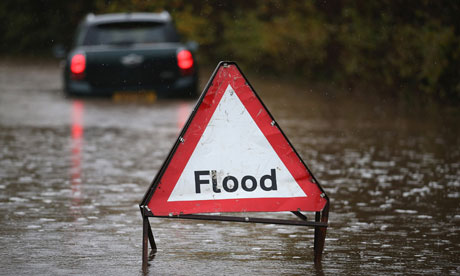
Wales has been battered by heavy rain and flooding over the last six months. I don't think there are any parts of the country that have escaped disruption over that period - Bridgend town itself looked perilously close to flooding just before Christmas. It's badly affected rail services, caused landslips and has damaged hundreds of homes and businesses.

The three stand-out flooding events have been Ceredigion and Powys in June 2012, Denbighshire in November 2012 and the aforementioned flooding last month, which affected south Wales particularly severely and still ongoing in some areas.

There's no such thing as "bad weather" really, just bad responses to it.

We're used to rain and some flooding as a residential hazard of living in Wales, but what were "once every 50 year events" are becoming "twice/thrice a decade" events. Climate change will inevitably be blamed - and I'm not going to debate the causes here. However, shifts in the North Atlantic jet stream – which has contributed to the rainfall - are (relatively) predictable, although those shifts are likely to happen more often with climate change.

The excess rain is likely to have been caused by shifts
in the North Atlantic jet stream. Is excess building on
flood plains making flooding worse than it
otherwise would be?
(Pic : BBC)

I think (perhaps many others too) the one reason flooding is becoming perceiveably more common is past and present building on flood plains.

As most flat, developable land in Wales is alongside rivers, you can't blame developers for eyeing it up. But building too many houses right next to rivers without providing extensive flood protection is negligent. It's also negligent to plan for/allow too many houses in these areas. It's probably negligent to move next to a river or stream never expecting it to flood, as is a failure to keep streams and brooks clear of debris.

Llyr Huws Gruffydd AM (Plaid, North Wales), recently called for the establishment of a Flood Action Forum for Wales. England has a National Flood Forum, while Scotland has Community Flood Action Groups. The organisation would be an advocate for flood victims, help promote flood prevention and help plan flood defences. I'm actually surprised Wales doesn't currently have one.

There are other, seedier, effects. Ann Jones AM (Lab, Vale of Clwyd) recently warned of doorstep loan sharks taking advantage of flood victims in Denbighshire. As to what I think of those sharks, insert strong epithet. Sounds like "runts".

The Welsh Government has flood action plans and strategies, and works with the Environment Agency and Dwr Cymru to plan flood defences out of its capital budget alongside water management.

The (Welsh) Environment Agency is due to merge with the Countryside Council for Wales and Forestry Commission to form Natural Resources Wales in April. I doubt that will affect the flood protection programme, but obviously merging three large bodies like that could cause administrative problems for the sheer scale of it.

It also doesn't help that the Welsh Government are cutting £30million in capital spending on flood defences over the next four years. That could blemish their – to date - decent record on the environment.

As all things, prevention is the best cure – stop building on flood plains, or at the very least, where flood plains need to be built on, provide extensive flood protection. That could become a statutory requirement as part of planning reforms, or form part of Section 106 agreements.

The Welsh Conservatives included the creation "Blue Belts" in their 2011 manifesto, maybe it's time for the Welsh Government to consider that in any sustainable development or planning bills. If any of these things make a development site "unviable", then developing such a site in the first place should be reconsidered.

By extensive flood protection I mean :
  • Concrete walls/flood barriers
  • Redirection of rivers and streams
  • Levees/Dykes/Embankments
  • Fines/prosecutions for not adequately maintaining watercourses


Are more extensive flood defences required in large
parts of Wales? Will they need to be funded by developers?
(Pic : South Wales Argus)
The last should apply to smaller streams as much as rivers. Recently, a blockage in a stream on Network Rail land flooded a block of flats in Brackla, Bridgend - providing an example of poor maintenance leading to flooding.

We also need to consider flood preparation and emergency planning. Concerns were recently raised by the Wales Audit Office about the Welsh Government's responses to civil emergencies.

Some of the criticisms seem a little unfair to be honest. I think the Welsh Government, emergency services and local authorities do a good job in emergencies. Most of the criticism stems from confused boundaries when it comes to responsibilities – so more administrative than practical.

I believe a major issue there is that flood warnings are never taken seriously enough by the media or the public.

Once an emergency becomes apparent, the media are quick to provide extensive coverage – especially local radio and via Twitter feeds etc. But in the period building up to an emergency, they seem reluctant to point out the seriousness of a situation, perhaps in fear of "crying wolf". People usually only take action when it's too late or when a situation becomes life-threatening.

Does the flood warning system in Wales
- and elsewhere - need another revamp?
(Pic : floodwarn.co.uk)

I've mentioned an "emergency alert system" before. I think warnings - not just for flooding but all sorts of severe weather (and perhaps missing children too - aka "Amber Alert") - are going to have to become more invasive. Yes, that means interrupting TV and radio programmes if necessary, perhaps even an expansion of text messaging services that the Environment Agency already provide.

This doesn't need to be Wales-only. It can't anyway as broadcasting isn't devolved. But maybe it's something the UK Government can re-visit. If the climate is going to get rougher over the coming decades, then the public need to be more aware – or at the very least treat a changing climate and severe weather as an immediate danger.

It should also mean greater use of the military (in particular Territorial Army units) in emergency preparations as and when required. It's supposed to be a "Ministry of Defence" after all. How can the UK spend £35billion on defence every year, yet not properly protect its own citizens from excess rainfall?

Thursday, 18 October 2012

Communities First - Past, Present & Future

Hat tip to Valleys Mam. Although everyone is no doubt focusing on AWEMA at the moment, I'll be looking at that next week.

What is Communities First?

The First Assembly decided concrete action needed
to be taken to tackle deprivation, but had to do so within
their limited powers.
(Pic : cpghr.com)
Every three years or so, an audit's carried out to determine how deprived council wards in Wales are compared to one another across several indicators, including : health, employment, access to services, education and housing - the Welsh Index of Multiple Deprivation. Similar surveys are carried out in the rest of the UK.

Communities First was established by Rhodri Morgan's government during the First Assembly between 2001-2002. It was set up to tackle deprivation in the 100 most deprived council wards in Wales, which has risen to around 150 today.


The overarching aim, was to provide a "bottom up" way for these communities to combat poverty, by allowing them to take strategic decisions at a local level themselves, using a set pot of money distributed by the Welsh Government.

Around £300million has been spent by successive Welsh Governments, and roughly £40million annually, since Communities First was established. It remains one of the more memorable flagship policies of Welsh Labour since devolution.

The Assembly circa 2001-2002 was a different beast. This sort of thing was, largely, the extent of the Assembly's powers – they could only administrate and make slight changes. Considering that context, Communities First was quite ambitious.


In many respects, it's a little government's big idea.

However, you could argue that - while it's done some good things - it's an example of everything that's gone wrong in Welsh public policy since devolution.

How does it operate?


Communities First areas are designated by the Welsh Government and local authorities. Sometimes they encompass entire council wards, but more often that not, they'll consist of deprived parts within wards called Local Super Output Areas (LSOA's). These could be a rundown housing estate, a former mining village or a deprived area within a wealthy ward.

Communities First Partnerships oversee the scheme at community level. These are specialist community regeneration teams, who coordinate projects and provide a level of professionalism. They're supposed to anyway.

The Welsh Government oversees a Communities First Trust Fund, which provides grants and loans to the Communities First Partnerships for projects in their areas.

For example, the funds could be use for : local litter clean-ups, equipment, environmental schemes, sports schemes, food co-ops, job matching schemes or to fund other unrelated community groups. Locals would come up with an idea, or an issue, and the Communities First Partnership would bring the right people and organisations together, source the funding, and make something happen.

A
s deprived areas gain a greater sense of control over their own communities, they might take more pride in themsevles and community. They might find a job, seek out help they need, or re-skill – knowing they'll get Communities First support and minimal interference from Welsh and local governments, neither of which they might necessarily trust.
Positives & Negatives
One big plus from Communities First has been improvements
to the physical environment of some communities.
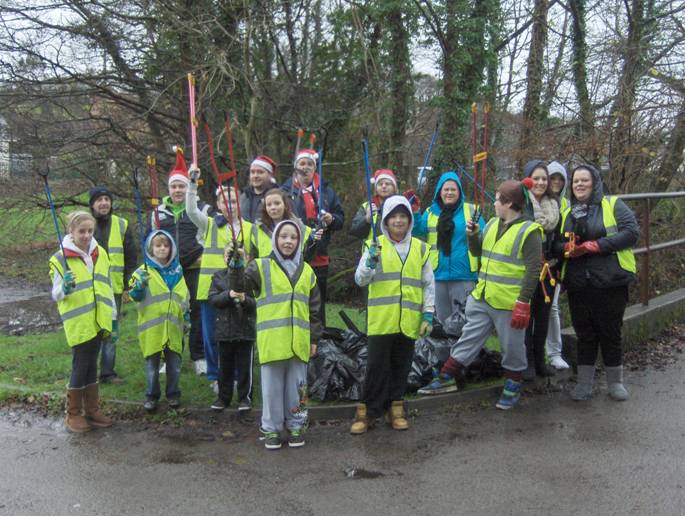
(Pic : Communities First Llangeinor)

Most of this is based on anecdotal evidence, but I believe most of it would stand up under closer scrutiny.

Positives
  • It's made a noticeable difference – I live next to a Communities First area in one ward, and there's also a Communities First area within my own council ward. The physical changes in ten years are, in some cases, quite remarkable.
  • It's given some pride back – Some of the people in these communities who worked with Communities First Partnerships are now local or community councillors, or have run for office. I do think the scheme has given people a sense of ownership – if still reliant on the Welsh Government.
  • It's impacted crime – The area I live near to was once a very run down, drug-ridden estate with serious problems. It's still has problems, but thanks to things like Communities First, the residents stand up to criminals a lot more now. Things like drug offences and anti-social behaviour are treated more seriously, and a level of trust has built up between residents and the police/authorities that wasn't there before.
  • It's improved the environment at community level – This has been one of the big plus points, in particular work with the likes of Groundwork, Tidy Towns and Keep Wales Tidy.

Negatives
  • It's open to corruption/cronyism – There are well known cases at Plas Madoc (Wrexham) and now in the Cynon Valley too. That's not to say the whole thing should be judged by a few isolated cases, but personally, I think it's the tip of the iceberg. There seems to be very little oversight, and the Partnerships – if they wanted to – could become a cliquey law unto themselves.
  • It's "top down", just at a lower level – Communities First schemes are ultimately led by "missionaries", spreading the good word of the Welsh Government. They usually have small teams of administrators and coordinators. There's nothing inherently wrong with that, but I wonder how much money and effort has been spent administering the scheme instead of on outcomes?
  • It spreads funds thinly - £40million a year spread between 140-150 areas works out at roughly £260,000. Take away the costs of employing the staff mentioned above (for arguments sake, four people earning an average of £16,000 per year) and that falls to £196,000. It's not as clear cut as that, obviously. The Welsh Government are changing this (see further down), but I'm willing to bet most local authorities spend that on pavement repairs each year.
  • It hasn't tackled many of its core aims – Time to investigate that further....

The wider issue : Does it work?

Communities First was set up to work towards the "strategic outcomes":
  • Prosperous communities
  • Learning communities
  • Healthier communities

There are no definitions of what would constitute "success" here. If you go by raw deprivation figures (2005, 2008, 2011), the answer to the question has to be no.


The areas are, generally, as deprived now as they were when the scheme started. However, thing have improved in a few cases. Butetown was the most deprived council ward in Wales in 2005, it's now "fallen" to 68th (so it's still amongst the most deprived wards). Very few areas have come out of Communities First after ten years.

The same names crop up year after year at the top : Rhyl West & Rhyl South West (Denbighshire), St James (Caerphilly), Gurnos (Merthyr Tydfil), Riverside (Cardiff), Townhill (Swansea), Tylorstown & Penrhiwceiber (RCT), Pillgwenlly (Newport)....

In Bridgend, you have : Caerau, Sarn, Blackmill, Llangeinor, Bettws, Morfa (Wildmill Estate) and Cornelly – joined in 2008 by Brackla (Meadows Estate). Of these, only Blackmill and Llangeinor have made noticeable progress on the deprivation index.

Ten local authorities had more than half their LSOA's in the 50% most deprived areas of Wales in 2008. Four (RCT, NPT, Merthyr Tydfil and Blaenau Gwent) had more than 70%. This hasn't changed in 2011, and I'm willing to bet it hasn't changed much since 2005. In fact, probably due to the recession, the situation has worsened in some authorities.

Things like education attainment levels have improved - the numbers leaving school without qualifications have fallen. That's likely down to national initiatives, not Communities First.

Maybe ten years just isn't enough time, or maybe the Welsh Government's flagship anti-poverty scheme just isn't working. The Assembly's Public Accounts Committee found in February 2010, that Communities First "wasn't providing value for money", criticised the lack of leadership from the top (which it wasn't supposed to do anyway, in fairness) and the lack of progress indicators.

Like many measures to tackle Wales' big issues, Communities First looks like another well-meaning initiative, that promises a lot, but perhaps wasn't set up the right way to do its job. Another tinker measure, from a government of tinkerers.

What's Communities First's future?

The Plas Madoc scandal in Wrexham has been symptomatic of some
of the problems relating to Communities First, which the Welsh Government
now hopes to tackle.
(Pic : BBC Wales)

The Welsh Government undertook a review of the scheme between 2011-2012.
Communities First areas will be clustered, so they cover larger areas and larger populations (up to 15,000), creating economies of scale. The idea is that management structures will be simplified, there'll be stricter guidelines to receive funding from the Welsh Government ( i.e.better delivery plans, guaranteed positive outcomes) and they're going to take other factors other than the deprivation index into account (i.e. school & hospital performance, rural sparsity).

I think the Welsh Government have realised, perhaps pushed by the Plas Madoc scandal, that Communities First couldn't continue as it was. I wouldn't be surprised if the scheme is re-branded post-2015, or leadership handed over to local authorities. Labour are unlikely to admit defeat on this, opening them up to claims that they've wasted up to £300million of public money, which would be harsh - they tried at least - but accurate.

I think there's a quiet acceptance that it hasn't worked out as planned. The new proposals will reduce administration and promote more "joined up thinking" between Welsh Government, local government and various public bodies. I'm not sure that would make that much of a difference.

The only other proposal to match Communities First's aims, so far, has been Leanne Wood's Greenprint. On paper, they sound similar.

The difference between Communities First and the Greenprint, in my opinion, is that Leanne has been specific in the Greenprint's goals (communities benefiting from the green economy), and sees potential from a co-operative and perhaps an entrepreneurial perspective - not just an anti-poverty measure.

The Greenprint seems more "permanent and self-sustaining", while Communities First is always going to be reliant on Welsh and Local Government for funds, and "appointed experts" for leadership.

I think, if there's going to be a replacement for Communities First post-2015, the Welsh Government (whatever the colour), would do well to take some of those points on board.