This site is no longer updated

Please use the links in the sidebar to visit the new sites!

Showing posts with label 4White Papers. Show all posts

Monday, 16 November 2015

Groundhog Day : Auditing the Welsh Media


(Pic : BBC Wales)
Last week, the Institute of Welsh Affairs (IWA) published a thorough review of the state of the media in Wales....and it makes typically grim reading.

The IWA's online organ, Click on Wales, released drafts of the report's sections throughout October, but the full and final report is now available at around 150 pages long (pdf). It's an incredibly useful analysis, but not anything we haven't heard before.

The state, and decline, of the Welsh media has been discussed on and off for the best part of a decade – such discussions being even more important this year in the context of negotiations on the BBC's Charter renewal. This site's no exception :

As you would expect me to do, I'm going to summarise what the audit found. Overall, it's an incredibly useful analysis, but not anything we haven't heard before.

Television & Public Service Broadcasting (PSB)


  • Digital terrestrial television reach in Wales (97.8%) is marginally below the UK average (98.5%). Virgin Media's cable services only reach 23% of Wales and hasn't changed since 2004, this is well below the UK average of 44%.
  • Wales has the highest proportion of HD-ready televisions and take-up of HD services of the Home Nations (Wales = 76%; UK average = 73%).
  • Made in Cardiff – currently Wales' only local TV station – has a weekly reach of 196,000 viewers.
  • Overall viewing minutes have fallen consistently across the UK – particularly amongst children and the under-35s - but Welsh viewers spend longer watching PSB than any other part of the UK.
  • Over a third of viewers in Wales used "catch-up" services in 2014. BBC iPlayer, Sky, ITV Player and 4OD are the most popular services. Netflix has grown significantly in popularity since 2012. A majority of catch-up services are viewed on television, but increasingly on tablet computers too, while there's a decline in PC/desktop views.
  • BBC Wales, ITV Wales and S4C spent a combined £215.35million on PSB services in 2014-15, a decline of £19.25million (8.2%) on 2008.
  • Since 2008, there've been 545 fewer TV hours produced (all BBC and ITV; S4C saw an increase) and 1,187 fewer hours of radio programming since 2008.
  • BBC and ITV produced 17.5 hours of English language output per week in 2015, compared to 24.5 hours in 1990 – a 48% reduction. ITV Wales now only produces 5.5 hours, compared to 15.5 in 1990.
  • 63% of BBC's English language output was current affairs, news or politics. Just 2.8% was comedy, drama and the arts.
  • S4C's funding fell from £104.4million a year in 2010 to £85.7million in 2014-15 – a reduction of 18.4%. They spend, on average, about £31,000 per hour, though drama productions can cost up to £140,000 per hour.
  • In 2014, 3.2% of PSB network production spend was in Wales, compared to a population share of 4.9%. 65.4% was spent in London and Southern England.
  • BBC Wales and independent producers provided £60.3million worth of UK network shows in 2014-15, primarily dramas.

Radio


  • Average listening hours per week in Wales fell from 24.4 hours in 2007 to 22.4 hours in 2014 – however weekly listening hours are the highest of the Home Nations. Radio also had a bigger reach at 94.5% of the adult population, compared to 89.4% across the UK.
  • Wales has the highest share of BBC Network listeners in the Home Nations at 49% of listeners.
  • Reach figures for BBC Radio Wales and Radio Cymru have shown steady declines, from 435k and 155k respectively in 2008-09 to 418k and 119k respectively in 2014-15.
  • Ownership of digital radios (DAB) is also highest in Wales amongst the Home Nations at 47% (UK = 43%). This brings Wales very close to the 50% threshold set by the UK Government whereby they would consider a digital radio switchover.
  • BBC Radio Wales and Radio Cymru spent a combined £20.6million on programming in 2014/15 and cost per hour was near enough the same for each (£1.5k-1.6k).
  • Commercial radio has the lowest listening share in Wales amongst the Home Nations at 39%, compared to the UK average of 43%. Wales also generated the lowest commercial radio revenues of the Home Nations at £14.9million.
  • Only three companies control commercial stations in Wales – Global Radio, UTV and Town & Country Broadcasting. Digital switchover may mean commercial stations are "released entirely" from their local obligations.

Internet & Broadband


  • 78% of premises in Wales have taken up broadband services, compared to 42% in 2006.
  • 79% of Welsh households have access to super fast broadband – more than Scotland (73%) and Northern Ireland (77%).
  • 3G mobile broadband outdoor services reach 97.9% of Welsh households. However, outdoor 4G services currently only reach 62.8%, compared to the UK average of 89.5%.

Press & Online Media


  • Welsh newspapers have seen massive declines in daily circulations since 2008, ranging from falls of more than 50% for the Western Mail, South Wales Argus and South Wales Echo to just a 6.3% fall for the south Wales version of Metro.
  • These numbers are, generally, in line with declines in newspaper sales elsewhere, with some UK papers suffering even steeper declines.
  • Online there's said to be a "more level playing field" between Trinity Mirror and BBC, with Wales Online and Daily Post websites being competitive with BBC Wales Online services in terms of unique browsers. Use of Wales Online has grown by 586% since 2006.
  • 59% of adults access BBC online services, and online services are significantly more popular amongst those aged 16-24.
  • 27% of people said Facebook was now their main source of local news.
  • BBC Wales spent a total of £2.541million on their online services (£399,000 was spent on Welsh language services/BBC Cymru Fyw).
  • S4C Clic viewing sessions had increased by 232% since 2013-14, with an additional 500,000 downloads of S4C mobile apps.
  • With Trinity Mirror agreeing a takeover of Local World, most of the major national, regional and local newspapers in Wales are owned by just two companies - Trinity Mirror and Newsquest.
  • The number of journalists in south Wales has fallen from over 700 in 1999 to 108 in 2013.
  • There are said to be 46 "hyperlocal" websites active in Wales, and research has suggested around half of hyperlocal site owners in the UK have had some form of journalistic training – though most were self-funded and only 13% generated more than £500 a month income.
  • £1.85million in grants were made available to Welsh language publications in 2013-14, compared to £748,000 for English language publications. 50 papurau bro receive grants of up to £1,900 a year from the Welsh Government.
  • S4C launched a £1million digital fund in 2012 to create interactive media and other apps.

Key Recommendations


  • The Welsh Government should establish an independent media panel to monitor media trends and commission studies, working with relevant academic departments.
  • Investment in BBC Wales' English language services should increase by £30million a year, ideally via an increase in the licence fee. This must include programming other than news and current affairs.
  • S4C's funding and editorial independence must be maintained to avoid slipping into a "cycle of decline". Collaboration between BBC and S4C should be maintained, however.
  • BBC 2 Wales and S4C should be broadcast in high-definition.
  • The effectiveness of DAB coverage should be assessed before any decision is taken on a digital radio switchover.
  • Radio regulation should be devolved to the Welsh Ofcom advisory commission.
  • The abandonment of local radio obligations should be reconsidered.
  • BBC Radio 1 and 2 should provide an opt-out news service for Wales.
  • The UK Government should support BBC establishing an interactive online service for Wales.
  • Responsibility for broadcasting should be shared between the UK Government and devolved administrations.
  • BBC Audience Councils should be replaced with National Broadcasting Trusts, which would help shape the delivery of a national service licence.
  • All PSB broadcasters should lay their annual reports in front of the National Assembly.
  • The Welsh Government and Ofcom should commission a joint study into the future of local media in Wales, embracing community radio, papurau bro, hyper-local news websites and local newspapers.
  • The Welsh Government should create a "challenge fund" administered by the Arts Council for Wales and Wales Books Council to help develop new local news services.


What the audit missed


Magazines - Including (ironically), the IWA's own Agenda, Planet as well as others like Cambria, Barn, Golwg and New Welsh Review. It does mention "publications", particularly with regard papurau bro, but there was little evidence provided on the impact of grant funding cuts on English language magazines or their long-term prospects.

Films & Music - The Welsh film production industry only gets passing mentions, along with music. You would've expected music to have been in there considering recent rows between Radio Cymru and Welsh language musicians. Although this certainly crosses into "the arts", it seems the definition of "media" has been set rather narrowly.

"Citizen Journalism"/The Blogosphere – It's admittedly a grey area, reportedly written off by Culture Minister Ken Skates (Lab, Clwyd South) as "opinion-driven" during the suit-and-sandwich conference because, as we all know, there's little political bias in the mainstream media.

There was a throwaway line about the number of blogs increasing but being "about lifestyle rather than news" - thanks a bunch. I can only speak for myself, and I might get 2% of the South Wales Evening Post's unique browsers on a good day; but I don't know whether being left out is an insult or compliment (sites like Carmarthenshire Planning certainly do count as hyperlocals).

It doesn't really matter because in the absence of public funding, political backing, advertising or publicity it's clear the blogosphere is (relatively) successful and performs a unique function. The Welsh blogosphere's still languishing in the shadows of Scotland's fifth estate; it would take me 20-30 years to match what Wings Over Scotland gets in site metrics in a single year. There's also a high turnover; Green Dragon being the latest political blog to leave the stage. I'm probably not going to be too far behind.

Gaming – The Welsh games industry has grown over the last few years from being practically non-existent to including some breakout companies. It's also one of the most popular mediums around, and as big as, if not bigger, than the film and television industries at present. I'm surprised the IWA and politicians haven't cottoned on to that yet. What do they think people, particularly those under the age of 35, are doing if they're not watching television, listening to the radio or reading newspapers? (See also : More than just a game).

A Warning on Funding


Time for some mathematical gymnastics to serve as a warning on how to interpret the funding figures in the report and how that fits from a "value for money" perspective. The easiest way to do that is to compare the ratio of amount of money spent versus the audience.

Based on the figures provided for BBC's English language web services, for every £1 they spend, they get 85.5 unique browsers. BBC Cymru Fyw gets 11.5 unique browsers for every £1 spent.

For every £1 I spend directly on Oggy Bloggy Ogwr - without a publicly-funded newsroom, television and radio network to back me up and whilst only posting a few times a week - I get 5,272 unique browsers.

Oggy Bloggy Ogwr is, therefore, 62 times greater value for money than BBC Wales Online and 458 times greater value for money than BBC Cymru Fyw. *Jazz hands*


Not bad for opinion-driven non-media. 

Technically speaking, if I put more money into this site its "value for money" would mathematically decrease because the audience is naturally limited and no amount of extra money would change that. Hence that's why complicated political and investigative stories tend to cost a lot of money and get poor returns for broadcasters and publishers, which leads to a downward spiral in coverage.

It also, theoretically, means the "true value" of non-current affairs, non-mainstream television (i.e children's), radio programmes as well as blogs and hyperlocals is likely to be significant in terms of what they bring to the table - perhaps more so than was reflected in the report and in general discussions on the Welsh media.

It's therefore not entirely a funding issue because it doesn't buy you viewers or readers. It's an audience issue and comes down to the quality of the product and how efficiently it's produced.

When you compare what Wales gets from our broadcasters and publishers compared to what the Republic of Ireland gets – utilising similar sums of money and with a similar set up - we're clearly doing something wrong here.


Conclusions


It's an incredibly useful analysis, but not anything we haven't heard before.

Individual AMs have made their own concerns known down the years, but it'll take the closure of one of the major Welsh newspapers – probably The Western Mail – or the subsuming of S4C into BBC Wales to actually force the Welsh Government into action. Calls for challenge funds and independent panels (yet another bloody committee) will fall on deaf ears as ministers can, justifiably, say it's not their problem as broadcasting is a non-devolved issue.

We can never, realistically, expect the UK Government to do anything constructive either; as long as UK-wide network shows continue to be watched or made in Wales, as far as they'll be concerned that's job done. A market failure – and that's essentially what this report implies very strongly – is just something that happens.

So it's worth saying again that it's an incredibly useful analysis, but not anything we haven't heard before.

Television and newspapers will remain important for the time being. However, the only rays of hope for the future, it seems, are online – even though Wales Online is close to becoming a parody of itself, and doesn't generate anything close to the same revenues as Media Wales' print productions – and community radio, which is holding up particularly well and isn't getting the attention it deserves in this debate.

I'm concerned there's too much hand-wringing over Wales being seen at the UK level in network shows when major broadcasters and newspaper publishers can't even harness a captive audience at a Welsh level. The success of Y Gwyll/Hinterland has happened by accident because melodramas about troubled detectives with names like Smegm
ä Smegmässon are in vogue at the moment (to saturation point). That won't last forever, neither will network shows like Casualty and Doctor Who.

Nobody has really explained what they want either. Do they really expect a Welsh political story affecting less than 5% of the UK's population to be given equal treatment to an English one affecting 85% on network news? News bulletins would end up three or four hours long.

There are only two reasons you'll see Wales on the front pages or in the main news bulletins: human tragedy and sport. The murders of April Jones and Tracey Woodford, as well as the Welsh national rugby and football teams, have probably got more coverage and column inches in the UK media than the Welsh Government and Assembly have in 10 years. A BBC network radio news opt-out - recommended in the report - or "Welsh Six" on TV might go some way towards addressing that.

As cynical as it sounds, maybe we just have to come to terms with the fact very little of interest happens in Wales. That's reflected in our politics, our economy and the small-c conservatism that forms the fabric of Welsh society. That's very well represented in our media – including this blog.

So to conclude, the report is an incredibly useful analysis, but not anything we haven't heard before.

Tuesday, 13 October 2015

A Comprehensive Review of Welsh Law-Making

We voted to give AMs law-making powers in 2011, so how has the process been handled since?
(Pic : National Assembly of Wales)

Making new laws is the National Assembly's most important function, though it's a role that – apart from a few high-profile cases like the Human Transplantation Act 2013 – draws little in the way of media coverage or scrutiny.

Wednesday, 17 June 2015

Back to the Future

"If my calculations are correct, when this baby hits 8 counties you're going to see some serious shit."

Today's post was originally going to be on the annual Programme of Government report, but due to a "dramatic" turn of events on local government reform I'll have to post it another time. There's a lot to get through.

Thursday, 11 June 2015

Tattoos, Bans & Bogs - The Public Health Bill

The Public Health Bill is a wide-ranging law, prompting controversy over
a proposed ban on the use of e-cigarettes in indoor public spaces.
(Pic : BBC Wales)
Earlier this week, the Health Minister, Mark Drakeford (Lab, Cardiff West), introduced what's likely to be one of the most controversial and substantial laws of the Fourth Assembly, instigating one of those rare occasions where Welsh politics has made UK-wide headlines - not necessarily in flattering terms either.

Monday, 9 March 2015

Mo' money, mo' problems

They asked the audience....then completely ignored them.
Last year, the Independent Remuneration Panel for the National Assembly proposed a change in AMs' and ministers' pay (The £64,000 Question).

Tuesday, 15 April 2014

Booze, Bans & Bogs

The Welsh Government have launched a consultation of their - slightly
controversial - Public Health Bill, which has led to accusations of "nanny stateism".
(Pic : chronicallive.co.uk)

About a fortnight ago, Health Minister, Mark Drakeford (Lab, Cardiff West), unveiled draft proposals for a flagship Public Health Bill, which has been put out for consultation until June 24th (more details here).

The Public Health Bill will be a key piece in the jigsaw surrounding another (slightly bizarre) law in the pipeline – the Future Generations Bill – which is supposed to address long-term, generational challenges like climate change, the economy, demography, the future of the Welsh language and long-term health problems.

The British Medical Association describe the proposed Bill as a potentially "seminal" piece of legislation.

I've done quite a bit over the last few months covering public health – most notably childhood obesity and drugs – so I'm not going to go into extensive details (heh).

The proposals include measures on obesity, registration of tattooists & cosmetic piercings and community pharmacies. Alongside these, there are three "headline policy proposals" that could make their way into the Bill : minimum pricing of alcohol, a ban on the use of electronic cigarettes (e-cigs) in enclosed public spaces and public toilet provision.

Booze : A minimum price for alcohol

A 50p minimum price per unit of alcohol is included in the draft proposals,
which could see the price of a standard bottle of whiskey set at £14.
(Pic : Daily Record)
This has been discussed in EnglandandWales and Scotland for some time, but finally has some concrete foundations under it.

As I covered last month, there are around 500 alcohol-related deaths each year (mostly men), contributing to liver disease, strokes, high blood pressure and depression. The total cost of alcohol-related disease in Wales is said to be somewhere between £70-85million per year, and there were more than 15,000 hospital admissions related to alcohol in 2011-12.

Although it's said the number of adults drinking to excess has decreased slightly, some 42% of adults report drinking above the daily recommended guidelines (3-4 units for men, 2-3 units for women) at least once a week.

Most of the powers over this are in the hands of the UK Government, and licensing alcohol is a non-devolved matter. The Welsh Government have requested licensing powers, but they've been consistently refused, though the devolution of those powers could be included as part of inter-governmental negotiations arising from Silk II.

The main measure the Welsh Government propose is to introduce a 50p per unit minimum price of alcohol. "Setting a floor" for alcohol prices means it can't be sold for anything less, restricting access to cheap, high-strength alcohol (White Lightning, Special Brew etc.). It's said a 70cl bottle of whiskey would sell for a minimum of £14 under this price arrangement.

The UK Government rejected a similar move to cover EnglandandWales because they weren't convinced it would reduce alcohol consumption, while minimum pricing at 50p per unit was introduced in Scotland in 2012 – though it's currently subject to a judicial appeal from alcohol producers.

The Welsh Government say "there is indisputable evidence that the price of alcohol affects consumption", with a particular affect amongst younger drinkers. They cite research from Sheffield University (pdf) which states a 50p per unit minimum price would reduce alcohol consumption by between 7-11%.

Bans : Use of e-cigs indoors

In a slightly controversial move, the Welsh Government are considering extending current
smoking bans to e-cigarettes. Is this the "nanny state"? Or is it prudent public health policy?
(Pic : The Independent)

I should probably declare an interest here as I know someone who runs an e-cig store.

This is perhaps the most controversial proposal, and certainly caused a stir, with accusations and counter-accusations about encroachment of the "nanny state" (related blog from Peter Black) and the dangers of "normalising smoking".


Without question, tobacco is the deadliest way to take drugs in Wales.
As covered last month (again), smoking-related diseases kill ~5,000 people in Wales each year, estimated to cost the Welsh NHS £302million, and a further economic impact of £90million in sickness and smoking breaks. The numbers starting smoking have shown consistent falls, however the number of Welsh adults who smoke remains static at around 23% of the population.

There's nothing Welsh Labour love more than a good ban, proving that not all left-wing parties are as progressive or liberal as they think they are - what I described last month as, "a social conservatism based around wanting to protect people from themselves". I'm certainly a "lefty", but I've come round to disliking this sort of paternalist collectivism as much as the rampant free market.

Recent tobacco restrictions include banning vending machines sales, banning smoking in enclosed spaces and bans on open tobacco displays at point of sale. They also support standardised packaging for tobacco products - which could be introduced across EnglandandWales at some point - as well as a ban on smoking in cars when children are present.

Proposals here include the creation of a register for tobacco retailers, and a ban on "proxy sales" of tobacco (adults buying fags for kids), making it a criminal offence. They are also asking for views on internet sales.

The headline proposal was, of course, a ban on the use of e-cigs in enclosed public spaces in the same way as the current ban on tobacco smoking. Around 14% of smokers use e-cigs. There are no current restrictions on sale, though the UK Government are going to introduce an 18 age limit in line with cigarettes.

The Welsh Government say health authorities are concerned that e-cigs are "normalising" smoking, acting as a gateway to full tobacco, risking "a new generation addicted to nicotine". They also believe e-cigs make it harder to enforce current smoking restrictions and/or make people think they can smoke when they really can't.

Current evidence points towards there being little to no harmful effects from e-cigarettes other than nicotine addiction – which is harmful in itself, but only one small factor in the harm caused by smoking.

Although they'll almost certainly have an affect on the lungs, e-cigs don't contain many of the harmful ingredients found in cigarettes (tar, formaldehyde, nitrogen oxide, carbon monoxide etc.) which causes chronic lung disease. The exhaled "smoke" is mostly steam, though it does contain traces of chemicals and nicotine - albeit to a much, much lesser extent than cigarette smoke. Until more thorough research is undertaken, it's hard to argue that e-cigs are harmful to anyone else other than the user.

E-cigs work the same way as a nicotine patch but used in a similar way to a normal fag, potentially - though not 100% conclusively (pdf, pdf, pdf) - making them powerful tools in getting people to stop smoking, and they're certainly more healthier than fags. The Bevan Foundation's Victoria Winckler (also discussed on Syniadau) argued that the primary goal in any public health policy on smoking should be to reduce the use of cigarettes, and e-cig restrictions would "only have a marginal effect".

I fear this is another case of policy-based evidence making. The consultation reads as though the Welsh Government and health authorities are fishing for evidence from the public in order to say e-cigs are bad. It'll probably take the form of the usual "argumentum ad filium".

There's nowhere near a strong-enough case to ban e-cigarettes in public places (yet).
Restrictions would perhaps be medically-sound as nicotine is one of the most addictive drugs, but it's scientific nonsense. Having said that, there is clear need for better regulation, and the British Medical Association have called for e-cigs to be regulated like medicines - which is what I called for in relation to all recreational drugs, so I'd agree with that.

If the Welsh Government are absolutely determined to do it, a ban should be provisional with a "sunset clause", and accompanied by high-level research into the relative risks and harm. If it's proven there's minimal risk to anyone else other than the user from e-cigs, any ban should be rescinded by the Assembly.

I don't mean to be scatological....well of course I do, and I doubt I'll be the first or last person to make this argument....but a paint-stripping, face-melting fart is probably more toxic than e-cig vapour.
Methane and hydrogen sulphide aren't things you should breathe in casually. Not wanting to put too fine a point on it, but I'm sure we've all been victims of "passive guffing" in an enclosed public space at some point.

I once experienced one, worthy of The Western Front, in a German class (ironically) during a rather hot summer's day. Portacabins aren't exactly renowned for their good air conditioning, so despite the best efforts to diffuse it, it hung like a mushroom cloud above everyone's heads, raining down sulphur. It was like the River Styx. As a result, all the boys were kept behind afterwards and lectured on etiquette. That just prolonged the misery, as everyone was desperately trying not to laugh and draw suspicion to themselves, enduring something that could only be described as drowning in ass.

I'd rather inhale puffs of strawberry laced with nicotine than be exposed to someone else's dietary issues.

Moving on....

Bogs : Access to public toilets

Public toilets are the forgotten son of public health, but are absolutely vital.
(Pic : BBC Wales)
You don't think about public toilets when you don't need them. You certainly think about them when you do!

Though, of course, men have an in-built anatomical privilege which turns any vertical surface into a urinal. Ahem. But that does public health or general hygiene no good at all.

It's not a particularly pleasant thing to think about, but provision of public toilets is – genuinely – no laughing matter; especially if you're elderly, have young children, have certain health conditions, or brought a catastrophe upon yourself by eating too many sugar-free sweets. It's one of the most overlooked and unappreciated areas of public health, and as a marginal expense, it's under attack due to local government austerity measures.

One of those much-maligned and overlooked short debates in the National Assembly could've played a role in the getting this measure on the table. Kirsty Williams AM (Lib Dem, Brecon & Radnor) held a short debate on the topic last November.

She explained that in rural areas in particular, public toilets are being eyed up for closure due to austerity, or – in Carmarthenshire's case (more from Carmarthenshire Planning) – being offloaded to community councils which have little in the way of resources. This would not only impact public health but also tourism.

One way the Welsh Government and local authorities have tried to address this is by encouraging local businesses – in particular pubs and restaurants – to open their toilets to the non-paying public through grants of up to £500. It's something that hasn't always happened, as it might be considered rude to use the facilities without paying in some way.

The white paper proposes that local authorities develop a strategy for public toilets, and consider the issue "in all aspects of planning". It could lead to clearer signage as to where they are, and planning conditions used to ensure more toilets are provided to the public.

Saturday, 5 October 2013

Newport's M4 coronary bypass

The public are now being consulted on options for
an M4 Newport bypass. Again.
(Pic : ITV Wales)

A public consultation on the proposed M4 relief road around Newport was launched by the Welsh Government in the last fortnight.

Woah!....Hang on a minute....I'm getting a strange....feeling....of
déjà vu.

Because of the M4's vital importance to the whole of south east Wales, the consultation appears to be open to everyone (not just Newport, Cardiff, Torfaen & Monmouthshire residents), and responses are due by 16th December 2013. You can find out more information, and the consultation documents, at this website.

A brief history

You all know why there's continued calls for a Newport bypass : accidents and congestion around the Brynglas tunnels and low speed limits due to the curvy nature of the M4 through Newport. Problems said to "clog the arteries of the south east Wales economy etc."

Initial plans for an M4 relief road were scrapped in 2009 due to concerns about costs. Some modifications and upgrades were made to roads around Newport instead, including a duel carriageway to the south of Llanwern steelworks which opened recently.

Then, the Welsh Government went back to the drawing board, and between 2011 and 2012 launched another consultation. This time, the emerging plan was for the current M4 to be widened, including the Brynglas tunnels themselves. However, Friends of the Earth Cymru described the process as "shambolic". Some aspects - in particular some data used to support the project - potentially left the Welsh Government open to a legal challenge. Those plans were quietly sidelined.

With borrowing powers on the table, and with Westminster keen to prove they're friends of Wales, we've finally come full circle to option one – an M4 Newport bypass. Costs don't seem to be concerning anyone this time, even though the question of how they're actually going to pay for it is, as yet, unanswered.

Will there be a toll? Will the toll gates move from the Severn bridges to the new M4 (more on that from Plaid Monmouth)? When will we know if the Welsh Government will even get borrowing powers?

Current cost estimates, AFAIK, are still around the £1billion range, with the South Wales Chamber of Commerce estimating a new M4 would boost the Welsh economy by £2.1billion.

The Options

The (latest) three options for the M4 Newport bypass
(taken from M4Newport website, click to enlarge)
The draft plans present three options (illustrated above) :
  • Black Route (the preferred option) – Leaves the M4 at Castleton, dips south of Duffryn and the Docks Way landfill site, crosses directly through Newport Docks/River Usk, south of Llanwern and Glan Llyn, rejoining the M4 at Magor.
  • Red Route – Leaves the M4 at Castleton, passes closest to Duffryn, north of the Docks Way landfill site, crosses Newport Docks/River Usk further north than the black route, then follows the same route to Magor.
  • Purple Route – As the red route, but crosses the River Usk further north and is a bit further away from Duffryn.

All three go through the Gwent Levels site(s) of special scientific interest.

There would also be several complimentary measures included alongside the bypass :
  • Improvements to traffic management on the current M4 (which would presumably become the M48 once any bypass is completed).
  • A new link road between the M48 and B4245 in Rogiet to serve a future Severn Tunnel Junction park & ride.
  • Unspecified improvements to cycling and pedestrian infrastructure.

What if the bypass isn't built?

This is described as a "do minimum" scenario. If the bypass is rejected, the Welsh Government believe it would result in; unspecified negative effects on the economy of south east Wales, longer journey times thus reducing the travel to work area, higher levels of noise and air pollution near to the existing M4 and a greater risk of accidents (mostly due to rear-end shunts in stop-start traffic).

It's worth pointing out that keeping things the way they are would have a negligible impact on current levels of greenhouse gas emissions, nor would it have any additional impact on either the wider Newport environment (except right next to the M4) or the Gwent Levels.

Why aren't alternatives included in the consultation?


If you have artery problems, a visit to the heart surgeon is to be avoided,
not put to the top of the list. You try the lifestyle changes first.
(Pic : livestrong.org)
I still maintain that a completely new M4 bypass is excessive (more for costs than the principle of a new road), so I'm inclined to oppose this. If I had to choose, I would've stuck with the "coronary stent option"  - the 2011-2012 plans to widen the existing M4 - or at very least remodel the M4 through Newport to discourage local traffic from using it (closing slip roads etc).

As Freshwater PR's Steve Howell pointed out in the Western Mail on Monday, you have the South Wales Metro and SEWTA's plans for the Gwent area, both of which have hardly got a look in within this consultation.

The report says 43% of journeys on the M4 around Newport are for less than 20 miles. If a public transport system was developed in and around Cardiff, Newport and Bristol that could beat the car in terms of journey times, then logically, enough traffic could be taken off the M4 during peak times to avoid needing an M4 bypass in the first place.

And you might be able to do that for a lot less than £1billion.

When you have a blocked coronary artery – as the Newport M4 is sometimes described as - you don't immediately rush to go under the knife for a operation that carries severe risks, you usually make an attempt at lifestyle changes first.

Even if you do go under the knife, if you don't change your lifestyle alongside it, a bypass doesn't last very long. Yes, lifestyle changes would be difficult but you would have to face up to it at some point.


Think of lorries and cars as lard pies; think of buses, trains, walking and bikes as salad.

Wednesday, 26 June 2013

Physical Literacy - Should PE become a core subject?

With obesity on the rise, is it time for PE to be at the
heart of school life in the same way as literacy and numeracy?
(Pic : The Telegraph)
On Monday, a Sports Wales Task & Finish Group - chaired by Baroness Tanni Grey-Thompson - reported back to the Welsh Government their proposals to increase levels of physical activity in schools.

I've covered the "obesity crisis" in Wales before, but the requirement for a review into school activity is laid out in very stark terms in the report (which you can read here) :
  • 36% of under-16s in Wales are overweight or obese (2010).
  • The percentage of 2-15 year olds who are obese rose from 16% in 2008 to 19% in 2010.
  • Just 28% of primary and 26% of secondary school pupils are said to be "regularly active".

There was a separate warning from the Assembly's Health Committee, whose latest report suggests diabetes is reaching "epidemic" proportions in Wales, and the Welsh Government are likely to miss targets for tackling the disease. Type II diabetes is linked to excess body weight.

So if nothing's done, in the long term it's going to lead to reduced healthy life expectancy and put immense strain on NHS resources. It's also likely to be the first thing in Leighton Andrews' successor's in-tray.

School PE – The current situation

PE is a compulsory part of the national curriculum for 3-16 year olds, but it's compulsory in the same way religious education, PSE and IT are – usually one or two teaching hours a week. There could be simple practical reasons why, like too few facilities for too many pupils.

The report cites research that suggests the vast majority (74%) of primary school pupils enjoy physical activity "a lot", with only 4% saying they don't enjoy it at all. That changes in secondary school, with only 50% enjoying it "a lot" and 14% not enjoying it at all. The report hints that PE lessons themselves might be putting pupils off regular exercise.

It's said that while professional athletes and big sporting events like the Olympics provide "inspiration" – and have led to "promising" increases in sports participation in Wales since – they don't provide enough of an inspiration for the "hardest to reach".

What does the report recommend?

PE lessons and teachers don't have the best of reputations.
But is their contribution to pupils' future wellbeing undervalued?
(Pic : Vest Virginia Surf Report)

There was one major headline recommendation – that PE should become a "core subject" in the national curriculum alongside English, maths and science (and Welsh first language in Welsh medium schools).

That would require a significant shift in mindset to make the subject more "valued". They want more teachers to take part in the Physical Education and School Sport (PESS) programme, which offers higher quality training, in order to develop "expert teachers".

Allied to this, there's a desire to create a framework for "physical literacy" in the curriculum – physical literacy defined roughly as, "having the motivation and confidence to become physically competent". It'll mean all teachers will have to show competence when it comes to PE in the same way they have to for literacy and numeracy.

It's estimated the cost of developing this would be around £5million.

I think that's sound. If you don't teach languages properly, you end up with illiterates. If you don't teach maths properly, you end up with innumerates. If you don't teach science properly, people get killed by plug sockets. If you don't teach PE properly, people will grow up to live unhealthy lifestyles.


What else could be done?

  • PE (in secondary schools) could be "streamed" – The more able are currently taught PE alongside those who aren't as good or confident. That's unfair to both groups. Separate the "elite", who could go down the road of more professional coaching, from those who need exercise for exercise's sake.
  • Doctor/Nurse exemptions only? - Pupils are actually going to have to participate in PE regularly in order for this to work, so exemptions from lessons could perhaps be a certificate signed by a GP or school nurse. However, certain biological cycles would make PE uncomfortable for girls and could complicate matters here. So maybe that could be treated with more tact and as a special case.
  • Change PE outfits – Schools shouldn't have a set "PE kit", and perhaps should let pupils choose what they wear when doing exercise. This could help girls and the overweight in particular for obvious reasons.
  • Better organised sport clubs & competitions out-of-school – That's a whole topic in itself, but if you want pupils to be healthy and active all year round, they'll have to be active outside of PE lessons as well. I've mentioned "umbrella clubs" before, with many different sports playing under one co-operative identity in a given area.
  • Make use of out-of-school facilities – This was hinted at in the report, and many schools already do this to a certain extent. If a school is close enough to a leisure centre, for example, but don't have the facilities on school sites, should they have time set aside to use them exclusively?
  • Be creative – PE shouldn't be all ball games, atheltics and gymnastics. The definition of PE could be expanded to include things like martial arts, outdoor activities like geocaching and cycling, mixed-sex sports like korfball, as well as dancing exercises and pool-based exercise. Schools could work in partnership with outside experts and sports bodies to develop these classes.

What are the other issues?

I think it's going to be very difficult to incorporate the Chief Medical Officer's recommendation of three hours of "vigorous physical activity" for every pupil per week into school timetables, especially in secondary schools. We're going to have to give serious consideration to extending the school day if that's the benchmark level of exercise the Welsh Government eventually want to adopt.

Does physical activity stop at the school gates?
(Pic : cycleshelters.uk.com)

Physical fitness doesn't just come down to exercise either. You could easily argue that nutrition should become a core subject for the same reasons as PE. We also have to encourage walking and cycling to school (and generally in life) and provide healthier meals in school canteens.

As well as increased physical activity, schools are going to have to offer more choice in terms of those activities, especially if they want to get to those "hard to reach" groups.

Even at my biggest I was strong for my size and had a decent throwing arm. But running for extended periods of time was painful, I'm not tall enough to be a useful rugby player, so-so at football and a poor swimmer. Maybe pupils should be pointed towards activities that take advantage of innate physical abilities and likes - with teachers trained to look for those strengths and guide pupils towards sports they might actually be good at.

So it's fair to say that I really enjoyed some sports and activities, and genuinely dreaded others, groaning whenever I saw PE on the timetable. Heavy rain during the summer so we would play handball or 5-a-side instead of doing cross country or athletics felt like a godsend. Did anyone else think like that?

PE is currently taught in a way that's a bit like going to subject called "art", having to play a musical instrument – regardless of talent - and getting ripped apart if you're not any good. That's silly, isn't it?

Do we need to be careful that the emphasis
on healthy lifestyles doesn't lead to
over-emphasis on a physical "ideal" ?
(Pic : thecurvynerd.com)

There's also the overarching issue of body image. Even if the underlying principle of more exercise is fine, you're going to have to be careful that the emphasis on "healthy bodies" doesn't lead to pupils developing a complex.
It needs to be made clear to everyone from an early age that we all come in different shapes and sizes, and that's fine, but you still need to live healthily.How would teachers be able to do that if on the one hand they're telling pupils they're fine the way they are, and on the other asking them – "Do you even lift?"

Bethan Jenkins AM (Plaid, South Wales West) has advocated self-esteem lessons in schools. I can understand why, but aren't body image issues indirectly a result of everyone else's attitudes and the media, not the self? Maybe teaching compassion would be better, if somewhat more difficult.


Saturday, 8 June 2013

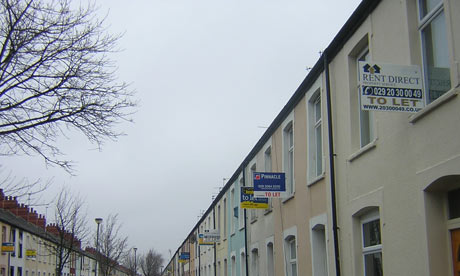
Renting Homes White Paper

Proposed legislation to make renting simpler and more
transparent are outlined in the latest housing white paper
from the Welsh Government.
(Pic : The Guardian)
Back in May, Housing and Regeneration Minister, Carl Sargeant (Lab, Alyn & Deeside), launched a white paper (pdf) on proposed housing legislation, this time to do with renting.

Previous Housing Minister Huw Lewis (Lab, Merthyr Tydfil & Rhymney) launched a separate, but related, white paper in 2012. This is the first in-depth consultation to stem from those proposals.

The need for change

The Law Commission published a report identifying several areas of the rental market that needed reform, which a multitude of organisations and people had asked for over the course of several years.

Many renters aren't satisfied with being owner-occupiers, and are said to have lower life satisfaction compared to home owners. As I'll point out in my next look at the census (probably next week), Wales is increasingly becoming a nation of renters. Around 30% of Welsh households live in rented accommodation.

Renting has advantages, like flexibility when it comes to moving (i.e for work on short notice) and some level of legal security. However, when it comes to social renting, many people see differences between renting from a local authority, from a private social landlord – like a housing association – or from a fully private landlord.

There are currently loads of different types of residential rental tenancies, many of which were created via Westminster legislation to respond to specific problems like anti-social behaviour (Family Intervention Tenancies, Demoted Tenancies etc.). Many tenants don't understand, or just "skim over", their rental contracts due to the confusion.

The Welsh Government can't offer any sort of tax incentives - like those used in Germany and Australia - to promote long-term renting because they don't have the powers. However, then can use the law to simplify arrangements for tenants, and encourage investment in rental properties by "not placing too many barriers".

What are the proposed changes?

The current system of seven types of residential rental contract will be simplified into two :
  • A "secure contract", similar to local authority secure tenancies. These are said to have much greater protection for tenants, secured in law. It'll also mean that social housing tenants in the private sector and local authorities will have the same type of contract.
  • A "standard contract", similar to short hold tenancies used in the private rental market. This is said to have a lower level of security, but landlords would have the option to create more secure, long-term tenancies if they wish.

What are the other benefits?
  • Tackling anti-social behaviour – Conduct clauses will be inserted, as standard, into rental contracts, with tenants made aware of their responsibilities. Breaching the terms could lead to a possession order being issued by the landlord, which could lead to eviction.
  • Tackling domestic abuse – The above clause would include domestic violence. There'll be clauses to evict the abuser, without the victim needing to terminate their tenancy (as currently). The Welsh Government are working on a related Domestic Violence Bill, which hasn't been introduced yet. More from me once it is.
  • Flexibility in joint tenancies – Instead of joint tenancies ending when one person leaves, the remaining tenant will be able to "give notice" to their landlord, enabling them to have enough time to find a replacement.
  • Rights for young renters – People aged 16 and 17 will be given the same power to rent as an 18 y.o. This could be useful for youngsters leaving care, for example.
  • Succession rights – Carers of a tenant who dies, and who've lived in the rented home for at least 12 months, will have succession rights to the tenancy.
  • No mandatory eviction for serious rent arrears (for housing association tenants) – This effectively removes "Ground 8" from the Housing Act 1988 as a grounds for eviction, granting housing association tenants the same rights as local authority tenants.
  • Abolish 6 month moratoriums on evictions – This might prove controversial, but it's said that most contracts are a minimum of 6-12 months anyway. It could make it easier for tenants to look for a short-term rent or to house the homeless.
  • Including landlord repair obligations in rental contracts – Self-explanatory. They'll be written into every rental contract, hopefully improving the quality of rental accommodation.

It might look heavily skewed in favour of tenants, but landlords stand to benefit too. The new arrangements will be simplified – reducing administration costs – and provide greater certainty with regard rental terms. There'll also be much better ways to deal with things like sudden abandonment of rented properties, which is said to be a big problem.

Implementing the changes

The Welsh Government intend to introduce a Renting Homes Bill in 2015, becoming law in 2016, so this process still has some way to go. Consultation on the white paper closes on 16th August.

It's decided that existing tenants won't have to sign any new rental contracts straight away as a result of the changes. Instead, they'll be phased in. At the moment though, it's unclear what the measures will cost, and the Rental Landlords Association have claimed that the money used to introduce legislation and regulations could be better spent on expanding housing stock.

All those details will become clearer when the draft Bill is introduced, as said sometime in 2015.

A good set of proposals?

The changes, as outlined, appear to be largely common sense and long overdue. Renting was in desperate need of being simplified for tenants and landlords alike, and the proposed changes go a long, long way towards achieving that.

As I'll note shortly in another blog, renting is becoming increasingly important as house prices remain ridiculously high. I would have preferred German-style arrangements for long-term renting, but I accept that's beyond the Assembly's devolved competence, which is a shame. But if the changes work it might not be necessary.

My concern - as with all things housing related - is the law of unintended consequences, where "progressive" changes in Wales could result in English local authorities dumping their problems on our doorstep, instead of pressing Westminster to make these sorts of changes themselves. Hopefully though, this might clamp down on slumlords – and let's face it, they are slumlords - along the North Wales coast in particular and other parts of Wales.

It'll also clamp down on bad tenants. As long as the rules are fair, those changes are fine. But if they break those rules, and are subsequently evicted, there's still the question of where the bad tenants would go? We're not going to go down the road of creating ghettos on isolated estates made up entirely of evicted tenants, are we?

Wednesday, 10 April 2013

Vibrant & Viable Places - A new regeneration strategy

In the last month, the Welsh Government unveiled its latest
regeneration strategy, including more carefully targeted funding.
(Pic : BBC Wales)

A few days before the cabinet reshuffle, Communities and Tackling Poverty Minister, Huw Lewis (Lab, Merthyr Tydfil & Rhymney) laid a new Welsh Government regeneration strategy/framework/"thing" in front of the Senedd.

Entitled : Vibrant and Viable Places, it outlines the Welsh Government's new principles and approaches towards regeneration as a whole.

Recent Policy

The Welsh Government has/had seven key regeneration areas – including things like Communities First, EU programmes, Flying Start and Enterprise Zones - as well as more specific programmes like Newport Unlimited and the Valleys Regional Park initiative.

It's said that the benefits of this approach included more flexible funding, an ability to address specific local issues and use of partnerships in delivery across several different providers.

However, some of the drawbacks were said to be too rigid boundaries, a lack of clarity on the criteria for establishing regeneration areas, poor timing and co-ordination with regard funding and objectives which were far too broad, perhaps vague.

New policies that are being developed in relation to this include city regions for economic development, local growth zones (whatever the hell they are), a new round of European funding and Welsh Government legislation – including new planning, housing and sustainable development Bills.

How do the Welsh Government define "regeneration"?


“....an integrated set of activities that seek to reverse economic, social, environmental and physical decline to achieve lasting improvement, in areas where market forces will not do this alone without some support from government.”

Believe it or not, I think that's pretty much as clear a definition as you can get.

I just think the Welsh Government have failed to deliver on the "lasting improvement" aspect. While "integrated activities" gets bogged down in too many agencies and too many little schemes tied to overly ambitious targets.

For example, trying to contribute to the perfectly laudable goal of ending child poverty by 2020 by using European funds on projects like the well-meaning, but colossal failure, Genesis 2. That scheme provided plenty of "mentoring", "raising self-esteem" and "advisers" but very few jobs.

Under the new approach, the Welsh Government want to achieve three key outcomes :
  1. Prosperous Communities – More jobs, better transport, better internet access, private sector investment, successful town centres and coastal towns, sustainable development.
  2. Learning Communities – Improved skills, "higher aspirations" and "a belief in a better future."
  3. Healthier Communities – Safer, healthier, more environmentally pleasing. Better houses.

They're going to closely monitor outcomes here, including reductions in long-term unemployment, reductions in people experiencing poor health etc.

Who's going to do it?

The report acknowledges that private sector involvement is shaky at the moment, and "hard to achieve", but this was the first area they want to look at. They want to attract the private sector by bringing in "good quality development(s)" and providing things like business mentoring and joint working between public and private sector.

In a somewhat surprising move, it looks as though the third sector is being (quite rightly) brushed aside somewhat. Third sector bodies will only be involved at "the right level and at the right time". There's a special focus here on registered social landlords – which ties in with their focus on "coastal communities" – who can deliver capital projects and already have a relationship with their communities. I don't know why faith groups are outlined as "disadvantaged or excluded" though.

Most of the detailed focus though, is on the public sector. Local authorities are said to be the leading organisation here, as they generally lead regeneration efforts anyway. However, the report says that regeneration will have to be "seen in the context of wider regional economies" and "regional working." Collaboration, then. They do also say, somewhat paradoxically, that they want town and community councils more actively involved in regeneration decision-making though.

Using my recent posts on local government as a guide, this sort of thing would probably be done by single provincial assemblies and governments, not 6-7 unitary authorities working together putting councillors and appointees on various regional boards. Just saying/plugging.

The Welsh Government itself will be actively involved in areas such as housing - especially good quality, environmentally friendly housing. Huw Lewis outlined his white paper on this last year.

Heritage also gets a nod, by giving places a "sense of character" to generate a sense pride in their communities. I'm pleasantly surprised they put that in as it's often overlooked. But will there be a conflict between housing and heritage – especially if we end up carpeting over areas with new housing estates?

There's a full run down of other areas, like the economy, health, transport, and various plans and strategies in the report itself. It's too many to go into here. The report just lists anything remotely related to the three outcomes I listed earlier.

Funding & Targeted Funding


Regeneration funds will be targeted at coastal towns in particular,
however with an acknowledgement that there can be no
promise of a return to "former glories."
(Pic : BBC Wales)
This is probably the most significant part, and a somewhat radical, welcome departure from standard Welsh Government policy - targeting funds at specific areas of focus rather than broad brush strokes that can be atomised into piddling little schemes.

As for funding, there are several streams – EU convergence, Welsh Government themselves, Big Lottery Fund, local authority contributions and private sector investment. There are few specific numbers given, and the budgets vary anyway.

As for the targets:
  • Town centres – The losing battle to "save the high street". They acknowledge something different is needed, including better use of heritage assets and more residential development in town centres. They also want to make better use of town centres for business start ups, rather than established chains. That means improving things like broadband.
  • Coastal towns – I think they clearly mean Rhyl and Colwyn Bay in this, but as I've seen through Bridgend Council's attempts to regenerate Porthcawl, it's easier said than done. They want to "maximise unique selling points without holding out false hope of....recapturing....faded glories of the past."
  • Communities First clusters – Self-explanatory.

Existing regeneration commitments will be "top sliced", and local partnerships will now bid for regeneration funds - based on the three priority areas. They'll have to come up with better plans, and prove that the projects they're bidding for will have a tangible impact. That could be more jobs, retaining spending within Welsh supply chains and commitments to sustainable development.

I guess the responsibility for delivery now lies with Carl Sargeant (Lab, Alyn & Deeside), and he'll be assisted in this via a new Ministerial Advisory Group.

The Welsh Government will closely monitor these "outcomes", and it's expected that the new framework/strategy/"thing" will fully roll out by April 2014.


Some good, some bad


Regeneration's one of those areas that could be said to have been "hit and miss" since devolution rather than an outright good or poor.

There are some regeneration schemes you can point to as successes, or potential successes. The two obvious examples would be Bargoed's Big Idea and The Works in Ebbw Vale. It's unclear whether the likes of Neath town centre, Pontypridd and Swansea will head the same way.

Big flops could include the vast bulk of Communities First areas in general and you'll probably have to include the likes of Porthcawl too. Though they're not complete write offs yet.

The heart's there. The heart's always been there. But this is nothing we haven't heard before. I do think better targeted funding is long overdue, but should've been done in the first place.

I outlined some of the problems facing town centres in particular on my recent post on Bridgend. I think the Welsh Government do realise some of those issues, but don't seem overly keen to address the bigger problems. You can't entirely blame them as there's more risk attached to tackling those big issues head on.

Of the three key outcomes, it was "belief in a better future" that got to me. Of course we all want that, and things are never as bad as they appear to be.

I firmly believe many Welsh towns and communities have great untapped potential if they have the right kind of investment targeting the right sort of projects.

That will mean more than simply propping up "the high street" or putting down nice paving stones.