He hasn't been in there
long, but one of the new intake of AMs – Steffan Lewis AM (Plaid,
South Wales East) – caused (a bit of) a ruckus a few weeks ago
after claiming Assembly proceedings were "dull to watch".
The Syrian refugee
crisis has slipped off the front pages in the last fortnight due to
Russian military intervention in the conflict, the latest catastrophic
brain fart from the US Air Force and party conference
season.
The night is dark and full of terrors.
(Pic : ITV Wales)
For several weeks it seemed as though the south Wales valleys were permanently
ablaze. It dominated headlines
over Easter, but has since drifted from the front pages.The number of grass/forest fires in 2015 are
reportedly up 195% on 2014. Trees were destroyed, wildlife killed and
homes evacuated as there was very real possibility that the fires
would endanger whole villages.
Yesterday, the Public Services
Minister, Smokey Bear Leighton Andrews (Lab, Rhonnda) issued a statement in the
National Assembly updating AMs on current actions taken to prevent similar fires in the future, perhaps with
the forthcoming school summer holidays in mind.
The Minister
issued a written statement during the height of the crisis on April 21st (clip). Subsequently, as a result of these "criminal
acts of a small number of individuals", more people have been
detained during this latest round of fires that were detained in the
previous five years. He condemned those who started the fires, and
praised the emergency services and tough stance of the police.
There were 933 fires in south
Wales alone, and it's believed 902 (97%) were started deliberately. All fires
were extinguished without having to call in extra support from
neighbouring authorities, but resources used to tackle them could've
been more productively spent elsewhere. A summit was held on April
29th with the First Minister, Natural Resources Minister
and Education Minister in attendance. They agreed co-ordinated
actions in the short, medium and long-term based around education,
land management and deterrence.
The fire service already has
a strong record on education, visiting every secondary school in
affected areas, while the Phoenix Project has a re-offending rate
of under 5%. The fire service are now considering using drones to
spot fires and identify those who start them. Alongside this there
are social media campaigns and extra-curricular activities to divert
children from deliberate fire setting.
Natural Resources
Wales are considering changes to land management structures to
control the spread of fires, such as using fire breaks. Welsh
Government will co-ordinate efforts through the Wales Resilience Forum and programmes like Glastir (The Green, Green Glas of Home).
Due to public and community
concerns, there's a willingness to help reduce fires and identify
arsonists. The Chief Fire Officer in south Wales has visited
community groups, and a smart phone app has been developed to report
fires. The Minister said that the threat hasn't gone away, so there's
no room for complacency.
William Graham AM (Con, South Wales
East) appreciated the actions of the Minister and paid tribute to the
fire service and emergency call handlers (clip). He asked if the Minister
agreed that sentencing guidelines needed to be changed to increase
the punishments for these crimes?
The Minister said these
fires are becoming "an annual event" and need to be
properly addressed through the resilience forum. Over time, the
number of grass fires has fallen, but emergency services have to
plan for these events and set budgets accordingly. He described
changes to sentencing guidelines as an "interesting
idea" but preferred to wait upon the outcome of current prosecutions (plus it's non-devolved).
Rhodri Glyn Thomas AM (Plaid, Carms. E &
Dinefwr) asked for an expansion on the issues raised at the summit (clip).
He also said pressure on emergency services was "huge", and
that the response of call centres was "extremely efficient".
Rhodri raised concerns about absence levels in the fire service, and
whether it was linked to these fires, plus changes in the workforce
from full-time officers to, part-time officers. He asked if they
would be able to maintain these levels of work?
Leighton said
collaboration has increased since the summit on prevention and
detection. The balance between full and part-time firefighters was a
matter for fire authorities, while fire services had coped with
reduced budgets and "made efficiencies". He was satisfied
current governance arrangements work, and wouldn't like to see
PCC-style elected fire commissioners (unlike policing, fire & rescue services were devolved in 2004).
Jenny
Rathbone AM (Lab, Cardiff Central) said the issue needed to be looked
at from the other end (clip), calling for third sector bodies like the RSPB
and Scouts to stress the importance of natural environments to the
whole community, so children are much more minded "to be
protectors of nature".
The Minister said the Foundation
Phase has commitments to the outdoors and the environment, and there
were already a number of voluntary bodies engaging with children. He
did, however, stress that not all of the fires were started by
children, with two arrests being men in their 30s and 50s. He wouldn't confirm if they were called Ramsay and Stannis respectively.
Eluned
Parrott AM (Lib Dem, South Wales Central) condemned the arsonists as
"reckless individuals" who not only endanger life through
fires but divert resources from other emergencies (clip). She asked several
questions, particularly on research into the profile of, and reasons
why, people start fires. Eluned also stressed the importance of
after-school and holiday activities, as well as schemes like Project Bernie (which appears to be based on DJ Dai from Grand Theft Auto II ).
The Minister said significant research had been done on
the motivations of arsonists, and South Wales Police have
commissioned further research from Cardiff University on motivations
and the effectiveness of social media campaigns. A wide range of
school clubs and other activities exist, and he acknowledged that
Project Bernie has made a significant impact.
Christine
Chapman AM's (Lab, Cynon Valley) constituency was disproportionately
affected by the fires (clip). She asked what work has been done with
offenders to understand drivers to authorities know what works and
what doesn't? She noted the association between deprivation and the
fires and whether these communities – in particular boys and men –
should be targeted. Finally, she asked about how easy fires were to
predict and whether a warning system has been developed?
Leighton
said we need to focus on research which has already been done, but
admitted it's "not comprehensive". He added it was right to
say fires can be predicted and the emergency services' plans have them in
mind, but the timing of education programmes/interventions might need to be
adjusted accordingly.
Mark Isherwood AM (Con, North Wales)
said there were 145 similar fires in north Wales (clip), and the fire
services instituted an effective "do you know where your kids
are?" campaign. He asked whether community groups were involved
in the summit and whether the responsibilities of landowners have
been taken into account?
The Minister said social media had
been used to engage with parents very effectively. There were too
many community groups to take part in the summit, but many were
engaged through the fire service. Also, he repeated what he said
about land management, adding that fire authorities discuss issues
with landowners.
Who can prevent forest fires?
You said "you", by which you were referring to me. That is incorrect. The correct answer is "you".
There have
been calls down the years to re-forest/re-wild upland Wales – notably from
George Monbiot – in order to increase flood protection in lowland
areas. In areas of agricultural use that's perhaps impractical, but
elsewhere I would love to see the valleys "re-greened" with
native forestry to the same extent as Switzerland. This is one of the
reasons why it can't/won't happen.
These fires have always
been a background threat but, like flooding, it's time to take it a
bit more seriously. Judging by what's been said, to their credit
that's precisely what the Welsh Government and emergency services are
doing.
Boredom might be a reason – and sensationalist
coverage via the likes of Wales Online won't have helped - but none of that is
an excuse and I hope those responsible, regardless of age, have the
book thrown at them. Due to the topography of the valleys, it's
inevitable that one day these fires will threaten entire villages and
people will at least lose their homes, if not be killed, as a result.
Christine Chapman raised an important point about warnings.
If you're close to a fire it's pretty obvious, but when there's a
heightened risk of one starting, it's worth warning people so they
can keep an eye out – particularly parents knowing where their
children are going.
We've had a noticeably dry year so far.
Maybe that was a factor in how the fires were able to spread so
quickly. We might also have to accept that these things are
increasingly going to start naturally, and so the fire service need
the resources to deal with them.
Speaking of resources, for
all the talk about defence spending and military recruitment
recently, the UK can't properly defend itself from natural disasters (even if there's a criminal element with these fires).
Wales nominally contributes about £1.6billion towards the
UK's military budget yet we seem to get very little back in terms
of....actual defence from real threats. Perhaps all those kids recruited into the three services from Welsh schools in deprived areas should be sent in to
help protect their hometowns during situations like these.
The modern image of poverty is something like the above, but it should also include
low-paid care workers, part-time shop assistants and people priced out of housing.
(Pic : Swansea Sound)
Earlier this week, the
Assembly's Communities & Local Government Committee launched the
first report of a four-part inquiry into poverty in Wales (pdf) - and a 10-page summary (pdf). Each
strand of the inquiry has its own terms of reference, and this first
report focuses on how poverty is measured, defined and generally
dealt with at a national level.
The Public Health Bill is a wide-ranging law, prompting controversy over
a proposed ban on the use of e-cigarettes in indoor public spaces.
(Pic : BBC Wales)
Earlier this week, the
Health Minister, Mark Drakeford (Lab, Cardiff West), introduced
what's likely to be one of the most controversial and substantial
laws of the Fourth Assembly, instigating one of those rare
occasions where Welsh politics has made UK-wide headlines - not necessarily in flattering terms either.
There were estimated to be more than 420,000 victims of domestic
violence (both genders combined) in Wales during 2011-12.
(Pic : South Wales Evening Post)
Today's legislative news is dominated by the "flagship" Future Generations Bill, which I'll hopefully come back to at the end of the week.
You know the
drill. Bill here (pdf), explanatory memorandum here
(pdf).
Gender-based violence : The need for a new
law According to the 2011-12 EnglandandWales Crime Survey, in
Wales alone :
11.7% of women and 5.1% of men say they've been
victims of any kind of domestic abuse.
3.2% of women and 0.7% of
men say they've been victims of sexual assault.
7.8% of women and
3.5% of men say they've been victims of stalking.
All of this
has an economic impact too; in terms of public spending, sickness
rates and police investigations. Based on figures produced in a 2009 report from Lancaster University's Prof. Sylvia
Walby (pdf), the cumulative cost (economic, public service and emotional)
of domestic violence could be as high as £826.4million in Wales (on
a population share figure). That figure doesn't including
gender-based violence like female genital mutilation and sexual
assaults.
At present, the Welsh Government say that
domestic and gender-based violence is a complex issue, with many
public sector bodies involved in dealing with it. Indeed, the
devolution settlement itself only partially covers it.
The main aims
of the Bill – in shorthand – are to : provide leadership from the
top through a national strategy, place duties on public sector
organisations to correctly report and work together when it comes to
possible cases of domestic or gender-based violence, and take
preventative measures to prevent such violence from happening in the first place.
What
does the Bill propose?
Public bodies - like the fire service and local health boards - will be required under the
proposed law to develop strategies to improve responses to suspected cases of abuse.
(Pic : Eric Jones via BBC Wales)
Strategies & Guidance
The Act will :
Place
a duty on the Welsh Government to :
Produce a national strategy
for domestic and gender-based violence sometime in the second half of
2016, setting outtheir objectives and timescales for achieving
them.
Set out a number of measurable indicators to determine if
they're meeting the goals of their national strategy or the Act in
general.
Submit an annual report on their progress to the National
Assembly.
Place a duty on local government and local health boards
to produce their own joint local strategies - along the same lines as
the national one - within one year of the next local authority
elections (scheduled for May 2017). They'll also have to produce an
annual report each financial year.
Grant Welsh Ministers the power
to issue guidance to relevant authorities (local government, fire
service, local health boards etc.) - which they must follow - setting
out what they should do in terms of preventing domestic and
gender-based violence, training staff, sharing information between
each other and co-operation. This guidance will need to be approved
by the National Assembly.
Grants Welsh Ministers the power to
issue directions to authorities in order for them to comply with the
Act if they are failing to do so.
Ministerial Adviser
The Act will :
Create
the post of Ministerial Adviser on Gender-based Violence, Domestic
Abuse and Sexual Violence, paid for directly by the Welsh
Government.
Set out the adviser's role as (broadly-speaking) undertaking research and
advising ministers (or other individuals/organisations) on issues
falling under the Act. They'll also have to produce and publish an
annual plan setting out what they intend to do.
The scope of
Gender-based Violence, Domestic Abuse and Sexual Violence
The
Act broadly covers :
"Abuse" – defined as
physical, sexual, psychological, emotional or financial abuse
(property theft, fraud, pressure to spend/misuse money).
"Domestic
Abuse" – "abuse" where the victim is associated with
the abuser via : marriage, engagement, civil partnership, live-in
relationship, relatives (presumably including step-relatives),
boyfriend/girlfriend or through joint parental responsibility.
"Harassment" – Speech or other
action that a reasonable person would consider to be harassment. The
Crown Prosecution Service have more specific definitions of
harassment and stalking.
So what's
important here isn't the Bill/future Act itself but the proposed
national strategy. This could include (based on the content of the
explanatory memorandum) :
"Ask & Act" –
Professionals (hinted as meaning NHS workers, social workers,
teachers, police and firefighters) will be encouraged to ask people
they suspect of being abused if they are being abused, and then –
through training and guidance – encouraged to act on that in order
to prevent any suspected abuse from continuing.
Multi-agency
forums – Collaboration to ensure there's a consistent approach
across the public sector.
A National Training Framework –
New training guidelines will ensure a consistent approach to care of
suspected victims of abuse, split into 6 levels. Level 1 training is the basic
level that would cover all public service staff, Level 3 covers professionals
and specialists who work directly with victims, while Level 6 covers
high-level strategy.
Public information campaigns and
education programmes – Compulsory relationship lessons in schools
have been dropped from the Bill itself, but that doesn't mean they
can't be included in the national strategy, part of training for
teachers (under the new training framework) or included as part of
the current review of the national curriculum.
How much will
this cost?
The new National Training Framework will cost a
total of £2.8million over the next four years, with just under
£440,000 being spent directly by the Welsh Government, and the rest
picked up jointly by public service organisations.
Introducing
the training and guidance for "Ask and Act" will cost
another £2.8million over four years, with the Welsh Government
spending £374,000 directly.
The multi-agency forums will cost
£7,000 (to pay a specialist to establish them). The cost of
the government adviser will be £244,000 in total over the next four
years, including the £11,000 cost of recruiting them. I'm sure
there are plenty of "insiders" eying up the job.
The
cost of establishing a Commissioner (similar to that for Older
People, Children etc.) - which was considered as an option - would've
been somewhere between £585,000 and £630,000 per year. This was
rejected in favour of the cheaper government adviser post
instead.
Sothe total cost of the legislation – if passed –
from 2014-15 to 2018-19 will be £5.61million (~£1.4million per year), mostly borne by the
Welsh public sector at large. Based on the statistics given (16.8% of
over 16s, or 424,578 people), it works out at around £3.36 per
victim of domestic violence per year.
The explanatory memorandum
says that it's "not possible" to quantify the financial
benefits, but it's worth again pointing towards the estimated total £826.4million impact of such violence and behaviour on the Welsh purse.
The
Relationship Lessons, Gender & Smacking Issues
The first
big change from the original proposal was that, as aforementioned,
compulsory relationship education lessons for schoolchildren have been dropped from the Bill.
You would expect this sort of
thing to be covered in PSE lessons anyway under the National
Curriculum – which, as said, is currently under review. I don't
think it's ever been made clear precisely what "relationship
education" means in practice, and I suspect the Welsh Government
are trying to prevent - what I've called before – a "curriculum
by statute" developing where the curriculum is set inflexibly
through laws. I wouldn't be surprised though if this ends up back in the
Bill after it's gone through committee. It's too valuable as a preventative measure to ignore completely.
The Bill also drew complaints from Wales Violence Against Women Action Group's Dr Mwenya
Chimba for not specifically focusing on women - whether titular or in
the content of the Bill itself. This law was, of course, originally
touted as a "Violence against Women Bill".
The
only specific reference to women and girls relates to female genital
mutilation (aka. FGM, female circumcision); an issue which I
explored in a bit more graphic detail last year (Life, Ethics & Independence III – Circumcision).
It's a matter of cold hard
fact that gender-based and domestic violence disproportionately
affects women and girls, and the Welsh Government acknowledge that in
the explanatory memorandum.
The Welsh Government would've been negligent though if a Bill that focuses on domestic and
gender-based violence ignored male victims. I'm not just referring to heterosexual men. The law would've been on shaky ground from the start
if, for example, a lesbian couple falls under the Bill's provisions,
but a gay couple doesn't. That's before adding transgenders into the
mix. This sort of violence and emotional entrapment is wrong regardless of who's on the receiving end or who's dishing it out.
The Welsh Government were, therefore, absolutely right to
make this Bill gender neutral, and get a thumbs up from me for doing
so, as I'm sure they will from organisations that work with male
victims of domestic violence.
I just hope AMs maintain the
law's gender neutrality and don't cave in to pressure from the third sector to change it. Also, the strategies themselves should remain gender neutral too - though they
could include measures specifically aimed at either gender where appropriate.
Unfortunately, and less complimentary to the Welsh
Government, we have this law trying to protect adults from domestic
abuse, yet the Welsh Government seem to be fine with hitting children
as a form of punishment. This could provide a perfect opportunity for
AMs to revisit a smacking ban if they so wish. A
(potentially) good law with no bite
In the absence of any control over the criminal justice side of this
kind of abuse, the outlined measures look limp - but still welcome.
(Pic : BBC Wales)
It's worth saying from the
outset that this is the absolute maximum the Welsh
Government can do to address the issues under the devolution settlement.
As criminal justice isn't
devolved, this doesn't update/alter criminal law or create any new offences
relating to domestic or gender-based violence. That's probably the
Bill's biggest weakness, and so it reads like a highly technical
administrative law that's unlikely to generate much in the way of
headlines or public interest.
It looks like it's been
stripped down compared to what was originally proposed during the
drafting and white paper phases too. It gives the impression of being another
"Enabling Act" that gives a lot of power to ministers (via
setting the strategy) without clearly outlining within the Bill itself what
they're going to do with said powers.
It's also unclear if the
perpetrators of violence are going to get the help they need.
Supporting victims has to be the priority, but some
perpetrators might have undiagnosed or untreated mental illnesses, or
grew up in an environment where domestic or gender-based violence was
the norm.
Despite all that, at least the Welsh Government are
doing something about it, and it genuinely could go some way to
helping victims and their families over the next few years. It's often
attitudes within key public services that lets victims down –
whether it's because abuse has gone unreported or it's not taken
seriously enough - and that's the law's focus.
Last week, Changing Union published a short but sweet report authored by Prof. Roger Scully entitled
"Attitudes of Young People towards devolution". You can
read it in English here (pdf) and Welsh here (pdf).
There's a Click on Wales piece from one of Changing Union's co-ordinators, Lleu Williams, and a post on Cardiff University's Elections in Wales blog from Prof. Scully himself, challenging some of the headlines resulting from this. It's perhaps been overshadowed by the Silk Commission poll - more on that from Syniadau.
The Findings
The
report compares data relating to two age groups across a few different surveys : 18-35 year olds
("young voters") and over-35s.
Both age groups broadly support more powers for the Assembly
or the status quo, with the young more likely to support the status
quo and older voters further powers.
Support for both abolishing
devolution and independence fell sharply in both age groups since
1997. More over-35s prefer scrapping devolution (~17%) compared to 18-35s
(12%).
A majority of older voters think the Assembly has the most
influence over decisions in Wales (55%) compared to the young (41-42%). 20%
of young voters "Don't Know", compared to less than 10% of
over-35s.
A majority across both age groups believe the Assembly
ought to have the most influence over health, education, policing and
criminal justice, with stronger support amongst older voters.
Similar
percentages across both age groups support tax powers for the Assembly
(~37%).
There's greater support for more powers - and
significantly greater support for independence - amongst both age groups
in Scotland compared to Wales. The percentage of "Don't Knows"
with regard constitutional choices is similar in both countries across both age groups.
The Conclusions
The report's
obvious one is that there's "lower levels of engagement amongst
the young", reflected in "lower rates of voter turnout"
and "less certainty" in their views on devolution.We knew that anyway, it's a long-standing problem.
There are
other conclusions too. Based on policy influence preferences - and backed by the Silk Commission poll this week - there's
strong support for further Assembly powers across the board,
falling short of independence, with little appetite to turn back
the clock. That hints that the Assembly has "established
itself" as an institution.
On the lack of enthusiasm for devolution amongst many
young people, The Western Mail's reaction was slightly hysterical. Support for independence is softer amongst the young than you might expect, but clearly there in abundance in the case of further powers.
It makes sobering reading for both devo-abolitionists, and nationalists who support independence like
myself. Both groups are significantly out of step with public opinion
- but I guess we knew that anyway. Unlike devo-abolitionists though, I think
those of us in the latter category can live with a more powerful
Assembly. If nationalists play the long game, we'll win.
A lot's
been said about "what" and "how" on youth apathy, so I think it's
worth turning to the "why". For once, I speak with
a little authority as I fall within that "young voter"
category.
Getting to know "Generation Y"
To
understand why "we" (18-35 year olds) aren't bothering with
politics, it's worth understanding what Generation Y - roughly those born between 1980-1999 - are like as a whole.
Vain
– We're often dubbed"narcissists" and "entitled".
I don't think that's necessarily true, but we are image conscious and
individualistic. We think we need to be seen to live a certain lifestyle. We
like to brag, and feel smug about making surface-deep "right
choices" in clothes, lifestyles, technology etc. In politics,
this translates into backing popular and charismatic individuals over
parties.
Insecure - Unless you're settled with a decent job or
family, the vanity hides an insecurity. We've taken the biggest hits from the recession. We're not going to get the same levels of retirement support as our parents and grandparents. Also, as a whole, we're trying to find a sense of generational purpose, with many living an extended adolescence. We might
feel let down by politicians/politics, considering we've been guinea pigs for many of their reforms to schools, universities, housing and the
economy - especially from the Thatcher and Blair years.
Mobile – We lack real job security so tend to
change employer often. We travel more, and are generally (but not
always) more willing to live in rented accommodation for long periods. We still have
"roots" as that's a Welsh characteristic, but we don't live
by it. We like flexible working, doing things on the move, and we don't sit down to
watch the news or read newspapers. Everything is instant, and we're –
on the whole - uncertain decision-makers because we're constantly
bombarded with information in our jobs and free time.
Tech-savvy – "Nerd"
and "geek" are more positive labels than they've been in the past. We live a lot of our lives through the internet, gadgets and
mobile phones. It makes us think we're all connected and "social", but it hides a loneliness too. This doesn't mean we're good at science and engineering
either, it just means most modern technology is user-friendly. Modern
politics isn't.
Time rich, cash poor – One of the reasons
I'm doing this blog is because it's free.
People my age are rather boring, unlikely to produce any great counter-culture, adopt "retro"
trends because we lack originality, all whilst focusing on someone else's idea of style over our
own creativity. Politics is seen as highly-focused and intensive, and not
something worth bothering with unless you have ambitions of
actually becoming a politician. There are plenty of other things we can do with our time.
Politics without ideology – Perhaps by being the first post-Cold War generation we see politics as
a series of "issues" and "causes" that need fixing rather than a clash
between left and right. People still fighting the Cold War at this
age – as I once did – stick out like a sore thumb. We're mainly socially liberal, so
don't tolerate "bans" and "restrictions", but
more ambiguous on economic policy - perhaps even slightly conservative. If we vote in
larger numbers as we get older, we're going to be a politician's
nightmare as we'll be impossible to please.
Why might some young voters blank devolution?
You can picture the youth of Wales getting as excited about a referendum
for the National Assembly to vary income taxes by 10p, can't you?
(Pic : salon.com)
We've been let down too – Younger
people are as likely to be dissatisfied with how Welsh devolution
turned out as older people. Bungs like tuition fee changes, EMAs and
apprenticeships will only go so far. We're concerned with bigger
issues like health, education (if we want to have children of our
own) as well as things like transport and the economy. We just
won't admit it, as we know we won't be listened to - which can be very embarrassing seeing as we're adults.
We didn't
vote or campaign for devolution, it's just "there" –
Today's 35 year old would've been 19 at the time of the 1997
referendum. Today's 18-24 year olds will barely remember the
time before devolution. I'd only just turned 13, and I don't recall if I had an opinion on it. Today's Wales was born from 60s
and 70s activism, so younger people won't share a similar
"spiritual/emotional connection" to devolution as those
who campaigned for or against it. To us, it's a national institution that we grew up with in the background. It's
nothing special, sacred or unique. Nor is it an abomination that undermines traditions.
We don't understand it – This
shows up in the report as a high percentage of "Don't Knows"
on the question of the Assembly's levels of influence and constitutional preferences.
That might be because young people are - like some older folks - unclear on what the
Assembly does and
what its powers are. Those things are hard to
explain to audiences who lack any pre-existing political
interest or knowledge. It's still - despite the 2011 referendum - quite
technical. The Assembly might not be considered powerful enough to get too interested or involved with,
whilst there's also the problem of the Assembly not being "seen" full stop.
It's boring, and any coverage we do get is cynical - Politics is supposed to be boring as
that's how mistakes get ironed out. With many
distractions, it's hard to get passionate about law-making, committee
reports and public service performances.
For example, the Assembly's integrated transport inquiry was
excellent and I think I did an OK job of whittling 60-odd pages to
under 2,000 words. I received ten times the focus for a
non-storyabout hotels a few weeks later.
Consider
yourselves "lucky" I still cover things like laws, policies
and committee reports. If I were dependant on maintaining regular
high levels of interest, I would've dropped them and concentrated on
character assassinations, conspiracy theories and gossip. That's
clearly where interest lies, except the problem is that none of that stuff is "politics" nor actually
relevant to anything.
We're disenchanted with politics - It's more correct to say young people are
"disenchanted" (disappointed with what it is) rather than "disengaged".
We do get excited about "single-issue causes" and "grand issues", just not traditional party and institutional politics. That's probably for the same reasons as older people, or we grew up with such a cloud of cynicism hanging over politics that we just absorbed it as we got older.
The only "grand issue" in Wales is never-ending constitutional masturbation surrounding the Assembly's powers. I've said it several times, but even I don't get excited about that. I consider it tedious, bordering on an insult to our intelligence. We will be back here again and again and again until we have parity with Scotland at least.
We didn't get that in 1997. We didn't get it from the Richard Commission. We didn't get that in 2006 or 2011. You can see that I don't have high hopes for Silk. It could all be done in 3 years, but we'll be waiting 30.
That's one reason why I would describe myself as "disenchanted". Ask others my age, and you'll probably get hundreds of different reasons.
We're under-represented – This is our own fault for not voting in large numbers, not registering
to vote and not standing in elections. However, that's mainly because of disenchantment, lack of interest and seeing it as something for aspiring "career politicians", not ordinary people. I hardly know anybody my age –
internet aside - who's a member of a party,
movement or an active member of a trade union. Based on Welsh demographics, the Assembly should have at least 9 AMs aged 35
or under. There's one.
What can be done?
Generation Y's politicians will think of it as a career - not a public service - and will
be thin on the ground. We may as well accept it, as it's better than nothing.
(Pic : British Youth Council)
Not much if I'm
completely honest. But there's hope.
It's unscientific, but my Facebook page reach (those who see the posts) hints that the majority (66%) of this blog's readers are – bucking the trend – aged between 18 and 44 (those aged
25-34 the biggest subgroup) with a roughly 55-45 split in favour of men. Page "likes" are similar in terms of demographics, but with an one-sided 80-20 split in favour of men.
I'm not surprised that it's mainly "the boys" who will openly admit to reading/liking this blog, and I suspect 90%+ of the people who leave comments are male too. However, I'm glad women do see/read it as I hope it's seen as relevant to everyone.
I suspect many are political anoraks, activists or party workers in some shape
or form. So there is interest amongst young voters, the problem's
that they're likely in the "political bubble" anyway.
We
have our youth parliamentary organisation – Funky Dragon – and
many local councils have youth councils and mayors. That's fine, but
I don't think going out and "nagging" young people to be
interested in politics and devolution "for their own good"
is going to work. The
single biggest fix is more young candidates in "proper
government", not farmed off into "yoof parliaments"
and student councils. Bridgend, for example, elected at least three
councillors aged 35 or under in 2012 : Luke Ellis (Lab, Pyle), Ross
Thomas (Lab, Maesteg West) - who's since become Mayor of Maesteg - and Hailey Townsend (Lab, Brackla). So
it can be done organically without any positive discrimination.
Of course, those of us interested/involved
in politics are going to say it's the most important thing in the
world. If politicians and outreach workers are struggling to make it
sound relevant and interesting, then the simplest answer is that
Welsh politics just isn't relevant and interesting full stop.
Welsh
politics is, quite often, painful to follow for its grinding processes and limp
outcomes - not the performance of politicians themselves, who I don't
have a issue with and who have a tough enough job as it is. They can only work with what they've got and can't perform miracles.
One day, those currently aged 18-35 are
going to inherit the country. You better be damned sure we're
interested enough to care, or there'll be a vacuum and I dread to
think what will fill it.
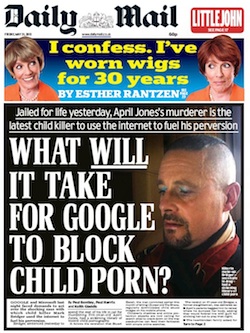
With extreme internet content once again in the spotlight, are arguments
surrounding "blocking sites/content" fundamentally flawed?
(Pic : BBC)
We'll
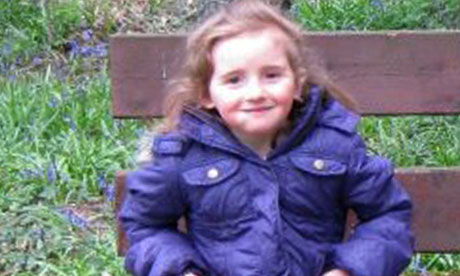
all have been shocked by the murder of April Jones, which has resulted in
the issue of extreme internet websites and online child abuse being raised again, after it was revealed during his trial that murderer Mark Bridger had
searched for child abuse images on the internet.
At this week's FMQs, there was this (edited) exchange between Russell George and
Carwyn Jones :
Russell George AM (Con, Montgomery) : In light
of this horrific case (April Jones murder), there have been increased
demands....across the UK, that internet companies such as Google
should take tougher action to stamp out images of child abuse and
pornographic sites online. What discussions have you had with the UK
Government and other devolved administrations on this....to adopt a
zero-tolerance policy in relation to such content?
Carwyn
Jones : There are some that take the view that the internet should be
as uncensored as possible. I do not take that view when it comes
to....child pornography. I cannot see what advantage there is in
allowing unfettered access to something that would be a crime if it
were published in a magazine....I am willing to write....to the Prime
Minister to ask him what his response might be....I would
certainly....pursue this to the greatest extent that I can.
A
few months earlier – on 5th February, Safer Internet Day
- there's this related exchange during FMQs. Here's a edited version of what the
First Minister said in response to an initial question from Gwyn Price, and follow ups from Bethan
Jenkins (Plaid, South Wales West), William Graham (Con, South Wales
East) and Rebecca Evans (Lab, Mid & West Wales) on the issue of
internet safety and online content.
Initial Question, Gwyn
Price AM (Lab, Islwyn) : Will the
First Minister make a statement on what the Welsh Government can do
to stop children accessing age inappropriate material online?
Carwyn
Jones : Of course, we cannot stop it completely as we do not control
the internet. However, we recommend....ISPs encourage parents to
enable parental controls. We are working to ensure that resources are
available for educating children on appropriate use of the
internet.
We have worked with UK Safer Internet Centre to
provide bilingual school packs....(lesson plans etc)....I know the
Children's Commissioner is also working to raise awareness of the
issue. One of the best ways of doing that is to ensure
that....parents are able to be informed....of what can be done to
restrict internet access to harmful sites.
It's difficult to
restrict access in the home....It is often difficult to understand
what age-appropriate content is. For example, the age certification
system...for video games....is different for that for films. It's
important we are in a position to educate children....and parents as
well. Directors general within the Government have been asked to hold
discussions....with a view to formulating.....a Welsh Government
policy in terms of what is age-appropriate material....I will report
back to Members about progress of that work.
It is important
that parents understand what their children are accessing
online....and what they're saying through websites like Facebook. The
(Hwb e-learning) platform allows us to centrally host e-safety
resources....available to all 3-19 year olds, and will also enable
teachers to raise awareness of....online safety with pupils and
parents alike.
I don't think there's much argument against
what the First Minister said in both cases. It's clear he doesn't
support a "clamp down" on the internet as an open forum.
What he's referring to is child pornography and other
online criminal activity. I think we'd all agree with
that.
The First Minister - and the other AMs - mean well, and their calls for action are completely understandable.
However, the issue goes deeper than Google, and much deeper than
simply blocking sites. Calling for search engines and ISPs to block
content as if it's a magic cure is wide of the mark, because it shows
a misunderstanding of precisely how it all works in the first
place.
Beyond Google - The internet's dark underbelly
This is usually how criminal activity online is sourced and distributed
- and not a search engine in sight.
(Pic : The Australian)
Most
criminal activity on the internet doesn't involve the "surface
web" – webpages you can access via search engines. Criminal
activity usually occurs on what's called the "deep web".
The only way you can access it is through anonymous networking using
applications like Tor, or sharing illegal content via peer-to-peer (P2P)
file-sharing. Search engine "bots" – which find content
for sites like Google – simply don't work there. So hardly anything in the
"deep web" actually makes it to the "surface" –
including child pornography.
Paedophiles are caught out either
when the content's found on their computer, they're identified via
that content, or via "sting operations" carried out by the
likes of the Child Exploitation and Online Protection Centre
(CEOP).
Things like Tor and P2P are impossible to
police. It's probably the main reason why wide-ranging blocks and
filters haven't been introduced yet. It's very easy to get around,
policing it would also be very resource intensive and the
technological requirements are daunting.
To completely
eliminate the problem, you would need to fundamentally change how the
internet works. That could be by developing a Chinese-style "walled
garden", where only approved sites are allowed - which would end
the internet as an open forum and would be an extreme reaction. There's also blocking secure traffic,
which would end internet shopping, gaming and banking overnight.
You
simply can't look up extreme content via search engines like Google.
In fact, the Internet Watch Foundation (IWF) has a blacklist to block
sites, with co-operation from ISPs. The panicked thrashing about
"making Google live up to their responsibilities" or
"blocking child abuse sites" is unlikely to have any
impact.
So, journalists writing exposés about the dark world of the internet - and how easily they could find child abuse images
via Google - are either making it up, not looking at child
pornography (but staged adult pornography) or doing it under
the direct supervision of CEOP.
Also, under UK law, even
looking at child pornography is a criminal offence. So journalists
claiming they've seen it should be expecting a knock on the door
then? Brown trousers at Daily Mail towers, surely?
If an
automated filter were set up, it's likely to flag up "false positives"
due to image labelling. An image of a child in a nappy might be
blocked, while real child abuse – labelled with some encryption –
would pass. A famous example being the temporary blocking of
Scorpion's Virgin Killer album cover on Wikipedia (it's probably best
not to look it up) by the IWF. Basically, it's media campaigners pressuring people,
politicians, search engines and
ISPs to "try and do something", that's not likely to solve the underlying
problem in the first place, and instead lead to the creation of a filtering system that will likely block "legitimate" content instead. Like
it or not - and however distasteful it might be - things like adult
porn are legitimate. There are also plenty of ways you can block that already. Looking for answers to the
unanswerable questions
We all want to know "why"?
However, it probably doesn't lie on the internet, more in the
head of one sick individual.
(Pic : The Guardian)
I hate to say this - as I would like to
see something done too - but it's all a load of poop. People and
newspapers are embarrassing themselves by debating it in such 2
dimensional terms.
I think Carwyn got it right in his Feb 5th
responses : better use of parental controls, better awareness, better
reporting and flagging of criminal online content (including the system proposed by April's parents) and add top quality investigations by CEOP to that
too.
In my opinion, many people look for the easiest way to
explain activities that defy the boundaries of normal behaviour –
and there's nothing that defies those boundaries quite like a child
murder.
"Why?" is always the hardest question to
answer in cases like that.
Children have been abducted,
abused, raped and murdered long before the internet existed. The lack
of an internet didn't stop Jimmy Savile, did it? Or the Moors
murderers? Clamp down on the illegal stuff by all means, but blaming "the internet" is reminiscent of
arguments that"video nasties",violent computer games and
Marilyn Manson turned people into monsters. All largely
disproven.
Ultimately, Mark Bridger killed April Jones
because, for whatever reason, he knew what he was doing and wanted to
do it – like all murderers. He just happened to be a paedophile as well, further adding to the revulsion, misery and outrage surrounding his heinous crime.
As far as
I'm concerned, there are other issues and statistics that are perhaps
more worrying – in particular working age people without
qualifications and those with a long-term limiting illness. I'll
return to those at a later date, as I doubt there's enough to work
off as yet.
Today though, I'm going to sift through the
numbers and patterns and try and come up with explanations for the
decline.
The decline : Where? & By how much?
There
are two key statistics here.
Firstly, Welsh-speakers as a
percentage of the population. Using the raw figures provided by Syniadau, I've drawn up maps to illustrate the changes visually.
Welsh-speaking population per local
authority 2011
(Click to enlarge)
There's
clearly a heartland consisting of Anglesey, Gwynedd, Ceredigion and
Carmarthenshire, commonly referred to as "Y Fro Gymraeg".
The Welsh-speaking population is comfortably above 40% in each of
them, but only Anglesey and Gwynedd remain majority Welsh-speaking
local authorities compared to 2001. That's the first worrying
development.
However, counties like Conwy, Pembrokeshire,
Powys and Neath Port Talbot form a looser "hinterland"
where there's a sizable minority of Welsh-speaking residents (between
15-25% of the population).
Change in % of Welsh-speakers compared
to 2001
(Click to enlarge)
Next it's worth looking at how the
figures have changed compared to 2001. Carmarthenshire and Ceredigion
stand out in particular, with Carmarthenshire experiencing the
sharpest fall at 6.4%. A vast bulk of Welsh local authorities saw
falls over the period, however the fall is more marked in "Y
Fro" and the "hinterland" than elsewhere. Neath Port
Talbot saw the sharpest fall in south Wales for example at 2.7%.
You
could argue the figures stood up well in south east Wales and south
Wales central. The only local authority that saw a rise was
Monmouthshire, while numbers held up in Cardiff, Caerphilly and
Rhondda Cynon Taf. Though all local authorities saw falls in those
able to read, speak and write Welsh.
Number of Welsh-speakers per
local authority 2011
(Click to enlarge)
The second key figure is
the number of Welsh-speakers in physical terms. A population
percentage gives you a good idea of the "density" of
Welsh-speakers, but in terms of actual numbers there's a more even
spread.
As you might expect, the vast majority of
Welsh-speakers live in Y Fro. Carmarthenshire has the most
Welsh-speakers overall, closely followed by Gwynedd. But Swansea,
Rhondda Cynon Taf and Cardiff have very large Welsh-speaking
communities despite being outside Y Fro. Cardiff, in fact, almost has
as many Welsh-speaking residents as Anglesey.
Next, the change
in Welsh-speaker numbers compared to 2001.Ceredigion and south west Wales have seen the sharpest falls.
However, falls in the north east – in particular Anglesey - don't
seem that pronounced.
Change in the physical number of
Welsh-speakers compared to 2001
(Click to enlarge)
When you look at the south it's a
different picture. The numbers have held up well in Bridgend, RCT and
Newport, while there were increases in Vale of Glamorgan, Caerphilly,
Monmouthshire and Cardiff. Cardiff seeing the sharpest rise at more
than 4,000.
Overall, Wales has lost just over 20,000
self-identifying Welsh-speakers since 2001. That makes Cardiff's
4,000 rise quite an achievement, rather than something to be
derided.
The decline : How? & Why?
"Rural down-sizers" appear to be just as likely to be
moving from other Welsh local authorities as
from England.
(Pic : Zoopla.co.uk)
Mortality – Y
Fro counties aren't only the most Welsh-speaking, but also amongst
the "oldest". Based on 2012 mortality rates (6,236 per
million) ~3,500 Welsh-speakers will have died in Wales each year, and
~35,000 since 2001. Clearly, there haven't been enough replacements
for them. It's even worse in Carmarthenshire and Neath Port Talbot,
where the percentage of people with poor health is way above the
Welsh average. Logically, that would lead to more people dying younger
at the top end of the demographic tree and proportionally more
Welsh-speakers amongst them. Migration patterns within Wales –
Using this tool from the ONS, you can see where people moving to
Welsh local authorities are coming from. In Anglesey, most inward
migrants came from Gwynedd. In Ceredigion the vast, vast bulk come
from Welsh local authorities. It's similar in Carmarthenshire. It's
also the opposite. For example, 1080 people moved to Cardiff from
Ceredigion, Gwynedd and Carmarthenshire. How many were
Welsh-speakers? The odds are quite a few. Which local authority saw
the sharpest rise in the physical number of Welsh-speakers again?
A
non Welsh-speaking Welsh person moving to an Y Fro county is going to
have the same effect on Welsh-speaking statistics as someone moving
from England. That might be an uncomfortable fact for some
nationalists, but it's the truth. Inward migration – There's
a clear pattern of small numbers of people from a large number of
English authorities moving to Wales. They don't look much in
isolation on the viewer, but added together they do tot up to a
significant number. Discounting those already here, English
in-migration "tops-up" a decline in Welsh-speakers
disproportionately. In addition, Carmarthenshire (especially
Llanelli) has seen large numbers of eastern European migrants
settling there since 2004. I'm willing to bet none of them can speak
Welsh either. You can't ignore that it's a contributing factor, but
it's simplistic to put all of the emphasis on this point
alone.
Outward migration – What about those heading in the
opposite direction? It's unclear how many Welsh-speakers there are
resident in England (or I simply couldn't be bothered to find out),
but there are, in many cases, at least as many Welsh people moving to
England than there are incoming. The south, however, seems relatively
self-contained. It's far more pronounced in Y Fro and counties like
Powys, where it's perhaps easier to head east-west than
north-south.
Has Blair government university expansion led to a more
transient Welsh-speaking population in their 20s?
(Pic : Austin Company)
Increased student numbers since 2001 – I
actually think this is an overlooked, but key reason behind the
proportional decline. I'm willing to bet a lot of the transient
population are full-time students, including English students
studying at Welsh universities and vice versa. Even if it's only a
few thousand moving in either direction, it's enough to knock a
big chunk off the Welsh-speaking population in sparsely populated
counties in Y Fro and elsewhere. Even more so if they don't return. Over-estimation of
Welsh-speakers in 2001 – Maybe people then were caught up in the
patriotic fervour of devolution and "Cool Cymru" and
over-estimated their Welsh-speaking ability. Now the national
question is settled to a certain extent, people might not be as keen
to express their national identity through their ability in the
language. It could also mean Welsh-learners no longer regard
themselves as proficient in 2011 as they were in 2001 – probably
through lack of use.
"O bydded i'r hen iaith
barhau"
If we're careful, Welsh might have a very bright future indeed.
But the vast bulk of Welsh-speakers in numerical terms are older.
(Pic : Welsh Language Commissioner via Blog Menai)
(Click to enlarge)
There's one big glimmer of hope, but we'll have
to be patient. Look at this graph from the Welsh Language Commissioner, also
posted on Blog Menai. The demography of Welsh-speakers is very
heavily in favour of younger generations in practically all
local authorities. Perhaps that's due to the expansion of Welsh
medium education. Perhaps Welsh-speakers are having more children or
are more settled.
The drawback is that Wales is generally
older in terms of sheer numbers. Migration by retirees (including
within Wales itself) will have an impact, but simple demographics are
the big issue here. If anglophone monoglot over 65s disappeared for whatever reason
Logan's Run style, it's possible Wales would have a ~30% Welsh
speaking population, Y Fro would be solidly Welsh-speaking and even
places like Cardiff and Blaenau Gwent would have 20-30% of the
population with some ability in Welsh.
I think the changes to
the number of Welsh-speakers could be compared to an incoming tide.
The first wave comes in a certain distance, then retreats. The next
wave comes in even further and stronger, then retreats.
But
there's still an awful lot left to do to, not to "preserve"
the Welsh language, but ensure it remains a living language. The living bit is much, much more important. End
"Meta-Welsh" – Or, to put it bluntly, Welsh language
activists have become so self-referential about Welsh itself, they've
dropped the ball over the last 10 years. It shouldn't be reduced to something you talk about at a
dinner party, a protest rally or in a seminar. Welsh shouldn't be
some sort of geeky hobby for enthusiasts.
Would the future of Welsh be more secure if activists dropped placards and more of them
picked up a guitar or wrote Welsh-language novels and television/radio shows?
(Pic : ITV Wales)
If the future of Welsh is
going to be constant arguments over status, "conservation",
legislation and commissioners – nothing ordinary folk care about -
we might as well give up now. It hasn't worked in Ireland, it won't
work here.
Mainstream the use of Welsh – You should be able
to buy your groceries in Pwllheli in Welsh – end of. The job of
ensuring you can now rests with the Welsh Language Commissioner.
There's no need to go over the top outside of Y Fro, but once a
Welsh-speaking population reaches a certain level, or number, there
should be an expectation that basic services would be available –
and more importantly, used – in Welsh. Even if it's only a token
"Derek the Weather" gesture. "Cwl Cymraeg"
– The future of Welsh lies with the Cyw crowd and 20/30-somethings,
not the Dechrau Canu, Dechrau Canmol crowd. Although there are some
"edgy" Welsh language artists out there, Welsh language
culture as a whole gives the impression of being very conservative. Cymraeg needs a
pulse. We need more contemporary Welsh language entertainment and
literature to make it alive and appear like something monoglots are
missing out on. It needs more slang, for example. It needs to be
worth the artist's time though. Note the disagreement between Radio Cymru and musicians.
Change how Welsh is taught in
English-medium (secondary) schools - Welsh has to be desirable to
speak and learn, and I don't think that comes down to compulsion. I
think instead of the pointless, token Welsh language GCSE Short
Course, it should become like the (proposed) Scottish-style "Welsh
Studies". It should be bilingual, but actually putting it in a
context, be that historical, political, cultural or sociological. The
emphasis on teaching Welsh (as a second language) should be heavily
weighted towards English medium primary schools, where language teaching is a bit more effective as brains develop.
It's impossible not to like this. But when Cyw's viewers get older, they'll need more
Welsh-language media that reflects modern Wales. Welsh needs to become a little bit more ballsy.
(Pic : BBC Wales)
Promote the
benefits of a bilingual education – This doesn't just include the
obvious cognitive one of being able to speak more than one language,
but employment, cultural and social opportunities. Most of the world
is bilingual. Pupils attending Welsh-medium schools also learn
English to native-speaker standards anyway. Secondary school pupils
also learn other languages alongside Welsh and English as part of the
curriculum – though both Plaid and the Conservatives have
discussed introducing a third language at primary school level
recently. That little fact means it's easy to lock those who have "issues" with Welsh language education in very amusing
circular arguments. I wish people would do it more often, and it
makes it far easier to uncover their true motivation(s). An Y
Fro baby boom – If Welsh is going to survive as a living language,
more children in the heartland need to be brought up in
Welsh-speaking households, who in turn might move to other parts of
Wales and top up Welsh-speaking communities there. More
Welsh-speaking young people might put off elderly, anglophone
white-flighters moving to rural Wales in the first place. But there's
another big problem....
An Y Fro economic miracle – There
are economic reasons for the decline of Welsh. With the economy of West Wales & The Valleys continuing to lag, and there being
natural penalties for living in a sparsely populated area, there
needs to be a reason to retain working-age people and provide them
with jobs. I call this a "miracle" because that's the scale
of the challenge. What industries could Y Fro specialise in? Energy?
Agricultural science? It has to be more than seasonal tourist
jobs. Link planning (economic and social) and housing to the
Welsh language – This doesn't necessarily mean prioritising
Welsh-speakers for housing. It could simply mean more cheaper,
affordable housing and the creation of a "Welsh-speaking city"
somewhere in Y Fro with enough clout to pull younger people towards
it. That could be Aberystwyth, it could be Bangor, it could be a
planned expansion of a town like Porthmadog.
Create a model for a
successful Welsh-speaking infrastructure, learn from it, then
replicate it elsewhere.