This site is no longer updated

Please use the links in the sidebar to visit the new sites!

Showing posts with label Fiscal Policy. Show all posts

Tuesday, 2 May 2017

FMQs: Gaffes, Circuit of Wales & Borrowing


This afternoon saw the final FMQs before the local elections on Thursday and the first since the announcement of the forthcoming UK general election.

Wednesday, 8 February 2017

Committees Bite Size #2: February 2017


Here's my second summarised round-up of some of the Assembly's committee inquiries over the last few months, including: domestic violence, the National Infrastructure Committee, the state of broadcasting, statutory advocacy services for vulnerable children and implementation of the new National Curriculum.

Saturday, 8 October 2016

Plaid's Infrastructure Commission

(Pic : Plaid Cymru)
(Owen : It's funny how things turn out. I'm sure that counts as three correct predictions in a row. As for the recent controversial episode of Question Time this sums up what happens in pretty much every episode and why I don't watch political programmes. "Don't feed the trolls.")

On Monday, the Shadow Ministers for the Economy & Infrastructure – Adam Price AM (Plaid, Carms. E & Dinefwr) and Dai Lloyd AM (Plaid, South Wales West) respectively – launched a policy paper outlining their proposal to create a National Infrastructure Commission (pdf).

Saturday, 24 September 2016

The Big Brexit To Do List

Before Brexit can happen, we need to know what needs to be done beforehand.

I'm getting as fed up with the endless hot air surrounding Brexit as much as you probably are. This will be my final post on Brexit for the foreseeable future. I'm also considering ignoring any future statements/questions on this in the Senedd as nothing's actually happened yet and nobody seems to be in a rush to make anything happen either
.

Thursday, 15 September 2016

Law to replace stamp duty introduced

(Pic : policyexpert.co.uk)

The first piece of legislation of the Fifth Assembly was introduced on Tuesday (13th September) by Finance & Local Government Secretary, Mark Drakeford (Lab, Cardiff West) – the snappily-titled Land Transaction Tax & Anti-avoidance of Devolved Taxes Bill.

Tuesday, 28 June 2016

Senedd Debates Brexit

(Pic : Wales Online)

I won't be covering First Minister's Questions this week – even though the business of government and legislature goes on – instead choosing to cover the National Assembly's response to the EU referendum result.

Sunday, 28 February 2016

Fourth Assembly In Focus : Economic Profile 2016


In about ten weeks weeks time, those of us who will bother to vote will elect a new Assembly and a "new" Welsh Government. My 2016 election coverage starts today with a mini series over three weekends focusing on three key areas of devolved public policy and how they've changed over the last five years : the economy, health and education.

Tuesday, 2 February 2016

The Great Cardiff Airport Swindle?

Were the Welsh Government diddled when they nationalised Cardiff Airport in 2013?
(Pic : Wales Online)

As others have said, the Welsh Government's reputation when it comes to spending public money has taken a big hit over the last few days, and brings what I said in Wales reacts to steel job cuts all the more into focus:

Saturday, 11 July 2015

AMs Mock UK's Dodgy Barnett

The Barnett formula - a simple concept, but difficult to negotiate in
practice, especially when it comes to so-called "consequentials".
Earlier this week (8th July), AMs held another member's debate on an issue raised time and time again in Welsh politics – the Barnett formula : the formula used to set budget allocations of the UK's nations, the principle being that it ensures each part of the UK receives a "fair share" of public spending.

Thursday, 23 April 2015

Westminster 2015 : The ITV Wales Debate

(Pic : ITV Wales)

Another week, another debate; this time from ITV Wales, hosted by Sharp End's Adrian Masters in Cardiff. For some reason it's not available online (though I watched it online), so you'll just have to take my word for it, although the ITV Wales website has a running commentary on what was said on their website.

Monday, 20 April 2015

Westminster 2015 : The Manifestos Part II


Following yesterday's look at the party manifestos (linked above), today it's the turn of the Lib Dems, Plaid Cymru and UKIP.

Sunday, 19 April 2015

Westminster 2015 : The Manifestos Part I


The following two posts are the most important of the lot this election campaign : What are we voting for in May? Or, more accurately, what might be on the table during negotiations in the event of a hung parliament?

Tuesday, 7 April 2015

Westminster 2015 : The Key Issues in Wales

What are likely to be the main issues for Welsh voters?
(Pic : Click on Wales)

The first debate's out of the way, I've given my verdict on the Coalition and the manifestos are going to be released over the next few weeks (I'll look at them in more detail once their all out, though UKIP are dragging their heels by the looks of it) - which means it's time to focus on some of the issues that might be fought over in Wales.

Friday, 3 April 2015

Westminster 2015 : The ITV Leaders Debate

The big debate has been held, and here's a run down of how the leaders did.
(Pic : ITV)

I'll only count this and the BBC opposition debate on on 16th April as "debates" because they're....actual debates. I'm not going to count the Question Time and Daily Politics specials or the interviews. I don't know if there are Wales-only debates planned over the next few weeks (as 2010), but if there are I'll cover them too.

Monday, 2 March 2015

A St David's Day Deposit


Legend says the ground beneath St David rose so all of his audience could see and hear him.
Like his namesake, the ground beneath David Cameron rose too, but it was a steaming mound of dung.

Most people don't care about the constitution, what powers the Assembly has or the intricacies of how devolution works. They're more concerned about public services, and what the decisions made by politicians mean for themselves and their families.

Some of us realise the constitution determines what decisions politicians are able to make in the first place – all of which has a direct impact on the public.

As you probably all know, the Silk Commission published two reports between 2012-2014 as part of "the next step in Wales' devolution journey" etc.

The first report (Silk I) covered taxation powers for the National Assembly. Those powers are now on the statute book in the Wales Act 2014, meaning from 2018 the Assembly will have the power to set landfill tax, stamp duty and the aggregates levy. It also means the Assembly can call a referendum on whether they should have the power to vary income tax - which the First Minister is already attempting to scotch. This is despite the inclusion of a new funding review, which Carwyn Jones said would be required for his government to back a referendum.


Holding a referendum on such a technical subject is, as Borthlas said today, "one of the silliest ideas ever to be proposed by a government" and very easy to lose.

As I've said before (Marching out of lockstep) a referendum on a general principle of fiscal powers - i.e. "Should the National Assembly have the power to fund devolved services by borrowing money and collecting taxes devolved to Wales?" - would be a juicer topic for the public to have a debate on and would definitely necessitate going to the polls to get a mandate from the electorate.

The second report (Silk II) covered extra powers, which was taken forward by the Welsh Secretary, Stephen Crabb MP (Con, Preseli Pembs.), who set a deadline of 1st March – St David's Day – for a cross-party, cross-government consensus on Silk II's recommendations. You can read the full report, which was published last Friday to great fanfare, here (pdf).

Whisper it quietly, but I've been impressed with how Stephen Crabb has gone about his job. He's done more for Wales in 8/9 months than his predecessors have in the best part of a decade. I don't blame him personally for this brown whale, rising from the depths of the bowl to mock Ahab.

This may well be another "step forward on Wales' devolution journey", but it's also one last blast of Westminster's brand of constitutional Poodigree Chum out of the tradesman's entrance before the election.

What's been agreed?
  • A reserved powers model, which should clear up what the Assembly's powers are by listing what the Assembly can't do. Except it won't clear anything up because of the piecemeal nature of Welsh devolution. Reserved powers would be like putting the current Schedule 7 in a mirror (if you see what I mean).
  • Inter-governmental relations – Puts relations between the two governments on a more equal footing, with better co-ordination of policies in areas like training, economic development, cross-border rail routes and franchises as well as cross-border health services.
  • Ports policy and development.
  • Speed limits.
  • Bus and taxi regulation, along with Traffic Commissioner functions.
  • Places a duty on the UK Government to consult with the Welsh Government, and take into account Welsh energy policy, when approving energy projects of up to 350MW. This effectively means the Welsh Government will have a veto on "fracking".
  • Sewerage and some aspects of water (with further negotiation).
  • Marine licensing.
  • At least one appointee to the Supreme Court should have an understanding of Wales.
  • Local government elections.
  • The Assembly itself – The Welsh Secretary will no longer have to appear before the Assembly, or have a right to participate in Assembly proceedings. The Assembly will also gain control over the age to vote in Assembly elections, the size of the Assembly and its name/branding. The National Assembly will also be recognised as "permanent".
  • The First Minister should have the power to recommend appointments to Lord Lieutenancies (more on this from me later this month).

What's been taken off the table?

Some significant stuff – arguably the only significant powers outlined in Silk II.
  • Youth justice and probation services.
  • Policing (all aspects).
  • There'll no longer be a review of devolution of the criminal justice system (courts, prisons, criminal law) in the 2020s.
  • Drink-driving limits – this has already been devolved to Scotland.
  • Network Rail funding – Scotland currently receives a population-based proportion of Network Rail's UK-wide funding (around 9%). In 2013, just 1% of Network Rail's budget was spent in Wales compared to a population share of ~5%. This means Wales will continue to, in nominal terms, "subsidise" English rail projects, resulting in significantly less than our "fair share" to invest here.
  • The Crown Estate – It currently generates a £9.4million surplus in Wales, and is devolved to Scotland and Northern Ireland.
  • State funding for S4C and appointment of S4C board members.
  • Any and all aspects of social security - aspects of which will be devolved to Scotland.
  • Responsibilities in relation to the Equalities and Human Rights Commission.
  • Teachers' pay and conditions.
  • The civil service.

What does this mean?

Thanks to the efforts of Nick Clegg and the "true party of Wales", the
National Assembly is set to have power over shit. Literally.

Not only are the UK Government hamstringing devolution, but there are people in and around the Assembly doing so as well.

The reason criminal justice powers have been taken off the table – the devolution of which would've finally put Wales on a near equal footing with Scotland – is because the Welsh Conservatives oppose it and must've vetoed it.

Welsh Labour probably did too, but they support devolution of policing at least (What's all this then?) – though Ed Miliband doesn't even want to go that far, promising some bizarre role in report-writing. It doesn't help that Owen Smith is arguably the most devo-sceptic Welsh Secretary-elect since 1999. He has to justify his position somehow.

The UK Government have also, quite literally, devolved shit to Wales. So we need to be grateful for the existence of Nick Clegg. Without Nick, Wales wouldn't have powers over faecal poltergeists and used tampons – but, at the same time, we're not good enough to run policing. Lib Dems should put that on their election leaflets.

I'm sure quite a few AMs from all parties will be underwhelmed by the St David's Day agreement, but this is a mess partly of their own making, as they put far too much faith in the "proper process" to the point of being gullible. In short, the UK never has been, and never will be, a union of equals; while constitutional reforms are pushed through in reaction to immediate threats to the status quo, not political consensus and grand commissions.

The UK is a very dysfunctional "family" indeed.The Scots have proven that if you want something you need to rattle your sabres. In political terms that means electing nationalists but, unfortunately, even then Wales would have very few sabres to rattle.

I'm not going to use the same old tired clich
és about Wales "being slapped in the face" or "insulted" or "offered third-rate devolution" because this is exactly the outcome I was expecting :
The question there is if Scotland votes no in September, and as a result acquires further devolved powers or devo-max, Wales will be left behind yet again when - based on this report - Wales is tantalisingly close to achieving parity with Scotland (if criminal justice powers were devolved in future).
- See more at: http://www.oggybloggyogwr.com/2014/03/silk-ii-wrath-of-paul.html#sthash.TZafNehB.dpuf
The question there is if Scotland votes no in September, and as a result acquires further devolved powers or devo-max, Wales will be left behind yet again when - based on this report - Wales is tantalisingly close to achieving parity with Scotland (if criminal justice powers were devolved in future).
- See more at: http://www.oggybloggyogwr.com/2014/03/silk-ii-wrath-of-paul.html#sthash.TZafNehB.dpuf
The question there is if Scotland votes no in September, and as a result acquires further devolved powers or devo-max, Wales will be left behind yet again when - based on this report - Wales is tantalisingly close to achieving parity with Scotland (if criminal justice powers were devolved in future).
- See more at: http://www.oggybloggyogwr.com/2014/03/silk-ii-wrath-of-paul.html#sthash.TZafNehB.dpuf
04/03/2014 : "....if Scotland votes no in September, and as a result acquires further devolved powers or devo-max, Wales will be left behind yet again when - based on this report - Wales is tantalisingly close to achieving parity with Scotland (if criminal justice powers were devolved in future)."

The question there is if Scotland votes no in September, and as a result acquires further devolved powers or devo-max, Wales will be left behind yet again when - based on this report - Wales is tantalisingly close to achieving parity with Scotland (if criminal justice powers were devolved in future).
- See more at: http://www.oggybloggyogwr.com/2014/03/silk-ii-wrath-of-paul.html#sthash.TZafNehB.dpuf
he question there is if Scotland votes no in September, and as a result acquires further devolved powers or devo-max, Wales will be left behind yet again when - based on this report - Wales is tantalisingly close to achieving parity with Scotland (if criminal justice powers were devolved in future).
- See more at: http://www.oggybloggyogwr.com/2014/03/silk-ii-wrath-of-paul.html#sthash.TZafNehB.dpuf
There have been several opportunities down the years to put the devolved powers issue to bed once and for all and ensure Wales has a settlement that would last more than a decade. People like me can then shut up about independence and further powers, and AMs can concentrate on running the country, safe in the knowledge that they would be on a clearer footing within the UK's constitution.

Nope, not going to happen. Again.

A cross-party commission's reasonable and proportionate recommendations have been watered down. Again.

Scotland is moving leaps and bounds ahead of Wales. Again.

Powers which, by rights, should be devolved (like abortion limits, medicine licensing, drink-drive limits, and Network Rail funding....because subjects like health and transport are devolved) have been taken off the table. Again.

The only person who has a right to be chuffed with this is the Llywydd, Rosemary Butler (Lab, Newport West). Her recommendations (Assembly Commission steps up to the oche) are included almost word for word.

So don't worry. The National Assembly might, in future be called Welsh Parliament because "National Assembly" isn't a good enough name for Wales....but it is for France, Greece, South Korea, Hungary, Pakistan and South Africa.

Oh, and all those 16 year olds chomping at the bit to vote may be able to (The X-Factor). Great stuff. Meanwhile, the "Assemblement" will be able to block "fracking" but won't be able to control any energy project that produces more power than a BMX dynamo. The UK Government will retain ultimate control.

I look forward to the recommendations of the Baroness Kirsty Williams Commission on Devolution for Wales in 2024, which will outline a lasting settlement and put the issue of constitutional reform to bed for....

Thursday, 23 October 2014

Hart Bypass returns to the Assembly

The issue of the Newport bypass has returned to the Senedd, and the
Environment Committee had a few choice words for Edwina Hart and the CBI.
(Pic : Wales Online)


It's back again....

Yesterday, the National Assembly debated the Environment Committee report into the proposed M4 bypass of Newport (Newport M4 : The Committee Strikes Back [pdf]) and the Welsh Government's response (M4 Newport – Edwina's Response [pdf]).

The Senedd's Heart to Hart

Committee Chair, Alun Ffred Jones AM (Plaid, Arfon), started by saying this project was, "the biggest decision the Welsh Government will take". The Committee haven't drawn any conclusions on merits of particular options, but serious, unanswered questions remained on whether the consultation process met strategic EU directives.

Alun said one issue "not given due attention" was the impact of electrification of the south Wales mainline and the South Wales Metro. The Committee believe these proposals weren't taken into account adequately when considering future travel patterns. He said the total costs of the bypass remain unclear, and funding sources were, "shrouded in uncertainty". He concluded that on basis of current information, the long-term value for money case is yet to be made.

Mick Antoniw AM (Lab, Pontypridd) said the traffic figures from the UK Department of Transport (DfT)– which formed a foundation for the case for the bypass by projecting a 20% increase in traffic – was out of date, and that the latest figures have shown a plateau in general M4 traffic. He said the Committee couldn't get further details from DfT. Mick said it was "of some concern" that the CBI – one of the main private sector proponents of the bypass - failed to respond to six requests to give evidence when the Committee were trying to evaluate the business case.


Antoinette Sandbach AM (Con, North Wales) described this as an "extremely important inquiry", echoing concerns that the CBI didn't contribute to the inquiry in written or oral form. She also criticised the Minister, as she was asked several times to give evidence but turned it down. This is in light of previous criticism in chamber on the way this has been handled.

Antoinette said there were "grave concerns" over the consultation process, in particular the lack of distinction between the three options and the exclusion of the Blue Route. She said it was important that the Welsh Government were "above reproach" on this due to international significance of Gwent Levels, and there was a lack of public confidence in way the process was handled. Antoinette said the Minister hasn't been prepared to be "transparent and scrutinised properly" on this, and she doesn't believe the Minister, "has the support of the public for this project".


Llyr Gruffydd AM (Plaid, North Wales) was also disappointed the Minister didn't give evidence on the route options or financing. This meant the Committee was prevented from scrutinising a scheme that has major financial and environmental impacts. He suggested there were "serious problems with statutory decision-making process", which meant the Committee were unable to scrutinise acutal costs.

Llyr believes the financial detail of scheme should be more widely known to ensure scrutiny on the basis of value for money, with the quoted costs having a massive margin of error, standing between £600million and £1billion. He said adopting the black route, "gave the impression to the people of Wales that it was a done deal" when there's a long way to go.

William Powell AM (Lib Dem, Mid & West Wales) said the Assembly's committees perform a key role in scrutinising policy, which is made all the more difficult "when government doesn't participate on their (the Committee's) terms". William also criticised CBI, saying you can read their op-eds in the Western Mail but they were unwilling to give evidence to the Assembly itself.

He said it was "beyond question" that the M4 through Newport isn't fit for purpose, but all options need to be considered. He said it was a shame the answers came so belated from the Minister. However, he said the Blue Route is as open to debate as the Black Route and we should, "let the evidence speak for itself". Williams also stressed the need for other solutions, emphasising that people need to get people out of cars and onto integrated public transport.

Julie Morgan AM (Lab, Cardiff North) said it was an "annoying and frustrating experience" dealing with the report due to CBI's absence, which "showed disrespect to the Committee". She welcomed the future detailed environmental impact study and the fact no construction will take place until after the 2016 elections, which gives the Assembly "time to have debates on all the options".

She said every effort should be made to avoid the "disastrous impact" on the environment, but they also need clarification on how much of the borrowing will be spent on the bypass. She also said comments (from the First Minister - clip of the FMQs exchange on 30th September 2014) about traffic lights on the Blue Route were irrelevant as they would be replaced by grade separated junctions.

Russell George AM (Con, Montgomery) was....surprise,surprise....disappointed the CBI didn't give evidence. He added his view that the Welsh Government ignored the environmental concerns and that any Newport bypass would have a knock-on impact on infrastructure projects in the rest of Wales – picking out improvements to the A55 and A40 in particular. Russell accused the Welsh Government of failing to look at Welsh transport infrastructure "in the round".

Former Environment Minister, John Griffiths AM (Lab, Newport East), said the Gwent Levels are unique, and that their importance and historical significance are "beyond doubt". Although he's now one of the more high profile opponents to the bypass, he said he didn't support the Blue Route either due to the possible air pollution and noise problems an urban expressway would cause. John would prefer "carrot and stick" public transport solutions.

He also raised the valid point that there's a new environment since the Scottish referendum, offering veiled criticism of the UK Government's caveat that early access to borrowing be dependent on funding a bypass.

In her response, the Minister for Economy & Transport, Edwina Hart (Lab, Gower), said her letter addressed the Committee's concerns. She regretted not giving evidence in person, but the statutory decision-making process is "very strict" and she repeated her defence that she couldn't give evidence until after the consultation. She agreed with William Powell that this process may need "looking at".

She confirmed the Welsh Government have submitted their defence to Friends of the Earth Cymru's legal challenge and they're waiting for the court's decision. Edwina also confirmed that no detailed design work will be until after a full environmental impact assessment, and she expects more detailed financial information to be provided at any future public inquiry (which will take place in late 2016/early 2017).

Unsurprisingly, she said it would be inappropriate for her to comment further on other matters while these processes were ongoing.

Concluding the debate, Alun Ffred Jones said he was disappointed the government "always has a reason for not giving details or answering basic questions", and he was "none the wiser" after the Minister's response.

He said the Committee weren't opposed to finding a solution to the Newport problems; but it has to be the right decision after all reasonable options have been considered, and because it would have a knock-on impact to infrastructure spending. The Committee simply wanted to, "ask pertinent questions about the process and not discuss the merits of the routes".

He therefore upheld the Committee's recommendation that the Welsh Government should restart the consultation process with all of the route options included.

Total Eclipse of the Hart
The Black Route isn't quite a done deal yet.
(Pic : M4 Newport website/Me)

Some very large obstacles were placed in the way of the Environment Committee in the process of this inquiry.

Firstly, Edwina Hart and the CBI refusing to give evidence; secondly, Plaid Cymru's predetermined support for the Blue Route which threw everything off balance; and thirdly, the sudden/curt announcement from the Minister in July that the Black Route has been selected.


The Blue Route isn't quite dead yet, but you get the impression the Minister is doing her best to kill it off. It seems the only way you can get comprehensive responses from the Welsh Government nowadays is a Daily Mail headline.

Having said that, the media – maybe myself included – might have given the impression that the Black Route is (as Llyr Gruffydd pointed out) "a done deal". That's wrong. All that's happened is the principle of a complete M4 bypass of Newport that follows the black route has been agreed, but the design could change significantly between now and the start of construction, depending on the outcome of the further environmental reports and any future public inquiry.

The problems facing the Black Route continue to mount. I wouldn't at all be surprised if the environmental impact report will make grim reading and lead to serious questioning of the Welsh Government's supposed commitment to *groan* "sustainable development".

Secondly, there seems to be growing opposition amongst Labour backbenchers to the project – notably from John Griffiths and Alun Davies AM (Lab, Blaenau Gwent), who are two former ministers with responsibility for the environment. You can probably include Julie Morgan and Jenny Rathbone AM (Lab, Cardiff Central) in there too, while Mick Antoniw has reservations by the sound of it.

Thirdly, as the South Wales Argus have covered, Newport Docks is going to have a whacking great big bridge built over it. I'd like to think that someone would've considered whether that proposal might have an impact on port operations. Newport Docks is Wales' most important cargo port and according to ITV Wales supports some 3,000 jobs.

Last but not least, as you might've noticed, the CBI were rightfully given a kicking from all quarters. When you consider they're often mouthing off to the press about the state of Wales, the fact they couldn't be bothered to give evidence on something they consider so vital - so important that it stands to become the single largest capital investment a Welsh Government will ever make - was nothing less than an insult to all of us. Up yours, Digby.

I certainly respect the work the Assembly's committees do, and it's not as if the CBI would ever consider snubbing a Westminster equivalent.


Wednesday, 22 October 2014

Building a better Wales from the bottom up

Leanne Wood's "Greenprint" idea has been developed further into
 wider reforms of how our communities and neighbourhoods tick.
(Pic : Rhondda Plaid Cymru)

Earlier this week, Plaid Cymru unveiled the latest in a series of discussion and policy papers, this time a comprehensive report (pdf), which was jointly launched by Plaid Cymru's Shadow Cabinet member for the Environment & Energy, Llyr Gruffydd AM (Plaid, North Wales) and Arfon MP, Hywel Williams.

It addresses, and provides an alternative to, the Future Generations Bill, parts of the Planning Bill and maybe even some aspects of the Williams Commission and "The Greenprint".

You could say it's Plaid Cymru's version of the "Big Society".

The Rationale

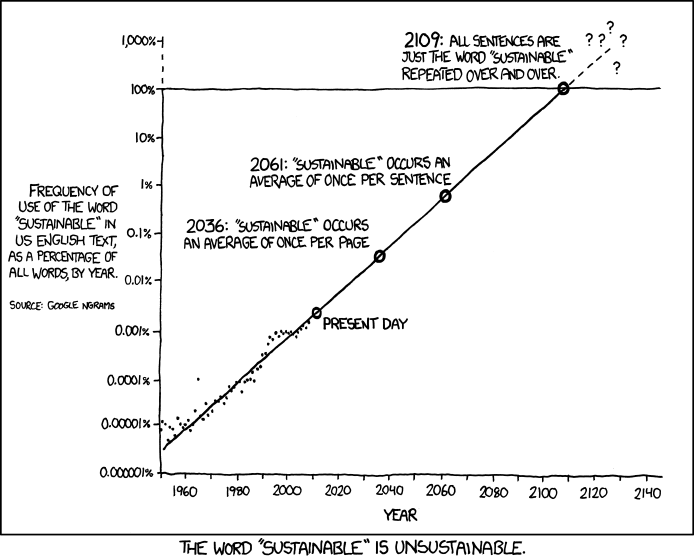
As regular readers will know, I'm not a fan of the word "sustainable" (in all its guises) and I'm going to do my best to avoid using it from here on in.

The broad aim of the policy paper is to draft new ways for our communities to work; but instead of being a top-down exercise where a central body or authority prescribes what communities should do, Plaid Cymru would much rather (in some aspects) it was the other way around, with communities taking more control over their own direction, whilst retaining a collective spirit – what Plaid have long called "decentralised socialism".

There are a number of challenges – depletion of resources & climate change, demographic change, increasing demand on public services. But there are also opportunities, like digital technologies, participatory democracy and a Basque-style collective economics, which can help meet these challenges in innovative ways.

The paper is split into three key themes : "empowering communities", alternative forms of investment and supporting infrastructure development.

The Community

Plaid advocate stronger community councils and
new forms of democratic participation.
(Pic : via todayinscocialsciences.blogspot.co.uk)

  • A National Community Development Programme (Connected Communities) which would be based off existing third sector infrastructure and help develop local social networks and co-ordinate local schemes.
  • A Strategy and Integration Unit within the Welsh Government, which would guide longer-term thinking across all government departments and would be directly responsible to the First Minister.
  • A Social Innovation Hub which would bring together people from different sectors and with different experiences to come up with innovative new ideas for public service delivery.
  • A review of at what level powers should reside in local government, including stronger community councils and the introduction of Single Transferable Vote (STV) in local elections.
  • A pilot of participatory democracy – starting with local budgets – and a digital government programme/Digital Wales fund which would encourage the use of new technologies to improve democratic engagement, promote open government and improve public service delivery (there's a related piece on this from the National Assembly blog covering the recent GovCampCymru 2014).

Communities actively supporting each other is a vital part of well-being.

These "active community" projects do work. Plaid give an example of a "time bank" in the Ely area of Cardiff (where people volunteer in exchange for time credits they can "spend" locally) which has made people feel better about themselves, enabled people to get to know each other better and given people the impression that they're actively improving their communities.

Plaid call for a shift in public sector thinking, where the public sector will work with communities instead of imposing decisions on them unilaterally, perhaps even ceding some control too.

This would require a review of what powers should reside where (something the Williams Commission largely looked over). But it would also mean changing how communities are governed, and Plaid propose a limited form of participatory democracy where decisions are made collectively instead of by representatives or officials.

Investment

Plaid would like to shift the focus of Communities First from
whole communities towards individual families.
(Pic : BBC Wales)

  • A Prevention Fund to ensure citizens don't go on to need more complicated and expensive public services.
  • Promotion of alternative forms of finance, and the creation of a Community Investment Fund to underwrite or match fund alternative investments.
  • Use public sector pension schemes to support long-term local investments (in particular housing), with a tax-relief scheme for social enterprises - if the powers are devolved (see : The Collective Entrepreneur).
  • A Welsh "Green Book" which will "put sustainable development at its core".
  • Legislative measures to improve the amount of domestic public procurement, with the aim of 75% of public contracts going to Welsh companies (currently 52%) (see : Public Procurement Reform & Plaid's "Plan C")
  • Shift the focus of the £40million Communities First programme from deprived areas to deprived families.

The second theme focused on investment in light of "shrinking public finances". Although the paper says there's a lot happening already, Plaid believe things can go further. Alternative forms of finance which were discussed include crowd-sourcing, community banking/community bonds, credit unions, social impact bonds and the third sector's Community Investment Fund.

They cite the specific example of the Llangattock hydroelectricity scheme where 100 investors raised £270,000 in a co-operative scheme to generate energy, with a return of between 5-8% per year.

Examples were also given of public sector pension schemes being used to invest in the local community. Islington Council invested £20million of its £800million pension fund in housing, while there are talks about pooling the pension funds across all of London's local authorities. The Welsh local government pension scheme controls around £9billion in assets, and Plaid believes this could be used in a similar way.

Most of the rest of the discussion was about financial incentives and alternative business models. The Basque co-operative conglomerate, Mondragon, are brought up again as a model worthy of consideration, while a co-operative investment fund is mooted as a way to tie existing co-ops together in Wales to eventually create something on the same scale.

There's backhanded praise for the Treasury's "Green Book", which is used to "provide guidance to UK Government departments on putting together a robust business case to support policy change". Plaid believe a Welsh equivalent, which would come with a Welsh Treasury, should take into account social and environmental costs and benefits.

Infrastructure

Plaid Cymru would extend the number of developments that wouldn't require planning permission,
and would also like to see a simplified way for communities to financially benefit from developments.
(Pic : hip-consultant.co.uk)

  • Using the reformed/stronger community councils to guide the development of neighbourhood-level infrastructure.
  • Stronger standards on energy efficient and design, as well as mandatory Welsh language impact assessments for infrastructure projects.
  • Simply the planning process and extend permitted development rights (i.e. changes to homes that don't require planning permission).
  • Simplify Section 106 agreements so they're more transparent and create a new system of financial incentives/community benefit schemes.
  • Possible legislative measures to give community bodies a right to purchase disused buildings, probably part of a wider-reaching Infrastructure Bill.

Infrastructure development is often led from "the top", so it was a real challenge to come up with ways in which this could be managed from "the bottom-up". The priorities might be different. An example's given where a community with a lot of older people might prioritise things like public toilets and seating – at relatively low cost – to create "age-friendly neighbourhoods".

Housing was picked out for special focus. At the moment, new housing developments are guided by centralised population estimates, meaning large numbers of houses are often built wherever the land is available with little thought given to how those communities would be planned, or what impact such developments have on the people already living there – including the Welsh language. Survey findings showed that higher-quality developments often endure less opposition. In terms of affordability, I've long supported things like modular/pre-fabricated homes.

Bringing old buildings back into community use was one of the key tenets of the Greenprint, and it returns again. The paper cites an example of community members in Llan Ffestiniog who received assistance to reopen a local pub; while there are other, more high-profile, examples like the Saith Seren in Wrexham.

Bottoms up?

Unfortunately, Welsh politics is a bit tied up at the moment.

The announcement has been overshadowed somewhat, with the Welsh political establishment and media sent into fits of existential despair and near paralysis by an awe-inspiring trolling masterclass from the Daily Mail. The funniest thing about the whole event is that It's not even about the Welsh Government, it's about Ed Miliband.

Anyway, it's nice to be Mr Positive for a change, while the title is in no way a reference to last week's post.

I'm pleased to say this is firmly grounded on Planet Earth, and – once again – there's a lot to like and take from one of these papers. Keep 'em coming.

The biggest omission is detailed costings, and without that information this hits a very big brick wall. That information could easily be provided if Plaid are in a position in government to see this through though, which is perhaps a much harder task.

Another bump in the road could be psychology. People "coming together" is very "jolly hockey sticks", but introverted people like myself (who make up at least a third of the population) are unlikely to be as enthusiastic in the absence of an incentive.

For example, I often find people who try to pester or guilt me into doing something – on a wider level this includes (often self-appointed) "community leaders" and chuggers - incredibly annoying, patronising and draining. So traditional campaigning and community "call to arms" usually don't work with people like me.

Therefore, the widespread use and normalisation of things like "time banking" is critical, and hopefully that would be something Plaid's "Connected Communities" proposal would be able to oversee at a national level.

That's not to fault what's in it. In fact, I agree with most of it in principle and I can't think of much in there I disagree with. I've long supported direct democracy for example (Local Sovereignty II :The Community), and what Plaid propose is a good start – though I believe representative democracy is a hindrance at the lowest level.


They key to this is, as Plaid have said themselves, a "culture shift" in the Welsh public sector and I'd question if they (the public sector) are really brave enough to do some of the things recommended in this report.

Alright, it's not exactly a riveting read, and is so full of public sector buzzwords it makes me want to leave thesauruses around the Assembly estate like those little bibles. However, it's a damned side more intellectually honest than the Future Generations Bill, and the vision is significantly more coherent, practical and innovative.

....and I've only used "sustainable/sustainability" three times, one of which is a direct quote and the other two being myself complaining about it. It appears in the report around 92 times.

Thursday, 25 September 2014

M4 Newport : Edwina's Response

With Edwina Hart responding to Assembly committee concerns and a legal
challenge imminent, it's worth drawing a picture of where the battle lines are.
(Pic : South Wales Argus)


There's been a bit more news on the £1billion Newport bypass front. As some of you will remember, the National Assembly's Environment & Sustainability Committee wrote to the minister in charge, Edwina Hart (Lab, Gower), back in July setting out a number of concerns.

In the last week or so, Edwina has responded to the Committee (pdf).

In the interests of balance - and to ensure that everyone can go into this fully informed - it's worth taking a look at what the Minister said in response to the Committee's letter, and how she came to justify the decision on the Welsh Government's behalf.

Additionally, Friends of the Earth Cymru officially launched their legal challenge – via a judicial review – on Tuesday (23rd September).

The route selection process

Committee : In the first consultation (2011-12 M4CEM), a completely new motorway wasn't included as an option. The change in heart since suggests the Strategic Environmental Assessment (SEA) process hasn't been followed correctly.


Edwina Hart : The Welsh Government used their "appropriate and recognised" WelTAG guidance process (pdf - large file). What's considered a reasonable alternative route under the SEA process is down to the decision-maker, but the SEA also allows a choice based on the objectives the decision-maker wants to meet. The Minister admits that the new fiscal powers offered by Westminster prompted a revisit to a full M4 bypass of Newport as an option.

The choice of route

Committee : The route choices for an M4 bypass were too similar to each other to "allow a meaningful comparison as required by the SEA directive". It also hasn't been made clear whether the Blue Route has been fully assessed by the Welsh Government to SEA standards.


Edwina Hart : None of the alternatives were considered "reasonable alternatives" in line with SEA regulations. She says the Blue Route wouldn't have been "sufficiently attractive to relieve M4 traffic", would cost £600million (rather than the £380million estimate) and would cause problems at connecting roads. It would also require significant land acquisition, and wouldn't meet the strategic objectives.

The environmental report

Committee : Natural Resources Wales (NRW) say some of the concerns they raised weren't included in the final environment report. NRW flatly disagree with many of the conclusions in said report, which underplayed the impact on biodiversity, and provided incomplete assessments of greenhouse gas emissions, water quality, landscape and town scape impacts.

Edwina Hart : Environmental concerns and possible mitigation measures have been taken into account during the Environmental Impact Assessment process. NRW's comments were taken into consideration during the drafting of the environmental report.

Consideration of public transport

Committee : Possible public transport options and the South Wales Metro scheme haven't been given full consideration. They should've been weighted directly alongside the M4 proposals as they could have a big impact on the underlying case for a bypass.

Edwina Hart : The M4 bypass will complement the South Wales Metro scheme, but increased public transport use won't solve the problems on the M4. Studies undertaken during the planning process showed that even if public transport use increased by 100%, it would only reduce Newport M4 traffic by 5% (Owen : I'm presuming this is because of the number of lorries using the M4).

Validity of traffic forecasts

Committee : Traffic forecasts on the M4 are produced using the UK's Department for Transport (DfT) forecasting methodology, but this methodology has – according to leading academics – predicted big growths in traffic volumes and car ownership when levels have actually remained flat. If traffic growth doesn't match the DfT's unreliable forecasts then the M4 bypass will be a waste of money. So the case for a bypass is partly reliant on traffic increasing.

Edwina Hart : Traffic volumes have returned to pre-recession levels after levelling off during the recesson itself. A new report on the traffic projection figures has been included on the Newport M4 website (pdf). She believes claims that current traffic projections mean a bypass won't improve traffic flows are "incorrect", and the plans are a "sustainable, long-term solution to the problems."

Costs

Committee : The proposed capital borrowing limit as set out in the Wales Bill (£500million) is only half the estimated total cost of the scheme. Therefore, there's a lack of clarity on how future borrowing powers would be used, and the impact the bypass would have on finances available for transport projects like the Metro. The Committee say it's "difficult to conclude....that a convincing case for the long-term value for money of this investment has been made".

Edwina Hart : The £1billion price tag includes the costs of environmental mitigation measures. Before the Welsh Government commits to construction, the cost estimates will be carefully managed, and the aim will be to reduce costs wherever possible. It's claimed every £1 spent will result in a £2.29 economic return. The Welsh Government won't be committing all of their borrowing powers to the scheme, as they'll use block grant/capital funding too; though it's too early to say precisely how the scheme would be financed, as it depends on the final cost.

I think it's safe to say that we now have a more complete picture of both sides of the argument.

The minister has given some concise and assured answers to the Committee's questions, with the exception of her response to the traffic projection figures.

Those figures are the statistical case for the bypass, and although Edwina linked to the figures themselves, the fact she brushed the issue off with a political back swing (talk of "long term solutions" and "sustainability") tells me that's where the big weakness is in the case, and will probably be one part of Friends of the Earth Cymru's legal line of attack.

I'll let you make your own mind up.

Monday, 21 July 2014

M4 Newport - The Committee Strikes Back

It's the committee report AMs couldn't wait to read, containing heavy
criticism of the Welsh Government's decision on the M4 around Newport.
(Pic : transportxtra.com)

The saga from the start :

It's led to rows, hypocrisy, (minor) backbench rebellions, and has turned out to be one of the more controversial committee inquiries in the Assembly's short history.

Towards the end of last week, the National Assembly's Environment and Sustainability Committee published their eagerly-anticipated report into the decision-making process which led to the announcement, on July 16th , that the £1billion M4 "Black Route" around Newport will be given the go-ahead.

The report itself (pdf) is short and to the point compared to other Assembly committee reports, and well worth a look regardless of your opinion on the M4 bypass scheme itself.

From the outset, the Committee say they were disappointed that neither the minister in charge, Edwina Hart (Lab, Gower), or the Confederation of British Industry (CBI) – one of the biggest cheerleaders for the bypass – appeared before them to give oral evidence.

The Committee have "grave concerns" about the consultation process which led to the Black Route being selected, but they stress that they make no observations on the "merits of any particular route". They believe that had the minister properly engaged with them, many of those concerns would've been addressed.

The Committee subsequently made a single recommendation; that Edwina Hart answers all of the questions and concerns raised in their letter to her on June 5th (pdf).

They go on to say that if the minister can't answer their questions to their satisfaction, then consideration should be given to restarting the public consultation process to ensure that all concerns (below) are taken into account and that all alternatives to the Black Route are considered.


The Committee's Concerns


The route selection process
– It's questioned whether the process of choosing a route met the EU's Strategic Environment Assessment (SEA) directive. In the first consultation (2011-12
M4CEM), a completely new motorway wasn't included as an option. Then, it was included as an option in the second consultation carried out in 2013-14. This suggests the SEA process hasn't been followed correctly, as the sudden change in heart on the need for a bypass would contradict the environmental reports issued alongside each consultation.

The choice between purple, red and black routes (2013 consultation) – The choices on offer with regard a route for an M4 bypass were too similar to each other to "allow a meaningful comparison as required by the SEA directive". It also hasn't been made clear whether the Blue Route has been fully assessed by the Welsh Government to SEA standards.

The environmental report – Natural Resources Wales (NRW) say some of the concerns they raised weren't included in the final environment report. NRW flatly disagree with many of the conclusions in said report, which underplayed the impact on biodiversity, and provided incomplete assessments of  greenhouse gas emissions, water quality, landscape and townscape impacts.

Consideration of public transport (or lack of) – Possible public transport options and the South Wales Metro scheme haven't been given full consideration. They should've been weighted directly alongside the M4 proposals as they could have a big impact on the underlying case for a bypass.

Validity of traffic forecasts – Traffic forecasts on the M4 are produced using the UK's Department for Transport (DfT) forecasting methodology. However, in the past this methodology has – according to leading academics – predicted big growths in traffic volumes and car ownership when levels have actually remained flat. There should've been a more flexible traffic prediction methodology based around varying scenarios, but it's not something the Welsh Government can do themselves as DfT are very protective of their forecasting models. If traffic growth doesn't match the DfT's unreliable forecasts then the M4 bypass will be a waste of money. So the case for a bypass is partly reliant on traffic increasing. That's very "unsustainable".

Costs – It's unclear if environmental mitigation measures, or the future of the A4810 Steelworks Road, have been factored in to the estimated costs of the Black Route. Also, the proposed capital borrowing limit as set out in the Wales Bill (£500million) is only half the estimated total cost of the scheme. Therefore, there's a lack of clarity on how future borrowing powers would be used, and the impact the bypass would have on finances available for transport projects like the Metro. The Committee say it's "difficult to conclude....that a convincing case for the long-term value for money of this investment has been made".

Executive Decisions demand Executive Answers

There's no obligation on ministers to follow through on any recommendations made by an Assembly committee - it's just a good idea to do so. If Edwina Hart wants to ignore this she can, though it would probably make it more difficult for the Welsh Government to win any legal challenge (if it goes that far), as it looks like the Welsh Government haven't gone about this in a professional way and are washing their hands with democratic scrutiny.

Without question, something has to be done to the roads in and around Newport. I'm not blinkered enough to think the solution lies in public transport and "active travel" alone.
 

But you get the impression the Welsh Government wanted a new M4 from the start, they just realised they couldn't afford it. As soon as borrowing powers came into the picture – fuelled by the enthusiasm from Whitehall to give Wales "fiscal responsibility" – the Welsh Government decided to press forward with this while they still had a window of opportunity.

So we ended up with a public consultation that was effectively based around three minor variations of a single option and what appear to be "sexed-up dossiers".

Edwina Hart has done the position of economy minister proud so far, so it would be a real shame if she ends up pushing through something she may later come to regret. Maybe a bypass really is the right option, but it has to be handled conscientiously. That clearly hasn't happened.

This is one of the single largest capital investments in Welsh history, standing at the equivalent of about 65% of the Welsh Government's total annual capital budget. It's serious stuff that deserves proper answers from the minister before anyone can think of getting the project underway.