This site is no longer updated

Please use the links in the sidebar to visit the new sites!

Monday, 22 April 2013

The Welsh measles epidemic - How did this happen?

The measles epidemic is centred on Swansea and Neath Port
Talbot but has began to spread into adjoining areas. How the hell,
in the age of mass vaccination, was this allowed to happen?
(Pic : BBC)

The latest figures point to there being just over 800 cases of measles in Wales - most of which in Swansea and Neath Port Talbot areas - but starting to spread into Bridgend (~30 cases), as well as the Hywel Dda and Powys local health boards.

As the schools recently returned from Easter holidays, it's likely that the epidemic won't peak for another two to three weeks, and Health Minister Mark Drakeford (Lab, Cardiff West) has said so himself. It's on course to be one of the worst measles epidemics in the UK & Ireland for some time. It's also unclear whether this epidemic may have claimed its first fatality too.

I think it's worth giving the main LHB involved – Abertawe Bro Morgannwg - a rare pat on the back with regard the public health response. I think they've handled this well and reacted quickly to the situation, including setting up the emergency vaccination programme.

I think it's nonsense to suggest that they, or the Welsh Government, were "slow to respond".
Due to the nature and background to this, there's not much else they could be doing.

Demanding oral statements in the Senedd - telling AMs what they presumably already know - is, to me, an pointless gesture for the time being.

A brief background to the MMR scare

Scares about vaccines aren't new. Did two/three particularly
damaging scares relating to MMR in the 1990s lead
to this epidemic?
(Pic : marriedtothesea.com)
Vaccines generally work by using weakened strains of diseases to enable the body's immune system to recognise them as "dangerous", and build up a natural immune response to those diseases ready for when they're encountered in the future.

Vaccines will have side effects as a result of that immune response – usually a mild form of the disease being vaccinated against, in rare cases something more serious.

A combined measles, mumps and rubella (MMR) vaccine was first introduced to the UK in the late 1980s. A strain of mumps used in the manufacturing of the MMR vaccine used at the time was linked to an 1 in 3000 chance of developing a form of meningitis as a side effect. This strain was replaced, but there was a fall in uptake of the MMR as confidence was shaken. This resulted in measles outbreaks in the early 1990s, so the UK government launched a more aggressive vaccination drive in response.


In 1998, gastroenterologist Andrew Wakefield – already a leading critic of MMR, and who had originally linked it with inflammatory bowel diseases - published a research paper in The Lancet. He suggested a connection between MMR, childhood digestive problems and a severe form of autism, which he eventually termed autistic enterocolitis.

Andrew Wakefield published more results from the same study over subsequent months and years, and suggested via a press conference (an unusual step in scientific circles) that it would be "safer" to suspend combined MMR and use three separate vaccinations instead. That attracted wider media coverage, leading to a major public health crisis at the turn of the century.

This wasn't
helped - circa 2001 - by Cherie Blair refusing to say whether Leo Blair had been vaccinated with MMR or not. She was absolutely within her rights not to do so to be honest, and that smells of the press trying to whip up an unnecessary storm by trying to expose "hypocrisy". Hundreds of articles were written based on the Lancet paper over several years, and public confidence in the MMR vaccine fell across the UK.

The South Wales Evening Post, based in Swansea, led its own separate campaign called "MMR parents' Fight for Facts" in 1997. There was a reported 14% drop in MMR uptake in the Swansea area, though it's worth pointing out that the Evening Post never actually told parents to avoid vaccinating their children.

Then, as the years went by, it became clear that there was no evidence backing Andrew Wakefield's claims. The original pathological evidence was manipulated – a mortal sin in scientific research. The research had also received financial backing from lawyers specifically looking to sue vaccine manufacturers. There were also other "conflict of interest" allegations which he failed to declare to The Lancet; including looking to launch a testing kit for "autistic enterocolitis" and patents for a new measles vaccine.

It wasn't until 2010 that The Lancet formally retracted the paper. Andrew Wakefield was eventually found guilty of professional misconduct and was struck off the medical register by the General Medical Council. The link between autism and MMR has been discredited, and it's unlikely that autistic entercolitis even exists as a disease.

What might have caused this measles outbreak?

Herd immunity is a concept where if a certain percentage of the population is immunised against a disease, the risk of someone who isn't immune catching that disease is reduced. They would be less likely to come into contact with someone who isn't immune, and it would be harder for people to carry that disease (act as a vector).

Vaccines are never 100% effective. So herd immunity is vital, even to protect those who have been immunised, those with supressed immune systems through medical treatment, or those for whom the effect of a vaccine has worn off.

Every child not vaccinated against measles  for whatever reason - especially if it caused vaccination rates to fall below the threshold for herd immunity - would've put the rest of the population at risk.

For measles, the percentage for herd immunity to kick in is around 90%, though the Welsh Government and public health officials aim for a 95% immunisation rate to be on the safe side. That means if 90%+ of children in the Swansea area were immunised against measles, there shouldn't have been a mass outbreak.


In November 2012, just under 42,000 children in Wales alone weren't vaccinated against measles, and a significant number have only been partially vaccinated - probably because they haven't received booster jabs. If they haven't been vaccinated against measles, they may well have not been vaccinated against many other childhood diseases either – including mumps and rubella.

Look at the graph below to see how MMR vaccination rates (the yellow line) changed between 1997-2003 (the start of the Evening Post campaign and the peak of the Wakefield scare) and how long they took to recover to the 90% level:
Childhood immunisation rates in Wales since 1997.
(Pic : Public Health Wales, Click to enlarge)


Looking at the age breakdown of the current recorded cases of measles, the bulk of those affected appear to be between the ages of 4 and 20 - roughly corresponding with the period of 1992-2010 - with most of those being between the ages of 4-14 (1998-2010). Public Health Wales have pointed to particular concerns about a "lost generation" of under-vaccinated children aged between 10-18.

Age breakdown of current recorded measles cases as of April 17th
(Pic : Public Health Wales, Click to enlarge)
As to why vaccination rates fell, you've got to point to vaccination conspiracy theories like those surrounding MMR. They were based off bad science, pushed by media headlines and not properly cleared up by public health authorities.

This would've happened on the Welsh Government's watch – they're responsible for public health - as the panic surrounding MMR "peaked" between 1998-2002.

I'm pleased to say that there's no sign that the safety of MMR has ever been brought into question in the Senedd. AMs have always been more concerned about falls in immunisation rates, so they get a thumbs up from me. That's wasn't enough though, obviously, and I can't tell if there were any press statements from individual AMs to the contrary.

Looking through the Assembly's records, the then Health Minister Jane Hutt (Lab, Vale of Glamorgan), was aware of the problems and was "taking action" with health authorities at the time. Similarly her successors, including Edwina Hart (Lab, Gower).

As you can tell from the public health statistics, those measures took their time to work. Though there was a spike in vaccine uptake around 2001, the Blair ruckus and ensuing further uncertainty might have partly contributed to the fall afterwards.

I
t looks as though trust in MMR in Wales wasn't properly restored until at least 2009-2010.
That's a big window in terms of age groups affected by this - many will be adults now - and immunisation rates remain below the desired 95%. All of that will have impacted herd immunity for a considerable period of time.

There are separate vaccines for measles, mumps and rubella available that aren't linked to MMR, but they have their own set of concerns and there's nothing wrong with MMR in the first place.

Another possible conclusion is that parents who were concerned about MMR, didn't have their children vaccinated with these separate vaccines either. That could've been through lack of availability, or because they became suspicious about all measles vaccinations as a result of the scare stories.

In fairness, I doubt any parent is sceptical about MMR now, as the queues to receive vaccines in the Abertawe Bro Morgannwg area show.

Science and health in the media

As much as sex sells, scaring people sells too.

There's a reason health stories are given pride of place in sensationalist sections of the press. Issues surrounding our personal or children's health are a primal fear. We're not confronted with death and disease as often as we were 50-100 years ago, so anything that shatters our cosy, clean reality is pounced upon, and more often than not, blown out of proportion.


Scare stories about vaccines have been going on for decades. There was one about the whooping cough vaccine in the UK during the 1970s and 80s that resulted in falls in immunisations, and two major outbreaks that killed 100 children.


I don't think it's a question of seeking to "blame" anyone, as that would be counterproductive. These things are going to happen – even if this could've been easily avoided - but it's understandably distressing for any families caught up in it. We need to first and foremost make sure, once this epidemic if over, that it never happens again.

Firstly, there are problems in the reporting of science in the media. Some journalists are specially trained to report science, but that doesn't mean they have a scientific background. It's unlikely local newspapers will have any science journalists on their staff. An exception here would be in-depth investigative journalism, which helped expose the MMR scare fraud in the first place.

For example, everything on this blog is commentary. I try my best to go through any evidence and come up with what I consider "educated guesses" - including this.

Most health or science stories in the media are nothing better than an "educated guess". It's usually reduced to the bare bones for sake of explanation, or cherry-picked for the best headlines, with no consideration given to the science behind those stories, which – admittedly – is usually quite dull or unnecessarily technical. There's also a problem with transparancy when it comes to pharmaceutical development and science in general, which creates so many doubts in people's minds that it gives conspiracy theorists enough material to work off.

Sometimes ordinary people will get caught up in and dragged along by convincing conspiracy arguments in the media, especially if they come from someone in a position of authority – like a doctor, established medical journal, perhaps even including journalists, celebrities and politicians.
People are perhaps also more cynical about government advice on areas like this because of their handling of things like BSE.

The British press – especially the tabloids - went for the MMR scare with gusto. People in Swansea will be just as likely, if not more so, to read The Mirror, Daily Mail, Express or The Sun as the Evening Post. That's before mentioning TV coverage and the impact of the internet in particular - where any idiot can say anything, myself included.

So, the Evening Post shouldn't be singled out in this, as it's probably overstating the influence of the local press. However, people might "trust" local papers more than Fleet Street, and any campaign the local press support might be seen to be more creditable. Although the defence of the Evening Post's coverage in the 90s seems a little strident, at least they're now calling on parents to vaccinate their children with MMR.


It's fine to report the news, it's another thing entirely to get involved in "campaigns" built on shaky foundations. In this case, those shaky foundations are as much The Lancet's fault as anyone else's. Andrew Wakefield merely loaded a gun the press were waving around irresponsibly. And they threatened the health of a generation of children by placing doubts into parents' minds about the safety of MMR.

When you read the specifics of the original 1998 Lancet report and the fallout, including :
  • The small sample size (12 patients)
  • The fact MMR had been used for up to a decade - even withdrawn - in other countries like Japan before being introduced to the UK with no affect on autism rates
  • Improvements in the identification of autism that would've resulted in more autism diagnoses
  • MMR is administered around the same time the symptoms of severe autism develop anyway
  • Nobody has been able to reproduce the results (a fundamental requirement in scientific research)
....I'm amazed they didn't laugh it straight into the bin.

The difference between a legitimate suspicion or scientific hypothesis and a conspiracy theory is that a conspiracy theorist is convinced they're right, and tries to fit evidence around their conclusion. They neglect anything to the contrary, perhaps coming up with related conspiracy theories to explain those away.

The mindset of conspiracy theorists means it's impossible to convince them that their theories are wrong. They usually just move the goalposts in a search for meaning with regard linked coincidences, expecting the worst from people, companies, politicians or institutions. If too many people get carried away by things like that, it can do serious harm.

The link between measles and children being hospitalised, disabled or dying is proven. There's statistically a much greater chance of a child being injured in a car journey on the way to being vaccinated, than from the vaccine itself.
Also, a health service is supposed to maintain the population's health and well being through thoroughly tested and proven treatments. It's an emergency service. It's not supposed to act like a supermarket, giving people "choice". That includes offering de rigueur separate vaccines over MMR and things like homoeopathy.
Ultimately though, it's a parent's responsibility to get their children vaccinated. It's not their fault they were misled – as Glyn Beddau pointed out a few weeks ago– but I find it hard to believe that anyone with a proper understanding of how vaccinations work, or herd immunity, would've avoided vaccinating their children.


If anyone wondered why science is still a key part of the school curriculum alongside maths and literacy, it's for reasons like this.

A healthy level of scepticism is a good thing for society, especially if that results in more of us being able to put decision-makers on the spot when they try to sneak things past us. But that's worthless if it's built on a foundation of bullshit, as it has been with MMR scares and vaccine conspiracies in general. Come to think of it, these two clowns can probably demonstrate it better than I ever can :


Thursday, 18 April 2013

Census 2011 : Qualifications

Not "fik" at all by the looks of it.
Judging by 2011 census data, Wales is - on the whole -
rather well-qualified, but divided between three large "camps".
(Pic : Swansea University)

It's time for another look at the 2011 census data, this time the highest level of qualifications held by  the Welsh working age population (16-65 year olds).

There are three broad categories as I see it : those with degree-level qualifications, those with no qualifications, and everyone else in between (without degrees, but with school-leaver, further education and technical qualifications like apprenticeships).

Degree Level (Level 4) Qualifications

Level 4 qualifications include bachelor's degrees and higher education certificates. A chunk of people holding these qualifications will probably also possess higher (Level 5,6,7+) qualifications like master's degrees or doctorates too.

Percentage of the working age population
with a degree-level qualification in 2011.
(Click to enlarge)
First, it's worth looking at the overall distribution of higher level qualifications in Wales. In 2011, an average 24% of the working age population in each local authority held a minimum of a degree level qualification. That compares to a local authority average of just 17% in 2001 – a 7% rise in the space of 10 years. That's could be down to a rapid expansion in university education during the Blair years.


In terms of patterns, the first thing to note is that the M4 corridor generally has a higher number of level 4 qualification holders than the rest of Wales. Monmouthshire (33.1%), Cardiff (32.3%) and the Vale of Glamorgan (29.8%) had the highest percentages overall. What also stands out is that rural parts of Wales, in general, tend to be home to above-average numbers of degree level qualification holders.

In terms of low numbers, the south Wales valleys have the overall lowest rates. Blaenau Gwent has the lowest percentage at 15.7%, with Merthyr Tydfil (17.8%), Caerphilly (18.7%) and Neath Port Talbot (18.8%) not far behind.

Change in the percentage of the population
with a degree-level qualification 2001-2011
(Click to enlarge)

What was a little surprising though is that north east Wales also had low numbers of level 4 qualification holders compared to the Welsh average. You wouldn't have expected that when you think of the number of manufacturing companies based there, however there could be an explanation for this. I'll come back to that later.


Next, it's worth looking at how things have changed compared to 2001. There were sharp rises in the number of Level 4 qualification holders across Wales, with some of the fastest rises in unsuspecting areas – Anglesey (+8.1%), Vale of Glamorgan (+8.7%), Monmouthshire (+8.7%) and Conwy (+7.9%).

The lowest rise was still a rather creditable 5.9% in Neath Port Talbot, with all Welsh local authorities seeing an average rise of between 6-7% compared to 2001 – even in the Valleys.

No Qualifications


Next, it's time to look at the working age population saying they didn't hold any qualifications.


Percentage of the working age
population with no qualifications in 2011.
(Click to enlarge)
In 2011, just under 26% of the Welsh working age population possessed no qualifications, with a local authority average/mean of 26.3%. This is another big change from 2001, when the local authority average was a whopping 33.3%. So the number of unqualified individuals has fallen by at least 7% nationally in the last ten years.


With the exception of Ceredigion (19.8% unqualified), it's mostly a reverse of degree level figures. Cardiff and the M4 corridor generally has fewer unqualified working age people than the rest of Wales. It's also worth pointing out that north east Wales makes up for its relative lack of higher-qualified individuals by having fewer unqualified residents – in particular Flintshire (23.5%).

The south Wales valleys authorities generally have higher unqualified populations than the urban and rural authorities. The highest percentage was in Blaenau Gwent (36%), with Merthyr Tydfil (34.8%), Rhondda Cynon Taf (31.8%) and Caerphilly (31.4%) not far behind.

Change in the percentage of working age people
with no qualifications 2001-2011.
(Click to enlarge)

But it's not all doom and gloom, especially when you look at how the numbers have changed over the last ten years.


The sharpest drops in unqualified people have been in those south Wales valleys authorities, similar to how they saw the sharpest drops in disabled people too. Some of these falls have been quite dramatic. 9.6% fall in Merthyr Tydfil, 9% in Blaenau Gwent, 8.1% in both Neath Port Talbot and Bridgend, 8.7% in RCT and 8.4% in Caerphilly.

It's actually the "better off" areas that have stagnated here (Vale of Glamorgan, Monmouthshire etc.) – if you call call "mere" 5-6% falls in unqualified people stagnation.

So overall, the situation with regard unqualified people – whilst remaining a challenge in post-industrial Wales – has improved significantly since 2001.

Those in between

The majority of working age people in Wales either have no qualifications, or degree-level qualifications – a total of 50.5% of the population fall into either one of those categories. But what about everyone else?

There's level 1 (GCSE D-G passes), level 2 (GCSE A*-C) and level 3 (A-Level) qualification holders, as well as those with technical qualifications and apprenticeships.

Those with apprenticeships were counted for the first time in 2011 as a separate category. They probably fell under the "other qualifications" category in 2001.

3.9% of the Welsh working age population had apprenticeship training in 2011
, with the highest levels in Neath Port Talbot (5.1%), Flintshire (4.9%) and Anglesey (4.7%). Cardiff had the lowest (2.8%), while the south Wales valleys authorities were generally similar to the Welsh average/total (3-4%).

Those with "other qualifications" (presumably including apprenticeships in 2001) have only increased by 1% on average per local authority since 2001 – the biggest rises were in Cardiff (2%), Flintshire (1.9%) and Wrexham (1.8%).


Moves to create more apprenticeships have only happened in the last few years. But this might explain why the NE of Wales has lower than average numbers of degree-level qualified individuals. Apprenticeships and technical training might be more attractive and useful in terms of jobs and major employers in the area - like Airbus - compared to a degree. Similarly Neath Port Talbot and the steelworks.


There's been a shift from GCSEs (levels 1 & 2) towards A-Levels
and other further education qualifications (level 3) over the last ten years.
(Pic : BBC Wales)

Another bit of good news is that there's been a shift in numbers of people with level 1 and 2 qualifications to level 3. Overall, the numbers of people holding a maximum of a level 1 qualification (GCSE G-D equivalent) fell by 2% on 2001, whilst it fell by 4% at level 2 (GCSE A*-C equivalent). The sharpest falls here have been in rural Wales, with the south Wales valleys lagging behind slightly.

Those with level 3 (A-Level or equivalent) qualifications have risen by an average of 5.3% per local authority since 2001. Here, the valleys have seen some of the sharpest rises, like Merthyr (5.5%), Neath Port Talbot (5.8%), Caerphilly (6%) and Torfaen (6%).

This perhaps shows that the Welsh population is becoming better qualified below degree level, with people staying in education longer and getting further education qualifications as a result – especially in the valleys. The problem is trying to break into that hardcore 25-30% with no qualifications.

What can we learn from this?


Wales is better qualified now than in 2001
– This is the obvious one. Not only do more people hold qualifications, but the quality/level of those qualifications has improved too. The only issue is that it's unclear what academic subjects or technical areas those qualifications are in. They could be in subjects that aren't "economically relevant" one way or another. Though personally speaking, I'd rather people were learning for learning's sake – regardless of what subject that is.

Another big turnaround in The Valleys
– Like the disability figures - where health has improved - there's been a dramatic change (downwards) in the levels of unqualified and (upwards) in the levels highly qualified individuals in the valleys. This could be another legacy of post-industrialisation.


Traditional heavy industries were largely categorised as "unskilled jobs" with no formal qualifications required to work in them. The economy's changed since, so I wouldn't be surprised if the higher levels of non-qualified people in the valleys are another hangover of the age of coal, iron and steel. As these people move into retirement age – and out of "working age" figures – I'd guess the numbers of unqualified people will continue to fall.
The changing nature of qualifications – It's unfair to say that all those with no qualifications aren't skilled. In many so-called "unskilled" jobs, one wrong move and you're dead. Before qualifications became more formalised, people working in farming, heavy industries and manufacturing will have had some sort of formal training, but wouldn't have had a piece of paper to signify that.

That could've been based on an optimistic notion that they would be there for life so wouldn't need transferable skills to take with them to another employer. Those types of training – especially in more technical areas like mine engineering or steel working - would probably be the equivalent to present NVQ standard (level 2 or 3). So levels of skilled workers aged 50-65 in post industrial EnglandandWales might be under-estimated slightly.

Wales has a competitive number of highly educated individuals
- Although in terms of level 4 qualification holders Wales still lags behind the EnglandandWales average of 27.2% (dragged upwards by London and SE England), Wales (24.5%) compares favorably to English regions like:
  • NE England (22.2%)
  • NW England (24.4%)
  • Yorks & Humber (23.3%)
  • West Midlands (23.3%)
  • East Midlands (23.6%)
Wales outperforms several English regions in terms of numbers
of degree-level qualification holders, and some parts of Wales
  perform similarly to Greater London. Why are we still lagging
behind economically then?
(Pic :The Guardian)
Was I right to include this as an economic advantage last year? There are pockets within Wales – especially Cardiff – that are very competitive even with Greater London.

Wales has an uncompetitive number of individuals with no qualifications – Here's the bad news. Although Wales might be doing well in terms of degree level qualification holders, we're not doing so well at EnglandandWales level in terms of of people holding no qualifications. At 25.9%, Wales has one of the highest percentages of working age people with no qualifications, only topped by the North East (26.5%) and West Midlands (26.6%). Some Welsh local authorities are towards the top of the table individually, doing much worse than individual English local authorities. Though once again, it's worth pointing out that things have improved overall.

No distinct correlation between qualification levels and the economy – Having large numbers of people with degree-level qualifications doesn't appear to result in any significant increase in economic output. Rural parts of Wales have large percentages of well-qualified individuals, yet it still lags behind in terms of economic productivity - as pointed out by both myself last year, and Syniadau more recently.

With better qualifications - and the investment put into attaining them -
comes an expectation of better paid, better jobs overall.
Does Wales have enough graduate jobs to match demand?
(Pic : University of Kent)
It's probably reasonable to suggest that having large numbers of highly-qualified individuals only boosts the economy in major urban centres. So it's linked, perhaps, to urbanisation and "city regions" rather than just a simple case of mass producing people with degrees and hoping that would boost economic performance itself. There's likely to be significant mass underemployment in Wales based on these figures, and it's little wonder Wales keeps draining graduates if that's true.


Professionalisation of vocational (public sector) roles? - It's worth trying to put degree-level qualifications in some perspective. Nursing, for example, was once a largely vocational role but it's now a requirement to hold a nursing degree to practice. Wales employs a larger proportion of people in health services, therefore it's reasonable to assume that changes like this will have contributed to an increase in the number of people with degrees. That's all well and good, but we need people with degrees in areas like science, engineering and maths too – as well as skilled apprentices - working in both private and public sectors.

Unclear impact of learning disabilities – Are those with no qualifications a hidden epidemic of learning disabilities?
Some of the people with no qualifications could also have conditions that cause learning difficulties, like Down syndrome. Conditions like dyslexia and dyspraxia will affect a person's ability to attain higher level qualifications, or even general qualifications, through no fault of themselves.


Friday, 12 April 2013

Protecting Welsh smiles - National Oral Health Plan

The Chief Dental Officer's 5-year plan for oral health in Wales
hopes to take good local practice national.
(Pic : NHS Wales)
I realise this has been a "dull week" , but someone needs to go through the various strategies and keep you up to date with what the Welsh Government are actually doing. I suppose it's part of my public service remit - if bloggers have such a thing. This is the last one for now, I swear.

Just before the Easter recess, the Chief Dental Officer, David Thomas, introduced a new five year plan for oral health which will last until 2018. I suppose this was the last major policy initiatives Lesley Griffiths will have overseen as Health Minister.

Obviously, this plan is so brilliant they decided to publish it twice, as the version I downloaded seems to be an accidentally repeated 40-page report. There's a useful summary of the plan though in the first few pages.

The state of oral health in Wales


Firstly, the number of children with dental decay has decreased by 6% - a clear improvement – to stand at around 41% of children. There have also been improvements across social classes, so there's no widening inequality gap, however it's said that these rates still – as you might expect – "lag behind the rest of the UK." There's still an overall gap in children's oral health between the well-off and least well-off too.

Dental decay is caused by bacterial plaque acids from sugary foods and drinks. The Chief Dental Officer says that "the most proven" way to prevent tooth decay is through applying fluoride to teeth. Most toothpastes have fluoride anyway, but another method is to put fluoride in water supplies, however the Welsh Government "has no plans" to fluoridate water supplies and it might be beyond their scope too. It's said that this should probably remain the case due to the complexity involved.

In adults, oral health has "improved dramatically" over the last half a century. In 2009, only 10% of Welsh adults had no natural teeth compared to 37% in 1978. Though this is still higher than England.

In terms of gum disease – which can be a primary cause of tooth lose – 56% of Welsh adults with teeth had bleeding gums, while 50% had "pocketing" (gap between the edge of the tooth and the gum line). There's a link between deprivation levels and poor oral health, as well as smoking.

Smoking is a leading cause of oral cancer, though there are no clear overall trends in Wales, with peaks and troughs in the number of cases. 385 Welsh people were diagnosed with oral cancer in 2007. Again, it's more common amongst deprived populations, with Merthyr Tydfil apparently standing out in particular.

Dental Services

Community and hospital dental services are currently provided by local health boards (LHBs), while primary dental services are contracted to individual practices.

In 2011, Wales had 1,800 dentists and around 2,800 registered dental care professionals (dental nurses, oral hygienists etc.). The good news is that half of Welsh dentists are under the age of 40, and the gender ratio amongst recent dental school graduates is near enough 50:50, though dentistry as a whole remains just about male-dominated. However, 91% of dental care professionals are women.

The good news is that, unlike other parts of the NHS, it looks as though Wales will meet the right balance between supply and demand in terms of dentistry staff, and the number of dentists being produced in Wales is currently growing at a faster rate than the population.

In the two years to September 2012, 55% of the Welsh population visited an NHS dentist, travelling an average of 4.3miles. There's roughly a third-third-third split in terms of patients being treated completely privately, charged NHS rates or funded completely by the NHS.

The plan wants the general dental services (GDS) budget to be provided on an all-Wales basis. It also outlines a desire for LHBs to include dentistry in their reporting on primary care (which would presumably include things like GP services).

There are highlighted problems with dental pilot schemes in local communities, which leave "patients feeling disempowered and dentists disengaged." They instead want a universal dental service that's available to anyone who needs it, and pilot schemes that are more innovative. School dental screening will be reviewed, as it remains to be seen whether it's actually effective or not as deprived children may not attend school often enough to be assessed.

In terms of hospital dental services, most of that will be surgical specialities like Oral & Maxillofacial Surgery. They praise Abertawe Bro Morgannwg for moving some of their consultant dental speciality services from Morriston to the Port Talbot primary care resource centre. It's a shame the whole hospital reorganisation thing is doing the complete opposite, then?

Ensuring Standards


There are various measures being taken to improve, or continue to improve, the standards of dental care. Most of this is very technical, so I don't think I need to go into too much detail.

Some of the proposed improvements include more integrated IT systems for things like data transfer, improved occupational health programmes for dentists and more opportunities for dentists to take part in academic research (which is an issue in medicine too).

Conclusions

There's actually quite a bit of good news in here.

I'm pleasantly surprised firstly, as it seems there's been a big turn around in terms of the number of dentists in Wales – which was one of the Assembly's original health crises. Although attendance rates still appear to remain lower in rural Wales (with the exception of Powys) and there remain chronic problems with waiting lists.

The Chief Dental Officer seems keen to promote good practice in some LHBs, and take those good practices across the country. So, this might be one area where local health boards deserve some praise, whilst deserving nothing but criticism for their handling of hospital reorganisations. It's worth pointing out that dental services (except hospital services like maxillofacial surgery) will be unaffected by those said reorganisations.

Like all health issues though, the best cure is prevention. That's down to all of us taking better care of our teeth, better oral health education – especially for children - and reductions in smoking. You've got to question what possible effect changes to Community Dentistry and school dental services will have there, but I'll trust dentist's judgement on that.

Wednesday, 10 April 2013

Vibrant & Viable Places - A new regeneration strategy

In the last month, the Welsh Government unveiled its latest
regeneration strategy, including more carefully targeted funding.
(Pic : BBC Wales)

A few days before the cabinet reshuffle, Communities and Tackling Poverty Minister, Huw Lewis (Lab, Merthyr Tydfil & Rhymney) laid a new Welsh Government regeneration strategy/framework/"thing" in front of the Senedd.

Entitled : Vibrant and Viable Places, it outlines the Welsh Government's new principles and approaches towards regeneration as a whole.

Recent Policy

The Welsh Government has/had seven key regeneration areas – including things like Communities First, EU programmes, Flying Start and Enterprise Zones - as well as more specific programmes like Newport Unlimited and the Valleys Regional Park initiative.

It's said that the benefits of this approach included more flexible funding, an ability to address specific local issues and use of partnerships in delivery across several different providers.

However, some of the drawbacks were said to be too rigid boundaries, a lack of clarity on the criteria for establishing regeneration areas, poor timing and co-ordination with regard funding and objectives which were far too broad, perhaps vague.

New policies that are being developed in relation to this include city regions for economic development, local growth zones (whatever the hell they are), a new round of European funding and Welsh Government legislation – including new planning, housing and sustainable development Bills.

How do the Welsh Government define "regeneration"?


“....an integrated set of activities that seek to reverse economic, social, environmental and physical decline to achieve lasting improvement, in areas where market forces will not do this alone without some support from government.”

Believe it or not, I think that's pretty much as clear a definition as you can get.

I just think the Welsh Government have failed to deliver on the "lasting improvement" aspect. While "integrated activities" gets bogged down in too many agencies and too many little schemes tied to overly ambitious targets.

For example, trying to contribute to the perfectly laudable goal of ending child poverty by 2020 by using European funds on projects like the well-meaning, but colossal failure, Genesis 2. That scheme provided plenty of "mentoring", "raising self-esteem" and "advisers" but very few jobs.

Under the new approach, the Welsh Government want to achieve three key outcomes :
  1. Prosperous Communities – More jobs, better transport, better internet access, private sector investment, successful town centres and coastal towns, sustainable development.
  2. Learning Communities – Improved skills, "higher aspirations" and "a belief in a better future."
  3. Healthier Communities – Safer, healthier, more environmentally pleasing. Better houses.

They're going to closely monitor outcomes here, including reductions in long-term unemployment, reductions in people experiencing poor health etc.

Who's going to do it?

The report acknowledges that private sector involvement is shaky at the moment, and "hard to achieve", but this was the first area they want to look at. They want to attract the private sector by bringing in "good quality development(s)" and providing things like business mentoring and joint working between public and private sector.

In a somewhat surprising move, it looks as though the third sector is being (quite rightly) brushed aside somewhat. Third sector bodies will only be involved at "the right level and at the right time". There's a special focus here on registered social landlords – which ties in with their focus on "coastal communities" – who can deliver capital projects and already have a relationship with their communities. I don't know why faith groups are outlined as "disadvantaged or excluded" though.

Most of the detailed focus though, is on the public sector. Local authorities are said to be the leading organisation here, as they generally lead regeneration efforts anyway. However, the report says that regeneration will have to be "seen in the context of wider regional economies" and "regional working." Collaboration, then. They do also say, somewhat paradoxically, that they want town and community councils more actively involved in regeneration decision-making though.

Using my recent posts on local government as a guide, this sort of thing would probably be done by single provincial assemblies and governments, not 6-7 unitary authorities working together putting councillors and appointees on various regional boards. Just saying/plugging.

The Welsh Government itself will be actively involved in areas such as housing - especially good quality, environmentally friendly housing. Huw Lewis outlined his white paper on this last year.

Heritage also gets a nod, by giving places a "sense of character" to generate a sense pride in their communities. I'm pleasantly surprised they put that in as it's often overlooked. But will there be a conflict between housing and heritage – especially if we end up carpeting over areas with new housing estates?

There's a full run down of other areas, like the economy, health, transport, and various plans and strategies in the report itself. It's too many to go into here. The report just lists anything remotely related to the three outcomes I listed earlier.

Funding & Targeted Funding


Regeneration funds will be targeted at coastal towns in particular,
however with an acknowledgement that there can be no
promise of a return to "former glories."
(Pic : BBC Wales)
This is probably the most significant part, and a somewhat radical, welcome departure from standard Welsh Government policy - targeting funds at specific areas of focus rather than broad brush strokes that can be atomised into piddling little schemes.

As for funding, there are several streams – EU convergence, Welsh Government themselves, Big Lottery Fund, local authority contributions and private sector investment. There are few specific numbers given, and the budgets vary anyway.

As for the targets:
  • Town centres – The losing battle to "save the high street". They acknowledge something different is needed, including better use of heritage assets and more residential development in town centres. They also want to make better use of town centres for business start ups, rather than established chains. That means improving things like broadband.
  • Coastal towns – I think they clearly mean Rhyl and Colwyn Bay in this, but as I've seen through Bridgend Council's attempts to regenerate Porthcawl, it's easier said than done. They want to "maximise unique selling points without holding out false hope of....recapturing....faded glories of the past."
  • Communities First clusters – Self-explanatory.

Existing regeneration commitments will be "top sliced", and local partnerships will now bid for regeneration funds - based on the three priority areas. They'll have to come up with better plans, and prove that the projects they're bidding for will have a tangible impact. That could be more jobs, retaining spending within Welsh supply chains and commitments to sustainable development.

I guess the responsibility for delivery now lies with Carl Sargeant (Lab, Alyn & Deeside), and he'll be assisted in this via a new Ministerial Advisory Group.

The Welsh Government will closely monitor these "outcomes", and it's expected that the new framework/strategy/"thing" will fully roll out by April 2014.


Some good, some bad


Regeneration's one of those areas that could be said to have been "hit and miss" since devolution rather than an outright good or poor.

There are some regeneration schemes you can point to as successes, or potential successes. The two obvious examples would be Bargoed's Big Idea and The Works in Ebbw Vale. It's unclear whether the likes of Neath town centre, Pontypridd and Swansea will head the same way.

Big flops could include the vast bulk of Communities First areas in general and you'll probably have to include the likes of Porthcawl too. Though they're not complete write offs yet.

The heart's there. The heart's always been there. But this is nothing we haven't heard before. I do think better targeted funding is long overdue, but should've been done in the first place.

I outlined some of the problems facing town centres in particular on my recent post on Bridgend. I think the Welsh Government do realise some of those issues, but don't seem overly keen to address the bigger problems. You can't entirely blame them as there's more risk attached to tackling those big issues head on.

Of the three key outcomes, it was "belief in a better future" that got to me. Of course we all want that, and things are never as bad as they appear to be.

I firmly believe many Welsh towns and communities have great untapped potential if they have the right kind of investment targeting the right sort of projects.

That will mean more than simply propping up "the high street" or putting down nice paving stones.

Monday, 8 April 2013

Margaret Thatcher 1925-2013

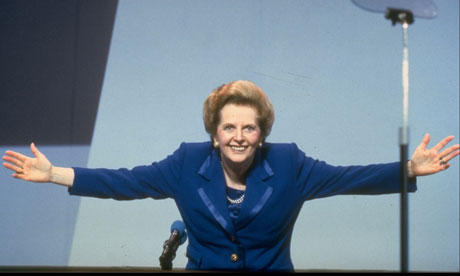
It probably would've been wiser for me to keep quiet. However, Margaret Thatcher
is going to be one of those people who will divide opinion for generations.
(Pic : The Guardian)
Well, "that day" has finally come. Margaret Thatcher has died. Although she was in ill health, and it was obvious she was – I'm not trying to be crass – in her final years, this news came out of the blue.
I'm not a ghoul, but I'd often wondered what I would end up writing when this happened. Would I even write anything at all? Should I write anything?

I'm just about old enough to remember the tail end of her premiership through to her resignation, but it's unquestionable that she left her impact on my adulthood, and the lives of everyone who's come after me.

There's so much I could focus on, but I think it'll be her economic policies that she'll be most heavily associated with in Wales.

Absolutely everything today – from housing, who we buy our energy from, where we work, even the way we get around on things like the railways and buses - was touched or influenced by her one way or another.

When she came to office, the UK was, as often described, a basketcase ripped apart by union self-interest, woeful economic policies (not helped by various energy disputes and crises) and manifest incompetence by people at the top of government.

She radically repositioned and restructured the British economy - fuelled by North Sea oil - overheating the south east of England in the process and purpetuating a slow, ongoing decline in the industrial parts of the island, which has only been reversed in a few cases like Manchester.

You could twist that into a positive too. People now work in comfortable offices, earning more money, buying more "things" and "stuff". They no longer have to worry about their own safety by having no choice but to take up some of the most unpleasant jobs imaginable. The lucky ones anyway.

That devastating legacy to Welsh heavy industry through the 70s and 80s eventually led to the destruction of individual lives those who missed out on the "new economy" - as a job vacuum was filled with welfare dependency and drugs.

At the time,  everything was reduced in worth to a simply tallying of how valuable it was. These losers in her redefined game of life, and Wales in general, became worthless. We've borne that label from the defeat of the miner's strike right through to the present.

So, when she left office, it was a different kind of basketcase she left behind – a nation-state slave to living in other people's pockets and a fostered individualist culture where everyone was now out to ask - "What's in it for me?"

I think it's safe to say that, as of 2008, that ideology has crumbled, despite outlasting Soviet Communism and completely destroying the old English left (Wales still retains it – just about).  It's also allowed politicians in Wales for decades - especially Labour - to point to her legacy as cover or to provide excuses for their own inaction.

However, people my age – deemed "Thatcher's children" - have grown up with it, and most of us actively embrace "me, me, me" regardless of our politics. As much as it embodies big banks, it also embodies stuff like reality television, things like Facebook/social media, mobile phone jingles, trendy city-centre apartments, hybrid turbo cars with big spoilers and it's the reason jobs like recruitment consultants exist.

Was she a good Prime Minister? Objectively, she was an excellent one. She was an ideologue and yes, a revolutionary, who knew precisely where she wanted to take the UK. She's going to be remembered as one of those great (as in important) historical figures that will divide opinion for as long as people have opinions.

Was she a good politician? The key difference between the two is that a leader of a nation has to maintain a detached objectivity from public feelings to be able to lead effectively – like a military officer. Politicians still have to care though, and have empathy. I think the fact so many of us fell off her coat tails as she enforced her revolution means she was a terrible politician. I don't think that's because she was incapable of caring, she probably just couldn't afford to care as there was too much at stake for her to reverse course.

Neither of that means she was a terrible person though, and I think it's wrong to think of her as evil, when all she was was a woman resolutely and pig-headedly committed to a set of core ideals and actions, believing with all her heart she was right even if those ideals were poisonous to some, yet the only answer to others.

Like it or not, she was in the right place at the right time. Like it or not, people voted for her again and again because they liked what she was doing - putting money in people's pockets and giving them "freedom of choice" over their "things" and "stuff".

Her legacy, in my eyes, will come down to those two words - "things" and "stuff."  That's what we've all been reduced to since, and what we will continue to pander to.

She's endured ill health during a rather frail old age, so she's been released from that now. I would've hoped she would've been given the dignity of a funeral in private so her body doesn't become a focal point for the inevitable ideological thrashing over how she's either Gloriana II, or an evil witch "milk snatcher."

Let her rest. Let her outdated ideals rest alongside her too.

Wednesday, 3 April 2013

The deal's done - so what next for Cardiff Airport?


I could've commented on this when Carwyn Jones made the original announcement back in December. I doubt he would've made that announcement unless an agreement was inevitable at the time, but it was worth waiting until the deal to buy Cardiff Airport was announced properly, which happened last week.

First thing's first, Cardiff Airport is important to Cardiff and its environs alone. As our capital, we should expect it to have decent air links – especially to be taken seriously for business. But this isn't economically essential for "Wales". North Wales has Liverpool and Manchester, mid Wales has Birmingham, while the far south east of Wales is probably within Bristol's catchment area anyway. Cardiff's catchment area should be everything west of Monmouthshire and south of Builth Wells – probably around 1.5-2million people.

I've touched on some of the issues surrounding Cardiff Airport and its future before, but let's be clear, once passenger figures start to reach 700,000-800,000 levels – which is entirely possible in the next 5 years based on the trends – there's a real possibility the whole thing could become so commercially unviable that closure could be an option. Something has to be done.

As far as I'm concerned this was the right decision. I'm pleased that the Welsh Government have taken some concerted and decisive action for once.

I can understand why the Tories are getting their knickers in a twist over this, as they're ideologically opposed to public ownership of anything, even if the airport will be "run commercially".

I'm also opposed to public ownership of things like airports, but I'm not opposed to public-private partnerships, not-for-profits or co-operative models of ownership and management. Sometimes that can be done completely within the private sector, sometimes – especially in the case of Wales - the state needs to help things along.


My biggest concern surrounds the Welsh Government hiding behind that old "commercial sensitivity/confidentiality" chestnut when questions were asked about this deal in the Senedd. When they finally revealed the numbers involved last week, my enthusiasm for this started to ebb.

I'm not a property expert or surveyor, but £52million seems a steep price tag for an airport that's barely keeping its annual passenger figures above the 1million mark. If I had to guess, I would've put the valuation at perhaps a half to two-thirds that.

Sion Barry also had a rather....optimistic....take on this in the Western Mail. I doubt Severnside airport is a goer now, and he seems to have ignored the presence of British Airways Maintenance, which is probably more important to the south Wales economy than the airport is.

Like it or not, it's done now. So what are the Welsh Government and the holding company put in charge of the airport going to do next?

Opportunities and threats


Cardiff's major trump card over Bristol is the length of its runway, which can accommodate larger aircraft, especially those used on long-haul flights. Air passenger duty for long haul flights could be devolved to Wales in the next million years, so there's a clear opportunity there to attract long haul flights to Cardiff.

That could take pressure off the London airports, with Cardiff Airport effectively acting as a mini "Heathrow West". That could expand Cardiff's catchment area, as well as save fuel for aircraft travelling from North, Central and South America, perhaps Australasia too (via Los Angeles).

Bristol might end up taking more "bucket and spade" short haul European flights as a result, but Cardiff should try and retain/attract some economically important air links to major European capitals. That might require a greater mix of airlines using the airport, and that was one of the first things the new chair pointed towards. I presume that's what Carwyn Jones and Edwina Hart have in mind too.

I think worries around transport - especially road transport - are overblown. People drive from the valleys to Bristol Airport because Bristol offers more choice in terms of flights and destinations. It certainly isn't easier to get to than Cardiff, and I think it's a lazy excuse so people can get around coming out and saying "Cardiff Airport is rubbish" to avoid appearing unpatriotic. That's no reason to ignore transport issues though.

Cardiff Airport - or should that be Rhoose village - already has a railway station, but it's about 2km from the terminal itself. There have been mooted proposals for a direct rail link to the airport terminal, but it's meeting opposition.

If that did happen, then I think there would need to be significant improvements from the west – that means train services to/from Swansea and west Wales being able to use the airport station. That would require significant junction/capacity improvements at Bridgend though, which aren't part of any Network Rail or Welsh Government plans.

The Welsh Government and civil service are very good at underpinning their plans with extensive - perhaps over the top - strategies and frameworks. Delivery is a whole other matter.

I'm starting to get worried, as there was – as the new chair has strongly hinted – no concrete business plan for the airport in place when the Welsh Government bought it. They're working on that now.

The Tories and Bristol Airport are going to whinge about this forever and a day. I'm actually surprised at the Conservative's stance on this, as it seems they'd be quite happy to let Cardiff Airport fall by the wayside and let Bristol take as much potential business traffic as possible. They're right to criticise the price tag, but at least the Welsh Government are doing something.

As for Bristol Airport, it's rather arrogant of them to assume south Wales should always remain within their domain. One leading reason they took off ahead of Cardiff was that they secured several low-cost carriers - like EasyJet - at the right time. The roles could very easily have been reversed.

When you weigh up all the variables, in many respects Cardiff should be the predominant airport in south west Britain. The reasons it isn't include persistent mismanagement and things like the Severn Bridge tolls. Fingers crossed that's about to change.

I don't think Carwyn Jones or Edwina Hart need be hung out to dry on this – yet – as they need a chance to see this though. They deserve friendly criticism on this and be given a two to three year window to be judged upon. If it fails, they'll need to take the can for it, but I'll give them credit for trying and being bold for once.

Plaid and the Lib Dems are right to ask for details of the Welsh Government's (and assorted partners) plans for the airport. They're being a sensible opposition about this, perhaps seeing the dire situation at Cardiff Airport for what it is. The Tories aren't, and come across as throwing a wobbler over very little.

But the wider issue remains. The Welsh Government wouldn't have spent £52million on an airport without some sort of "plan" or "strategy" underpinning that rather ballsy decision....would they?