This site is no longer updated

Please use the links in the sidebar to visit the new sites!

Monday, 8 July 2013

Education Bill introduced

Although school holiday powers were the headline-grabber, some of the
reforms outlined in the Welsh Government's Education Bill go deeper than that.
(Pic : Aberdeen City Council)
Last week, Education Minister Huw Lewis (Lab, Merthyr Tydfil & Rhymney) introduced the Education Bill to the Senedd. The Bill itself is available here (pdf), and the explanatory memorandum here (pdf).

The Bill itself has four major groups of proposals :

1. The Education Workforce Council

At the moment, teachers have to be members of a professional body – the General Teaching Council for Wales (GTfW) – in order to teach. Back in 2011, Leighton Andrews (Lab, Rhondda) said that he wanted all education workers (not just teachers) to work together to raise standards.

In this regard, the Bill proposes that :
  • The GTfW be reformed as the "Education Workforce Council" (EWC). Schedule 1 of the act sets out the EWC's constitution and powers.
  • The Education Workforce Council will be the registered professional body for anyone involved in education (i.e. educational support workers and further education teachers), not just school teachers, with the intention of eventually expanding this to include youth workers and those involved in work-based learning.
  • The EWC will have responsibility for promoting education careers, ensuring higher standards and dealing with professional conduct. The Bill outlines the EWC's role in disciplinary proceedings and suspensions, and they will have the power to:
    • Reprimand
    • Issue a conditional registration order (probation?)
    • Issue a suspension order
    • Issue a prohibition order, banning the person from registering (effectively banning them from teaching).
  • People will be unable to register with the EWC if they're barred from working with children or otherwise disqualified (from elsewhere in the UK too).
  • The Welsh Government be able to make regulations regarding who can or cannot work in a schools, as well as regulations regarding the induction of newly qualified teachers.
  • The Welsh Government will set a new Code of Practice and Conduct for the educational workforce, which the EWC will have to review every 3 years after it's introduced.

2. Learning Difficulties

The Bill makes changes to how independent schools (non-state) for learners with special education needs (SEN) are registered and approved, mainly to increase the amount of information available and improve transparency about levels of SEN teaching provided in such establishments.

The Bill also sets out improvements to how SEN teaching is provided and assessed for post-16 pupils, making the transition from school to further education colleges much easier and less bureaucratic, mainly in relation to the funding available to FE colleges to provide training/teaching for SEN pupils.

Local authorities will be required to produce a report outlining the needs of the learner, and the Bill will place duties on local authorities to provide SEN pupils with (what appears to be) whatever they need to carry on learning post-16.

It also beefs up the right to appeal for parents of post-16 SEN pupils when they believe their funding/places haven't been dealt with satisfactorily, as at the moment there are circumstances where they can't appeal, or can only do so via a Judicial Review.

3. School Holidays & Term Dates

At present, there's variation in school term dates between local authorities.

As Inside Out pointed out last week, England has gone down the path of allowing individual schools to decide term dates for themselves. Meanwhile, Wales is taking a more "centralist approach" by forcing local authorities to work together to harmonise school term and holiday dates, with a final nod from the Welsh Government. It'll only apply to state schools.

The plus is that school holidays usually result in increased child care costs, so harmonising them might provide a bit more certainty for parents, so they don't consider taking children on holiday during term time, for example.

The negative being that....is this really such a pressing issue that the Welsh Government need to involve themselves with it?

4. Appointment of HM Inspectors of education and training in Wales (Estyn)


The power to recommend school inspector appointments (in Wales) to Bet Windsor and her successors will transfer from the Welsh Secretary to the First Minster. It's hinted in the explanatory memorandum that similar functions relating to devolved matters in Wales will bypass the Welsh Secretary too thanks to a Privy Council agreement.

Conclusions

This has all the hallmarks of a Leighton Andrews Bill (examples here and here) - giving powers away on one hand whilst taking with the other, new regulations, and reformed structures under the "standards agenda" banner. It remains to be seen whether Huw Lewis will simply go along with that, or stamp his own approach and amend some aspects of it.

Plans for a register of home-schooled children were - as I understand it -  going to be included in this Bill, but have been dropped it appears.

The creation of an all-inclusive education professional standards body seems to have been broadly welcomed by other AMs when Huw introduced this to the Senedd. It's understandable, as it seems a bit strange that only teachers have to be registered, even if a lot more people than teachers are involved in educating children.

The headline in this was the school holiday business, as – in all honesty – that's the only bit most members of the public and parents can relate to. I'm in favour of a "six term system", and maybe the provisions in the Bill will eventually allow a Welsh Government to move towards that.

I think the big change in the Bill will be the SEN post-16 provisions. I'm not sure what the standards are like for those provisions now, but it does look as though the Bill is going to make some quite substantial changes there.

It's right that those with special needs are given as much opportunity as possible to pursue education to as high a level as they're capable of. That's so they don't get written off, or end up writing themselves off, getting stuck in a rut when they leave full-time education and try to enter the workforce because they might not have had the right opportunity to get the right qualifications.

Saturday, 6 July 2013

Wales in an emergency : Fit for purpose?

The Welsh Government have been criticised for its civil
emergency arrangements by the Wales Audit Office. Now, the
Assembly's committees have had their say.
(Pic : BBC)
Earlier this week, the Assembly's Public Accounts Committee published its report into civil emergency arrangements in Wales, prompted by a critical Wales Audit Office report into some aspects of those arrangements, and partly in the wake of serious flooding in Denbighshire last year.

The report (pdf) made 14 recommendations; broadly speaking :
  • The Welsh Government should consider seeking new legislative and statutory powers in relation to civil emergencies.
  • Better training, self-assessment and monitoring of performances of emergency responders.
  • Improve representation of voluntary bodies on emergency planning committees.
What is a "civil emergency"?

An "emergency" is defined in the Civil Contingencies Act 2004 as any event that threatens, damages or endangers property, the environment or life. That could include serious flooding, major accidents (like plane and train crashes) and even up to and including war and terrorism.

On the ground, emergencies are dealt with by Category One responders (the emergency services, local authorities, health boards and environmental agencies) and Category Two responders (utilities, transport and communications companies).

The government's role - Welsh and UK - is to oversee operations, helping to manage responses or provide resources, like the military.

The difference between a "civil" and a "national" emergency, is the latter usually involves a formal  state of emergency being declared by the UK Government that suspends certain state functions. It's only been used once, AFAIK, and that was during the 1970s fuel crisis. We probably came close to it during the 2000 fuel protests too.

What prompted the inquiry?

As said at the start, this committee inquiry was prompted by a critical Wales Audit Office (WAO) report into this matter from December 2012.

Executive Powers & Devolution

Civil contingencies are a non-devolved matter. However, the Welsh Government would generally be expected to provide leadership for major emergencies in Wales, co-ordinating their response – when appropriate – with the UK Government as part of an agreement between the two governments.

The executive powers are – surprise, surprise – muddied in relation to Wales, while the Scottish Executive have some powers for themselves in this area, perhaps because policing and criminal justice are devolved (so they would be better placed to deal with public disorder issues, for instance).

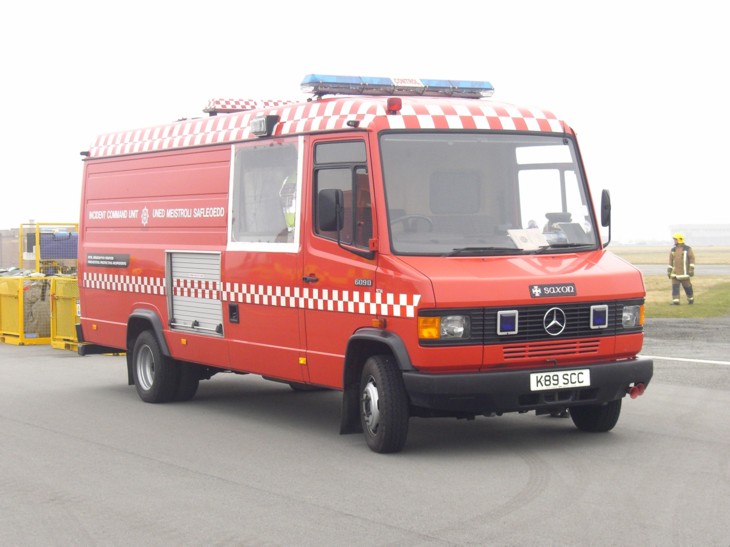
Category One responders - like the fire service - currently
have to deal with awkward command arrangements during
a civil emergency in Wales.
(Pic : Andrew Wright via fire-engine-photos.com)

This was just one major criticism picked up by the WAO, as it was unclear who was in charge, with the Welsh Government being able to support Category One responders, whilst not being responsible for managing or monitoring them.

On the ground, this meant that the different organisations would, "look to a range of government bodies for leadership" making the management of emergency responses unnecessarily complicated.

Of the many bodies giving evidence to the inquiry, it was generally expected that the Welsh Government should lead emergency responses within Wales.
The chair of the Wales Resilience Partnership, Sup.Int Claire Parmenter, said it would clear up matters. However, the WLGA said that they would oppose devolution of further executive powers due to increased administrative demands.

Implementation of the Civil Contingencies Act


The Civil Contingencies Act 2004 was brought in, mostly, because of the threat from terrorism in the wake of the 9/11 attacks. It updated emergency planning legislation, clearly set out who does what, and even led to a somewhat ill-fated public information campaign.

The Civil Contingencies Act 2004 updated older legislation
to meet modern emergency planning requirements
and new threats.
(Pic : West Yorkshire Fire Service)

You could say it contributed to public paranoia. In the main though, the powers have been used in relation to serious environmental emergencies like flooding, and were very effective in the response to the July 7th 2005 bombings in London. They clearly work.

The WAO found major failings in how Category One responders were implementing their Civil Contingencies Act duties, in particular inconsistent approaches by different bodies and a lack of monitoring of those obligations.

This matters because if emergency planning isn't done properly, when these situations do arise, it can lead to confusion if people don't know precisely who's giving the orders and on what basis, possibly putting lives or property in danger.

Regional Emergency Planning, Budgets & Training

The Welsh Government operate an emergency management fund to compensate local authorities for costs relating to emergency responses. Some emergencies exhaust these budgets rather quickly.

For example, the total cost of the 2011 Fforestfach tyre fire in Swansea was said to be £1.5million, with a grant of £1million from the Welsh Government, leaving a net cost to Swansea Council of £500k. Under the circumstances that would've been a big chunk of their emergency budget I would imagine. It's recommended that both local authorities and Welsh Government take relative exposure to certain risks into account when deciding their emergency budgets.

Emergency planning functions are said to be spread too thinly across too many organisations – a regular recurring theme in Welsh public policy – and should be restructured to a regional level.

*AWOOOOGA*  I'll just leave this here *AWOOOOGA*.

However, significant barriers would need to be overcome to enable that, and are still being investigated by the Welsh Government.

Emergency training exercises take place at UK level twice a year. There are also national-level training exercises in Wales, with few concerns about that training. In spite of that, it's said that Welsh responders aren't "taking full responsibility for assessing their performance" as set out by the UK Government. Could lazy assessment lead to lazy responses?

Social Media & Emergencies


Social media is said to have both positive and negative impacts. The obvious positives are that information can be sent out quickly by authorities. The negatives being that sometimes that information can be faulty, leading to rumours and mis-information being spread quickly too.


During the Gleision mine accident, it's said that information was sometimes spread faster than the emergency services dealt with issues on the ground – not exactly helpful.

The UK Government want to trial mobile alerts, which can be sent to a specific geographical area.

In north Wales, authorities are trying to map vulnerable people (i.e. elderly living on flood plains) so they know precisely who would need to be moved or sheltered during an emergency. I've mentioned something similar on flooding back in January, so I'm glad they've been thinking along the same lines.

Dull, but necessary


Yeah, not one of my most exciting blogs in a long list of not very exciting blogs, but
it's rare I can blog about defence issues in Wales without referring to independence.

One of the first duties of any government – devolved or not – is to protect the population. That's why  this inquiry and the WAO report were important.

Emergency planning is something that generally goes on behind the scenes, and we don't really notice it until it's needed. We've had several major incidents recently that have caused serious disruption or loss of life in Wales, including – as mentioned - serious flooding, M4 accidents, the Gleision mine accident and the measles epidemic.

Having skimmed through the report, I doubt there were major failings that could've put lives at risk, but obviously having a clearer understanding of who's in charge of what during an emergency would help enormously.

In terms of the civil response to emergencies themselves, like the report suggests, new ways of warning the public are essential if we want to prevent people putting themselves in harm's way in the first place. That also means all of us using things like Twitter responsibly to prevent rumours getting out of control, as well as treating government advice during emergencies with the utmost seriousness.

Tuesday, 2 July 2013

Assembly opts in favour of opt out organ donation

Presumed consent organ donation is coming to Wales
after the Assembly approved new law today.
(Pic : Wales Online)
One of the most eye-catching pieces of legislation laid before the National Assembly has just been passed (eventually!) – the Human Transplantation Bill.

Within two years – and assuming this doesn't lead to a collision course with Westminster before Royal Assent - the Human Transplantation Act will create an "presumed consent" organ donation system for Welsh residents.

You should take the following information with a health warning (excuse the pun), as I'd imagine the Welsh Government and health authorities will explain it better before the new system comes into force.

Who will the presumed consent system apply to?

Everyone who dies in Wales, with the exception of :
  • Adults who aren't ordinarily resident in Wales (i.e tourists, prisoners, armed forces personnel stationed in Wales), or have lived in Wales for less than 12 months.
  • Adults, who prior to death, "lacked the capacity" to understand the system or give their consent.
  • Children (under 18s).
How will the new system work in practice?

It'll be presumed that a person consents to having their organs donated, unless :
  • They "opted out" on the donor register under the new system.
  • The person is alive – Consent will have to be given by them.
  • The person dies and appointed someone to decide on their behalf – Consent will have to be given by the appointed person.
  • They're a child - Consent will either have to be given when they're alive (and as long as they understand the system), or consent has to be sought from the parent/guardian or someone with a "qualifying relationship" (generally blood or step relatives).
  • A relative or long standing friend believes the deceased would object to their organs being donated.
So, despite the "presumed consent" label, it isn't absolute. It's what's been described as a "soft opt out" system. Some form of consent will still need to be sought, and relatives and friends will still have sway – but the wishes of the deceased overrides anything else.

What else does the law include?


A new organ donor register – Where people will be able to say whether they specifically consent or don't consent (opt out) to organ donation, as well as being able to decide which organs to donate. The latest explanatory memorandum (pdf) says this will be done at at a UK level, with an agreement that the Welsh Government pay half the costs of establishing the new register.

Promoting organ donation
- The Welsh Government/Health Minister will have a legal obligation to promote organ donation at least once a year, as well as public information campaigns on how the new donation system works. They'll have to report to the Assembly on how they've done this annually until 2018. 17 year olds will also have to be informed about the new system in the run up to their 18th birthday.

Appointing a representative – The Act lays out the arrangements for a person to appoint someone to make an organ donation decision on a their behalf (as noted further up). This is already in the Human Tissues Act 2004, but will allow Welsh Ministers to set regulations determining who can act as an appointed representative.

Creates new criminal offences relating to transplantation – It'll be illegal to carry out a transplant without consent (unless deemed under the opt-out system). It'll also be illegal to lie about transplant procedures or lie about someone giving consent when they haven't.

Storage of bodies for transplantation - Bodies of the recently deceased can be specifically stored for organ transplantation under the new system by the relevant authorities - care homes, coroners etc.

Excluded relevant materials
  • Welsh Government regulations will determine what body parts will or won't be eligible ("excluded relevant material") for transplantation under the new arrangements.
  • For transplantations involving "excluded relevant materials", consent will be explicitly sought, it won't be "opt out" like other body parts.
  • "Excluded relevant materials" will include composite tissues (tissues made up of multiple tissue types, like a limb or face) and transplants considered "novel". "Novel", I'm presuming, could include things like reproductive organs.
The fixed costs of setting up the scheme are said to be £7.6million between now and 2022. The aim is to have an extra 15 donors per year. However, if the scheme generates an extra 25 donors a year, it would be worth £250million to the Welsh NHS thanks to reduced costs of no longer having to use expensive treatments, and increased healthy life expectancy etc.

What this means

It isn't fair to say that everything about this is hunky dory, being an emotive topic. If people believe that organ donation becomes something "expected" rather than a gift, they could well decide to opt out because they don't trust the government. That's the controversial part.

Concerns have also been raised about whether NHS resources are going to be diverted towards this from elsewhere, as well as question marks over whether similar schemes and laws elsewhere in the world actually prove that an "opt out" system is successful.

In practical terms, the new system is likely only to be used a dozen or so times a year. However, if this law fulfills its intent, it'll save lives. It's probably laying the groundwork for a similar law across the UK too.

I might've been a bit mean in the past, so I think it's worth giving former Health Ministers Lesley Griffiths (Lab, Wrexham) and Edwina Hart (Lab, Gower) a double thumbs up. This is very much "Lesley's Law" I suppose - even if it was mooted during Edwina Hart's tenure - and she will have overseen the bulk of issues arising while it passed through the Senedd. Current Health Minister Mark Drakeford (Lab, Cardiff West) deserves credit for his time as chair of the Health Committee too, and for seeing the Bill through to the end.

But this is about more than backslapping, as all parties have played their part in bringing this about.

Those who oppose some of the principles of this - in particular Darren Millar AM (Con, Clwyd West) - also deserve credit for not scaremongering, being practical in opposition and in terms of the amendments they put forward.

There were some really ugly rumours and insinuations going around prior to the law passing. For example, there won't be any such thing as "organ harvesting", and believing such shows a complete misunderstanding of how organ transplantation works.

If the Local Democracy Act is an example of a law where you're left wondering why the Assembly even bothered, this one's the exact opposite. This sort of stuff does matter to people and deserves wider coverage. In fairness, it's got plenty of coverage across the media today - Welsh and UK.

The question, as always, remains as to whether enough people in Wales were fully aware of this in the build up to today?

I think this has been handled very well by the Assembly as a whole, and they earned their spurs today. It is, for now, the most controversial law passed by the National Assembly, and probably ever will be, barring the sorts of things we could do with independence or "devo max".

Historic? Perhaps. But it has to work - for prospective donors, those who want to opt out and those waiting for organs and a chance of a normal, healthy life.

Sunday, 30 June 2013

Senedd Watch - June 2013

  • First Minister Carwyn Jones called for a “national conversation” on the future of the Welsh language during a visit to the Urdd Eisteddfod in Pembrokeshire, following the 2011 Census results, which showed a fall in the Welsh-speaking population.
  • The Assembly's Enterprise & Business Committee report into the European Union's Horizon 2020 scheme called for a similar approach taken by the Republic of Ireland and Scotland in pooling and attracting talent - and investment - for research and development.
  • Shadow Transport Minister, Byron Davies (Con, South Wales West), unveiled the Welsh Conservative “blueprint” for Cardiff Airport, including : marketing the airport to new carriers, lower air passenger duty (once devolved), enhanced freight facilities and an improvement to bus services. Vaughan Gething AM (Lab, Cardiff S. & Penarth) described it as a “u-turn” and welcomed them “backing the Welsh Government's interventionist approach.”
  • A vote to approve Mick Antoniw AM's (Lab, Pontypridd) Asbestos Disease Bill was postponed, after representations from the Association of British Insurers claimed the draft law could be outside the competence of the National Assembly due to provisions relating to the insurance industry.
  • The Assembly's Public Accounts Committee criticised Welsh Government handling of the purchase of River Lodge in Llangollen, Powys. The plans were to lease the lodge for a martial arts centre, however £1.6million was “wasted” when the deal fell through, in addition to conflict of interests involving senior officials. Committee chair, Darren Millar AM (Con, Clwyd West), described the inquiry as one of the “most illuminating and troubling ever undertaken by the committee.”
  • Wales has fewer doctors per head than Moldova and Kazakhstan according to Plaid Cymru research. Elin Jones AM (Plaid, Ceredigion) suggested financial incentives to recruit foreign doctors and encouraging bright schoolchildren into medicine. The Welsh Government said the vacancy rate was favourable compared to the rest of the UK, while the BMA described the situation as an “unacceptable state of affairs.”
  • The First Minister published the second annual Programme for Government report. He said it highlighted that his government were “standing up for Wales” during difficult economic times. Opposition parties criticised the lack of targets, describing the report as a “fig leaf” and an attempt to give the impression that “all is well”.
  • The Public Services Ombudsman for Wales, Peter Tyndall, told the Assembly's Health & Social Care Committee he would like to have the power to block publication of some reports to “protect the vulnerable”. Welsh Liberal Democrat leader, Kirsty Williams, said public reports are needed to learn from mistakes. Legal experts said there were “obvious dangers” from such a move.
  • Plaid Cymru leader, Leanne Wood, repeated her calls for the UK Government to abandon plans to privatise parts of the probation service in EnglandandWales, and for probation to be devolved. She described the UK Government's plans as a “dangerous, ideology-driven path to privatise services that should not be in private hands.”
  • A Westminster committee criticised plans for a £25billion tidal barrage across the Severn Estuary, claiming information submitted to them was inadequate, and that there was an “unproven” case. They suggested alternative ways to harness tidal power be found.
  • The First Minister warned further cuts could be made to “unprotected services” in the run up to the UK Chancellor's spending review on June 26th. The spending review made a 2% cut in the Welsh Government's revenue budget, but UK Chancellor George Osbourne promised “impressive” plans for an M4 relief road, as well as a response to Part I of the Silk Commission.
  • Health Minister Mark Drakeford (Lab, Cardiff West) announced legislation would be introduced giving local health boards three years to submit accounts (instead of annually) to give them greater flexibility. He also said cancer patients should see specialists within 10 days to help meet a 62 day target for treatment, and announced a new plan to reduce “bed blocking” to increase emergency treatment capacity.
  • A second conference on media coverage of the Assembly - on hyper-local journalism - suggested AMs need to make their work relevant to the public and the Assembly should back the creation of local news outlets.
  • The Assembly's Constitutional Affairs Committee recommended the “complete disestablishment” of the Church in Wales, after “loopholes” were revealed, tying the Church in Wales to the Church of England. They also recommended that changes to burial law, with regard Church in Wales burial sites, could be included as part of a future Bill.
  • Tourism advisers told the Welsh Government that Wales should aim to become an upmarket, luxury tourist destination, with an aim of increasing tourist spend by 10% over the next seven years. Business Minister, Edwina Hart (Lab, Gower), described the target as “challenging yet realistic.” It's estimated that visitors spend £4.5billion in Wales annually.
  • Plaid Cymru freedom of information requests showed that 11,000 life-threatening emergency calls took more than twice the 8 minute target to be responded to by ambulance. Elin Jones AM described the figures as “disturbing”. The Welsh Government said only 6.8% of urgent calls were attended to later than 20 minutes.
  • Former Plaid Cymru leader and Deputy First Minister, Ieuan Wyn Jones, resigned his Ynys Mon seat on June 18th – which he represented since 1999 - to lead the development of the new Menai Science Park. Political figures paid tribute, with Leanne Wood thanking him for his work “over the last 26 years.” His resignation triggered a by-election, due to take place on August 1st.
  • A report into Welsh education arrangements recommended the number of local education authorities be “cut by a third”, following a review requested by the Welsh Government, and in light of a quarter of local authorities having their education services in “special measures”.
  • The National Assembly passed the Local Government Democracy Bill, which makes changes to the boundary and remuneration commissions, and requires community and town councils have a web presence by 2015. An amendment also passed, setting out the role of the Independent Remuneration Panel with regard setting the pay of local authority chief executives.
  • The Assembly's Public Accounts Committee report into grant management highlighted several failures and weaknesses within the Welsh Government, in particular lack of cross-department monitoring and not reacting quickly enough to concerns about irregularities. There was also an attack on the handling of the AWEMA scandal in 2012.
  • Lindsay Whittle AM (Plaid, South Wales East) said he would table an amendment to the Social Services & Well Being Bill to outlaw “smacking”, describing it as a “golden opportunity”. Glyn Davies MP said the responsibility fell within criminal justice powers and was outside the Assembly's devolved competence, describing it as a “borderline issue”.
  • The Assembly's Health Committee reported that the Welsh Government were unlikely to meet their diabetes treatment targets unless urgent action is taken. They said the disease had reached “epidemic” levels, with 5% of the Welsh population now having diabetes, costing the Welsh NHS £500million per year.
  • A Task & Finish Group report, chaired by Baroness Grey-Thompson, recommended that PE becomes a “core subject” in schools to help combat obesity and increase children's physical activity. Teaching unions supported the idea in principle, but warned that it could end up diluting other core subjects like English and maths.
  • Plaid Cymru and the Welsh Liberal Democrats announced they would work jointly on budget negotiations, with the Welsh Government needing to negotiate with one team representing both parties in future.
  • Leighton Andrews resigned as Education Minister on June 25th, after the First Minister refused to support his decision to oppose school changes in his Rhondda constituency - as part of his own surplus places policy – in the Senedd. The First Minister also rebuked him, and others, earlier this month for using Welsh Labour branding in a campaign against potential downgrades at Royal Glamorgan Hospital, Llantrisant.
  • Following the resignation, and subsequent reshuffle on June 26th, the First Minister took responsibility for the Welsh language, Huw Lewis (Lab, Merthyr Tydfil & Rhymney) was appointed Education Minister, Jeff Cuthbert (Lab, Caerphilly) Minister for Communities & Tackling Poverty, while Vaughan Gething and Ken Skates (Lab, Clwyd South) were appointed to deputy minister positions.
  • Two senior executives of north Wales' Besti Cadwaladr health board resigned after a damning report into the running of the board, which cited management failings, delayed operations and a lack of foresight when planning – all of which was said to have "put patients at risk”.
  • Business Minister Edwina Hart said a new consultation on an M4 bypass around Newport would be launched in September following the Comprehensive Spending Review, where the project was described as “one of the most important road projects in the UK.”
  • The first report from Prof. Dylan Jones-Evans into access to finance for small and medium sized businesses, recommended that more bank lending decisions be made in Wales, better links between business support programmes and the banking sector and changes to how lending applications are dealt with.
  • A report from the Wales Co-operative Centre suggested that more be done to increase the number of housing co-operatives in Wales, citing ten potential schemes across Wales which could be developed in this way.
Projects announced in June include : a £2billion infrastructure programme by Dwr Cymru until 2021, a consultation into a national service to help flood victims, £1.9million to boost credit union membership, plans for a £200million gas-fired power station near Hirwaun, confirmation from the UK Government of plans for a £250million prison in north Wales and a £10million free wi-fi project in Cardiff city centre.

Wednesday, 26 June 2013

Physical Literacy - Should PE become a core subject?

With obesity on the rise, is it time for PE to be at the
heart of school life in the same way as literacy and numeracy?
(Pic : The Telegraph)
On Monday, a Sports Wales Task & Finish Group - chaired by Baroness Tanni Grey-Thompson - reported back to the Welsh Government their proposals to increase levels of physical activity in schools.

I've covered the "obesity crisis" in Wales before, but the requirement for a review into school activity is laid out in very stark terms in the report (which you can read here) :
  • 36% of under-16s in Wales are overweight or obese (2010).
  • The percentage of 2-15 year olds who are obese rose from 16% in 2008 to 19% in 2010.
  • Just 28% of primary and 26% of secondary school pupils are said to be "regularly active".

There was a separate warning from the Assembly's Health Committee, whose latest report suggests diabetes is reaching "epidemic" proportions in Wales, and the Welsh Government are likely to miss targets for tackling the disease. Type II diabetes is linked to excess body weight.

So if nothing's done, in the long term it's going to lead to reduced healthy life expectancy and put immense strain on NHS resources. It's also likely to be the first thing in Leighton Andrews' successor's in-tray.

School PE – The current situation

PE is a compulsory part of the national curriculum for 3-16 year olds, but it's compulsory in the same way religious education, PSE and IT are – usually one or two teaching hours a week. There could be simple practical reasons why, like too few facilities for too many pupils.

The report cites research that suggests the vast majority (74%) of primary school pupils enjoy physical activity "a lot", with only 4% saying they don't enjoy it at all. That changes in secondary school, with only 50% enjoying it "a lot" and 14% not enjoying it at all. The report hints that PE lessons themselves might be putting pupils off regular exercise.

It's said that while professional athletes and big sporting events like the Olympics provide "inspiration" – and have led to "promising" increases in sports participation in Wales since – they don't provide enough of an inspiration for the "hardest to reach".

What does the report recommend?

PE lessons and teachers don't have the best of reputations.
But is their contribution to pupils' future wellbeing undervalued?
(Pic : Vest Virginia Surf Report)

There was one major headline recommendation – that PE should become a "core subject" in the national curriculum alongside English, maths and science (and Welsh first language in Welsh medium schools).

That would require a significant shift in mindset to make the subject more "valued". They want more teachers to take part in the Physical Education and School Sport (PESS) programme, which offers higher quality training, in order to develop "expert teachers".

Allied to this, there's a desire to create a framework for "physical literacy" in the curriculum – physical literacy defined roughly as, "having the motivation and confidence to become physically competent". It'll mean all teachers will have to show competence when it comes to PE in the same way they have to for literacy and numeracy.

It's estimated the cost of developing this would be around £5million.

I think that's sound. If you don't teach languages properly, you end up with illiterates. If you don't teach maths properly, you end up with innumerates. If you don't teach science properly, people get killed by plug sockets. If you don't teach PE properly, people will grow up to live unhealthy lifestyles.


What else could be done?

  • PE (in secondary schools) could be "streamed" – The more able are currently taught PE alongside those who aren't as good or confident. That's unfair to both groups. Separate the "elite", who could go down the road of more professional coaching, from those who need exercise for exercise's sake.
  • Doctor/Nurse exemptions only? - Pupils are actually going to have to participate in PE regularly in order for this to work, so exemptions from lessons could perhaps be a certificate signed by a GP or school nurse. However, certain biological cycles would make PE uncomfortable for girls and could complicate matters here. So maybe that could be treated with more tact and as a special case.
  • Change PE outfits – Schools shouldn't have a set "PE kit", and perhaps should let pupils choose what they wear when doing exercise. This could help girls and the overweight in particular for obvious reasons.
  • Better organised sport clubs & competitions out-of-school – That's a whole topic in itself, but if you want pupils to be healthy and active all year round, they'll have to be active outside of PE lessons as well. I've mentioned "umbrella clubs" before, with many different sports playing under one co-operative identity in a given area.
  • Make use of out-of-school facilities – This was hinted at in the report, and many schools already do this to a certain extent. If a school is close enough to a leisure centre, for example, but don't have the facilities on school sites, should they have time set aside to use them exclusively?
  • Be creative – PE shouldn't be all ball games, atheltics and gymnastics. The definition of PE could be expanded to include things like martial arts, outdoor activities like geocaching and cycling, mixed-sex sports like korfball, as well as dancing exercises and pool-based exercise. Schools could work in partnership with outside experts and sports bodies to develop these classes.

What are the other issues?

I think it's going to be very difficult to incorporate the Chief Medical Officer's recommendation of three hours of "vigorous physical activity" for every pupil per week into school timetables, especially in secondary schools. We're going to have to give serious consideration to extending the school day if that's the benchmark level of exercise the Welsh Government eventually want to adopt.

Does physical activity stop at the school gates?
(Pic : cycleshelters.uk.com)

Physical fitness doesn't just come down to exercise either. You could easily argue that nutrition should become a core subject for the same reasons as PE. We also have to encourage walking and cycling to school (and generally in life) and provide healthier meals in school canteens.

As well as increased physical activity, schools are going to have to offer more choice in terms of those activities, especially if they want to get to those "hard to reach" groups.

Even at my biggest I was strong for my size and had a decent throwing arm. But running for extended periods of time was painful, I'm not tall enough to be a useful rugby player, so-so at football and a poor swimmer. Maybe pupils should be pointed towards activities that take advantage of innate physical abilities and likes - with teachers trained to look for those strengths and guide pupils towards sports they might actually be good at.

So it's fair to say that I really enjoyed some sports and activities, and genuinely dreaded others, groaning whenever I saw PE on the timetable. Heavy rain during the summer so we would play handball or 5-a-side instead of doing cross country or athletics felt like a godsend. Did anyone else think like that?

PE is currently taught in a way that's a bit like going to subject called "art", having to play a musical instrument – regardless of talent - and getting ripped apart if you're not any good. That's silly, isn't it?

Do we need to be careful that the emphasis
on healthy lifestyles doesn't lead to
over-emphasis on a physical "ideal" ?
(Pic : thecurvynerd.com)

There's also the overarching issue of body image. Even if the underlying principle of more exercise is fine, you're going to have to be careful that the emphasis on "healthy bodies" doesn't lead to pupils developing a complex.
It needs to be made clear to everyone from an early age that we all come in different shapes and sizes, and that's fine, but you still need to live healthily.How would teachers be able to do that if on the one hand they're telling pupils they're fine the way they are, and on the other asking them – "Do you even lift?"

Bethan Jenkins AM (Plaid, South Wales West) has advocated self-esteem lessons in schools. I can understand why, but aren't body image issues indirectly a result of everyone else's attitudes and the media, not the self? Maybe teaching compassion would be better, if somewhat more difficult.


Monday, 24 June 2013

Giving devolution a smack

A ban on "smacking" in Wales has reared its head once
more, but is there any chance of movement?
(Pic : topnews.ae)
BBC Wales reported last week on another (long-standing) row bubbling over the Assembly's powers, this time in relation to a ban on "smacking".

Lindsay Whittle AM (Plaid, South Wales East) described the Social Services and Well Being Bill – due to return from committee later this year – as a "golden opportunity" to enact a ban, saying he would table an amendment to that effect. However, once again the question of whether the Assembly would be able to do so has been raised.

This issue was first raised in 2011. The Assembly approved a cross-party motion calling on Deputy Minister for Social Services & Children, Gwenda Thomas (Lab, Neath), to enact legislation banning smacking, which she rejected.

I don't like repeating myself, but with the Silk Commission, reserved powers being openly discussed and the fact we all like a constitutional fudge (because it seems to be the only way to get Welsh politics into the headlines), I've decided to come back to it.

The background to the ban proposal


As for my own beliefs, I think parents alone should decide how to discipline their children, and there might be scenarios where physical restraint is appropriate (i.e. a younger child running out into a road, breaking up playground fights). There's a difference between "physical restraint" and striking a child though.


I loath dragging out
clichés, but I was smacked and it didn't do me any harm.

However, that sort of anecdotal evidence doesn't mean it'll be the same in all cases.
Using violence to routinely punish children is perhaps a sign the parent has "lost it", not the child, and it provides cover for abuse. A smacking ban has the support of various bodies, including the Royal Colleges of Paediatrics (pdf) and Psychiatrists (pdf).

I'm not opposed to a smacking ban in principle, I just think it would be difficult to enforce. It could lead to confusion as to what constitutes smacking, discourage "physical restraint" of any sort - even if it's needed - or end up bogged down in guidelines that nobody will pay any attention to.

Welsh Labour, based on their track record of wanting to uphold children's rights, probably would ban smacking if they had the opportunity.

I think this time they'd rather avoid a confrontation with Westminster on the constitution so one of their flagship Bills can pass. This particular Bill has taken its time to get this far and has been seriously troubled at several points.

Betsan Powys noted back in April that Labour's Chief Whip, Janice Gregory (Lab, Ogmore), changed the party's membership on the Children & Young People Committee, replacing vocally pro-smacking ban AMs like Christine Chapman (Lab, Cynon Valley) and Julie Morgan (Lab, Cardiff North). With amendments to legislation needing cross-party support in committee, it would've preventing that from happening.

The Bill will return to plenary with Lindsay Whittle keen to put an amendment in. That's unlikely to have much Conservative support, so any amendment would need significant Labour support, as well as Plaid and the Lib Dems on board.

So, in my opinion, the "golden opportunity" was lost in committee thanks to the musical chairs.

The power to ban smacking


Schedule 7 of the Government of Wales Act 2006 – which outlines what powers are devolved to Wales since the 2011 referendum - says that:
(Part 1, section 15)

Social welfare including social services. Protection and well-being of children (including adoption and fostering) and of young adults. Care of children,young adults, vulnerable persons and older persons, including care standards. Badges for display on motor vehicles used by disabled persons.

....are devolved. There are no exceptions relating to "corporal punishment" or "legal physical chastisement of children".

If smacking is counted as an assault, then that falls under the banner of "criminal justice".
The Assembly, however, does have the power to change criminal laws for matters within its remit, even if the criminal justice system as a whole isn't devolved.

If smacking falls under the banner of "protection and well-being of children" or even domestic violence – which you could interpret it as - then it probably is devolved.

Last time it was David Davies MP (Con, Monmouth) who raised the issue of this being non-devolved –  partly because he opposes a smacking ban anyway. This time it's Glyn Davies MP (Con, Montgomery), though Glyn is perhaps more correct to describe it as a "borderline issue" rather than black or white.

The question then, is whether smacking is an assault or a punishment relating to childcare? The latter probably means it falls under the Assembly's remit.

But that would also mean that David Davies - and others who oppose a smacking ban in Wales on constitutional grounds - would consider smacking a form of "assault" and a criminal offence, which....contradicts their position.

If Lindsay – or other AMs who support a ban - fail to get their amendment in this time around, I think they should concentrate on the proposed domestic violence law. That'll get the Welsh Government shifting uncomfortably in their seats. They couldn't work to end a form of violence against adults whilst neglecting children, could they?

Thursday, 20 June 2013

Local Democracy Bill passed by the Assembly

Things are starting to wind down at the National Assembly as the summer recess approaches. The major business left largely consists of tying up loose legislative ends. At least four Bills are/were on course to be passed before July 19th .

There've been problems with Mick Antoniw's (Lab, Pontypridd) Asbestos Disease Bill, so its final vote has been delayed. There's also Peter Black's (Lib Dem, South Wales West) Mobile Homes Bill - due for a vote on July 10th - and the controversial Human Transplantation Bill, which is up for the vote on
July 2nd .

On Tuesday, another of those four laws was passed – the Local Government Democracy Bill.

The Bill, in its latest incarnation prior to Tuesday (pdf), had the following provisions :
  • Modifications to the Local Boundary Commission for Wales – Including its name (changed to Local Democracy and Boundary Commission), membership and introducing a ten year cycle to review electoral arrangements in each local authority and community.
  • Modifications to the Independent Remuneration Panel (which sets local councillor's pay) – Amendments will be made to the Local Government Measure 2011, which will change aspects of how/when the panel submits its annual report, and give the panel the power to make local authorities publish information relating to councillors' pay and expenses.
  • Political balance on Local Authority Committees – Makes political balance of membership of council committees a legal requirement.
  • Joint Standards Committees – Gives local authorities the power to establish collaborative standards committees to deal with codes of conduct and their violations.
  • Online presence for town and community councils – Every town and community council will be required to provide contact details and records of proceedings via the internet by May 2015.
  • Council Chairs and Presiding Officers – Allows councils to seperate the role of an elected presiding officer from the ceremonical civic "chair" of the local authority (i.e Ceremonial Mayor).

OK, that's pretty dry stuff.

Amendments were tabled by AMs (pdf) and Local Government Minister Lesley Griffiths (Lab, Wrexham), which were also voted on to create a final version of the Bill (pdf), which will now go to Bet Windsor for the official stamp of approval, barring any intervention by Westminster.

Most of the amendments related to wording. The significant ones were :

  • Amendment 3 - Peter Black AM & Rhodri Glyn Thomas AM (Plaid, Carms. E & Dinefwr) - Giving people reporting council proceedings "reasonable facilities". I'm not sure what that meant exactly. (Not Passed)
  • Amendment 5 – Ditto – Introducing Single Transferable Vote for local authority elections. (Not Passed)
  • Amendment 6 – Ditto – Provisions relating to the conduct of local authority elections, including election expenses. (Not Passed)
  • Amendment 7 – Ditto – No payments to returning officers except those in relation to carrying out their duties. So it closes the (rumoured) "pocket the savings" loophole with regard election costs. (Not Passed)
  • Amendment 54 – Lesley Griffiths AM – Brought in as part of a deal with opposition parties, it lays out the powers of the Independent Remuneration Panel with regard the pay of local authority chief executives. (Passed)

That agreement resulted Peter Black/Rhodri Glyn Thomas withdrawing their amendment (15) for setting maximum pay for "senior officers". Janet Finch-Saunders AM (Con, Aberconwy) kept it in as Amendment 9 which, as hinted, covered all senior officers, not just chief executives. (Not Passed)

"Local Democracy Bill" sounds like it would be meaty enough to send the proverbial equivalent of several columns of tanks over the Loughor, in order to liberate the Democratic People's Republic of Carmarthenshire. Nyet, comrades.

Echoing what Caebrwyn said yesterday, the reality is that it's quite a limp law, that deals mostly with administrative matters, was beefed up by opposition amendments (all of which failed to pass) and will likely mean nowt to the general public. The title makes it sound grander than it actually is, a bit like the Active Travel Bill.

It's understandable why the opposition and Welsh Government agreed to deal with local authority executive pay, following some rather embarrassing revelations over the last few months.

I'm not complaining, and it's without a doubt the headline part of the Bill. Executives shouldn't be paid so many more times their lowest paid worker's salaries. If we expect principles like those to eventually apply to private companies, we should expect them to apply to the public sector too.

What's not understandable, is why they've decided – in a law called "Local Democracy Bill" – to take powers away from local authorities. A sentiment echoed by others.

There's clearly frustration in Cathays Park and the Senedd about how services are being run at a local level. Although there's currently a review of local services taking place, Welsh Government and opposition alike are giving the the impression of being scared away from making root and branch reforms, and are instead trying to reorganise it via the back door – like the recent report recommending collaborative education authorities. I made my thoughts on local government clear(ish) earlier this year.

A lot has also been said recently about the media and public paying little or no attention to the Assembly, AMs and what the institution does. Here's a case in point. Try convincing the public at large that laws like these are important and a good use of AMs' time. Even I'm struggling.

Of course, it'll be very different on July 2nd .

Thursday, 13 June 2013

Wales : State of Innovation? Or doing the wrong things better?

In the last few weeks, a report entitled State of Innovation (pdf) - authored by Nesta's Matthew Gatehouse and Adam Price - was published as part of the Welsh Public Services 2025 programme.

It sets out a vision of a more innovative Welsh public sector which, considering it's proportionally large impact on the Welsh economy, could well become necessary if we want to see public services delivered more efficiently, and more imaginatively, in the backdrop of public spending cuts.

Why the public sector needs innovation

The report highlights a "triple vice":

  • Public spending cuts and austerity – The impact is likely to last for at least five years, probably more, affecting the general Welsh economy (due to more public sector employees). There's also the issue of "Offa's Gap" – a gap in economic productivity between Wales and the rest of the UK. So public services can't be based off the back of continuous economic growth filling coffers anymore.
  • An ageing and ill population – Rates of child poverty and chronic illness remain above UK averages. Wales also has a proportionately older population too, with the number of over-75s expected to increase by up to 80% by the 2030s.
  • Environmental and social pressures – We increasingly expect to do activities "on demand" and "on the fly" since the advent of things like social media - expecting the same flexibility from our public services. We're still using more than our fair share of natural resources despite commitments to "sustainability". This impacts the public sector, as much as the private sector and individual households.

What does public sector innovation actually mean?

The report says, "new ideas that work at creating public value". In English, I think that means improving how things are run, instead of simply throwing money at problems and hoping that'll work –  the usual way of doing things. "Working smarter", then.

The report describes three different types of innovation :
  • Incremental – Smaller changes to existing services over a longer period of time.
  • Radical – Significant changes to existing services, without altering the underlying purpose of those services.
  • Transformational "Ripping the whole lot up and starting again", with completely new services or methods of service delivery.
I think it's safe to say that the Welsh Government and civil service often opt for "incremental" change, or even not bothering with change at all, and rarely make the step up to "radical" innovation. Those "transformational" changes require new technologies, mind-sets and skills; so they might sound seductive, but might not always be the best option on the table.

Present Welsh public service innovation

Foundation Phase is given as an example of where the
Welsh public sector has been "innovative". Similar examples
are fleeting, however.
(Pic : npted.org)
Devolution is said to have been delivered off the back of "Made in Wales" solutions to long-standing problems in areas like the economy and health. However, there's lament at the lack of innovation. Instead – and I think we all know this, except the people at the top – we ended up with Westminster policies simply being "tuned" to Welsh needs. The civil service got used to doing things a certain way, without being as "stand alone" as Scotland and Northern Ireland.

Innovation in Wales extends to freebies and subsidised schemes. Low-hanging fruit, sometimes cheap to deliver, and politically successful for Welsh Labour. In other cases, there've been more dramatic changes, like the introduction of Foundation Phase, and the proposed organ donation opt-out law.

One key factor in all this was the Welsh Government's adoption of "partnership and persuasion", instead of aping the more hostile relationship between Westminster and those delivering public services on the ground in England.

There are said to be two "defining strengths" with regard innovation in the Welsh public sector :
  1. Political cohesion – Welsh public services are "closely knit", with the potential for a highly co-ordinated system for innovation, helped by pan-Wales bodies.
  2. Social sciences – Welsh universities produce "world-leading" social science research – for example, Cardiff's School of Planning. This has been added to via the creation of things like the Public Policy Institute, as well as independent bodies like the Bevan Foundation and Institute of Welsh Affairs.
However, there has been frustration in Cathays Park at the lack of progress made in delivering at a local level by councils and various public bodies. There are an awful lot of other roadblocks too, namely :
  • Organisational thinness – We haven't got the numbers to develop the "big" institutions needed to develop the right skills.
  • Lock-out – Small-c conservatism and insularity in the Welsh public sector, where everything is done "on the inside" since the "Bonfire of the Quangos".
  • Lack of citizen engagement – Service users are best placed to point out how things could work better, but aren't being asked, or aren't bothered enough to care.
  • Fragmentation – There's no single system to highlight successful innovations and share them between different parts of the public sector.

What are the barriers to public sector innovation?

These are all things anyone who follows Welsh politics closely will agree with. It makes for depressing reading, but most of you will be nodding along I'd expect.
  • Hierarchies and "silo mentalities" – Seeing radical ideas from "outside" as a threat, and operating in a way that creates barriers to sharing ideas between different parts of the public sector. There's very little mixing of academic research with practice.
  • Risk aversion – Public services staff seeing innovation as a threat to their job, or a challenge to the comfy status quo. The need to be accountable and a need for "certainty" means there's a disincentive to make major changes that could have a big pay off, but might not work.
  • No rewards"If it ain't broke...." mentality, meaning if a service is trundling along fine, it won't be tampered with by managers. Also, radical changes are often flagged up by the media and then opposed by service users, trade unions and politicians.
  • Short-termism – Public service staff work to fix immediate pressures and on administration, instead of "taking a step back and seeing if you can do things differently".
  • Politics – Contributes to short-termism by "demanding instant results" rather than more effective longer-terms solutions. The Foundation Phase is cited as an example, where the results won't be known for perhaps another decade.
Although these are general barriers that can happen everywhere, there are more Wales-specific problems too :
  • Higher proportion of people working in the public sector, who don't get rewarded for innovation and might fear their job is at risk by adopting riskier, untested methods of service delivery. Because of lower private sector employment, they might worry they won't find another job.
  • A lack of creative leadership in public management, who end up perpetuating the above.
  • Innovation is seen as a "distraction" from service delivery in Wales compared to England.
  • Auditing compares public services with existing "good practice" rather than taking into account radical and untested/unproven schemes. Staff said they end up trying to meeting audit checklists rather than coming up with new ways to deliver services. This might result in services improving, but only because of "doing the wrong things better."

What can be done?

That's actually the wrong question. One of the key tenets of the report isn't, "What could be done?" But more, "Wales is doing a lot already, it just isn't being exploited as it could be." It contained plenty of examples, but I decided not to go into them for the sake of brevity (LOL!).

In terms of specific proposals, there's a national action plan outlined as :
  1. Bringing "social science research and public service practice" closer together, with greater collaboration, generating the evidence base needed to put forward the case for more radical public service reforms.
  2. Making innovation skills a key part of public management training, in order to "create a cadre of leaders in Wales who create a new vision for public services." This would help turn innovation into workable projects.
  3. Engaging more independent bodies in public service innovation, to create a more "entrepreneurial culture" to drive up productivity, and develop enterprises to provide services within local communities.
  4. Incentivise partners in the private sector – especially technology – to turn Wales into a "global test bed" for innovations in public services. Examples include digital education and developing new technology in reaction to an ageing population.
There are also other proposals and unanswered questions, like :  funding innovation as a proportion of public sector spending (in the same way private companies invest in R&D), prizes for innovation and changes to how performances are measured to make "taking risks" more attractive.

Can Wales become a State of Innovation?

Ultimately, you'll have to ask Carwyn and the civil service. He's made small steps in that direction through the establishment of the Public Policy Institute, as covered by A Change of Personnel. I still remain sceptical about the remit of the "think tank that can't think", but I don't question the First Minister's sincerity. Maybe this report will be picked up there, who knows?

It's another report that, as Prof. Dylan Jones-Evans bemoans on Click on Wales, largely went under the radar. In all honesty though, it's incredibly hard to make reports like these interesting for the media or relevant to the public - even if said reports are excellent or important.

If posts like this get picked up by other people who have a bigger audience, or make people understand things better - great, I've done my job. That rarely happens as I'm preaching to the choir. I have the luxury of being able to do that, though – the mainstream media don't. But isn't that the problem in the first place?

And, "Doing the wrong things better" is the best summing up of Wales since devolution I've ever come across.

Saturday, 8 June 2013

Renting Homes White Paper

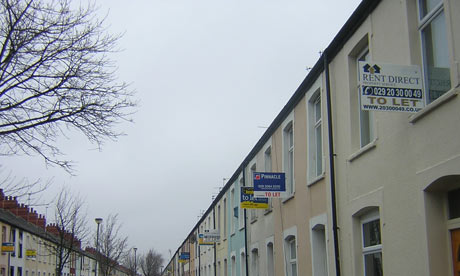
Proposed legislation to make renting simpler and more
transparent are outlined in the latest housing white paper
from the Welsh Government.
(Pic : The Guardian)
Back in May, Housing and Regeneration Minister, Carl Sargeant (Lab, Alyn & Deeside), launched a white paper (pdf) on proposed housing legislation, this time to do with renting.

Previous Housing Minister Huw Lewis (Lab, Merthyr Tydfil & Rhymney) launched a separate, but related, white paper in 2012. This is the first in-depth consultation to stem from those proposals.

The need for change

The Law Commission published a report identifying several areas of the rental market that needed reform, which a multitude of organisations and people had asked for over the course of several years.

Many renters aren't satisfied with being owner-occupiers, and are said to have lower life satisfaction compared to home owners. As I'll point out in my next look at the census (probably next week), Wales is increasingly becoming a nation of renters. Around 30% of Welsh households live in rented accommodation.

Renting has advantages, like flexibility when it comes to moving (i.e for work on short notice) and some level of legal security. However, when it comes to social renting, many people see differences between renting from a local authority, from a private social landlord – like a housing association – or from a fully private landlord.

There are currently loads of different types of residential rental tenancies, many of which were created via Westminster legislation to respond to specific problems like anti-social behaviour (Family Intervention Tenancies, Demoted Tenancies etc.). Many tenants don't understand, or just "skim over", their rental contracts due to the confusion.

The Welsh Government can't offer any sort of tax incentives - like those used in Germany and Australia - to promote long-term renting because they don't have the powers. However, then can use the law to simplify arrangements for tenants, and encourage investment in rental properties by "not placing too many barriers".

What are the proposed changes?

The current system of seven types of residential rental contract will be simplified into two :
  • A "secure contract", similar to local authority secure tenancies. These are said to have much greater protection for tenants, secured in law. It'll also mean that social housing tenants in the private sector and local authorities will have the same type of contract.
  • A "standard contract", similar to short hold tenancies used in the private rental market. This is said to have a lower level of security, but landlords would have the option to create more secure, long-term tenancies if they wish.

What are the other benefits?
  • Tackling anti-social behaviour – Conduct clauses will be inserted, as standard, into rental contracts, with tenants made aware of their responsibilities. Breaching the terms could lead to a possession order being issued by the landlord, which could lead to eviction.
  • Tackling domestic abuse – The above clause would include domestic violence. There'll be clauses to evict the abuser, without the victim needing to terminate their tenancy (as currently). The Welsh Government are working on a related Domestic Violence Bill, which hasn't been introduced yet. More from me once it is.
  • Flexibility in joint tenancies – Instead of joint tenancies ending when one person leaves, the remaining tenant will be able to "give notice" to their landlord, enabling them to have enough time to find a replacement.
  • Rights for young renters – People aged 16 and 17 will be given the same power to rent as an 18 y.o. This could be useful for youngsters leaving care, for example.
  • Succession rights – Carers of a tenant who dies, and who've lived in the rented home for at least 12 months, will have succession rights to the tenancy.
  • No mandatory eviction for serious rent arrears (for housing association tenants) – This effectively removes "Ground 8" from the Housing Act 1988 as a grounds for eviction, granting housing association tenants the same rights as local authority tenants.
  • Abolish 6 month moratoriums on evictions – This might prove controversial, but it's said that most contracts are a minimum of 6-12 months anyway. It could make it easier for tenants to look for a short-term rent or to house the homeless.
  • Including landlord repair obligations in rental contracts – Self-explanatory. They'll be written into every rental contract, hopefully improving the quality of rental accommodation.

It might look heavily skewed in favour of tenants, but landlords stand to benefit too. The new arrangements will be simplified – reducing administration costs – and provide greater certainty with regard rental terms. There'll also be much better ways to deal with things like sudden abandonment of rented properties, which is said to be a big problem.

Implementing the changes

The Welsh Government intend to introduce a Renting Homes Bill in 2015, becoming law in 2016, so this process still has some way to go. Consultation on the white paper closes on 16th August.

It's decided that existing tenants won't have to sign any new rental contracts straight away as a result of the changes. Instead, they'll be phased in. At the moment though, it's unclear what the measures will cost, and the Rental Landlords Association have claimed that the money used to introduce legislation and regulations could be better spent on expanding housing stock.

All those details will become clearer when the draft Bill is introduced, as said sometime in 2015.

A good set of proposals?

The changes, as outlined, appear to be largely common sense and long overdue. Renting was in desperate need of being simplified for tenants and landlords alike, and the proposed changes go a long, long way towards achieving that.

As I'll note shortly in another blog, renting is becoming increasingly important as house prices remain ridiculously high. I would have preferred German-style arrangements for long-term renting, but I accept that's beyond the Assembly's devolved competence, which is a shame. But if the changes work it might not be necessary.

My concern - as with all things housing related - is the law of unintended consequences, where "progressive" changes in Wales could result in English local authorities dumping their problems on our doorstep, instead of pressing Westminster to make these sorts of changes themselves. Hopefully though, this might clamp down on slumlords – and let's face it, they are slumlords - along the North Wales coast in particular and other parts of Wales.

It'll also clamp down on bad tenants. As long as the rules are fair, those changes are fine. But if they break those rules, and are subsequently evicted, there's still the question of where the bad tenants would go? We're not going to go down the road of creating ghettos on isolated estates made up entirely of evicted tenants, are we?

Thursday, 6 June 2013

The Internet on Trial

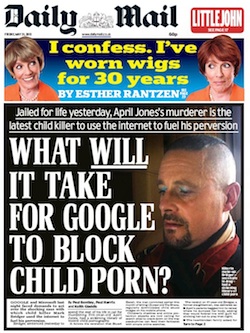
With extreme internet content once again in the spotlight, are arguments
surrounding "blocking sites/content" fundamentally flawed?
(Pic : BBC)
We'll all have been shocked by the murder of April Jones, which has resulted in the issue of extreme internet websites and online child abuse being raised again, after it was revealed during his trial that murderer Mark Bridger had searched for child abuse images on the internet.

At this week's FMQs, there was this (edited) exchange between Russell George and Carwyn Jones :
Russell George AM (Con, Montgomery) : In light of this horrific case (April Jones murder), there have been increased demands....across the UK, that internet companies such as Google should take tougher action to stamp out images of child abuse and pornographic sites online. What discussions have you had with the UK Government and other devolved administrations on this....to adopt a zero-tolerance policy in relation to such content?

Carwyn Jones : There are some that take the view that the internet should be as uncensored as possible. I do not take that view when it comes to....child pornography. I cannot see what advantage there is in allowing unfettered access to something that would be a crime if it were published in a magazine....I am willing to write....to the Prime Minister to ask him what his response might be....I would certainly....pursue this to the greatest extent that I can.

A few months earlier – on 5th February, Safer Internet Day - there's this related exchange during FMQs. Here's a edited version of what the First Minister said in response to an initial question from Gwyn Price, and follow ups from Bethan Jenkins (Plaid, South Wales West), William Graham (Con, South Wales East) and Rebecca Evans (Lab, Mid & West Wales) on the issue of internet safety and online content.
Initial Question, Gwyn Price AM (Lab, Islwyn) : Will the First Minister make a statement on what the Welsh Government can do to stop children accessing age inappropriate material online?

Carwyn Jones : Of course, we cannot stop it completely as we do not control the internet. However, we recommend....ISPs encourage parents to enable parental controls. We are working to ensure that resources are available for educating children on appropriate use of the internet.

We have worked with UK Safer Internet Centre to provide bilingual school packs....(lesson plans etc)....I know the Children's Commissioner is also working to raise awareness of the issue. One of the best ways of doing that is to ensure that....parents are able to be informed....of what can be done to restrict internet access to harmful sites.

It's difficult to restrict access in the home....It is often difficult to understand what age-appropriate content is. For example, the age certification system...for video games....is different for that for films. It's important we are in a position to educate children....and parents as well. Directors general within the Government have been asked to hold discussions....with a view to formulating.....a Welsh Government policy in terms of what is age-appropriate material....I will report back to Members about progress of that work.

It is important that parents understand what their children are accessing online....and what they're saying through websites like Facebook. The (Hwb e-learning) platform allows us to centrally host e-safety resources....available to all 3-19 year olds, and will also enable teachers to raise awareness of....online safety with pupils and parents alike.


I don't think there's much argument against what the First Minister said in both cases. It's clear he doesn't support a "clamp down" on the internet as an open forum. What he's referring to is child pornography and other online criminal activity. I think we'd all agree with that.

The First Minister - and the other AMs - mean well, and their calls for action are completely understandable.

However, the issue goes deeper than Google, and much deeper than simply blocking sites. Calling for search engines and ISPs to block content as if it's a magic cure is wide of the mark, because it shows a misunderstanding of precisely how it all works in the first place.


Beyond Google - The internet's dark underbelly


This is usually how criminal activity online is sourced and distributed
- and not a search engine in sight.
(Pic : The Australian)
Most criminal activity on the internet doesn't involve the "surface web" – webpages you can access via search engines. Criminal activity usually occurs on what's called the "deep web".

The only way you can access it is through anonymous networking using applications like Tor, or sharing illegal content via peer-to-peer (P2P) file-sharing. Search engine "bots" – which find content for sites like Google – simply don't work there. So hardly anything in the "deep web" actually makes it to the "surface" – including child pornography.


Paedophiles are caught out either when the content's found on their computer, they're identified via that content, or via "sting operations" carried out by the likes of the Child Exploitation and Online Protection Centre (CEOP).

Things like Tor and P2P are impossible to police. It's probably the main reason why wide-ranging blocks and filters haven't been introduced yet. It's very easy to get around, policing it would also be very resource intensive and the technological requirements are daunting.

To completely eliminate the problem, you would need to fundamentally change how the internet works. That could be by developing a Chinese-style "walled garden", where only approved sites are allowed - which would end the internet as an open forum and would be an extreme reaction. There's also blocking secure traffic, which would end internet shopping, gaming and banking overnight.

You simply can't look up extreme content via search engines like Google. In fact, the Internet Watch Foundation (IWF) has a blacklist to block sites, with co-operation from ISPs. The panicked thrashing about "making Google live up to their responsibilities" or "blocking child abuse sites" is unlikely to have any impact.


They can try it, but it won't work.
(Pic : blogistan.co.uk)
So, journalists writing exposés about the dark world of the internet - and how easily they could find child abuse images via Google - are either making it up, not looking at child pornography (but staged adult pornography) or doing it under the direct supervision of CEOP.

Also, under UK law, even looking at child pornography is a criminal offence. So journalists claiming they've seen it should be expecting a knock on the door then? Brown trousers at Daily Mail towers, surely?

If an automated filter were set up, it's likely to flag up "false positives" due to image labelling. An image of a child in a nappy might be blocked, while real child abuse – labelled with some encryption – would pass. A famous example being the temporary blocking of Scorpion's Virgin Killer album cover on Wikipedia (it's probably best not to look it up) by the IWF.

Basically, it's media campaigners pressuring people, politicians, search engines and ISPs to "try and do something", that's not likely to solve the underlying problem in the first place, and instead lead to the creation of a filtering system that will likely block "legitimate" content instead.
Like it or not - and however distasteful it might be - things like adult porn are legitimate. There are also plenty of ways you can block that already.

Looking for answers to the unanswerable questions

We all want to know "why"?
However, it probably doesn't lie on the internet, more in the
head of one sick individual.
(Pic : The Guardian)

I hate to say this - as I would like to see something done too - but it's all a load of poop. People and newspapers are embarrassing themselves by debating it in such 2 dimensional terms.

I think Carwyn got it right in his Feb 5th responses : better use of parental controls, better awareness, better reporting and flagging of criminal online content (including the system proposed by April's parents) and add top quality investigations by CEOP to that too.

In my opinion, many people look for the easiest way to explain activities that defy the boundaries of normal behaviour – and there's nothing that defies those boundaries quite like a child murder.

"Why?" is always the hardest question to answer in cases like that.

Children have been abducted, abused, raped and murdered long before the internet existed. The lack of an internet didn't stop Jimmy Savile, did it? Or the Moors murderers? Clamp down on the illegal stuff by all means, but blaming "the internet" is reminiscent of arguments that "video nasties", violent computer games and Marilyn Manson turned people into monsters. All largely disproven.

Ultimately, Mark Bridger killed April Jones because, for whatever reason, he knew what he was doing and wanted to do it – like all murderers. He just happened to be a paedophile as well, further adding to the revulsion, misery and outrage surrounding his heinous crime.