This site is no longer updated

Please use the links in the sidebar to visit the new sites!

Thursday, 28 February 2013

Senedd Watch - February 2013

  • The Assembly rejected a Legislative Consent Motion from the UK Parliament to close the Agricultural Wages Board – which sets wages for agricultural workers in EnglandandWales. Deputy Minister for Rural Affairs, Alun Davies (Lab, Blaenau Gwent) will ask for Wales to be excluded from the respective legislation.
  • The First Minister warned NHS reorganisations were essential to prevent the Welsh NHS from “collapsing”. He repeated that the Welsh Government wanted to create a “safe and sustainable health service”, but said that he doesn't expect Welsh Labour to suffer electorally because of the reforms. A poll for BBC Wales later in the month showed 74% of the public were opposed to the changes.
  • Dafydd Elis-Thomas AM (Plaid, Dwyfor Meirionnydd) called for a reduction in the number of local authorities to as few as 7 or 5, a reduction in the number of MPs and an increase in the number of AMs. He said the internal governance of Wales needed to be “slimlined”.
  • Opposition parties called a Welsh Government proposal to introduce online health checks for the over-50s a “monumental climbdown” on a Welsh Labour 2011 election pledge to provide a GP-led health check.
  • The House of Commons voted to approve the Marriage (Same Sex Couples) Bill on February 5th, which will legalise/recognise same sex marriages in EnglandandWales. However, 140 Conservative MPs voted against the plans, meaning the legislation was reliant on Labour, Liberal Democrat and nationalist support.
  • Health Minister Lesley Griffiths (Lab, Wrexham) said the Welsh NHS will “learn lessons” from a report into an English heath trust, which criticised standards and quality of care. She said there were “robust systems in place to ensure quality and safety are at the heart of NHS care.” Partly in response, Welsh Liberal Democrat leader Kirsty Williams warned Welsh NHS staff faced being “overwhelmed” and that a similar scandal could occur in Wales.
  • Conservative and Lib Dem leaders accused the Welsh Government of “setting a dangerous precedent” by stepping in to fund a Welsh language festival in Cardiff following Cardiff Council budget cuts. Andrew Davies (Con, South Wales Central) said the Welsh Government were “cherry picking good causes to save.”
  • A public consultation into M4 improvements around Newport has been deemed “inadequate” by the Welsh Government's own lawyers according to Friends of the Earth Cymru. It could result in a second consultation being required. Shadow Transport Minister Byron Davies (Con, South Wales West) said that would be a “damning indictment of this Labour government's incompetence.”
  • Plaid Cymru leader Leanne Wood called for the “fast-tracking” of powers to Wales should Scotland vote for independence in 2014, saying Wales would find itself in a “Tory-governed state.” However, both she and Adam Price said independence for Wales isn't a practical possibility until the economy improves, which “could take 10-15 years.”
  • Deputy Minister for Housing, Regeneration and Heritage, Huw Lewis (Lab, Merthyr Tydfil & Rhymney) suspended eight Regeneration Investment Fund for Wales (RIFW) projects, pending a double internal investigation into handling of land sales in March 2012, which are currently also being investigated by the Wales Audit Office.
  • First Minister Carwyn Jones described cuts to the EU budget as “deeply unfair” to the poorest parts of the EU. It could result in a £400million cut in EU funding for Wales between 2014-2020. Plaid Cymru MP Jonathan Edwards demanded Welsh Labour MPs “apologise” after backing the cuts in December 2012, despite opposition from the Assembly.
  • Food critic Simon Wright called for improved cooking lessons in schools to help combat childhood obesity rates. Obesity experts warned Wales faces an “obesity epidemic” unless action was taken. The Assembly debated the Change4Life campaign, and the Welsh Government said it would look at how teaching cooking could be improved in schools.
  • The First Minister travelled to San Francisco to discuss trade and meet business leaders in hi-tech industries for four days. He announced the creation of 100 jobs at a water purification company in Carmarthenshire. The Welsh Conservatives called for the trade missions to “deliver real investment for Wales.”
  • The Assembly's Public Accounts Committee warned that maternity staff numbers were falling below recommended levels. The Welsh Government said more midwives were being trained. The committee also called for time scales for phasing out Caesarean section births.
  • Eluned Parrott AM (Lib Dem, South Wales Central) accused Welsh Labour of hypocrisy, after UK shadow cabinet members criticised cuts to bus services, while the Welsh Government will make deeper cuts – 25% - to Welsh bus services from April 1st.
  • Chair of the Assembly's cross-party group on eating disorders, Bethan Jenkins AM (Plaid, South Wales West), called for a specialist residential centre for eating disorders to be established in Wales. The Welsh Government said they spent up to £1million on specialist services since 2010, and that those with highly-specific requirements were provided with services elsewhere in the UK.
  • A row broke out over the Human Transplantation Bill, with an organ donation expert claiming the Welsh Government's evidence that legislation – based on a Spanish example – would increase organ donation was “misleading.” However, Kidney Wales Foundation say that an opt-out system would help save minority ethnicity lives as they need more transplants.
  • An EU-backed job creation scheme – Genesis Cymru Wales 2 – may be wound up a year early, after it was revealed fewer than 800 people were found jobs, despite aims of creating 20,000 jobs or qualified individuals.
  • The Welsh Government's submission to the second part of the Silk Commission called for the devolution of policing, with the devolution of the criminal justice system “in the long term”. The submission also called for the devolution of large energy projects – except nuclear energy. The First Minister said policing was “the only emergency service not devolved.”
  • Local Government & Communities Minister Carl Sargeant (Lab, Alyn & Deeside) introduced the Active Travel Bill. The Bill will place an obligation on local authorities to link together “key sites” with cycling and pedestrian facilities and map integrated networks.
  • Two local authorities – Merthyr Tydfil and Monmouthshire – should have their education services placed in “special measures” by the Welsh Government based on recommendations from schools inspectorate, Estyn. On February 25th, Merthyr's education services were placed in special measures by the Education Minister, drawing condemnation from NASWUT for “heavy handedness”.
  • Unemployment in Wales rose by 6,000 in the three months to December 2012 to stand at 8.6%. Unemployment across the UK as a whole fell by 14,000 to 7.8%. Business Minister Edwina Hart (Lab, Gower) said economic conditions “remained difficult.”
  • A Wales Audit Office report warned the public sector may not be getting value for money with its £133million bill for external consultants fees. They suggested £40million could be saved by following “best practice”. Local government spent the most on consultants, while the Welsh Government saw a reduction in consultants fees.
  • Education Minister Leighton Andrews (Lab, Rhondda) announced Wales will set its own grading system for English Language GCSEs to avoid a repeat of the grade inflation row in summer 2012. The Welsh Conservatives warned this threatened to “devalue” GCSEs in Wales, while Simon Thomas AM (Plaid, Mid & West Wales) said the minister was doing it “without an independent regulator deciding the merits of the case.”
  • Plaid Cymru leader Leanne Wood called for non-specific legislative measures to create a gender balance in the National Assembly. It follows concerns raised by Llywydd Rosemary Butler (Lab, Newport West) about a fall in the number of women AMs in 2011.
  • The Welsh Conservatives proposed cutting taxes for high earners if tax-varying powers - outlined by the first part of the Silk Commission - were implemented. They hope it would generate a “spirit of greater enterprise.”
  • Plaid Cymru called for the immediate devolution of several areas including broadcasting, food safety, coastguard services and criminal justice “without delay” in their submission to the second part of the Silk Commission.
  • The Welsh Government rejected new Welsh language service standards drawn up by Welsh Language Commissioner Meri Huws for being “too complicated” and “unreasonable.” Welsh language campaigners questioned the Welsh Government's rejection of the commissioner's advice.
  • NHS reorganisations in north Wales could be referred to the Welsh Government after widespread protests, and a cross-party campaign, against moving specialist neo-natal services to Arrowe Park Hospital in the Wirral.
  • The First Minister announced that a “St Davids Awards” will be launched in 2014 to honour “ordinary people who do extraordinary things” in Wales, during a Welsh Conservative Senedd debate on a Welsh Honours system.
  • The Wales Audit Office reported that “a vast majority” of hospital consultants in Wales were working more than 48 hours a week, with one in six working at least 46 hours a week. An improved contract was supposed to have set a 38 hour working week for consultants.

Projects announced in February include : a £16.3million investment in specialist rehabilitation services for elderly neurological/spinal condition sufferers, the second phase of a £30million Economic Growth Fund and the launch of a “NewBuy” scheme to help first-time buyers onto the property ladder.

Thursday, 21 February 2013

Census 2011 : National Identity & Ethnicity

Is Wales significantly less "British" than commonly believed?
It looks like it.
(Pic : Clive Morgan via theimagefile.co.uk)

How "Welsh" is Wales?

This has been covered before by both Syniadau and Welsh not British. All the data I've used to compile this is available here. I couldn't link to them directly.

2011 was the first census year you were able to officially record yourself as Welsh, English, Scottish etc. so there are no previous figures from 2001 to judge any changes.

% of population giving some form of Welsh
identity in the 2011 census
(Click to enlarge)

So, how "Welsh" is Wales? For this exercise I'm counting "Welsh only", "Welsh and British" and "Welsh and another identity" as "describing themselves as Welsh".

Only two local authorities – Flintshire and Conwy – had less than 50% of the population giving no Welsh identity. Flintshire probably due to close interconnections and cross-border commuting to/from the Wirral, Merseyside and Cheshire. Conwy probably because of retirees and, yes, people moving from the large conurbations of NW England to live by the sea. Denbighshire also came close to having 50% or less. Powys, Ceredigion and Monmouthshire also have what could be considered "weak" Welsh identity.


The strongest Welsh identity is in the south, in particular the former coalfields. RCT and Merthyr have joint highest levels of Welsh identity at 82.2%, with all valleys local authorities (including Swansea and Carmarthenshire) having Welsh identifying populations of 70%+.

Cardiff - as you might expect - falls just short of a 60% Welsh identifying population. I imagine all national capitals are more "international" than their respective nations with the exception of Pyongyang. Newport and Vale of Glamorgan have similar figures, presumable as they are "overspill".

% of the population giving NO British identity
(Click to enlarge)

Nationally, 65.8% of the resident Welsh population gave some sort of Welsh identity, and the clear majority of them (87.3%) considered themselves exclusively Welsh.


But what about "British" identity? It's probably best to highlight how many people gave NO British national identity in the census – that would include people describing themselves as English, Scottish etc. It's actually quite startling.


A clear majority in every single Welsh local authority didn't consider themselves "British" at all. Again this sentiment is stronger in the south Wales valleys, but even in supposedly Anglicised areas it's the same trend, just less pronounced.

It ranges from 81.4% in Merthyr Tydfil to 65.9% in Monmouthshire – and Monmouthshire is the lowest. You're looking at an average 26% of people per local authority considering themselves British or (Something) and British. That's outstripped by Welsh identity and, in come cases, English identity.

The English in Wales

Although the numbers of Scots, Northern Irish and Irish are recorded, they don't make up any significant percentage of the Welsh population. What's clear, and what you probably already knew, is that the English are the largest "minority" in Wales.

% of the resident population giving some form
of English identity
(Click to enlarge)

"Minority" is key. Nationally, just 13.8% of the resident Welsh population identified themselves as wholly or partially English.


English identity ranges from 31.7% in Flintshire, to just 4.5% in Merthyr Tydfil. There's no English majority in any local authority, and doesn't appear to be on the cusp of happening any time soon. The average percentage of people identifying themselves as English (one way or another) per local authority is a paltry 14.9%.

If anyone still thinks Monmouthshire's "a part of England" – 21.8% of the population considered themselves wholly or partially English. Judging by the numbers in the Gwent Valleys – also part of the former county of Monmouthshire – it's probably best the English Democrats stay away from canvassing there. They would be better off trying Connah's Quay and Mold instead. However, I suspect Flintshire isn't "nice" enough to be annexed.


In terms of people born in England, the pattern's varied. 20.8% of the resident Welsh population were born in England in 2011. However, it's heavily skewed towards Powys and Flintshire, with large English-born populations in Ceredigion, Conwy and Denbighshire.

% of the resident population born in England
(Click to enlarge)

Elsewhere in Wales, especially the south, the numbers of English-born are low, barely rising above 10% in Valleys areas. Only 14.1% of Swansea's population were born in England and just 12.2% in Bridgend. Even Cardiff doesn't break the 20% barrier. It's only Monnmouthshire in the south that stands out.

The numbers of Welsh-born living in England amounts to 1% (or 561,000 people, perhaps more) of the English population. The number of English-born in Wales (20.8%) amounts to 637,200 people. So there's clearly been net "English" in migration, but it's a difference of just 76,000 people compared to those leaving. And not all of them will be "English".

Place of birth

In 2001, there was a local authority average of 26.9% of the population born outside Wales. In 2011, that's risen to 29.2% - which is slightly higher than the Welsh national figure (27.4%). This is because the actual figures across Wales vary wildly on a county-to-county level.

% of resident population
not born in Wales
(click to enlarge)


Only two local authorities – Conwy and Denbighshire – saw a fall in the numbers born outside Wales.

However, in Powys and Flintshire, half of the resident population were born outside Wales, with the likes of Conwy (45.5%) and Ceredigion (44.5%) close behind. In fact, the numbers born outside Wales are heavily skewed towards rural parts of the country with the exception of Carmarthenshire.

Now, most of the people reading this are going to immediately point to English in migration. But....


The numbers of people in Wales born in England – outlined further up - have remained relatively stable. There's no evidence of a "mass influx", and in the south the numbers born in England have flatlined or even fallen slightly. Nationally, the English-born population of Wales has only risen by 0.5% compared to 2001, and the bulk of that can be accounted to Powys, Carmarthenshire and Neath Port Talbot. Even Cardiff has only seen a 0.6% rise.

Change in the % of residents born in England
2001-2011
(click to enlarge)

The evidence points to the increase in people being born outside Wales being driven by migrants from the European Union (post 2004 enlargement) or elsewhere, perhaps mainly international students. This was a point I made in the Welsh language post.

Wrexham (+2.6%), Ceredigion (+1.4%), Cardiff (+1.8) and Carmarthenshire (+1.3%) have all seen a rise in EU-born residents that completely outstrips English-born once non-EU born are added to that. It's a similar pattern in every local authority.

At local authority level, there's an average 2.2% increase in the numbers born outside Wales. Up to 1.95% (88%) of that is down to EU and "other" immigrants. It's almost identical to the average fall in the number of Welsh-born residents.


So if you're determined to want a migratory reason as to why the percentage of Welsh-speakers have fallen, you'll have to look much, much further east than Offa's Dyke.

Change in the % of residents not born in Wales
2001-2011
(Click to enlarge)

It's also fair to point out that being "born in England" doesn't mean you're not Welsh, or vice versa.Quite a fair number of Welsh babies in border counties like Powys will have been born in English hospitals I'd imagine – the Royal Shrewsbury is closer than Bronglais. 20.8% of the Welsh population may have been born in England, but only 13.8% of the population consider themselves wholly or partially "English."

Oh, and under those definitions I'm not Welsh either. I count in the census as someone "not born in Wales." If you're going to judge nationality by birthplace alone, I guess I'm going to have to "bugger off home" with a Cantonese dictionary tucked under my arm and leave Wales for the "proper Welsh."


Race in Wales

Outside the cities and university towns, it's safe to say that
Wales remains (relatively) mono-ethnic.
(Pic : BBC Asian Network)

There's little point analysing Caucasians. The average "white" ethnic population per local authority was 96.6%. Bears in woods. Compare that to the 86% total for EnglandandWales.

That means in terms of people from mixed, black, Asian or other (i.e Arab) backgrounds, the all-Wales average is just 3.4% - and that's been dragged upwards by a handful of local authorities.

The only local authorities that can point to having anything close to a multi-ethnic population are Cardiff and Newport. In Cardiff, 15.3% of people are from a mixed or minority ethnic backgrounds, while it's 10% in Newport. Swansea comes in fairly close behind them, but even there 94% of the population are from white ethnic groups.


The largest minority ethnic group across Wales are Indian, Pakistani and Bangladeshi Asians. This broadly corroborates my last census post on religion, where Islam and Hinduism are the two largest faiths outside Christianity.

% of the resident population from a mixed,
black, Asian or other minority ethnic background in 2011
(Click to enlarge)

The largest Chinese communities are in Cardiff (1.2%), Swansea (0.9%) and Gwynedd (0.7%).

The Black-Welsh population though, barely registers outside Cardiff (2.4%) and Newport (1.7%). There's an average black population of 0.38% per local authority. In Merthyr Tydfil there were, in 2011, no black residents (or so few they barely reached .1 of a percent). Several local authorities - in particular across north Wales, the Gwent Valleys and Pembrokeshire - recorded just 0.1%.

Outside Cardiff (2%), Swansea (1%) and Newport (1%); Ceredigion (0.5%) and Gwynedd (0.7%) recorded the largest populations of "other" resident ethnic groups.

What could this mean?

British identity in Wales is soft – It's unclear what impact last summer's successful London Olympics will have had, but it's worth pointing out that the census was taken around the same time as last year's other "Big British Bash" Billy Whizcopter and Kaff getting married. It doesn't appear to have made any impact. I'm not sure what this means for nationalism. It could be a good thing - for obvious reasons. Or, it could equally mean the Welsh are comfortable with multiple nationalities to spend too much time thinking about it. But when they do think about it, they'll perhaps be more likely to lean towards "Welsh" (or English) than "British." Everything points to there being polarisation between a majority Welsh identity and a large minority English identity.

Reinforcing the common bonds of "British identity"? Or excuse for a piss up?
You got to say - based on the evidence - excuse for a piss up.
(Pic : BBC)


The English are not "swamping" Wales (as a whole) – Aside from Flintshire, Powys and the Costa Geriatrica, there's no real sign of any mass influx. Judging by the figures, quite a few English people in Wales may now consider themselves Welsh. Good. Why shouldn't they? What matters is how old they are, and I'll be looking at demography another time.

Wales is becoming more "European" – With 88% of the change in people born outside Wales driven by non-British immigration – especially EU enlargement nations - Wales has become ever so slightly more cosmopolitan. It's unclear if this is a good thing or a bad thing. Hopefully it could lead, in the long-term, to more trade opportunities or university co-operation.

Link between universities and minority ethnic residents – It's fairly probable that having a university in your local authority boosts the numbers of people from minority ethnic backgrounds by attracting international students. That would explain why Ceredigion, Rhondda Cynon Taf and Gwynedd have proportionally larger minority ethnic populations than somewhere like Bridgend or Blaenau Gwent.

Are a large chunk of minority ethnic residents
in Wales international students?
(Pic : The Guardian)
Question marks over Third Sector economies of scale – When AWEMA wound up, there were three or four other race-related charities ready to step in and take over. You have to question - given the small populations of minority groups in Wales – why there's so many of these bodies? Surely it would be better to have a single body/charity with clout, instead of six or seven competing for their own slice of pie? A similar point was raised in the recent arts participation report from the Assembly. By proliferating into ever smaller organisations, competing for ever smaller pots of money, are Third Sector bodies doing minority groups a disservice?


The Assembly accurately reflects Wales' ethnic make up
– There's one AM for approximately 1.7% of the population. Having two AMs from minority backgrounds – Mohammad Ashgar (Con, South Wales East) and Vaughan Gething (Lab, Cardiff South & Penarth) – is pretty much representative, so well done us. So that's a far cry from the hand-wringing that the devolved administrations aren't doing enough here. Maybe positive discrimination here should concentrate instead on gender balance and, in Wales' case, disabilities – my next stop.

Monday, 11 February 2013

Digging deep into deals done dirt cheap

A brief recap

Back in March 2012, the Regeneration Investment Fund for Wales (RIFW) – an "arms-length" Welsh Government body - sold a bundle of 18 plots of publicly-owned land across Wales to a Guernsey-based company called South Wales Land Developments (SWLD) for £20.6million. RIFW's aim is to raise money through land sales to match fund/loan to companies working on urban regeneration projects in West Wales & The Valleys.

One of those parcels of land, in the Lisvane area of Cardiff, was earmarked
– something of an open secret - by the incoming Labour Cardiff Council administration for housing as part of their changed Local Development Plan.

If you had the money, and were involved in property development, you would've had to have been brain dead not to show interest. It appears as though potential buyers - including SWLD - were "canvassed" directly rather than the sites going out on open sale, which is rather strange. In short, it wasn't a completely open tendering process.

As everyone knows, land values are based on a number of factors including planning consent or strategic land use plans. In this case, the value of the Cardiff land sold to SWLD will have risen from just under £2million to ~£120million because of Cardiff Council's outline proposals for housing.

Former police officer Byron Davies AM (Con, South Wales West) noticed that this was "odd" and referred the matter to the Wales Audit Office for investigation last September. Things began to steamroll, and eventually the WAO expanded the scope of the investigation.

Nearly five months on, Minister for Housing, Regeneration and Heritage, Huw Lewis (Lab, Merthyr Tydfil & Rhymney) ordered a double internal investigation into both the handling of the sales and how RIFW operates. Eight RIFW projects (except one in Neath town centre) have now been suspended.

Who's diddled who?


"Claw back clauses" were inserted into the deal to ensure that if land values rose, some money could be claimed back by the Welsh Government (or "taxpayers" i.e you and me). That's perfectly sensible.

However, as BBC Wales' Nick Servini pointed out, we don't know much about these claw back arrangements, which parcels of land they apply to, or how much the Welsh Government could expect to make back.

There's the possibility that, from the Lisvane land alone, if there wasn't some significant claw back agreement then RIFW (and by extension, the rest of us) could've missed out on up to £100million, possibly on purpose due to the "closed" tender.

An anonymous commentator on my last visit to this linked to a European Investment Bank presentation on RIFW. Some of RIFW's goals (slides 13-14) included :
  • A seemingly immediate need to "meet cash flow requirements for (their) investment profile".
  • Targeting up to "£55million of private sector investment in 2011/12".
  • "Securing planning consents to add value to (RIFW's assets)".

Securing planning consents? How about insecure ones like several thousand houses on the outskirts of Cardiff? That would certainly "add value to assets" - whether houses actually get built or not.

We all know how finicky the EU are about tendering processes. This might come close to falling under the definitions of some sort of fraud – perhaps "failure to disclose information when required to". That's before mentioning all the other unanswered questions about SWLD, RIFW projects themselves (or lack of) and the fund managers' handling of this.

As the anonymous commentator also pointed out, there didn't seem to be any requirement to get the best possible price. That's probably so regeneration projects can get started immediately – even if RIFW weren't doing very much at the time. I'm not business-minded, but although that might make political sense, it doesn't make much business sense.

They also claimed that the land was marketed at a 2009 valuation, not a March 2012 (point of sale) valuation - which is more than a little "odd".

If you have an asset - unless you don't have the option of negotiation (i.e liquidation) or you want a quick sale - you sell it for the best price you can get. And sometimes to get the best price you need as many people bidding as possible. Neither of those things appears to have happened - and this is, essentially, many millions of pounds of public money at stake.

Even if SWLD were in negotiations for up to a year before the sale, it would've been blindingly obvious to anyone with half a brain that ANY open land around Cardiff was going to be worth a fortune because of housing requirements. So why were RIFW so keen to sell it for such a "low" price, bundled in with so many other pieces of land (some of which equally valuable), to a company based in a tax haven, that was set up rather quickly and quietly, with more than a few "local connections"?

Land bank, anyone?

Even if they're not directly responsible for RIFW, the Welsh Government are certainly accountable. These "internal reviews" tend to mean answers are slow to come by. There's plenty of questions to answer for all involved. Especially :
  • Who valued the sites?
  • What were those valuations based on?
  • How was the land marketed?
  • Why the urgency to generate cash flows despite RIFW being practically dormant?
  • The details of alternative tenders.
  • What prior knowledge did anyone involved have about things like Cardiff's LDP?

Both Inside Out and Glyn Beddau have pointed out other possible talking points – too many to go into here. These things usually turn out to be less suspicious than first presumed, but I think this one's smelling rather ripe.

This could've been the case of rushed, lazy sale that's potentially lost millions of pounds in match funds for regeneration (gross incompetence). Or, it could've been a knowingly bad sale to benefit "someone" ("market abuse"/insider dealing, possibly fraud). It could even be a combination of the two – which could potentially make it one of the worst scandals of the devolution era.

Beth yw "cute hoor" yn Gymraeg?

Ha! Ha! Ha! Ha! Ha! Oh, please! Make it stop!
(Pic : BBC Wales)

There've been other questionable, but unrelated, planning and development proposals in Wales over the last few years too. More recently - in Gwynedd - the sale of a failed arts centre to private owners. That's also been referred to the auditors.

But in the Powys, Neath Port Talbot and Bridgend area, you can point to developments involving open cast mines. They were actually quite "impressive" proposals. Impressive in a "yeah, right" way.

One involved a "resort" in the Amman Valley. The second involved building some sort of Smurf village/Teletubbyland in a big hole on the outskirts of Kenfig Hill on the Bridgend-NPT border.

Gwenda Thomas AM (Lab, Neath) asked for the Amman scheme to be called in because of the scale/impact. Bethan Jenkins AM (Plaid, South Wales West) has often warned that these schemes are a "front" to smooth through extensions to mining licences - which are due to run out over the next few years. AMs have campaigned for more robust exclusion zones around open cast sites since the Assembly was founded. So the mines have a PR problem then.

Local councillors' responses were mixed. Some (understandably, but somewhat hastily) welcomed the prospect of jobs and investment, while others shared similar concerns to the AMs.

When the Kenfig/Margam scheme was revealed, first of all I had to check the date. Second, when I tried to blog on it I couldn't write as it was so funny. The thought of council cabinet members smiling, wearing Bob the Builder hard hats, as they looked over these plans was too much. It may as well have been a base on the Moon.

I wouldn't object to spending quality time with Christina Hendricks and Salma Hayek on a sweltering tropical paradise island. So sweltering, that it would mean they walk around in tight, but revealing clothing, while I occasionally get diverted with fruit, monkey butlers and grilled seafood.

Someone could offer me that, and bring me some flattering artist's impressions of what such a glorious undertaking would look like. But in order to obtain that dream, I would have to wash jock straps by hand at their Central Asian salt mine for 30 years. Also, they can't guarantee the desired outcome – more a loose promise/I.O.U.

"But look at the artist's impressions!" they'll say. "Look what you could have! Just sign here!" If you were a dopey guy easily mesmerised, you might ignore the fact that by the time you're free, Christina and Salma will have free bus passes.

A similar thing almost happened with these open cast mine projects, which would've prevented them being returned to their natural state. That's not so funny.

It's lucky some people still have their heads screwed on, because several people leading these open cast schemes, also involved in the sale of them – involving offshore-registered companies - were recently put on trial for conspiracy to defraud.

Hmm. Sounds familiar.

Monday, 4 February 2013

More questions on the future of the Welsh press

Last week, the owners of Media Wales and North Wales Daily Post - Trinity Mirror - announced 20 job losses across their Welsh titles while creating new jobs in "digitally oriented" roles. Most redundancies are, apparently, senior features editorial posts. Trinity Mirror are quoted as saying that this would:
"....enable us to become a fully-fledged, digitally-focused news operation, and brings together for the first time the best of our regional and national journalism."

Meaning : Much less Welsh and local content, more generic "national" stuff. So, The Western Mail, South Wales Echo and Daily Post are likely to become The Daily Mirror gossip and lifestyle pages with Welsh political and business stories plopped around it.

Despite the spin, this is – in my opinion – a significant downgrading of Welsh newspapers. It's not quite the death knell for The Western Mail, but this is probably what we're going to look back to as the beginning of the end. It also has wider political implications, perhaps underlining significant problems with devolution's "clout" too.

Trinity Mirror giving the finger to the Assembly & Wales

Back in May 2012, an Assembly task & finish group published an extensive report into the future of the Welsh media. There were clear warnings from witnesses that the Welsh print press was "fighting for survival", perhaps a simple reflection of changes in reading habits. There were also concerns about how Wales was being covered by the media in general.

You could consider the inquiry a polite, if urgent, request for assistance from the newspaper proprietors, and a way to generate ideas and proposals to ensure a long-term future for the Welsh press.

However, public debate surrounding the issue was moribund.

Bethan Jenkins AM (Plaid, South Wales West) – who seemed to be the only politician pressing this issue with any determination, and who proposed the inquiry - tried to kick start it single-handedly by suggesting the Welsh Government nationalise The Western Mail.

Bethan might well have made herself look like some sort of eccentric Bolshevik throwback as a result, but there was a point. It's a smart, if slightly unorthodox, tactic to offer an outlandish suggestion to gain publicity, hiding your "real" suggestion (in this case a journalist co-operative) behind it hoping people would pick up on it and debate it. That's what it looks like Bethan tried to do, and her press officer Duncan Higgitt pretty much admitted it himself on here.

A co-op is perfectly reasonable and feasible. Combine that with some sort of modest Norwegian-style state subsidy (similar to that provided to Golwg360) and you're looking at a viable future for the Welsh press in my opinion. They'll have enough money from subsidy to continue the unfashionable, but essential, investigative/scrutinising stuff while still offering the more commercial/fluffier stories about sport, fashion and celebrity gossip. And the Welsh-based journalists would have ownership over it.

But instead of the press and media acknowledging her idea of a journalist co-operative, they pounced on the "Pravda" aspect and managed to twist a positive suggestion into a negative story. They should've instead been grateful that anyone was conscientious enough to realise there was a problem, put some effort into it and came up with ideas. We're now going to see what ignoring that means in practical terms.

It's now been suggested, in spite of the inquiry, that the Welsh press is in its "death throes". But you can't point fingers at AMs and suggest they "didn't do anything". On the contrary, they held up their end of the bargain. The AMs should be given a pat on the back for their hard work and for giving a toss in the first place. There were also plenty of other inquiry findings that could prove useful elsewhere.

Maybe - with regard newspapers - it was a waste of time, but that's because distant newspaper proprietors treated an Assembly committee's findings and evidence with blatant disrespect, even the AMs personally. Even if they were never going to be subject to its recommendations, Trinity Mirror have, in effect, stuck two fingers up at the Assembly committee.

You might think that all that means is hurt feelings for everyone involved. Maybe even a bit of schadenfreude. But remember this - we elect AMs to do things like the media inquiry on our behalf, and when they've done that job we should expect the relevant people and organisations to take notice of the findings and concerns raised. Regardless of your opinions on devolution; if anyone snubs, ignores or flagrantly disregards the Assembly or AMs, they're doing that to us all.

So, Trinity Mirror have just stuck two fingers up at me too then. And you. For no good reason. I consider that....irritating.

You could say Huw Lewis (Lab, Merthyr Tydfil & Rhymney) – the minister in charge - should've immediately pressed forward with plans for state subsidy or whatever, but....it's unclear if he even had the power, money or legitimacy to do something as extensive as that.

I presume Golwg360 is/was only provided with funding because it falls under the banner of a "cultural" Welsh language service, not a broader "media service". All Huw could do is offer comforting words and promises to take suggestions under advisement.

If Wales had a clear-cut responsibility over the media, I could be writing about the the Assembly/committee debating - for argument's sake - an expanded Welsh Books Council pilot scheme, part-subsidising Welsh-based media co-ops, creating/saving jobs for Welsh journalists.

Welsh devolution : Chindogu in inaction

"Wales has all the might....of a southpaw punch from Winnie the Pooh."
(Pic : Quicklol.com)

Yet again I have to drag up constitutional matters. However, this time it's more institutional. A classic case of the needs of 5% of a nation state – an economic and social backwater - being easy to ignore at the top tables be they political, cultural and business. Below – spelt out in simple terms – is why I'm becoming increasingly fed up with devolution's/Wales' glacial pace of change and lack of teeth.
  • Welsh newspapers hold devolved politicians and government to account (most of the time), which is a pretty fundamental cornerstone of a democracy.
  • The English-based conglomerates that own Welsh newspapers see them as subsidiaries, not "national" newspapers or even an essential public service to Wales. They increasingly cut back on "hard/investigative" journalism, and replace it with more populist and commercially-oriented stories to drive traffic to websites in light of declining print sales. It doesn't work.
  • In light of declines, an Assembly committee launches an inquiry. Academics and industrial bodies make the usual erudite contributions and stern-faced warnings. Those who really should make a contribution – the press conglomerates – don't even acknowledge it. Probably because Cardiff's not on the Jubilee line.
  • It'll get reported every now and again, but without any spark or urgency, because we're all more concerned about what Bill Windsor has for breakfast and old men pointing at potholes.
  • AMs then have to practically humiliate themselves in public to get this issue pushed towards the top of news agenda and get some ideas and debate going. And when they finally manage to, it's spun negatively without reading between the lines.
  • The Assembly committee produces a well-presented, comprehensive report - that took the best part of a year to compile - but will be filed away quietly because Wales has all the might (where it matters – "Fleet Street") of a southpaw punch from Winnie the Pooh.
  • Welsh Government ministers will be told by civil servants to cite "cuts" and the general state of the economy and newspaper industry – despite practical options being put on the table by the committee or individual AMs - saying they're, "concerned about those affected," then, "of course, what we know is, this isn't a devolved matter. I can't comment on it/subject to review/due diligence/framework/pathway/commercial sensitivity."
  • Nothing happens.
  • Then in four of five years time, with the Welsh press decimated, an Assembly committee will launch an inquiry into the future of the Welsh me....

We have a devolution settlement, and low position of influence within the UK, that effectively forces Welsh Ministers to move as fast as a tortoise walking through setting concrete. It also means AMs  – with all the best intentions in the world – spend hours in committees whose outcomes come across as nothing but pseudo-Kafkaesque torture.

You might think I'm overanalysing this, or dragging too many issues into it, but it's setting a dangerous precedent. It's going to happen on something the Welsh Government decides is "important" one day – the EU for example – and for all the promises of "standing up for Wales" the Assembly and Welsh Government won't be able to do anything. At all.

We're all getting played for fools here. Am I the only person who thinks this is an unacceptable position to be in when trying to run a country?

It's not "gradualism". It's not "federalism". There's no "respect agenda" here.

It's called "chocolate teapot" or "motorbike seatbelt". It's called "set up deliberately not to work" or you could even call it "f**king retarded".

The future of the Welsh press....again

Unless there are dramatic changes, this is the likely
future of the Welsh print press.
Be afraid. Be very, very afraid.
(Pic : webswonder.co.uk)
All this is before mentioning the most important people - the staff affected. There may be a point about Media Wales bringing about a decline by publishing deliberately inflammatory stories to drive traffic to Wales Online.
People might think all those comments on Wales Online articles are a sign of popularity, and translate into a genuine reflection of public opinion - but look at who's commenting. Even on articles with 200+ comments, it's the same 20-30 people. That goes for all newspaper websites, even extending to the likes of Betsan Powys' blog and fringe sites like this blog.

I don't think many newspapers have adapted well (commercially) to the internet, with perhaps the exception of The Daily Mail. The only reason people are drawn to Mail Online is because it's full of sensationalist twaddle and paparazzi photos of women wearing suspiciously undersized clothing. It's a comic book for adults - a cross between Midsomer Murders and The Viz - not a credible news website. It seems as if Media Wales titles are heading the same way.

At some point in the near future, all we're going to be left with to cover Welsh news (aside from TV and local radio – which have their own problems) are whatever local titles that happen to still be going, council and Welsh Government PR departments - take a look at Carmarthenshire to see how that will pan out - and people like me.

People like me who do this on a part-time basis, with no journalistic training whatsoever, a clear bias/agenda, largely dressing up opinion as fact and no way to source stories other than skulking through Assembly websites. And I'm only doing this out of some sense of duty to anyone reading it, not professional pride or to work to professional standards.

Whatever your feelings about The Western Mail or Daily Post, remember that trained senior journalists focusing on Welsh stories (no matter how trivial) are set to be replaced with generic pan-UK junk about tits and arse.

Thursday, 31 January 2013

Senedd Watch - January 2013

  • Plaid Cymru MP Jonathan Edwards accused the Welsh Government of “shedding crocodile tears” after Severn Bridge car tolls rose to £6.20 on January 1st. A Freedom of Information request showed the Welsh Government lobbied in favour of a change to the toll formula which caused the rise.
  • In a related development, transport expert Prof. Stuart Cole argued that high Severn Bridge tolls were “no deterrent to tourism or inward investment” and argued in favour of using bridge tolls as a revenue raiser for transport schemes.
  • A “smart card” system for public transport fares across Wales has been delayed for five years, however they will come into use on buses in 2014, with a trial beginning in north Wales this month. The Welsh Government said renegotiation of the all-Wales rail franchise in 2018 is the reason for the delay.
  • University applications from Welsh students fell by 11.7% compared to 2012 according to UCAS statistics - the sharpest drop of the Home Nations. Only Northern Ireland saw a rise. Wales also lagged behind on the award of top degrees (firsts and 2.1s), but outperformed the rest of the UK in terms of graduates employed after six months, which stood at 91%.
  • Swansea City's promotion to the English Premier League is worth £58million to the local economy, and created/safeguarded around 400 jobs according to a Cardiff University report. Business Minister Edwina Hart (Lab, Gower) welcomed the report's findings, saying Swansea City's promotion “provided....rich opportunities to promote....economic development and tourism.”
  • Edwina Hart launched a network of “one stop shops” for micro and small business advice, which will operate from 11 sites. She said the “Business Wales service will compliment....support available through our Business Information Helpline and Business Wales website.”
  • Shadow Education Minister, Angela Burns (Con, Carms W & S. Pembs.), criticised some Welsh universities for offering places with low grade requirements at A-Level and GCSE. She said it,“sends out a message that (Welsh universities) have bargain-basement entry requirements and don't appreciate the value of academic rigour.”
  • Network Rail unveiled their strategic plan until 2019, setting provisional dates of 2018 for south Wales mainline electrification and 2020-2024 for Valley Lines electrification. Around £1billion has been committed towards both projects.
  • Plaid Cymru leader, Leanne Wood, called for the devolution of probation services following the UK Government's announcement that probation services for low-risk offenders could be outsourced to the private sector in EnglandandWales.
  • The Welsh Conservatives criticised the Welsh Government's decision to seek to purchase Cardiff Airport. Byron Davies AM (Con, South Wales West) said it was a “financial liability we don't need in this day and age.” Edwina Hart said negotiations were confidential and she “wouldn't provide a running commentary” on them. On January 30th, the First Minister told the Assembly's Business and Enterprise Committee that a deal was “close”.
  • A petition was handed in to the Assembly, with more than 22,000 signatures, calling for business rate relief for charity shops to be maintained. The Welsh Government said they were “sensitive to many viewpoints.”
  • Education Minister Leighton Andrews (Lab, Rhondda) launched a Masters in Educational Practice (MEP) module, which is intended to “drive up standards in schools” by supporting newly-qualified teachers via ongoing professional development.
  • The chair of the National Clinical Forum explained his modifications to a Betsi Cadwaladr Local Health Board report, which originally called hospital reorganisations in north Wales “unsustainable”. He admitted that his chances appeared to be “totally bizarre”, but believed the board responsible “didn't understand the proposals”.
  • The Welsh Conservatives criticised the Welsh Government for cutting funds for promoting Wales abroad for tourism. Suzy Davies AM (Con, South Wales West) said Labour had made “a massive own goal in failing to market Wales to our closest neighbours.” The Welsh Government said they were focusing on UK tourists, who account for 80% of tourist expenditure.
  • There were calls for “strong political leadership” over NHS reforms from Community Health Councils (CHCs). Disagreements on reforms between Local Health Boards and CHCs can be referred to Health Minister Lesley Griffiths (Lab, Wrexham), who has been criticised for her attitude to CHCs in the past.
  • A campaign was launched to cut down on waste of prescription medicines, which is claimed costs the Welsh NHS £21.6million over the last year.
  • Leighton Andrews was warned by Welsh exam board, the WJEC, that he could be damaging the exams system through his reforms. Qualifications Wales was created in 2012 as a new body for exam regulation and awards. The Welsh Government said the WJEC were “in denial.” The Welsh Government also confirmed that GCSE's and A-Levels would be maintained in Wales, despite reforms in England that would see them replaced.
  • The Assembly passed the School Standards and Organisation Bill on January 15th. Amendments mean that local authorities would decide school closures and mergers, instead of proposed determination panels.
  • Minister for Housing, Heritage and Regeneration, Huw Lewis (Lab, Merthyr Tydfil & Rhymney) described UK Government welfare reforms as a “social atrocity”. He was accused by a Liberal Democrat MP of the “lowest form of politics”. Plaid MP Jonathan Edwards supported the statement in principle, but said all but 10 Labour MPs abstained during the second reading of the Welfare Reform Bill which instituted the changes.
  • The Welsh Government launched a review of bank lending to small and medium sized enterprises, including the difficulties SMEs may face and alternative models of finance. The review will be led by Prof. Dylan Jones-Evans.
  • In related development, Plaid Cymru called for the creation of a state-backed “Bank of Wales”, which would provide funding to SMEs, based on German regional Landesbanken model. The Welsh Conservatives also proposed a similar scheme, but one that would allow SMEs to borrow public money via existing high street banks and post offices.
  • An education expert criticised Welsh Government progress on truancy rates as “painfully slow”. Prof. Ken Reid told the Assembly's Children & Young People Committee that promises made as a result of a 2008 report remained unfulfilled. The Welsh Government pointed to improvements in attendance rates in the last year.
  • The Welsh Government found £22million necessary to prevent 230,000 households in Wales paying council tax for the first time following changes to council tax benefits. Communities and Local Government Minister, Carl Sargeant (Lab, Alyn & Deeside), said the Welsh Government was “protecting the most vulnerable in our communities.” Opposition leaders welcomed the move, but described the handling as a “u-turn” and “shambolic”. Fresh council tax benefit regulations were approved on 22nd January following provisional regulations passed at the end of 2012.
  • Health Minister Lesley Griffiths announced the Welsh Government is to invest up to £82million in providing training to healthcare professionals. She said “high quality healthcare education is critical to support the delivery of health services in Wales.” The funding will help health authorities determine staff levels to maintain services beyond 2016.
  • Leader of the Opposition, Andrew Davies (Con, South Wales Central) proposed a motion for debate - signed by cross-party AMs - calling for the Welsh Government to lobby in favour of the introduction of “safe standing areas” in Premier League and Football League grounds.
  • Diabetes UK Cymru warned the disease could “overwhelm” the Welsh NHS, following a 9.4% increase in the numbers being treated in the last two years. The Welsh Government said diabetes treatment rates in Wales were comparable with “the best in Europe” and that a new diabetes delivery plan was in development.
  • Chair of the Assembly's Public Accounts Committee, Darren Millar AM (Con, Clwyd West), called for the Wales Audit Office to investigate a £2million heritage centre in Gwynedd following a BBC Wales investigation which showed the centre, and its land, was transferred to private landowners following its failure.
  • The Assembly unanimously passed the Food Hygiene Ratings Bill on January 22nd. Once granted royal assent, the Food Hygiene Ratings Act will make the display of food hygiene ratings compulsory. Regulations relating to the new law will be debated later this year.
  • Suicides in Wales rose by 30% in the last two years according to the Office of National Statistics, with the suicide rate amongst middle aged men the highest since 1981. The Samaritans said that the difference may be due to changes in how deaths are recorded.
  • Unemployment in Wales fell by 1,000 in the three months to November 2012. There was a 37,000 fall across the UK as a whole.
  • Prime Minister David Cameron promised an “in out” referendum on the UK's membership of the European Union should the Conservatives win the 2015 UK General Election. First Minister Carwyn Jones said it would create “years of instability”, while Plaid Cymru MEP Jill Evans pointed to the benefits of Wales within the EU.
  • First Minister Carwyn Jones gave a speech to Irish business leaders in Dublin, stressing the importance of Welsh-Irish trade – worth up to £1.5billion per year. He also wants to encourage more Irish businesses to invest in Wales “under the banner of the EU single market.”
  • Lesley Griffiths told the Assembly's Health Committee that the Human Transplantation Bill, which will create and “opt-out” organ donation system in Wales, will not include limb or face transplants.
  • Cardiff Airport saw a 16% drop in passenger numbers (-200,000) between 2011 and 2012 according to the Civil Aviation Authority, but with a small rally in December 2012. The Football Association of Wales also claimed the current state of Cardiff Airport was hindering a potential bid to host Euro 2020 games.
  • School inspectorate Estyn's annual report called for more help for more-able pupils. It also said fewer schools achieved “good” or “excellent” ratings compared with the previous year. The NUT also threatened industrial action over proposed literacy and numeracy assessments proposed by the Welsh Government.
  • The Welsh Government introduced the Social Services and Wellbeing Bill, which take carer's needs into consideration alongside those being cared for, create a national adoption service, grant social workers a power of entry with a court order and new eligibility criteria for social services.
  • UK Government plans to reduce the number of MPs in Wales from 40 to 30 were defeated in Westminster on January 29th. The plans will be postponed until at least 2018.
  • The Welsh Ambulance Service missed its response targets, with only 56.1% of life-threatening emergencies responded to within 8 minutes in December 2012, compared to a Welsh Government target of 65%. Welsh Liberal Democrat Leader, Kirsty Williams, said that the Ambulance Trust had to “work with increasingly strained resources.”
  • Research suggests onshore wind energy could create up to 2,000 jobs and generate up to £2.3billion for the Welsh economy if a 2,000 megawatt target is met by 2025. Campaigners point to differences is renewables energy policy between Scotland and Wales – where the Scottish Government have been more proactive.
  • Five Welsh local authorities were in the top 10 areas where the lowest proportion of people felt their health was “good” in EnglandandWales according to the latest census data. Health had only improved in three local authorities – Cardiff, Wrexham and Swansea.

Projects announced in January include : the shortlisting of north Wales for a “super prison”, £1.5million towards nine regeneration projects in the “Western Valleys” across 2012-13 and 2013-14, a £39million investment in faster broadband connections for schools, £5million towards flood protection to protect up to 1,000 homes, a new £25million bus funding scheme that will replace three existing service grants and £1.25million towards “improving public engagement” in local government.

Tuesday, 29 January 2013

Census 2011 : Losing our religion?

Is Wales turning its back on established religions?
What are we embracing instead?
In my second visit to the census data, it's time to look at another one of the more dramatic changes compared to 2001 – an increasingly secular Wales.

As a humanist scientist, who's put on record his support for a secular state, you would expect me to perhaps welcome that development. However, I think the picture's a little more complicated than that.

Believe it or not, I still think there's a place for religion - or at the very least some sort of personal worldview - which you can have even if you don't believe in God(s). It's just the warping of these beliefs or forcing them on non-believers that I object to.

What does the picture look like in Wales? And what might it mean for us as a nation?

Christianity

Wales is still, just about, a majority self-identifying Christian nation. However, the falls in the numbers identifying themselves as Christian are quite dramatic.

As you can see from this first map, all Welsh local authorities have a Christian majority (with the exception of Blaenau Gwent, which is just below 50%).

Christians as a % of the population per
local authority
(Click to enlarge)

The local authority average/mean Christian population was 72.6% in 2001. In the space of ten years that's fallen to 58.5%. The overall national figure is slightly worse at 57.6%. Flintshire has the highest percentage at 66.5%, with all north Wales local authorities – except Gwynedd – above 60%. The only obvious pattern is that rural Wales is significantly more Christian than urban south Wales.

That could be because they're "older" in demographic terms - and church attendances and adherence has traditionally been stronger amongst older generations. It could be that there's a stronger legacy of non-conformism in these parts of Wales.

How precisely has this changed?

The lowest fall in the Christian population compared to 2001 was a "mere" 12.3% in Monmouthshire. The average drop across all Welsh authorities was 14.1%, with 15%+ falls in seven local authorities – the sharpest in Bridgend at 17%.

These authorities already had some of the lowest percentage of Christians in general terms. Though it does appear, on the basis of both figures, that Christianity is holding up relatively well compared to the rest of Wales in the former county of Dyfed (Pembrokeshire, Ceredigion, Carmarthenshire).

Percentage change in the numbers of
Christians 2001-2011
(Click to enlarge)

I couldn't find any denominational breakdown of the figures, so it's hard to tell which particular church is losing the most members. Logically, you've got to presume it's the two big establishment churches – the Anglican Church in Wales and Catholicism.

The picture is also complicated as Wales' non-conformist tradition means there are more active denominations than other parts of EnglandandWales, except perhaps Cornwall and Greater London. These denominations, especially more evangelical ones (Baptists, Pentecostals), tend to be spread out a bit more and have small, but very loyal groups of worshippers.

Islam

The number of Welsh Muslims has more than doubled, from 0.7% of the population in 2001 to 1.5% in 2011- around 46,000 people. That's still pretty insignificant in the grand scheme of things nationally.

There's a local authority average/mean of 1%, however this is distorted by Cardiff (6.8%), Swansea (2.3%) and Newport (4.7%). Cardiff's Muslim population has increased by around two-thirds compared to 2001 (3.7%).

In nearly all other Welsh local authorities the Muslim community is comfortably below 1%, with the (perhaps surprising) exception of Gwynedd (1.1%).

Judaism, Eastern religions and Other religions

The largest religion in Wales other than
 Christianity or Islam is Hinduism.
(Pic : bhujmandir.org)
To be frank, other than Christianity and Islam the other religions are – in statistical terms – practically non-existent in Wales as a whole. But obviously they still have thousands of worshippers on the ground.
  • Jews – 0.1% of the population
  • Sikhs – 0.1%
  • Buddhists – 0.3%
  • Hindus – 0.3%
  • Other Religions – 0.4%

There have been concerns expressed about the terminal decline of Wales' Jewish population, however it appears to have held up compared to 2001, with only a small fall (~300) in the number of Welsh Jews, most of whom live in Cardiff.

However, Sikhism, Buddhism and Hinduism have all seen increases, but only Hinduism had more then 10,000 Welsh believers in 2011, with Buddhism close behind it. Once again, you're more likely to find worshippers of these faiths in the three main cities (Swansea, Cardiff, Newport). That could be down to students from India and China studying at Welsh universities, or that long-established communities have grown in that time, topped up with modest levels of immigration.

"Other Religions" have almost doubled. I'm not sure what would be included under this label, but presumable smaller religions like : Zoroastrianism (Cardiff's Iranian community), Shinto, Celtic Paganism/New Age Paganism, Wicca, Satanists and people putting down Jedis, Klingons, Football etc. If Welsh/Celtic Paganism made a comeback that would be....interesting. I don't think any of us need wake in a cold sweat over the Hounds of Annwn anytime soon though.

But, as all you heathens out there should know, there is only one true religion. Worship, brothers and sisters, at the altar of steel :


Irreligious & Religion not stated


The other dramatic change is the rise in the number of non-religious people. That doesn't mean exclusively that they're atheist, it could perhaps include the "not religious, but spiritual" people and agnostics. In fact, compared to 2001, the numbers not stating a religion (instead of non-religious) fell slightly.

Overall there was a combined average 13.2% rise in irreligious and non-stated per local authority. However, it's fair and right to point out that in 2011, no Welsh local authority had a non-religious majority. That's rapidly changing though

Percentage of the population irreligious or
religion not stated.
(Click to enlarge)

As you can see, the numbers of irreligious and non-stated religious are more heavily weighted towards the south Wales valleys than elsewhere.South Wales is now, arguably, amongst the least religious parts of the UK and in the next census, it will probably be Blaenau Gwent, Caerphilly or RCT that become the first Welsh local authorities to have a non-religious majority. That contrasts with north east Wales, where religions are holding up perhaps slightly better than the rest of the country.

In terms of how it's changed compared to 2001, the sharpest rises were again in the south of Wales. Bridgend, Caerphilly and Torfaen saw the joint-sharpest rises at 14.8%. Cardiff had the slowest rise at 11.6%, perhaps because there's a more diverse population there.

Percentage change in people describing
themselves as irreligious or religious not stated
2001-2011
(Click to enlarge)

It's hard to tell if these people have simply ditched the Christian label since 2001. It's also pretty hard to give any reasons precisely why there's been such a dramatic change.

I don't think scientific rationality has replaced faith to a great degree. I don't think it's because everyone has suddenly taken to dressing like vampires and listening to My Dying Bride either. I think it's probably that in some parts of Wales, a sense of faith tied to community has been replaced with a browbeaten fatalism, you could even say nihilism, as a result of the condition their communities have been in for decades.

If that were turned into a bottom-up secular communitarianism it could be a positive in the long run, but I think that's a big, big ask as it flies in the face of political and economic realities in Wales. I'd like to retain some hope that it could happen though.

What could this mean for Wales?

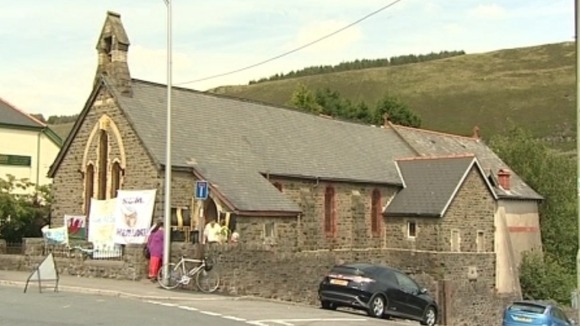
This is probably going to become an increasingly common
sight over the next 10-20 years unless Christian churches can
turn around the decline in attendances.
(Pic : ITV Wales)
Wales is still, for now, a "Christian country" – Although there have been colossal falls in the numbers of people identifying as Christians since 2001, they are still a healthy majority in Wales. Based on the trend, I don't think it's too outlandish to suggest that Wales will probably cease being a majority Christian country between the 2021 and 2031 censuses.

Churches need to take a look at themselves – I'm convinced the falls are terminal unless Christian churches adapt to life in the 21st century. That could come down to how worship is conducted. It looks as though the Church in Wales is starting to look at that, but will it be too little, too late? It might well come down to some core Christian beliefs no longer seeming relevant to younger generations in particular. Re-evaluating these beliefs and their interpretations might be a step too far for many denominations. I'm not sure if churches will be satisfied with a social role reduced to just conducting christenings, weddings and funerals.

Wales is rapidly secularising
– This could have massive social and political implications. It could mean changes in policy such as school "daily acts of worship" in the medium-term. It could perhaps mean that right-wing parties in Wales are going to have to become more socially liberal. It probably means that pseudo-religious phrases like "family values" and "moral majority" are going to have very little political clout in Wales. It also means a materialistic evidence-based approach to some public policy issues – abortion and same sex marriage for example – might be increasingly more palatable to the Welsh as a whole.

Question marks over the future and relevance of faith schools - I don't think this is that big an issue. As long as there is demand for faith-based education, then it'll be provided somehow, just like Welsh medium education. If both parents and pupils alike are questioning/rejecting faiths in increasing numbers, then you have to wonder what role faith-based schools are going to play in the future - perhaps their very existence in the long-term.

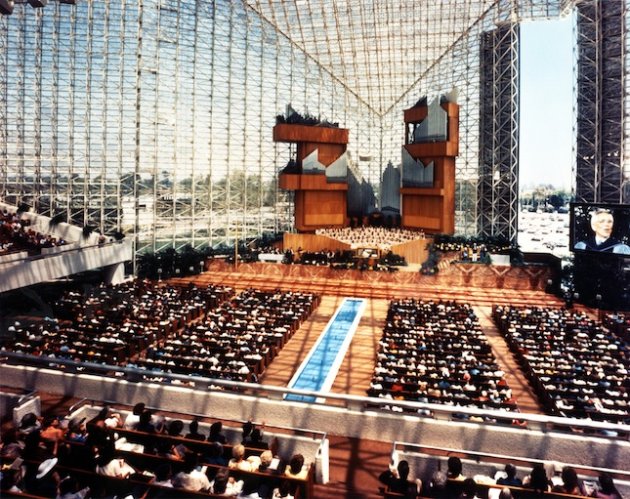
Considering Wales' history of non-conformism, it's (somewhat) understandable
that Wales is targeted by evangelical groups. However, attempts to
convert or create a "Bible Belt" aren't working and probably never will work.
(Pic : Yahoo News)

Attempts by Christian evangelicals to create a "Bible Belt" in Wales are doomed – We've seen a lot of groups come to Wales over the last decade, bringing some really quite hardcore "fire and brimstone" views with them under the guise of community work or missionary work. They've been targeting parts of west Wales in particular. Some even end up with public money, perhaps an excuse by local authorities to offload responsibilities. The hard evidence says this isn't working and they're not really converting many new people, perhaps just making the inevitable decline a little bit slower by being quick to adopt modern ways of proselytising.

Wales is still relatively monocultural – With the exceptions of Cardiff, Swansea and Newport, Wales remains fairly homogeneous compared to vast chunks of England. I imagine this will be reflected in the ethnicity figures as well, which will be my next port of call.