This site is no longer updated

Please use the links in the sidebar to visit the new sites!

Friday, 30 November 2012

Senedd Watch - November 2012

It's been an busy month in Cardiff Bay by usual standards, so my apologies for this post's length.
  • Plaid Cymru criticised Labour MPs from Wales for voting with some Westminster Conservatives against a rise in the European Union's budget – which could translate into cuts in structural and Common Agricultural Policy funds for Wales. On November 21st, the Assembly approved a Plaid Cymru-sponsored motion calling for the Welsh Government to “make representations” opposing the move.
  • Welsh-language broadcaster, S4C, celebrated its 30th anniversary on 1st November. Chief Executive, Ian Jones, said they were considering English-language dubs for some programmes via the red button. S4C were also carrying out a feasibility study with regard moving to three smaller sites.
  • Julie Morgan AM (Lab, Cardiff North) called for the creation of a “green belt” around Cardiff, following Cardiff Council's draft Local Development Plan, which plans for 45,000 homes between 2006 and 2026.
  • The Children's Commissioner called for a new inquiry into child abuse at north Wales children's homes in the 1970s and 1980s, after it was revealed senior public figures may have been involved as part of a paedophile ring. The First Minister urged victims to go to the police, and said he would look at the terms of reference to the original 1997-2000 Waterhouse Inquiry. Plaid Cymru leader, Leanne Wood, also joined the calls, saying that victims “should be heard”.
  • UK Home Secretary, Teresa May, announced a new inquiry into the abuse on November 6th, which will be lead by the National Crime Agency. A separate inquiry will investigate the terms of reference of the Waterhouse Inquiry. On November 13th, a cross-party group of AMs called on an outside police force to investigate North Wales Police's handling of the abuse.
  • New regulations came into force in Wales granting children a “right to play”, and placing a duty on local authorities to assess play area provision and suitability. Deputy Minister for Social Services & Children, Gwenda Thomas (Lab, Neath), said Wales is “leading the way on promoting children's rights” and that play is “vital for children's development.”
  • A report - commissioned by the Welsh Government - found that scrapping Severn bridge tolls would boost the south Wales economy by £107million. The First Minister called for control of the tolls to be devolved to Wales once the current toll concession expires in 2017-18.
  • Mick Antoniw AM (Lab, Pontypridd) criticised Cardiff Metropolitan University for “misleading and bogus” advertising claims suggesting they were Wales' top “new university”, which damaged institutions like Glamorgan University. In a related development, Education Minister, Leighton Andrews (Lab, Rhondda), granted Cardiff Met a reprieve from a merger with Glamorgan and Newport Universities, which will allow the former two to merge in April 2013.
  • The Assembly's Finance Committee expressed concerns that the Welsh Government's draft spending plans won't meet all of their proposed objectives once inflation has been taken into consideration. Committee Chair, Jocelyn Davies AM (Plaid, South Wales East), expressed particular concerns about local health board budgets, and legislation's impact on local authorities. On November 18th, NHS Wales Chief Executive, David Sissling, said he was “confident” local health boards would balance their budgets.
  • Environment Minister, John Griffiths (Lab, Newport East), set up a Task and Finish Group on Marine Conservation Zones, which will report back in April 2013. Antoinette Sandbach AM (Con, North Wales) said the number of consultation responses highlighted the “huge concern at these proposals.” Llyr Huws Gruffydd AM (Plaid, North Wales) said he was pleased that the Welsh Government listened to concerns, but that the new approach “should have been adopted from the outset.”
  • Health Minister, Lesley Griffiths (Lab, Wrexham), announced an extensive review of the Welsh Ambulance Service, following failures to meet performance and budget targets. Peter Black AM (Lib Dem, South Wales West) said that too many reviews had been undertaken on ambulance services and told the minister to “get a grip of this issue.”
  • Welsh Labour and Plaid Cymru agreed a 2013-14 budget deal, which includes an extra £40million for apprenticeships over two years - possibly rising to £60million - and capital investment in a science park for Bangor & Aberystwyth Universities. Plaid Cymru will abstain from the budget vote in December.
  • Paul Davies AM (Con, Preseli Pembrokeshire) called the deal “cheap” and said it “hails the return of an ineffective tag team.” Welsh Liberal Democrat leader, Kirsty Williams, said her party wouldn't support the budget due to failures to close a school funding gap with England.
  • Education Minister, Leighton Andrews, defended his handling of 2011-12 GCSE English Language marking. He told the Assembly's Children & Young Persons Committee that had he changed grade boundaries before results were released, he would've been “crucified in the media....because I would have had little evidence to base that judgement.” He added that it was important, as a minister, to step in when there was a “fundamental issue” at stake.
  • The first Assembly Bill since the 2011 referendum was granted Royal Assent on 12th November. The National Assembly (Official Languages) Act was described by the First Minister – also Keeper of the Welsh Seal - as “the beginning of a new era for the governance of Wales.”
  • Elin Jones AM (Plaid, Ceredigion), said advice documents from 2006 - proving Welsh Government ministers wanted to protect actors from smoking - contradicts current proposals to ease regulations on enclosed smoking for the film and television industry.
  • Local Government & Communities Minister, Carl Sargeant (Lab, Alyn & Deeside), reassured the public that there were “record” levels of salt grit stored around Wales. He said, “this will ensure....we're self-sufficient throughout the winter period without the need to re-stock.”
  • As part of Aberystwyth University's Welsh Politics Annual Lecture, Leanne Wood announced that Plaid Cymru would “crowd source” their manifesto and open their candidate selection process – including open primaries. She also announced her intention to stand for a constituency seat in 2016.
  • Darren Millar AM (Con, Clwyd West) accused the chair of the National Clinical Forum of undermining an independent report on hospital reorganisations in north Wales. The report was initially critical of changes, but was rewritten by the chair and re-submitted as the forum's own work to include support for some Betsi Cadwaladr LHB reforms.
  • Welsh unemployment fell by 5,000 to stand at 8.2% in the 3 months to September 2012, compared to 7.8% for the UK as a whole. Business Minister, Edwina Hart (Lab, Gower), said youth unemployment was still too high, and asked the UK Government to extend rate relief schemes into 2013.
  • Local Government & Communities Minister, Carl Sargeant, relaunched the Welsh Government's flagship anti-poverty scheme - Communities First. Changes will include “clustering” Communities First areas together and he said he would to provide “robust monitoring” of the scheme, following concerns it wasn't providing value for money.
  • Concerns were raised that Welsh local authorities aren't doing enough to combat human trafficking. A BBC Wales investigation found that a quarter of local authorities had no policies on the issue. Joyce Watson AM (Lab, Mid & West Wales), said that the National Assembly were taking human trafficking “extremely seriously”, pointing to the creation of an all-Wales human trafficking coordinator.
  • Winston Roddick (Ind, North Wales), Christopher Salmon (Con, Dyfed-Powys), Ian Johnson (Ind, Gwent) and Alun Michael (Lab, South Wales), were elected Wales' first Police & Crime Commissioners on November 15th. There were concerns raised about turnout levels, which averaged ~15% in Wales.
  • The Global Entrepreneurship Monitoring report found that levels of business start-ups amongst Welsh youngsters (18-29 y.o.) trebled between 2002 and 2011 - from a rate of 3.4% to 9.7%. However, the report also suggested that business confidence in Wales was low, with only 17.7% of entrepreneurs questioned saying there were “good opportunities” in the next six months.
  • The Silk Commission published the first of two reports on Welsh devolution on 19th November, covering fiscal devolution. Recommendations include : devolution of taxes such as stamp duty, air passenger duty, landfill tax and aggregates levies; capital borrowing powers and the ability to vary income tax from 2020 – subject to a fair funding agreement and a referendum. Under the proposals the Assembly will be responsible for raising a quarter of its budget. Deputy Llywydd, David Melding (Con, South Wales Central), suggested these new powers would require more AMs.
  • Leighton Andrews announced a study into the structure of of education service delivery, which will report back in March 2013. He told the Senedd that the possibility of local authorities losing control of school funding decisions – effectively abolishing Local Education Authorities - is being considered. Angela Burns AM (Con, Carms West & South Pembs) said it was an “admission of 13 years of failure.” The Welsh Local Government Association said it would be “undemocratic.”
  • Plaid Cymru leader, Leanne Wood, called on the Welsh Government to take class action against energy companies and banks over “market rigging”, which could pave the way for Welsh consumers taking similar action.
  • The UK Supreme Court ruled unanimously that the Local Government Byelaws Bill was within the Assembly's competence, after it was called-in by the UK Attorney General over concerns about Secretary of State powers. The Welsh Secretary said the judgement, “clarified the boundaries of devolution” while the First Minister said it proved “the Welsh Government was in the right.”
  • The Assembly rejected a Liberal Democrat motion - by 26 votes to 27 - calling for the Ministerial Code of Conduct to be policed independently of the Welsh Government (nominally the First Minister) and the Assembly Commission.
  • The Wales Audit Office reported that the Welsh NHS is likely to face budget shortfalls of £70million in the current financial year - possibly up to £130million. Darren Millar AM said the Welsh NHS faced “financial meltdown” without a big cash injection from the Welsh Government. Elin Jones AM called on more honesty and action from the Health Minister, whilst the Liberal Democrats expressed “grave concern.” NHS Chief, David Sissling, told the Assembly's Public Accounts Committee on 27th November that there was a £50million reserve in place.
  • 53% of waste collected by Welsh local authorities in now being recycled according to Welsh Government statistics. Environment Minister, John Griffiths, said he was “delighted” and wanted to “build on our recycling success so....we can meet our....targets of 70% recycling by 2025 and zero-waste by 2050.”
  • The Welsh Government launched a consultation on its draft Control of Dogs Bill, which will include : bringing 1991 Dangerous Dogs Act measures into effect on private property, measures to force owners to register out-of-control dogs and making muzzles compulsory for dangerous breeds. The Welsh Government are also considering compulsory chipping of dogs, as proposed in an earlier consultation.
  • Politicians from all parties reacted with dismay to the announcement of 600 “white collar” steel redundancies across south Wales, and 200 job losses at a pizza factory in Flintshire. The Welsh Government pledged to provide support to those affected.
  • One person was killed as a result of serious flooding of the River Elwy in Denbighshire on November 27th, after days of torrential rain and gales caused problems across Wales and much of the rest of the UK. The First Minister promised an investigation after in emerged that flood defences on land – bought by a housing developer, but formerly owned by the Welsh Government – failed.
  • Deputy Minister for Skills, Jeff Cuthbert (Lab, Caerphilly), unveiled a qualifications review for 14-19 year olds, which will retain GCSEs, improve literacy and numeracy skills within qualifications, set up a new arms-length qualifications agency for Wales and make changes to the Welsh Baccalaureate.
  • The Assembly approved a motion calling to end stigmas surrounding mental health. Four AMs - from all parties - disclosed their own experiences with mental illness as part of an initiative to “Get Wales Talking.”
  • Vaughan Gething AM (Lab, Cardiff South & Penarth) launched a report, backed by the Co-operative Group, calling for the establishment of a not-for-profit “Rail Cymru” to run the all-Wales rail franchise from 2018. He described it as a “once in a generation opportunity”.
  • The Welsh Government made a bizarre attempt to pull a repeat episode of S4C soap opera, Pobol y Cwm, following complaints they were denied a “right to reply” after a character criticised their handling of bovine TB. Peter Black AM – a known opponent of a badger cull - said the Welsh Government had “no respect for free speech and artistic integrity.”

Projects announced in November 2012 include : A feasibility study into a new postgraduate centre at the Old College in Aberystwyth, a Liberal Democrat-backed mortgage guarantee scheme for up to 3,000 new homes, a £42.5million RNLI investment in Wales for modern lifeboats and a relaunch of the £30million Economic Growth Fund.

Saturday, 24 November 2012

Creating a Welsh legal jurisdiction

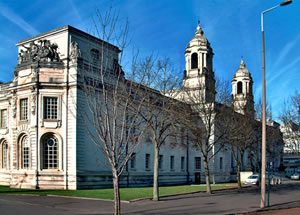
Following this week's Supreme Court judgement, the legal authority
of the Welsh Assembly is solidified. However, is a Welsh legal jurisdiction -
or subsequently, reserved powers - required to cement it once and for all?
(Pic : BBC Wales)
Earlier this year, First Minister Carwyn Jones and the Counsel General, Theodore Huckle QC, launched a wide-ranging consultation on the creation of a Welsh legal jurisdiction. An inquiry is currently being led by the Assembly's Legislative & Constitutional Affairs Committee, all the details are available here. It looks as if they are preparing to report back on it fairly soon.

Now, this is going to be one for the anoraks, but it's an issue that's come to the fore recently (indirectly) because of the Supreme Court case involving the Local Government Byelaws Bill (A farce that should never have happened). As you probably know, the Welsh Government quite comprehensively won that argument.

What is a legal jurisdiction?

The Welsh Government's consultation document has a wider discussion on this (p 4-9), but I'll simplify things.

In short, a legal jurisdiction is a defined territory within which laws, and designated legal authority, apply. This could sometimes go so far to include a separate courts and legal system. Scotland and Northern Ireland are "separate legal jurisdictions". Wales and England are part of the same legal jurisdiction.

A brief history of EnglandandWales


Until Henry VIII's Laws in Wales Acts (LIWA), Wales was a half-way house legally. Although the Welsh had been subject to English common law, it was administered slightly differently. Marcher Lords retained some powers – and were quite influential - whilst some aspects of the civil court system remained distinctively Welsh.

The LIWA formally absorbed the Welsh legal system into the English model, creating a single legal jurisdiction for England and Wales (nominally England).

It established the "traditional counties", the Welsh language was no longer a language of the courts and Welsh people were effectively granted "English subject" status. All this helped the Welsh gentry assimilate themselves into the English aristocracy, and the effects of these things are with us in the present.

The LIWA have been called an Act of Union between England and Wales, but that's open to interpretation. The LIWA had nothing to do with political union, just merging the legal systems. Wales was brought into the union by Norman annexation over several centuries and the Statute of Rhuddlan - not political union in the same way as Scotland (1707) and Ireland (1800).

Parts of the LIWA were repealed by the Welsh Language Act in 1993, which put Welsh on equal standing with English in public life, as well as other bits of legislation before this. Wales also became part of the double act of "England and Wales", after the Wales bit was rather silent for several hundred years.

In subsequent years, Government of Wales Acts in 1998 and 2006 have formalised Wales' position within the Union as a distinct national/territorial unit. Since 2006, a distinct body of Welsh law has also developed, and since 2011, the Assembly has had greater law-making powers in devolved areas. The Assembly also has powers over community safety, tribunals and the family court system.

So, Wales already meets some of the definitions of a legal jurisdiction. However, legally, Welsh laws are part of EnglandandWales statute books – they just apply only to Wales. This isn't the situation in the other devolved administrations, or the Crown Dependencies. Confused?

And now - partly because of this, partly because of politics (see Daran Hill's recent piece at Click on Wales) - we have Welsh laws, passed by a Welsh legislature, being entangled in the Supreme Court. If Westminster tried that with Alex Salmond, Scotland would already be independent.

I always put EnglandandWales in italics because it's not a nation - it's a "thing", and now it's becoming a constitutional tumour. Welsh devolution reaches yet another pointless, unnecessary roadblock.

A Welsh legal jurisdiction : What's the point?

On the surface, this sounds like a very technical issue, but if it did happen, it would have wide-ranging impact on the devolution settlement.

Advantages

Would a Welsh legal jurisdiction make it easier
to devolve areas like policing?
(Pic : BBC Wales)

"Welsh laws, made in Wales, for Wales" – Those of us who bothered to vote said yes to this in 2011, logically this is a conclusion to that process. The National Assembly would have an unquestioned authority to make laws in defined devolved areas, within Wales, to suit Welsh needs. There would be no justification for Westminster "hand holding" and it might dampen (but not eliminate) the threat of Welsh Bills being called in by Welsh Secretaries or the Attourney General.

Equal footing (legally) with Scotland – It's a bit more complicated than saying EnglandandWales would be over once and for all, but it would be a huge step in this direction. Each constituent nation (minus Cornwall) would be their own legal jurisdiction for perhaps the first time ever. The UK would finally be inching towards a more formal federal-lite model.

It would make devolving criminal justice easier – I believe one of the reasons things like policing haven't been devolved yet, might be the lack of a legal jurisdiction for Welsh police forces to work in. It would be too confusing to decide who has authority over what - the police would uphold EnglandandWales laws, whilst being accountable to the National Assembly. That would be yet another constitutional mess. A Welsh legal jurisdiction would clear things up, and make it easier for a Welsh legal system to function – if responsibilities were devolved.

The creation of a Welsh "Legal Society" – This might be dependant on devolving criminal justice. Having (potentially) a Welsh Inns of Court, Welsh Bar association and Welsh Judiciary would give us some standing in terms of the British court system(s). I think, personally, it would be the most significant development in Welsh "nation building" since 1997. It could lead to the creation of more opportunities for Welsh law/legal graduates closer to home. For example, if you had some major legal hurdle in Wales to overcome, eventually you would only – realistically - be able to use a Welsh legal firm when currently you could just as easily use one in Bristol as you would Bridgend. Legal cases under Welsh law would have to be heard in Welsh courts too.

Disadvantages

Would it be too complicated - and too expensive - to start
to separate into English and Welsh judiciaries?
(Pic : UK Department of Justice)

It wouldn't lead to better laws being drafted – This is a big point. It wouldn't improve law-making by the Assembly, and wouldn't lead to improvements in scrutinising legislation. One of the more disturbing issues raised by the Byelaws case, is that no AMs, or Welsh Government ministers, picked up on any possible conflict. They were proven right in the end, but they need to be more careful. Ultimately, this will come down to the colour of the governments we have either side of the M4, and the legislative drafting skills of AMs and Assembly Commission staff.

It's worthless without criminal justice powers – Saying it should be devolved is easier than doing it. This is one of the points raised by Theodore Huckle, but not necessarily because he supports the move. Having a legal jurisdiction without any corresponding legal "teeth" (policing, prisons, probation, courts) would be a hollow, symbolic gesture. Devolving the police would be relatively simple, but the courts system would be more difficult as there's (currently) little of the administrative apparatus in place.

Duplication of functions previously shared – The effort required to create a stripped-down legal jurisdiction (in which Welsh laws only apply to Wales) would likely be minimal. The cost of criminal justice powers, or even a Welsh judiciary (with or without justice powers) would be an issue. I imagine justice spending could simply added to the block grant. But as I (sort of) pointed out in The Big Independence Question, there are discrepancies between how much is actually spent on criminal justice in Wales (out turn expenditure) and how much is reported by the Treasury, or even the Welsh Government's own figures. In short, there appears to be far more reported to be spent on certain things in Wales than is actually spent. That could be the same across whole (UK) government departments.

Increased differences between Wales and the rest of the UK – Is the chance to make criminal law to serve Welsh needs worth it? Or is the current system working so well, that it needn't be interfered with? For those reasons, it could have both a positive, and negative, impact on the Welsh legal profession in particular. My Bristol and Bridgend argument above could easily be the other way around. There's nothing fundamentally wrong with the (English) legal system as it is. But as I pointed out, in terms of devolution, I think a single EnglandandWales legal jurisdiction is starting to become a nuisance. Despite my allegiance, I can see both points to the argument.

The impact on devolution

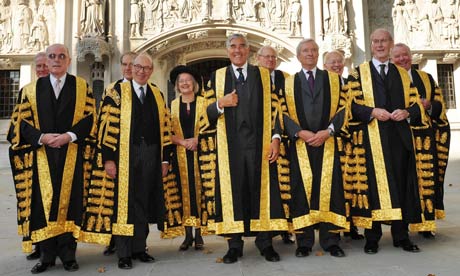
Westminster would retain significant authority over many matters,
but are a Welsh legal jurisdiction and reserved powers intertwined?
(Pic : The Guardian)

Firstly, it has to be pointed out that even with the creation of a Welsh legal jurisdiction, there would still be an overarching "UK" legal jurisdiction. The UK Supreme Court would still be the highest court, and in the case of Wales - unless the criminal justice powers came with it – policing, prisons and courts would (as I understand it) remain run on an EnglandandWales basis.

As the First Minister and Counsel General have suggested, it might lead to the requirement of a Welsh judge (and presumably Scottish and Northern Irish judges too) sitting alongside English judges on the Supreme Court. I don't see the point of a single Welsh judge sitting there - at the moment - until some of these issues are sorted out. It seems symbolic more than anything. They don't actually believe we're equals in the Union, do they?

For this to work effectively, Wales would almost certainly need a "reserved powers" model like Scotland. That means powers would be retained explicitly by Westminster, rather than powers explicitly devolved on a piecemeal basis - as currently.

It sounds like Lilliputian arguments over breaking eggs, but it would clear up where Wales and Westminster stand constitutionally. It would go some way to setting the Assembly's powers "in stone" and make the Assembly seem less subordinate in legislative terms.

The Assembly has a (perceived) status half-way between a county council and a devolved parliament like Scotland within EnglandandWales - where it's obvious the "Daddy" legislature for EnglandandWales is Westminster.

Both the First Minister and Ieuan Wyn Jones (Plaid, Ynys Mon) raised the issue recently, and steps towards reserved powers are now becoming a jog (Manon George & Alan Trench). If there are any problems with the Organ Donation Bill – I'm expecting there'll be a rough ride - those jogs will become sprints.

It remains to be seen whether a legal jurisdiction would be a pre-requisite for reserved powers or not - I think it would be. There's no point in reserved powers without a jurisdiction in which those powers would apply. However, complications resulting from the creation of an embryonic Welsh Judiciary might make the idea sound more appealing that it actually is.A Welsh legal jurisdiction would, in my opinion, mark a bigger "growing up" phase in Welsh devolution compared to the fiscal powers announced earlier this week.

In terms of the "devolution journey", the original Assembly (1999-2006) was Welsh politics in the primary school, 2006-2011 was GCSE. Welsh politics is currently studying A-Levels. This move (combined with reserved powers and fiscal devolution) would put Welsh politics in the first year of university. Federalism or Devo Max would be a university graduate - and that's where most people would get off. Confederalism would be Masters, whilst independence would be a constitutional and political PhD.

Wednesday, 21 November 2012

Silk Commission - Part One : Finance & Devolution

On Monday, the Silk Commission published the conclusion of the first part of its remit, covering the devolution of fiscal powers. The full report and executive summary are available here.

There were a total of 33 recommendations, and I've summarised them below. I strongly recommend you read the executive summary at the very least yourselves though.


Devolution of tax powers
Will devolving Air Passenger Duty for long haul flights with Westminster
retaining the control over APD for short haul flights until they decide it meets
their own policy objectives....heh....heh....I'll just catch my breath...
result in a turnaround in....oh f**k it.
(Pic : Holidayextras.co.uk)

"Smaller yielding and local taxes" – It's recommended these are devolved. These include : Air Passenger Duty, Stamp Duty (on land), Aggregates Levy and Landfill Tax. These don't amount to much revenue (less than £200million), but could be used as tools to help Welsh Governments meet policy objectives. For Air Passenger Duty, it's recommended it should only apply to long-haul flights in the short-term, with Westminster deciding whether to go the whole hog as part of its own aviation policy. I think attracting long haul flights to Cardiff requires more than that. And the suggestion that Valley, Swansea, Pembrey or Harwarden could be developed into international airports off the back of changes in APD is hilarious.

Non Domestic (aka Business) Rates
– NDR is currently "half-devolved". The Commission recommends devolution in line with Scottish arrangements. Parties have focused on changes here as a way to boost small businesses, while the Welsh Government carried out its own review earlier this year.

Corporation Tax
– The Commission accepts it's "a powerful policy", but recommends against devolving corporation tax - unless it's devolved to Scotland and Northern Ireland.

Corporation Tax (within enterprise zones)
– Subject to state aid requirements, the Commission believes that "enhanced capital allowances" should be allowed in Welsh enterprise zones.

Income Tax (Partial)
– The headline-grabber. Current bands (20p, 40p, 50p) would be reduced by 10p respectively, and the Welsh Government will be able to either restore the status quo (raising each by 10p) or vary things. The Welsh Government would have the power to set each rate independently of one another. So, for example, they could set a basic rate of 19, a higher rate of 41 and an additional rate maintained at 50. The block grant would use "indexed deduction" to reflect the changes.

The impact of income tax changes is small. If the higher rate rose/fell by 1p for example, it's estimated to make a £16million difference either way. It's the basic rate which has the power as a potent tool, with a £180million impact either way.

I think the Assembly would be terrified of pursuing a different income tax regime from England, because that's been their mentality since day one. I wouldn't be surprised if they maintain the status quo, perhaps raising the basic rate to fund one off projects. Or, they could raise the higher rates to service borrowing when required, or lower them to encourage wealthier people to move to Wales.

94% of residents living in Wales, work in Wales, so I don't see what the report's point is about an "interconnected economy with England." The numbers out-commuting amount to 2.5% of the Welsh population. It looks to be the opposite to a large degree – the likes of Flintshire aside. They do, however, conclude that "modest" changes to income tax would have little impact on cross-border migration.

Why do people think these problems have never been encountered in human history? Have they ever been to a "eurodistrict"? Or US state border? Or better still, the Irish border? Or the Isle of Man?

It's also recommended that new taxes - within devolved areas - created by the UK Government should be considered "with a presumption in favour of" devolution to Wales.

Borrowing, "fair funding" & legislative requirements

"Toytown Treasury"? Or big shake up in economic reporting and powers?
(Pic : Buildingopinions.com)

Last month, both governments agreed that the Welsh Government should have borrowing powers, as long as they raise the income to service it. So the fact that borrowing powers were included wasn't a surprise.

Currently, the Welsh Government needs to plan capital spending over a three year period. It's a fixed pot of money set by Westminster. The report recommends that the Welsh Government be able to borrow directly from the UK Government – with agreed limitations – for both:
  • Capital expenditure – Suggested up to £130million per year.
  • Revenue expenditure shortfalls – Suggested up to £100million, with total debt limited to £500million (as currently).

The exact figures, limits and arrangements would need negotiation between the governments. The fact Wales has a significantly lower PFI debt than Scotland – just 1% of the UK's total - suggests Wales might be able to service higher levels of borrowing, perhaps up to £3billion in total.

"Fair funding" wasn't part of the commission's remit, but they suggest a new funding arrangement be agreed before moves on this – so does Carwyn Jones - as both governments will share responsibility over taxation. The Welsh Government might also be able to switch spending between capital and revenue spending – subject to agreement.

It's recommended a "Welsh Treasury" is established - effectively replacing the existing Finance Department – to oversee it. That seems like a cosmetic measure to give us the illusion that these are heavy duty powers. But there are indications that economic monitoring will be significantly beefed-up.

The Commission recommends that within this Parliamentary term (by 2015), a Wales Bill is passed to include all the measures listed, and including provisions for a referendum. All the tax and borrowing powers - except income tax powers - would come into force in April 2016.

The referendum

Sigh. Here we go again.
My bet is on a sub-30% turnout sometime in Spring 2018.
(Pic : BBC Wales)
It's proposed that the power to vary income tax be decided via referendum, once both governments agree to funding reform. Simon Thomas AM (Plaid, Mid & West Wales) let slip on Twitter that it was at the behest of Labour and Conservatives.

True Wales "warned" that tax powers would follow a successful 2011 referendum. They were right, but for the wrong reasons. In an ironic (and hilarious) twist, Welsh Labour have explicitly said several times that they're not seeking tax-varying powers. It's a logic grenade being hurled into the True Wales camp. Do they campaign against Westminster's mandate to decide these things? This was their doing.

Once again, a Welsh constitutional decision, which is very staid, dull and technical – but important - will rest on whether Labour want it or not. All indications are that the answer would be no.

Welsh Labour are,on the whole, pretty good at keeping in step with public opinion, but this might be an example of when they're not. Polls have consistently suggested a majority are in favour of tax-varying powers, whilst, more crucially, there's a suggestion people don't see the point in a referendum on the issue.

A referendum on whether the Assembly should have the power to vary in....your eyes are glazing over, aren't they? Richard Wyn Jones and Roger Scully put it better than me. A referendum would be easily won IMHO, but if we're going to have referenda, let's ask something significant and worth the effort.

The referendum won't happen this Assembly term, and income tax powers (which I said are pointless as, in practice, there'll be a fear of differing from England) won't come before 2020. Seven-to-eight years. In political terms, that's a glacial pace.

There might be a legitimate reason for the "delay" - to get the right state apparatus in place. However, while the Assembly tinkers with landfill taxes and air passenger duty for long-haul flights (that don't even serve our only major airport); Scotland might have seceded, on current trends Offa's Gap is likely to be wider than it is now and our tax base could be much, much smaller.

Conclusion : Pissing into the wind

Aggregates levy. Yeah.
(Pic : Telegraph)

The announcement confirmed the nuggets of info released over the last year or so. It's not exciting stuff, and I doubt it'll make much of an impact, but overall, it's another one of those "steps in the right direction."

The big - and perhaps only significant - positive is the devolution of business rates, which all parties support reforms to. That lever's also hefty in terms of the revenues involved. Borrowing powers could be used effectively too. Emphasis on the "could".

Labour get what they wanted : control of "minor taxes" like air passenger duty, capital borrowing powers, an acknowledgement that a "fair funding" agreement is needed and income tax powers are stalled.

I imagine the other parties will be happy too. Tories because they can propose tax cuts/"responsibility" in Assembly elections without making any real impact, Plaid and Lib Dems (mostly) for the same reasons as Labour. Though Plaid have said, perhaps unsurprisingly, that these recommendations "don't go far enough."

I would've preferred recommendations that put pressure on the Assembly. That means, in addition to business rates, borrowing (including bond issue) and the minor taxes : complete control of income tax, corporation tax - and perhaps vehicle excise, fuel duty and alcohol/tobacco duties too (because transport and health are [supposed to be] devolved).

And all to come into force in the next Assembly term - minus referendum - so we can go into the 2016 elections with manifestos promising policies that would make people sit up and take notice for a change.

I might be pre-judging Part II, but I hoped I would be saying Wales is reaching - in constitutional terms - a federal "endgame". If it's done well, that's something I could live with. This isn't that, and every time it's fudged, it pushes me further into the "screw the lot of you" camp by giving me the distinct impression that Wales isn't being taken seriously in either Cardiff Bay or Westminster.

I doubt I'm the only one pissed off with the same constitutional arguments flaring up again and again. It isn't exciting, it's dull and unnecessary. Gradualism might be appropriate for devolution as a whole, but the economy and fiscal responsibility scream out as areas where Wales - quite literally - can't afford to take mere "baby steps in the right direction".

We'll be back here again in the 2020s, probably deciding whether the Assembly gets full control of income tax, or other minutiae that should've been decided years earlier.

We'll be arguing over whether we have another referendum too. That could be because of our political class's innate lack of confidence in their own abilities, or even their own feelings of inadequacy about their mandate to govern Wales.

And, considering how joint powers over legislation works/worked so brilliantly, I wonder what glories await us with taxes.

We could have a nation state that treats federalism as a serious proposition, whilst being able to elect politicians at "state level" who can improve lives with meaningful, not half, or even quarter measures. If AMs want to play in a sandpit with their paper round money, and MPs approve of that, I think it's fair to treat both accordingly.

If anyone wanted reasons why the vast majority of people don't give a toss about Welsh politics - this is one of them. It's taken me just 20 months to go from wide-eyed optimist to cynic of all things "devolution".

Maybe those massed ranks are the wise ones, and it's never been a more tempting time to join them.


Monday, 19 November 2012

Giving children the right to play

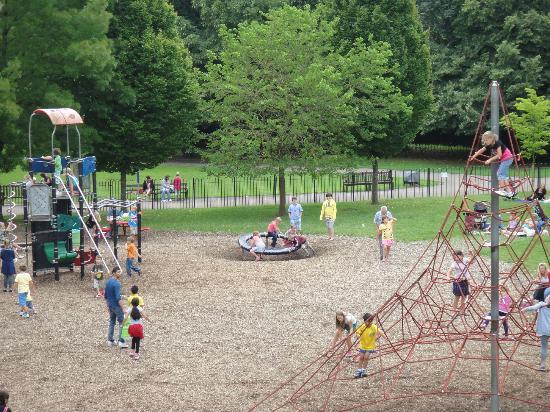
The Welsh Government has become one of the first
in the world to legislate for play.
(Pic : Tripadvisor.com)
I know today's top story will be the release of the first part of the Silk Commission, and I'm giving it the once over for later this week. Let's just say my initial reaction isn't positive.

It makes quite a contrast to my last blog on abortion, but today, I'm going to focus on some good news that perhaps went under the radar.

In 2004, the Welsh Government formally adopted the United Nations Convention of the Rights of the Child. This was followed up by the Children and Families Measure in 2010. The measure had a section, laying out local authorities duties with respect of providing safe and reasonable play areas for children.

In the last few weeks, Deputy Minister for Children & Social Services, Gwenda Thomas (Lab, Neath), issued new statutory guidelines to local authorities, governing children and play.

The new regulations and guidelines include:

Play Sufficiency Assessments : Local authorities (and in some cases, town and community councils and Communities First partnerships) will be obliged to carry out an audit of play areas, determining if there are enough suitable play areas for children.

Statutory Action Plans
: Where there are "deficiencies" in play provision, various bodies will be obliged to plan out improvements. If provision is adequate, then plans will need to be put in place to ensure it stays that way. These plans will need to be submitted to the Welsh Government by March 2013, and every three years after that (2016, 2019, 2021).

Consultation
: Views of parents - and crucially - children, will need to be taken into account. These include ideas for what sort of play areas they would like to see, as well as the reasons why they might not use existing facilities. For example, dangerous roads, or anti-social behaviour.

Play is considered vital to childhood development, whether that's "freely chosen play" (without adult supervision) or "structured recreational activities." Adequate play facilities will also improve overall health/wellbeing, and hopefully reduce instances of anti-social behaviour. It's all part of ensuring the Welsh citizens of tomorrow are well-adjusted and well-rounded (but not in a fat sense).

The Welsh Government also passed former Plaid AM, Dai Lloyd's, Playing Field (Community Involvement in Disposal Decisions) Measure in 2010, which ensures playing fields cannot be sold off/developed without adequate consultation with statutory consultees.

When I was a lad, aside from Newbridge Fields (which was/is generally well-maintained), the only other open space was my old primary school rugby pitch. There were syringes, dog mess, and broken glass - from a nearby abandoned building that wasn't demolished for the best part of a decade – to varying degrees.

There were two smaller equipped playgrounds nearby, both of which were poorly maintained. I'm pleased to say that's not the case now. Though it took the death of a 5 year old girl in an automatic gate for one of them to be upgraded. The original playground was completely removed over concerns about anti-social behaviour.

It might not be their highest-priority, but - other than rubbish collection - playgrounds and leisure facilities are what most people think of first when it comes to local councils, even if their responsibilities extend further than that.

Successive Welsh Governments, and Welsh Labour, have a good track record in tackling these small, but important, quality of life matters. On paper, it's an excellent idea that underpins their commitment to improving opportunities and rights of children.

It's just a shame they still can't get many of the big things right.

Wednesday, 14 November 2012

Police & Crime Commissioners - A Guide

Three posts in a row. I'm spoiling you.  After the excitement of last week's US Presidential elections, I bet you can't wait to have your say on Police and Crime Commissioners (PCCs) for Wales' four police forces tomorrow.

PCCs : What are they?


The UK Government passed the Police Reform and Responsibility Act in 2011, which created the role of Police and Crime Commissioner. PCCs will be directly-elected – by supplementary vote or first past the post (when there are only 2 candidates).

PCCs will only be elected in the 41 police forces in EnglandandWales outside London (not including the likes of British Transport Police). Policing in Wales is a non-devolved matter, and therefore the responsibility of Westminster. The Welsh Assembly does control over some minor devolved functions relating to community safety, as do local authorities.

Policing is devolved in both Scotland and Northern Ireland. Scotland is (for now at least) retaining the police authority model, while Northern Ireland has a National Policing Board which includes Northern Irish Assembly Members.

What will they do?


PCCs replace the existing police authorities, which were made up of local councillors and appointed members. Local authorities will retain some say in policing via new Police & Crime Panels, which will scrutinise the PCCs themselves.

PCCs themselves will:
  • Have the power to fire, hire or suspend the Chief Constable of their respective police force
  • Manage police finances, including the Council Tax precept for policing
  • Produce a "Police & Crime Plan" for the police force area, setting out strategic objectives
  • Ensure Chief Constables deliver the objectives of the plan
  • NOT be able to impact operational policing decisions.

It's a full-time role, with a salary of between £65,000 and £100,000 per year.

Are they worth it?

In principle, I believe directly-electing these "executive positions" is the right thing to do. I've made my reasons clear before. I'm a fan of directly-elected mayors, and I'll have more to say on that next year.

However, the police is a different matter.

Politics and justice rarely mix. Politics needs to take in the popular will of the electorate. If it did, I'm convinced we'd still have the death penalty and corporal punishment in schools (or for petty criminals). That's not justice, it's a step up from barbarism. Although PCCs won't have any control over the operational side, you can certainly see a way for a "strongman/woman" to get into a position to give criminals a "bally good thrashing, wot." I'd prefer just upholding the law.

In my opinion, the Police Commissioner should have operational decision making, not just the administrative stuff. To do that effectively, the only credibly candidates for PCC would be the senior police officer in charge of a particular territory, and answerable to local authorities directly.

Basically, I'm saying if we're going to have PCCs, we should elect Chief Constables into the position, or they should be part of a "ticket" including commissioners for fire services, health boards, social services etc.

I'm not impressed with the prospective PCCs to be frank, and although they've been criticised, I think Plaid Cymru (and the Lib Dems) made the correct decision to sit these out. It isn't worth the time, money or effort. If these roles were combined police, fire, health and social service "commissioners" – in effect regional mayors – then maybe it would've been worth getting excited about.

I'll probably give these elections a miss, and doubt I'll be the only one.

I'd only vote for a candidate who explicitly supports the devolution of policing and criminal justice, and the closest to that in South Wales appears to be the Independent candidate, Mike Baker. Consider that an endorsement if you want, and if I were going to vote it would be for the two Independents.

Though as far as I can tell, he hasn't mentioned it officially in his programme. Reassuring tweets and posts from Plaid members aren't enough, personally. Even if a candidate did support it, they wouldn't have the political power or clout to do anything about it.

I doubt spoiling my ballot would make any difference either. It's not as if they make a note of why a ballot was defaced (AFAIK). The fact that voting would annoy Ian Blair is tempting though. I think a really, really low turnout (sub 20%) is the only way to "send a message", as it undermines the credibility and mandate of the position – hopefully leading to a positive rethink in Westminster, or hopefully, Cardiff one day.

As for my predictions, I think Labour will win all four quite comfortably. The most "interesting" contest appears to be between Tal Michael (Lab) and Winston Roddick (Ind) in North Wales. There's also extensive analysis of the related (in South Wales) Cardiff South & Penarth by-election at Penarth a'r Byd.

I think it's worth running down the candidates – who bear no resemblance to the real ones, honest - and what they stand for.


RoboCop


As the property of G4S, he's been criticised for being a vehicle for the privatisation of South Wales Police. Unlikely to be satisfied with a desk job, memories from his organic remnants cause him to go on rampages of revenge against those who tore his body apart with shotguns. That's what he vows to do to Welsh criminal scum – to applause from those who like the sound of baton on skull on a Sunday afternoon.


Unfortunately, his state-of-the-art programming can't cope with the complexities of the Welsh language. Protesters from Cymdeithas yr Iaith were dealt with swiftly and with extreme prejudice. After being hacked by Anonymous, he could only ask women to show their tits, and developed an obsession with cats.

He has no concept of rehabilitation or proportionate response. He runs on nothing but air and baby food. He doesn't require rest, or money. He can't decide is he's a man or a machine. He doesn't understand fun, commits everything to memory and lives to do what he's told – the model Tory citizen.

Gene Hunt

It's time to fire up the Quattro and turn your clocks back to Thatcher. With a healthy amount of misogyny and a regard for police brutality that would make General Pinochet blush, the Gene Genie is on the case.


As officer in charge of the children's TV presenter CID unit, his nonce-beating policies have proven popular on the doorstep in the wake of the Jimmy Savile scandal. He played a key part in the downfall of beloved entertainer – Mr Blobby – and his now infamous BDSM dungeon. He also uncovered a shocking bestiality fisting scandal, affecting a yellow bear, a dog, a panda called Soo....they even got Little Cousin Scampi too.

He pledges to bring back "the good old days", where someone who had their bike stolen could go into any police station, describe the assailant as a 5ft4 pale-skinned, freckled redhead, and be assured that the police will "catch the black bastard."

Inspector Gadget

"Go! Go! Gadget bureaucrat!" A perfect example of the Peter Principle. Somehow managing to become a senior detective by sheer luck than skill, Inspector Gadget couldn't detect his way out of a phone box. It's not a good sign when most of the detective work is done by his niece and a dog.


As the Nostalgia Party candidate, he's another ex-copper pledging to bring back "the good old days" of the 1940s and 50s, when crime didn't exist, gangsters were "good boys who loved their Mums" and public figures could rape vulnerable children and keep it hushed up.

Those extending arms aren't a superpower – they're a crippling bone condition that medical science hasn't found a cure for yet. He might have to accept his policing days are over.
Clay Davis

A valued pillar of the community, he sacrificed a safe seat on the promise of serving the people with dignity, honesty and transparency. He bats away criticism that politicising the police is wrong, and despite bitterly opposing the establishment of Police & Crime Commissioners, he was quick to throw his hat into the ring.


He promises to do all he can in the few hours a week he'll set aside for the job, alongside his £100,000 per year chairmanship of The Charitable Charity Trust, his £5,000 per month stipend from the Chartered Lesbian Society of Greater Swansea and his non-executive directorship of G4S.

Some controversy remains over his proposed £30million deal with Trabant to provide new police cars. Only £30 is actually going to be spent, with the rest of the money unaccounted for. Clay insists the money was never there in the first place, and hopes the public will be impressed with his magic trick, and treat him with the respect he's due. The Wales Audit Office said in a detailed statement, "Duuuurrrrrr, this seems Okie-Doke, duuuuurrrrrr."

Monday, 12 November 2012

Housing London

Harlow, Essex  - one of many  "new towns" built to cope with London's population growth.
Due to decades of short-sightedness by Westminster,  it looks like Wales
is about to become home to evacuees in a new wave of "expulsions".
(Pic : Wikipedia)
In the last few weeks, it's been revealed that London's local authorities are planning to purchase houses across EnglandandWales, to "temporarily" move people out of the Imperial Capital, once stricter housing benefit reforms come into force. More on this at : Jac o' the North, National Left, Borthlas and Valleys Mam.

One local authority highlighted as a refugee camp is Merthyr Tydfil. I presume any local authority with access to the M4 and South Wales Mainline will be seen as suitable, though it remains to be seen if other local authorities will be drafted.

And let's face it, similar things have been happening for some time, especially along the north Wales coast. If it's good enough for Scousers, Mancs and Brummies, then it's good enough for Londoners too. There's nothing (AFAIK) Welsh local authorities, or the Welsh Government, can do to prevent another local authority in another part of the state buying up cheap, empty housing stock.

People migrate back and forth across national, and sub-national, borders all the time. Usually, that's for employment reasons. People moving for work makes sense, because they can better themselves and their families and they contribute to the local economy. Let's just say that I doubt the people being "expelled" from London will be the cream of the lower-middle and working classes.

That's precisely what Wales and northern England needs right now – more people, looking for fewer jobs. It's like a twisted, reverse version of The Grapes of Wrath.

We constantly hear how London and South East England are the economic engine of the UK. So logically, shouldn't movement be in the opposite direction?

We can call it "Take in a Taff", and have a soppy TV appeal. Can live in the garage of your Belgravia townhouse. Comes house-trained and vaccinated. Requires regular walks and rugby pitches. Will find deep holes irresistible.

More seriously, I said this in response to the Welsh Government's Housing White Paper back in May:

"I'm afraid that the Welsh Government's broadly positive aims to reduce it (homelessness) might be exploited by local authorities elsewhere in the UK to "dump their problems on us". Despite the trend of falls in homelessness numbers, the Welsh Government could inadvertently let the UK Government off the hook for their welfare and housing reforms, and be left to pick up the pieces and the price tag. "

We knew London boroughs were planning something along these lines, but perhaps thought that they wouldn't be cretinous/heartless enough to go through with it. Well, here we are.

It's estimated there'll be around 200,000 possible "evacuees" from London alone, though I imagine only a few hundred would move to Wales. They'll likely be larger families, who live in large houses and flats on social housing estates in areas where rents are higher - swankier districts like Westminster and Kensington & Chelsea for example.

Even if it's temporary, they'll need new schools and new GPs. They'll need temporary jobs too – good luck with that. Everything they will have been used to – as London is a different planet compared to most of Wales – will be turned on its head. Try swapping the Underground and London Bus for Arriva Trains Wales, First Cymru and Stagecoach.

They're likely to be quite angry about being forced/coerced to move too, and they'll take it out on the people whose doorsteps they've been left on – Welsh local authorities and the Welsh Government.

The Welsh Government can do three things.

They can send the equivalent of a strongly-worded letter (because devolution is toothless). They can keep their fingers crossed that this is a political stunt (as John Dixon said). Or they can prepare for the inevitable.

For the latter, there's the opportunity to come up with great-sounding social enterprises and third sector bodies, and plonk some failed political candidate in to channel EU funds yadda, yadda, yadda.

None of this solves the underlying problems : high rents, high cost of living and lack of affordable housing in London.

The old way of solving this, was pulling people to new towns constructed around the M25 - the so-called "London overspill". NIMBYs and the economic crisis put paid to that, but if you want to live next to a Global City, I think you should expect it to acquire more breathing room as it grows. There's no way that the new developments in Stratford related to the Olympics will solve the problem by itself either. You need thirty or forty Stratfords.

The Welsh Government (and some local authorities in Wales & England) have been very accommodating to "other people's problems" down the years. Their quest for an all-encompassing, obtuse definition of "social justice", has lead to London boroughs seriously considering this as a viable option.

Thanks for selling us out cheap.

We have to remember, that it's not the tenants fault that since the 1970s, the UK has become useless at planning for anything that requires longer than 10 years of forethought – look at energy, transport and now housing and welfare.

Despite being portrayed as a megalopolis with streets paved with gold, London has levels of deprivation that would make Welsh Labour teeth itch. While Wales remains part of the UK, we shouldn't ignore that, perhaps because things in Wales aren't half as bad as they appear to be.

This proposal is....quite extraordinary. History has shown us that coerced and forced movements rarely end well – for those being moved, or the areas to which they are moved to.

It's funny. Whenever I doubt my commitment to independence, you can always rely on the UK Government, or other "great British institutions", to take a dump with their trousers on, reassuring me that it's the right choice.

Saturday, 3 November 2012

Schools without books? Learning 2.0

Welsh schools are beginning to introduce tablet computers into
the classroom. Where could this development lead?
(Pic : Welsh Government)
Information Technology is a compulsory subject until the age of 16, and a core part of the National Curriculum. However, beyond computing, technology also increasingly plays a role in teaching other subjects – for example : scientific models, computer aided design, presentations, notes and even core texts.

With concerns raised about the physical health of children as the result of heavy bags, could Wales blaze a trail for book less, technology-led, interactive learning. If we do, it could completely revolutionise how we teach, and would set us in good stead for the coming (technological) challenges ahead.

Current policy

One Wales piloted a "Laptop for every child" scheme,
but technological changes might have rendered it redundant.
(Pic : BBC Wales)
Plaid Cymru had a policy to give each pupil a laptop, and launched a pilot programme during the Third Assembly, but that was ditched by Labour last year. Recently, it's been revealed that laptops bought by Torfaen council under this scheme are still in storage. Full-blown laptops probably over-engineered the solution to the problem, but clearly the Welsh Government have thought along these lines for some time, and this line of thinking has had an impact - perhaps not in the way Plaid expected.

Education Minister, Leighton Andrews (Lab, Rhondda), is a technophile – and that's a progressive and exciting development in my opinion. He's actively encouraging the use of mobile phones and social networking as a teaching tool, instead of seeing them as a nuisance.

Labour's 2011 manifesto included commitments to build a "virtual learning environment", which would link teaching materials across institutions and classrooms – for example :YouTube, iTunes and Open University material.


Tablet computers are already being used in Welsh schools as a learning tool. Tonypandy Community College are piloting the use of Android tablets for things like internet access/research, word processing and presentations. They cost £65 and pupils contribute £10 towards the cost. Obviously the widespread introduction of tablet computers in the classroom would be expensive, but as technology changes, it might become affordable, practical and even desirable.

Cardiff Council are also spending £3million on introducing tablet computers across its schools.

A Task and Finish Group reported back at the beginning of the year, giving ten headline recommendations, the standout ones being:
  • The establishment of a national organisation to oversee digital resources in the classroom (Hwb)
  • Improving the skills of educators in use of technology
  • A national "digital collection" as a learning resource (in both languages)
  • The ability to access teaching resources anywhere, and the creation of a unique User ID to be used anywhere
  • Manage IP rights and create income through external licencing

The questions now are : What would all this look like? How might it work?

Pontydysgu and Taccle2

Interactive textbooks are already being
offered by the likes of Apple.
(Pic : Phonearena.com)
Pontydysgu is a pan-European research consultancy focusing on "personal learning" and use of technology in teaching, which has been dubbed "E-learning 2.0." There's a concerted effort by the European Commission to investigate, develop and research applications of technology in learning. Pontydysgu produced a paper on working and learning, and it overall message was that the "industrial model" of teaching (classrooms as structured learning "factories") was becoming increasingly outdated.

We've seen a shift towards that already in Wales, with the creation of more apprenticeships. But it also means that things once seen as outside the traditional definition of education, such as lifelong , informal and distant learning courses were "starting to converge." So instead of a structured : school – college – university model, you can pretty much learn wherever you are and at any time.

The paper says that "with the availability of multiple knowledge sources....the way young people are using computers for learning....looks dysfunctional." There's also a difference between primary and secondary schools. Primary schools have a focus on developing social skills, key skills and social adjustment, while secondary schools are a bridge between higher-technical training and fundamentals needed to become a productive citizen.

How can all these new technologies be applied to the classroom? Do we need a rethink of the structure and progression of pupils within the public education system? That's where Taccle2 comes in.

If Pontydysgu is about researching the ins and outs, the Taccle2 project is more about application – guiding teachers in introducing e-learning to classrooms. This includes providing resources such as : games, use of established tools like Google Earth, interactive e-books. They also provide guidelines for prospective e-textbook authors.


As these are pan-European projects, I think one area which could be focused on is – you guessed it – modern foreign languages and Welsh. With Plaid Cymru and the Conservatives both mulling over bringing a "third language" into primary schools (presumably French), I think e-learning tools would be a great way to introduce second and third languages at a steady pace.

Swansea University and Academi Hywel Teifi launched "Gemau Glew" last year as a Welsh-language learning aid (you can try it yourself at Syniadau). I don't see why this could be expanded to a whole load of languages, or even integrated properly into courses like those provided by the Open University or Learn Direct.

Teaching of tomorrow

Although, as said earlier, IT is a core part of the school curriculum, there have been complaints raised about how it's taught in schools. At the moment, it's more application based and showing you how to use them. But this neglects things like coding and binary – the "languages of computers" – which is usually left until GCSE or A-Level.

I'm not computer-minded at all, in fact I'm something of a technophobe. To me, the internets is a series of tubes. But neglecting coding is a bit like teaching kids a subject like history, but without them being able to write. IT will have to become something transferable across subjects and become as important as reading, writing and maths.

Tablets and computers shouldn't replace traditional teaching methods. In fact it could make teaching a bit easier, personalise student learning and through interactive programmes, make learning a lot more hands-on and fun.

The technological requirements

Simplified programming languages like "Scratch"
could gently introduce younger children and teens to coding.
(Pic : Lunduke.com)
First things first. We need to develop a robust, cheap tablet computer. This could be based off the Raspberry Pi computer – now manufactured in Pencoed – which uses a Linux operating system.

The open source bit is key. One of the recommendations in The Collective Entrepreneur was that public computer software should shift to open-source to reduce costs. These could be Linux-based, like Android, or a bespoke one developed for Welsh needs.

Now, if every school pupil, every university and every government department (local or national) issued tablets that ran the same software, you could create a "national grid for computing". Everyone in Wales would (eventually) have a working knowledge of the operating system, and would be free to develop improvements to applications and programmes because it's open-source. We'll probably be able to keep public IT contracts in-house.


So, for example, if someone working in an NHS IT department come up with improved accountancy software, it could be replicated across the Welsh public sector quite easily. There would no longer be that clash between computer systems. Yes, if it's good enough, they could probably sell them as well (I do watch The Thick of It).

Secondary schools, FE colleges and probably universities, would need to become free Wi-Fi zones – that's unlikely to come cheap. A nation-wide "cloud computer" could be established to move documents, files etc. quickly and easily between institutions. This could have a dramatic impact on things like freedom of information.

Open source software would likely be easier to update too. It shouldn't really affect personal gadgets. The "national tablet" would be very much designed for work, and people would still be able to use other computers for personal use, or gaming etc.

If students were given the freedom to code their own, then it might lead to boosts in computer literacy, creative expression and individualistic thinking.

School specific

The tablet mentioned earlier would be given away, or part-subsidised, in Year 7, and flexible enough to be used throughout a pupil's secondary and further/higher education. Primary schools should focus on traditional computers and things like handwriting, social skills and basic numeracy.

The tablets would presumably come pre-loaded with "essential software" – things like word processors, spreadsheets, presentation, calculators, dictionaries. It could also come with personalised timetables or homework assignments. These could, once again, be open-source (Open Office for example).

IT teaching in secondary schools would shift towards coding and modifying both these tablets and desktop computers. It could include software development – which, if good enough, could be shared/sold nationally – graphic design, games design, troubleshooting and hardware upkeep.

In other lessons, the tablets would be used instead of pen, textbooks, worksheets and paper. Obviously, this won't be suitable for every single school subject. Many subjects would still require hands-on practical sessions – sciences, PE and the arts for example.

How would this benefit pupils and teachers?

A "national tablet" could be used across the Welsh
public and private sector as a "work tool".
(Pic : Inventinginteractive.com)
Apps replacing textbooks – There's an obvious cost benefit. You could also convert existing textbooks to e-book versions, or interactive textbooks. These could be shaped entirely to meet the requirements of a Welsh curriculum. Universities and major employers could help in writing and developing these. It should also give teachers a wider choice in texts to choose from.

Individualised/customised learning – Teachers would have a much greater toolkit in developing class assignments and worksheets. They could include video, games, songs, animations etc. If the coding language were simple enough, teachers would be able to create individual lessons off a template to match each pupils respective needs.

Environmental benefits – Paperless working would have obvious benefits, and perhaps make school administration more efficient. For example, registration and signing in/out could be done electronically.

24/7 learning and nowhere to hide
- There would be no excuses for not doing homework/losing homework, other than laziness. Some applications could be created to enable teachers to give homework to absent pupils - as Twitter has been used to send work to Cwmcarn High School pupils recently. Pupils might even be able to follow lessons from home in some – but not all – cases. This could be useful in rural areas, and dramatically change the way we thing about "school" as a single building you leave your kids at.

Potential Drawbacks

Exams like this would probably have to stay. But would
pupils have the attention span to sit and write?
(Pic : BBC)
Charging – The tablets would need a long battery life, and the costs of recharging would need to be taken into consideration. Maybe wireless chargers could be installed in public buildings so they can recharge on the go, but the technology for that is likely to be some way away and quite expensive.

Exams – Traditional "pen and paper" exams would probably have to stay. That's not to say that if there were a switch to tablets that pupils would forget how to write, but they would need to keep in touch with handwriting somehow. I doubt the safeguards are there to enable exams to be taken on tablets, especially if enterprising young people found ways to "code their way to success."


Outdated technology – One of the reasons open source is key is that updates can be spread quickly and, nominally, for free. That's not the same case for the hardware. There's a good chance a "national tablet" might seem quite antiquated within 5-10 years of being developed.

Distractions and horseplay – There's the chance that children simply won't pay any attention and use their tablets to play games/wind up teachers during lessons. The learning material itself would have to be engaging to prevent this from happening, and that could lead to shorter attention spans amongst pupils in the long term. That's not a good thing. There's also the possibility of hacking.