This site is no longer updated

Please use the links in the sidebar to visit the new sites!

Thursday, 3 January 2013

Time to take flooding seriously?

Remember when there was talk of droughts last April?
(Pic : BBC Wales)
Wales has been battered by heavy rain and flooding over the last six months. I don't think there are any parts of the country that have escaped disruption over that period - Bridgend town itself looked perilously close to flooding just before Christmas. It's badly affected rail services, caused landslips and has damaged hundreds of homes and businesses.

The three stand-out flooding events have been Ceredigion and Powys in June 2012, Denbighshire in November 2012 and the aforementioned flooding last month, which affected south Wales particularly severely and still ongoing in some areas.

There's no such thing as "bad weather" really, just bad responses to it.

We're used to rain and some flooding as a residential hazard of living in Wales, but what were "once every 50 year events" are becoming "twice/thrice a decade" events. Climate change will inevitably be blamed - and I'm not going to debate the causes here. However, shifts in the North Atlantic jet stream – which has contributed to the rainfall - are (relatively) predictable, although those shifts are likely to happen more often with climate change.

The excess rain is likely to have been caused by shifts
in the North Atlantic jet stream. Is excess building on
flood plains making flooding worse than it
otherwise would be?
(Pic : BBC)

I think (perhaps many others too) the one reason flooding is becoming perceiveably more common is past and present building on flood plains.

As most flat, developable land in Wales is alongside rivers, you can't blame developers for eyeing it up. But building too many houses right next to rivers without providing extensive flood protection is negligent. It's also negligent to plan for/allow too many houses in these areas. It's probably negligent to move next to a river or stream never expecting it to flood, as is a failure to keep streams and brooks clear of debris.

Llyr Huws Gruffydd AM (Plaid, North Wales), recently called for the establishment of a Flood Action Forum for Wales. England has a National Flood Forum, while Scotland has Community Flood Action Groups. The organisation would be an advocate for flood victims, help promote flood prevention and help plan flood defences. I'm actually surprised Wales doesn't currently have one.

There are other, seedier, effects. Ann Jones AM (Lab, Vale of Clwyd) recently warned of doorstep loan sharks taking advantage of flood victims in Denbighshire. As to what I think of those sharks, insert strong epithet. Sounds like "runts".

The Welsh Government has flood action plans and strategies, and works with the Environment Agency and Dwr Cymru to plan flood defences out of its capital budget alongside water management.

The (Welsh) Environment Agency is due to merge with the Countryside Council for Wales and Forestry Commission to form Natural Resources Wales in April. I doubt that will affect the flood protection programme, but obviously merging three large bodies like that could cause administrative problems for the sheer scale of it.

It also doesn't help that the Welsh Government are cutting £30million in capital spending on flood defences over the next four years. That could blemish their – to date - decent record on the environment.

As all things, prevention is the best cure – stop building on flood plains, or at the very least, where flood plains need to be built on, provide extensive flood protection. That could become a statutory requirement as part of planning reforms, or form part of Section 106 agreements.

The Welsh Conservatives included the creation "Blue Belts" in their 2011 manifesto, maybe it's time for the Welsh Government to consider that in any sustainable development or planning bills. If any of these things make a development site "unviable", then developing such a site in the first place should be reconsidered.

By extensive flood protection I mean :
  • Concrete walls/flood barriers
  • Redirection of rivers and streams
  • Levees/Dykes/Embankments
  • Fines/prosecutions for not adequately maintaining watercourses
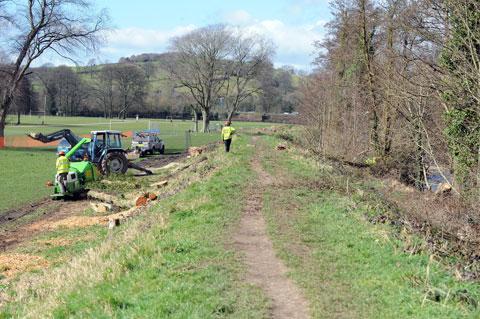

Are more extensive flood defences required in large
parts of Wales? Will they need to be funded by developers?
(Pic : South Wales Argus)
The last should apply to smaller streams as much as rivers. Recently, a blockage in a stream on Network Rail land flooded a block of flats in Brackla, Bridgend - providing an example of poor maintenance leading to flooding.

We also need to consider flood preparation and emergency planning. Concerns were recently raised by the Wales Audit Office about the Welsh Government's responses to civil emergencies.

Some of the criticisms seem a little unfair to be honest. I think the Welsh Government, emergency services and local authorities do a good job in emergencies. Most of the criticism stems from confused boundaries when it comes to responsibilities – so more administrative than practical.

I believe a major issue there is that flood warnings are never taken seriously enough by the media or the public.

Once an emergency becomes apparent, the media are quick to provide extensive coverage – especially local radio and via Twitter feeds etc. But in the period building up to an emergency, they seem reluctant to point out the seriousness of a situation, perhaps in fear of "crying wolf". People usually only take action when it's too late or when a situation becomes life-threatening.
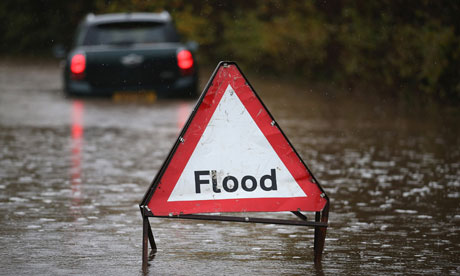
Does the flood warning system in Wales
- and elsewhere - need another revamp?
(Pic : floodwarn.co.uk)

I've mentioned an "emergency alert system" before. I think warnings - not just for flooding but all sorts of severe weather (and perhaps missing children too - aka "Amber Alert") - are going to have to become more invasive. Yes, that means interrupting TV and radio programmes if necessary, perhaps even an expansion of text messaging services that the Environment Agency already provide.

This doesn't need to be Wales-only. It can't anyway as broadcasting isn't devolved. But maybe it's something the UK Government can re-visit. If the climate is going to get rougher over the coming decades, then the public need to be more aware – or at the very least treat a changing climate and severe weather as an immediate danger.

It should also mean greater use of the military (in particular Territorial Army units) in emergency preparations as and when required. It's supposed to be a "Ministry of Defence" after all. How can the UK spend £35billion on defence every year, yet not properly protect its own citizens from excess rainfall?
Tuesday, 1 January 2013

Senedd Watch - December 2012

Dymunaf fy holl ddarllenwyr y Flwyddyn Newydd Dda!
I wish all of my readers/followers a Happy New Year!
  • Newly-appointed Anti-trafficking Coordinator for Wales, Stephen Chapman, said Welsh ports could be seen as a “soft target”. He aims to “dispel myths” about human trafficking and wanted the public to recognise it as slavery.
  • Author Jon Gower called for a Library of Wales scheme that republishes classic Welsh books to continue. The scheme costs £50,000 per year, but has been criticised by some for supporting “non-commercially successful” English-language books.
  • A ban on cigarette displays in supermarkets came into force on December 3rd. Smaller stores will be subject to the ban from 2015. A similar ban started in England earlier in 2012.
  • The new Permanent Secretary to the Welsh Government, Derek Jones, said he “winced” when he read the Wales Audit Office report into AWEMA. He told the Assembly's Public Accounts Committee that he believed Welsh Ministers gave the organisation the “benefit of the doubt” with the aim of promoting race quality. Former AWEMA Chair, Dr Rita Austin, accused opposition AMs and the media of “strident, partial and ill-informed” attacks.
  • Health Minister Lesley Griffiths (Lab, Wrexham) introduced the Human Transplantation Bill to the Assembly. The Bill outlines an “opt out” system of organ donation, but there were warnings that legislation itself wouldn't result in increased in organ donation. If the Bill is passed, it'll come into force by 2015.
  • The £15billion Welsh budget for 2013-14 was passed by the Senedd on December 4th. An agreement between Labour and Plaid Cymru will see extra spending on apprenticeships and a university science park.
  • Education Minister Leighton Andrews (Lab, Rhondda) launched Qualifications Wales - a new independent body that will regulate the exam system. It was originally announced as part of the 14-19 qualifications review. Angela Burns AM (Con, Carmarthen W. & S. Pembs.) said it was an “embarrassing climbdown”. Simon Thomas AM (Plaid, Mid & West Wales) said Plaid Cymru had long called for an independent exams body.
  • £82million was made available for Local Health Boards following concerns about budget shortfalls. Health Minister, Lesley Griffiths, denied it was a “bailout” - to criticism from opposition AMs. Elin Jones AM (Plaid, Ceredigion) called for LHBs to be directly accountable to the Assembly's Health Committee. Welsh Liberal Democrat leader, Kirsty Williams, said “rejigging money around is not going to solve all of the problems in our NHS.”
  • Mick Antoniw's (Lab, Pontypridd) Member's Bill – the Asbestos Disease Bill – was laid before the Assembly. It aims to “enable Welsh Ministers to recover costs incurred by the Welsh NHS in providing care and treatment to victims of asbestos-related disease.”
  • An extra £227million in capital expenditure for Wales was announced as part of the UK Chancellor's Autumn Statement, along with an extra £52million in revenue funding. The Welsh Government added that they were pleased that regionalised public sector pay had been abandoned.
  • The Welsh Government were defeated by 33 votes to 18 in a motion to suspend the Assembly's Standing Orders to allow Council Tax Benefit reforms – which affect up to 330,000 households - to be passed without a vote.
  • The motion was strongly condemned by opposition AMs as they didn't have time to read the regulations. Rhodri Glyn Thomas AM (Plaid, Carmarthen E & Dinefiwr) – who warned that this was an issue in March 2012 - said it was “poor practice in terms of governance.” Peter Black AM (Lib Dem, South Wales West) said it treated the Assembly “with contempt”, while Leader of the Opposition, Andrew Davies (Con, South Wales Central), said Local Government & Communities Minister, Carl Sargeant (Lab, Alyn & Deeside), had been “negligent in his duty.”
  • The Assembly was recalled from Christmas recess to debate Council Tax Benefit regulations on December 19th. The regulations were approved after the Welsh Government included a “sunset clause” that would mean the Assembly reconsiders the issue in 2014. Around 230,000 more households will pay council tax as a result.
  • The Wales Audit Office expressed concerns about aspects of civil emergency responses in Wales. They said responsibilities were unclear – including differences between Welsh and UK governments - and that there was a lack of training and support. The Welsh Government responded by saying they constantly review emergency planning procedures. The Welsh Conservatives called for a full review of civil emergency arrangements.
  • Ann Jones AM (Lab, Vale of Clwyd) suggested doorstep loan sharks were seeking to exploit victims of November's floods in Denbighshire. She urged people affected to use credit unions instead. North Wales Credit Union are believed to be offering discount rates for repairs.
  • Shadow Rural Affairs Minister, Antoinette Sandbach (Con, North Wales), accused Welsh Ministers of “sitting” on a report from the Wales Rural Observatory which surveyed public service satisfaction in rural areas. The Welsh Government denied any suppression of the report, saying they were undertaking a “thorough quality assurance procedure” prior to publication.
  • A £1billion gas-fired power station in Pembrokeshire may need to alter its cooling system after the European Commission warned the UK Government that there have been up to 18 violations of four environmental laws. Both the Welsh and UK governments said investigations were ongoing.
  • The First Minister rejected claims from the Royal College of Nursing that nurses were “too busy” to care for patients. It comes as Labour MP for Cynon Valley, Ann Clwyd, expressed serious misgivings about the treatment her husband received in the University Hospital of Wales Cardiff before he died.
  • Education Minister Leighton Andrews asked the OECD to conduct a thorough review into the quality of education in Wales. He said, “we need to learn from the best, that's why I have requested this review.”
  • New data releases from the 2011 Census showed that the Welsh-speaking population fell from 20.8% in 2001 to 19%. Other headline figures include : 66% of people gave their nationality as Welsh, 32% of the population had no religion, 23% of people had a long-term limiting disability, 24% of the population had a degree-level qualification, 26% of the adult population had no qualifications and home ownership rates were higher than England.
  • As a result of the Census figures, Cymdeithas yr Iaith Gymraeg called for a “living manifesto” that would quadruple the amount spent on the Welsh language, improve planning regulations to take into account Welsh-speaking areas and expand the use of Welsh in the public sector. Former Culture Minister, Alun Ffred Jones AM (Plaid, Arfon), described the figures as a “wake-up call” and called for improved language planning.
  • Leighton Andrews launched “Hwb” - a web-based “learning platform”. It'll allow users to share information and learning materials across devices. He said it would, “play a key role in helping schools share information with parents and involve them in their child's learning.”
  • Welsh unemployment fell by 15,000 in the three months to October 2012 to stand at 7.9% - slightly above the UK (7.8%). Welsh Gross Value Added (GVA) rose by 2.2% between 2010 and 2011 to £47.3billion, or 75.3% of the UK per-capita average – narrowing the productivity gap with the rest of the UK.
  • Plaid Cymru leader Leanne Wood called for the devolution of criminal justice powers to Wales, saying it would allow Wales to take a “more progressive, evidence-based approach” following a UK Select Committee report on drug addiction.
  • The Assembly's Constitutional & Legislative Affairs Committee reported back on an inquiry into a Welsh legal jurisdiction. Their report suggested amendments to existing arrangements including : a Welsh judge on the UK Supreme Court, additional legal training in Welsh law specialisms and the establishment of a body to review the consolidation of Welsh law. David Melding AM (Con, South Wales Central) said that while a separate legal jurisdiction was “constitutionally viable” it's “ultimately a political decision.”
  • The Assembly's Health Committee reported that changes needed to be made to elderly care, including the possibility of increased use of home care. Committee chair, Mark Drakeford AM (Lab, Cardiff West), said information needed to be “as clear and simple as possible” to enable families and older people to make “informed choices” on care.
  • Loans for 1970s housing developments in Newtown, Powys are still being repaid by the Welsh Government, despite the Development Board for Rural Wales – the body that owed the loans – no longer existing. The Welsh Government said there were heavy penalties for early payment. Leanne Wood described the situation as an “absolute scandal.” Russell George AM (Con, Montgomery) said “the right decisions were taken at the time.”
  • The Assembly's Finance Committee published a report saying there was a need for “urgent” and “radical” reforms to how European Union convergence funds are used. Committee chair, Jocelyn Davies AM (Plaid, South Wales East) said there were issues surrounding “lack of leadership, co-ordination and monitoring” of EU projects – worth around £1.7billion over 6 years between 2006-2013.
  • Leanne Wood called for the devolution of decision making for same-sex marriage to Wales, after UK Equalities Minister, Maria Miller, included the disestablished Church in Wales in a ban on Anglican same-sex marriages. Leanne said it was “against the spirit of devolution.”
  • First Minister Carwyn Jones announced that a deal had been reached to nationalise Cardiff Airport in 2013 – subject to viability. The airport would be “run on a commercial basis” with profits going “to the Welsh taxpayer”. Leanne Wood offered Plaid Cymru's tacit support for the move, but Conservative and Liberal Democrat AMs expressed concerns about the possible business case.
  • The Welsh NHS failed to meet cancer treatment targets. 86% of patients received cancer treatment within 62 days of GP referral, compared to a target of 95%. The Welsh Government pointed to improvements in screening and overall cancer survival rates.
  • The latest secondary school bandings showed that 61 Band 4 & 5 schools improved on 2011. Schools in Neath Port Talbot performed particularly well, with Ysgol Gyfyn Gymraeg Bryn Tawe in Swansea being the top performing school. Carmarthenshire's Glan-y-Mor school was the weakest performing.
  • Llyr Huws Gruffydd AM (Plaid, North Wales) called for the establishment of a national flood action forum to prevent over-development of flood plains in Wales and provide increased representation for people resident in flood prone areas.
  • The numbers of people seeking help for homelessness in Wales rose by 27% on 2011 according to BBC Wales figures. The Welsh Government pointed to a new Housing Bill, however the WLGA warned that funding cutbacks and benefit reforms could result in “significant increases” in homelessness.
  • Prosecutions for attacks on NHS staff in Wales rose over the last year. Lesley Griffiths said “violence against NHS staff will simply not be tolerated” adding that she “hopes it sends a clear message that we have a zero-tolerance approach in operation.”
  • Lindsay Whittle AM (Plaid, South Wales East) said that many Welsh local authorities failing to keep track of homophobic bullying in schools was “worrying” as they “are in the dark over the extent of homophobic bullying and, possibly, bullying generally.”
  • In his Christmas message, First Minister Carwyn Jones said Wales “stood together” through adversity during 2012, including widespread flooding and the disappearance of April Jones in October. He said a “sense of solidarity....is part of being Welsh....but something we will forever cherish.” In his New Year's Message, he said he hoped Wales would “unite” to face up to tough economic challenges in 2013.

Projects announced in December include : a £200million local government borrowing scheme for the 21st Century schools programme, a £300million limited dividend scheme to complete the duelling of the A465 by 2020, an additional £3million towards maintenance of the A55 in north Wales and a £30million second phase of a tackling poverty programme and Communities First clustering.

Sunday, 16 December 2012

Nadolig Llawen!


I've given consideration to packing this in. That's nothing to do with lack of interest, in fact I've exceeded my own expectations there. It's as though I've been blogging on autopilot. Perhaps an excuse for a break has come at the right time, though I felt like flipping a coin to decide if it would be permanent or not.

In the coming year, I'd like to look at : local government in Wales – which couldn't come soon enough in my opinion - broadcasting and who Wales' “twins” are around the world.

I'll hopefully finish my look at contentious public policy issues (including capital punishment) and there's Part II of the Silk Commission too. I've considered looking at the recent Census “stunting” of the Welsh language, but I think that's best left to fluent Welsh-speakers to be honest.

I'll give a full evaluation of David Melding's serialised proposals for a federal UK (if it's finished next year). I also do the usual stuff covering bigger stories in Bridgend, the Welsh economy and the Assembly.

There've been rumours of a Welsh Government reshuffle. There were some "interesting" searches directing here at the end of October/early November (that, in the wrong context, could've easily been misread!). Carwyn Jones was coy when asked on that, but I wouldn't be surprised if it did happen early in 2013.

Editing Neophobia has taken longer than I thought, but the final draft should be finished next week. I'm not sure how long formatting will take. Due to the recent tax issues I'm reconsidering whether to use Amazon as "publisher" and distributor, though I'm unlikely to change my mind for practical reasons. My guess is that it'll be out in February.

If, over the holidays, you're bored, you can't stand either your family or the crap on television or you just don't have a life, then here are the most read posts from the last year. It might give you an insight into what sort of posts are popular.
  1. Cardiff Green Investment Bank Bid – Enough's Enough
  2. Wales: An Economic Profile I – Primary Industries & Energy : The first in a six-part look at the state of the Welsh economy at present.
  3. Defending Wales I – What are Wales' strategic defence needs? : The start of a five-part look into a possible independent Welsh defence policy. I might return to this in the future.
  4. Forced Cymraeg - A special investigation : A tongue-in-cheek look into the thoughts behind the anti-Welsh language "movement". See also : Mysterious superhero rids Wales of Cymraeg.
  5. Whither Porthcawl?
  6. Kings of their castles : Do our government structures nurture corporate psychopathy? Or is Carmarthenshire Council just a running joke of a local authority? Consider the recent problems with the South Wales Guardian when reading it again.
  7. Linking north and south Wales by rail
  8. Offa's Gap – What? When? Where? & Why?
  9. March 1st 2036 – Cardiff, Wales
  10. Leanne's Greenprint for The Valleys

Honourable mentions:

A Welsh Monarchy
The Big Independence Question (@ Cambria)
Could Wales host a Commonwealth Games?
Dirty deeds done dirt cheap?
The future of the Welsh media report


The only thing important or relevant enough over the next fortnight worthy of a blog is the Assembly recall for a vote on Council Tax benefit regulations. I think I've done enough this year to say, just this once, “I can't be arsed.”

Cyfarchion y Tymor pawb!

Saturday, 8 December 2012

What Wales gets from the European Union

It's bloated. It's bureaucratic. Its budget is yet to be (formally) decided.
What does Wales actually get from EU membership?
(Pic : capreform.eu)
I don't think issues surrounding the European Union are, really, at the forefront of most people's minds. It does look as though an agreement on the EU budget for 2013 is imminent after an EU Commission climbdown, but the agreement for the budget between member states for 2014-2020 remains at an impass. These matters impact Wales whether we like it or not.

The EU budget

A few weeks ago, Conservative backbenchers and Labour MPs voted against a rise in the EU's budget, and passed an amendment calling for a real-terms cut. You can argue this is a reasonable stand – if national governments have to make sacrifices, shouldn't Brussels?

The relationship between Wales and the EU is slightly different than many other parts of the UK. Although the EU failed to agree a budget at their last summit, any cuts or freeze will be noticeable here. A failure to agree to a budget would put long-term projects at risk.

Plaid Cymru MEP, Jill Evans, spelt out some benefits of Wales within the EU, working out that every Welsh person is getting back £40 more than is put in. That roughly works out at Wales being £120million better off as a whole.

That doesn't sound like much, but I think the benefits are much wider. It's also fair to say that some of this money may well have been (perceivably) mismanaged. I said this a few months ago:
"EU-funds appear to be used for things like public realm improvements, or incredibly niche schemes, spreading funds far too thinly. In the period 2007-2013, £1.5billion has been spent on the public sector (mainly universities), £99million on the third sector (including ~£6.1million to the likes of AWEMA), and just £23million in the private sector."

It's also worth pointing out that the EU's own strict guidelines, regulations and rules mean that an awful lot of effort needs to go into getting the funds in the first place. That doesn't mean that some of the people bidding for these funds are always suitable. Note Jac o' the North's account on that.

It's also right to point out that seeing grants as the be all and end all solution in Wales, or a natural "Welsh way of doing things", is perhaps creating an incredibly damaging, short-term, dependant mindset.

A Jocelyn Davies AM (Plaid, South Wales East) motion passed the Senedd – including support from Welsh Labour AMs – that pressed the Welsh Government to "make representations" to the UK Government, opposing the budget cut.

Are (UK) Labour equally concerned about the "threat" posed
by UKIP as the Tories seemingly are?
(Pic : The Times)

Now, I don't know why Westminster Labour have decided to lurch towards euroscepticism-lite. Maybe they're just hardening their stance to appear "tougher on Europe" than they were in government to stave of a UKIP threat amongst the working class.

I don't have any truck with UKIP's views, but in terms of public debate, they've opened a window – even if it only lets in muck spreading wafts. They're eccentric - with a Colonel Blimp jingoism and a twee view of the UK's place in the world – but deserve to, and will, be taken seriously in 2014 and 2015. However, I think it's too soon to be building them up as an electoral force. Due to FPTP, the chances of them gaining MPs will be slim.

Welsh Labour are, seemingly, more pro-Europe that the Westminster party. They might be disciplined on the surface, but there's a history of differences causing "tensions". The first chinks in Tony Blair's armour came from Wales in the shape of Rhodri Morgan.

If Carwyn Jones were taken seriously as a head of government by his own party, instead of being seen as a loyal provincial governor, I'd put £10 on him verses Ed within two rounds.

It's also heartening that Welsh politicians can debate these matters of importance in a reasoned and mature manner, while British politicians try to out-clown each other in the Westminster lobby on News 24 trying to prove who wants to cut the most.

How does Wales benefit from EU membership?


Broader benefits

Jobs – The First Minister acknowledges that at least 150,000 jobs were based wholly or entirely on EU membership, and 50,000 were employed directly by companies from other EU member states. You could also suggest EU membership imperils Welsh jobs – especially if operations move to more attractive places in eastern Europe. It's also fair to say these jobs wouldn't disappear overnight if the UK left.

Free trade & membership of the world's largest economy – As I highlighted back in September, Wales is less reliant on the EU for our exports than the UK as a whole. But having free and open access to a market of half a billion people in one of the wealthiest parts of the planet (in spite of what's going on) is a no-brainer.

Carwyn Jones recently said that 50,000 people in
Wales were employed by companies based elsewhere in the EU -
including ~500 at (German-owned) Siemens Diagnostics in Llanberis.
(Pic : Daily Post)

Free movement
– Although the UK isn't part of the Schengen agreement, being able to move visa-free between large economies like England, Germany and France - as well as faster-growing economies like Poland - should be considered a huge benefit. It's a shame we tend to focus on those coming in instead of thinking about going out – in business terms especially. It also has spin offs like guaranteeing free health care in EU nations.

Peace & political stability – The timing of the EU being awarded the Nobel Peace Prize was...."amusing". The EU has developed a strength in its diversity - when it was once a weakness. Instead of Europe's great powers using smaller nations as chess pieces in their quest to dominate the continent (or further afield), disagreements are now thrashed out around negotiating tables in Brussels and Strasbourg. There's also a strong commitment to liberal democracy in all member states – though that's starting to slip in places like Hungary. It's just a shame the European institutions are so cumbersome, but maybe they need to be.

Harmonised pan-European regulations – Whenever we hear about EU laws, they are usually BS about straight bananas and weights and measures. What about mobile phone roaming? Environmental regulations? Standards on chemical safety and water quality? Car and air safety standards? Veterinary and agricultural standards? Cross-border crime fighting? It's also important to point out that the much-maligned European Court of Human Rights isn't part of the European Union.

Specifically important benefits for Wales

Agricultural Programmes – Includes the European Fisheries Fund, European Agricultural Rural Development Fund (worth about £195million to Wales between 2007-2013) and Common Agricultural Policy (CAP). The CAP alone is said to be worth £350million to Welsh farmers every year.

The Common Agricultural Policy is due for reform, but
without it, would Wales have much of a farming industry left?
(Pic : BBC Wales)

You can argue that farms shouldn't need subsidy, and should be encouraged to become more commercially viable – that's supposed to be amongst these funds main aims. These funds are in desperate need of reform – especially since EU enlargement - and make up a sizable chunk (€270billion) of the EU's total budget. I think attempts at reform have probably been blocked by the French and Spanish, who benefit disproportionately from the current arrangements. The UK does too, it has to be said.

Convergence Funds – Commonly referred to under the umbrella of "Objective One", or the more grand European Regional Development Fund (ERDF). These funds are worth up to £1billion over a 6 year period. It looks like West Wales & The Valleys might qualify again in 2013. That's not really good news, as convergence funds have to be match-funded by the Welsh Government and are a sign of a weak economy.

These funds have had a big impact on the university sector in particular. Jill Evans mentioned using EU funding to electrify the north Wales mainline recently, and that's the sort of project you would expect this money to be spent on. However, as noted earlier, I believe many of the projects over the last few decades have been well-meant, but haven't delivered anywhere near the outcomes – especially in terms of economic development and infrastructure – that West Wales & The Valleys desperately need.

"Objective One" is probably the most visible
sign of the EU in Wales. But is the money
being invested wisely?
(Pic : Ceredigion Council)

European Social Fund – Another branch of "Objective One". This is worth around £690million over six years. These funds are used on the "social schemes". For example : reducing economic inactivity, "social justice", up-skilling. But it also makes its way to the third sector, who haven't covered themselves in glory of late. The rules are incredibly specific and so full of hoops, that I doubt much money makes it to the front lines.

Specific Investment Funds – This includes the JESSICA framework (funds aimed at developing urban areas). It could be considered a branch of the main convergence funding. The Welsh Government have set up and Urban Development Fund and the Regeneration Investment Fund under this EU framework. It's supposed to be used on regeneration projects. In fact, a chunk of RIFW's cash is going to be spent on Neath town centre over the next few years. Again, the outcomes and management should be questioned. The JEREMIE initiative also helps/helped the Welsh Government's finance arm (Finance Wales) support small and medium businesses. It was/is worth £150million.

Erasmus– A pan-European exchange programme. Although it's said only 630 students (and 112 staff) from Wales have participated in the programme last year, compared to the all-UK figure (~12,000 participants) that's roughly what you would expect – perhaps slightly more than our population share. Cardiff University also hosted one of the largest overseas Erasmus contingents in the UK. Even brief periods living and studying in another EU state would obvious help cross-cultural understanding and – hopefully – international relations should they grow up to become business or political leaders.

What we also get, and what we'll get in the future

London Mayor, Boris Johnson, recently mooted a "pared down" relationship
with the EU - citing Switzerland and Norway. That might suit London, but
would it suit Wales, or the UK as a whole?
(Pic : BBC)

Bone-crushing levels of bureaucracy. No (Welsh) voice at the top tables. The pointless spectacle of moving between Strasbourg and Brussels. The ongoing "will they, won't they" fiscal union debacle. Nigel Farage. Uninspiring leaders at European level. And a voice for lunatics on the far-left and far-right in the European Parliament.

And it's fair to point out that there's significantly more subvention/subsidy from the UK that there is from the EU. We might be £40 better off in Europe, but thanks to leaky submarines, West Ham's new stadium and RBS – and other, more important things like social security – we're estimated to be about £4000 "better off" in the UK. Even if most of that is borrowed via the Treasury's credit card.

So although I clearly believe there are benefits to Welsh membership of the EU – via the UK at the moment – there's a need for reform.

The Lisbon Treaty went a long way towards doing that. It merged several institutions and created, in effect, a European constitution. But I think things are coming to a head due to the eurozone's fiscal problems.

My hunch is that the worst of the Euro fiscal crisis is behind us, but there's nothing ahead but a decade of stagnation. I think a new treaty is inevitable – probably creating a full fiscal union between eurozone members – and, ultimately, a "two-speed Europe".

Guess who'll be trundling along in the outside lane, indicating to take the next exit - with Wales in tow. Would that be in Wales' interests? It's a big question, and one that's perhaps too difficult to answer at the moment.

But, at the end of the day - whether you're Welsh, Slovene, German or French - we're all Europeans aren't we? If you even consider the British Isles a part of Europe. It appears the Leader of the Opposition in the Assembly doesn't.

Stronger together....

Thursday, 6 December 2012

Domestic Violence White Paper

I was going to post something on yesterday's council tax benefit ruckus from the Senedd. The Welsh Government cover themselves in brown, pongy glory once again.  I'm pretty sure Rhodri Glyn Thomas (Plaid, Carmarthen E & Dinefwr) warned of this happening a good 8-9 months ago. As there's very little to work off other than some strongly-worded statements, finger pointing and incompetence, I decided against.

He's got himself into another fine mess on that, but Local Government and Communities Minister, Carl Sargeant (Lab, Alyn & Deeside), recently launched a white paper drawing up proposals for a new law on domestic violence and violence against women. He's asking for consultation responses – some representations from major domestic violence groups have already been submitted, I believe – which are due by February 22nd 2013.

The Problem

Domestic violence – defined as "patterns of controlling, coercive, threatening behaviour, violence or abuse" - is said to cost Wales up to £800million a year. That figure presumably covers costs of social services, healthcare and perhaps even extending into the economy if domestic violence victims are too intimidated to go out and work.

The Welsh Government have also make the (more than welcome) decision to make the domestic violence provisions gender neutral. If this had been women only – even though women make up the majority of victims - it would've neglected victims of domestic violence in same sex couples and male victims.

"Violence against women" – another core/specific part of the proposed legislation – is defined by the United Nations as "actions....likely to result in physical, sexual or psychological harm or suffering to women." This would include, presumably, things like stalking and harassment.

The Welsh Government believe that people have a "right to feel safe" and believe that legislation in this area will go some way to improve the services provided to victims.

Specific Proposals

Leadership & Accountability

The approach by the public sector in Wales to domestic violence is said to be "innovative". However, the Task & Finish Group preceding this white paper said there needed to be improvements to "leadership and accountability". They also want to improve consistency across Wales, as these issues are – in the main – the responsibility of local authority-run social services.

There are early proposals for a Welsh Government appointed adviser on the issue, but that falls short of the Commissioners for Children, Older People and the Welsh language, for example. The adviser would have the power to carry out investigations and contribute to funding decisions taken by the Welsh Government. Some of these powers will link in with those outlined in the proposed Social Services Bill from earlier this year (details here).

Our old friend - local authority collaboration – makes an appearance, again tying in with the Social Services Bill.

Education & Awareness

The white paper cites studies showing that between a quarter and a third of young women have been victims of some sort of unwanted sexual attention or harassment at some point. The Welsh Government want people to "engage" with the proposed Bill. They want to ensure that relationship education is on the school curriculum.

The Welsh Government want to dispel myths amongst the public about domestic violence and even rape victims – for example, the belief that revealing clothing makes a woman partially or wholly responsible for being sexually assaulted.

The aim, through education, is to reduce victim-blaming, make violence unacceptable and reduce "damaging gender stereotypes". The Welsh Government want to set national standards to ensure services relating to domestic violence aren't as varied as currently, by placing more statutory duties on education/prevention on local authorities.

To address inconsistencies in training to deal with abuse, there are proposals for a new national advice framework (groan!) for everyone ranging from the public to public leaders. The Welsh public sector will also have a statutory obligation to have a domestic & sexual violence policy.

Strengthening Services

The Welsh Government want to improve information sharing between relevant public bodies and groups so they can improve safety of victims at a much earlier stage, and help identify perpetrators sooner.

Welsh public bodies – like the NHS - will also be expected to "act and ask" by disclosing information to relevant agencies, and increasing referrals to relevant bodies dealing with abuse. They also want to provide safer accommodation for victims, so they don't feel obliged to stay at home with an abuser.

It's hinted more than once that the capital and resource costs of this might be difficult for local authorities and the NHS to meet. So, one more, "regional collaboration" crops up.

Conclusions

The broad aims are welcome – domestic violence is a particularly vicious crime because, more often than not, it traps the victims emotionally – but I do have some issues with a few of the proposals.

I might be open to accusations of hypocrisy considering what I said about replicating Scotland's Sexual Offences Act in Wales (if criminal justice powers are devolved), but I imagine most outward examples of domestic violence would be covered by current assault and harassment laws. The psychological abuse would be hard to define or (in some cases) prove.

It's a tricky thing to tackle by legislation alone. I think the Welsh Government realise this, and that's why they've focused on attitudes and services, but I fear this is going to get bogged down in public sector buzzwords and policy wonk talk.

The UN definition of "violence against women", as cited in the white paper, might refer to violence in specific circumstances – for example, in warzones, or using rape as a weapon. Maybe I'm wrong about that. I don't think that definition's entirely applicable to Wales, but obviously some aspects (i.e human trafficking) would be.

Like housing, I fear that local authorities elsewhere in the UK might see the more aggressive approach taken to tackle domestic abuse here - by a "progressive, caring" Welsh Government - as a way to pass problems onto us that they should be addressing themselves.

A proper course of relationship education in schools as part of PSE lessons would be wholeheartedly welcome, and I've mentioned that before. I just hope it's genuine and well-planned so it doesn't become another box-ticking exercise. It's this public education and awareness aspect that would make the big difference, seeing prevention as the best cure.

But let's not go over the top. Men still make up – by some significant margin – the perpetrators and victims of general violence. You would think that a "Violence Against Men" Bill, under the same benchmarks, would probably be laughed out of any legislature in the world. Once you take into account things like the 1995 Srebrenica massacre - Bosniak  men and boys were specifically targeted - the concept of gender-based violence against men might not be so laughable.

On the other hand, I can see why a "Violence Against Women" Bill makes sense, as it's usually (but not always) a symptom of something else, or a way to exert control rather than spontaneous.

However, the title of the white paper and (presumably) any future Bill might give the mistaken impression that it'll clamp down on the violence itself. Sadly, I don't think it would.

Tuesday, 4 December 2012

Welsh Budget 2013-14

Finance Minister Jane Hutt's (Lab, Vale of Glamorgan) Welsh Government budget for the coming year passed the Senedd earlier by 25 votes to 18.

Here's a summary of the total spending allocations (combined revenue and capital spending plans) and their change compared to the plans in the 2012-13 supplementary budget from June this year.


Main Expenditure Group (Total spending) Budget 2013-14 Change from 2012-13 Supplementary Budget
Health & Social Services £6,430million -£115million
Local Government & Communities £5,204million +£57million
Education & Skills £2,048million +£15million
Housing, Regeneration & Heritage £488.2million -£38.9million
Central Services & Administration £350.2million -£10.8million
Environment & Sustainability £326.8million -£13.7million
Business, Enterprise, Technology & Science £315.3million -£1.3million

In the final budget narrative, Jane Hutt notes:


  • An extra £175million in capital spending over the next two years to support "strategically important projects" as outlined in the Welsh Infrastructure Plan.
  • The above includes an extra £16million towards housing on public sector land (up to 1,800 new homes) and an extra £30million to the Wales Economic Growth Fund over the next two years.
  • Allocating £6million in extra funding from reserves towards Business Rate Relief schemes in Enterprise Zones.
  • The establishment of an Advisory Group to see how the proposed budget impacts equalities.
  • A continuation of the Pupil Deprivation Grant from last year's deal between Labour and the Liberal Democrats. This has been increased by £4.7million.


It's also been announced today that there'll be an extra £200million for capital spending on schools - funded via local borrowing - while up to £300million will be raised via a not-for-profit mechanism (which sounds suspiciously like the "pie in the sky" and "uncosted" Build for Wales idea mooted by Plaid Cymru in 2011 and roundly criticised by opposition parties) to complete the A465 duelling.
This budget passed because of a deal between Labour and Plaid Cymru. Plaid Cymru abstained from the vote, but they got:

  • £20million in 2013-14 and £20million in 2014-15 to create new apprenticeships. This could be topped up to £60million via European and private sector funding. It's estimated this could create between 8,000 and 10,500 apprenticeships.
  • £10million over the next two years towards a new joint science park facility for Bangor and Aberystwyth Universities. It's been hinted/rumoured that this might be based on Anglesey.

Last year, Plaid criticised the Liberal Democrats for "selling themselves cheaply". I said it seemed as if Kirsty Williams sold herself short as well. But is there that much of a difference between the two deals?

Plaid's deal might be a bit more "concrete" in terms of outcomes than the Pupil Premium – which seems, on the surface, a bit like throwing money at a problem - and the science park is a commitment to a specific project. So, I'd say Plaid (and Labour, as an expansion of apprenticeships would reduce unemployment) have marginally got a better deal, but it isn't some fantastic game changer.

The only difference between this year and last year really are the sums of money involved and Plaid being a bit more practical - which is welcome to see. But there's no need to go overboard hailing the deal's virtues just yet.

As for the budget as a whole, the overall impression is "steady as she goes." The total budget is down by ~£108million, but the figures I've given appear more dramatic because I used the supplementary budget (which I believe is a more accurate measure of what's actually spent) as the comparison, not last year's final budget. If I'd used 2012-13's final budget instead, then the figure would still be a cut, but a smaller one – probably around the £50million mark, which matches the cut to the block grant.

Regardless of which budget is used, there's another obvious cut to the health and social services budget as a whole (NHS spending itself is largely protected), which the Conservatives in particular – I'd imagine – are going to use as a stick beat the Welsh Government with.

There are ongoing worries there. This isn't the first year concerns have been raised regarding NHS efficiency savings. In fact, this year's obligatory Darren Millar (Con, Clwyd West) outburst matches last year's almost word for word. The only difference is that this year's spending gap is bigger, and it's getting worse. I think time's starting to run out for the Welsh Government and Local Health Boards to get a grip of the issue. As an ordinary member of the public, with family members who use NHS services regularly, I'll say this – we're starting to notice it.

There's an overall (real terms) 8.7% cut in capital budgets, so Jane Hutt's been a bit more careful about where that money's gone, focusing on getting return on that investment – and Plaid played a role in directing it.

But judging by Labour's shopping list in the Infrastructure Plan, borrowing powers couldn't come soon enough. It could make the difference, for example, between Newport waiting years for M4 improvements or decades. We'll see if Gorgeous George has any early Christmas presents tomorrow, but I don't think we should be getting our hopes up somehow.

Friday, 30 November 2012

Senedd Watch - November 2012

It's been an busy month in Cardiff Bay by usual standards, so my apologies for this post's length.
  • Plaid Cymru criticised Labour MPs from Wales for voting with some Westminster Conservatives against a rise in the European Union's budget – which could translate into cuts in structural and Common Agricultural Policy funds for Wales. On November 21st, the Assembly approved a Plaid Cymru-sponsored motion calling for the Welsh Government to “make representations” opposing the move.
  • Welsh-language broadcaster, S4C, celebrated its 30th anniversary on 1st November. Chief Executive, Ian Jones, said they were considering English-language dubs for some programmes via the red button. S4C were also carrying out a feasibility study with regard moving to three smaller sites.
  • Julie Morgan AM (Lab, Cardiff North) called for the creation of a “green belt” around Cardiff, following Cardiff Council's draft Local Development Plan, which plans for 45,000 homes between 2006 and 2026.
  • The Children's Commissioner called for a new inquiry into child abuse at north Wales children's homes in the 1970s and 1980s, after it was revealed senior public figures may have been involved as part of a paedophile ring. The First Minister urged victims to go to the police, and said he would look at the terms of reference to the original 1997-2000 Waterhouse Inquiry. Plaid Cymru leader, Leanne Wood, also joined the calls, saying that victims “should be heard”.
  • UK Home Secretary, Teresa May, announced a new inquiry into the abuse on November 6th, which will be lead by the National Crime Agency. A separate inquiry will investigate the terms of reference of the Waterhouse Inquiry. On November 13th, a cross-party group of AMs called on an outside police force to investigate North Wales Police's handling of the abuse.
  • New regulations came into force in Wales granting children a “right to play”, and placing a duty on local authorities to assess play area provision and suitability. Deputy Minister for Social Services & Children, Gwenda Thomas (Lab, Neath), said Wales is “leading the way on promoting children's rights” and that play is “vital for children's development.”
  • A report - commissioned by the Welsh Government - found that scrapping Severn bridge tolls would boost the south Wales economy by £107million. The First Minister called for control of the tolls to be devolved to Wales once the current toll concession expires in 2017-18.
  • Mick Antoniw AM (Lab, Pontypridd) criticised Cardiff Metropolitan University for “misleading and bogus” advertising claims suggesting they were Wales' top “new university”, which damaged institutions like Glamorgan University. In a related development, Education Minister, Leighton Andrews (Lab, Rhondda), granted Cardiff Met a reprieve from a merger with Glamorgan and Newport Universities, which will allow the former two to merge in April 2013.
  • The Assembly's Finance Committee expressed concerns that the Welsh Government's draft spending plans won't meet all of their proposed objectives once inflation has been taken into consideration. Committee Chair, Jocelyn Davies AM (Plaid, South Wales East), expressed particular concerns about local health board budgets, and legislation's impact on local authorities. On November 18th, NHS Wales Chief Executive, David Sissling, said he was “confident” local health boards would balance their budgets.
  • Environment Minister, John Griffiths (Lab, Newport East), set up a Task and Finish Group on Marine Conservation Zones, which will report back in April 2013. Antoinette Sandbach AM (Con, North Wales) said the number of consultation responses highlighted the “huge concern at these proposals.” Llyr Huws Gruffydd AM (Plaid, North Wales) said he was pleased that the Welsh Government listened to concerns, but that the new approach “should have been adopted from the outset.”
  • Health Minister, Lesley Griffiths (Lab, Wrexham), announced an extensive review of the Welsh Ambulance Service, following failures to meet performance and budget targets. Peter Black AM (Lib Dem, South Wales West) said that too many reviews had been undertaken on ambulance services and told the minister to “get a grip of this issue.”
  • Welsh Labour and Plaid Cymru agreed a 2013-14 budget deal, which includes an extra £40million for apprenticeships over two years - possibly rising to £60million - and capital investment in a science park for Bangor & Aberystwyth Universities. Plaid Cymru will abstain from the budget vote in December.
  • Paul Davies AM (Con, Preseli Pembrokeshire) called the deal “cheap” and said it “hails the return of an ineffective tag team.” Welsh Liberal Democrat leader, Kirsty Williams, said her party wouldn't support the budget due to failures to close a school funding gap with England.
  • Education Minister, Leighton Andrews, defended his handling of 2011-12 GCSE English Language marking. He told the Assembly's Children & Young Persons Committee that had he changed grade boundaries before results were released, he would've been “crucified in the media....because I would have had little evidence to base that judgement.” He added that it was important, as a minister, to step in when there was a “fundamental issue” at stake.
  • The first Assembly Bill since the 2011 referendum was granted Royal Assent on 12th November. The National Assembly (Official Languages) Act was described by the First Minister – also Keeper of the Welsh Seal - as “the beginning of a new era for the governance of Wales.”
  • Elin Jones AM (Plaid, Ceredigion), said advice documents from 2006 - proving Welsh Government ministers wanted to protect actors from smoking - contradicts current proposals to ease regulations on enclosed smoking for the film and television industry.
  • Local Government & Communities Minister, Carl Sargeant (Lab, Alyn & Deeside), reassured the public that there were “record” levels of salt grit stored around Wales. He said, “this will ensure....we're self-sufficient throughout the winter period without the need to re-stock.”
  • As part of Aberystwyth University's Welsh Politics Annual Lecture, Leanne Wood announced that Plaid Cymru would “crowd source” their manifesto and open their candidate selection process – including open primaries. She also announced her intention to stand for a constituency seat in 2016.
  • Darren Millar AM (Con, Clwyd West) accused the chair of the National Clinical Forum of undermining an independent report on hospital reorganisations in north Wales. The report was initially critical of changes, but was rewritten by the chair and re-submitted as the forum's own work to include support for some Betsi Cadwaladr LHB reforms.
  • Welsh unemployment fell by 5,000 to stand at 8.2% in the 3 months to September 2012, compared to 7.8% for the UK as a whole. Business Minister, Edwina Hart (Lab, Gower), said youth unemployment was still too high, and asked the UK Government to extend rate relief schemes into 2013.
  • Local Government & Communities Minister, Carl Sargeant, relaunched the Welsh Government's flagship anti-poverty scheme - Communities First. Changes will include “clustering” Communities First areas together and he said he would to provide “robust monitoring” of the scheme, following concerns it wasn't providing value for money.
  • Concerns were raised that Welsh local authorities aren't doing enough to combat human trafficking. A BBC Wales investigation found that a quarter of local authorities had no policies on the issue. Joyce Watson AM (Lab, Mid & West Wales), said that the National Assembly were taking human trafficking “extremely seriously”, pointing to the creation of an all-Wales human trafficking coordinator.
  • Winston Roddick (Ind, North Wales), Christopher Salmon (Con, Dyfed-Powys), Ian Johnson (Ind, Gwent) and Alun Michael (Lab, South Wales), were elected Wales' first Police & Crime Commissioners on November 15th. There were concerns raised about turnout levels, which averaged ~15% in Wales.
  • The Global Entrepreneurship Monitoring report found that levels of business start-ups amongst Welsh youngsters (18-29 y.o.) trebled between 2002 and 2011 - from a rate of 3.4% to 9.7%. However, the report also suggested that business confidence in Wales was low, with only 17.7% of entrepreneurs questioned saying there were “good opportunities” in the next six months.
  • The Silk Commission published the first of two reports on Welsh devolution on 19th November, covering fiscal devolution. Recommendations include : devolution of taxes such as stamp duty, air passenger duty, landfill tax and aggregates levies; capital borrowing powers and the ability to vary income tax from 2020 – subject to a fair funding agreement and a referendum. Under the proposals the Assembly will be responsible for raising a quarter of its budget. Deputy Llywydd, David Melding (Con, South Wales Central), suggested these new powers would require more AMs.
  • Leighton Andrews announced a study into the structure of of education service delivery, which will report back in March 2013. He told the Senedd that the possibility of local authorities losing control of school funding decisions – effectively abolishing Local Education Authorities - is being considered. Angela Burns AM (Con, Carms West & South Pembs) said it was an “admission of 13 years of failure.” The Welsh Local Government Association said it would be “undemocratic.”
  • Plaid Cymru leader, Leanne Wood, called on the Welsh Government to take class action against energy companies and banks over “market rigging”, which could pave the way for Welsh consumers taking similar action.
  • The UK Supreme Court ruled unanimously that the Local Government Byelaws Bill was within the Assembly's competence, after it was called-in by the UK Attorney General over concerns about Secretary of State powers. The Welsh Secretary said the judgement, “clarified the boundaries of devolution” while the First Minister said it proved “the Welsh Government was in the right.”
  • The Assembly rejected a Liberal Democrat motion - by 26 votes to 27 - calling for the Ministerial Code of Conduct to be policed independently of the Welsh Government (nominally the First Minister) and the Assembly Commission.
  • The Wales Audit Office reported that the Welsh NHS is likely to face budget shortfalls of £70million in the current financial year - possibly up to £130million. Darren Millar AM said the Welsh NHS faced “financial meltdown” without a big cash injection from the Welsh Government. Elin Jones AM called on more honesty and action from the Health Minister, whilst the Liberal Democrats expressed “grave concern.” NHS Chief, David Sissling, told the Assembly's Public Accounts Committee on 27th November that there was a £50million reserve in place.
  • 53% of waste collected by Welsh local authorities in now being recycled according to Welsh Government statistics. Environment Minister, John Griffiths, said he was “delighted” and wanted to “build on our recycling success so....we can meet our....targets of 70% recycling by 2025 and zero-waste by 2050.”
  • The Welsh Government launched a consultation on its draft Control of Dogs Bill, which will include : bringing 1991 Dangerous Dogs Act measures into effect on private property, measures to force owners to register out-of-control dogs and making muzzles compulsory for dangerous breeds. The Welsh Government are also considering compulsory chipping of dogs, as proposed in an earlier consultation.
  • Politicians from all parties reacted with dismay to the announcement of 600 “white collar” steel redundancies across south Wales, and 200 job losses at a pizza factory in Flintshire. The Welsh Government pledged to provide support to those affected.
  • One person was killed as a result of serious flooding of the River Elwy in Denbighshire on November 27th, after days of torrential rain and gales caused problems across Wales and much of the rest of the UK. The First Minister promised an investigation after in emerged that flood defences on land – bought by a housing developer, but formerly owned by the Welsh Government – failed.
  • Deputy Minister for Skills, Jeff Cuthbert (Lab, Caerphilly), unveiled a qualifications review for 14-19 year olds, which will retain GCSEs, improve literacy and numeracy skills within qualifications, set up a new arms-length qualifications agency for Wales and make changes to the Welsh Baccalaureate.
  • The Assembly approved a motion calling to end stigmas surrounding mental health. Four AMs - from all parties - disclosed their own experiences with mental illness as part of an initiative to “Get Wales Talking.”
  • Vaughan Gething AM (Lab, Cardiff South & Penarth) launched a report, backed by the Co-operative Group, calling for the establishment of a not-for-profit “Rail Cymru” to run the all-Wales rail franchise from 2018. He described it as a “once in a generation opportunity”.
  • The Welsh Government made a bizarre attempt to pull a repeat episode of S4C soap opera, Pobol y Cwm, following complaints they were denied a “right to reply” after a character criticised their handling of bovine TB. Peter Black AM – a known opponent of a badger cull - said the Welsh Government had “no respect for free speech and artistic integrity.”

Projects announced in November 2012 include : A feasibility study into a new postgraduate centre at the Old College in Aberystwyth, a Liberal Democrat-backed mortgage guarantee scheme for up to 3,000 new homes, a £42.5million RNLI investment in Wales for modern lifeboats and a relaunch of the £30million Economic Growth Fund.

Saturday, 24 November 2012

Creating a Welsh legal jurisdiction

Following this week's Supreme Court judgement, the legal authority
of the Welsh Assembly is solidified. However, is a Welsh legal jurisdiction -
or subsequently, reserved powers - required to cement it once and for all?
(Pic : BBC Wales)
Earlier this year, First Minister Carwyn Jones and the Counsel General, Theodore Huckle QC, launched a wide-ranging consultation on the creation of a Welsh legal jurisdiction. An inquiry is currently being led by the Assembly's Legislative & Constitutional Affairs Committee, all the details are available here. It looks as if they are preparing to report back on it fairly soon.

Now, this is going to be one for the anoraks, but it's an issue that's come to the fore recently (indirectly) because of the Supreme Court case involving the Local Government Byelaws Bill (A farce that should never have happened). As you probably know, the Welsh Government quite comprehensively won that argument.

What is a legal jurisdiction?

The Welsh Government's consultation document has a wider discussion on this (p 4-9), but I'll simplify things.

In short, a legal jurisdiction is a defined territory within which laws, and designated legal authority, apply. This could sometimes go so far to include a separate courts and legal system. Scotland and Northern Ireland are "separate legal jurisdictions". Wales and England are part of the same legal jurisdiction.

A brief history of EnglandandWales


Until Henry VIII's Laws in Wales Acts (LIWA), Wales was a half-way house legally. Although the Welsh had been subject to English common law, it was administered slightly differently. Marcher Lords retained some powers – and were quite influential - whilst some aspects of the civil court system remained distinctively Welsh.

The LIWA formally absorbed the Welsh legal system into the English model, creating a single legal jurisdiction for England and Wales (nominally England).

It established the "traditional counties", the Welsh language was no longer a language of the courts and Welsh people were effectively granted "English subject" status. All this helped the Welsh gentry assimilate themselves into the English aristocracy, and the effects of these things are with us in the present.

The LIWA have been called an Act of Union between England and Wales, but that's open to interpretation. The LIWA had nothing to do with political union, just merging the legal systems. Wales was brought into the union by Norman annexation over several centuries and the Statute of Rhuddlan - not political union in the same way as Scotland (1707) and Ireland (1800).

Parts of the LIWA were repealed by the Welsh Language Act in 1993, which put Welsh on equal standing with English in public life, as well as other bits of legislation before this. Wales also became part of the double act of "England and Wales", after the Wales bit was rather silent for several hundred years.

In subsequent years, Government of Wales Acts in 1998 and 2006 have formalised Wales' position within the Union as a distinct national/territorial unit. Since 2006, a distinct body of Welsh law has also developed, and since 2011, the Assembly has had greater law-making powers in devolved areas. The Assembly also has powers over community safety, tribunals and the family court system.

So, Wales already meets some of the definitions of a legal jurisdiction. However, legally, Welsh laws are part of EnglandandWales statute books – they just apply only to Wales. This isn't the situation in the other devolved administrations, or the Crown Dependencies. Confused?

And now - partly because of this, partly because of politics (see Daran Hill's recent piece at Click on Wales) - we have Welsh laws, passed by a Welsh legislature, being entangled in the Supreme Court. If Westminster tried that with Alex Salmond, Scotland would already be independent.

I always put EnglandandWales in italics because it's not a nation - it's a "thing", and now it's becoming a constitutional tumour. Welsh devolution reaches yet another pointless, unnecessary roadblock.

A Welsh legal jurisdiction : What's the point?

On the surface, this sounds like a very technical issue, but if it did happen, it would have wide-ranging impact on the devolution settlement.

Advantages

Would a Welsh legal jurisdiction make it easier
to devolve areas like policing?
(Pic : BBC Wales)

"Welsh laws, made in Wales, for Wales" – Those of us who bothered to vote said yes to this in 2011, logically this is a conclusion to that process. The National Assembly would have an unquestioned authority to make laws in defined devolved areas, within Wales, to suit Welsh needs. There would be no justification for Westminster "hand holding" and it might dampen (but not eliminate) the threat of Welsh Bills being called in by Welsh Secretaries or the Attourney General.

Equal footing (legally) with Scotland – It's a bit more complicated than saying EnglandandWales would be over once and for all, but it would be a huge step in this direction. Each constituent nation (minus Cornwall) would be their own legal jurisdiction for perhaps the first time ever. The UK would finally be inching towards a more formal federal-lite model.

It would make devolving criminal justice easier – I believe one of the reasons things like policing haven't been devolved yet, might be the lack of a legal jurisdiction for Welsh police forces to work in. It would be too confusing to decide who has authority over what - the police would uphold EnglandandWales laws, whilst being accountable to the National Assembly. That would be yet another constitutional mess. A Welsh legal jurisdiction would clear things up, and make it easier for a Welsh legal system to function – if responsibilities were devolved.

The creation of a Welsh "Legal Society" – This might be dependant on devolving criminal justice. Having (potentially) a Welsh Inns of Court, Welsh Bar association and Welsh Judiciary would give us some standing in terms of the British court system(s). I think, personally, it would be the most significant development in Welsh "nation building" since 1997. It could lead to the creation of more opportunities for Welsh law/legal graduates closer to home. For example, if you had some major legal hurdle in Wales to overcome, eventually you would only – realistically - be able to use a Welsh legal firm when currently you could just as easily use one in Bristol as you would Bridgend. Legal cases under Welsh law would have to be heard in Welsh courts too.

Disadvantages

Would it be too complicated - and too expensive - to start
to separate into English and Welsh judiciaries?
(Pic : UK Department of Justice)

It wouldn't lead to better laws being drafted – This is a big point. It wouldn't improve law-making by the Assembly, and wouldn't lead to improvements in scrutinising legislation. One of the more disturbing issues raised by the Byelaws case, is that no AMs, or Welsh Government ministers, picked up on any possible conflict. They were proven right in the end, but they need to be more careful. Ultimately, this will come down to the colour of the governments we have either side of the M4, and the legislative drafting skills of AMs and Assembly Commission staff.

It's worthless without criminal justice powers – Saying it should be devolved is easier than doing it. This is one of the points raised by Theodore Huckle, but not necessarily because he supports the move. Having a legal jurisdiction without any corresponding legal "teeth" (policing, prisons, probation, courts) would be a hollow, symbolic gesture. Devolving the police would be relatively simple, but the courts system would be more difficult as there's (currently) little of the administrative apparatus in place.

Duplication of functions previously shared – The effort required to create a stripped-down legal jurisdiction (in which Welsh laws only apply to Wales) would likely be minimal. The cost of criminal justice powers, or even a Welsh judiciary (with or without justice powers) would be an issue. I imagine justice spending could simply added to the block grant. But as I (sort of) pointed out in The Big Independence Question, there are discrepancies between how much is actually spent on criminal justice in Wales (out turn expenditure) and how much is reported by the Treasury, or even the Welsh Government's own figures. In short, there appears to be far more reported to be spent on certain things in Wales than is actually spent. That could be the same across whole (UK) government departments.

Increased differences between Wales and the rest of the UK – Is the chance to make criminal law to serve Welsh needs worth it? Or is the current system working so well, that it needn't be interfered with? For those reasons, it could have both a positive, and negative, impact on the Welsh legal profession in particular. My Bristol and Bridgend argument above could easily be the other way around. There's nothing fundamentally wrong with the (English) legal system as it is. But as I pointed out, in terms of devolution, I think a single EnglandandWales legal jurisdiction is starting to become a nuisance. Despite my allegiance, I can see both points to the argument.

The impact on devolution

Westminster would retain significant authority over many matters,
but are a Welsh legal jurisdiction and reserved powers intertwined?
(Pic : The Guardian)

Firstly, it has to be pointed out that even with the creation of a Welsh legal jurisdiction, there would still be an overarching "UK" legal jurisdiction. The UK Supreme Court would still be the highest court, and in the case of Wales - unless the criminal justice powers came with it – policing, prisons and courts would (as I understand it) remain run on an EnglandandWales basis.

As the First Minister and Counsel General have suggested, it might lead to the requirement of a Welsh judge (and presumably Scottish and Northern Irish judges too) sitting alongside English judges on the Supreme Court. I don't see the point of a single Welsh judge sitting there - at the moment - until some of these issues are sorted out. It seems symbolic more than anything. They don't actually believe we're equals in the Union, do they?

For this to work effectively, Wales would almost certainly need a "reserved powers" model like Scotland. That means powers would be retained explicitly by Westminster, rather than powers explicitly devolved on a piecemeal basis - as currently.

It sounds like Lilliputian arguments over breaking eggs, but it would clear up where Wales and Westminster stand constitutionally. It would go some way to setting the Assembly's powers "in stone" and make the Assembly seem less subordinate in legislative terms.

The Assembly has a (perceived) status half-way between a county council and a devolved parliament like Scotland within EnglandandWales - where it's obvious the "Daddy" legislature for EnglandandWales is Westminster.

Both the First Minister and Ieuan Wyn Jones (Plaid, Ynys Mon) raised the issue recently, and steps towards reserved powers are now becoming a jog (Manon George & Alan Trench). If there are any problems with the Organ Donation Bill – I'm expecting there'll be a rough ride - those jogs will become sprints.

It remains to be seen whether a legal jurisdiction would be a pre-requisite for reserved powers or not - I think it would be. There's no point in reserved powers without a jurisdiction in which those powers would apply. However, complications resulting from the creation of an embryonic Welsh Judiciary might make the idea sound more appealing that it actually is.A Welsh legal jurisdiction would, in my opinion, mark a bigger "growing up" phase in Welsh devolution compared to the fiscal powers announced earlier this week.

In terms of the "devolution journey", the original Assembly (1999-2006) was Welsh politics in the primary school, 2006-2011 was GCSE. Welsh politics is currently studying A-Levels. This move (combined with reserved powers and fiscal devolution) would put Welsh politics in the first year of university. Federalism or Devo Max would be a university graduate - and that's where most people would get off. Confederalism would be Masters, whilst independence would be a constitutional and political PhD.