This site is no longer updated

Please use the links in the sidebar to visit the new sites!

Saturday, 12 May 2012

Getting Wales on its bike

Although there's been successes in promoting leisure cycling,
what can be done to make cycling a mainstream form of transport in Wales?
(Pic : The Guardian)

Cycling is a cheap, efficient and enjoyable way to get around. Wales also has a fairly underplayed cycling heritage, producing World-class cyclists such as Nicole Cooke and Geraint Thomas. We also possess some truly fantastic mountain bike facilities, such as those in the Afan Valley, and more than enough opportunities for leisure cycling.

However, as a form of transport - not as a leisure activity - cycling isn't mainstream in Wales. Public transport is often the focus for attempts at "modal shift" from cars compared to cycling or walking. This has a wider impact on society beyond commuting.

There are several places in Wales - especially in the south - that are being closely monitored for air pollution. This BBC report from 2010 highlights fears that most of this is caused by car traffic. Air pollution is a major aggravator of respiratory illnesses. Could a wider shift to cycling improve all-round heath as well as reduce pollution?

It's a stereotype of sorts, but the Netherlands is often seen as the torch bearer for cycling society. In 2010, cycling accounted for 27% of all journeys, and the cycling rate was as as high as 59% within some urban areas like Groningen.

It wasn't always like this, as you'll see in this Youtube video that covers the history of cycling there. It took major social change and protest to see the kind of investment and infrastructure that sustained cycling's popularity in the Netherlands through the age of the car.

What could Wales do to get people out of cars and on to bikes?

Strategy

The Welsh Government is currently consulting on an Active Travel Bill, which would place a statutory duty on local authorities to maintain cycle and pedestrian paths. I'll cover that in more detail when the Bill is formally introduced. The Safe Routes to School initiative has seen significant investment in upgraded cycling and pedestrian facilities across Wales. In addition to this the Welsh Government has funded personal travel plans to promote new ways of getting around.


To date, much of the focus in Wales has been on developing interconnected long-distance cycle paths, usually but not always following disused railway lines. Some of these projects, like those in the Garw and Ogwr Valleys, have been community-led initiatives. Sustrans also have plans for developing something similar in the Ely Valley. These long-distance routes are fine, but I'm not sure if it's the right priority.

Cardiff was picked as a "Sustainable Travel City" by the previous Welsh Government. They have developed their own cycling strategy called "Enfys" (English : "Rainbow"). Being a relatively flat city, you would think that cycling would be a popular mode of transport – but it isn't really. Although the Enfys report states that car ownership levels are lower than the Welsh average, just 5.8% of people commuted by cycle in 2008. That's still way higher than the Welsh average (1.8%) which is the joint lowest level in the UK. Only around 1.7% of school pupils in Cardiff cycle to school.

It's hoped the development of "core routes" in Cardiff, in collaboration with Sustrans, will link schools, "major trip attractors" and residential parts of the city together. One of the things that stood out in the Cardiff plan, is how difficult many respondents to the survey felt cycling to the city centre was.

I imagine this is a similar situation in every major urban area in Wales and it's a big problem.

Persuasion

Cycling is arguably one of the most efficient form of transport for short journeys – for instance shopping, school or college, in many cases commuting too. In 2010, 71% of the working population of Wales worked in their home local authority, with the average commute being around 22 minutes – amongst the shortest commuting times in the UK. Travelling by cycle needs to be at least as quick and as hassle-free as this to really take off.

There are several things that stand in the way:

Climate – It rains a lot. People don't like to get wet. It's bad enough if you're on foot, but it's even worse if you're in the road getting splashed (or expecting to get splashed) by buses and cars. Having said that, the Netherlands isn't exactly a dry place either. Is this too lazy a suggestion?

Topography – You would think that the valley floors would be ideal for cycling, and indeed that's where most of the cycle paths are. However the streets are usually clinging to the side of the valleys and in some cases just too hard to ride a push bike up.

Street & Urban Design – The Active Travel Bill will likely address this, and there are several documents and strategies out there on street design. Unfortunately many of our older towns have archaic street layouts, with poor visibility for cyclists, pedestrians and motorised traffic.

Convenience –  Sitting in the comfort of a seat, pushing a few pedals, encased in a tonne of metal is far easier than pumping your legs trying to get up a hill. We also don't see many "utility cycles" capable of carrying baggage or groceries as we might on the European mainland.

The Times launched a campaign for safer cycling after
 journalist Mary Bowers was left in a coma following an accident.
In Wales, cycling road casualties remain erratic.
(Pic : The Times)


Safety
- Statistics for Quarter 3 2011 show that, while the overall number of police recorded road casualties in Wales continues to fall year on year - in fact Wales has some of the safest roads in Europe – the numbers for cyclist casualties are erratic, showing a mixture of falls and rises. Up to Quarter 3 2011, there were just over 400 cycling casualties, and the overall casualty numbers for 2011 are on course to be higher than 2010.


What are the practical steps, learning from Netherlands and elsewhere, that can be taken to make cycling more attractive?


Here are some of my own ideas.

Safety
  • Helmets should be mandatory for anyone cycling on a road without cycle facilities, with fines for those not wearing them. Segregated cycle lanes and cycle-friendly streets wouldn't be included.
  • Cycle paths should have minimum standards for lighting - perhaps with the use of solar studs.
  • Cycle paths should ideally be overlooked by property, and underpasses should be avoided where possible.
  • Where cycle paths cross a junction, the cycle path should be raised to the level of the pavement, with cyclists and pedestrians given right of way. There should be as clear a line of sight as possible for drivers.
  • Any road shared with cyclists on the same surface should have a 20mph limit. Exceptions could include major thoroughfares (i.e. Newport Road in Cardiff) until segregated facilities are constructed.
Cyclists taken seriously as road traffic
  • Cycle paths maintained to a minimum national standard, perhaps with a sliding scale "grading system". For example - a fully paved, Dutch-style segregated track would be grade A while a mud track through overgrown vegetation would be grade E.
  • Legal (and insurance) protection for the "weaker" party (pedestrians and cyclists) in the event of an accident. This is used in the Netherlands.
  • Mandatory cycling proficiency tests in primary schools (based on the Dutch "Verkeersexaman") as an essential part of road safety teaching.
  • A hypothecated tax on cycles and cycling equipment (safety equipment exempted) to pay for new and improved cycle infrastructure. Other taxes/levies could include parking spaces, congestion charges and residential parking permits.

Incentives
  • Cycling over these short distances should be quicker, or as quick, as travelling by car. That means cycling routes should be planned and developed to be as direct as possible.
  • Cycle loan schemes, cycle "scrappage schemes", or cycle vouchers for schools, to contribute towards cycling equipment. Perhaps this could be part-paid for through environmental taxes.
  • Moving the boundary for free school bus travel from 2 miles to 3 miles - or even further where there are "good" cycling facilities available. Those living between 1 mile and the outer boundary would be eligible for the cycle vouchers mentioned above.
  • Local and national government contributing significantly towards the cost of cycle parking facilities, and other facilities such as showers, at workplaces, schools, colleges and universities if they successfully increase use of public transport or cycling amongst students or workforce.

All this needs, above all else:

Infrastructure

I don't think Wales will ever be in the same position as the Netherlands, Denmark or other parts of Europe with regard cycling infrastructure, but there's no reason to stop the shift to public and "active" transport. There's no reason why - within major urban areas - we couldn't push for a 15-20% cycling rate within 30 years. That would require education, persuasion and massive investment in cycling and cycle-friendly infrastructure.

Using a part of the world I know well – Bridgend – here's an example of how I could see an urban network of cycle/pedestrian panning out. Not everything on this map needs to be done, but it does underline the potential.

A possible walking/cycling network for Bridgend
(Click to enlarge)
As you can see, I've linked the completed cycle routes together (ideally without interruption). I've also linked major trip attractors to one another : schools, the hospital, transport interchanges, industrial estates and suburban residential areas.

Bridgend town centre streets could become "shared surface", with a low speed limit. That could reverse some of the difficulties disabled people and the elderly have experienced being "dropped off" in the town centre, and formally allow cyclists to use the pedestrianised streets (if they didn't already), with cycling parking dotted around the town centre.

Ideally, a clearly signposted, largely segregated network, with reduced speed limits, like this would encourage parents in the suburban parts of the town to let their children walk or cycle to school without any real concern.

I've separated cycling infrastructure into two broad categories:

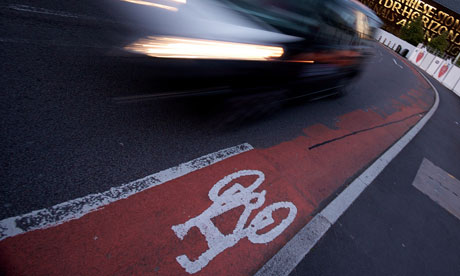
Cycle lanes on the road surface could be
considered "cycle friendly" infrastructure if well maintained.
(Pic : Wikipedia)

1. Cycle-friendly streets
  • "Shared surface" street layouts
  • Cycle lanes marked onto existing road surfaces
  • Authorised use of bus lanes by cyclists
  • Speed humps
  • 20mph (or less) speed limits
  • Advanced stop lines at traffic lights


The Netherlands is famous for its planned,
segregated cycling facilities.
(Pic : aviewfromthecyclepath.com)


2. Segregated cycling facilities
  • Dedicated cycle paths, or cycle/pedestrian shared paths
  • Dedicated cyclist signage and road signals (where appropriate)
  • Priority for cyclists at junctions and roundabouts
  • Segregated crossing facilities – underpasses, bridges or toucan & puffin crossings
  • Consensual crossings with cyclist/pedestrian rights of way (i.e zebra crossings)
  • Secure and monitored (formally & informally) bicycle parking facilities
  • Easy storage of cycles on public transport

Wales and the UK seem to opt more for "cycle friendly" infrastructure, but where there's the option for pre-planning for cyclists – for example 1960s and 1970s new towns or modern housing estates - segregated cycling facilities are becoming a more common feature. This is probably why nations like the Netherlands have such a good cycling infrastructure, as the "new town" was a key driver of post-war economic growth there.

What does independence have to do with any of this?

You might wonder - why I'm including this post in the Independence Index? That's a perfectly legitimate question.


There are several state functions that could be modified or reformed to give cycling a boost:
  • Road markings & signs
  • Traffic & vehicle regulations
  • Vehicle taxes/DVLA functions
  • The Highway Code
  • Rights of way (including definitions)
Creating new forms of cycle/pedestrian crossing, new signs
and signalsand new driving regulations would (most likely)
require independence.
(Pic : Fietsberaad.nl)

Something as simple as creating a new form of "consensual crossing" would be a major step forward. Like it or not, we're locked into a "British" road system where many matters are highly regulated from the centre. Powers could come from federalism or devo-max, but independence would be the ultimate way for a significant divergance from the "British" road system - and one modelled on a benchmark like the Netherlands - would be possible.

Cycling needs a culture shift – not just new laws - although that helps. Britain is a car-centric country and our addiction to four wheels is a much a statement of an Anglo-American "rugged individualism" as much as it is the most popular (and often best) way to get around.

A brand new nation could be the kind of shock needed to create a new ethos, not just on how we travel but a whole host of other things too. It's all part of the independence vision.

Thursday, 10 May 2012

School Standards & Organisation Bill

The new Bill is the latest move by the Welsh Government
to improve school standards inside & outside of the classroom.

A few weeks ago, Education Minister Leighton Andrews (Lab, Rhondda) laid this, the first of two Education Bills this Assembly term, in front of the Assembly. Consultation on the proposed Bill ended in January this year, attracting hundreds of responses, which you can see here.

It's quite a dull, lumbering piece of legislation, but it's the first "meaty" Bill laid before the Assembly since the 2011 referendum. I've already covered two previous bills – the Local Byelaws Bill and the Social Services Bill (which is yet to be drafted and laid). I've also mentioned the smaller National Assembly of Wales (Official Languages) Bill in passing.

Rationale

The goal of the bill is to "bring together, update and tighten standards and management" of Welsh schools. It will also localise decision making on school organisation and streamline several current processes – such as Governing Body meetings. There are also several other smaller, but somewhat significant, provisions such as the ability for schools and local authorities to have more flexibility over school meal prices.

The Bill has 4 key parts, which I'll now explore in some more detail.

1. School Interventions


  • There will be 8 grounds for intervention in "failing schools" covering : unacceptably low standards, failures in school management and governance and the placement of a school in "special measures" by school inspectors.
  • Local authorities and Welsh Ministers will be given the power to issue warning notices, or guidance, and intervene if a school has "failed to comply" for whatever reason.
  • Local authorities and Welsh Ministers can require failing schools to : collaborate with another school, appoint new (or interim) governors or advisers and suspend delegated budgets.
  • Welsh Ministers will be able to do similarly for "federated" schools as well as order the closure of a school if they are under "special measures".
  • Welsh Ministers will be able to intervene in local authorities if they : fail to comply with education functions, act unreasonably with regard education functions or fail to perform to an acceptable standard. Local authorities, as well as governing bodies, will be obliged to cooperate.
  • Welsh Ministers may issue school improvement guidance to "school authorities", but they have to lay a copy of any draft guidance before the Assembly. School authorities will be obliged to follow this advice.

2. School Organisation

  • Welsh Ministers must issue (and may revise) a School Organisation Code, and lay a draft before the Assembly.
  • Local authorities will be able to establish new community schools, special schools or maintained nursery schools. Any person may establish a voluntary school. No new foundation schools may be established in Wales, except foundation special schools.
  • Local authorities will be able to alter mainstream schools, including nursery's, with the consent of Welsh Ministers. They, and governing bodies, will also be able to propose discontinuing maintained schools.
  • Governing bodies will be able to change the category of a school (community school, voluntary aided, voluntary controlled school). However schools cannot change to voluntary aided status without satisfying funding criteria.
  • There will be no requirement to consult on the closure of small schools – the definition of which can be amended by Welsh Ministers.
  • Any change to the category of a school (with the above exception) must be put out for consultation – to which anybody may object within 28 days. Category 1 objectors being local authorities, religious bodies and local authorities in England adjacent to the area where a proposed change will take place. Category 2 objectors being governing bodies, school councils, AM's and MP's and FE colleges. Category 3 objectors being local councillors, school staff, pupils, parents and community councils.
  • Proponents of changes must implement them as they were agreed, but can delay changes for up to three years from the date of any approval. Proposals to discontinue a school can be brought forward by up to 13 weeks.
  • Welsh Ministers can order local authorities to use their powers to establish, alter or discontinue schools based on "excessive or insufficient provision" (school places). Again a 28 day objection period applies. Local inquiries may be held if there are any objections. Welsh Ministers will be able to approve, or make further proposals, depending on the outcomes of any inquiry.
  • Welsh Ministers can direct local authorities to consider if "regional provision" (collaboration) in special education is suitable. Again a 28 day objection period applies.
  • Welsh Ministers will have the power to restructure sixth form education. Once more there's an objection period of 28 days.
  • Welsh local authorities will be barred from proposing to establish schools in England.

3. Welsh Education Strategic Plans


  • Local authorities must prepare a "Welsh Education Strategic Plan" which will plan for Welsh medium provision, improve standards of WM provision, set local authority targets for WM provision and a report on progress made to attain those targets.
  • Welsh Ministers will approve these strategic plans, and suggest modifications. They may also make local authorities assess demand for WM education.
  • Welsh Ministers will be able to set the regulations relating to these strategic plans.

4. Miscellaneous School Functions


  • Local authorities must provide free breakfasts to primary school pupils on request of governing bodies.
  • Amendments are made to the Education Act 1996, which will give local authorities more flexibility in charging for school meals.
  • Local authorities must ensure "reasonable provision of independent counselling services" in secondary schools.
  • Governing bodies must hold parent meetings if there is a petition from : 10% of parents of pupils registered at the school, the parents of 10 primary school pupils or the parents of 30 secondary school pupils. However these meetings have to occur well within a school term, and no more than three of these types of meetings can be held in a single school year.
  • The duty to hold an annual parents meeting in the Education Act 2002 has been repealed.
  • The "code of practice" for relations between education authorities and schools in the School Standards and Framework Act 1998 has been repealed.

Conclusion


With this Bill, the responsibility to improve school standards is going to fall quite squarely on the shoulders of local authorities. Cardiff Bay is taking a slightly more hands-off approach, though it's disingenuous to suggest that Leighton Andrews - or any future Education Minister - won't be able to keep a close eye, or leash, on proceedings.

The grounds for intervention – by the Welsh Government or local authorities – will be crystal clear.

There are hints of a possible heavy-handedness : the closure of "small schools" without consultation (that could have a big impact in rural parts of Wales), reorganisation of sixth forms and forcing collaborative working.

It's unclear what impact the proposals for "flexible arrangements" for school meal prices will have either. I suspect Jamie Oliver will be popping across the Severn Bridge at some point in the future.

If this Bill is passed, it's not going to be a magic bullet that's going to set Welsh education back on the right tracks, but it does tidy up existing legislation, firing "a shot across the bows" to coasting or struggling schools, warning them that they need to consistently aim for better achievement.

This isn't the most significant piece of legislation ever written, but its aims are broadly welcome.

Monday, 7 May 2012

We need honesty on the Welsh NHS


There are two stories in the last week on the Welsh NHS that are ringing alarm bells for me.

Firstly, the cabinet paper on a possible public relations campaign with regard the centralisation of Welsh hospital services. Secondly, the conflicting reports between Betsan Powys (and others) and the Welsh Government on Local Health Board (LHB) financial results.

I've blogged before on Labour's plans for NHS reforms. I have to reiterate - I support the creation of "centres of excellence". It makes perfect sense. The primary aim of any reform of the health service should be to improve patient outcomes. The research carried out suggests that it could. All well and good.

It's obvious no district or general hospitals are going to close, and suggesting such is likely a ruse to make these reorganisations sound palatable. What's up in the air is which hospital services are going to be moved around or centralised and where.

These are the sorts of "reorganisation" decisions Hywel Dda LHB in particular (covering Ceredigion, Carmarthenshire and Pembrokeshire) have the unenviable task of sorting out. The Welsh Government will need to defend it on their behalf.

Here's the problem:

You have three hospitals providing the same services. Two hospital lose a service – for arguments sake, minor injuries units. How would you describe what has happened to those two hospitals?

Have they been "downgraded", or has one hospital become a "centre of excellence"?

One is the half-empty description. The other is the half-full description. Ultimately they mean the same thing. Suggesting anything different is an outright lie. It's disappointing to see that the First Minister has got the ball rolling in FMQ's last week:
Leanne Wood (Plaid, South Wales Central) :....Will you tell us, ahead of Thursday's local elections, whether your Government plans to downgrade hospitals or centralise core services?

Carwyn Jones (Lab, Bridgend)....From our point of view, we want to ensure that health services are safe and sustainable. No hospital is under threat. No hospital was ever under threat in Wales....

So some LHB's are actively preparing to reorganise hospital services - in essence taking away from some, keeping them at others - yet "no hospital is under threat"? Yeah, OK.

Some hospitals will be affected by these changes – that's inevitable. Arguing about whether they are "under threat" or becoming a "centre of excellence" is pedantic. At least be upfront and be honest about it. Explain to the public why it's the best option on the table. It should be easy to do so. The Welsh Government shouldn't have to use PR and euphemisms.

The Welsh NHS has become a political football since devolution. It's no longer a public service, but an ideology in itself. It's all Nye Bevan & miners co-ops, black and white images of church-like Victorian institutions with prim blue-uniform nurses and doctors in white coats – all wedded to a greater sense of Welsh collectivism. We're supposed to like the NHS the way it is because Labour in particular have made it such an inherent part of "Welshness" and "something to be proud of" - "our" greatest ever achievement.

Its conservation and protection has been drummed into so many skulls that any reforms – wherever and whenever they happen - are going to be bitterly opposed. These reforms are minor compared to what's happening in England, yet the protests are already starting.

Labour have simply left these reforms far too late, interrupted by the dropping of hospital centralisation as part of the One Wales coalition. Beds have been made, it's time to lie in them.

The second issue is more immediately worrying. Health Minister Lesley Griffiths (Lab, Wrexham) (has quite correctly) instructed LHB's to meet strict financial targets. She's on record in telling the LHB's, via the Assembly's Heath Committee, that they can no longer "expect handouts" due to strained finances.

The wider question remains though – what was the £290million saved in 2010-11 "without harming services" actually spent on in the first place?

Last Wednesday, the Welsh Government hailed the "remarkable achievement" of the Welsh NHS breaking even.

There's one small problem – it was bullshit.

Lesley Griffiths had to dip into next year's funding to the tune of £12.4 million to ensure that three LHB's met the targets she laid down. Like the issue of reorganisation, the news has been sugar-coated along the lines of "drawing down money from contingency funds."

Fair enough. If the LHB's need a bail out - do it. Just remember how silly you're going to look after telling them "not to expect any more handouts". We plebs hate it when politicians don't admit their mistakes. Don't let your pride get in the way of admitting you're wrong, or that a target or deadline has been missed.

The likelihood is that next year, the Welsh NHS will meet their targets - £12.4 million is a drop in the ocean compared to the £6billion+ Health and Social Services budget. The gap has closed dramatically and Lesley Griffiths deserves credit for that. However, these sweet little lies can quickly become big juicy sour ones down the line.

"The cuts"
are inevitably going to be the fall-back position for every single unpopular decision Labour makes – at local and national level - between now and whenever they get back into power in Westminster. It's good cover for centralisation plans, which have been on the cards since at least 2006, resurfacing during the tail end of the Third Assembly, and now on the cusp of finally be put into action.

Like it or not, Labour have both hands on the wheel for this. They can't blame Westminster.

Get this wrong – it'll be a catastrophic bungle if it does go wrong – and it should come back and bite the Welsh Government very hard, very fast, on the backside.

Because Wales loves the NHS, we do.

Saturday, 5 May 2012

What did we learn from the local elections?


Nobody cared – Turnout across the board seems to be atrocious, and quite similar to last year's referendum turnout. In hindsight, that probably makes the referendum turnout look a lot better than it was. This might've given Labour a boost, but I don't think it all comes down to turnout. It's a real shame, but I'm not really surprised anymore. Politics is becoming a massive turn-off for many people - for whatever reason - and it's going to be an uphill struggle to try and get them back.

People are fed up with austerity – That's not to say Labour wouldn't be doing similar if they were in the same position as the Coalition. The media turned this into a referendum on the Coalition - and it certainly helped Labour - though I'm sure local factors came into play as well in some cases. In the midst of a double-dip, you would hope that the UK Government will rethink their deficit reduction plans, perhaps focusing on developing infrastructure to boost competitiveness in all parts outside London. Easier said than done.

Decapitation! - One thing that really stood out was how many council leaders lost their seat, or came close to losing their seats - for all parties. Some really significant players are gone. Russell Roberts in RCT will make the headlines, but the one that stood out is the Lib Dem's Rodney Berman in Cardiff. He might have come across as slightly haughty and smug, but I don't really see what he did wrong. He always appeared to be a pretty decent figurehead for the city.

Is that "sending a message"? Or is it something more personal? Do the Welsh dislike "Big Time Charlies"? It would make elected mayor scenarios very interesting indeed.

Bridgend at a glance

Detailed results are available here.

Labour                 39 (+12)
Independents       10 (-4)
Lib Dems               3 (-3)
Conservatives        1 (-5)
Plaid Cymru           1 (n/c)

Congratulations to those who've been re-elected or newly elected. Commiserations to those who missed out this time around or who lost their seats.

My predictions weren't that far off all in all. Labour did slightly better than expected, taking seats in many of the wards I dubbed "too close to call" quite comfortably, along with others. They had a particularly excellent result in Brackla, taking all four seats.

Despite Labour's successes, there were still a few shocks. Alana Davies - a cabinet member - bucked the county trend and lost her Porthcawl seat to an Independent. Several long-serving councillors also lost their seats, such as : the Hacking's in Brackla, Bob Burns in Oldcastle and David Unwin in Newcastle. Peter Foley also came within 7 votes of losing his seat in Morfa.

The Lib Dems got off lightly it seems – in fact I think they'll be secretly "happy" with their performance, keeping 3 seats. The Independent vote held up remarkably well across the county. In many wards, Plaid were standing for the first time and gave a reasonable account of themselves, without really excelling.

It seemed to be the Conservatives who really suffered in Bridgend, losing 5 of their 6 seats. That's a pretty miserable performance for a party that has a decent base in the southern half of the county. What went wrong there?

Party by party national analysis


Conservatives

Was 2011 a high tide mark?

Losing overall control of Monmouthshire borders on incompetence. As mentioned before, they took a real hammering in Bridgend and even worse hammerings in Cardiff and the Vale of Glamorgan. However, it looks as though they held up reasonably well in north Wales and they still have a respectable number of councillors across Wales as a whole.

Pressure will be starting to pile on Andrew Davies. He hasn't seemed to capture the imagination of the public, the Conservatives are in serious danger of undoing all of the good work Nick Bourne did in "detoxifying" the brand, there seem to be serious organisation issues within the party and they are guilty by association with regard the UK Coalition. If they can create a clear narrative within the Assembly, they'll be able to turn things around, but it's increasingly looking like an uphill struggle. For those reasons, this is a worse result than they are making out.


Labour

It was always on the cards – a tremendous night for Labour in Wales. They pretty much recovered most - if not all - of their 2008 losses, retaking the major urban areas of Wales and the Valley authorities. Labour picked up seats from every single opposition party, and the independents, without breaking too much of a sweat. Depending on the result of the by-election in Gwynedd, Labour are now the only party in overall control of any Welsh local authority.

Cardiff will be the feather in their cap, but I think they'll be delighted to have a massive stranglehold on Caerphilly, RCT, Bridgend and NPT as well as thumping swings from the Tories in the Vale of Glamorgan. It was a great performance across the board.

Did Wales "send the Westminster Coalition a message"? Not really. Not even Ed Milliband will really care that the Valleys have turned red again. The Midlands and the south of England will be the main battleground in 2015, but it helps the cause to know that there'll be a fair few Labour MP's returned from Wales as usual.

The focus on Westminster issues, at least at the top level, played its part in victory once again. They won't be able to do that forever, though. Two words – hospital reorganisations.


Liberal Democrats

An embarrassing result in Cardiff, and real leatherings in Wrexham, Newport and Swansea. But less so elsewhere. At a local level, they are an effective party and to be fair, always have been. They are clearly paying the price for their perceived mistakes at UK level. Did they deserve that? Probably not, but it's easier to kick the junior partner in a coalition. They seemed resigned to fate in these elections, losing candidates through simple withdrawal or defections.

Maybe it's time for some of the more prominent Lib Dems to stop highlighting every minor "success" or "concession" they get in Westminster and focus more on what they can do in Wales.


Plaid Cymru

A bad night, but nowhere near as bad as it could've been. When austerity bites, people run back to Daddy Labour. Parties like Plaid - that compete largely on the same ground - will be squeezed out. The results in Caerphilly, Cardiff and Neath Port Talbot do require addressing and a significant rebuilding on the ground. The results in Rhondda Cynon Taf will likely be embarrassing to Leanne Wood on a personal level.

However, aside from the disappointment, there's a bit of hope there. Their core vote turned out - especially in the "heartland". Also, on the surface of it, it looks as though Plaid's overall share of the vote won't have dipped anywhere near as much as the Tories or Lib Dems. There's no need to be too downbeat really, but Plaid are going to have to become more than a party that thrives when Labour are unpopular. How they do that is a hard question to answer.


Independents & Minor Parties

Is the "age of the independent" over in Welsh local politics? Not quite, but they took a hit in most parts of the country. They do, however, remain in firm control of Pembrokeshire, and still hold sway in many other authorities. I think the question many people are starting to ask themselves is – what do independents actually stand for? Is it right that they can form a group and get away with not having a manifesto or a set of aims?

Should they be forced to form a registered party if they have over X number of seats? Perhaps, should registered independents be banned from forming political groups?

None of the "other" parties appear to have made much headway in Wales. The Green campaign has been an abject failure. I'm genuinely surprised they didn't pick up seats in Cardiff, as they've been quite vocal on local planning and transport issues in the city for many years now.

There were no far-right or far-left successes. I don't think the likes of the BNP or the National Front will ever make even a minor impact on Welsh politics the way things are going. That pleases me.

UKIP appear to have kept the seat that they had, and added one. The UKIP situation will be one to watch on a UK-wide level. Could they be emerging as a major player on the populist right, but without the "racist" baggage? That would be an interesting development, and would cause a headache for the Tories, and perhaps even Labour in some parts of England, if they can convince enough white, working-class voters to jump ship.


Tuesday, 3 April 2012

Council Tax in Wales - Are the poor paying more?

In financially straightened times, and with local elections coming up,
Council Tax and it's relative burden, is becoming a hot issue.
(Pic : BBC Wales)

How council tax works

You'll already know this but....

Council Tax was introduced as a replacement for Community Charge (aka Poll Tax) by the UK Government in 1993. Households are placed into bands, based on the value of their properties, with A being the lowest and H being the highest. A ratio is set, so that bands pay a certain proportion of Council Tax, with Band D as the "average" around which all others are set. Band A households, for example, pays around 67% of the Council Tax of a household in Band D.

In 2003, there was a revaluation of Council Tax bands in Wales, including the creation of an I-band, which came into effect in 2005. According to a BBC article from the time, 33% of homes moved up a band, while only 8% moved down, despite a prediction that "a quarter would move up and a quarter would move down." This could be a result of the house-price boom during that wider period.

For businesses, non-domestic rates (NDR) are based on a "ratable value" of business properties multiplied by a "multiplier" which determines an NDR bill. The provisional multiplier for 2012-13 is 45.2p, so for a business with a ratable value of £10,000 - the provisional NDR bill would be £4,520 – payable in instalments over the year. However it's not as simple as that. There are rate relief schemes that help ease the burden - for small businesses in particular - with low ratable values. It can reduce the bill by as much as 50%, or even 100% for small post offices.

In addition to council tax and NDR, there are also "precepts" – extra levies raised by police authorities, fire authorities, community & parish councils and national park authorities.

Council tax, rate relief, and local government finance are devolved to the Assembly, being one of the few examples of the Assembly wielding fiscal powers.

The situation is more muddied with regard non-domestic rates. Ratable values for businesses, and the "multiplier" are set on an EnglandandWales basis. (Thanks to an Anonymous commentator for pointing that out.)

How is the money redistributed in Wales?

Councils, as far as I know, generally keep whatever Council Tax they raise. Precepts go to the relevant authorities.

Non-domestic rates are put into a central "kitty", held in the Welsh Consolidated Fund at Westminster, and redistributed back to Welsh local authorities based on a formula, made up of various criteria, including population, relative deprivation and demographics. It forms a large part of the Welsh Government's annual local authority settlement.

This is topped up with other central grants to fund local services as part of the Welsh Government's (or in the case of policing, the UK Government, as policing is an EnglandandWales matter) priorities for the area. For example, local transport schemes or to support things like Communities First.


Council Tax in 2012-13

One thing that stood out when looking at the provisional rates, published by the WLGA is how high Band D council tax was in places such as Merthyr Tydfil and Blaenau Gwent. Considering these are two of Wales' smallest and more deprived local authorities, I decided to plot the average wage in each local authority (from 2011) against the respective provisional Band D rate. Then I created a measure to give an idea of the "burden" - by determining how many weeks - at the average local wage - it would take to pay off a Band D bill. I called this an "earnings to tax ratio".

Council Tax in Wales 2012-13
(Click to enlarge)

Some of the figures - in particular the tax increases - might be out of date now. There aren't significant differences from the provisional figures, but a few local authorities have set lower increases, I have to make that clear.

Four local authorities decided to freeze council tax for the year : Bridgend, Swansea, Monmouthshire & Caerphilly.


What are the findings?

Before taking things at face value, it's important to note that council tax is set based on property value not household incomes. Someone could live in a Band B or C property and earn a higher weekly wage than the local authority average, the opposite could also be true. I must also point out the figures above don't include precepts for things like the police or community councils.

The above figures in in graph form
(Click to enlarge)

However the general trends appear to be:

  • At the extremes - the lower the local average wage, the higher the Band D council tax bill and the opposite is equally true.
  • The majority of local authorities tend to have a "burden" of around 1.9-2 weeks wages (excluding precepts).
  • There's probably a link between levels of deprivation in a local authority and higher council tax bills. Only Monmouthshire and Powys from the wealthier East Wales region have above-average Band D council tax bills.
  • Remember that council tax is set using a ratio, so if the Band D bill is higher than average, then Bands C, B and A will be too. Glancing at the Welsh Government's statistics, this is certainly the case.

Political performance

As the local elections are coming up, you're going to put me on the spot and want a party political picture, won't you. It's a mixed bad, with good news and bad news for all parties.

I've defined "led or influenced" as either outright control, minority rule or a ruling coalition - but I've only counted it if the party has a significant number of seats. So for example, Cardiff has been counted for both the Lib Dems and Plaid Cymru. It isn't an exact science, I'm not a psephologist, sociologist or economist, so treat these conclusions with caution.

(Click to enlarge)
  • Conservative led or influenced local authorities are few in number, but they are the wealthiest on average, with below average council tax bills, burdens and the lowest tax rises.
  • Lib Dem led or influenced local authorities are wealthier than average and have the lowest burdens, lowest average council tax bill, but tax rises are at the Welsh average.
  • Independent led or influenced local authorities vary wildly, individually, in wealth, but are generally poorer than the Welsh average. With the exception of Pembrokeshire, tax rises and burdens tend to be the highest, but the average council tax bill is slightly below the Welsh average.
  • Labour led or influenced local authorities have average wealth (probably distorted by Bridgend & Neath Port Talbot), higher than average tax burdens and the highest council tax bills overall, but rises have been kept to below the Welsh average.
  • Plaid Cymru led or influenced local authorities tend to have average burdens, but are generally less-wealthy than the Welsh average. They have the second lowest council tax bills overall, but council tax rises are slightly above average.
All this now begs the question:

Why are the figures they way they are?

It shouldn't automatically be assumed that tax rises are a "bad thing". In terms of politics, it might be true that Labour have higher council tax bills, and the Conservatives smaller, but that was a given, wasn't it? We all know that.

In local terms, different parties tend to rule or influence different areas. Labour in urban authorities of the south and north east, Lib Dems in major urban areas, Conservatives in wealthier rural authorities and Plaid and Independents a wide spread, with Plaid more dominant in Y Fro (Caerphilly and Cardiff aside). Each area is going to have its own individual needs, and subsequently, their own individual spending priorities and requirements.

Council tax bills could:

  • Be justifiably higher in more deprived areas - they tend to have the greatest need for public spending. I imagine most households in these areas will be Bands A, B and C - so Band D is set higher to maximise income from lower bands. Is this putting a greater burden on some of our poorest communities? It might not be that clear cut.
  • Be set at an affordably lower rate in larger, more populated, local authorities (Cardiff, Swansea, Newport, Wrexham etc.) - there are more households. Wouldn't they also be receiving more from the non-domestic rates "kitty" too? Are council tax freezes, or smaller rises, trumpeted in these places actually, to an extent, disingenuous?
  • Be justifiably higher in sparsely populated areas - because services are generally more expensive to run there – but that doesn't explain the Pembrokeshire anomaly.
  • Be affordably set lower in wealthier local authorities – they're likely to have more properties in higher council tax bands – Monmouthshire and the Vale of Glamorgan for example.
  • Be a reflection of the small size of some local authorities. It might be easier to run some services close to a community. However, with a smaller household pool to get tax from, are taxes set at a disproportionately higher rate to provide services at the same level and standard as larger authorities?

It's a complicated picture.

It's also important to look at the impact of council tax in terms of demographics and welfare.

The Institute of Fiscal Studies published a report in 2010 entitled "A Survey of the UK Benefits System". It offers a detailed overview of the current benefits system in the UK, but also looks at the UK Government's plans for welfare, including changes to benefit entitlements and the introduction of the Universal Credit.

Council Tax benefit is available to people on low incomes – averaging £15.69 per week according to the latest release by the Department of Work & Pensions. At the end of 2011, there were just over 327,000 council tax benefit recipients in Wales, which is roughly the equivalent of £270m per year.

According to the IFS report, Council Tax benefit is due to be localised from 2013-14, with an estimated spending reduction in the area of 10%. So there is the possibility it could disproportionately impact some of Wales' already struggling areas, already with some of the highest council tax bills and relative "burdens".

Are there possible alternative funding models for the future?

Mark Drakeford (Lab, Cardiff West) recently advocated a Land Value Tax, holding a short debate in the Assembly, which you can see here. (Not wanting to get too off topic, but how depressing is it to see so many empty seats in the Siambr for such a imaginative policy proposal?) There's also an article on Click on Wales.

The basic idea is that, as you might have guessed, the value of land is taxed, instead of the value of whatever's built on top of it. It was be much clearer to understand and collect, and it might encourage development, to avoid areas "lying fallow". Nobody would like to be taxed on something they own but don't use, would they?

In Scotland, the SNP proposed to introduce local income tax, to replace council tax. It would have operated similarly to non-domestic rates – the central government would collect local income tax, then redistribute it back to local authorities.

The UK Government threatened to withhold £400million in Council Tax benefit if the SNP went through with the proposal, and it probably contributed to the policy being effectively dropped. The IFS produced a bulletin that suggested that a 3% local income tax would leave a shortfall of some £450million.

There's also the option of US-style Local Sales Taxes - as a way to compliment, or reduce non-domestic rates – put on top of something like VAT or added to any sale in a given area, set at a local level, but realistically something like 1%.

Conclusion

Are the poor paying more council tax in Wales? At the most basic, visual level, you could certainly get that impression. However, the underlying picture is more complicated than that. Council Tax has never been a particularly popular fiscal lever in the UK, but judging by the statistics, it does provide a substantial level of income for our local authorities – more so than a local income tax would.

Despite there being a wide range of help out there - from Council Tax benefit, to rate relief - is a tax based on property value, at a fundamental level, ever going to be truly fair?

Saturday, 31 March 2012

Senedd Watch - March 2012


  • The First Minister used his St David's Day message to promote tourism off the back of the 2012 Olympic Games, Wales Tourism Week and the imminent completion of the All-Wales Coastal Footpath. Bethan Jenkins AM (Plaid, South Wales West) repeated calls for St David's Day to become a national holiday. In London, Prime Minister David Cameron hosted a celebratory event at 10 Downing Street attended by Welsh celebrities and dignitaries.
  • The BBC/ICM St David's Day poll showed a clear majority in favour of partial or complete fiscal powers for the National Assembly, but only 7% supporting independence, rising to 12% should Scotland secede. 77% of respondents also opposed NHS reforms in Wales similar to those happening in England.
  • In the same poll by BBC Wales, 63% of respondents supported the Welsh Government's proposed organ donation "opt out" legislation. 64% also supported the 5p single use bag charge. However there were more mixed results on education, with a fairly even spread of responses to whether education in Wales has improved, stayed the same or got worse.
  • The Welsh Liberal Democrats held their spring conference in Cardiff. Leader Kirsty Williams criticised Labour for not using the law-making powers from the 2011 referendum to it's fullest. Leader of Cardiff City Council, Rodney Berman also said that he hopes the Lib Dems will keep control of several major urban Welsh local authorities after the local elections in May.
  • Rhodri Glyn Thomas AM (Plaid, Carmarthen East & Dinefwr)  called for the establishment of a dedicated Welsh Charity Commission to prevent future funding scandals like AWEMA. The Wales Office opposed the suggestion saying that it could lead to "inconsistency and confusion".
  • The Welsh Government launched a consultation into possible improvements to the M4 around Newport, including the possibility of widened Brynglas tunnels – estimated to cost up to £550million. The First Minister has suggested that borrowing powers may be required to fund the project if chosen as the solution.
  • Education Minister Leighton Andrews (Lab, Rhondda)  announced that Band 4 and 5 secondary schools in Wales will be eligible for an extra £10,000 if they submit an action plan for improvement.
  • South East Wales Transport Alliance (SEWTA) called for the electrification of the Valley lines in south Wales. It calls for Welsh Secretary Cheryl Gillan and the Welsh Government to put the case to the UK Government to fund it. Electrification of both the south Wales mainline and the Valley lines enjoys cross-party support.
  • Chair of Plaid Cymru, former-AM Helen Mary Jones, said that the party should consider all-women shortlists for UK Parliament elections to increase the number of women represented by Welsh constituencies.
  • The Welsh Government and Chief Scientific Adviser have launched a new science initiative that is hoped will attract “scientific talent” to Wales. Ser Cymru (Stars Wales) is a fund of up to £50million that will be focused on three areas of research: life sciences, low carbon technologies and advanced manufacturing.
  • In addition, a scheme to pump £100million of joint public-private investment into the Welsh life sciences sector has been unveiled by Business Minister Edwina Hart (Lab, Gower) and biotechnology entrepreneur Christopher Evans.
  • Environment Agency Wales warned against complacency about water levels in Wales, after drought threatens the south and east of England.
  • Deputy Minister for Social Services Gwenda Thomas (Lab, Neath)  launched a consultation on the Social Services (Wales) Bill that aims to speed up the adoption process, provide more transparency and encourage professionalism, regulation and consolidation of social services across Wales.
  • New EU figures suggest that the West Wales & The Valleys region has fallen even further behind EU economic averages – falling to 68.4%, while East Wales was at just under 100%. The Welsh Government claimed that the figures were out of date and that other indicators, such as wage increases, showed good progress.
  • First Minister Carwyn Jones criticised the operators of Cardiff Airport, saying they need to “run it properly or sell it”, describing the airport as “giving a bad first impression of Wales”. He was criticised by Eluned Parrot AM (Lib Dem, South Wales Central) for “talking the city's airport down.”
  • Cancer charity Tenovus called for debate on a complete smoking ban in Wales on the day smoking on hospital grounds was banned in all but one of Wales's local health board areas.
  • Unemployment in Wales rose slightly by 1,000 in the three months to the end of January, with the unemployment rate remaining unchanged at 9.1%.
  • St Asaph, Denbighshire, has been awarded city-status as part of the Queen's Diamond Jubilee celebrations.
  • Leanne Wood AM (Plaid, South Wales Central) was elected Plaid Cymru leader on March 15th, with 55% of the vote, after Dafydd Elis-Thomas AM was eliminated in the first round of voting. Elin Jones AM came second with 41% of the vote.
  • SEWTA - a transport conglomerate of 10 Welsh local authorities - have agreed in principle the establishment of a metro system in south east Wales. However, they say that electrification of the Valley Lines is a key element of the proposals. A cross-party team from the Assembly travelled to London to make the case for electrification of the Valley Lines to the UK Department of Transport.
  • The Welsh Government honoured the Welsh national rugby team's successful Six Nations Championship win by staging a special reception on the steps of the Senedd in Cardiff.
  • Plans for a badger cull to prevent the spread of bovine tuberculosis have been abandoned by Environment Minister John Griffiths (Lab, Newport East). Instead a vaccination programme will be carried out. The Farmers Union of Wales has reacted angrily, calling the decision a “cowardly betrayal.” The previous Welsh Government announced plans for a cull in 2008, but the plans were put on review by the new Welsh Government in 2011.
  • All four Welsh political parties have reacted strongly against plans by the UK Government to introduce regional rates of pay for public sector workers. Finance Minister, Jane Hutt (Lab, Vale of Glamorgan), called the plans divisive, while Plaid Cymru leader Leanne Wood called for cross-party unity to oppose the plans.
  • As a result of the UK Chancellor's budget on March 21st, Cardiff will receive £12million towards fast broadband improvements, the Welsh Government will receive an extra £11.7million over the next three years and the Deeside enterprise zone will be able to write off the costs of plant and machinery.
  • Cardiff's Millennium Stadium will host the opening ceremony of the 2013 Rugby League World Cup, organisers of the tournament have confirmed.
  • The Welsh Government welcomed the UK Government's decision to introduce minimum pricing for alcohol (40p per unit) in EnglandandWales, saying that they have consistently said that they would support it's introduction despite it being a non-devolved issue.
  • Plaid Cymru held their spring conference at Ffos Las Racecourse in Carmarthenshire. Leanne Wood gave her first speech to the party as leader, saying that Wales, “shouldn't accept poverty as inevitable.” Party chair Helen Mary Jones said that she expected local elections in May to be “tough” but that Plaid should “hold their ground.”
  • The Welsh Conservatives held a rally in St Asaph, Denbighshire. Leader Andrew Davies appealed to “alienated” Plaid Cymru voters, who might believe that the election of Leanne Wood as leader would shift the party to the left.
  • The Welsh Government has launched a 12-week consultation into the creation of a separate legal jurisdiction for Wales. Welsh Secretary Cheryl Gillan has called the move a “surprising priority” and that the current system has “served Wales well for centuries.”
  • The Welsh Liberal Democrats have criticised dental services in Wales, finding via a survey that only 37% of dentists are accepting new NHS patients, as well as criticising the length of waiting lists. The Welsh Government acknowledged that NHS dental services were “difficult in some areas” but that “improvements have been made.”
  • The First Minister has reiterated a call for borrowing powers, suggesting that Wales might miss out on big infrastructure projects without them. He's also called for a written constitution that's “fit for the 21st Century.”

Projects announced in March include an £11million boost to the "invest to save" public sector efficiency drive, £15million improvements to orthopaedic and emergency units at Morriston Hospital in Swansea, a £36million improvement of the railway between Wrexham and Chester, a joint Carmarthenshire Council-Welsh Government project to replace Llanelli Leisure Centre, grants worth £25million and £11million for local public transport schemes across Wales.

Thursday, 29 March 2012

Time for reform - A follow up to "Enough's Enough"


Judging by the "robust" reaction to my last blog, it's fair to post a proper follow up. Just adding another comment wouldn't do the reponse I've received justice.

It's depressing, but it doesn't surprise me, that one of my most popular blogposts has been overtly critical of the Welsh Government, civil service and probably extends to devolution itself. Believe me when I say it was the toned down version.

It's sad that a month that started with an optimistic vision of the future has to end like this, but that's what living in Wales sometimes does to you. It's a frustrating love-hate relationship.

I'm going to sound like a pompous arse saying this, but I don't care. From a nationalist perspective, Wales probably needs a "reformer" like Lech Walesa or Vaclav Havel before we can have our Alex Salmond. And no, I don't think Welsh Labour and the civil service are an "evil empire", they're just a well-meaning, but passive, managerial blob.

Maybe that's the problem. We're all waiting for someone utterly brilliant who's going to sort everything out to ride to the rescue.

Well I'm not hearing any trumpets heralding the arrival of Y Mab Darogan. Are you?

With rubbish like this, independence moves another two or three decades further away and general prosperity (including within the union, for those who might cheer at that independence prospect) - light years away. This could be a rare case of "separatists" and ultra-unionists actually having some common ground. Ultimately though, both sides are still rabbles.

I'm not the sort who rants without offering some opinion on a way out. My ego might've been stroked by the reaction, but it's pissing into the wind ultimately.  There's the chance that somebody, somewhere, with the ability to make a change, read the last post - and the reaction - and can do something. That includes sitting AMs and Welsh Government ministers.

I'd be more than happy for that person (or persons) to be from Welsh Labour. However I suspect, like AWEMA, they want this swept under the carpet as quickly as possible, or forgotten until the next bungle - whether that bungle will be by the Welsh Government themselves or the civil service.

The questions that need answers


Andrew Davies (Con, South Wales Central) asked during First Minister's Questions about the bid, and he got an apology from Carwyn Jones. Fair enough. I would've mentioned it in the last post had I realised that had happened. However, I don't think we would've got anything from Carwyn had the question not been asked.

What disappoints me is that they both decided to delve into childish, macho posturing over grammar. Despite stronger statements elsewhere, they laughed this off, and that's the problem here. Andrew had an open goal and I'm surprised the Conservatives didn't react as strongly as I, and many others, have.

Simon Thomas AM (Plaid, Mid & West Wales) and Jonathan Edwards MP were also critical on Twitter. I think it was a simple case of the Conservatives having the first question that prevented Plaid, or indeed the Lib Dems, from sticking the boot in if they had the chance.


As I've said, the Welsh Government would be pleased to let this be brushed under the carpet, but anyone and everyone needs to keep chipping away – on this and indeed on things like AWEMA - for the bigger reasons I mentioned. They're not a cat with nine lives, and they shouldn't be seen as invincible, however much they seem to be able to get away with practically anything.

It's for those reasons that other questions need to be asked. I'm not talking about a full blown inquiry or anything like that regarding this GIB bid - it doesn't warrant it. Many would probably prefer it to get tied up in something like that. It's time for the committees in the Assembly to play their role – and the traditional media need to get stuck in to this too. We need to know more about the Welsh Government and civil service thinking behind this bid.
  • Did they know or suspect, beforehand, that Cardiff was unlikely to be chosen? If so, what gave them this impression?
  • How was the bid process decided in government and the civil service, who was involved, and what were the timescales?
  • The bid has been described as "robust", what gave civil servants or ministers that impression?
  • Was the bid "rushed"?
  • Why were Cardiff's comparatively low wages described as a "compelling proposition"? Has this term ever been used in any other bids similar to this? If so, why?
  • Why didn't/Did anybody proof-read the bid before presenting it?
  • Did any of the companies mentioned, universities or people quoted in testimonials read the bid before it was submitted? What were their opinions of it?

Welsh Wanderers FC – A club in crisis
Daily Star eat your heart out.
I don't buy that political discussion always has to be "Westminster" highbrow and verbose. It can be fun, sometimes. I enjoy frivolous and whimsical analogies as much as ranting, and if we're going to have our government reduced to the equivalent of supporting a team, then I think that's a fair place to start.

Welcome to Welsh Wanderers FC, nicknamed "The Dragons" - unofficial nickname "The Woobies". The club has been languishing around mid table for decades, occasionally going on a decent cup run or flirting with relegation, but it keeps plugging away nonetheless.

Each club is funded by the league's central governing body, usually making up losses for weaker than expected ticket or merchandising sales. It helps provide a guaranteed income but there's a danger that some clubs are becoming reliant on this, instead of developing a long-term, sustainable business model that includes better performances on the pitch.

Currently, the league imposes strict rules on what clubs can or cannot do - it heavily influences squad depth, playing positions, formations, wages and makes some decisions as to how teams are organised and run themselves. There's lots of collective bargaining, joint arrangements on things like marketing at home and abroad. Sometimes it favours one club over another, but at least it's run professionally. If one club becomes more successful than another, that position can become entrenched over time. People will always pay to watch a successful team, and referee decisions will be seen to go in their favour more often. In 2011, a few minor restrictions were lifted on Welsh Wanderers, that very few people understood, but it should've made life a little bit easier.

Some people are unhappy with the teams performance. They want Welsh Wanderers to withdraw from the league halfway through the season and merge with the very successful neighbouring team. Welsh Wanderers would act as a feeder, or would fold, but at least one or two local lads or ladies will make it to the top that way. Unfortunately though, it'll only help those players, not the rest of us. The Wanderers ground will be abandoned and left to rot and rust.

A few think that because the club spends a few pence extra on stationary, that that's the reason the club isn't performing on the pitch. Yeah, OK.

Some are calling for a change of management. The current management team has a cult-like following - a true living legend (think Brian Clough). They've been there for decades, becoming part of the furniture. It's obvious to many they are running the club into the ground, sticking with an outdated 4-5-1 and hoof-and-hope football. They've become complacent, and although every now and again they'll scrape out a win, more often than not, they'll make the wrong call.

The backroom staff keep bringing in journeymen on a Bosman, because they're cheap or have some experience at a higher level - but there's a reason they were let go. Younger, more talented staff and players, aren't given the chance to rise up, get frustrated and leave, usually becoming successful elsewhere. Every decision the management or backroom staff makes seems like patching over problems now, instead of building for something better in the future. There's no use of advanced diets like elsewhere, it's still a bit "magic sponge". There's a constant state of panic, and morale is at an all time low.

Many people can't bare to pull the trigger, some simply don't want to because they're happy with the performance – they think other fans should stop moaning and back the team. Others are worried about the prospective replacements for the manager, and can't think of anyone else being in charge, even though one day it's inevitable it'll happen. Even if there were a change of management though, the rules would stay the same. The underlying problems would remain. It would probably need a change of backroom staff too, but that would cause upheaval.

A few would prefer a new contract with the league: with more power to the clubs, more control over finances, merchandise deals and more freedom over squad selection and squad formations. This sounds sensible on paper, but many argue that the clubs can't run themselves very well as is, or that it doesn't even go far enough to enable a club like Welsh Wanderers to rise up the table. They worry about what the current management or backroom staff would do with the new powers, if they even used them at all, but at least they would be under more pressure to perform.

Others want  fan ownership of the club - and for each club to be autonomous of the league. The club could become the next Barcelona or Real Madrid, or it could flop. The clubs would have complete freedom to decide their own affairs – and if they brought in the right manager or backroom staff, with innovative formations and training methods - it could turn things around. They'll be able to take part in more competitions outside of the league, but they would also lose the funding from the centre. That prospect terrifies many fans who don't even want to consider it. However, the league itself is in a lot of financial trouble.

It would be a big gamble, probably needing heavy investment in the club at the start. However, they haven't got the personality, or the business case, to make yet – but one day they might. Sometimes the minority or the unpopular position is the right one, but that can equally go for those who want to wind the club up.

Perhaps though, the best place to start is to bring through better local talent - in the backroom, the boardroom and on the pitch. Welsh Wanderers - above probably all else - needs a new academy.

The Bigger Picture – Tackling problems & promoting excellence

A full and frank public inquiry

Wales needs a large, formal public inquiry or tribunal into the culture and practices of the civil service – yes it probably would be a "Welsh Leveson". We need to know, in the clearest possible terms:

National Level

  • How the civil service operates at a national level, honestly – the real story, not the flow charts. It should also allow anonymous whistle blowing.
  • How has the civil service managed the move from administrative to legislative devolution?
  • The handling of the "Bonfire of the Quangos", in particular the WDA.
  • How and why are people appointed to senior positions? What are the qualifications for the job?
  • How has the Welsh Government and civil service handled investment since 2006?
  • The relationship between Welsh ministers, political parties and the third sector - Don't think I'm aiming that at Labour because of AWEMA, it would likely be uncomfortable for other parties as well.

Local Level

  • The handling of Local Development Plans, population projections and housing forecasts
  • The handling of local authority amalgamation and shared services
  • The relationship and trust between the Welsh Government, civil service and local authorities
  • The relationship between local authorities, local councillors and the public – in particular handling public criticism
  • The actual role and influence of local councillors in decision making
  • How political parties operate at a local level, including the selection of candidates
  • The demographics of local government and the civil service in general – what can be done to encourage younger people, those with full-time jobs and women to stand for local office?
  • Personal interests and local councillors – how are they recorded and reported? Are there examples of abuse or conflict of interest?

Non-Specific

  • The pay and conditions of senior local authority executives and senior civil servants
  • What does the civil service do well? What do they handle badly?
  • The culture – is there any bullying? Are there any examples of incompetence? Are there any examples of excellence?
  • How the Assembly and local authorities handled job re-evaluation
  • The use of outside consultants – how are they chosen? Under what criteria?

You might think it'll undermine devolution by suggesting this, but if anything it could strengthen it.

Those who opposed devolution, or have changed their minds, need to remember that the same people would be there – Assembly or no Assembly. The Assembly, as it was from 1999-2006, was just the Welsh Office with the Welsh Secretary's functions passed to AMs - eventually forming a separate government post-2006.

Devolution is now a settled will - it's time to own mistakes
as well as successes.
(Pic : Guardian)
At least with devolution we have the ability to hold them to account properly as long as someone takes the opportunity to do so. Until we air our dirty washing, we'll never get anywhere. We need that bit of tough love - sooner rather than later.

All of it could feed suggestions into the Welsh Government's new "Institute of Public Policy" of course. It could start the process of turning things around for the good of everybody.


A New Welsh Civil Service Compact

Complete Apoliticisation - Anyone appointed above a certain pay grade in the civil service, or a body like a health board, shouldn't be a member of, fund-raise for, or make donations to, a political party. It should probably extend to not being members of unions who donate to political parties. They already can't stand for election but they are, of course, entitled to political beliefs.

At the very least memberships (past and present) of political parties should be declared, and it should extend to "Independents" too. It should be blanked out information available on request, but obviously there's no gain by lying about it.

Promotion and relegation - There should be an easier way for talent to rise through the ranks. It shouldn't be down to simple years of service. If you're good enough, you're old enough. Some volatility within the civil service might be a good thing for performance, but I could understand how it might be bad for morale. It doesn't always mean the "right thing" will be done at all times either.There should be, and probably is, some kind of "appraisal", where performance is judged over the year. Those who are slipping should be demoted, or sent for extra training in relevant areas to make sure their weaknesses are worked on. Those who show talent or consistency should be promoted.

No punitive measures, but no toleration of failure - The people at the bottom shouldn't pay for the mistakes of the people above them – that's why I'm not, personally, in favour of performance related pay or anything like that. However bonuses should only be limited to "exceptional performances" only. Nobody handling the Welsh economy for the last 20 years would really deserve a bonus, for example. There should, however, only be limited chances to make "major bungles" in the same manner as the GIB bid. That's fair - to us as members of the public and voters, and them as public servants. They should still be allowed to make errors, but not get away with the big ones.

Transparency - It's a buzzword - but it's something we need now. The Assembly, as a legislature, has a fairly good track record, but the Welsh Government and Civil Service don't in my opinion. It's not that the information isn't out there. The Welsh Government has a fairly comprehensive publication scheme, but I'm not sure if that's enough.

We need to know about lobbying. For the record, I think it's great that there are people and organisations out there that ensure that Welsh groups have good access to our politicians, I'm not complaining there. It's a good thing.

We need to know, and have open access to, everything the civil service does (barring things that could genuinely be deemed classified). We should be able to see all the reports, all the meeting minutes and know what's being done. The job of a civil servant is probably incredibly boring, but if the public knew a bit more about what they did, they'll appear more human to us, rather than pin cushions, They might avoid being the subject of rants like my last one in the future.

Accountability
– With one or two exceptions, senior civil servants are effectively anonymous. Ultimately, it'll be ministers who carry the can when things go wrong - perhaps even when they don't deserve to - but the people around them can walk away from the fire. That's a big problem here.

Improved Delegation & use of expertise – Someone working with an economic brief should be a qualified economist etc. It doesn't mean they'll be good at their job of course, and I'm sure there are people already there who have, on paper, the right skills, but for whatever reason don't apply them effectively. Actually that's an even more depressing thought....

Ambition – The GIB bid is an example, but I'm sure there are others. Cardiff and Wales might well not be the centre of the universe, and it's not always appropriate to bid for certain things. However if you're going to, at least do so thinking you have a chance of winning.

A National Civil Service Academy

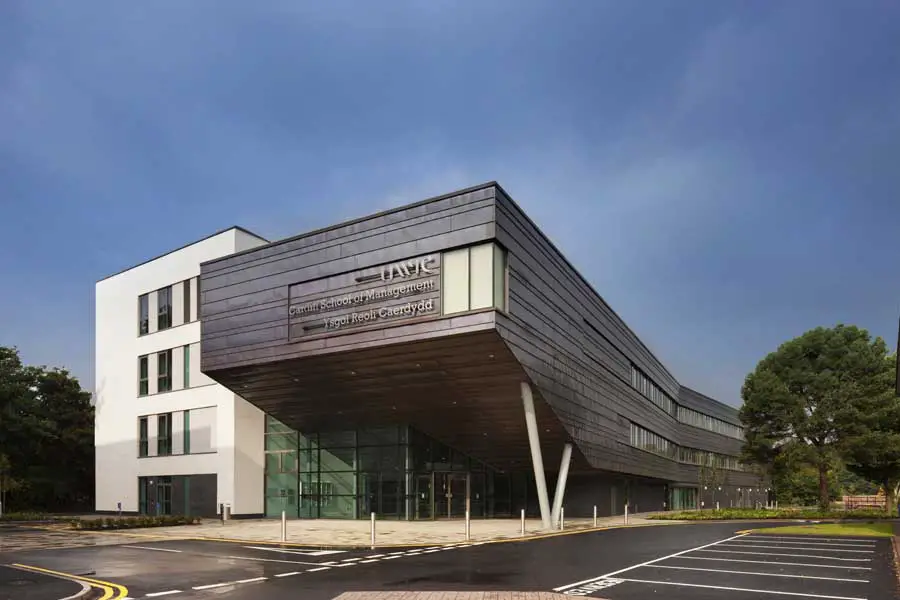
Wales needs to promote the right level of skills
if we want a sustainable, well-functioning, civil service in the future.
(Pic: E-architect)

If we want the best, we're going to have to train and recruit the best.

There should be a formal structure in place to bring through people, who have a clear understanding of their brief, and can specialise within a role. It should also enable those who are struggling within the existing civil service to get extra training.

It could be a combination of the University of Glamorgan's Public Services & Public Management degrees with UWIC's School of Management. Like the suggestion in The Collective Entrepreneur that there should be a "Masters of Social Business Administration", anyone with ambitions of getting high up the ladder in the civil service should be expected to have a "Masters of Public Administration." It should be extremely challenging and include:


  • A firm grounding in economics and project management - as good as you would expect for a private business.
  • Marketing, accountancy and presentation
  • A firm grounding in Welsh politics, devolution in the UK and contemporary Welsh law
  • Specialised modules covering areas such as planning, health & education
  • Hands-on experience/shadowing existing civil service personnel across the Welsh public sector
  • Individual projects based on possible past and future scenarios, for example - marketing a Welsh town or city to host a major sporting event, handling a coalition between two ideologically opposed parties, the devolution on extra powers to the Assembly and the use of EU funding in infrastructure projects.

There's no shame in bringing people in "from the outside" if they stand out. It shouldn't start and stop at the UK though. I'm sure there are examples in America of people turning around cities or states, similarly parts of mainland Europe. The Welsh Government has partially gone down this route with the "sector panels" in business, stemming from the Economic Renewal Report. That's fine, but it has to produce results.

If we improve the quality of the civil service, it'll have wider impacts. For nationalists, it would improve the civil scaffolding needed for "nation building". For those on the right, it could lead to a better economic understanding within the civil service - hopefully improving investment and other economic functions overtime. For all parties - but in particular Labour - it could lead to improved performance in essential public services, hopefully opening the door to more innovation, better management and leadership from the top.

None of that would be guaranteed of course.