This site is no longer updated

Please use the links in the sidebar to visit the new sites!

Thursday, 30 October 2014

NHS Wales : The point-scoring has to stop

Playing political football with the Welsh NHS is likely to be as damaging as the political
football which has led to topics like immigration becoming "third rail" issues.
(Pic : reddit.com)
I wish politics was based on the strength of arguments and how good ideas are, debated rationally in language everyone can understand. That's the "Premier League of Politics". Unfortunately, we're stuck with the "Conference of Politics" in the UK, and there's been no better display of political semi-professionalism than the Cardiff-London spat over the Welsh NHS.

The content of the Daily Mail series is nothing we haven't heard before, but as it's dragged on-off for close to a fortnight - it looks like Y Byd ar Bedwar are going to come back to it again next week -  I suppose I've got no choice but to address it as well.

First off – as I'm sure you all realised - this was an attempt by the Daily Mail to embarrass Ed Miliband by flagging up the perceived incompetence of the UK's only ruling Labour administration.


Ed Miliband typifies the career politicians that have caused such a disillusionment with politics in the first place. He's been sheltered from the realities of everyday life and knows nothing but politics as he was born into it. The thought of him walking through the door of Number 10 as Prime Minister next May fills me with a sense of dread, and I don't need the Daily Mail to paint me a picture.


Unfortunately, the Welsh Government did something everyone on the internet should know not to do : they fed the trolls. W
hy the Welsh Government should even care about what happens next May when they have so many immediate problems of their own is something you'll have to ask them. I believe Johann Lamont provided the answer last week; something to do with "branch parties".


I never thought I'd ever say this, but I have to take my hat off to the Daily Mail. Not only was this a visiting Ivy League professorship in trolling, but the Daily Mail have done a better job of getting straight answers on health out of the Welsh Government than 30 opposition AMs have during the whole Fourth Assembly.

The soundbites from Cathays Park and Labour AMs have sounded North Korean, which tells me the Mail hit a nerve.

Why?

It's a PR disaster. The Daily Mail is widely-read across the whole of the UK and the Welsh Government know this looks bad. That's because their overall record on health isn't just bad compared to the rest of the UK, it's f**king atrocious. Because this row was was played out on a UK stage - where the Welsh Government and Assembly have no leverage - it makes it different to past rows.

The Welsh Government live in a comfortable "big fish, small pond" bubble here where they often don't have to answer questions properly, can bat away scrutiny by hiding behind rules/process and are confident of being in power forever.
If Labour were running England or Scotland in the same way they're running Wales though, they would've been booted out of office in a landslide after a single term.


They're not used to the kind of high-profile sustained attack they endured from the Mail. This was a smear from the big boys and girls. The Fleet Street titles would utterly break most AMs if they did this consistently, making even the most strongly-worded Western Mail editorial look like a brawl between George from Rainbow and Teddy Ruxpin in comparison.


Having said that, while there are things we can blame them for and should punish them for at the ballot box, there are plenty of things we can't blame them for.

The Welsh Government aren't going around telling people to stuff their own and their children's faces with junk food, work longer hours than is sensible, drink and smoke to excess, get no exercise, ignore the needs of our elderly neighbours and relatives, stigmatise people with mental illnesses, turn up to A&E departments with a stubbed toe or after a drunken fight, or hold up ambulances because we don't know how to drive or park. It's not their fault we have a legacy of industrial disease or disproportionate numbers of older people either.

The under-performance is relative not absolute. The Welsh NHS is nowhere near as good as it could be, and is being mismanaged. However, in the face of so many (mostly self-inflicted) challenges, the Welsh NHS remains one of the finest health systems in the world, and I believe figures showing satisfaction (but not delight) with NHS services in Wales will stand up.

Only an over-promoted cretin with absolutely no sense of perspective could describe the Welsh NHS as "second class" with a straight face.

The Tories - and their little helpers like Danny Alexander - are single-minded, borderline autistic accountants reducing everything to a cost and a price. That includes me and you. They see public services as lines on a balance sheet. Too much red is bad, even if it makes a difference to peoples lives; while too much black means it's either better off in the private sector's hands or can be cut to the bone.

The Coalition's morbid obsession with the Welsh NHS comes across like a rubbernecking driver who's just passed a pile-up, hoping for as much bloodied asphalt as possible so they can tell exaggerated stories to the people back home and feel more alive. That doesn't mean they're always wrong.

Waiting times are longer in Wales. We don't have access to the same cancer drugs as patients in England. Large numbers of Welsh patients receive treatment in England (for geographical reasons, mainly). We really do have a recruitment crisis. Morale amongst NHS workers is through the floor. An ambulance is likely to take significantly longer to reach you in Wales compared to elsewhere in the UK. Meanwhile, care standards in some Welsh hospitals have been roundly criticised and the NHS complaints system is an utter shambles.

Have the Welsh Government taken steps to improve these things? Sort of.

Is it working? No, not urgently enough. Labour in Wales never treat problems with the seriousness they deserve, instead chucking money at issues to a point where the Welsh NHS is becoming a fiscal black hole. They also commission numerous low-level, over-specific investigations (like Trusted to Care) which result in reports that recommend sticking plaster solutions.

Sometimes all you need to do is address problems as they arise, but there's never been a comprehensive review of the Welsh NHS - from top to bottom - that addresses wider systemic challenges and forces the Welsh Government into action.

I don't believe that should be an "inquiry", because it's too quasi-judicial and implies there's someone or something to blame.

The OECD have been appointed to carry out an independent investigation comparing the UK's health systems, and the Welsh Government should co-operate fully. If that means the results are published at a time that inconveniences Ed Miliband and the Labour Party - hard lines. They shouldn't play politics with our health and well-being.

"We have an alternative!" I hear you cry.

I'll give the Welsh Lib Dems and Plaid Cymru credit for restraining themselves and coming up with their own ideas instead of just joining in the game of British Bulldog. Kirsty Williams has a Bill coming soon on minimum nursing levels and her party have called for a Williams-style Commission for the NHS; while Plaid want to integrate health and social care and address recruitment through their proposed tax on sugary drinks. Those are things for debate in 2016, not 2015.

During this row, however, both parties pretended to be above the Tory-Labour mudslinging while in the past they've often pressed for similar answers to similar questions using similar language. It hints at an inconsistency.

The Daily Mail is a Viz for Hyacinth Buckets, the hard of thinking and the highly-strung. But I'm willing to bet if it were the Western Mail, Independent or The Guardian slanging the Welsh Government's record along the same lines, the Lib Dems and Plaid would be marching down from the moral high ground singing a different tune.

The Greens will offer something that sounds high-minded but is incredibly impractical; while I'd imagine UKIP's vision for the NHS – if they even have a coherent idea between them in Wales – will be straight out of a Carry On film.

We can take a few things from this spat :

  1. The Scots made a humongous mistake in September.
  2. The popular press still have an important (Post-Leveson) role in holding governments to account.
  3. AMs are getting a good taste of what "getting more coverage in the UK media" will look like (and they should perhaps shift their focus back to coverage in the "nicer" Welsh media as a result).
  4. The last thing we need in Wales is to be dragged down to Westminster's level.
When you unnecessarily emotionalise a incredibly complex issue you tribalise the debate. It'll turn the Welsh NHS into a "no go area", handing "ownership" of the issue to those on the extremes, and resulting in discussions which resemble a pub car park fight - like immigration often does.

We deserve better than that, and we've been let down by the media and our politicians who keep spinning issues to such an extent that they barely resemble reality.


I realise this is the standard of debate we're used to from Westminster and the sorts of arguments we've come to expect from the Welsh Labour Government, but it's making it all the more tempting to give next May's election a miss altogether, and I doubt I'm the only one.


Thursday, 23 October 2014

Hart Bypass returns to the Assembly

The issue of the Newport bypass has returned to the Senedd, and the
Environment Committee had a few choice words for Edwina Hart and the CBI.
(Pic : Wales Online)


It's back again....

Yesterday, the National Assembly debated the Environment Committee report into the proposed M4 bypass of Newport (Newport M4 : The Committee Strikes Back [pdf]) and the Welsh Government's response (M4 Newport – Edwina's Response [pdf]).

The Senedd's Heart to Hart

Committee Chair, Alun Ffred Jones AM (Plaid, Arfon), started by saying this project was, "the biggest decision the Welsh Government will take". The Committee haven't drawn any conclusions on merits of particular options, but serious, unanswered questions remained on whether the consultation process met strategic EU directives.

Alun said one issue "not given due attention" was the impact of electrification of the south Wales mainline and the South Wales Metro. The Committee believe these proposals weren't taken into account adequately when considering future travel patterns. He said the total costs of the bypass remain unclear, and funding sources were, "shrouded in uncertainty". He concluded that on basis of current information, the long-term value for money case is yet to be made.

Mick Antoniw AM (Lab, Pontypridd) said the traffic figures from the UK Department of Transport (DfT)– which formed a foundation for the case for the bypass by projecting a 20% increase in traffic – was out of date, and that the latest figures have shown a plateau in general M4 traffic. He said the Committee couldn't get further details from DfT. Mick said it was "of some concern" that the CBI – one of the main private sector proponents of the bypass - failed to respond to six requests to give evidence when the Committee were trying to evaluate the business case.


Antoinette Sandbach AM (Con, North Wales) described this as an "extremely important inquiry", echoing concerns that the CBI didn't contribute to the inquiry in written or oral form. She also criticised the Minister, as she was asked several times to give evidence but turned it down. This is in light of previous criticism in chamber on the way this has been handled.

Antoinette said there were "grave concerns" over the consultation process, in particular the lack of distinction between the three options and the exclusion of the Blue Route. She said it was important that the Welsh Government were "above reproach" on this due to international significance of Gwent Levels, and there was a lack of public confidence in way the process was handled. Antoinette said the Minister hasn't been prepared to be "transparent and scrutinised properly" on this, and she doesn't believe the Minister, "has the support of the public for this project".


Llyr Gruffydd AM (Plaid, North Wales) was also disappointed the Minister didn't give evidence on the route options or financing. This meant the Committee was prevented from scrutinising a scheme that has major financial and environmental impacts. He suggested there were "serious problems with statutory decision-making process", which meant the Committee were unable to scrutinise acutal costs.

Llyr believes the financial detail of scheme should be more widely known to ensure scrutiny on the basis of value for money, with the quoted costs having a massive margin of error, standing between £600million and £1billion. He said adopting the black route, "gave the impression to the people of Wales that it was a done deal" when there's a long way to go.

William Powell AM (Lib Dem, Mid & West Wales) said the Assembly's committees perform a key role in scrutinising policy, which is made all the more difficult "when government doesn't participate on their (the Committee's) terms". William also criticised CBI, saying you can read their op-eds in the Western Mail but they were unwilling to give evidence to the Assembly itself.

He said it was "beyond question" that the M4 through Newport isn't fit for purpose, but all options need to be considered. He said it was a shame the answers came so belated from the Minister. However, he said the Blue Route is as open to debate as the Black Route and we should, "let the evidence speak for itself". Williams also stressed the need for other solutions, emphasising that people need to get people out of cars and onto integrated public transport.

Julie Morgan AM (Lab, Cardiff North) said it was an "annoying and frustrating experience" dealing with the report due to CBI's absence, which "showed disrespect to the Committee". She welcomed the future detailed environmental impact study and the fact no construction will take place until after the 2016 elections, which gives the Assembly "time to have debates on all the options".

She said every effort should be made to avoid the "disastrous impact" on the environment, but they also need clarification on how much of the borrowing will be spent on the bypass. She also said comments (from the First Minister - clip of the FMQs exchange on 30th September 2014) about traffic lights on the Blue Route were irrelevant as they would be replaced by grade separated junctions.

Russell George AM (Con, Montgomery) was....surprise,surprise....disappointed the CBI didn't give evidence. He added his view that the Welsh Government ignored the environmental concerns and that any Newport bypass would have a knock-on impact on infrastructure projects in the rest of Wales – picking out improvements to the A55 and A40 in particular. Russell accused the Welsh Government of failing to look at Welsh transport infrastructure "in the round".

Former Environment Minister, John Griffiths AM (Lab, Newport East), said the Gwent Levels are unique, and that their importance and historical significance are "beyond doubt". Although he's now one of the more high profile opponents to the bypass, he said he didn't support the Blue Route either due to the possible air pollution and noise problems an urban expressway would cause. John would prefer "carrot and stick" public transport solutions.

He also raised the valid point that there's a new environment since the Scottish referendum, offering veiled criticism of the UK Government's caveat that early access to borrowing be dependent on funding a bypass.

In her response, the Minister for Economy & Transport, Edwina Hart (Lab, Gower), said her letter addressed the Committee's concerns. She regretted not giving evidence in person, but the statutory decision-making process is "very strict" and she repeated her defence that she couldn't give evidence until after the consultation. She agreed with William Powell that this process may need "looking at".

She confirmed the Welsh Government have submitted their defence to Friends of the Earth Cymru's legal challenge and they're waiting for the court's decision. Edwina also confirmed that no detailed design work will be until after a full environmental impact assessment, and she expects more detailed financial information to be provided at any future public inquiry (which will take place in late 2016/early 2017).

Unsurprisingly, she said it would be inappropriate for her to comment further on other matters while these processes were ongoing.

Concluding the debate, Alun Ffred Jones said he was disappointed the government "always has a reason for not giving details or answering basic questions", and he was "none the wiser" after the Minister's response.

He said the Committee weren't opposed to finding a solution to the Newport problems; but it has to be the right decision after all reasonable options have been considered, and because it would have a knock-on impact to infrastructure spending. The Committee simply wanted to, "ask pertinent questions about the process and not discuss the merits of the routes".

He therefore upheld the Committee's recommendation that the Welsh Government should restart the consultation process with all of the route options included.

Total Eclipse of the Hart
The Black Route isn't quite a done deal yet.
(Pic : M4 Newport website/Me)

Some very large obstacles were placed in the way of the Environment Committee in the process of this inquiry.

Firstly, Edwina Hart and the CBI refusing to give evidence; secondly, Plaid Cymru's predetermined support for the Blue Route which threw everything off balance; and thirdly, the sudden/curt announcement from the Minister in July that the Black Route has been selected.


The Blue Route isn't quite dead yet, but you get the impression the Minister is doing her best to kill it off. It seems the only way you can get comprehensive responses from the Welsh Government nowadays is a Daily Mail headline.

Having said that, the media – maybe myself included – might have given the impression that the Black Route is (as Llyr Gruffydd pointed out) "a done deal". That's wrong. All that's happened is the principle of a complete M4 bypass of Newport that follows the black route has been agreed, but the design could change significantly between now and the start of construction, depending on the outcome of the further environmental reports and any future public inquiry.

The problems facing the Black Route continue to mount. I wouldn't at all be surprised if the environmental impact report will make grim reading and lead to serious questioning of the Welsh Government's supposed commitment to *groan* "sustainable development".

Secondly, there seems to be growing opposition amongst Labour backbenchers to the project – notably from John Griffiths and Alun Davies AM (Lab, Blaenau Gwent), who are two former ministers with responsibility for the environment. You can probably include Julie Morgan and Jenny Rathbone AM (Lab, Cardiff Central) in there too, while Mick Antoniw has reservations by the sound of it.

Thirdly, as the South Wales Argus have covered, Newport Docks is going to have a whacking great big bridge built over it. I'd like to think that someone would've considered whether that proposal might have an impact on port operations. Newport Docks is Wales' most important cargo port and according to ITV Wales supports some 3,000 jobs.

Last but not least, as you might've noticed, the CBI were rightfully given a kicking from all quarters. When you consider they're often mouthing off to the press about the state of Wales, the fact they couldn't be bothered to give evidence on something they consider so vital - so important that it stands to become the single largest capital investment a Welsh Government will ever make - was nothing less than an insult to all of us. Up yours, Digby.

I certainly respect the work the Assembly's committees do, and it's not as if the CBI would ever consider snubbing a Westminster equivalent.


Wednesday, 22 October 2014

Building a better Wales from the bottom up

Leanne Wood's "Greenprint" idea has been developed further into
 wider reforms of how our communities and neighbourhoods tick.
(Pic : Rhondda Plaid Cymru)

Earlier this week, Plaid Cymru unveiled the latest in a series of discussion and policy papers, this time a comprehensive report (pdf), which was jointly launched by Plaid Cymru's Shadow Cabinet member for the Environment & Energy, Llyr Gruffydd AM (Plaid, North Wales) and Arfon MP, Hywel Williams.

It addresses, and provides an alternative to, the Future Generations Bill, parts of the Planning Bill and maybe even some aspects of the Williams Commission and "The Greenprint".

You could say it's Plaid Cymru's version of the "Big Society".

The Rationale

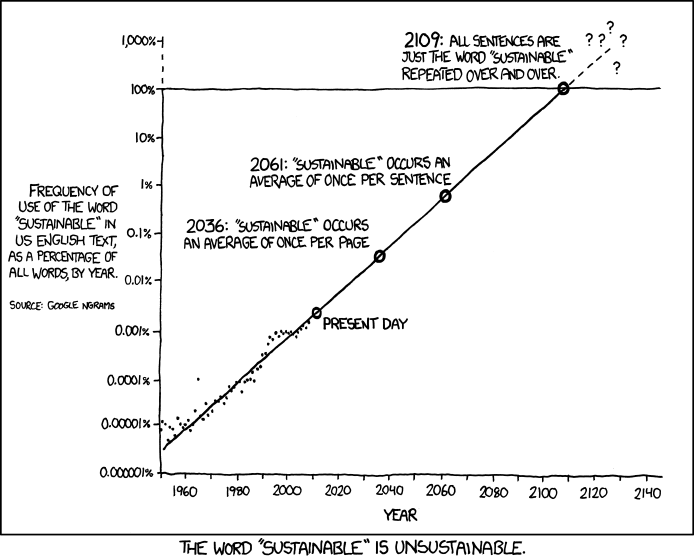
As regular readers will know, I'm not a fan of the word "sustainable" (in all its guises) and I'm going to do my best to avoid using it from here on in.

The broad aim of the policy paper is to draft new ways for our communities to work; but instead of being a top-down exercise where a central body or authority prescribes what communities should do, Plaid Cymru would much rather (in some aspects) it was the other way around, with communities taking more control over their own direction, whilst retaining a collective spirit – what Plaid have long called "decentralised socialism".

There are a number of challenges – depletion of resources & climate change, demographic change, increasing demand on public services. But there are also opportunities, like digital technologies, participatory democracy and a Basque-style collective economics, which can help meet these challenges in innovative ways.

The paper is split into three key themes : "empowering communities", alternative forms of investment and supporting infrastructure development.

The Community

Plaid advocate stronger community councils and
new forms of democratic participation.
(Pic : via todayinscocialsciences.blogspot.co.uk)

  • A National Community Development Programme (Connected Communities) which would be based off existing third sector infrastructure and help develop local social networks and co-ordinate local schemes.
  • A Strategy and Integration Unit within the Welsh Government, which would guide longer-term thinking across all government departments and would be directly responsible to the First Minister.
  • A Social Innovation Hub which would bring together people from different sectors and with different experiences to come up with innovative new ideas for public service delivery.
  • A review of at what level powers should reside in local government, including stronger community councils and the introduction of Single Transferable Vote (STV) in local elections.
  • A pilot of participatory democracy – starting with local budgets – and a digital government programme/Digital Wales fund which would encourage the use of new technologies to improve democratic engagement, promote open government and improve public service delivery (there's a related piece on this from the National Assembly blog covering the recent GovCampCymru 2014).

Communities actively supporting each other is a vital part of well-being.

These "active community" projects do work. Plaid give an example of a "time bank" in the Ely area of Cardiff (where people volunteer in exchange for time credits they can "spend" locally) which has made people feel better about themselves, enabled people to get to know each other better and given people the impression that they're actively improving their communities.

Plaid call for a shift in public sector thinking, where the public sector will work with communities instead of imposing decisions on them unilaterally, perhaps even ceding some control too.

This would require a review of what powers should reside where (something the Williams Commission largely looked over). But it would also mean changing how communities are governed, and Plaid propose a limited form of participatory democracy where decisions are made collectively instead of by representatives or officials.

Investment

Plaid would like to shift the focus of Communities First from
whole communities towards individual families.
(Pic : BBC Wales)

  • A Prevention Fund to ensure citizens don't go on to need more complicated and expensive public services.
  • Promotion of alternative forms of finance, and the creation of a Community Investment Fund to underwrite or match fund alternative investments.
  • Use public sector pension schemes to support long-term local investments (in particular housing), with a tax-relief scheme for social enterprises - if the powers are devolved (see : The Collective Entrepreneur).
  • A Welsh "Green Book" which will "put sustainable development at its core".
  • Legislative measures to improve the amount of domestic public procurement, with the aim of 75% of public contracts going to Welsh companies (currently 52%) (see : Public Procurement Reform & Plaid's "Plan C")
  • Shift the focus of the £40million Communities First programme from deprived areas to deprived families.

The second theme focused on investment in light of "shrinking public finances". Although the paper says there's a lot happening already, Plaid believe things can go further. Alternative forms of finance which were discussed include crowd-sourcing, community banking/community bonds, credit unions, social impact bonds and the third sector's Community Investment Fund.

They cite the specific example of the Llangattock hydroelectricity scheme where 100 investors raised £270,000 in a co-operative scheme to generate energy, with a return of between 5-8% per year.

Examples were also given of public sector pension schemes being used to invest in the local community. Islington Council invested £20million of its £800million pension fund in housing, while there are talks about pooling the pension funds across all of London's local authorities. The Welsh local government pension scheme controls around £9billion in assets, and Plaid believes this could be used in a similar way.

Most of the rest of the discussion was about financial incentives and alternative business models. The Basque co-operative conglomerate, Mondragon, are brought up again as a model worthy of consideration, while a co-operative investment fund is mooted as a way to tie existing co-ops together in Wales to eventually create something on the same scale.

There's backhanded praise for the Treasury's "Green Book", which is used to "provide guidance to UK Government departments on putting together a robust business case to support policy change". Plaid believe a Welsh equivalent, which would come with a Welsh Treasury, should take into account social and environmental costs and benefits.

Infrastructure

Plaid Cymru would extend the number of developments that wouldn't require planning permission,
and would also like to see a simplified way for communities to financially benefit from developments.
(Pic : hip-consultant.co.uk)

  • Using the reformed/stronger community councils to guide the development of neighbourhood-level infrastructure.
  • Stronger standards on energy efficient and design, as well as mandatory Welsh language impact assessments for infrastructure projects.
  • Simply the planning process and extend permitted development rights (i.e. changes to homes that don't require planning permission).
  • Simplify Section 106 agreements so they're more transparent and create a new system of financial incentives/community benefit schemes.
  • Possible legislative measures to give community bodies a right to purchase disused buildings, probably part of a wider-reaching Infrastructure Bill.

Infrastructure development is often led from "the top", so it was a real challenge to come up with ways in which this could be managed from "the bottom-up". The priorities might be different. An example's given where a community with a lot of older people might prioritise things like public toilets and seating – at relatively low cost – to create "age-friendly neighbourhoods".

Housing was picked out for special focus. At the moment, new housing developments are guided by centralised population estimates, meaning large numbers of houses are often built wherever the land is available with little thought given to how those communities would be planned, or what impact such developments have on the people already living there – including the Welsh language. Survey findings showed that higher-quality developments often endure less opposition. In terms of affordability, I've long supported things like modular/pre-fabricated homes.

Bringing old buildings back into community use was one of the key tenets of the Greenprint, and it returns again. The paper cites an example of community members in Llan Ffestiniog who received assistance to reopen a local pub; while there are other, more high-profile, examples like the Saith Seren in Wrexham.

Bottoms up?

Unfortunately, Welsh politics is a bit tied up at the moment.

The announcement has been overshadowed somewhat, with the Welsh political establishment and media sent into fits of existential despair and near paralysis by an awe-inspiring trolling masterclass from the Daily Mail. The funniest thing about the whole event is that It's not even about the Welsh Government, it's about Ed Miliband.

Anyway, it's nice to be Mr Positive for a change, while the title is in no way a reference to last week's post.

I'm pleased to say this is firmly grounded on Planet Earth, and – once again – there's a lot to like and take from one of these papers. Keep 'em coming.

The biggest omission is detailed costings, and without that information this hits a very big brick wall. That information could easily be provided if Plaid are in a position in government to see this through though, which is perhaps a much harder task.

Another bump in the road could be psychology. People "coming together" is very "jolly hockey sticks", but introverted people like myself (who make up at least a third of the population) are unlikely to be as enthusiastic in the absence of an incentive.

For example, I often find people who try to pester or guilt me into doing something – on a wider level this includes (often self-appointed) "community leaders" and chuggers - incredibly annoying, patronising and draining. So traditional campaigning and community "call to arms" usually don't work with people like me.

Therefore, the widespread use and normalisation of things like "time banking" is critical, and hopefully that would be something Plaid's "Connected Communities" proposal would be able to oversee at a national level.

That's not to fault what's in it. In fact, I agree with most of it in principle and I can't think of much in there I disagree with. I've long supported direct democracy for example (Local Sovereignty II :The Community), and what Plaid propose is a good start – though I believe representative democracy is a hindrance at the lowest level.


They key to this is, as Plaid have said themselves, a "culture shift" in the Welsh public sector and I'd question if they (the public sector) are really brave enough to do some of the things recommended in this report.

Alright, it's not exactly a riveting read, and is so full of public sector buzzwords it makes me want to leave thesauruses around the Assembly estate like those little bibles. However, it's a damned side more intellectually honest than the Future Generations Bill, and the vision is significantly more coherent, practical and innovative.

....and I've only used "sustainable/sustainability" three times, one of which is a direct quote and the other two being myself complaining about it. It appears in the report around 92 times.

Monday, 13 October 2014

Anything to declare?

"Financial interests" and "politicians" in the same sentence is always combustible,
though proposed changes to National Assembly rules will dampen the fires a bit.
Last week, the National Assembly's Standards Committee and Standards Commissioner, Gerard Elias QC, reported back on possible changes to how, when and why Assembly Members report their personal and financial interests (pdf).

A consultation with AMs began in January 2014, and a preliminary report was prepared by the Standards Commissioner in July 2014.

It's said five (of ten) categories of financial/personal interests were of particular concern:
  • Remuneration, Employment, Office, Profession etc.
  • Remuneration for other material benefit
  • Financial Sponsorships
  • Shareholdings
  • Public Bodies

The Committee made 15 recommendations in total, which would mostly result in changes to the National Assembly's Standing Order 2 (pdf, latest version). All changes will need to be approved by the Assembly before coming into force.

Employment status of dependent children

At the moment, AMs need to declare the employment status/job of partners, as well as children aged 16-19 (where applicable). The Standards Commissioner considers the requirement relating to children as "intrusive" as it would drag the personal life of AMs' children into the public domain. Currently, the National Assembly is the only legislature in the UK that requires this information to be formally declared.

There are obvious exceptions to this – like an AM employing their own child, and that's dealt with under a separate set of Standing Orders – but the Committee believes AMs should instead make an oral declaration of a "family interest" of this kind where relevant.

The Committee therefore recommended that the requirement to register the employment status of a dependent child aged over-16 be removed.

Receipt of public funds

A separate registration category for "receipt of public funds" was considered, but rejected as it would be a duplication. The Committee agreed that receipt of public funds (grants etc.) should be registered by AMs, but that clear guidance was needed on what would count as "public funds".

They also agreed that pensions should no longer be considered a registrable form of remuneration.
Assembly Contracts

AMs need to register an interest where any company they, or their immediate family, receive money from (including, presumably, things like shareholder dividends) are tendering for, or has won, a contract to provide services to the National Assembly.

The Committee believe this was unfair, as AMs might not always have knowledge of what companies are bidding for what. So the rules will be changed so AMs only have to register an interest when they know for absolute certainty that a company they're involved with has won a contract or is tendering for one.

Shareholdings

There's a general duty on AMs to register shareholdings they, or their family, hold that are worth more than 1% of the total shares issued by a company. There's a recommendation that share options (shares offered to employees in lieu of/in addition to pay) are included as registrable.

The big concern here relates to so-called "blind trusts" where the beneficiaries have no idea what investments are made or where as control is handed over to independent experts. This is an obvious advantage to politicians, who can gain financially from these schemes without attracting scrutiny, as any decisions would be independent of their political careers or unaffected by their political decisions. The recommendation is that AMs declare any "blind trusts" they hold.

Membership of an Assembly-funded body

The issue here was about clarity, specifically what "membership" means. Not declaring memberships of this sort is a potential criminal offence, so some AMs are registering memberships of organisations like the WRU and National Trust to be on the safe side.

The Commissioner believed it was more appropriate to focus on memberships of organisations where the AM's presence would, in itself, "put them in a position to promote a cause" – this includes being a patron of a charity, memberships of governing bodies, trustee positions and any sort of paid executive or administrative role.

The Committee recommended that Standing Orders be changed to narrowly-define what "membership" means, and require AMs to register "where they knew or ought to have known" about Assembly funding.

Financial Sponsorship

The Electoral Commission already requires elected representatives to declare sponsorship or financial donations, so requiring AMs to register again with the National Assembly was "double declaration" and a needless duplication. The Committee recommended that this "double declaration" be removed, and it's suggested they work with the Wales Office, Electoral Commission and Assembly Commission to get this underway – but it might take some time.

Oral declarations

There are rules already in place setting out when AMs need to make an oral declaration in Assembly proceedings if they, or their family, have a financial interest or would be set to gain financially by any decisions made in the meeting.

The Commissioner proposed changing the wording to ensure AMs declare an interest if they would benefit financially from any decision "to a greater extent than the electorate generally". An example's given where an AM who's a landlord might benefit from decisions made with regard rent regulations.

Dealing with breaches

It's a criminal offence for an AM to take part in Assembly proceedings without declaring personal or financial interests as outlined by Standing Orders – this includes both accidental/delayed omissions and deliberate omissions.

The Commissioner believes relations between AMs and the Assembly Commission would sour if 
"accidental"/"trivial" cases were referred to the the Director of Public Prosecutions (DPP) straight away, as set out in Standing Orders.

It was recommended, therefore, where there's a breach of Standing Order 2, the case first be referred directly to the Standards Commissioner, who would then decide – as an independent adjudicator – whether a case needs to be either referred to the DPP, be subject to code of conduct investigations or dealt with informally.

EXCLUSIVE : FINANCIAL INTERESTS ASSEMBLY MEMBERZZZ

You would've thought having "financial interests" and "Assembly Members" in the same sentence would've got the Western Mail salivating, but this was too boring even for them, and only warranted around 100 words from BBC Wales.

This is an important post, just to underline how strict the rules are so people don't get the impression AMs are routinely "on the take". It takes some accounting gymnastics and whopping big lies to get away with it.

I know you all loves a bit of intrigue and scandal, but the reality is that AMs are well-behaved and understand what they should or shouldn't do here. I can't remember any cases where an AM has come a cropper of these particular rules, and I don't believe there's a threat of that happening either.

Most of the recommendations here seem largely about making things clearer, adding the requirement about declaring receipt of public funds, and you could even say the rules have been relaxed a little bit or simplified. Why would we need to know if an AM's son or daughter is flipping burgers, for example?

It's worth pointing out that the consultation with AMs began before the Alun Davies sacking, and it's just very timely that it covers declaration of financial interests.

I don't believe this vindicates Alun at all (as touched on by National Left).

Although it's absolutely right AMs declare all financial and personal interests, it was the manner by which Alun handled it – some tu quoque political posturing which dragged in the civil service (after being warned not to) - that turned what was a perfectly legitimate point into a scandal.

"Keep cooly cool, boy".

Tuesday, 7 October 2014

Why are Welsh ambulance response times so poor?

The Wales Ambulance Service Trust (WAST) has failed to hit and maintain its response time targets (65% of the most serious [Category A] 999 calls responded to within 8 minutes) for around 24 months in a row.

The latest figures, from August 2014 (pdf), show that 56.9% of Category A calls were responded to within 8 minutes; that rises to 66.8% within 10 minutes and 83% at 15 minutes. That means for 17% (almost 1 in 5) of life-threatening calls in Wales, an ambulance takes near double the target time to reach the patient. Summer is traditionally quiet in terms of demand for ambulance services, so these figures are particularly bad.

Although this is one of those issues which Assembly Members get very hot under the collar about, nobody's ever considered the precise reasons why the ambulance service is missing its targets so consistently. Opposition AMs huff and puff over the figures and turn it into a political football, while ministers almost never give straight answers.

Most of this is going to be guesswork and inductive reasoning with very little hard evidence to back it up. But I do believe that – concerns from the McClelland Review about management aside - some of the reasons might not be sexy enough for politicians to score points off each other in the Senedd chamber or press, but do make sense.

Where are the problems?

Before considering why response times are poor, it's worth looking at performances at a local level to see if there are any patterns we can draw conclusions from. As you can see from the map below, response times vary wildly across Wales.

Ambulance response times by local authority - August 2014
(Pic : StatsWales/Welsh Government)

Four local authorities actually hit or exceeded the target – Swansea (65.1%), Conwy (65.9%), Bridgend (69.3%) and Wrexham (70.3%). Neath Port Talbot (62.8%) and Denbighshire (63%) came close. So despite criticism elsewhere, it looks like ambulance response times in the Abertawe Bro Morgannwg local health board are significantly better than the rest of Wales.

In terms of poor responses, there are two distinct clusters.

The first cluster are rural local authorities, with Monmouthshire (50%), Anglesey (51.5%) Powys (53.3%), Vale of Glamorgan (53.5%) and Carmarthenshire (54.7%) standing out, with the likes of Pembrokeshire, Ceredigion and Gwynedd not doing much better.

The second cluster consists of Cardiff (58.1%) and the south Wales valleys. Response times in Caerphilly (44.8%), Rhondda Cynon Taf (46.4%), Torfaen (47.6%), Merthyr Tydfil (51.3%) and Blaenau Gwent (52.8%) are much, much worse than the rest of Wales. The difference between bordering local authorities like Bridgend and RCT is stark, though – as I'll come to – there may be unorthodox explanations as to why this is the case.

What might the problems be?

These aren't exactly ambulance friendly street layouts.
(Pic : Wales Online)
The quality of the road network - The poorest response times are in the south Wales valleys where there are a lot of very narrow side streets consisting of tightly-packed terraced houses, usually on steep inclines. There's often very little room to park if you live on these roads, let alone enough room to attempt to get an ambulance up them at high speed.

Local authorities which have the better response times, like Swansea, Bridgend and Wrexham, are quite car-friendly. Swansea city itself, for example, has been designed with road traffic in mind since the Luftwaffe flattened it, while Bridgend and Wrexham have large housing estates served by high-quality spine roads and dual carriageways.

So as much as AMs might want to pin the blame on the government or the WAST's management team, it could be equally down to dodgy junctions, potholes, poor car parking, ill-considered one-way systems or unnecessary sets of traffic lights and speed humps.

Perhaps consideration should be given to the creation of designated "ambulance-friendly routes" in the valleys that are cleared of any and all obstructions where practical.

Rurality and the distance travelled to 999 calls – This is something you can easily infer from the map, and it's so blindingly obvious even the harshest critic of the Welsh NHS will have to accept it as an unavoidable hazard.

The further you are from a hospital or ambulance station, the longer the ambulance will take to reach you – simple. The problem will be more acute in north west, mid and west Wales (as well as some south Walian local authorities like Monmouthshire and Vale of Glamorgan). The catchment areas for Ysbyty Gwynedd and Bronglais Hospital, for example, are huge, and often cover difficult terrain.

Farming and fishing are probably the most dangerous jobs around. Workers in these sectors are at higher risk of suffering serious accidents, and these jobs are also more densely concentrated in these areas.

Also, people who move to idyllic-looking farmhouses to retire don't factor in that – as they get older and inevitably get sicker too - ambulances might struggle to reach them at the end of gravel tracks off a picturesque winding B-road in the Welsh Desert. And air ambulances might be tied up elsewhere.

Ambulances are too heavy and too slow
- In 2013, around £9.5million was spent upgrading the Welsh ambulance fleet. Although they now carry very high-tech (and heavy) equipment – before factoring in the weight of paramedics themselves and patients – the ambulances are still glorified transit vans that can't negotiate corners particularly well and accelerate slowly. Over longer distances this will add up.

If you want an analogy, it's a bit like refurbishing the interior of a train or bus to business class standards, but the bus/train itself remaining a clapped out diesel from the 1970s.

There's little the Welsh Government and Ambulance Trust can do here, and the onus is on ambulance manufacturers to create faster, lighter vehicles. Perhaps there should be more use of motorbikes and cars for first responders, while using larger ambulances solely to transport patients to hospital and stabilise complicated conditions.

There's at least 8 ambulances I can see that can't go on another urgent 999 call.
(Pic : Morriston Hospital via cardifflocalguide.co.uk)
Delayed transfers at Accident & Emergency departments – Now this is something you really can criticise the Welsh Government for. It's their job to ensure there are enough medical staff, and that hospitals are well-resourced enough, to see whoever comes through the door.

Every minute an ambulance spends outside A&E departments waiting to discharge patients is a minute that ambulance is out of action. There are acute problems in Cardiff in particular, and it occasionally happens at other hospitals, such as Morriston Hospital in Swansea and Princess of Wales Hospital, Bridgend.

With the forthcoming centralisation of specialist services in south Wales, I'll actually expect this problem to get worse, as treating capacity hasn't been dealt with. They might stand a chance of being seen by staff quicker, but as far as I can tell there'll be the same number of beds to treat them.

This is the main reason why, in my opinion, you end up hearing of extreme cases of people waiting hours for an ambulance to show up. It's simply because all the ambulances are tied up outside A&E departments waiting to offload patients.

Compassion fatigue & "false alarms" - "Compassion fatigue" is a mild form of post traumatic stress disorder that affects people who deal with harrowing things every single day (like paramedics and A&E doctors), and it even affects the general public when we're bombarded with bad news or sob stories. We eventually get used to it to such an extent we don't care anymore. How many times have we been told the Wales Ambulance Trust are over-worked, under-staffed and poorly-managed?

For medical staff this becomes cynicism and a lack of genuine compassion for patients. This in turn may lead to complacency in care and poor morale. I doubt you would ever get paramedics to admit it because the trade unions will go ballistic and on the defensive. But I'm willing to bet on some calls they'll let standards slip because they've had enough crap for one day.

Then there are people calling for an ambulance when they don't really need one, tying up more resources. It's easy to criticise people who do this as time-wasters or hypochondriacs, but it's often better to be safe than sorry. Welsh Government public information campaigns on this have clearly failed.

The McClelland review recommended that the 8 minute target be ditched.
- something AMs have conveniently forgotten.
(Pic : Telegraph and Argus)
The targets are too ambitious – Not all Category A 999 calls need to be responded to within 8 minutes. With improved medicines and treatments, things that would've once killed people – like heart attacks and strokes – are now increasingly survivable, even if a patient doesn't reach hospital in the "golden hour" (which some academics and medics have called a "myth").

That's no reason to be complacent, and there is evidence that suggests the sooner an ambulance reaches a patient who's suffering a heart attack, the greater the chance of survival (Pell, Sirel, Marsden et. al 2001).

However, just to point out how silly the 8 minute target is (as pointed out in the McClelland review), if an ambulance reaches a patient within 8 minutes and they die, they've met the target. If they reach them in 8 minutes 30 seconds and save the patient's life, they've missed the target. That's ridiculous, and no wonder paramedics must hate their job (Price, 2006) when those are the twisted standards they're held to by managers and politicians.

Echoing what was said in the McClelland review, the target should be based around the patient's outcome (for argument's sake, all Category A patients should be admitted to hospital within 40 minutes of the 999 call with a chance of survival), not a stopwatch.

What are the Welsh Government doing about it?
                                  

You've got to say that if these are the sorts of problems facing the ambulance service, then there's very little the Welsh Government can do other than implementing some of the recommendations from the McClelland report and keeping their fingers crossed.

Ditching the 8 minute target – however rational it would be - would be an absolute god-send to opposition AMs. It would probably send the Tories in particular into screams of ecstasy on the Senedd benches, as it'll be on every election leaflet in 2016, accompanied by a photo of an elderly actor/actress having a "chest-clutcher" on the stairs. So it's unlikely to happen due to politics, even if shifting the goal posts is in vogue at Cathays Park.

However, in the last fortnight or so, the new Deputy Minister for Health, Vaughan Gething (Lab, Cardiff S. & Penarth), made a major announcement on this.

The Welsh Government have earmarked around £5million towards the creation of an Emergency Medical Retrieval and Transfer System (EMTRS) service. In English, that means an expansion (you could even say a part-nationalisation) of the Wales Air Ambulance - dubbed "Flying Doctors" after the cheesy 1980s Australian drama, though it's probably more comparable to M.A.S.H. It'll operate for 12 hours a day, and will be based in Swansea and Welshpool.

The idea's that trained doctors and consultants will be airlifted to serious incidents with equipment so patients can be treated at the scene instead of waiting for an ambulance to take them to hospital to be treated. If it works, it's said 95% of the population will now be within 30 minutes of doctor-led emergency care.

The EMTRS is probably an act of desperation, but as an idea it's incredibly sensible, practical and I'm surprised it hasn't been attempted a lot sooner.

Thursday, 2 October 2014

Senedd on the Box

The National Assembly recently debated the future of public service
broadcasting, with a possible Ofcom review in mind. But did AMs
fundamentally misunderstand what PSB is?
(Pic : digitalspy.co.uk)
Despite saying they don't want to discuss non-devolved matters, on Tuesday the Welsh Government held a debate on the importance of public service broadcasting/broadcasters (PSB).

Regular readers will know I covered the issue of broadcasting (both within the context of the Silk Commission and independence) around this time last year (Broadcasting Wales VI : Public Broadcasting & Media Regulation). Most of the debate went over things I covered then, as well as previous Assembly committee inquiries and debates.

It's worth returning to this because we have a new deputy minister – who crucially has journalistic experience – in charge of (what can laughably be called) the Welsh Government's "media and broadcasting policy".

It looks like Senedd TV have fixed the autoplay problem too – see, I do have leverage – so I can use it how I wanted to use it, which is all the more timely considering the topic.

Public Service Borecasting


The new Deputy Minister for Culture, Sport and Tourism, Ken Skates (Lab, Clwyd South), started off by saying PSBs play an increasingly important role in Welsh life, and support the creative industries, in light of a "weak print media". He said we're no longer constrained by technological factors and are only held back by ambition. Although broadcasting and media isn't devolved, he said the Welsh Government does have "influence".

Ken said broadcasting aimed at Welsh audiences "has been under considerable pressure", with a 23% reduction in first-run programming – mostly in English. Therefore, Welsh needs have to be considered in any future Ofcom review of PSB. Ken underlined the importance of S4C having sufficient funding and editorial independence, and the Welsh Government are concerned that the funding picture for 2016-17 is unclear in terms of contributions from the UK Department for Culture, Media & Sport (DCMS).

Ken said he expects the Welsh Government to be "fully involved" in the renewal of the BBC's royal charter, and the charter should ensure that programming in both English and Welsh receives sufficient funding. On ITV, he said the Welsh Government welcomed the creation of a Welsh Channel 3 licence, but regretted that the terms of the licence weren't extended beyond the current requirements.


Peter Black AM (Lib Dem, South Wales West) said PSB should be "protected and developed in a devolved Wales as part of a devolved settlement" that falls short of full devolution of broadcasting due to the complicated financial and technical arrangements. He echoed what was said about BBC and S4C having the funding to continue to provide Welsh language programming and that S4C maintains editorial independence.

Further on, he pointed out the importance of community radio stations – which was picked up in an Assembly media inquiry. Peter said licencing requirements should be based on local needs, not the current system that applies across the whole UK. He also said that Wales was "crying out for more political coverage" and reiterated his support for a Welsh version of Newsnight, and for the Assembly to subject broadcasters themselves to scrutiny.


Paul Davies AM (Con, Preseli Pembs.) said broadcasters should reflect "the cultural, social and political identity that is unique to Wales", calling for the Welsh Government to market Wales as a place to produce high-quality programmes, and called for a stronger Welsh presence in Ofcom to ensure challenges specific to Wales are dealt with – like those related to community radio licencing.

However, he said the Conservatives are opposed to the devolution of radio licensing because of the costs involved – though they weren't opposed to it in principle. Paul emphasised that any changes to PSB arrangements should avoid creating more bureaucracy, though he appeared to be open-minded on whether S4C/Welsh-language broadcasting should be devolved, saying that if it were, then similar statutory commitments to those currently used needed to be put in place.


Bethan Jenkins AM's (Plaid, South Wales West) response started with disappointment that responsibility for culture had been "demoted" to a deputy ministerial position, believing the role's importance meant it should've retained a full cabinet post. Plaid want broadcasting devolved, and she flagged up Silk II's recommendations on broadcasting, which includes some representation on BBC boards and contributions to S4C's finance.

Bethan believes the Assembly is better placed to understand the relevance of broadcasting to Wales, and that devolving broadcasting would have a "practical purpose" because Welsh broadcasting is "threatened by a number of factors" – like cuts to S4C by DCMS. She repeated what the Llywydd has said about a "democratic deficit" developing as a result of "insufficient outside scrutiny of the National Assembly and Welsh Government".

As UK radio broadcasters centralise and syndicate their programming from London for commercial reasons, this has impacted Welsh radio stations. Bethan said bodies like Ofcom should've done more to prevent "service downgrades" to Welsh radio, exemplifying the takeover of Real Radio by Global (there've been Competition Commission rulings on this too – more here – which would've also affected things, but Ofcom wouldn't really have been able to do anything about it).

She finished by saying Wales-produced programmes like Hinterland "shouldn't be a one-off" and programmes should be made across Wales to better reflect Welsh life.

Alun Davies AM (Lab, Blaenau Gwent) spoke well and at length raising many key points. He said since the last Ofcom review of PSB, we've seen digital switchover, and a "destructive response by the UK Government towards S4C" which he describes as, "the most ruthless bullying of a broadcaster I've witnessed in Western Europe in my life".

He made the key point that technology has undergone a transformation and the new media has grown, meaning people's viewing and consumption habits have changed. Despite this, he says "linear broadcasting" (fixed-schedule programming) remains "remarkably resilient" – though services like Netflix and Youtube will inevitably become more popular.

Alun said PSB is arguably of more importance to Wales than any other part of the UK due to the weak print media, poor communications between communities and dual-culture. He also said there's been "little appetite to create hyper-local services", but the opportunity remains there. He rounded up by saying we needed "visibility of Wales, and for Wales" that accurately reflects daily lives, more effective news coverage from all broadcasters and a "plurality of news voices".

Aled Roberts AM (Lib Dem, North Wales) said we needed "to raise awareness of Welsh issues", and to be able to do that there needed to be "constitutional change in BBC and Ofcom" to better reflect Wales. He also pointed out that in parts of South Clwyd and Wrexham, only English-based programming from Manchester and Birmingham was available since digital switchover, despite calls for improvements.

Aled reiterated concerns expressed earlier in the debate that the funding situation for S4C post-2016 hasn't been resolved by DCMS, though he believes the current funding arrangement (where S4C receives licence fee payments) was "a good compromise".

Ken Skates finished the debate by saying he hopes the Assembly, "can speak with one voice....on this crucially important area." He said linear broadcasting was here to stay, but a "generation gap was emerging in the way content is consumed", though he's keen for new media opportunities to deliver jobs and growth to Wales.

Any changes to S4C funding arrangements – including its devolution – will need to be conditional on "safeguards on continued overall funding". He said the Welsh Government doesn't believe the devolution of broadcasting would be sensible, but it doesn't mean PSBs should be exclusively accountable to the UK Government.

The unanswered question : "What is 'Welsh' public service broadcasting?"

No this isn't a jibe at AMs....
Shows like Sesame Street, and S4C's Cyw programmes probably
fills the PSB remit a hell of a lot better than most shows like Casualty.
(Pic : Globed)
What this debate lacked (though Alun Davies came closest), is a discussion on what PSB is, and what it should look like in the 21st century. They focused too much on the broadcasters not the broadcasting.

The radio stations which were mentioned, like Real Radio, community radio etc. are independent commercial stations that are prey to market forces - they're not really PSBs despite (or in spite of, even) the licensing requirements set down by Ofcom.

Coincidentally, today marks the 40th anniversary of the launch of Swansea Sound – the first Welsh commercial radio station – and there's a good article from Marc Webber on Click on Wales about this and the state of Welsh radio generally.

When it comes to television, despite mentions of Hinterland/Y Gwyll, Doctor Who and Sherlock during the debate, none of them qualify as PSB programming. They could all, very easily, be provided by commercial broadcasters like Sky or HBO. Shows like this are, ultimately, commercial shows that subsidise the real PSB output through merchandising and rights sales to foreign broadcasters.

Nobody mentioned children's programming, educational programmes, religious output, party political broadcasts, weather forecasts.... News or current affairs programmes barely got a mention - though you can see what I think of Question Time here.

It's the content that matters; not how many people consume it, its commercial appeal or what it does to "reflect Welsh life" (whatever that means in practice).
It's not entirely about whether a channel is publicly-funded or its economic impact either.

It looks like AMs don't understand what PSB is. That's not a criticism, as it's becoming harder for anyone to define PSB as technology and consumption habits change.

A stopgap 21st century model for public service broadcasting is closer than you think.
In fact, it's probably staring at you right in the face. Now.
(Pic : spiceworks.com)

A universal definition would probably be "non-commercial broadcasting" in all accessible formats – stuff that caters for minority, educational or civic interests, and generally "has to" be broadcast because it can't be provided for-profit (as it wouldn't make any money). Hinterland would only qualify because it was originally made in Welsh. The English version is just a bog standard crime drama, which are ten a penny nowadays.

Do you want an example of a 21st Century model for public service broadcasting?

Me.

Laugh all you like, but - even if, unsurprisingly, there was no mention of internet-based PSB during the debate - a large chunk of the stuff here (as well as other blogs and sites like Click on Wales) easily falls under the definition of "public service broadcasting" whether AMs like it or not ("indifferent" being their more likely reaction)....and probably suits the PSB definition more so than Casualty and Doctor-bloody-Who. This post itself is an example.

I've done some work on the abacus, and based on going rates (~£275 per [average]1,000 words per post x 552 posts)....I work it out to be around £150,000 worth of PSB I've provided over the last three and a half years - pennies per click! Bargain!

I believe I'm due some backpay. I'm sure AMs will chip in to cover the costs, because they've been so enthusiastically supportive of my efforts; efforts which have garnered hundreds of thousands of clicks for independently-sourced articles educating and informing people - domestic and global audiences - about their service to Wales. Who do I send the bill to?

What's that? Blogging's not good enough for you, eh!? You're expecting me to do it for free?

It was all for nothing then. "Taken for granted" doesn't begin to describe it. Harrumph.

As I'm never going to see my internet money, it's worth seriously assessing what might happen next. It wouldn't surprise me if broadcasting is "administratively devolved" to Wales in the constitutional fallout resulting from the Scottish referendum result. By "administratively devolved" I mean some aspects like the BBC and S4C will be held to account in Cardiff and/or have specific Welsh representation (like a Welsh BBC Trust). That's a prospect AMs raised themselves.

Regulatory powers over broadcasting won't come. Every party except Plaid Cymru opposed full devolution of broadcasting during the Silk Commission, so there's little appetite for it politically.

I doubt this is the last we've heard of it though.