This site is no longer updated

Please use the links in the sidebar to visit the new sites!

Showing posts with label Basque Country. Show all posts

Wednesday, 22 October 2014

Building a better Wales from the bottom up

Leanne Wood's "Greenprint" idea has been developed further into
 wider reforms of how our communities and neighbourhoods tick.
(Pic : Rhondda Plaid Cymru)

Earlier this week, Plaid Cymru unveiled the latest in a series of discussion and policy papers, this time a comprehensive report (pdf), which was jointly launched by Plaid Cymru's Shadow Cabinet member for the Environment & Energy, Llyr Gruffydd AM (Plaid, North Wales) and Arfon MP, Hywel Williams.

It addresses, and provides an alternative to, the Future Generations Bill, parts of the Planning Bill and maybe even some aspects of the Williams Commission and "The Greenprint".

You could say it's Plaid Cymru's version of the "Big Society".

The Rationale

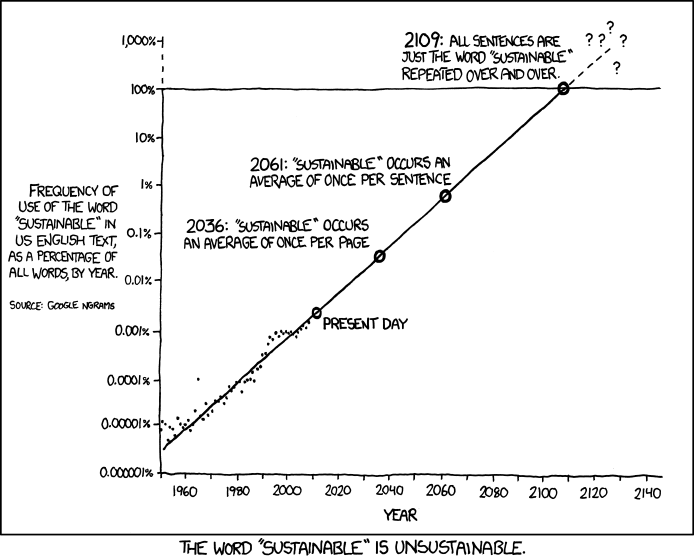
As regular readers will know, I'm not a fan of the word "sustainable" (in all its guises) and I'm going to do my best to avoid using it from here on in.

The broad aim of the policy paper is to draft new ways for our communities to work; but instead of being a top-down exercise where a central body or authority prescribes what communities should do, Plaid Cymru would much rather (in some aspects) it was the other way around, with communities taking more control over their own direction, whilst retaining a collective spirit – what Plaid have long called "decentralised socialism".

There are a number of challenges – depletion of resources & climate change, demographic change, increasing demand on public services. But there are also opportunities, like digital technologies, participatory democracy and a Basque-style collective economics, which can help meet these challenges in innovative ways.

The paper is split into three key themes : "empowering communities", alternative forms of investment and supporting infrastructure development.

The Community

Plaid advocate stronger community councils and
new forms of democratic participation.
(Pic : via todayinscocialsciences.blogspot.co.uk)

  • A National Community Development Programme (Connected Communities) which would be based off existing third sector infrastructure and help develop local social networks and co-ordinate local schemes.
  • A Strategy and Integration Unit within the Welsh Government, which would guide longer-term thinking across all government departments and would be directly responsible to the First Minister.
  • A Social Innovation Hub which would bring together people from different sectors and with different experiences to come up with innovative new ideas for public service delivery.
  • A review of at what level powers should reside in local government, including stronger community councils and the introduction of Single Transferable Vote (STV) in local elections.
  • A pilot of participatory democracy – starting with local budgets – and a digital government programme/Digital Wales fund which would encourage the use of new technologies to improve democratic engagement, promote open government and improve public service delivery (there's a related piece on this from the National Assembly blog covering the recent GovCampCymru 2014).

Communities actively supporting each other is a vital part of well-being.

These "active community" projects do work. Plaid give an example of a "time bank" in the Ely area of Cardiff (where people volunteer in exchange for time credits they can "spend" locally) which has made people feel better about themselves, enabled people to get to know each other better and given people the impression that they're actively improving their communities.

Plaid call for a shift in public sector thinking, where the public sector will work with communities instead of imposing decisions on them unilaterally, perhaps even ceding some control too.

This would require a review of what powers should reside where (something the Williams Commission largely looked over). But it would also mean changing how communities are governed, and Plaid propose a limited form of participatory democracy where decisions are made collectively instead of by representatives or officials.

Investment

Plaid would like to shift the focus of Communities First from
whole communities towards individual families.
(Pic : BBC Wales)

  • A Prevention Fund to ensure citizens don't go on to need more complicated and expensive public services.
  • Promotion of alternative forms of finance, and the creation of a Community Investment Fund to underwrite or match fund alternative investments.
  • Use public sector pension schemes to support long-term local investments (in particular housing), with a tax-relief scheme for social enterprises - if the powers are devolved (see : The Collective Entrepreneur).
  • A Welsh "Green Book" which will "put sustainable development at its core".
  • Legislative measures to improve the amount of domestic public procurement, with the aim of 75% of public contracts going to Welsh companies (currently 52%) (see : Public Procurement Reform & Plaid's "Plan C")
  • Shift the focus of the £40million Communities First programme from deprived areas to deprived families.

The second theme focused on investment in light of "shrinking public finances". Although the paper says there's a lot happening already, Plaid believe things can go further. Alternative forms of finance which were discussed include crowd-sourcing, community banking/community bonds, credit unions, social impact bonds and the third sector's Community Investment Fund.

They cite the specific example of the Llangattock hydroelectricity scheme where 100 investors raised £270,000 in a co-operative scheme to generate energy, with a return of between 5-8% per year.

Examples were also given of public sector pension schemes being used to invest in the local community. Islington Council invested £20million of its £800million pension fund in housing, while there are talks about pooling the pension funds across all of London's local authorities. The Welsh local government pension scheme controls around £9billion in assets, and Plaid believes this could be used in a similar way.

Most of the rest of the discussion was about financial incentives and alternative business models. The Basque co-operative conglomerate, Mondragon, are brought up again as a model worthy of consideration, while a co-operative investment fund is mooted as a way to tie existing co-ops together in Wales to eventually create something on the same scale.

There's backhanded praise for the Treasury's "Green Book", which is used to "provide guidance to UK Government departments on putting together a robust business case to support policy change". Plaid believe a Welsh equivalent, which would come with a Welsh Treasury, should take into account social and environmental costs and benefits.

Infrastructure

Plaid Cymru would extend the number of developments that wouldn't require planning permission,
and would also like to see a simplified way for communities to financially benefit from developments.
(Pic : hip-consultant.co.uk)

  • Using the reformed/stronger community councils to guide the development of neighbourhood-level infrastructure.
  • Stronger standards on energy efficient and design, as well as mandatory Welsh language impact assessments for infrastructure projects.
  • Simply the planning process and extend permitted development rights (i.e. changes to homes that don't require planning permission).
  • Simplify Section 106 agreements so they're more transparent and create a new system of financial incentives/community benefit schemes.
  • Possible legislative measures to give community bodies a right to purchase disused buildings, probably part of a wider-reaching Infrastructure Bill.

Infrastructure development is often led from "the top", so it was a real challenge to come up with ways in which this could be managed from "the bottom-up". The priorities might be different. An example's given where a community with a lot of older people might prioritise things like public toilets and seating – at relatively low cost – to create "age-friendly neighbourhoods".

Housing was picked out for special focus. At the moment, new housing developments are guided by centralised population estimates, meaning large numbers of houses are often built wherever the land is available with little thought given to how those communities would be planned, or what impact such developments have on the people already living there – including the Welsh language. Survey findings showed that higher-quality developments often endure less opposition. In terms of affordability, I've long supported things like modular/pre-fabricated homes.

Bringing old buildings back into community use was one of the key tenets of the Greenprint, and it returns again. The paper cites an example of community members in Llan Ffestiniog who received assistance to reopen a local pub; while there are other, more high-profile, examples like the Saith Seren in Wrexham.

Bottoms up?

Unfortunately, Welsh politics is a bit tied up at the moment.

The announcement has been overshadowed somewhat, with the Welsh political establishment and media sent into fits of existential despair and near paralysis by an awe-inspiring trolling masterclass from the Daily Mail. The funniest thing about the whole event is that It's not even about the Welsh Government, it's about Ed Miliband.

Anyway, it's nice to be Mr Positive for a change, while the title is in no way a reference to last week's post.

I'm pleased to say this is firmly grounded on Planet Earth, and – once again – there's a lot to like and take from one of these papers. Keep 'em coming.

The biggest omission is detailed costings, and without that information this hits a very big brick wall. That information could easily be provided if Plaid are in a position in government to see this through though, which is perhaps a much harder task.

Another bump in the road could be psychology. People "coming together" is very "jolly hockey sticks", but introverted people like myself (who make up at least a third of the population) are unlikely to be as enthusiastic in the absence of an incentive.

For example, I often find people who try to pester or guilt me into doing something – on a wider level this includes (often self-appointed) "community leaders" and chuggers - incredibly annoying, patronising and draining. So traditional campaigning and community "call to arms" usually don't work with people like me.

Therefore, the widespread use and normalisation of things like "time banking" is critical, and hopefully that would be something Plaid's "Connected Communities" proposal would be able to oversee at a national level.

That's not to fault what's in it. In fact, I agree with most of it in principle and I can't think of much in there I disagree with. I've long supported direct democracy for example (Local Sovereignty II :The Community), and what Plaid propose is a good start – though I believe representative democracy is a hindrance at the lowest level.


They key to this is, as Plaid have said themselves, a "culture shift" in the Welsh public sector and I'd question if they (the public sector) are really brave enough to do some of the things recommended in this report.

Alright, it's not exactly a riveting read, and is so full of public sector buzzwords it makes me want to leave thesauruses around the Assembly estate like those little bibles. However, it's a damned side more intellectually honest than the Future Generations Bill, and the vision is significantly more coherent, practical and innovative.

....and I've only used "sustainable/sustainability" three times, one of which is a direct quote and the other two being myself complaining about it. It appears in the report around 92 times.

Thursday, 13 September 2012

Wales : An Economic Profile V - Wales in the global economy

What does the economy look like within Wales? What
is Wales' role in the UK, European and global economies?
(Pic : Wikipedia)

The economic geography of Wales


It's worth taking a look at the overall spread of the economy within Wales, and how it's changed over the years.

Firstly, in terms of average gross (before deductions like taxes) weekly earnings. Only eight local authorities - clustered in three areas - had an average weekly wage above the Welsh average in 2011 (£519.40) and that shows on the map below.

The three clusters are : the M4 corridor, north east Wales and Pembrokeshire. Pembrokeshire is the 2nd highest on the list, and there are obvious reasons why, one being well paid contractor work at the various petrochemical terminals.

Gross weekly earnings by Welsh local authority
(Click to enlarge)

The M4 corridor is another obvious one, though it's surprising that Monmouthshire doesn't seem to get much out of it. Being "close to England" doesn't appear to be that much of a factor – look at Powys, Monmouthshire and Wrexham.

This might suggest that the south Wales economy is more self-contained that commonly believed. Other local authorities have taken advantage of vacant, flat land next to motorway junctions down the years for industry – especially in authorities like Bridgend and Neath Port Talbot. Cardiff's place is obvious, and the Vale of Glamorgan likely acts as an upmarket/attractive overspill for people commuting to Cardiff.

Flintshire is home to many large employers, so its high wages are not a surprise. People from Denbighshire are probably likely to commute there to work, and it's also where Ysbyty Glan Clwyd is. What stands out is that Wrexham doesn't appear to have had any knock-on from this - despite having one of the largest industrial estates in Wales. Average weekly earnings in Wrexham are, in fact, lower than Merthyr Tydfil and Rhondda Cynon Taf (which are both below average themselves, but not spectacularly so).

Pembrokeshire aside, almost all of the rural parts of Wales have average wages below the Welsh, and even south Wales valley, averages. Carmarthenshire was the highest-placed "rural" authority at £495.10, but the likes of Anglesey, Powys and Ceredigion were all below £470. One suggestion might be that higher population densities, equals more demand for services and more attractive locations for businesses – an agglomeration effect.

Where are those businesses? I decided to map the density of the Top 100 largest companies in Wales (from the 2011 Top 300) and the 2011 Fast Growth 50. This is imperfect, as some companies are listed in both and have been counted twice.

Density of largest and fastest
growing companies in Wales
(Click to enlarge)

In this case, the Cardiff-Newport area and Deeside-Wrexham appear to be the main business hubs. But perhaps surprisingly, the south Wales valleys – in particular Rhondda Cynon Taf, Caerphilly and Bridgend – do rather well. Authorities like Swansea did much better on the Fast Growth list than the Top 100 list.

One other thing stood out. More than half of the top 100 and fastest growing companies (92) were based in just six local authorities : Cardiff (32), Flintshire (15), Newport (12), Caerphilly (11), Bridgend (10) and Swansea (10).

You would think this suggests that urban areas outperform rural areas, but that isn't necessarily the case. Gwynedd (7), Powys (6) and Vale of Glamorgan (5) do quite well. The only two local authorities without listings were Ceredigion and Conwy, while urban authorities like Blaenau Gwent and Merthyr Tydfil (both 1) did poorly too.

Wages do seem to be higher in areas where there's a greater density of large businesses. This radiates out into neighbouring authorities – for example, the Vale of Glamorgan has some of the highest wages, but not a spectacular business density, perhaps reliant on Cardiff commuters living there.

Going back to Part IV for a moment, there doesn't seem to be any link/pattern between levels of public sector employment, average wages or "lack of businesses" – it appears to be quite random.

Pembrokeshire only had 2 companies on the business list, pays some of Wales's highest wages, but had one of the lowest public sector employment rates. Cardiff, Bridgend, Swansea and Rhondda Cynon Taf had some of the highest public sector employment rates and businesses densities, but varied in average wages.

Any suggestion that the public sector might affect the private sector's competitiveness in Wales doesn't appear to have any legs.

Then you look at how Welsh production has changed over the last decade or so.

GVA compared to the UK by NUTS3 region 1997-2009
(Click to enlarge)
Only three NUTS3 areas in Wales experienced an increase in GVA relative to the UK between 1997 and 2009 : Cardiff & Vale of Glamorgan (+2.9%), Anglesey (+7.6%) and Gwynedd (a rather modest +0.2%). Only Cardiff & Vale of Glamorgan had a GVA above the UK average average in 2009.

Some NUTS3 areas experienced wild changes over the period. Bridgend & Neath Port Talbot was 82.6% (UK=100) in 1997, this fell to 67.6% (-15%) in 2003, then recovered to 71.3% in 2009 (-11.3% on 1997). Swansea was the opposite - falling, then rising, then falling.

The most dramatic relative decline though, has been in Flintshire and Wrexham, where GVA relative to the UK has fallen from 99% in 1997 to 80.3% in 2009 (-18.7%). Maybe this explains the Wrexham anomaly in wages from earlier.

Wales within the UK

As highlighted above, there is a widening gap in productivity between Wales and the rest of the UK – this was the crux of Plaid Cymru's Offa's Gap report earlier this year.

Relative GVA of the UK's constituent nations 1997-2010
(Click to enlarge)

Welsh GVA per capita has fallen from 78% of the UK average in 1997 to hovering around 74% in 2010. However, this is a much slower slide than in the early 1990s. Northern Ireland also experienced a slightly sharper drop (from 81% to 76%) over this period. England remained relatively stable at around 102%, while Scotland's GVA per capita rose from 96% in 1997 to 99% in 2010 – perhaps boosted by North Sea oil. Most of the UK's GVA growth has been driven by England - in particular Greater London and SE England.

The depressing fact is that GVA per capita in Wales actually grew over this period, from £9,774 in 1997 to £15,145 in 2010. Despite this, Wales is rooted at the bottom of the 12 nations and regions of the UK.

Some people will say all Wales has to do to close the gap is match pace with whatever the rest of the UK is doing. If Wales did so, you would expect us to be much better off, wouldn't you?


Welsh GVA is economic growth matched pace with the UK 1996-2010
(Click to enlarge)

Well, if Wales had matched the UK's average growth rate year-on-year (including the recent downturn) since 1996, Welsh GVA per capita would only be £1,253 higher (+8.3%) than it is currently. Better, but not dramatically so.

Presuming all the other nations and regions remained unchanged, Wales would only move up two places in the "league table" to 10th – above NE England and Northern Ireland and just behind Yorkshire & Humber. Welsh GVA per capita would've stayed static at around 80-81% of the UK average throughout the period.

So even in more favourable economic circumstances within the UK, Wales might never be able to realistically breach that 80-81% "ceiling".

It was once Rhodri Morgan's stated aim to get Welsh GVA to 90% of the UK average. A similar pledge was in the Welsh Conservative manifesto in 2011. So, Rhodri would've missed the target even if Wales matched pace with the rest of the UK. It's lucky we in Wales don't punish politicians for making promises they couldn't possibly keep, isn't it?

Wales is, first of all, starting off from a much lower base - the "precipitous decline" in the 1980s-1990s saw to that. For Wales to close the gap with the rest of the UK, the Welsh economy would not only have to match pace with UK growth, but significantly exceed it. Wales would have to try and close the gap without possessing a large financial service sector, having a sparse population and with a one-size-fits all monetary, tax and fiscal policy.

As I hope these pieces have demonstrated, there's not much fundamentally wrong with the Welsh private sector, but there are gaps that need to be filled. All those things Wales needs are currently based in and around London : great international links, a large financial service sector, excellent and extensive public transport and agglomeration.

To close Offa's Gap, Wales would need to become the fastest growing nation/region in the UK - sustained for at least 30 years. Your guess as to how Wales, in its current state, would be able to do that is as good as mine. Maybe the Welsh economy needs a big game-changing shock to the system. Something really dramatic to kick start it.

Wales in three scenarios : current, matching pace
with the UK and the "Flotilla Effect"
(Click to enlarge)

The Flotilla Effect report suggested, on a population-based model, that if Wales became independent around the same time as the fall of the Berlin Wall, and followed the "right" economic policies:
  • Welsh economic growth would have been between 2.2% and 2.5% per year (compared to the actual 0.9%)
  • Wales would be 39% "wealthier" now than it is currently.

If this were true, and presuming all the other nations and regions stayed the same, then Welsh GVA would be (approximately) £21,052 in 2010 – the 3rd highest nation/region compared to the UK, and above the UK average, only behind London and SE England. If Scotland were independent, then maybe they would be above Wales, perhaps the overall English figures will have been dragged upwards too. More on that further down.

Before you read on, I think the Flotilla Effect figures are an over-estimate. I'm convinced GVA would probably be higher because Wales would have needed to prioritise economic growth. My guess is it would probably be halfway between where we are now and +39%, but I'm not an economist. It's unclear what impact independence would have had on things like the public service sector, the public sector/public spending, exports, employment law etc.

For now though, the Flotilla Effect is the best thing we have to base an estimate on. I fear it's going to become a Welsh equivalent of the McCrone Report, except written with the benefit of hindsight.

Wales within Europe

Rough estimate of Wales' place within the European Union in 2011
Based on the "three scenarios"
(Click to enlarge)

Based on 2011 figures (so not 100% accurate, as my GVA figures are from 2010), Wales would be, alone, the 19th wealthiest EU nation, with a GVA per capita at $24,534 (based on mid-2011 dollar conversion rates). Wales would also be the second poorest nation in what we would call "Western Europe" or "Old Europe", snuggled between Malta and Portugal. It's around 78% of EU-27 average GVA per capita ($31,607).

This isn't an awful place to be in compared to some of the EU nations ranked below us. Using football terminology, you could say Wales is in the "lower half of midtable."

"Poor" within the EU is a relative term. The only parts of Europe - including non-EU nations - you could genuinely describe as poor are places like Albania and Moldova.Wales also significantly outperforms the vast bulk of Eastern Europe, including EU members, on a nation-to-nation basis.

Notice that bit of orange where West Wales is (and Cornwall)?
But there's also a bit of green too - which is good.
(Pic : Eurostat)

However, on a regional basis, West Wales and the Valleys does compare unfavourably to some parts of the former Warsaw Pact (as you can see above), while East Wales compares relatively favourably to the European mainstream.

Based on Wales matching pace with UK, Wales would only move up two places to 17th - above Greece and just below the Czech Republic. Wales' GVA per capita of $26,565 would also be boosted to 84% of the EU average. Wales is still in that "midtable" position, but closing the gap with "twin countries" (nations that are similar to Wales in many respects) like Slovenia.

Now the Flotilla Effect figures. Wales would be 11th place, with a GVA per capita of $34,101 (108% of the EU-27 average). Wales would be pushing very close to the productive mainstream of the EU : Finland, Germany, Denmark, as well as above Spain and Italy. All of this is conjecture, as I noted above.

It's unclear what effect independence, or matching pace with the rest of the UK, would have on the intra-Wales regional differences. Would West Wales & Valleys be wealthier? Would all the economic growth have come from East Wales? You can't really tell.

It's worth noting that presumably, were Wales independent, the UK would cease to exist. Thus, England, Scotland, Northern Ireland (and at a stretch Cornwall and the Crown Dependencies) would be in the list in their own right. You also have to take into account other stateless nations like Catalonia, the Basque Country, Wallonia, Faroe Islands and Flanders.

Rough estimate of Wales' place amongst the "stateless nations" of
Western Europe
(Click to enlarge)

Where would Wales place amongst these? The above is an estimate based on various sources and timescales, so it's only a rough guess. I'm also including the Brussels city region as they are neither Flanders or Wallonia and have been mooted as some sort of EU "federal district" should Belgium split.

Catalonia and the Basque Country perform particularly well alongside England and Scotland. Wales, Brittany, Cornwall and Northern Ireland less so. Greenland isn't in the EU of course, but remains part of the Kingdom of Denmark (along with the Faroe Islands). Despite only having a population of around 60,000, the Greenlandic economy has been boosted by the discovery of large mineral deposits, and possibly in future extractable supplies of natural gas and oil. There are obvious concerns about that.

The likelihood is that these nations would be ranked above Wales, pushing Wales down the rankings a few places and changing the EU averages. I've treated this, in part, as though the UK disappeared into a puff of smoke - frankly because I couldn't be bothered to work the figures out and I'm not paid to do this. You get what you (don't) pay for. I think you can forgive me for that - and I am noting it.

Wales and the World

The global economy is becoming ever more interdependent, and Wales is as much a part of it as any other nation. It's worth looking at where Wales stands amongst the 183 nation-states listed in the International Monetary Fund list of nations by per capita GDP for 2010-11.

Rough estimate of Wales' rankings globally
(Click to emlarge)

Currently, Wales would be ranked 39th , based on the same figures given for Europe above, nestled between the Seychelles and Saudi Arabia. The UK is currently 22nd. This means Wales is pushing into the top 20% of all nations.

Based on the matching UK pace figures, Wales would be bumped up to 35th place, between the Czech Republic and Oman. This, again, is around the top 20% mark for all the nations.

When it comes to the Flotilla Effect figures, Wales would be 25th place, between Japan and South Korea, and ahead of nations like Israel and The Bahamas. Wales would have been within the top 15% of nations.

Whichever way you look at it, Wales is undoubtedly a "first world economy" - even in its current state. When people talk about poverty in Wales, it's always in a relative sense. For example, someone used to shopping at Waitrose having to shop at Asda would probably consider themselves "impoverished" somewhat.

However, the vast bulk of the world don't even have the luxury of a Lidl's. When we talk about "poverty" in Wales, or Wales being "poor", we need to remember that – for their sake.

When it comes to population, how does Wales stand compared to nations the same size as us (~3million)?

Wales' global rankings to similar sized nations in terms of population
(Click to enlarge)

Oil-rich Oman is the only circa-3million nation that's wealthier than Wales. If Wales had matched pace with the rest of the UK even modestly, Wales would be #1, with an even wider gap in respect of the Flotilla Effect. So you could say that Wales is one of the richest nations in the world with a population of around 3million.

Where do Welsh exports go?

There have been concerns raised that many small and medium sized Welsh businesses aren't taking full advantage of overseas opportunities. It's quite plausible that this has been caused by the demise of the WDA and International Business Wales.

The make up of Welsh goods exports in 2011
(Click to enlarge)

Wales' exported goods worth around £13.4billion in 2011. At the same time, the UK's total goods exports were worth £293.6billion. So Welsh goods exports make up approximately 4.6% of all UK goods exports – roughly where you would expect Wales to be, based on population share.

Where did Welsh goods go in that year though? It's difficult to pinpoint specific nations, the only statistics I could find are on a global regional/continental basis, but there are some interesting findings.

Welsh goods exports by destination (and value)
(Click to enlarge)

Although the European Union is the single largest trading partner for both the UK and Wales, Wales is less reliant on exports to the EU than the UK as a whole (42.4% of exports vs 53.8% for the UK).
Wales' other major export destinations are Oceania & Asia (12.1% of exports), North America (29.4%) and Middle East and Africa (8.8%).

In addition to the EU, the UK as a whole exports more, proportionally, than Wales to : Oceania & Asia (14% of UK exports), non-EU Western Europe, for example Norway, (4.5% compared to Wales' 2.5%) and non-EU Eastern Europe (2.5% to Wales' 0.9%).

Whole UK goods exports by destination. Notice the
differences compared to Wales?
(Click to enlarge)

How do Welsh figures look on a UK scale?

Welsh good exports to North America for instance, amount to 8.8% of total UK exports there – well above our population share. This is similar for the Middle East and North Africa, probably comings and goings via Milford Haven (7.7%).

However, Welsh exports to the EU (3.6%), non-EU Western Europe (2.6%), non-EU Eastern Europe (1.6%) and Sub-Saharan Africa (3.6%) were well below our population share.

Exports to Asia & Oceania and Latin America & the Caribbean are roughly where you would expect them to be (4% and 5% respectively).

Trade in goods - differences between Wales and the UK
(Click to enlarge)

As I've mentioned several times, Wales has a trade surplus in goods, and has done for several years. In fact, the Welsh trade surplus in goods has risen from £2.23billion in 2005, to £5.41billion in 2011.

The UK, on the other hand, has a deficit in trade in goods, rising from a £60.5billion deficit in 2005, to  £143.5billion in 2011. (You can find all the figures on the HM Revenue and Customs website, here's just a selection)

It's very hard to pin down trade in services figures, but it's believed that if these were included, Wales would be in deficit, while the UK would be closer to equilibrium (thanks primarily to the City of London's financial service sector, I'd imagine). It's also hard to tell how much is exported/imported to and from the respective Home Nations, and what effect it would have on Welsh export figures.

It doesn't matter in the grand scheme of things whether a nation is a net-exporter or a net-importer due to global interdependence. Trade deficits are neither a good, nor bad thing really.

These things matter because economic policy should be shaped to inherent strengths. I'm not convinced the UK's import-based economy based on services (though the UK Coalition government have, nominally at least, focused on exporters/manufacturing) is to the benefit of Wales' export-based economy based around manufacturing and energy.

Exports can help determine currency strength, credit ratings as well as who your trading partners are and why you do business with them. It can even boost things like international profiles and university co-operation, while successful exporters could well beget other successful exporters. These are very important issues that should, ideally, be shaped to a nation's individual profile.

For now, we're going to have to work within the current framework, which boils down to : monetary policy designed to maximise tax incomes from the City of London financial service sector (without spooking them), making sure the London remains Europe's predominant financial servicecentre, bribing businesses to set up in undesirable locations and keeping our fingers crossed that we (Wales) might produce another Admiral one day (Part III).

The sixth and final part in this series, will offer my own conclusions on what the strengths, weaknesses, opportunities and threats are with regard the Welsh economy.

Thursday, 17 May 2012

Leanne's Greenprint for the Valleys

The core message of Leanne Wood's greenprint is self-sufficiency
- something the Valleys desperately need.
(Pic : United Welsh)

I've been meaning to do this for some time, but my break finally allowed me to get around to it. Seeing as Leanne Wood is appearing on Question Time tonight, now's as good a time as any to post it.

Back in March 2011, Plaid Cymru launched a consultation document, authored by Leanne Wood, called "A Greenprint for the Valleys". It wasn't a detailed policy document and is actually pretty short, but it does give you a good idea of what Plaid's economic vision for this part of Wales is.

The Rationale

There are 4 key parts that underpin the Greenprint:

  • The co-operative history in the Valleys
  • Peak Oil & resource shortages – prompting a focus on "sustainable development"
  • Locally-sourced goods and energy (as a result of Peak Oil)
  • A new mutualism – in particular finance

It also points out that there are many examples of good projects already – food co-ops and time banks for instance. However due to a reliance on grant funding, these schemes are unlikely to be sustainable in the long-term due to general cut-backs, or resources being spread too thinly across a wide area like the Valleys.

Time and Money


There are three examples of alternative financial models given :

  • Mutual loans to businesses that "make positive contributions to the community"
  • Local currencies – backed by sterling – that can only be spent in the local economy
  • Time banks – people receive credits for every hour they spend volunteering, that can be spent in the local economy

My criticism would be that, however good these schemes sound, I don't see how it would generate any tangible wealth in GVA terms. It would, at least, increase economic activity and see reinvestment of time and money in areas that badly need it.

That might trump the need for traditional wealth generation in the short to medium term. As confidence in these communities builds, so would the enterprising spirit, combined with with a far more cooperative, team effort. A friendlier capitalism could start here.

What can government do?

The paper suggests several things the Welsh government could do to stimulate this "new economy." Obviously these powers, time-scales and abilities would be enhanced by independence - just thought I'd add that.

  • Tailor public sector contracts to small local businesses – incorporating clauses for apprenticeships, environmental criteria, and making contracts smaller to enable local cooperatives, social enterprises and small businesses to bid for work. A point made in The Collective Entrepreneur.
  • Set "carbon budgets" linked to council tax to provide incentives to local councils to meet green targets. Hopefully this would lead to things like power stations being more spread out and improved recycling rates.
  • A programme to bring heritage and disused buildings back into public use as community facilities (i.e churches, chapels, pubs, schools, abandoned businesses). Set a target for every community of 10,000 to have a "fully accessible community building" running services, courses etc.
  • A legally binding action plan to protect wildlife, countryside and ecosystems.
  • Pilot areas, where measurable environmental aims are set (i.e a percentage of homes to be 0% carbon emitting within an Assembly term) – starting off small, then gradually increasing over time.

Green Infrastructure

It's important that this new "green economy" has the right infrastructure in place to enable it to function.

Renewable energy cooperatives are cited, with the The Green Valleys project in the Brecon Beacons given as the main example. A community-owned hydroelectric scheme is expected to produce 82% of the community's energy needs, will reduce its carbon footprint by 137% and was constructed and maintained entirely by community volunteers - led by a steering group with a "wide range of expertise".

The potential for schemes like this in the Valleys is enormous due to its geography : plenty of publicly owned forestry land, upland areas and fast-flowing rivers.

During the leadership campaign, Leanne Wood also produced a policy paper on renewable and clean energy, which you can read at Syniadau (along with a link to an academic paper from Cardiff University's Dr Calvin Jones).

The Greenprint also proposes:

  • New models of finance, including pooling of borrowing powers, EU funding and credit unions to create an Investment Fund to provide low cost loans towards micro energy generation and energy efficiency.
  • Promotion and support for local currencies (mentioned earlier).
  • A "community land bank", where the Welsh Government can offer long-term leases for food co-ops or energy generation – with a clear assessment of suitable sites.
  • Integrated transport – partially coming to fruition with the recent support for a "South Wales Metro". The re-opening of disused railway tunnels is also mooted, but it's unclear if it's for new rail links or for pedestrians/cycling.
  • A shift in car parking towards town centres by discouraging free parking at out of town sites.

Skills and Participation

An expansion of apprenticeships is highlighted, preferably via the new cooperatives, with the aim of contributing to "long term self-sufficiency". Also the creation of a "Green Construction College" linked to the University for the Heads of the Valleys initiative.

Funding for valley-based universities should be partially dependent on their support and co-operation with the new green economy.

 The Communities First network should be reformed and help coordinate local volunteering teams, putting "like-minded people in touch with each other".

Several examples are given of successful food-related projects that meet these ideals, including :

  • A direct-to-consumer food company in Scotland
  • Todmorden – a town in West Yorkshire that "aims to be self-sufficient in food by 2018"
  • Riverside Community Market in Cardiff, which has established a weekly farmer's market, food co-op and expanded to include new land in Cowbridge.

The creation of a open-to-all "green social network" is seen as a way to maximise participation, with a democratically elected board to oversee and drive projects. The paper says that government would need to be less tribal, more "hands off", open-minded and supportive – acting as an "enabler" instead of a top-down "enforcer".


Is it time for the Welsh Government to "back off"?
(Pic : Click on Wales)

I think this has been the big flaw since devolution in Wales – a top-down, managerial government in Cardiff, that has very narrow goals, and is far too focused on its own pet-projects that it's blind to innovation and "big-picture" thinking. Reforming the civil service (or more its attitude) would help.

Is it viable?

Traditional supply-side economics has let the Valleys down, leaving them look like - in economic and social terms - the victim of an ugly assault. This "greenprint" isn't an economic panacea. I don't see it generating wealth in the traditional sense, but what it could give is priceless – hope and a sense of ownership.

Both things have been taken away by the economy, Cardiff Bay and Westminster over a period that stretches far beyond 1979. If you can increase activity, get people working (even if it's voluntary) and create a new sense of purpose in the Valleys, then it could at least lead to a social recovery, if not an economic one.

What could be both a positive development and a problem is the creation of a two-stream economy in Wales – an economy based on traditional economics in the M4 corridor and the north East and a cooperative one in rural parts of Wales and the Valleys. This could widen the prosperity gap between West Wales & The Valleys and East Wales - while increasing economic activity and giving communities their self-respect back. Is that a trade-off that's worth it? Maybe it's not as simple as that.

While it's important to support those producing new supplies of food, retrofitting homes and building new power schemes, you have to remember all those grey factories and offices that dot the Valleys. They need help and support too - and perhaps - should even be encouraged to join the greenprint.


Eroski is a supermarket subsidiary of Mondragon - a Basque corporation
made up of hundreds of smaller, worker-owned co-operatives.
(Pic : Wikipedia)
It can work, and it can be serious business. It's been proven in the Basque Country. Mondragon Corporation – a federation of 200+ companies and co-operatives, employing some 84,000 people, had a €15billion turnover in 2010. It does everything from making consumer goods, banking, architecture, supermarkets and even has its own university.

That doesn't mean that this is some "utopian" solution to our own problems – Mondragon has enough problems of its own and is not free from criticism, usually from the left (see : Sharryn Kasmir's The Myth of Mondragon). Once a co-op reaches the size of Mondragon, does it "sell out"? Does it lose the sense of "ownership"?

Imagine if the Valleys had a Mondragon?

A banking arm based in Merthyr Tydfil, a manufacturing arm HQ'd at Ebbw Vale, an affiliated university, an energy company HQ'd at Hirwaun, a supermarket chain based in Caerphilly, a fashion chain in the Rhondda, an IT company in Cwmbran and a landmark headquarters north of the M4.

Now that would be something to see, wouldn't it.