This site is no longer updated

Please use the links in the sidebar to visit the new sites!

Sunday, 16 December 2012

Nadolig Llawen!


I've given consideration to packing this in. That's nothing to do with lack of interest, in fact I've exceeded my own expectations there. It's as though I've been blogging on autopilot. Perhaps an excuse for a break has come at the right time, though I felt like flipping a coin to decide if it would be permanent or not.

In the coming year, I'd like to look at : local government in Wales – which couldn't come soon enough in my opinion - broadcasting and who Wales' “twins” are around the world.

I'll hopefully finish my look at contentious public policy issues (including capital punishment) and there's Part II of the Silk Commission too. I've considered looking at the recent Census “stunting” of the Welsh language, but I think that's best left to fluent Welsh-speakers to be honest.

I'll give a full evaluation of David Melding's serialised proposals for a federal UK (if it's finished next year). I also do the usual stuff covering bigger stories in Bridgend, the Welsh economy and the Assembly.

There've been rumours of a Welsh Government reshuffle. There were some "interesting" searches directing here at the end of October/early November (that, in the wrong context, could've easily been misread!). Carwyn Jones was coy when asked on that, but I wouldn't be surprised if it did happen early in 2013.

Editing Neophobia has taken longer than I thought, but the final draft should be finished next week. I'm not sure how long formatting will take. Due to the recent tax issues I'm reconsidering whether to use Amazon as "publisher" and distributor, though I'm unlikely to change my mind for practical reasons. My guess is that it'll be out in February.

If, over the holidays, you're bored, you can't stand either your family or the crap on television or you just don't have a life, then here are the most read posts from the last year. It might give you an insight into what sort of posts are popular.
  1. Cardiff Green Investment Bank Bid – Enough's Enough
  2. Wales: An Economic Profile I – Primary Industries & Energy : The first in a six-part look at the state of the Welsh economy at present.
  3. Defending Wales I – What are Wales' strategic defence needs? : The start of a five-part look into a possible independent Welsh defence policy. I might return to this in the future.
  4. Forced Cymraeg - A special investigation : A tongue-in-cheek look into the thoughts behind the anti-Welsh language "movement". See also : Mysterious superhero rids Wales of Cymraeg.
  5. Whither Porthcawl?
  6. Kings of their castles : Do our government structures nurture corporate psychopathy? Or is Carmarthenshire Council just a running joke of a local authority? Consider the recent problems with the South Wales Guardian when reading it again.
  7. Linking north and south Wales by rail
  8. Offa's Gap – What? When? Where? & Why?
  9. March 1st 2036 – Cardiff, Wales
  10. Leanne's Greenprint for The Valleys

Honourable mentions:

A Welsh Monarchy
The Big Independence Question (@ Cambria)
Could Wales host a Commonwealth Games?
Dirty deeds done dirt cheap?
The future of the Welsh media report


The only thing important or relevant enough over the next fortnight worthy of a blog is the Assembly recall for a vote on Council Tax benefit regulations. I think I've done enough this year to say, just this once, “I can't be arsed.”

Cyfarchion y Tymor pawb!
Saturday, 8 December 2012

What Wales gets from the European Union

It's bloated. It's bureaucratic. Its budget is yet to be (formally) decided.
What does Wales actually get from EU membership?
(Pic : capreform.eu)
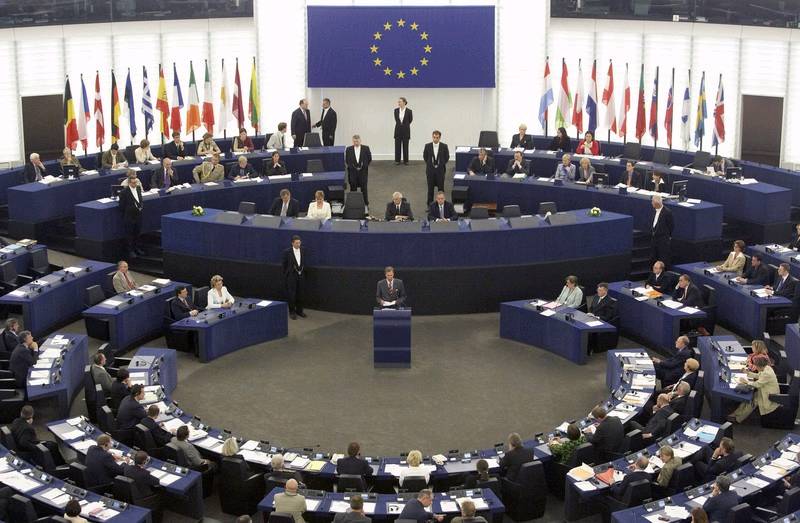
I don't think issues surrounding the European Union are, really, at the forefront of most people's minds. It does look as though an agreement on the EU budget for 2013 is imminent after an EU Commission climbdown, but the agreement for the budget between member states for 2014-2020 remains at an impass. These matters impact Wales whether we like it or not.

The EU budget

A few weeks ago, Conservative backbenchers and Labour MPs voted against a rise in the EU's budget, and passed an amendment calling for a real-terms cut. You can argue this is a reasonable stand – if national governments have to make sacrifices, shouldn't Brussels?

The relationship between Wales and the EU is slightly different than many other parts of the UK. Although the EU failed to agree a budget at their last summit, any cuts or freeze will be noticeable here. A failure to agree to a budget would put long-term projects at risk.

Plaid Cymru MEP, Jill Evans, spelt out some benefits of Wales within the EU, working out that every Welsh person is getting back £40 more than is put in. That roughly works out at Wales being £120million better off as a whole.

That doesn't sound like much, but I think the benefits are much wider. It's also fair to say that some of this money may well have been (perceivably) mismanaged. I said this a few months ago:
"EU-funds appear to be used for things like public realm improvements, or incredibly niche schemes, spreading funds far too thinly. In the period 2007-2013, £1.5billion has been spent on the public sector (mainly universities), £99million on the third sector (including ~£6.1million to the likes of AWEMA), and just £23million in the private sector."

It's also worth pointing out that the EU's own strict guidelines, regulations and rules mean that an awful lot of effort needs to go into getting the funds in the first place. That doesn't mean that some of the people bidding for these funds are always suitable. Note Jac o' the North's account on that.

It's also right to point out that seeing grants as the be all and end all solution in Wales, or a natural "Welsh way of doing things", is perhaps creating an incredibly damaging, short-term, dependant mindset.

A Jocelyn Davies AM (Plaid, South Wales East) motion passed the Senedd – including support from Welsh Labour AMs – that pressed the Welsh Government to "make representations" to the UK Government, opposing the budget cut.

Are (UK) Labour equally concerned about the "threat" posed
by UKIP as the Tories seemingly are?
(Pic : The Times)

Now, I don't know why Westminster Labour have decided to lurch towards euroscepticism-lite. Maybe they're just hardening their stance to appear "tougher on Europe" than they were in government to stave of a UKIP threat amongst the working class.

I don't have any truck with UKIP's views, but in terms of public debate, they've opened a window – even if it only lets in muck spreading wafts. They're eccentric - with a Colonel Blimp jingoism and a twee view of the UK's place in the world – but deserve to, and will, be taken seriously in 2014 and 2015. However, I think it's too soon to be building them up as an electoral force. Due to FPTP, the chances of them gaining MPs will be slim.

Welsh Labour are, seemingly, more pro-Europe that the Westminster party. They might be disciplined on the surface, but there's a history of differences causing "tensions". The first chinks in Tony Blair's armour came from Wales in the shape of Rhodri Morgan.

If Carwyn Jones were taken seriously as a head of government by his own party, instead of being seen as a loyal provincial governor, I'd put £10 on him verses Ed within two rounds.

It's also heartening that Welsh politicians can debate these matters of importance in a reasoned and mature manner, while British politicians try to out-clown each other in the Westminster lobby on News 24 trying to prove who wants to cut the most.

How does Wales benefit from EU membership?


Broader benefits

Jobs – The First Minister acknowledges that at least 150,000 jobs were based wholly or entirely on EU membership, and 50,000 were employed directly by companies from other EU member states. You could also suggest EU membership imperils Welsh jobs – especially if operations move to more attractive places in eastern Europe. It's also fair to say these jobs wouldn't disappear overnight if the UK left.

Free trade & membership of the world's largest economy – As I highlighted back in September, Wales is less reliant on the EU for our exports than the UK as a whole. But having free and open access to a market of half a billion people in one of the wealthiest parts of the planet (in spite of what's going on) is a no-brainer.

Carwyn Jones recently said that 50,000 people in
Wales were employed by companies based elsewhere in the EU -
including ~500 at (German-owned) Siemens Diagnostics in Llanberis.
(Pic : Daily Post)

Free movement
– Although the UK isn't part of the Schengen agreement, being able to move visa-free between large economies like England, Germany and France - as well as faster-growing economies like Poland - should be considered a huge benefit. It's a shame we tend to focus on those coming in instead of thinking about going out – in business terms especially. It also has spin offs like guaranteeing free health care in EU nations.

Peace & political stability – The timing of the EU being awarded the Nobel Peace Prize was...."amusing". The EU has developed a strength in its diversity - when it was once a weakness. Instead of Europe's great powers using smaller nations as chess pieces in their quest to dominate the continent (or further afield), disagreements are now thrashed out around negotiating tables in Brussels and Strasbourg. There's also a strong commitment to liberal democracy in all member states – though that's starting to slip in places like Hungary. It's just a shame the European institutions are so cumbersome, but maybe they need to be.

Harmonised pan-European regulations – Whenever we hear about EU laws, they are usually BS about straight bananas and weights and measures. What about mobile phone roaming? Environmental regulations? Standards on chemical safety and water quality? Car and air safety standards? Veterinary and agricultural standards? Cross-border crime fighting? It's also important to point out that the much-maligned European Court of Human Rights isn't part of the European Union.

Specifically important benefits for Wales

Agricultural Programmes – Includes the European Fisheries Fund, European Agricultural Rural Development Fund (worth about £195million to Wales between 2007-2013) and Common Agricultural Policy (CAP). The CAP alone is said to be worth £350million to Welsh farmers every year.

The Common Agricultural Policy is due for reform, but
without it, would Wales have much of a farming industry left?
(Pic : BBC Wales)

You can argue that farms shouldn't need subsidy, and should be encouraged to become more commercially viable – that's supposed to be amongst these funds main aims. These funds are in desperate need of reform – especially since EU enlargement - and make up a sizable chunk (€270billion) of the EU's total budget. I think attempts at reform have probably been blocked by the French and Spanish, who benefit disproportionately from the current arrangements. The UK does too, it has to be said.

Convergence Funds – Commonly referred to under the umbrella of "Objective One", or the more grand European Regional Development Fund (ERDF). These funds are worth up to £1billion over a 6 year period. It looks like West Wales & The Valleys might qualify again in 2013. That's not really good news, as convergence funds have to be match-funded by the Welsh Government and are a sign of a weak economy.

These funds have had a big impact on the university sector in particular. Jill Evans mentioned using EU funding to electrify the north Wales mainline recently, and that's the sort of project you would expect this money to be spent on. However, as noted earlier, I believe many of the projects over the last few decades have been well-meant, but haven't delivered anywhere near the outcomes – especially in terms of economic development and infrastructure – that West Wales & The Valleys desperately need.

"Objective One" is probably the most visible
sign of the EU in Wales. But is the money
being invested wisely?
(Pic : Ceredigion Council)

European Social Fund – Another branch of "Objective One". This is worth around £690million over six years. These funds are used on the "social schemes". For example : reducing economic inactivity, "social justice", up-skilling. But it also makes its way to the third sector, who haven't covered themselves in glory of late. The rules are incredibly specific and so full of hoops, that I doubt much money makes it to the front lines.

Specific Investment Funds – This includes the JESSICA framework (funds aimed at developing urban areas). It could be considered a branch of the main convergence funding. The Welsh Government have set up and Urban Development Fund and the Regeneration Investment Fund under this EU framework. It's supposed to be used on regeneration projects. In fact, a chunk of RIFW's cash is going to be spent on Neath town centre over the next few years. Again, the outcomes and management should be questioned. The JEREMIE initiative also helps/helped the Welsh Government's finance arm (Finance Wales) support small and medium businesses. It was/is worth £150million.

Erasmus– A pan-European exchange programme. Although it's said only 630 students (and 112 staff) from Wales have participated in the programme last year, compared to the all-UK figure (~12,000 participants) that's roughly what you would expect – perhaps slightly more than our population share. Cardiff University also hosted one of the largest overseas Erasmus contingents in the UK. Even brief periods living and studying in another EU state would obvious help cross-cultural understanding and – hopefully – international relations should they grow up to become business or political leaders.

What we also get, and what we'll get in the future

London Mayor, Boris Johnson, recently mooted a "pared down" relationship
with the EU - citing Switzerland and Norway. That might suit London, but
would it suit Wales, or the UK as a whole?
(Pic : BBC)

Bone-crushing levels of bureaucracy. No (Welsh) voice at the top tables. The pointless spectacle of moving between Strasbourg and Brussels. The ongoing "will they, won't they" fiscal union debacle. Nigel Farage. Uninspiring leaders at European level. And a voice for lunatics on the far-left and far-right in the European Parliament.

And it's fair to point out that there's significantly more subvention/subsidy from the UK that there is from the EU. We might be £40 better off in Europe, but thanks to leaky submarines, West Ham's new stadium and RBS – and other, more important things like social security – we're estimated to be about £4000 "better off" in the UK. Even if most of that is borrowed via the Treasury's credit card.

So although I clearly believe there are benefits to Welsh membership of the EU – via the UK at the moment – there's a need for reform.

The Lisbon Treaty went a long way towards doing that. It merged several institutions and created, in effect, a European constitution. But I think things are coming to a head due to the eurozone's fiscal problems.

My hunch is that the worst of the Euro fiscal crisis is behind us, but there's nothing ahead but a decade of stagnation. I think a new treaty is inevitable – probably creating a full fiscal union between eurozone members – and, ultimately, a "two-speed Europe".

Guess who'll be trundling along in the outside lane, indicating to take the next exit - with Wales in tow. Would that be in Wales' interests? It's a big question, and one that's perhaps too difficult to answer at the moment.

But, at the end of the day - whether you're Welsh, Slovene, German or French - we're all Europeans aren't we? If you even consider the British Isles a part of Europe. It appears the Leader of the Opposition in the Assembly doesn't.

Stronger together....

Thursday, 6 December 2012

Domestic Violence White Paper

I was going to post something on yesterday's council tax benefit ruckus from the Senedd. The Welsh Government cover themselves in brown, pongy glory once again.  I'm pretty sure Rhodri Glyn Thomas (Plaid, Carmarthen E & Dinefwr) warned of this happening a good 8-9 months ago. As there's very little to work off other than some strongly-worded statements, finger pointing and incompetence, I decided against.

He's got himself into another fine mess on that, but Local Government and Communities Minister, Carl Sargeant (Lab, Alyn & Deeside), recently launched a white paper drawing up proposals for a new law on domestic violence and violence against women. He's asking for consultation responses – some representations from major domestic violence groups have already been submitted, I believe – which are due by February 22nd 2013.

The Problem

Domestic violence – defined as "patterns of controlling, coercive, threatening behaviour, violence or abuse" - is said to cost Wales up to £800million a year. That figure presumably covers costs of social services, healthcare and perhaps even extending into the economy if domestic violence victims are too intimidated to go out and work.

The Welsh Government have also make the (more than welcome) decision to make the domestic violence provisions gender neutral. If this had been women only – even though women make up the majority of victims - it would've neglected victims of domestic violence in same sex couples and male victims.

"Violence against women" – another core/specific part of the proposed legislation – is defined by the United Nations as "actions....likely to result in physical, sexual or psychological harm or suffering to women." This would include, presumably, things like stalking and harassment.

The Welsh Government believe that people have a "right to feel safe" and believe that legislation in this area will go some way to improve the services provided to victims.

Specific Proposals

Leadership & Accountability

The approach by the public sector in Wales to domestic violence is said to be "innovative". However, the Task & Finish Group preceding this white paper said there needed to be improvements to "leadership and accountability". They also want to improve consistency across Wales, as these issues are – in the main – the responsibility of local authority-run social services.

There are early proposals for a Welsh Government appointed adviser on the issue, but that falls short of the Commissioners for Children, Older People and the Welsh language, for example. The adviser would have the power to carry out investigations and contribute to funding decisions taken by the Welsh Government. Some of these powers will link in with those outlined in the proposed Social Services Bill from earlier this year (details here).

Our old friend - local authority collaboration – makes an appearance, again tying in with the Social Services Bill.

Education & Awareness

The white paper cites studies showing that between a quarter and a third of young women have been victims of some sort of unwanted sexual attention or harassment at some point. The Welsh Government want people to "engage" with the proposed Bill. They want to ensure that relationship education is on the school curriculum.

The Welsh Government want to dispel myths amongst the public about domestic violence and even rape victims – for example, the belief that revealing clothing makes a woman partially or wholly responsible for being sexually assaulted.

The aim, through education, is to reduce victim-blaming, make violence unacceptable and reduce "damaging gender stereotypes". The Welsh Government want to set national standards to ensure services relating to domestic violence aren't as varied as currently, by placing more statutory duties on education/prevention on local authorities.

To address inconsistencies in training to deal with abuse, there are proposals for a new national advice framework (groan!) for everyone ranging from the public to public leaders. The Welsh public sector will also have a statutory obligation to have a domestic & sexual violence policy.

Strengthening Services

The Welsh Government want to improve information sharing between relevant public bodies and groups so they can improve safety of victims at a much earlier stage, and help identify perpetrators sooner.

Welsh public bodies – like the NHS - will also be expected to "act and ask" by disclosing information to relevant agencies, and increasing referrals to relevant bodies dealing with abuse. They also want to provide safer accommodation for victims, so they don't feel obliged to stay at home with an abuser.

It's hinted more than once that the capital and resource costs of this might be difficult for local authorities and the NHS to meet. So, one more, "regional collaboration" crops up.

Conclusions

The broad aims are welcome – domestic violence is a particularly vicious crime because, more often than not, it traps the victims emotionally – but I do have some issues with a few of the proposals.

I might be open to accusations of hypocrisy considering what I said about replicating Scotland's Sexual Offences Act in Wales (if criminal justice powers are devolved), but I imagine most outward examples of domestic violence would be covered by current assault and harassment laws. The psychological abuse would be hard to define or (in some cases) prove.

It's a tricky thing to tackle by legislation alone. I think the Welsh Government realise this, and that's why they've focused on attitudes and services, but I fear this is going to get bogged down in public sector buzzwords and policy wonk talk.

The UN definition of "violence against women", as cited in the white paper, might refer to violence in specific circumstances – for example, in warzones, or using rape as a weapon. Maybe I'm wrong about that. I don't think that definition's entirely applicable to Wales, but obviously some aspects (i.e human trafficking) would be.

Like housing, I fear that local authorities elsewhere in the UK might see the more aggressive approach taken to tackle domestic abuse here - by a "progressive, caring" Welsh Government - as a way to pass problems onto us that they should be addressing themselves.

A proper course of relationship education in schools as part of PSE lessons would be wholeheartedly welcome, and I've mentioned that before. I just hope it's genuine and well-planned so it doesn't become another box-ticking exercise. It's this public education and awareness aspect that would make the big difference, seeing prevention as the best cure.

But let's not go over the top. Men still make up – by some significant margin – the perpetrators and victims of general violence. You would think that a "Violence Against Men" Bill, under the same benchmarks, would probably be laughed out of any legislature in the world. Once you take into account things like the 1995 Srebrenica massacre - Bosniak  men and boys were specifically targeted - the concept of gender-based violence against men might not be so laughable.

On the other hand, I can see why a "Violence Against Women" Bill makes sense, as it's usually (but not always) a symptom of something else, or a way to exert control rather than spontaneous.

However, the title of the white paper and (presumably) any future Bill might give the mistaken impression that it'll clamp down on the violence itself. Sadly, I don't think it would.

Tuesday, 4 December 2012

Welsh Budget 2013-14

Finance Minister Jane Hutt's (Lab, Vale of Glamorgan) Welsh Government budget for the coming year passed the Senedd earlier by 25 votes to 18.

Here's a summary of the total spending allocations (combined revenue and capital spending plans) and their change compared to the plans in the 2012-13 supplementary budget from June this year.


Main Expenditure Group (Total spending) Budget 2013-14 Change from 2012-13 Supplementary Budget
Health & Social Services £6,430million -£115million
Local Government & Communities £5,204million +£57million
Education & Skills £2,048million +£15million
Housing, Regeneration & Heritage £488.2million -£38.9million
Central Services & Administration £350.2million -£10.8million
Environment & Sustainability £326.8million -£13.7million
Business, Enterprise, Technology & Science £315.3million -£1.3million

In the final budget narrative, Jane Hutt notes:


  • An extra £175million in capital spending over the next two years to support "strategically important projects" as outlined in the Welsh Infrastructure Plan.
  • The above includes an extra £16million towards housing on public sector land (up to 1,800 new homes) and an extra £30million to the Wales Economic Growth Fund over the next two years.
  • Allocating £6million in extra funding from reserves towards Business Rate Relief schemes in Enterprise Zones.
  • The establishment of an Advisory Group to see how the proposed budget impacts equalities.
  • A continuation of the Pupil Deprivation Grant from last year's deal between Labour and the Liberal Democrats. This has been increased by £4.7million.


It's also been announced today that there'll be an extra £200million for capital spending on schools - funded via local borrowing - while up to £300million will be raised via a not-for-profit mechanism (which sounds suspiciously like the "pie in the sky" and "uncosted" Build for Wales idea mooted by Plaid Cymru in 2011 and roundly criticised by opposition parties) to complete the A465 duelling.
This budget passed because of a deal between Labour and Plaid Cymru. Plaid Cymru abstained from the vote, but they got:

  • £20million in 2013-14 and £20million in 2014-15 to create new apprenticeships. This could be topped up to £60million via European and private sector funding. It's estimated this could create between 8,000 and 10,500 apprenticeships.
  • £10million over the next two years towards a new joint science park facility for Bangor and Aberystwyth Universities. It's been hinted/rumoured that this might be based on Anglesey.

Last year, Plaid criticised the Liberal Democrats for "selling themselves cheaply". I said it seemed as if Kirsty Williams sold herself short as well. But is there that much of a difference between the two deals?

Plaid's deal might be a bit more "concrete" in terms of outcomes than the Pupil Premium – which seems, on the surface, a bit like throwing money at a problem - and the science park is a commitment to a specific project. So, I'd say Plaid (and Labour, as an expansion of apprenticeships would reduce unemployment) have marginally got a better deal, but it isn't some fantastic game changer.

The only difference between this year and last year really are the sums of money involved and Plaid being a bit more practical - which is welcome to see. But there's no need to go overboard hailing the deal's virtues just yet.

As for the budget as a whole, the overall impression is "steady as she goes." The total budget is down by ~£108million, but the figures I've given appear more dramatic because I used the supplementary budget (which I believe is a more accurate measure of what's actually spent) as the comparison, not last year's final budget. If I'd used 2012-13's final budget instead, then the figure would still be a cut, but a smaller one – probably around the £50million mark, which matches the cut to the block grant.

Regardless of which budget is used, there's another obvious cut to the health and social services budget as a whole (NHS spending itself is largely protected), which the Conservatives in particular – I'd imagine – are going to use as a stick beat the Welsh Government with.

There are ongoing worries there. This isn't the first year concerns have been raised regarding NHS efficiency savings. In fact, this year's obligatory Darren Millar (Con, Clwyd West) outburst matches last year's almost word for word. The only difference is that this year's spending gap is bigger, and it's getting worse. I think time's starting to run out for the Welsh Government and Local Health Boards to get a grip of the issue. As an ordinary member of the public, with family members who use NHS services regularly, I'll say this – we're starting to notice it.

There's an overall (real terms) 8.7% cut in capital budgets, so Jane Hutt's been a bit more careful about where that money's gone, focusing on getting return on that investment – and Plaid played a role in directing it.

But judging by Labour's shopping list in the Infrastructure Plan, borrowing powers couldn't come soon enough. It could make the difference, for example, between Newport waiting years for M4 improvements or decades. We'll see if Gorgeous George has any early Christmas presents tomorrow, but I don't think we should be getting our hopes up somehow.