This site is no longer updated

Please use the links in the sidebar to visit the new sites!

Tuesday, 30 October 2012

Regulated Mobile Home Sites Bill

Peter Black's Member's Bill on park homes aims to tighten regulations
and prevent site operators from abusing their power.
(Pic : BBC Wales)
Although Darren Millar's (Con, Clwyd West), widely-derided, Chewing Gum Levy Bill wasn't approved by AMs a few weeks ago, Peter Black's (Lib Dem, South Wales West) Member's Bill was accepted, becoming the first Member's Bill introduced to the Senedd since the 2011 referendum.

Now it's time to take a look at the proposals in more detail.

The problem

Some 3,400 households in Wales are counted as (permanent) "residential mobile homes". The definition of a "mobile home" usually extends to fixed caravans, but includes holiday caravans. Most of the people living in these will be elderly and subsequently living on a reduced, fixed income.

Several incidents and scandals involving mobile home parks have led to campaigns to improve the regulation and licensing of these parks. The licencing scheme is said to be "outdated", while many park owners have have criminal prosecutions brought against them.

One issue surrounds the sale of mobile homes – in particular buying mobile homes at a greatly reduced price, then selling them for market value.

In the consultation Peter Black carried out before laying the Bill in front of the Assembly, home owners were said to be greatly in favour of reforms, while site operators/owners were hostile towards it. I think that says it all.

What does the Bill aim to do, specifically?

Licencing & management of regulated sites
  • The Welsh Government will regulate how applications for licences are made - and the price.
  • The proposed manager of a regulated site will need to pass a "fit and proper persons test", and either be the person in control of a site, or an employee of someone with control of a site.
  • Licences last for up to 4-5 years, and will be renewable after that, with temporary extensions of up to 3 months available.
  • Licences can be revoked when a person breaches the condition of a licence, is no longer considered a "fit and proper person", or would be unlikely to be granted a licence were it up for renewal.
  • Licence holders will have a right to appeal.
  • The Welsh Government will be able to set codes of practice, and have the power to ensure there are proper management practices in place.
  • "Site rules" need to be submitted with licence applications. Changes to these site rules need to be consulted with residents.

Licencing authorities
  • Local authorities will become the "site licencing agencies" for mobile home sites, with the possibility of collaboration with other authorities.
  • Licencing authorities will be given the power of entry for matters related to licencing.
  • Licencing authorities will decide how many mobile homes can be put on a site.
  • Local authorities will need to keep a register of regulated site licences.

Offences
  • Failing to obtain a licence when it's a requirement
  • Stationing too many homes on a regulated site than permitted by a licence
  • Failure to, or preventing someone from, complying with licencing conditions
  • Preventing an authorised person entering the site (power of entry)
  • Operating unlicensed regulated sites.

Offenders can be punished by up to £5,000 fine in a Magistrate's Court, or an unlimited fine in a Crown Court case. For blocking the power of entry, it's a fine of up to £2,500. Site owners who sell mobile homes or collect pitch fees on unlicensed sites can be ordered to repay any pitch fees or costs incurred. In some cases, a fixed penalty notice may be given.

Sale and purchase of mobile homes


Site operators rent a pitch, but the owner of the mobile home owns the home.

If mobile home owners want to sell their home, they need to seek site owner approval of the new purchaser. Some site operators have "blocked" sales this way, and it's been one of the primary complaints leading to this Bill. Site owners are also entitled to a commission on sales – up to 10% of sale price. It's said that pitch fees would rise by 22% if the commission were removed – so it stays.

However, in this Bill:
  • New owners will no longer need to be approved by the site operator
  • BUT sales/transfers of pitch agreements cannot go ahead until the site operator receives their commission.

Other
  • Joint-owned mobile homes can be taken over by a person for which it's their primary residence.
  • Site owners cannot pass on any costs relating to this Bill via pitch fees.
  • Home owners will be able to make any external or internal modifications to their home, as long as the modifications don't breach any terms of agreement. Permission by site owners cannot be "unreasonably withheld".
  • Unless there's agreement between home owners and site operators, a mobile home cannot be moved without a Residential Property Tribunal unless it's "urgent" (i.e landslip).

Effects of the Bill

The benefits are said to include:
  • A simplified legal process, and making licencing easier to monitor.
  • Result in actual savings for local authorities in enforcing licences in the long-term.
  • Improve standards at sites (obvious).
  • Elderly residents being coerced out of their mobile home should be reduced.
  • Residents won't be faced with picking up the costs for the new scheme via increased pitch fees.

Some of the potential pitfalls are said to be:
  • Banks might be unlikely to led to sites where there's a fixed-term pitch.
  • The extra costs placed on park owners, hitting profitability.

It's said that the financial costs of the Bill are "dependant on how and when the powers are implemented." The initial cost of setting up the scheme, at all levels of government and the site owners, is estimated to be £463,000 – including a one-off £270,000 bill for the Welsh Government. The scheme should cost around £83,000 per year to run after that, with most of that falling on the licencing authorities (local councils).

Monday, 22 October 2012

AWEMA - No Taffioso deals, but some questions unanswered

Last Thursday, the Wales Audit Office published their long-awaited report into AWEMA, following the charity's liquidation. More on this at : National Left, Jac o' the North, Peter Black AM, A Change of Personnel, Inside Out, Betsan Powys and Gareth Hughes.

Firstly, we need to get the Labour issue out of the way. The report found no evidence of outright political interference, saying that although "the full basis of some of the Welsh Government's funding decisions were unclear" there was little evidence of "inappropriate ministerial involvement." (p31)

By that, they mean there were no deals in smoky rooms, or ministers going out of their way – on record - to accommodate Naz Malik. In fact, AWEMA didn't always get what they asked for.

The report highlights who was responsible for what over the period (Appendix 5). Three names feature prominently throughout - Jane Hutt, Carl Sargeant & Edwina Hart – with a few others, such as Carwyn Jones, Sue Essex, Brian Gibbons and Andrew Davies playing minor roles. Also, between 2007-2011, Ieuan Wyn Jones played a significant role as minister responsible for the European funding , but his name doesn't feature as often.

So, this was a primarily Labour-led systemic failure, but neither Plaid, nor the Lib Dems (Mike German's brief involvement circa 2000-2001 & Lib Dem AWEMA trustees), come out of this completely smelling of roses (heh).

Welsh Labour conspiracy theories are entertaining – no doubt harbouring truths - but a scandal would have to be really big and bad to make an impact. It also distracts from the key issue – poor governance. The way to dent a party's credibility, is that when they're crap at the job they're elected to do, it gets reported as widely as possible.

On that, the findings were more damning. You could sum up the rest of the report in one sentence : In handling AWEMA, the Welsh Government, parts of the European Funding Office and civil service have been vain, disorganised and shown poor leadership.

Vain - The report says that the Welsh Government's equalities unit issued advice to Jane Hutt and Rhodri Morgan that they were worried about the "impact on the Welsh Government's reputation among....minority ethnic groups, were it to cease funding AWEMA." (p40)

When the wider scandal broke in 2011, and the organisation's existence was threatened, AWEMA  did play the race card. So civil service warnings were, perhaps, vindicated. So what? Fearing the reactions to "controversial" decisions is no way to run a government or civil service. It's vanity. To quote The Thick of It from the weekend, "This is the result of a political class that's given up on morality and simply pursues popularity at all costs."

Disorganised – The report highlights major errors in grant funding, citing lack of stability in the equalities unit, and brushing aside the findings of a specially commissioned report. Edwina Hart wasn't even sent a submission about new funding arrangements, despite commissioning the review in the first place and being responsible for funding (p41).

The equalities unit "did not rigorously follow up concerns about AWEMA's governance arrangements" for a period of five years (2005-2010) and didn't take allegations, by the chair and acting chair in 2007, into consideration. The European Funding Office had no concerns about AWEMA's EU projects, but "didn't apply sufficient rigour in monitoring these projects."

Poor leaders – The Welsh Government were warned no fewer than eight times between 2000-2011 about AWEMA (Appendix 3), including former Plaid AM, Dai Lloyd and Peter Black AM (Lib Dem, South Wales West) as recently as 2010.

The Welsh Government were satisfied with many of AWEMA's projects, but too lazy in monitoring them – a recurring theme. They didn't respond to specific allegations, had poor communication between departments, failed to follow-up concerns or "get to the heart of issues" when concerns were raised. (p71-72)

The report says that "management of....funding to AWEMA by the Welsh Government....has often been poor." There's praise, however, for how the Welsh Government reacted in 2011 .Shame it couldn't have been said earlier.

It's also unclear how much this has cost. Direct payments from the Welsh Government totalled £7.15million between 2000-2011. The Welsh Government claimed a debt owed to them of around £900,000. AWEMA disputed this, and the figure was reduced to around £545,000. Naz Malik denied there were any missing funds on ITVWales' Sharp End. It's unlikely AWEMA's creditors - including the Welsh Government - will see any of that money again.

Some important questions remain partially, or wholly, unanswered. So this hasn't been flushed yet.

Bethan Jenkins pressed Finance Minister, Jane Hutt (Lab, Vale of Glamorgan) to release documents from the equalities unit, to little avail. The change of Permanent Secretary might be a legitimate excuse for that, and might delay backbench AMs getting answers too.

We partially know why funding kept going to AWEMA – the Welsh Government/civil service didn't want to be accused of racism – but it's worth hearing the reasons from the ministers themselves. We now, also, have a good idea about who was involved. Will we get any apologies?

Other issues and questions I don't think have been satisfactorily cleared up include:
  • What were the precise failings which resulted in the answer to the (2006) written question by Dai Lloyd and Peter Black AM being "incomplete and inaccurate"?
  • Why, despite concerns raised in the 2004-05 report, was funding to AWEMA increased in subsequent years?
  • Why did the Welsh Government "fail to act" in response to the 2007 accusations from the acting chair and vice-chair of AWEMA?
  • What, precisely, did the Charities Commission do in relation to the 2007 allegations?
  • Where are the Home Office  records relating to their £346,000 grants to AWEMA?
  • What was particular about the 2011 disclosures that convinced the Welsh Government to act compared to prior warnings?
  • What actions are the Welsh Government and civil service taking to prevent this from happening again?

It's been reported that several urgent questions have been submitted for tomorrow, and today, the Assembly's Public Accounts Committee heard that the Welsh Government had "no way of highlighting that AWEMA was high risk." I think it's time ministers were upfront, or lines will never be drawn under this.

Thursday, 18 October 2012

Communities First - Past, Present & Future

Hat tip to Valleys Mam. Although everyone is no doubt focusing on AWEMA at the moment, I'll be looking at that next week.

What is Communities First?

The First Assembly decided concrete action needed
to be taken to tackle deprivation, but had to do so within
their limited powers.
(Pic : cpghr.com)
Every three years or so, an audit's carried out to determine how deprived council wards in Wales are compared to one another across several indicators, including : health, employment, access to services, education and housing - the Welsh Index of Multiple Deprivation. Similar surveys are carried out in the rest of the UK.

Communities First was established by Rhodri Morgan's government during the First Assembly between 2001-2002. It was set up to tackle deprivation in the 100 most deprived council wards in Wales, which has risen to around 150 today.


The overarching aim, was to provide a "bottom up" way for these communities to combat poverty, by allowing them to take strategic decisions at a local level themselves, using a set pot of money distributed by the Welsh Government.

Around £300million has been spent by successive Welsh Governments, and roughly £40million annually, since Communities First was established. It remains one of the more memorable flagship policies of Welsh Labour since devolution.

The Assembly circa 2001-2002 was a different beast. This sort of thing was, largely, the extent of the Assembly's powers – they could only administrate and make slight changes. Considering that context, Communities First was quite ambitious.


In many respects, it's a little government's big idea.

However, you could argue that - while it's done some good things - it's an example of everything that's gone wrong in Welsh public policy since devolution.

How does it operate?


Communities First areas are designated by the Welsh Government and local authorities. Sometimes they encompass entire council wards, but more often that not, they'll consist of deprived parts within wards called Local Super Output Areas (LSOA's). These could be a rundown housing estate, a former mining village or a deprived area within a wealthy ward.

Communities First Partnerships oversee the scheme at community level. These are specialist community regeneration teams, who coordinate projects and provide a level of professionalism. They're supposed to anyway.

The Welsh Government oversees a Communities First Trust Fund, which provides grants and loans to the Communities First Partnerships for projects in their areas.

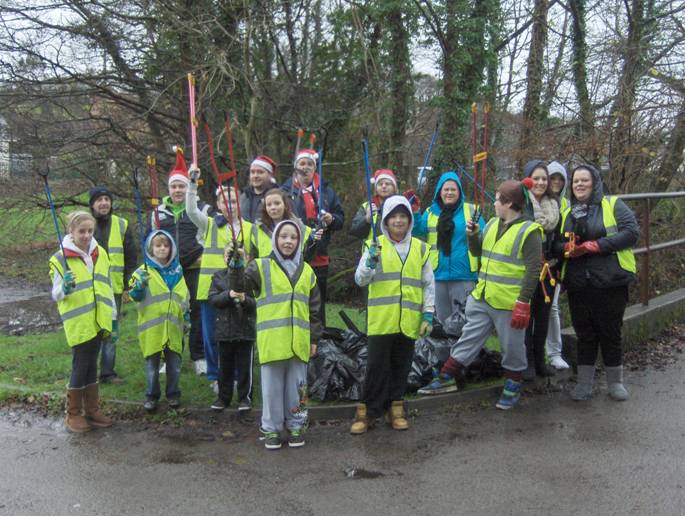
For example, the funds could be use for : local litter clean-ups, equipment, environmental schemes, sports schemes, food co-ops, job matching schemes or to fund other unrelated community groups. Locals would come up with an idea, or an issue, and the Communities First Partnership would bring the right people and organisations together, source the funding, and make something happen.

A
s deprived areas gain a greater sense of control over their own communities, they might take more pride in themsevles and community. They might find a job, seek out help they need, or re-skill – knowing they'll get Communities First support and minimal interference from Welsh and local governments, neither of which they might necessarily trust.
Positives & Negatives
One big plus from Communities First has been improvements
to the physical environment of some communities.
(Pic : Communities First Llangeinor)

Most of this is based on anecdotal evidence, but I believe most of it would stand up under closer scrutiny.

Positives
  • It's made a noticeable difference – I live next to a Communities First area in one ward, and there's also a Communities First area within my own council ward. The physical changes in ten years are, in some cases, quite remarkable.
  • It's given some pride back – Some of the people in these communities who worked with Communities First Partnerships are now local or community councillors, or have run for office. I do think the scheme has given people a sense of ownership – if still reliant on the Welsh Government.
  • It's impacted crime – The area I live near to was once a very run down, drug-ridden estate with serious problems. It's still has problems, but thanks to things like Communities First, the residents stand up to criminals a lot more now. Things like drug offences and anti-social behaviour are treated more seriously, and a level of trust has built up between residents and the police/authorities that wasn't there before.
  • It's improved the environment at community level – This has been one of the big plus points, in particular work with the likes of Groundwork, Tidy Towns and Keep Wales Tidy.

Negatives
  • It's open to corruption/cronyism – There are well known cases at Plas Madoc (Wrexham) and now in the Cynon Valley too. That's not to say the whole thing should be judged by a few isolated cases, but personally, I think it's the tip of the iceberg. There seems to be very little oversight, and the Partnerships – if they wanted to – could become a cliquey law unto themselves.
  • It's "top down", just at a lower level – Communities First schemes are ultimately led by "missionaries", spreading the good word of the Welsh Government. They usually have small teams of administrators and coordinators. There's nothing inherently wrong with that, but I wonder how much money and effort has been spent administering the scheme instead of on outcomes?
  • It spreads funds thinly - £40million a year spread between 140-150 areas works out at roughly £260,000. Take away the costs of employing the staff mentioned above (for arguments sake, four people earning an average of £16,000 per year) and that falls to £196,000. It's not as clear cut as that, obviously. The Welsh Government are changing this (see further down), but I'm willing to bet most local authorities spend that on pavement repairs each year.
  • It hasn't tackled many of its core aims – Time to investigate that further....

The wider issue : Does it work?

Communities First was set up to work towards the "strategic outcomes":
  • Prosperous communities
  • Learning communities
  • Healthier communities

There are no definitions of what would constitute "success" here. If you go by raw deprivation figures (2005, 2008, 2011), the answer to the question has to be no.


The areas are, generally, as deprived now as they were when the scheme started. However, thing have improved in a few cases. Butetown was the most deprived council ward in Wales in 2005, it's now "fallen" to 68th (so it's still amongst the most deprived wards). Very few areas have come out of Communities First after ten years.

The same names crop up year after year at the top : Rhyl West & Rhyl South West (Denbighshire), St James (Caerphilly), Gurnos (Merthyr Tydfil), Riverside (Cardiff), Townhill (Swansea), Tylorstown & Penrhiwceiber (RCT), Pillgwenlly (Newport)....

In Bridgend, you have : Caerau, Sarn, Blackmill, Llangeinor, Bettws, Morfa (Wildmill Estate) and Cornelly – joined in 2008 by Brackla (Meadows Estate). Of these, only Blackmill and Llangeinor have made noticeable progress on the deprivation index.

Ten local authorities had more than half their LSOA's in the 50% most deprived areas of Wales in 2008. Four (RCT, NPT, Merthyr Tydfil and Blaenau Gwent) had more than 70%. This hasn't changed in 2011, and I'm willing to bet it hasn't changed much since 2005. In fact, probably due to the recession, the situation has worsened in some authorities.

Things like education attainment levels have improved - the numbers leaving school without qualifications have fallen. That's likely down to national initiatives, not Communities First.

Maybe ten years just isn't enough time, or maybe the Welsh Government's flagship anti-poverty scheme just isn't working. The Assembly's Public Accounts Committee found in February 2010, that Communities First "wasn't providing value for money", criticised the lack of leadership from the top (which it wasn't supposed to do anyway, in fairness) and the lack of progress indicators.

Like many measures to tackle Wales' big issues, Communities First looks like another well-meaning initiative, that promises a lot, but perhaps wasn't set up the right way to do its job. Another tinker measure, from a government of tinkerers.

What's Communities First's future?

The Plas Madoc scandal in Wrexham has been symptomatic of some
of the problems relating to Communities First, which the Welsh Government
now hopes to tackle.
(Pic : BBC Wales)

The Welsh Government undertook a review of the scheme between 2011-2012.
Communities First areas will be clustered, so they cover larger areas and larger populations (up to 15,000), creating economies of scale. The idea is that management structures will be simplified, there'll be stricter guidelines to receive funding from the Welsh Government ( i.e.better delivery plans, guaranteed positive outcomes) and they're going to take other factors other than the deprivation index into account (i.e. school & hospital performance, rural sparsity).

I think the Welsh Government have realised, perhaps pushed by the Plas Madoc scandal, that Communities First couldn't continue as it was. I wouldn't be surprised if the scheme is re-branded post-2015, or leadership handed over to local authorities. Labour are unlikely to admit defeat on this, opening them up to claims that they've wasted up to £300million of public money, which would be harsh - they tried at least - but accurate.

I think there's a quiet acceptance that it hasn't worked out as planned. The new proposals will reduce administration and promote more "joined up thinking" between Welsh Government, local government and various public bodies. I'm not sure that would make that much of a difference.

The only other proposal to match Communities First's aims, so far, has been Leanne Wood's Greenprint. On paper, they sound similar.

The difference between Communities First and the Greenprint, in my opinion, is that Leanne has been specific in the Greenprint's goals (communities benefiting from the green economy), and sees potential from a co-operative and perhaps an entrepreneurial perspective - not just an anti-poverty measure.

The Greenprint seems more "permanent and self-sustaining", while Communities First is always going to be reliant on Welsh and Local Government for funds, and "appointed experts" for leadership.

I think, if there's going to be a replacement for Communities First post-2015, the Welsh Government (whatever the colour), would do well to take some of those points on board.

Tuesday, 16 October 2012

Draft Road Safety Plan for Wales


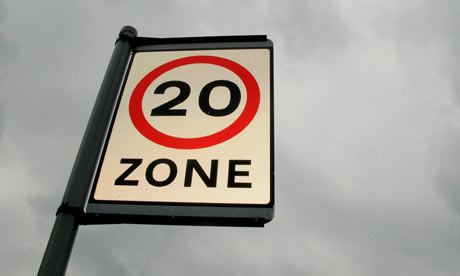
The Welsh Government are reviewing speed limits on trunk roads,
and are encouraging local authorities to do the same for their roads.
(Pic : The Guardian)

Local Government and Communities Minister, Carl Sargeant (Lab, Alyn & Deeside), recently launched the Welsh Government's Draft Road Safety Plan. A consultation on the proposals is out, and responses are due by 13th December 2012.

One area successive Welsh Governments can point to success is road safety – or more specifically, reducing road casualties. Wales now has some of the safest roads, not just in the UK, not just in Europe, but on the planet.

The draft plan sets the open-ended, but ambitious, target of zero road fatalities "in the future". They say it should be a "government aspiration to tackle avoidable deaths." It's hard to disagree with that.

The plan itself

The Welsh Goverment have successfully smashed every single one of their 2010 targets. For example, in terms of "slight casualties", they saw a 40% reduction, when they targeted 10%. Despite occasional spikes in road deaths (2003, 2004 and 2011 stand out as bad years) it's a downward trend across the board.

They want to "learn lessons from both successful and unsuccessful activities", with improvements in monitoring the effectiveness of things like road safety campaigns (which are not always measurable).

The Welsh Government and police will lead things at the national level, while regional transport consortia lead things at a regional & local level through road safety partnerships.

Areas of concern

Motorcyclists

Motorcyclists are said to account for "1% of road traffic, but 39% of fatalities and seriously injured." The plan says that most of them are "men, riding during the summer months."


I think everyone in Wales will attest for that. Although Powys is likely to be the hotspot, I've seen some really bad motorcycling, even in Bridgend. I don't know if it's a false sense of security amongst day-trippers - that it's "only Wales, therefore it can't hurt you" - or complacency on familiar roads.

Other road users don't help matters either. The report says that "motorcyclists aren't necessarily at fault for collisions they're involved in". It's the whole "Think Bike" thing, and it's probably poor driving that accounts for many (pedal) cyclist casualties too.

Young drivers

Young people (16-24 y.o) are said to be "disproportionately at risk of being killed or seriously injured....making up 23% of casualties in 2011." However, the numbers of young drivers involved in collisions fell by 41% compared to the 1994-98 average.

The Welsh Government already part-subsidises Pass Plus Cymru, a post-driving test course, that covers more advanced practical handling and theory.

Vulnerable road users

This includes : older drivers (70 y.o.+), children, pedestrians and cyclists.

Wales will have proportionately more older drivers in the future. Accidents involving older drivers are increasing too. However, the Welsh Government doesn't want to take older drivers off the road, only provide better assessments. They note the "independence a car gives them."

There's been a "significant reduction in the number of children killed/seriously injured in the last decade". The focus with regard children is, unsurprisingly, on road safety education and safer school transport. The Assembly passed the Learner Travel Measure in 2008 and the Safety on Learner Transport Measure in 2011, which set standards of behaviour on school buses, and will make seat belts compulsory on school buses from 2014. This is in addition to Safe Routes to School.


Although pedestrian casualties have fallen, they still account for 21% of all road casualties. Cyclist casualties increased in 2011 - and I've mentioned that before (Getting Wales on its bike). The aim here, is to improve matters through legislation – the Active Travel Bill – which I'll cover in more detail when introduced in the Senedd. Road workers and people driving for work are also included, when they're often overlooked. 11 people were killed/seriously injured whilst working on Welsh motorways or A roads between 2005-2011.

The Welsh Government want to achieve, by 2020 :
  • A 40% reduction in serious road casualties and fatalities
  • A 25% reduction in the number of motorcyclists killed/seriously injured
  • A 40% reduction in the number of young drivers killed/seriously injured

Judging by their performance to date, they might yet do it, or even exceed it. It's very rarely you can say that.

Prevention

The Welsh Government favour reducing the legal drink drive limit, but they have no powers over that. Personally, I'd prefer a zero-tolerance approach - where you get reduced points/fine/mandatory training course - if you've been drinking but aren't over the limit. Unfortunately, roadside testing for drug-driving is in its infancy.


The Welsh Government are reviewing trunk road speed limits, and want local authorities to do the same for A and B roads. They issued new guidance to local authorities in 2009.

Personally, I'd want mandatory 20mph limits outside : schools, care homes, leisure centres and playgrounds. That won't always be appropriate, of course.

The Welsh Government supports UK Government proposals to raise fines for careless driving. Pity they don't want the power to do that themselves.

Despite jumpy headlines at conspiracy sites about bilingual roadsigns causing accidents, it appears the signs themselves are more likely to kill you than what's written on them. These pose a particular risk to motorcyclists. The Welsh Government want to encourage the use of "crash friendly" street furniture (signposts, barriers, lamp posts), which are now de rigueur on the Welsh trunk road network.

The Welsh Government grants, on average, just £10million per year to various road safety authorities. Considering casualty reductions in that time, and the cost savings from accident prevention (i.e. hospital stays, accident investigation), that's excellent value for money.

Conclusions

Would devolved criminal justice powers
make a difference to road safety?
(Pic : Via Flickr)

I'm fortunate enough never to have been involved in a road accident, but I agree that road casualties are avoidable – whether that's through better education, better manufacturing or simply better driving.

Devolution of the criminal justice system could give the Welsh Government a more powerful toolkit to reduce road casualties (I would say that, wouldn't I) by changing penalties for road traffic offences. I've said before that the learning to drive age in Wales should be lowered to 16 (with stricter post-test conditions). I've also suggested that devolving traffic regulations would be another powerful tool.

Having said that, perhaps contradicting myself, I'm personally in favour of having no mandatory speed limit on motorway-standard roads (unless explicitly signed/controlled like the M4 around Newport). I'll look at the road network in relation to independence at a later date.

Car manufacturers, anti drink-driving and anti-speed campaigns as well as strict EU safety guidelines, have all played a critical role in reducing road casualties. Successive Welsh Governments and relevant authorities (such as the police and local authorities), have been too modest about their own contributions.

I don't think there'll be a day where there are zero road fatalities, however the Welsh Government have gone some way to ensure that road deaths are tragic exceptions rather than the norm. For overseeing a dramatic decline in road casualties in such a short time, the Welsh Government and National Assembly should take a bow.


Monday, 1 October 2012

Senedd Watch - September 2012

  • Squatting became a criminal offence in EnglandandWales on September 1st, with a penalty of up to 6 months in prison, or a £5,000 fine. Squatting was already illegal in Scotland and Northern Ireland.
  • Peter Black AM (Lib Dem, South Wales West) claimed that Swansea was becoming “the poor relation to Cardiff”, after £19million previously ring-fenced for a marina scheme in the city, was redistributed elsewhere by the Welsh Government.
  • Australian journalist, Natalie Bennett, was elected leader of the Green Party of EnglandandWales on September 3rd. Leader of the semi-autonomous Wales Green Party, Pippa Bartolotti, placed last.
  • Education Minister, Leighton Andrews (Lab, Rhondda), unveiled plans to “harmonise” school holiday dates throughout Wales. Teaching unions have welcomed the proposals. The minister also unveiled a consultation on monitoring “home schooled” children, the numbers of which have risen from 896 in 2010-11 to 986 in 2011-12.
  • An academic report from Sheffield Hallam University suggested that unemployment in Wales is much higher than official figures. An estimated 195,000 people in Wales are unemployed, the equivalent of 10.3% of the workforce, compared to a UK figure of 8.8%. Opposition parties in the Assembly called for varying changes in economic policy, while the Welsh Government pointed that it was a “UK-wide report” and that “key economic levers remain with the UK Government.”
  • David Jones MP replaced Cheryl Gillan as Welsh Secretary, following a reshuffle of the UK Cabinet on September 4th. Cheryl Gillan served as Welsh Secretary from 2010-2012, and Shadow Welsh Secretary from 2005-2010.
  • Byron Davies AM (Con, South Wales West) referred land sales involving an arms-length Welsh Government body to the Auditor General. £20.6million worth of public land was sold to a firm based in low-tax Guernsey. There were hints that some of the land, especially around Cardiff, was speculatively bought just weeks before the price rose following Cardiff Council's decision to plan for 40,000+ new homes by 2026.
  • Environment Minister, John Griffiths (Lab, Newport East), revealed that the Welsh Government's proposed planning overhaul, due in October, will “put an emphasis on the economy.” WWF Cymru and Campaign for the Protection of Rural Wales have both expressed concerns about the proposals, accusing the Welsh Government of “weakening their commitment to sustainable development.”
  • Teachers in EnglandandWales have voted for industrial action, to protest against “erosion of their pay and working conditions.”
  • The Royal College of Nurses have expressed concerns that acute health services in Wales will reach “breaking point” if there were unprecedented demand in the lead up to winter. Several local health boards in Wales have announced savings and spending cuts to meet Welsh Government budget guidelines.
  • The First Minister has said that Welsh companies “lack cash, not ideas” for a BBC Wales programme on the Welsh economy. He said that the banking sector needed to lend more to Welsh businesses, and that he believes in government intervention “where the economy is bumping along the floor.” Admiral CEO Henry Engelhardt said that businesses in Wales and the UK were “over-regulated” but added that he was concerned that Wales was still stereotyped as being full of declining industries.
  • Leighton Andrews ordered the WJEC to re-grade the English language grades of Welsh pupils. The WJEC says that they had been placed “in a difficult and unexpected position.” He launched an attack on the CEO of OFQUAL, Glenys Stacey, suggesting she had been influenced by the UK Government to put pressure on the WJEC, and that her answers to his enquiries were unsatisfactory.
  • As a result of the row, Simon Thomas AM (Plaid, Mid & West Wales), called for the Assembly's education committee to reconvene ahead of the start of the new Assembly term.
  • Unemployment in Wales rose slightly by 1,000 in the three months to July 2012, though the number of people age 18-24 out of work for longer than a year rose by more than 3,000 between August 2011 and August 2012.
  • The Assembly's Children & Young Person's Committee have suggested that 80 new nurses are needed at Wales' 13 neonatal units to meet recommended staff to patient ratios. They also recommended a round the clock neonatal transport service.
  • Mike Hedges AM (Lab, Swansea East) outlined his opposition to devolving tax varying powers to the Assembly, suggesting that the current block grant “provided certainty of income” to Wales. He also raised concerns about higher-rate taxpayers leaving Wales, and that possible cuts to corporation tax to attract businesses, could lead to shortfalls in revenues to spend on services.
  • The Welsh Government announced that tuition fees in Wales will be capped at £9,000 for the next three years. Welsh-domiciled students will continue to pay £3,500 per year, with the difference made up by the Welsh Government.
  • At Plaid Cymru's annual conference in Brecon, Leanne Wood put forward plans for a “Green New Deal”, saying that “economic underdevelopment is the single biggest hurdle to our progress as a nation.” Proposals included the creation of a “Glas Cymru” for energy, reduced reliance on oil and tax breaks for pension funds that invest in Wales. Plaid members also supported motions for police officers who covered up the 1989 Hillsborough disaster to be brought to justice, the voting age to be lowered to 16 and called for the devolution of criminal justice powers.
  • A reception was held at the Senedd for Welsh Olympic and Paralympic athletes on September 14th. It was revealed by BBC Wales that plans - drawn up by the First Minister and Welsh National Opera - for a “land of song” pageant, before the first event in Cardiff, were dropped by Olympic officials due to funding concerns.
  • The Older People's Commissioner, Sarah Rochira, has said that public bodies are risking legal action if they continue to “fail older people”. The Commissioner announced 50 “action points” which could lead to improvements in services.
  • The Welsh Government have been criticised for not revealing their own corporate risk registers, despite making Local Health Boards reveal theirs. Darren Millar AM (Con, Clwyd West) said it “smacked of double standards” and urged the Welsh Government to change their position.
  • John Bufton, UKIP MEP for Wales, denied that they are a “single issue party” in the build up to the party's conference in Birmingham. He said that UKIP had “a whole manifesto of policies” but that plans for the Welsh Assembly were a “work in progress.”
  • Former Whitehall and Assembly civil servant, Derek Jones, has been appointed the new Permanent Secretary to the Welsh Government, succeeding Gillian Morgan.
  • Mark Drakeford AM (Lab, Cardiff West) called for the Assembly committees to have the power to confirm the appointment of “Quango” chairs, citing mooted reforms for the House of Commons in 2007 that would “enhance the legitimacy (of appointments) and provide greater scrutiny.”
  • Welsh Liberal Democrat Leader, Kirsty Williams, warned that the party faces “difficult times” at their annual conference in Brighton. However, she was more upbeat about future prospects, saying that when they “put forward proposals to help....hard-working families....the party will see a reflection in the polls.” UK Deputy Prime Minister, Nick Clegg, also accused the Welsh Government of “interfering” in the GCSE regrades row.
  • 54,000 operations have been cancelled by the Welsh NHS since 2010, with 400,000 people waiting to start treatment in July 2012. Elin Jones AM (Plaid, Ceredigion) said that this “showed that centralising services doesn't solve all your problems.” Health Minister, Lesley Griffiths (Lab, Wrexham), hit back by saying that Plaid Cymru were “over-simplifying and distorting” the facts to “score cheap political points.”
  • The National Assembly reconvened from its summer recess on September 24th.
  • The First Minister said during a business summit that exports were a vital economic priority for his government, saying that Wales needed a greater presence via UK Trade & Industry, but adding that there was no need to permanent Welsh offices abroad.
  • Deputy Llywydd, David Melding (Con, South Wales Central) has defended the Assembly spending £10,000 on training sessions for Assembly Members in how to ask questions in committees, where to sit at the table and how to dress. He said that the training “was good standard practice”. Nick Ramsey AM (Con, Monmouth) and former Conservative AM Rod Richards both criticised the spending.
  • Education Minister, Leighton Andrews, has launched the National Numeracy Programme, which is part of a National Literacy and Numeracy Plan aimed at improving performance in under-14s.
  • Labour Party leader, Ed Miliband, has heaped praise on Welsh Government attempts to reduce unemployment at the party's annual conference in Manchester. He said that Welsh Labour “provided an alternative” and that Carwyn Jones was the “right man to stand up for Wales.”
  • Keith Davies AM (Lab, Llanelli) was taken “seriously ill” on September 28th , prompting messages of support from across the Assembly. He's still undergoing treatment at University Hospital, Cardiff, where's he's described as being in a “stable condition.”
  • A study by Bangor University showed that a majority of people polled would not support paying more for cancer drugs over treatments for equally serious conditions. The Welsh Conservatives, who support the creation of a Cancer Drugs Fund, remain convinced that such a scheme still has public support.
  • Plaid Cymru leader, Leanne Wood, received a verbal apology from BBC Wales, after erroneous claims that the party would be officially opposed to Wylfa B in next year's delayed local elections on Anglesey. The local branch of Plaid can, in fact, “make up their own minds on the issue”, and Plaid are “committed to securing local jobs on the island”.

Projects announced in September 2012 include : A new biomass power plant at Chirk, Wrexham county (decision granting planning permission postponed), a £40million regeneration of the Penrhys estate in Rhondda Cynon Taf, a £20million care home and retail complex in Swansea's waterfront and expansion of the “Meic” children's advocacy service.