This site is no longer updated

Please use the links in the sidebar to visit the new sites!

Thursday, 6 September 2012

Wales : An Economic Profile II - Manufacturing & Technology


Manufacturing is far from dead in Wales. In fact, manufacturing makes up a greater share of the Welsh economy compared to the other Home Nations – 15.2% in 2009 compared to 10.3% for the UK as a whole – the equivalent of around £6.8billion every year.

"Production" jobs in Wales from 2001-2010
(Click to enlarge)
In 2010, there were just over 147,000 people employed in, what Stats Wales describes as "production" (mining, manufacturing, energy and construction). The vast bulk of these are in straight-up manufacturing, but the numbers employed have fallen from 210,000 in 2001, and saw a very sharp fall during the first dip of the current double-dip recession.

The most annoying thing is that between 2007-2008, the numbers employed in production in Wales - especially manufacturing and construction - rose.

Gee, thanks "masters of the universe."

Heavy Industries

Port Talbot steelworks is not only a major landmark, but likely to
be Wales' single largest company by itself.
(Pic : BBC Wales)
The decline in Welsh heavy industry is often linked to the overall decline of the Welsh economy. Although coal mining in Wales is critically endangered - albeit still ongoing in different forms - Wales continues to be a major player in the heavy industries. The smokestacks are still here, perhaps most famously exemplified by TATA's Port Talbot and Llanwern steelworks.

In 2010, Wales produced 52% of the UK's iron (3.79m tonnes) and 51% of the UK's steel (4.92m tonnes).
Metal exports from Wales were worth £1.71billion in 2011 (12.7% of Wales' total exports in goods), recovering well from the recession dip, but sharply down on the pre-recession total of £2.42billion.

Although not listed in the 2011 Top 300, in previous years, TATA's (and before them, Corus) operations in Wales were worth a considerable amount by themselves – estimated turnover was around £2.5billion in 2008. If that trend continued down the years, then it's likely that they would be the largest company based in Wales. However, figures for Corus/TATA stopped in subsequent editions, so it's hard to quantify.

Earlier in 2012, TATA announced an £800million investment in their Port Talbot works, with a commitment of at least £240million – including the re-commissioning of number 4 blast furnace (but ignition has been delayed) and a new medical/administration/training centre. The previous Welsh Government invested £100million to complete the Port Talbot distributor road near the steelworks, which is due for completion sometime in 2013.

Although TATA may be the pre-eminent metals company, there are smaller metal producers like Llanelli-based Dyfed Steel and Celsa UK in Cardiff. Llanelli is still home to a major tin-plating works, while Swansea-based Timet provides titanium for the aerospace industry.

Despite this, the numbers employed in the Welsh iron and steel industries have fallen sharply - from 63,000 in 1996 to just over 8,000 in 2010 – a fall of 87% in just 14 years.

Exports from heavy industries, engineering and building (2005-2011)
(Click to enlarge)

There have also been other blows to the Welsh metals industry. Pre-eminently, the mothballing of Llanwern blast furnaces, closure of Ebbw Vale steelworks, and the mothballing of Anglesey Aluminium in 2009 due to the termination of an energy contract (aluminium smelting is an incredibly energy-intensive process) – one of Anglesey's largest employers. Anglesey Aluminium may recommence smelting by 2016 once a biomass plant is constructed (more on that in Part I).

Chemicals are another "big Welsh product", with exports valued at around £1.07billion in 2011.

Most of that is likely to be from Dow Corning's plant in Barry, which specialises in silicones (used in gums, lubricants, sealants and medical applications). Solutia UK, in Cefn Mawr near Wrexham, produces rubber industry chemicals, but the plant is due to close completely by 2015.
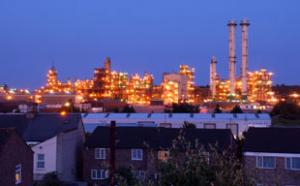
Dow Corning's plant at Barry. Chemical exports from
Wales were worth over £1billion in 2011.
(Pic : Penarth Times)

There'll also be significant petrochemical and related goods, such as liquefied gas, exported/imported from/to Wales - via the likes of Milford Haven, the UK's fourth largest port in terms of tonnage handled.

Rockwool, based near Bridgend since the late 1970s, are a major insulation manufacturer, while Pontypridd-based Harp International are a major producer of aerosols, propellants and refrigerants.

The Royal Mint, based in Llantrisant, has a highly-skilled metallurgical-oriented workforce, with a turnover of £215million in 2011. It's a private company owned by HM Treasury, and has an exclusive contract to produce coinage for the UK, as well as produce coins for other nations, commemorative coins/medallions and - more recently - Olympic medals.

Construction & Property Development

Flintshire based housebuilder, Redrow, are
Wales' largest construction company.
(Pic : Lindstrand.co.uk)
In 2009, 93,200 people were employed in the construction sector in Wales, contributing 7.7% of total GVA the same year (approximately £3.39billion). Construction output in Wales fell sharply at the start of 2012, falling to 88.7 (2009 = 100) in the first quarter.


The single largest Welsh construction company is house builder Redrow, based in Flintshire, and listed on the FTSE 250. Redrow had a turnover of just over £450million in 2011, and was the ninth largest company by turnover in Wales the same year, making pre-tax profits of around £25million. Redrow is currently subject to a management buy-out by chairman, Steve Morgan.

Between roughly 5,000 and 6,000 new homes constructed every year in Wales. There are major urban regeneration schemes taking place on brownfield sites, such as Coed Darcy near Swansea, Glan Llyn near Newport and new urban villages being created at Parc Derwen in Bridgend and Llanilid, Rhonnda Cynon Taf. Redrow isn't the only prominent Welsh house builder, there's also Bangor-based Watkin Jones, and Llantrisant-based Llanmoor Homes.

In terms of general construction and civil engineering, most Welsh companies are in the mid to small range but still pack a punch. Award-winning Cardiff-based JR Smart are currently developing a mixed-use "Capital Quarter" near Cardiff City centre, while PMG estates constructed the Cardiff City Stadium and retail park.

Other prominent Welsh civil engineering/construction companies include : Ruthin-based Jones Brothers (who constructed the Porthmadog bypass), Newport-based structural steel experts Rowecord Engineering, in addition to Bridgend-based Jehu Project Services (a group of four companies covering contracting, energy and property development) and Cardiff-based Macob Holdings. These four companies have a combined turnover of approximately £230million.


Wales is also base to of one of the UK's leading architectural companies – Holder Mathias, based in Cardiff – who have designed schemes across the UK and Europe, including retail, healthcare, masterplanning, residential/regeneration schemes and mixed-use developments.

Cardiff University is also one of the UK's leading centres for architecture and has a genuinely "world-class" school for city/regional planning.

The Welsh Government has focused on "up-skilling" the construction sector, developing a new construction academy at Bridgend College as well as creating pathways for building/construction apprenticeships. Local and national government are also a significant commissioner of major infrastructure projects – more on that in Part IV.

General Manufacturing & Engineering

Manufacturing remains an important part of the Welsh economy, and can punch
above its weight on the European and world stage in certain sectors.
(Pic : BBC Wales)

There are two general manufacturing/engineering sectors Wales performs notably well in.

Firstly, aerospace. There's a significant global aerospace manufacturing facility at Broughton, Flintshire, which manufactures wings for Airbus aircraft. Broughton has been a base for aerospace manufacturing for some considerable time, and is not only home to Airbus, but many other supporting companies – for example, defence aviation specialist Raytheon. It's unclear how much the Airbus factory contributes to the Welsh economy, but it's likely to be a significant figure - I'd guess easily in the hundreds of millions of pounds, if not more.


General Electric Aircraft Services - based in Nantgarw, Caerphilly - is one of Wales' few £1billion companies, with a turnover of £1.2billion in 2011, and employing more than 1,000, in what is a highly-skilled, high value-added business in the maintenance of aircraft engines. Considering it's several miles from an airport, this is quite the achievement, and proves that nowhere should be written off for this kind of industry.

Below this, you have several moderate-sized players in aircraft engineering : Cwmbran-based Contour Premier Seating (their expertise is obvious), Bridgend-based aircraft technical management company TES Aviation (who recently attracted investment from Japan), TB Davies and Aircraft Maintenance Support Services (also near Bridgend), who manufacture aircraft support equipment.

St Athan was, until recently, part of the Defence Aviation Repair Agency (DARA), maintaining the Royal Air Forces' fast jets. The UK Government moved maintenance of Tornado aircraft "in house" in 2007, while plans for a £14billion defence academy at the site never materialised. The WDA invested £113million in a "super-hanger" at the site (Project Red Dragon) before the UK Government took those decisions.

Wales' Top 20 manufacturing and engineering companies
(Click to enlarge)

St Athan was recently been designated an aerospace enterprise zone by the Welsh Government, making good use of the former DARA base there, and has already attracted interest. Iron Maiden singer, Bruce Dickinson, recently launched an aircraft maintenance company at the site – Cardiff Aviation – which is aimed at maintaining Airbus and Boeing aircraft, hoping to create up to 1,000 jobs.

British Airways have a significant maintenance facility at Cardiff Airport, which is capable of servicing large passenger aircraft such as the Boeing 747 – and are considering expansion. Nearby Cardiff and Vale College, as well as most Welsh universities, offer specialist courses in aerospace engineering.

Next, there's the automotive sector. Although there've been significant job-losses and plant closures here in recent years (TSW in Resolven, Visteon in Swansea), automotive exports were worth £566million in 2011 - which is almost double biotechnology and pharmaceutical exports. However, exports in this sector have declined significantly since 2005.

Wales has attracted significant foreign direct investment
in the automotive sector down the years.
(Pic : Bridgend Council)

Like TATA and Airbus, it's unclear how much Bridgend's Ford engine plant and Deeside's Toyota plant contribute to the Welsh economy. Again it's likely to be very significant, and again likely to be in the hundreds of millions of pounds range.

Those plants aside, Wales' largest automotive company is Calsonic Kansei Europe, based in Llanelli, who manufacture various components. After this, the second (verifiable) automotive "giant" is Yuasa Battery Europe, based in Ebbw Vale. The combined turnover of both companies is around £720million, both employing a combined workforce of more than 2,000.

The exotic names shouldn't surprise you. The automotive sector benefited heavily from foreign inward investment through the 1970s and 1980s, leaving Wales with a strong automotive supply chain. The total value of the automotive sector - and its supply chain - to the Welsh economy has been estimated to be £3billion.

Ebbw Vale has been selected to be an automotive enterprise zone by the Welsh Government, and has also been put forward as site for a £250million motorsports circuit and business park. The automotive sector clearly has something of a future in Wales, but what will they be doing? Will there be a move to hydrogen vehicles? Electric vehicles?

General manufacturing exports 2005-2011
(Click to enlarge)

We shouldn't ignore "low-tech" manufacturers that form the backbone of Welsh industry. For example: packaging companies, general machinery, bulky goods, vehicle repair, household goods, other components.

Most of the Welsh secondary sector will be this – "big box" manufacturers on large industrial estates on the outskirts of major settlements. They might not feature heavily in the list I've given, but they have strength in numbers and form a backbone of companies in the Top 300 list, and probably a bulk of those outside it too.

The top four "general manufacturing" companies in the Top 300 list (Kronospan, Kingspan, International Greetings, Artenius PET Packaging) had a combined turnover of £882million, and employed more than 4,400 people. General "engineering" exports were also worth £3.82billion in 2011.

Food & Drink

There are three sides to the food and drink sector in my opinion:
  • Primary – Including crop and meat processing.
  • Processing – Turning primary products into other foods (i.e. Baking).
  • Service - Hospitality, fast food/food sales/restaurants and food marketing.

The primary part was touched on in Part I. For this section, I'm looking a the "processing" role. I'll look at the service side of things in Part III.

Although only two food and drink "manufacturers" made my list of the top 20 Welsh industrial companies (Finsbury Food Group of Cardiff and First Milk Co-op of Wrexham), there are also prominent Welsh companies below this.


SA Brain are primarily involved in hospitality, but still has the iconic brewery in the centre of Cardiff, more on them in Part III. They've launches several new draught and bottled beers in recent years - including Brains Black (stout) and Brains 45 (a premium lager that's been discontinued) as well as continuing their traditional ales.

There's a fairly active Welsh independent brewery scene – (the famous) Otley Brewery in Pontypridd, Swansea-based Tomos Watkin (who make ales and ciders like "Taffy Apples"). Wrexham Lager has a long and noble history, and has been resurrected (of sorts) despite the original company closing in 2000. Penderyn produce a Welsh whiskey, though the Welsh whisky industry has a long way to go to be on a par with Scotland and Ireland. I'm was surprised by the number of commercial vineyards in Wales – despite the fact vines have been grown in Wales, especially the Monmouthshire, Powys and Vale of Glamorgan areas, since Roman times.
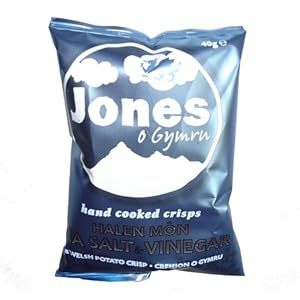
Where are the next Welsh "brands" going to
come from?
(Pic : Via Amazon)
Finsbury Foods – based in Cardiff - oversee several subsidiaries, such as Memory Lane Cakes, United Central Bakeries, Livwell and Nicholas and Harris. They're also listed on the FTSE 250.

Wales also has large and medium size companies such as Global Foods and Euro Foods (both Cardiff) and Peter's Food Services, based in Caerphilly (perhaps most famous for its pies). Brace's bakery are a major employer in the Newport area, and an important Welsh commercial "brand", employing some 330 people and a turnover of £30.4million in 2011.


Real Crisps, based in Newport, are owned by the Northern Irish crisp manufacturer Tayto. Bon Bon Buddies, based in Blackwood, are a major supplier of branded confectionery, and  experienced significant growth in Europe in recent years. In recent times, Anglesey-based crisp manufacturer Jones o Gymru (who source all their ingredients locally), sealed a deal to supply crisps to Tesco's 40 Welsh stores.

Harking back to Part I, Wales has a pretty active meat export market and meat processing industry. But alongside this, as exemplified above, Wales does relatively well above its weight in the the more "industrial"/"convenience food" sector of the market. Ultimately though, with a few exceptions, these are still mostly branch factories.

Could Wales produce a new generation of popular, marketable food brands? The manufacturing base is certainly there. What's becoming clear though, is that despite having all the things necessary to upscale and turn raw materials/processed goods into high-value products and services, there might be a "ceiling" as to how far Welsh businesses can go along this road.

Breach it, and I'm think it could help the Welsh economy will start to grow. If we can make crisps, cakes and other foods, then we should be able to put Welsh "brands" on supermarket shelves, attract the high-paid jobs in marketing these brands - and all the corporate stuff that underpins it - that are currently based elsewhere.

Electronics & IT

Wales had an enviable track record in attracting electronics inward investment – in particular branch factories from global brands like Sony, Panasonic etc. This is on the wane. Exports in machinery and household goods are in a steady decline, while as noted earlier, general engineering exports have experienced big increases in value in recent years to make up for this.

The days of big Japanese electronics companies
plonking a factory anywhere are over.
(Pic : BBC Wales)

One sector that has seen a noticeable, possibly terminal, decline in exports is telecomms. Despite this sector producing one of Wales' greatest business minds (Terry Matthews), exports have fallen in value from £259million in 2005 to just £53million in 2011. But these figures could be misleading.

Cassidian, based in Newport, are a major defence and security telecommunications company. One of Terry Matthew's companies, Mittal Networks, also based in Newport, had a turnover of just under £100million in 2011. Big companies don't necessarily mean big exports, especially if most of their business is done within the UK, or if there isn't anything tangibly "exported" – like data.

Although IT has been selected as a special sector in the Economic Renewal Plan, IT plays a much more significant role further down the "food chain" that at the top. IT companies are a perennial mainstay of the Fast Growth 50 list, rather than the Top 300. This is a good sign, as it means Wales is beginning to develop a solid, indigenous base in IT.

I'll give you some examples. Swansea-based IT sales specialist, Flashpoint Technologies, saw turnover rise from £7.8m to £54.8m between 2008 & 2010. Cardiff-based data applications specialist Excelerate increased their turnover by more than 200%. Education IT specialist, Gaia Technologies, based in Bangor, almost doubled their turnover to more than £10million.

Bangor-based educational IT company, Gaia Technologies, are
just oneof a number of rapidly-growing Welsh IT companies.
(Pic : Gaia Technologies)

Like Terry Matthews, our other great business mind, Michael Moritz, made a significant fortune in internet/IT investments – including the likes of Google, PayPal and Youtube.

Alongside Cassidian mentioned earlier, Reading-HQd Logica are a significant employer in Bridgend, providing services in outsourcing, management consultancy and general IT consultancy. They were recently taken over by Canadian IT services company, CGI, in a deal worth £1.7billion.

I've mentioned before that there are some weaknesses here - in particular the games industry - but steps have been taken to develop things like mobile applications, via the establishment of specialist centres like those at Glamorgan University. Price comparison websites would probably come under this too, but more on them in Part III.

Sciences


Wales has a "blind-spot" when it comes to cutting-edge science and technology. Most of our science industry is dominated by the medical devices and pharmaceuticals industry - usually subsidiaries of larger multi-nationals. For example: Ortho-clinical Diagnostics, near Pencoed, Biomet in Bridgend, Ipsen Biopharm near Wrexham, Siemens in Caernarfon and Convatec in Flintshire.

Before we consider the future of life sciences in particular (picked as a growth sector in the Economic Renewal Plan), we need to accept the fact that there are very few indiginous life science/science companies coming through. Very few make the Fast Growth 50 list, for example. A point I've raised before.

Wales' top 10 "high tech" companies
(Click to enlarge)

There are exceptions to this. Biotec Services International, based in Bridgend, specialises in clinical and pharmaceutical supplies and are an example of an indigenous science company experiencing rapid growth. British Biocell International, based in Cardiff but with centres all around the world, manufacture assay & immunoassay equipment for diagnostic and labelling purposes.

Williams Medical Supplies are the only "Welsh" company to make my list of the Top 10 high-tech companies. They're a successful, highly-skilled, pharmaceuticals supply company based in Rhymney of all places, and are a leading supplier to the primary care sector in particular. Once again – you shouldn't completely write off certain areas because of their economic history.

Our weakness, as far as I see it, is Wales' inability (so far) to come up with a large number of patent-protected, innovative technologies. This is starting to change though. Wales is developing niches in areas such as:
  • Optronics (lighting/scanning/processing/laser technology) – There are a cluster of companies based in and around north east Wales, plus Photonstar (formerly Enfis, based in Swansea, listed on the AIM).
  • Silicon Wafers – Cardiff-based, AIM-listed, IQE are the most obvious example. They are now one of the world's leading suppliers of silicon wafers (used in solar panels, semiconductors) and expended to include manufacturing facilities in mainland Europe, the US and Asia. Swansea-based Pure Wafer are a leading recycler of silicon wafers.
  • Diagnostic/medical equipment – Wales already manufactures them, but is starting to develop new ones too. EKF Diagnostics – founded in Germany originally, but now based in Penarth – have developed new diabetes diagnostic equipment, as well as special "biomarker" based testing equipment. It made a loss recently, but only because it was rapidly expanding and taking over subsidiaries. Swansea's Energist provide laser-based technology to the medical and cosmetics industry. There are numerous others - particularly university spin-outs - but too many to mention here.

In recent times, Business Minister, Edwina Hart (Lab, Gower) and Welsh biotechnology entrepreneur, Christopher Evans, launched Ser Cymru – a university-based science initiative – as well as a biotechnology fund worth £100million, with the hope of attracting a further £200million. The aim is to generate up to £1billion for the Welsh economy over the next decade.

I'll be looking in more detail at the economic role of Welsh universities in relation to the national economy in Part IV next week.

See, it isn't all bad news. Wales can still make things with the best of them.

Part III, focusing on the service sector (finance, retail, hospitality/tourism) and the creative industries/media , will be posted in a few days time.
Monday, 3 September 2012

Wales : An Economic Profile I - Primary Industries & Energy

I was originally going to take a look at local government reforms in relation to independence this summer. However, I decided to change that.

We won't know where we're heading, or where we could go, economically (union or no union) until we have some idea of where we stand right now. Over the next fortnight, in six parts, I intend to provide an "at a glance" (ha!) look at the fundamentals of the Welsh economy, including : sector profiles, prominent Welsh businesses, opportunities & threats, trade statistics and where Wales' economy is placed at UK, European and global levels.

Firstly, a disclaimer. I'm not an economist, I just consider myself a keen amateur. Any conclusions/conjecture should be considered "educated guesses", not the truth, nor standing up to any significant academic rigour. There will almost certainly be errors, though I'm hoping minor ones.

The first part today looks at the primary sector of the economy and energy production.

Agriculture

Wales might be stereotyped as home to more sheep than
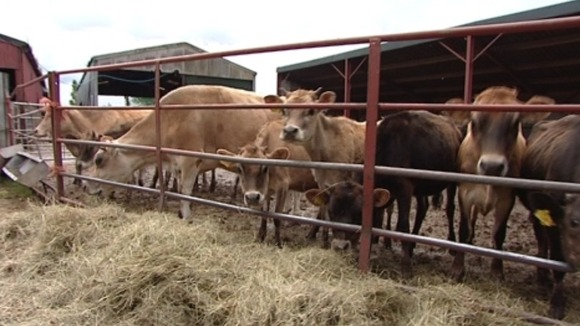
people, but dairy cattle are the more "productive" Welsh livestock.
(Pic : ITV Wales)
Welsh agriculture is dominated by the pastoral (livestock) sector. According to the latest Welsh Government statistics, in 2011 only 7.65% of the 23,135 active farm holdings in Wales were aimed at crops, horticulture or were a mixture of the two. In addition, some 17,765 holdings were "dormant". Wales has 18% of the UK's total supply of permanent pasture land, and 9% of the UK's total supply of general agricultural land.

The livestock estimates for 2011 were:
  • 8.6million sheep
  • 8.1million poultry (chickens, ducks, geese etc.)
  • 1.1million cattle
  • 30,000 pigs

Wales, unsurprisingly, is home to more than a quarter of the UK's sheep (27%), and an above population share of cattle (11%). Livestock numbers are lower than 2001, perhaps on ongoing recovery from the 2001 foot and mouth crisis. The sheep population, for example, is recovering, but the population is still lower than in 2001 (9.9million).

The amount of land set aside for agricultural use has slowly increased over the years, from 1.62million hectares in 2001 to 1.71million hectares in 2011. Of that, some 84.5% of it is permanent grassland or rough grazing land.


When it comes to production, Welsh agriculture is dominated, not by sheep, but by cows. 30% of gross output is dairy products, 23% is cattle (presumably beef). Only 19.4% of agricultural output was based around sheep (presumably meat), but this figure doesn't include wool.

Dairy farming is the most "lucrative" element of Welsh agriculture, providing an estimated income in 2011-12 of £63,900 per farm - compared to the all-farm average of £38,200. However, this figure should be treated with caution due to the well-documented issues surrounding the retail price of milk in particular, as well as possible inflation of incomes via grant schemes.

Some £316million of grants were paid to Welsh farmers in 2011, with £263.4million (83.4%) of that being from the Single Payment Scheme, which is part of the EU's Common Agricultural Policy.

Agricultural exports amounted to £166million in 2011, rising steadily over the years from £127million in 2005, dipping during the recession, but experiencing the sharpest rise between 2010 and 2011. This could be due to schemes like Hybu Cig Cymru (Meat Promotion Wales) - a co-operative meat promotion scheme. It may also have aided by the Third Assembly's Red Meat Industry Measure 2010. The measure, introduced by former Rural Affairs Minister, Elin Jones AM (Plaid, Ceredigion), made it a statutory obligation to promote the Welsh red meat industry.

The official export figures could be underestimated. Recent figures suggest lamb & beef exports alone were worth £200million in 2011. However, agricultural exports made up just 1.2% of total Welsh goods exports in 2011.

As an employer, the agricultural sector provided 58,400 jobs in 2011, with around 43% of workers working on a part-time basis.

In my own opinion, one area that could be targeted for further growth in the same way as red meat are processed dairy products. Wales obviously has a ready supply of milk, so why aren't our cheeses - for example - being promoted to the same extent? That's not to mention other potential marketable spin-offs : creams, butter, ice creams, gelatos & yogurts.

Finding alternative incomes (farm diversification) is a goal for many farmers – for example tourism. In 2009-10, some 24% of farms were actively diversifying, compared to 20% in 2006. The Welsh Government has its own Farm Diversification Schemes, one of which provided £1.3million in support to farmers in Powys.

Wales' largest agriculture-related companies (2011)
(Click to enlarge)
If we're looking for specific farming/agriculture success stories, there's one that stands head and shoulders above all others. Llansantffraid-based Wynnstay Group, one of the UK's largest agricultural suppliers, is Wales' 15th largest company in the Top 300 2011 list, with a turnover of £234million (pre-tax profits of £5.9million), employing around 770 people.

I think we can conclusively say that the Welsh economy is not "reliant on sheep". We can lay that popular tongue-in-cheek myth to rest. It looks like agricultural exports - in particular meat - have a bright future. But we must remember that prices are volatile, and agriculture is still an (unfairly) low-margin, subsidised, low value added sector, with heavy competition from elsewhere for similar products (New Zealand lamb for example).

Farmers could help lead the way in processing, marketing and promoting their goods, more on that in Part II later this week.

Fisheries

Shellfish is a primary Welsh maritime product, finding
ready and willing export markets. However, the overall
fishing industry in Wales is small by UK standards.
(Pic : UK Student Life)
The Welsh fishing industry is tiny by UK standards. According to the Rural Development Plan 2007-2013, only around 1,400 people worked full or part-time in the industry in 2007. Most of the industry is based around Pembrokeshire, Ceredigion, Anglesey and Gwynedd, and has obvious competition from the Irish, the more-developed Cornish deep-water fishing fleet, as well as (infamous) Spanish trawlers.

Having said that, Wales has a plentiful and high-quality supply of shellfish – cockles, mussels, scallops, lobster, crabs, crayfish etc. - but even these are under threat. It's been reported that Welsh restaurants struggle to source local fish as most of it is exported to mainland Europe - especially France and Spain. The Swansea & Carmarthenshire area is also famous for its cockles and laver - what the Japanese would call nori , and a key ingredient in Japanese and Korean cuisine. Some local businesses are already expanding by exporting laver to Japan.

The proposed creation of "Marine Conservation Zones" by the Welsh Government is proving contentious, with Environment Minister John Griffiths (Lab, Newport East) likely to face a legal challenge from commercial fishermen.

With pressure on fishing quotas, a tiny maritime zone, as well as possible pressure from Marine Conservation Zones, you could say that deep-water fishing is under threat in Wales. It's not impossible it could be reduced to nothing more than a cottage industry in the medium to long term. Sadly, the only way I can see a future for commercial fishing in Wales will be via inland/near water "fish farming."

Forestry


In 2010, 14.3% of Wales' total land area was woodland, though only 38% of this is owned by the Welsh Government - and this is increasing steadily. When woodland is lost, more than half of it (85 hectares) was to quarrying and golf courses between 1997 and 2010. Only 6 hectares were lost to wind farms, and 13 hectares to general urbanisation.

Although not entirely related to Welsh forestry, paper & packaging exports were valued at £210million in 2011. According to Forestry Commission Wales, the forestry sector was worth £340million to the Welsh economy, and employs as many as 16,000 people. There are comprehensive plans for marketing and export of timber, and that's before considering Welsh forestry's contribution to tourism and the environment.

According to a woodlands survey for 2011, and 78% of woodland visitors travelled less than 5 miles. Overall visits are increasing, especially for walking and cycling/mountain biking. So you could conclude that Welsh woodlands and forests are a valued local amenity.

Welsh primary sector, paper/packaging and energy exports
from 2005-2011
(Click to enlarge)

Through diversification - such as providing mountain biking facilities - the numbers of tourists from further afield visiting Welsh forests will inevitably grow. This could result in more pressure being exerted to build higher-quality, more comprehensive, tourist facilities in forestry areas (for example in the Afan Valley), which could damage the environment in a way the likes of the Forestry Commission were set up to prevent.

Forestry is a potential "jewel in the crown" for Wales, but it will need to be developed sustainably - whether that's for energy, supplies of timber, or for tourists. When a single environment body is established by the Welsh Government in the the coming years, it'll be down to them to make sure it isn't sold off, under-utilised or, indeed, overdeveloped.

Water

Water is something Wales has plenty of - we all know that - but we need to avoid complacency. Dwr Cymru's Water Resource Management plan estimates that only 3% of rainwater in Wales is utilised for public water supply, compared to 50% in parts of south east England. Due, mostly, to the decline of heavy industry, water demand in Wales is on a steady decline, from 1,090 million litres per day (ML/d) in 1995-96 to around 820 ML/d in 2009-10.


Water company catchment areas are based (largely) on drainage basins of major rivers. Dwr Cymru provides water for the bulk of Wales and Herefordshire, while Severn Trent provides water for north Powys, Wrexham and parts of Flintshire. Dwr Cymru is a subsidiary of Glas Cymru - a company limited by guarantee - based in Nelson, Caerphilly. Glas Cymru is Wales' fourth largest company by turnover - standing at £688million - employing around 3,000 people.


With recent concerns over water shortages in south east  England this spring, it's been suggested that Wales could export more water to England in the future. It's currently unclear how much Wales actually exports – for example, to the West Midlands and Merseyside. It's also unclear how much those exports are worth. John Osmond of the IWA put the figure at £4.5billion per year, while others have suggested a more modest figure of around £100million.That's a big margin for error, though I suspect the latter figure is closer to the truth.

The total cost to supply processed water is currently around 0.2p per litre. The roughly 400million litres per day (20% of Severn Trent's total output) supplied by Dwr Cymru is, notionally, worth around £292million per year (fully processed). There are other companies that use Welsh water too - United Utilities for example.

Unprocessed costs are likely to be much, much lower – judging by the lower end estimates above (£100million), perhaps up to 50% lower. This suggests the value is in providing processed water directly to consumers and businesses and associated services, not the "raw" water itself. So, Wales wouldn't really benefit - economically - from water exports unless a Welsh company, presumably Dwr Cymru, was providing the service themselves.

Even in its unprocessed cost, water exports would certainly provide a "nice little earner", and if transferred via Dwr Cymru onto consumers, might result in lower water bills for their customers. But we shouldn't consider it some magical, lucrative export proposition. We'll probably have to look further afield for that.

Wales' Top 10 Utilities & Energy Companies.
Glas Cymru, based in Nelson, Caerphilly, is #1
*NB - W&W Utilities turnover is £312.8million obviously
(Click to enlarge)
Water is likely to become an increasingly valuable commodity, especially in places like the Middle East, and perhaps even parts of southern Europe. Syniadau wrote on the possibility of exporting water to the Middle East before, citing an example from Flanders.

In simple terms, water's returned in tankers used to carry liquefied natural gas. MH suggested in the comments that there's the potential margin of around $250,000 (~£160,000) per full water tanker returned from Pembrokeshire (where we have an LNG terminal) to the likes of Qatar. That would require investment in new water storage facilities in the area, but with their bottomless pockets, I'm sure the Qatari's would be able to fund such facilities quite easily.

Energy

Wales' non-renewable sources
(Click to enlarge, edited from
d-maps.com)
I'll have to explain my methodology behind this first of all.

There are many different way to measure energy outputs, I've decided to go for the easiest option of simple generating capacity in megawatts (1MW = 1million watts) or gigawatts (1GW = 1000MW). I haven't accounted for energy lost in transmission, and I also haven't counted very small energy schemes, or micro-generation (home solar panels etc.). This is aimed at being a rough guide, mainly focusing on where and how energy/electricity is produced in Wales – not how it's used.


The technicalities of energy policy and independence will have to be revisited another time, but Syniadau has probably done more work than anyone else on this subject and I recommend you look there for more detailed analysis.

Energy is one of the big boys of the Welsh economy, perhaps the single biggest sector. Energy exports - which in 2011 totalled £4.06billion - make up just over 30% of all Welsh goods exports. Is this a good thing? It's a steady export stream, that's for sure. But Wales, of all places, should have learnt by now that putting all your export eggs into few baskets isn't smart – a point raised in the Offa's Gap report.

It's also important to note that it probably includes petrochemicals in that figure, but I'll be looking in a little more detail at that in Part II later this week. This is focusing almost entirely on electricity generation. Actual (physical) oil and gas exports from Wales are minuscule – only £22million worth was exported in 2011.

Energy exports from Wales have more than tripled in value since 2005. But the questions I'm going to attempt to answer now is, where does it come from currently? And where will it come from in the future?

Proportions of non-renewables : current and proposed.
(Click to enlarge)

Although coal played an important role in Wales' industrial past, there are only two coal-fired power stations in Wales (though a few more use some coal) – Aberthaw and Uskmouth B – total generating capacity of 1.89GW.

In terms of fuel, estimates in 2005 suggest there's as much as 250million tonnes of coal reserves left in Wales in 1979 (roughly 50-75 years worth). Small scale mining is still ongoing, but mainly opencast, with some drift mining still being undertaken in the Neath Port Talbot area.

Although coal has other uses – for example steel-making - it doesn't dominate the Welsh non-renewable energy production sector. That honour goes to gas. If/when Wylfa B is built, then there'll also be more nuclear energy produced in Wales than from coal.

There have been hopes that carbon capture and storage based "clean coal" technology could be developed in Wales. Clean coal, for now, is prohibitively expensive and untested, currently at the experimental stage in places like the United States. Perhaps though, some sort of underground coal gasification could be an alternative to shale gas "fracking". However, this still produces high levels of greenhouse gases, and I'm sure the concerns about geological instability will remain.

43% of Welsh energy production is fuelled by gas at present (4.09GW) , with an additional 4.09GW of gas-fired energy projects forthcoming - such as the new/proposed Pembroke and Port Talbot power stations. There's also the £70billion worth of coal shale gas, but for this exercise I've discounted it.

Renewable energy in Wales - current and proposed
(Click to enlarge)

What of renewables? Currently it's dominated not by wind, but by hydroelectricity – big schemes such as Dinorwig in Gwynedd. 87% of current renewable energy in Wales is generated from hydroelectricity, and I think the potential for further hydroelectic power has been ignored in favour of "cheaper" wind schemes.

It isn't a simple case of "build dam, install turbines, get electricity" because of how hydroelectricity is generated and used in the first place (usually to meet a short term spike in demand). The prospect of "drowning" more Welsh valleys would also no doubt be contentious. But what if it were carried out by a Welsh company, under a Welsh Government mandate, instead of foisted on us from elsewhere? Maybe the prospect would be more palatable.

Although somewhat controversial, wind power currently only generates 320MW (13% of renewable energy currently generated in Wales). However, if every single proposed wind scheme is constructed in Wales, or off Wales' coast, then that will rise to 2.7GW (48% of Wales' future renewable energy supply, discounting the Severn Barrage). Wind clearly has a future, but issues remain around wind subsidies and arguments around noise, efficiency and aesthetics. Considering Wales is one of the windiest places in the UK, it would be sensible to make full use of a clean, renewable source on our doorstep.

Wales' renewable sources of energy
(Click to enlarge, edited from d-maps.com)

A lot has been said of waste incinerators, but they're a fairly minor player - even in the future. Of the three schemes currently on track for delivery (Cardiff, Deeside and Hirwaun), they'll only generate around 50MW of energy between them (not counting the Deeside scheme). Whether you would consider these "renewable" or "sustainable" is another matter.

Biomass energy is due to increase in influence over coming years, rising from just 10MW of generating capacity now, to around 730MW from the likes of the Llynfi, Holyhead and Baglan Bay biomass plant schemes. Once again, questions should be asked about how "sustainable" these are considering their fuel is often transported long distances. To prove how up to date this is, I've only included the Chirk biomass scheme this afternoon, but it isn't included in the overall energy totals because I don't know the generating capacity.

Wales isn't associated with sunshine, but a lot of micro-generation in Wales is provided by solar panels. It's hard to quantify how much is produced this way, but there are scaled-up proposals for "solar farms" in Pembrokeshire and Carmarthenshire (combined 8MW) and Sarn on the outskirts of Bridgend (5MW).

Proportions of non-renewables v renewables : current, future
and including the proposed Severn Barrage
(Click to enlarge)

Taking the Severn Barrage out of the equation, although sheer renewable and non-renewable generating capacity in Wales is going to increase over the next decade or so, the proportions aren't going to change dramatically. This is slightly depressing/worrying, as Wales has enough potential to meet twice its own energy needs through renewable energy alone.

It would certainly help things along if we had a devolved government that wanted the power to deal with meaningful-sized energy projects – like Scotland's continuous examples - not muck about with tiny schemes. Is Wales' current policy sacrificing renewable energy targets to prop up exports/attract "investment" in big, new non-renewable power schemes?

Out of date energy consumption and demand statistics (available here, Annex C) suggest that Wales produced 35 Terrawatt hours (TWhrs) in 2005, and consumed 24 Twhrs. Though it's difficult to pin down the exact figures, Wales is clearly a net exporter of energy and energy-related products (petroleum etc.).

More recent figures on Syniadau, suggest that Wales exports 7,092 gigawatt hours (GWh) of renewable electricity to England – almost as much as Scotland.

Most of Wales' generating capacity is in north Wales. Because there's no "north-south" electricity link (more on this, once again, at Syniadau), while north Wales and Wales as a whole are net-energy exporters, south Wales is a net energy importer.

This results in the anomaly of south Wales paying some of the highest energy prices in the UK. This is likely to be offset in future by increased energy generation in the south, but a good "north-south interconnector" is vital – not just to ensure we have appropriate infrastructure, but perhaps to help combat fuel poverty too.

Part II – looking at the secondary sector (manufacturing), IT as well as science & technology - will be posted later this week.

Saturday, 1 September 2012

Senedd Watch - August 2012

  • Police are undertaking a review into an anti-poverty scheme in the Cynon Valley, following a referral from the Welsh Government. It's alleged that “financial irregularities” have been uncovered in the Cwmaman Communities First scheme.
  • Education Minister, Leighton Andrews (Lab, Rhondda), joined his Northern Irish counterpart in writing to UK Education Secretary Michael Gove, to list objections about proposed changes to the GCSE exam system. Leighton Andrews has already ruled out following suit in Wales, but believed there needed to be “more communication between governments”.
  • NHS Wales Chief Executive , David Sissling, unveiled his annual report, which indicated improvements in treating chronic conditions and unscheduled care – including a reduction in emergency admissions and a reduction in hospital-acquired infections.
  • The First Minister said that by hosting the National Eisteddfod, the Welsh language will be “boosted in the Vale of Glamorgan”. Meanwhile, Leighton Andrews suggested that the Eisteddfod needed to “modernise” to attract more visitors, which could result in a boost in funding. The National Eisteddfod currently receives around £500,000 in funding from the Welsh Government annually.
  • Hywel Dda NHS Board defended its reorganisation plans, which were unveiled earlier this month. The plans will see closures of smaller community hospitals across west Wales, with downgrades to accident and emergency services at Llanelli, while seeing a £40million investment in services across the board.
  • The UK Prime Minister insisted that Westminster constituency boundary reforms are going to be delivered, despite serious disagreements within the UK ruling Coalition over constitutional reforms. Welsh Labour said that Welsh Secretary Cheryl Gillan's subsequent plans for changes to Assembly constituencies “are in disarray” as a result.
  • Both Plaid Cymru and the Welsh Conservatives called for improvements in foreign language teaching. Leanne Wood (Plaid, South Wales Central) called for Wales to become a “tri-lingual nation”, while Angela Burns AM (Con, Carms. West & South Pembs.) called for foreign languages to be taught from age 7.
  • The First Minister launched his search for prospective tenders for a new “Public Policy Institute” which is aimed at improving public policy development, and delivery, by the Welsh Government.
  • The Western Mail claims that the First Minister and Communities Minister Carl Sargeant (Lab, Alyn & Deeside) were warned in letters that clauses in the Local Government Byelaws Bill - which amended British Ministers powers - would be illegal. The Bill was referred to the UK Supreme Court in July 2012.
  • Health Minister Lesley Griffiths (Lab, Wrexham) launched a new initiative aimed at reducing the number of deaths caused by heart disease. The Cardiac Delivery Plan aims to prevent illness through education, detecting diseases sooner, providing faster treatments and improved on-going care.
  • Welsh Conservative leader Andrew Davies (Con, South Wales Central) proposed that the National Assembly be renamed a “Welsh Parliament” as “a statement about the institution which now legislates our great nation.” Nick Ramsey AM (Con, Monmouth) disagreed, saying that the wider party hadn't been consulted on the issue.
  • Tributes have been paid to Welsh language campaigner, Eileen Beasley, who died aged 91. She refused to pay local council rates in the 1950s unless they were provided in Welsh, leading the way to wider, organised, Welsh language campaigns through the 1960s.
  • First Group won the bid to provide rail services on the West Coast Mainline from 2016 – which includes services between north Wales and London – beating current operator Virgin Trains. On August 28th, Labour called for the deal to be discussed by the UK Parliament, however UK Transport Secretary, Justine Greening, said that there would be “no delay” to signing the new deal.
  • Unemployment in Wales fell by 7,000 in the three months to June 2012, though most of the fall in unemployment, and new jobs created across the UK, were in the London region.
  • The numbers of pupils achieving A* and A grade A-levels fell in Wales, England and Northern Ireland. However, the gap between Wales and the rest of the UK narrowed slightly, as there were sharper falls in England. The A*-E pass rate rose from 97.2% to 97.6%. More than 8,200 students were awarded the Welsh Baccalaureate Advanced Diploma - a rise of 20% on 2011.
  • The First Minister sent good wishes to Wales' Muslim community, who were celebrating the festival of Eid, saying that,“Wales is a nation with a strong record of embracing different cultures and communities where we live in peace together.”
  • Farmers expressed concerns that poor summer weather has damaged crops and grazing ground, which has had a knock-on impact on livestock sales, pushing up food production costs. Deputy Minister for Rural Affairs, Alun Davies (Lab, Blaenau Gwent), said that he would “play my part in slightly lifting the burden.”
  • Figures obtained by BBC Wales show an increase in the number of medical negligence compensation payments over the last three years. £38million was paid out in the year to April 2012. The Welsh Government said that “no win, no fee” claims, and longer life expectancies, led to higher value negligence claims.
  • The gap between Wales and England & Northern Ireland at the highest graded GCSEs (A*-A) closed from 3.7% to 3.2% in 2012 compared to 2011. However, the percentage of pupils attaining 5 A*-C grades fell from 66.5% to 65.4% - widening the gap. Leighton Andrews accused UK Education Minister Michael Gove of “politicising” GCSEs in England, believing exam boards had been pressured to mark more harshly to curb “grade inflation”.
  • Plaid Cymru leader, Leanne Wood, called for control over Welsh resources to be devolved, and that “profits should go into Welsh coffers, not the Treasury's”. Plaid repeated calls for accurate GDP figures for Wales to be produced, expressed their support for same-sex marriage, as well as calling for better regulation of apprenticeships and the voting age to be lowered to 16.
  • The Welsh Conservatives urged Welsh Government ministers to “do more to get people off the sofa”, after figures from the 2010 Welsh Health Survey show that up to 38% of adult women, and 32% of adult men, do no exercise whatsoever. In contrast, a similar percentage of adults - and up to 52% of 4 to 15 year olds - do 5+ exercise activities a week. A leading obesity expert warned that Welsh obesity levels were “just behind the US” and are “getting worse”.
  • The numbers of prescription items dispensed in Wales rose by 2.6million for 2011-12 to 72.7million. However, the overall cost of prescriptions fell by £7.1million over the same period. Shadow Health Minister, Darren Millar AM (Con, Clwyd West) said that, " when Labour are imposing the deepest cuts in the history of the Welsh NHS....free prescriptions....is increasingly unsustainable.”
  • The numbers of workless households in Wales rose by 2% to 21.6% of households compared to 2011. The Welsh Government pointed to “volatile” figures that varied over time.

Projects announced in August include : The start of a £200m+ resignalling programme in the Cardiff area - which will improve capacity and station facilities, Head of the Valleys Development Company has raised £150million towards the development of a race track and motorsports park in Blaenau Gwent and initial/outline plans for an £800million waste-to-energy plant on Deeside.

Wednesday, 15 August 2012

Whatever happened to Welsh baseball?


A few weeks ago, I posted on Basketball Wales' rejection of a merger with British Basketball on a permanent basis. Although unrelated, an interesting discussion took place in the comments section on Welsh/British baseball, and I thought it was worthy enough to look again separately.

Historian Dr Martin Johnes from Swansea University wrote on the subject back in 2000 in a paper entitled "Poor Man's Cricket". It's available here, and it's what I'm basing some of the following off. It's well worth a read.

What is Welsh/British baseball?

There are major differences between Welsh/British baseball and the "American/Major League" game:
  • The Welsh/British baseball bat is more like a "paddle" than the American long and thin bat.
  • Bases are poles rather than mats/bags on the round
  • Balls are bowled underarm instead of "pitched"
  • Welsh/British baseball has 11 players (MLB – 9 outfield) and uses a lot of cricket terminology (crease, bowling, extras, no-balls)
  • The playing kit is very similar to football or rugby (shirt and shorts) with no protection (i.e. helmets)
  • There are just two "innings" compared to American baseball's nine
  • A run is given for every base reached after hitting the ball, rather than a complete circle of all the bases

The Welsh/British game developed as an improvement of the traditional "rounders" game. Although there were national (UK) competitions at the end of the 19th century, attempts were made by American sides to promote their own version via tours. Baseball didn't catch on, and became isolated in two main pockets – south Wales and Merseyside.

By 1921 there were "60 clubs and 1,400 players registered by the Welsh Baseball Union", but the sport never spread outside Cardiff and Newport. It was very much a working-class game, heavily associated with the inner-city communities of Cardiff, while rugby and football players would play baseball during the off-season. These were people who simply couldn't afford to play, or weren't interested in, cricket.

Baseball became "established as the predominant summer sport" within Cardiff and Newport, though the rules weren't fully standardised until 1927. Internationals took place between representative sides of England and Wales and still continue until this day. As late as the 1980s, the annual "internationals" even had highlights on the BBC, as exemplified here. You wouldn't picture BBC Wales or S4C doing that now, would you?

How come it never took off?

There are several reasons cited by Dr. Johnes' paper and elsewhere.

Firstly, there's the issue of land. Although baseball didn't require as much room as cricket, in other working-class areas where you would expect the sport to spread to – The Valleys for instance – there weren't the large tracts of flat land available to play on. In Cardiff, baseball clubs were reliant on public space and "applications from baseball clubs to use (public parks) were turned down."

Then there's the issue of money. It might've been cheaper to play than cricket, but the fees and rules applied to baseball clubs that didn't have their own private land were extraordinary. For example the traditional collections, to raise funds for the clubs, couldn't be carried out in public parks. As a result, the baseball clubs "couldn't operate independently from those in power (City of Cardiff Corporation)."

This entrenched the sport's reputation as a "poor man's cricket". Baseball simply couldn't attract the sort of middle-class patronage that cricket, football and rugby enjoyed, and it remained confined within certain communities. The association with Irish Catholics, also led to marginalisation of the sport, at a time when there was a bubbling sectarianism in some Cardiff communities.

Welsh baseball today

The sport in Wales is still governed by the original Welsh Baseball Union established at the end of the 19th century.

Although there's been some considerable decline in Merseyside (there are, apparently, only four clubs left), the Cardiff and Newport area still has its own local amateur baseball league (with at least two divisions), and even has very active youth and women's competitions.

Grange Albion are probably the most famous and successful Welsh baseball club - winning the championship 33 times since 1921, including this year. Some of the other sides are associated with religious societies or existing sports clubs – like St Peter's and Rumney rugby clubs. Both Newport-based St Michael's and Grange Albion are over 100 years old. Paul Flynn MP (Lab, Newport West) is a noted supporter of the sport.

The internationals between Wales and England national sides (The Gladstone Rose Bowl) are still contested annually as mentioned earlier. Wales also have a considerable lead over England in terms of championships won.

That's not to say the sport is entirely confined to the Cardiff area. I certainly remember playing this during PE lessons during the summer term. There is a campaign, I believe, to reintroduce the sport properly in other schools, presumably starting in its "heartland".

A future for Welsh baseball?
If it's one thing Welsh baseball needs, it's a publicity boost.
With the push for more active children and adults in the wake
of the London Olympics, now is as good a time as any.
(Pic : The Telegraph)

All this leaves you wondering what might've happened had the sport taken off in The Valleys, or if it crossed the River Dee from Merseyside into the Flintshire and Wrexham area. Would Wales now be playing this version of baseball in the summer instead of cricket?

Seeing as the likes of cnapan fell away a long time ago (or simply evolved into our affinity for rugby union), Welsh baseball is probably - bando aside - our equivalent of a "Gaelic sport". By that I mean a largely/uniquely Welsh "folk sport", not any reference to the rules.

Baseball might not enjoy the popularity it once used to, but it's still chugging along. In the face of competition from the likes of cricket, the fact the sport is still going is a magnificent achievement and tells a story in itself about how baseball has been taken to the heart of these communities.

It might not mean much in the grand scheme of things. However, if we lose things like our own version of baseball - harking back to the original post on Welsh basketball - we lose a little bit of ourselves with it – as well as the means to properly support the infrastructure of these sports : coaching, leagues, clubs and school activities.

If baseball is to have a future, it need to continue to attract new players. Getting it back in schools during the summer months is an absolute must – preferably with organised inter-school competitions. It would probably be cheaper and easier for many schools to play than cricket. Seeing as everyone is now clamouring to get kids playing sport off the back of the London Olympics, we in Wales should keep every option on the table.

Exposure is another big problem. Even in Cardiff, although the local media cover it, it's not as well presented or promoted as perhaps it should be. S4C usually fill empty air space with live events, I doubt it would be that big a stretch to cover a game or two. Seeing as everybody is obsessed with celebrities nowadays, perhaps one way to raise awareness is to host some sort of fund raising  game in the SWALEC stadium to raise money for the clubs and leagues.

Should there be a bid for a Commonwealth Games by Wales in the future, perhaps Welsh/British baseball could be included as an exhibition sport.

More on that at the weekend....

Sunday, 12 August 2012

A spunky Welsh Public Policy Institute

Hat tip to A Change of Personnel.

The First Minister launched his government's proposed Public Policy Institute earlier this week. He's initiated a "pre-tendering process" to encourage the "brightest minds" to apply – from academia, presumably parts of the public sector, existing think-tanks and private sector too.

I was pleased when Carwyn Jones first announced a "new deal" with the civil service, of which this forms a part, as it was in the fallout from that Green Investment Bank bid. Anything that would've given the civil service a boost at the time would've been welcomed by me personally with open arms. I thought, "At last! Someone's finally got it!"

What I envisioned, was a Public Policy Institute that would:
  • Be a significant non-partisan body. Most "Public Policy Institutes" are completely/mostly independent (even if they are sometimes partisan) – for example, the Institute for Public Policy Research, Institute of Economic Affairs and Institute for Fiscal Studies.
  • Focus its attentions on debating public policy decisions in Wales (or UK/EU policies affecting Wales) and help come up with creative new ones.
  • Have enough clout (academic/reputation) to give the Welsh Government a clip around the ear every now and again.
  • Be the first step in the creation of some sort of "Civil Service Academy"

We need all that if we're ever going to hold Welsh Governments (of all colours) to account effectively, and see a significant shift in public service performance. That would qualify, from a political anorak perspective, as an "exciting development."

Then you look at the detail in this pre-tender.

What the Institute of Public Policy will be expected to do:
  • Respond rapidly to the needs of the Welsh Government, including providing short turn-around advice to Ministers, but not commission any research of its own.
  • Support the cabinet in highlighting "cross-cutting issues" (screw-ups?)
  • Help interpret research for Ministers, and draw lines to dots for them ("make connections between insights and evidence") as well as double check Welsh Government research, looking for gaps.
  • Maximise impact with "less emphasis on written reports", and more on "communicating" and "getting the right people together." (Some sort of government PA/gofer?)
  • Developing cross-discipline delivery (for example, social justice and health)
  • Build partnerships with international think-tanks and universities.
  • Working through a "network of authoritative and independent individuals, contributing to the work of the Welsh Government's Knowledge and Analytical Service and (the) Departments' research commissioning, at Ministers request."

All of this is subject to "refinement at the pre-tender stage", so it's not set it stone. It doesn't deserve to be written off before it's even come into being.

I think the role of this body can be simplified even further.

Back in school, there was probably a kid/kids whom lazier classmates used to go to get answers from during difficult lessons? That's what (it looks like) this proposed Institute of Public Policy is going to be – someone to help the Welsh Government and civil service with their homework. Maybe that's not an entirely bad thing thinking about it.

Although this has all the hallmarks of a think-tank (it was described as such when initially launched back in February), it can't "commission any research of its own". It's a think-tank that can't think.

So it's just a "tank" then. Tommy tank.

Then you look at selection criteria : Full grasp of key issues facing Wales, understand practical challenges of policy implementation, build effective relationships with Ministers, civil servants academics....

I'm willing to bet Prof. Brian Morgan's name just popped into your head. Victoria Winckler? Perhaps a former Welsh Government Minister like Andrew Davies? That's not to say they haven't made considerable contributions, but I wouldn't at all be surprised if it's a familiar face(s) coming, probably bringing ideas with them that will be all too familiar as well.

That's not a public policy institute really, but a panel of experts outsourced from the civil service. It also seems to be obliged to respond to requests from Ministers - that's more "footsie under the table" than "arms length from government".

There are crumbs of comfort . Shortlisted candidates will be expected to "focus on delivery." You can't accuse the First Minister of not meaning business there. He deserves credit for trying at least. Developing greater "cross-discipline delivery" and "links with international think-tanks and universities" is also pretty sensible.

The new institute will be transparent too, with its work "published as a matter of routine" – good. But then you notice it says, "unless there are compelling arguments against" (what I presume means "compelling arguments against publishing analyses produced by the institute").

Hmm....if the analysis would be too inconvenient? Who would decide what does or doesn't get released?

The First Minister has been commendably prudent. The contract is only for three years, and its envisaged up to a maximum of £450,000 will be spent on it per annum.

Alas, it'll inevitably disappear in amongst all those initiatives and departments that, perceivably, only exist as lines on the Assembly's annual budget spreadsheets.

There's not much to see here - unfortunately.

Wednesday, 8 August 2012

The case for Cornwall

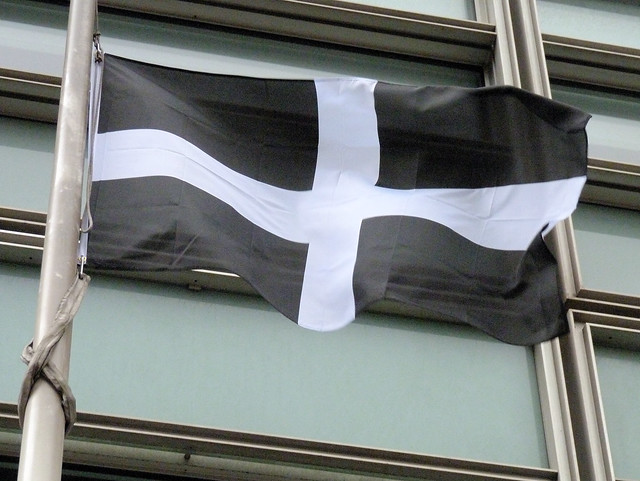
A national flag, or a "regional" one?
(Pic : Via Flickr)
We've often heard that Wales is England's biggest county. It certainly feels like it's treated like that sometimes, but I don't think that quip holds much water anymore other than as a wind-up, especially since devolution – however weak a settlement it is.

There are campaigns for some form of English devolution - and there will have to be movement there at some point in the future. As arguments over the future of the British constitution "rage" (or become totally bonkers in the case of this guy), there are two broad parts of the islands left out of the debate : the Crown Dependencies (which are enjoying what most of us would call "Devo-Max") and the fifth Home Nation – Cornwall.

Wales & Cornwall : Points of divergence

Could this simple act - the creation of a disestablished church - have
changed  Wales' future vis-a-vis Cornwall?
(Pic : Wikipedia)
Wales and Cornwall had a similar relationship with Old England. Both (you could probably expand this to include Devon) were recognised as holding some sort of "separateness" from England proper – both containing the Germanic "wahl" (foreigner) in their adopted names - but being nothing more than vassals to be divided amongst the Norman aristocracy. Subsequent interbreeding with the "natives" created Cambro-Norman and Corno-Norman ruling elites.

Then the Welshman, Owain ap Tudur, managed to play way out of his league. Many years down the line, we ended up with the Tudor dynasty, who centralised rule from London, fully absorbing both Wales and Cornwall into the Kingdom of England.

Both had rebel leaders who wanted to do things differently at varying times – for Owain Glyndwr, see Michael An Gof. Both, however, were fighting powers beyond their control. That power being the carrot dangled in front of our elites that their fortunes could only be made by being fully paid up members of the British project – cemented by the ascension of a Scottish King to the English throne. Both were true to this for some time, being Royalist strongholds through the English Civil War.

Both had their own forms of devolution – the Council of Wales and the Marches, and the Cornish Stannary Parliament. Both were eventually swept away. Both had their own extractive industrial booms – Wales had coal, iron and slate, Cornwall had tin and copper. As a result of industrialisation, both saw increased migration, and both saw the slow decline of the remnant native language and culture. Both were hotbeds of non-conformism and "rural liberalism".

But then something happened that I believe is critical – Wales was treated as a distinct nation. We got our disestablished church and freedom of thought and administration in such matters, while Cornwall was destined to become the "most un-English of English counties." From this, Wales eventually claimed administrative, then legislative devolution. But for Cornwall, the damage had been done.

The Cornish have, to date, never had their "1955 moment". Cornwall isn't widely considered in equal standing with the "four" Home Nations, though attitudes are changing.

Cornwall doesn't have a national rugby team, national football team, Commonwealth Games team, national university....the list goes on. These are things the Welsh take for granted, as they've "always been there", and we couldn't possibly imagine them being taken away now.

Welsh nationalists probably won't admit this, but I'll be honest – Cornwall is a worst case scenario of what Wales could've been. Administratively, Cornwall has been absorbed into England and has had very few, if any, symbols of nationhood besides its flag, the Cornish language and national anthem.

Maybe that's all you do need. A sense, or idea, of nationhood can never be taken away. Cornwall is slowly but surely being revived, and that should enhearten civic nationalists everywhere.

Cultural Revival

The unedifying spectacle of the Cornish flag being taken forcefully from an Olympic torchbearer back in May prompted significant outrage, resulting in an overturning of a ban on the flag of St Piran at the Olympic Games themselves. You've probably noticed yourselves, but this has been extended to Y Ddraig Goch too.

On the civic culture side of things, a Cornish national theatre is proposed by Cornwall Council as part of a wider plan on Cornish culture. Alongside this, a Cornish National Library is also planned to house various documents currently split between several sites. That's a lot of "nation building" there.

The Cornish language (Kernewek, or in Welsh, Cernyweg) is seeing a gradual revival, with between 2-3,000 people estimated to be able to hold a conversation or be fluent in the language. Cornish, Welsh and Breton share a similar Brythonic language family, and although Welsh and Cornish are very similar, they aren't entirely mutually intelligible. UNESCO has Cornish listed as a "critically endangered" language (Welsh is listed as "vulnerable"), but Cornish has, at least, been upgraded from the incorrect "extinct" designation.

Cornwall has always maintained a distinct culture, and
against all odds, a distinct language too.
(Pic : Wikipedia)
Reaching a eventual milestone of, for example, "10,000 speakers" would be remarkable considering where the language was - aided by projects like Radyo an Gernewegva (Cornish-speaking area Radio) and organisations like Maga (the Cornish equivalent of the now-defunct Welsh Language Board). Cornwall is still some way away from becoming a bilingual nation, but keeping Cornish alive in these circumstances is an achievement in itself.

In another big step - literally within the last day or two - Visit Cornwall have dropped references to "England" and "county" from their promotional materials. They're adopting "region" (softly) for now, and will probably keep "Duchy" to spare Chuckle's feelings, but how long until that becomes "country"?

Political Revival

You're right Dave, it might not be the Amazon, but
it's still a national border.
(Pic : National Archives)
There have been three incidents that have provoked Cornish self-awareness in more recent times.

Firstly, the creation of a "Devonwall" constituency in the proposed Westminster boundary reforms. Recent events mean that might not happen now, but it reeks of a decision taken by a government that fails to take local - or in this case, national - opinion into account.

Now, imagine the reaction in Wales if Monmouthshire, or parts of Powys, were partially merged with Marches seats, and the Prime Minister justifying it by saying, "It's the Severn, not the Amazon, for Heaven's sake!" That would be unthinkable, wouldn't it?

The rational reason to oppose such a move would be that, because of devolution, it would make the role of any prospective MPs too complicated – but the obvious, sentimental "heart" reason would stir sentiments more. Cornwall doesn't have that luxury (for now).

Secondly – the proposed "pasty tax". Now the spectacle of politicians of all colours winding themselves up over pastries might have been very "Brass Eye", but the Cornish pasty is an EU-designated protected geographical product. It was estimated by the Cornish Pasty Association that the "pasty tax" would've led to "400 job losses and a £100million hit." The u-turn might well have been a shambles, - leading to unnecessarily complicated rules on VAT - but it could be considered a minor victory for the Cornish food industry.

Thirdly - a sports stadium. A 10,000-capacity stadium for Cornwall was proposed on the outskirts of Truro for promotion-chasing Cornish Pirates RFC (the Cornish like rugby almost as much as the Welsh do) and Truro City FC. Plans have been on and off for the best part of a decade, but in the last few years were revised, not as a "Stadium for Truro", but as a "national", popular campaign for a "Stadium for Cornwall". Although the bid has been put on the back burner due to funding issues, it was a perfect melding of the cultural with the political – a home for, what effectively is, a "national" sports team, and a significant "political" investment in sporting facilities alongside it.

There's one other depressing characteristic Cornwall and Wales share – rural poverty. Cornwall is an Objective One area in the same way West Wales & The Valleys is, with a GVA per capita around 70% of the UK average. However, the Cornish have been partially successful in closing the gap. Can Wales learn from what the Cornish have done there?

Having said that, Cornwall had no sway on Objective One decisions. It was managed within the South West England region, while Wales is a European region of its own and manages European programmes largely by itself.

The creation of Cornwall Council (as a single unitary authority) in 2009 has been viewed quite negatively since it replaced six, smaller, district councils. Maybe this creation of a pan-Cornish institution will make the path to devolution much easier – and the local government situation can always be resolved post-devolution. Indeed, a Government of Cornwall Bill was introduced by a backbench Liberal Democrat in 2009, but nothing came of it.

Cornwall is a traditional Liberal Democrat stronghold (along with much of south west England), with the Tories a competitive second party. Labour are practically non-existent outside of the major population centres. The Cornish Nationalist party, Mebyon Kernow, has been a fully-fledged political party for some 40 years, and has 5 seats in the 123 member Cornwall Council, as well as many representatives at community and parish level. They campaign for Cornish devolution, wishing to create a devolved Cornish Assembly, with the same powers - broadly - as the Welsh Assembly.

A devolved, or de-loved future?

The future "Senedh Kernow"?
(Pic : BBC)
Wales and Cornwall share an awful lot in common, including being caught in Westminster's blind spot when it comes to our more peripheral needs.

But the Cornish shouldn't expect devolution to act as a magic bullet. It'll have its disappointments, and it'll have its triumphs – like all forms of government. It'll probably have to be a process led by the Liberal Democrats if anyone - or, perhaps at some point in the future - Mebyon Kernow MPs.

Cornish Nationalists don't need to be patronised by people like me. They might be starting off the process further behind Wales, but they have more than enough raw material to work with and a strong case to be made for equality with the other Home Nations. It's hard to predict when, or if, Cornwall will eventually become a devolved nation - but a nation they are.

And once a nation stands up and actually acknowledges that fact, who knows where it'll take them....