
This site is no longer updated

Please use the links in the sidebar to visit the new sites!

Sunday, 8 January 2012

Saving the Union - Impossible without unity?

Carwyn's new relationship with the UK

Back in November, the First Minister gave the Welsh Politics Annual Lecture at Aberytwyth University on devolution (more on this at Borthlas, Welsh Ramblings and Click on Wales). In his speech he said that should the Scottish people vote for independence, then Wales's relationship with the rest of the UK would need to be reformed or reworked.

Carwyn Jones outlined three "tests" that he believes are key considerations to warrant the devolution of further powers:

1. That the new powers are potentially beneficial to the Welsh public

New powers are neither beneficial or unbeneficial to the Welsh public. It's how they are used that determines that - so a matter for individual party policy and subsequent application. The same can be said of a whole raft of constitutional arrangements including independence.

2. That the new powers can be accommodated in the existing Welsh Government structures

Carwyn has a point - but this could automatically rule out new powers that could be beneficial to the Welsh public - like policing - because there's no Welsh "Department of Justice" or legal jurisdiction (yet). It's a bit of a cop-out (excuse the pun).

3. The impact of new powers on the wider UK is limited

Existing devolved powers and policies that are "beneficial" to the Welsh public might not always be beneficial to the rest of the UK or vice versa – free prescriptions, single use bag charges or differing tuition fee policies for example. It also means that Carwyn could technically be ruling out powers over areas like energy, water resources and even the railways (contradicted in part by Network Rail's "devolution" to Wales in the last few months) because of cross-border impacts.

Saving the Union from itself


Nation states made of nations (as opposed to non-national federal units) vary wildly in their longevity - Austria-Hungary, the various pan-Scandanavian unions, Yugoslavia, the USSR, the United Arab Republic, Spain, Belgium....etc.

The constitutional flux the UK is currently in, could be part of a natural "untying" phase peculiar to these nations-of-nations that can lead to various places including : federalism, more formal centralisation (as in France or the UK historically) or independence.

What we now call the UK is radically different from what it was 20 years ago - let alone at the turn of the century. A UK existing at the end of the decade isn't guaranteed - neither is a break up - but in all likelihood, the UK is going to be as different in 2030 compared to the present as it was in 1990. Hardline Unionists are going to have to accept that.

I do believe Unionists are unnecessarily pessimistic and dour - both in terms of how they see the referendum in Scotland going, and the arguments they currently present for Scotland to remain in the Union.

A positive case for union, accompanied by significant changes to the relationship between the Home Nations (including a proper answer to the England Question) can win in Scotland. They can save the Union by transforming it into an ever evolving relationship between sovereign states – a mini-EU on steroids.

Things can't go on as they are. There's browbeating of the "Celtic Fringe" that sounds like the threats a fat, bald middle-age husband would make to a divorcing wife. There's a struggle to define civic "Britishness" due to identity politics - not only in the Celtic Fringe but in England too. Proper "British" institutions seem confined to Auntie Beeb, a distant and haughty Westminster, English benevolence towards sponging Scots and whinging Welsh, the Windsors and an increasingly deified military.

There's also those who want to "play the ostrich". It's "all a diversion from the important issues of the day". Stick your head in the sand if you want, cover your ears going "la la la I'm not listening" but having a well-oiled, properly functioning nation-state certainly helps provide solutions to all those bread and butter issues "ordinary people" concern themselves with. I might be giving them too much credit, but our politicians are smart enough to deal with day to day things alongside the big picture issues.

Throwing "British" into every sentence and Union Flags into every picture with a plodding, middle-of-the-road Elbow soundtrack does not a Union make. The cake, pride of place at the centre of the party - draped in red, white and blue icing - is a lie. It's been hollowed out. What's the point of icing without a delicious cake underneath it?

What a bangin' party! Turn off the Steps Greatest Hits CD, burst the balloons, chuck the sausage rolls in the bin. It's over.

You could blame the chubby, charismatic Scot in the corner with chocolate around his mouth.

You could blame the massive elephant in a St Georges Flag making everyone claustrophobic.

Or you can blame the cooks who took their position for granted, expecting cake to always be under the icing by the grace of God, well away from that cheeky scamp Alex. The cooks can stand around moping and shouting at everyone, steadfastly denying the cake's gone, or they can bake a new one. One the likes of Alex won't try to scoff quite so quickly.

"That'll do" won't do anymore

Wales's foremost federalist - David Melding AM (Con, South Wales Central) - has consistently said that sovereignty over Wales, within the Union, should rest with the people of Wales constitutionally. The Welsh should remain in Union with the Scottish, English and Northern Irish by popular consent, not because of due deference to the tradition of parliamentary sovereignty or because "it's the way it's always been".

In his recent Wales Home article, David Melding says there needs to be a "mega-political big deal". I'd agree that any New Union will need to be "uniquely British" due to the political system and practices. However, I also think it will have to be rigid to a certain extent – perhaps not allowing organic development down certain avenues - or we'll just return to this conversation again at some point in the future. It might irk conservatives, but some of those cherished traditions might need to go out the window to ensure a New Union happens – in particular Westminster's primacy.

There's a stubborn reluctance to properly address England's sheer size and economic clout in the Union, England's constitutional position as well as the status of Cornwall, Greater London and the Crown Dependencies. All we're hinted at getting is a typical Westminster fudge that patches over problems until said patches wear out (English votes for English laws).

Despite all the hard graft David Melding has put into creating a new purpose, vision and underlying justification for a New Union, what he's saying appears to be falling on deaf ears where it matters. I might not agree that the Union - at heart - is really worth saving, but I think he's earned the respect of everyone who ponders these grander constitutional issues by putting in the effort in the first place.

He's one of the cooks who notices a new cake recipe is needed, but sadly, is David Melding the Cassandra of British Unionism?

The reason? MPs and Lords (maybe some devolved politicians too) won't like some of the possible answers to, or fallout from, the following question.

What power should Westminster retain?

There's nothing particularly exciting about constitutional change. With a hollowed out Britishness – and a potential big transfer of sovereignty down to the Home Nations - only a bland, mundane, constitutional, administrative and institutional United Kingdom can really survive. Before Unionists get too depressed, or say it can't work, or that it would dilute "Britishness", I'd say it works brilliantly in Switzerland.

David says that Conservatives and Labour need to unite to provide an "exciting alternative to Celtic nationalism". That makes the job of unionists, and the creation of a New Union, much harder than it need be. Just look at the difference between Carwyn Jones and David Melding on the issue – a box ticking exercise vs a brand new form of federalism. That's just two people. Ask all 60 AMs the same question and you'll probably get 180 different answers from Dafydd Elis-Thomas alone.

Just declaring something a federation doesn't make that so either. The changes will need to be
tangible. The UK might even have to become a confederation rather than a federation (yes, there is a difference) to properly stem nationalism – a seismic change to the UK's constitution and the relationship between the Home Nations. Unfortunately, I don't think that outcome is something many unionists would have the stomach for. Can you picture a scenario whereby Carwyn Jones effectively wields more power than David Cameron within the UK?

That brings us right back to the main question. How does the constitution evolve to keep a strong "core Britain" at Westminster while devolving as much sovereignty as possible to the federal/confederal units to stave off nationalism and secessionism?

How do you get the balance right?

Where do you draw the lines?

David Melding believes that the welfare state led to the centralisation of the UK and "it's multi-national identity subdued". Logic doesn't necessarily follow that welfare be devolved - partially or wholly - within this New Union. However, without considering devolution of the "big time" powers like welfare, wouldn't a unitary state just continue wrapped in name-only federalism? That's just a re-branding exercise (or from a "nat" perspective detoxification) not a grand New Union.

In a 2007 poll by University College London on attitudes to devolution, 59% of respondents said that the Welsh Assembly should make decisions on benefits. The annual St David's Day BBC polls over the last four years suggest that around 60% want the Assembly to have "the most influence over Wales" compared to 25% believing Westminster should. Obviously you can't properly judge public opinion by a small set of polls but the view that Wales should have more sovereignty – but not independence - has some consistency.

Those on the left might oppose devolution of some aspects of welfare – I'd picture Welsh Labour opposing such a move with every fibre of their being. Meanwhile, those on the right might resist certain economic or criminal justice powers being devolved. The Lib Dems have long been supporters of federalism, but the likes of Peter Black have argued - not without reason - that even something as basic as teachers' pay and conditions shouldn't be devolved. Nationalists will always find some powers that "need to be devolved" and are unlikely to stop pressing for secession even in a New Union, although "post-nationalists" might be satisfied with a federation or confederation.

That's just the politicians. Just wait how hard it'll get when the public are asked.

A British Constitutional Convention – bound to be a requirement - could rumble on for years. It would almost certainly open up the whole EU in-or-out debate at some point. Meanwhile Alex Salmond is checking his watch and looking towards the door.

We nationalists often tie ourselves in knots umming and ahhing over the finer points of independence, including trying to decide what the word actually means. Well now it's the Unionists turn. These discussions are an awful lot easier within one party or one movement broadly united around social democractic principles. Where do unionists, from across the political spectrum and not speaking in one voice (ironically), start with this beauty?

Answering the Question


Firstly, I haven't gone all "Dafydd-El" and I still believe that independence is the optimum constitutional settlement for Wales. However if I were to have my own preconditions for a New Union it could be simplified to the outline below.

1. Each of the Home Nations should have the same powers (symmetrical devolution, federalism or confederalism) clearly laid out in a written constitution.

2. Residual reserved powers and budgets directly related to existing devolved areas should be devolved.

For example in health – Abortion, Xenotransplantation, Euthanasia, regulation of health professions.

Peculiar to Wales - the devolution of Network Rail funding in line with Scotland.

3. Reserved powers would be defined as those powers that have to be applied consistently across the whole of the United Kingdom with no scope for variation, using other federal/confederal system around the World as a template.


For example – regulatory bodies, financial regulations, employment law, "federal" voting system, the Supreme Court, weights and measures.

4. The UK should retain powers that have to be applied consistently for the United Kingdom to meet common definitions of a nation state and ensure international obligations are met.

For example – defence, intelligence, immigration & identity, foreign affairs, currency, the constitution, human & civil rights, VAT.

Again what could be included or removed depends entirely on how you would interpret these preconditions. What I've listed isn't set in stone and is just back of a fag packet stuff. It could raise as many questions by itself.

Should Cornwall and the Crown Dependencies be considered separate devolved nations? If not, why not? How would they fit into the constitution? What would be the constitutional status of Greater London? (Conflicts with Precondition 1)

Would devolving "residual powers" in existing devolved areas leave the Federal/Confederal Parliament too weak to hold the union together? (Conflicts with Precondition 2)

Should there be a return to a pan-UK NHS – how would the theoretical "repatriation" of powers from the Home Nations to the UK be handled without fuelling nationalism? (Conflicts with Precondition 3)

Would devolving drug laws (for example) make it hard for the UK to meet international obligations on things like smuggling? (Conflicts with Precondition 4)

Creating a New Union sounds easy enough - but it most certainly isn't.
Thursday, 5 January 2012

More than just a game - missed opportunities for the Welsh economy?


Video games have come a long way since the arcades of the 1980s. Far from being a pastime for spotty geeks hunched over a bleeping screen in darkened rooms (ahem), it's now a mainstream medium. Last year the computer games market was estimated to be $74billion and in 2008 UK sales amounted to $6billion – one of the largest markets in Europe.

Indeed the games industry is estimated to have become the leading form of entertainment globally sometime between 2005 and 2007. Growth in the industry continues to exceed expectations after a gaming renaissance in the early 2000's and the success of next generation consoles like the Xbox 360.
The demographics of games has changed too. Although being seen in the past as a largely male pursuit, 40% of gamers are female as of 2010 and the average age of a gamer was as high as 37 in 2011 according to an American study by the Entertainment Software Association.

This doesn't mean that the gaming industry has "survived" the recession – games sales fell consistently throughout 2011, buoyed only by the release of "blockbusters" like Skyrim, Modern Warfare 3 and Battlefield 3. If you want a comparison with the film industry, one of the largest game companies - Activision - is cited in the New York Times as saying combined box office revenues for 2011 was $9.4billion.

Modern Warfare 3
sold $1billion worth of copies alone in just over a fortnight. Only 10 films have grossed more than that in cinematic history. Gaming is serious business.

Game "franchises" like The Sims or MMORPGS like World of Warcraft can easily sell millions of copies. Groundbreaking games like LA Noire are beginning to blur the boundaries between scripted entertainment and immersive interaction.

Meanwhile major film studios churn out sequel after sequel hoping the fickle public are guaranteed to like them. This is something the game industry is in danger of repeating it has to be said – franchises and series games are vitally important to major game developers. Indeed many smaller game developers have been swallowed by giants like Electronic Arts (EA), Activision and Take-Two Interactive down the years, especially if they get into financial difficulty after "flops". There are also long-established "survivors" like Sega and Nintendo who usually make their own consoles as well as the games.

The UK capital of game design is arguably Dundee, which spawned Grand Theft Auto publishers Rockstar (since decamping to Edinburgh). There are also noticeable hubs in Liverpool, Manchester and....Guildford. The nature of games design used to mean that a company can set up anywhere. The ever successful Football Manager franchise (formerly Championship Manager) began life in a bedroom. However with increasing complexity of game mechanics and demands from consumers, many new games now require large teams of highly-skilled designers, coders and engineers.

Developing these high-end skills is critical. In Wales this has been damaged by the University of Wales, Newport's decision to axe it's Games Development and Artificial Intelligence degree early last year, although they retain a general Game Design degree. Aside from Newport, four other Welsh universities (Aberystwyth, Swansea Metropolitan, Glyndwr, and Glamorgan) offer some sort of game design degree. Far from being a doss subject or a hobby degree – the figures I listed earlier should underline the importance games are to creative industries at present let alone the future.

Wales can't keep missing out but has a blind spot to software development - in particular gaming - despite being home to big IT companies like Logica in Bridgend and EADS in Newport. There are exceptions to this. Cwmbran has a noticable cluster of software companies like Comtec, Tribold, Isca Networks and CIS Healthcare. The skills and expertise are there to a certain extent.

While there are glimmers of hope with an emerging group of Welsh "indie" game developers, the fact remains that Wales doesn't have much of a games industry. For example it's rather ironic that Mabinogi - a MMPORPG based on the medieval Welsh literature classic Mabinogion – was developed in South Korea. It's since become a hit and spawned a spin-off as well as a sequel currently in development.

The popularity of mobile games like Angry Birds and stripped down Facebook games like FarmVille shows that demand for "casual" on-the-go entertainment shows no signs of slowing down despite the economy. While Wales might have missed the boat when it comes to traditional console and PC games, we are at least playing a role in the development of smartphone apps.

At the University of Glamorgan, a £5million Centre of Excellence in Mobile Applications and Services (CEMAS) was established by the previous Welsh Government and EU Convergence funding to take advantage of the growing use of smart phones. CEMAS aims to help SME's take advantage of phone apps or assist in developing new ones and is a example of productive collaboration between higher education and business. Could CEMAS turn to mobile games too?

While it's all well and good that the Welsh Government and business brains focus on big-box, high-tech manufacturing, they also have to help Wales claim a slice of this ever more lucrative, and foolishly ignored, part of the technology and creative sectors.

I'm not suggesting that cheap Android and iPhone games are a magic bullet. With the news that Wales struggling to retain graduates compared to other Home Nations it's important Wales and Welsh business create and sustain these highly-skilled, highly-relevant and potentially well rewarding jobs.

Well it'll be easier than space wouldn't it?

Monday, 2 January 2012

Senedd Watch - December 2011

I trust anyone reading this had a nice Christmas and New Year.

As you can see, I've given the blog a bit of a revamp - complete with cheesy new banner. Hopefully it's a bit more polished and easier on the eye now. I'm now also on Twitter which should make it easier to keep up to date with my latest posts if you are so inclined.

  • NHS boards in Wales are facing a £50million shortfall despite warnings from Health Minister Lesley Griffiths (Lab, Wrexham) that there will be no more "bail outs" in future. Conservative Health Spokesman Darren Millar (Con, Clwyd West) said that the Welsh NHS was in a "dire financial crisis". Liberal Democrat leader Kirsty Williams (Lib Dem, Brecon & Radnor) implied that poor performing health boards should use good practice from better performing ones.
  • The Auditor General has said that the system of grants administered by the Welsh Government – worth some £2billion a year – is "overly complex" and "rarely learns from mistakes". Darren Millar said "valuable lessons needed to be learned" and that "grants are not always the best vehicle to deliver support".
  • Education Minister Leighton Andrews (Lab, Rhondda) unveiled the Welsh Government's scaled-back "21st Century Schools" programme of school building and modernisation. The total budget until 2015 will be £1.36billion to be spent on numerous projects throughout Wales – significantly less than the £4billion initially proposed by local authorities.
  • The Welsh Government's budget for 2012-2013 passed the Assembly on December 6th by 34 votes to 22, after Labour and the Liberal Democrats reached a deal in November, which will see extra spending on deprived pupils and energy efficiency schemes. Further negotiations between Labour and the Lib Dems are due for the possible Barnett consequentials related to the UK Government's Autumn statement which could see an extra £300million come to Wales.
  • The First Minister accused the UK Government of "financial chicanery" after Scotland received more as a result of the autumn statement compared to Wales. He also criticised the length of time it took to determine the consequentials.
  • School banding for secondary schools was unveiled by the Welsh Government. Schools were placed into five bands – 1 the best 5 the weakest – based on several statistics and factors, including social factors. Six local authorities in Wales failed to achieve a single secondary school in the top band.
  • Local Government & Communities Minister Carl Sargeant (Lab, Alyn & Deeside), unveiled the prioritised National Transport Plan. The plan now focuses on improving east-west connectivity and reducing poverty. Opposition politicians have attacked the plan as lacking vision and a regurgitation of previously announced projects.
  • The First Minister wrote to UK Prime Minister David Cameron to criticise the PM's decision to walk away from a possible accord relating to the ongoing economic problems in the Eurozone. The First Minister also raised concerns that the decision could provide ammunition to the Scottish independence movement and lead to the break up of the United Kingdom. A joint letter from Carwyn Jones and Scottish First Minister Alex Salmond was also sent to the Prime Minister expressing the concerns of both devolved administrations.
  • Unemployment in Wales rose by 11,000 over the three months to October 2011 to stand at 9.1%. The UK as a whole also saw a large rise of 128,000 to 8.3%.
  • A new Welsh Seal has been approved by the Queen for use on legislation passed by the Assembly. The Seal was a requirement after the yes vote in the March 2011 referendum, which enabled the National Assembly to pass Acts on devolved matters for the first time.
  • Headline Gross Value Added (GVA) for Wales rose by 3.5% in 2010 compared to 2009 to stand at £45.5billion or £15,145 per capita – the fastest growth of the UK's nations or regions. Despite this, GVA per capita in Wales remains the lowest of the UK's nations and regions at 74%, with a big difference between East Wales (91.4%) and West Wales & The Valleys (62.8%).
  • A poster campaign has been launched by the Welsh Government to prevent attacks on NHS workers by patients. There have been 200 successful prosecutions since April 2010.
  • Julie Morgan AM (Lab, Cardiff North) called for compulsory micro-chipping of dogs after a spate of attacks on people in Wales in the last three years.
  • A row has broken out between the Welsh Government and the Welsh Office after it was revealed that the Welsh Government were seeking to open a full time office in London to provide "flexible accommodation". The Welsh Office have accused the Welsh Government of seeking "separation between Wales and Westminster for the sake of it."
  • A dispute between the devolved administrations and the UK Government over spending on the 2012 London Olympics has been resolved. An extra £8.9million will be transferred to Wales after changes were made to spending on the Olympics by the previous Labour UK Government but neglected to include a Barnett Formula consequential.
  • Community Housing Cymru have urged the Welsh Government to spend an additional £122.5million on social housing as a way to boost the economy. They claim it could create up to 2500 jobs and apprenticeships and ease the estimated 91,000 strong waiting list for social housing in Wales.

Projects announced in December include : a £64m expansion of the Children's Hospital of Wales in Cardiff, a £40million improvement to rail services between Llanelli and Swansea, station access upgrades and Chirk in Flintshire and Ystrad Mynach in Caerphilly county, a proposed £30million bus rapid transit system in Cardiff, a joint £2million grant to the Cardiff Experimental Cancer Medicine Centre from the Welsh Government and Cancer Research UK and a £5.5million investment in mental health as a consequence of the Mental Health Measure 2010.

Thursday, 15 December 2011

The Assembly's First Bill - Local Government Byelaws


Just before the Assembly went into recess, the Welsh Government laid the first bill since the successful March referendum in front of the Senedd. The Local Government Byelaws Bill will "simplify procedures for making and enforcing local bylaws".

Byelaws are pieces of delegated legislation passed by local authorities that can "provide an effective and flexible method of addressing a variety of local problems." But I bet you already knew that, right? A local authority is defined in the Bill as a county borough council (unitary authority), national park authority, the Countryside Council for Wales or town/community council.

In some cases legislation by the Assembly and Westminster has superseded the need for byelaws, however local authorities still have the power to make byelaws in certain areas such as:
  • Taxis
  • Parks, recreation grounds, open spaces, promenades
  • Graveyards, mortuaries, crematoria and burial grounds
  • Prevention of "nuisances"
  • Public toilets
  • Swimming and bathing pools
  • Walkways and public rights of way
  • Hairdressers, barbers, acupuncture and tattooists
  • Conduct in libraries and museums
  • Car parks

The new bill proposes several changes to the procedures through which byelaws are made:
  • It removes the requirement of Welsh Ministers (Welsh Government) or UK Secretary of State approval for byelaws in certain areas (Schedule 1 Part 1 of the Bill). This list can be amended by the Welsh Ministers by adding or subtracting areas.
  • It gives local authorities the option to issue fixed penalty notices for certain byelaws (Schedule 1 Part 2) which is "more effective and efficient" than through the Magistrate's Courts.
  • It allows local authorities to seize or retain property connected with breaches of a byelaw.
  • Welsh Ministers will retain approval powers for byelaws relating to the environment and child employment and will also be able to revoke "obsolete" byelaws.
  • Local Authorities will be legally required to go through a consultation process to see if a new byelaw is an appropriate measure and publish an intention to make a new byelaw one month before the byelaw is made.

It's estimated that for byelaws that would no longer require confirmation, it would save the Welsh Government £1250 per byelaw and by avoiding the Magistrate's Court, would save £500-1000. The cost of the consultation process in creating a new byelaw is estimated to be between £2000-3000. There are currently about 4 or 5 byelaws confirmed by the Welsh Ministers each year.

OK, like many things coming out of this current Assembly it's not grand stuff. However this could be seen as - in part - a devolution of powers away from Cardiff Bay and a small reduction in local government bureaucracy.


Tuesday, 13 December 2011

What do we do with Cardiff Airport?

Hat tip to Andrew Davies AM and Click on Wales.

Cardiff Airport is in a hell of a state. Passenger numbers have plummeted over the years from a peak of around 2.1million in 2007 to threatening to fall below the 1 million number this year – the lowest passenger figures for the best part of 15 years. That's a catastrophic turn in fortunes for the airport and something that should concern Welsh politicians.

Niches, needs and propensity to fly

We need to take a look at what types of services Cardiff Airport offers compared to its main rival Bristol Airport.

Cardiff Airport's passenger figures tend to see upward trends when the economy is doing well seeing big rises from 1998-2001, 2003 and 2006-2007. This reflects the flight offer - "bucket and spade" charter flights to sunshine destinations in Europe, internal flights within the UK and the odd "hub" flight, in particular services to Amsterdam Schiphol and Paris Charles de Gaulle. It's very seasonal and dependant on consumer spending on holidays. Proper business destination flights seem to be few and far between.

At first glance, Bristol Airport offers largely the same type of flight on the whole, but there are several key differences. Bristol Airport has managed to attract key "low cost carriers" such as Easyjet and Ryanair which fuelled much of the growth in UK air travel the last few years. Many of these low cost services are to major European cities such as Berlin, Madrid and Rome in addition to major cities in eastern Europe. No doubt such links are useful for business and more affluent travellers.

Then there's the airports themselves. Despite ambitions of expansion, Cardiff Airport's terminal is dated compared to the airy and modern Bristol Airport - which is due to be further expanded in the future. Consumers now expect a certain level of service at airports and however well meaning Cardiff Airport's recent improvements are, I doubt they will ever offer the same level of service you can get at Bristol without a radical overhaul.

Then there's propensity to fly. When the last UK Government consulted on the future of air travel, its figures showed that Wales has lower propensity to fly (0.6) compared to the UK average (1.3) and a small catchment area confined to south Wales, with minimal passengers from west Wales and the south west of England. 65% of air passenger traffic "leaked" from Wales to the likes of Bristol, Manchester, Birmingham and the London airports. Only the south west of England and north of England leaked more.

The blame game

There are many targets for blame for Cardiff Airport's decline. Firstly, there's Welsh Government for "not doing enough" or not getting its priorities in order - usually targeting the subsidy for the Anglesey-Cardiff air link, or not backing an improved road link. It's easy to blame them - and in some cases justified - but I've always got the impression they're as frustrated as everyone else.

Then there's the airport's owners Abertis. They are accused of using "sky high" fees to rake passengers and airlines. Fees like landing fees, parking fees and even fees for dropping/picking people up. Cardiff Airport's one-week parking fees for example are amongst the most expensive in the UK. Somehow Cardiff Airport is still profitable, so it's unlikely Abertis will just give it up that easily to another company, cooperative or even the Welsh Government.

The overall management and airlines strategy for the airport has also been brought into question. The failure to attract a major low cost airline has been highlighted as a possible blunder, as attracting Easyjet and Ryanair led to dramatic turnaround in performance at Bristol compared to Cardiff. There was hope that a new Welsh-based low cost carrier, "flyforbeans", would be up and running by now however it looks as though that has been postponed indefinitely for perhaps multiple reasons.

In a bit of good news, Cardiff Airport has managed to attract the Catalan low-cost airline Vueling and a service between Cardiff and Barcelona three times a week. Hopefully this could lead to more destinations in the future and close a gaping hole in Cardiff's offer.

Cardiff Airport's strengths and how to play to them

Firstly Cardiff has a longer runway than Bristol and can comfortable accommodate aircraft like the Boeing 747, which regularly use the British Airways maintenance facility at the airport. If long-haul flights can be enticed to Cardiff, then it would no doubt be a big boost, enabling travellers in Wales and the west of England to fly further without having to use Heathrow. Perhaps there is a case for a "one airport, two-sites" model for a merged Cardiff-Bristol "Severnside" Airport along these lines.

Contrary to popular belief, in my opinion, road access to Cardiff Airport isn't a particular problem and only requires modest improvement. Compared to Bristol, driving to Cardiff Airport is a breeze. The rail link via Rhoose is a welcome USP - albeit not an entirely direct service. It might be useful to have better connections with trains from the west of Wales (requiring junction improvements at Bridgend or service upgrades on the Vale of Glamorgan line). An express bus from the centre of Cardiff has often been thought of as a good idea and I agree. However in Labour's recent National Transport Plan, an express bus has now been pushed back to beyond 2015 which to me is completely inexplicable.

There's also an opportunity for the Welsh Government to throw its backing behind the airport. It's often said their hands are tied by various EU regulations on state support, but that isn't an excuse to not explore alternatives and loopholes. Manchester Airport is co-owned by 10 local authorities via Manchester Airport Group. One of the major loopholes in EU rules on state-aid is that if a government has an interest in an airport, then the rules are relaxed and options for support are opened up.

That could bring Carwyn Jones' hope for an air link to China and the Welsh Conservative manifesto commitment of an air link to North America closer to reality. There is proof that this kind of service is sustainable, as Zoom's service between Cardiff and Vancouver was by all accounts a roaring success until the airline collapsed. I don't doubt that a service to New York could be just as successful.

I think there is too much emphasis on outgoing passengers than incoming passengers. Helvetic Airlines service between Cardiff and Zurich clearly has demand from the Swiss end, but hardly any from the Welsh end, meaning the flight will now stop over at Bristol for the return journey. We might have to accept that Cardiff Airport is probably more likely to be used by incoming tourists than outgoing business travellers and passengers and adapt accordingly – working with local companies and hotels to provide excursions to castles and golf courses direct from the airport for example.

The ghost of Severnside Airport


I hinted above that a "one airport, two sites" model is a possible basis for a Severnside Airport. However was the "real" Severnside ever a goer or just a pipe dream?

The plans for a multi-billion pound airport in the Bristol Channel on an artificial island near Newport were certainly ambitious and promised as many as 13,000 jobs when first mooted. It would've been one hell of an entrance to Wales and indeed the south west of England. However it was claimed that the only way this airport would come about would be with the closure of the existing Cardiff and Bristol airports.

In the current Newport City Council Local Development Plan, the land for the airport island has been put forward as a candidate site. It would be a big statement of intent for the UK Government to drop plans for a "Boris Island" airport in the Thames estuary and instead build it at Severnside together with the phased closure of both Cardiff and Bristol airports, or even retaining Cardiff airport as a freight-only/maintenance-only airport (due to the longer runway).

An airport to the west of Heathrow might relieve some of the current pressure there, and with an appropriate upgrade to the south wales mainline, be readily accessible by public transport, negating the need for an expensive project at Heathrow.

Unfortunately there are several problems that make the Severnside project nothing more than an idealistic fantasy project. Firstly the obvious environmental concerns, secondly Bristol is unlikely to be satisfied losing "their airport" and thirdly the UK government is unlikely to put a single penny towards such a large, risky project in Wales – where the likelihood of a return is less compared to "Boris Island".

That's the trouble with Wales in the UK. Always the bridesmaid....

Wednesday, 7 December 2011

Welsh Government's reprioritised National Transport Plan

Local Government and Communities Minister Carl Sargeant (Lab, Alyn & Deeside) has unveiled the Welsh Government's reprioritisation of the National Transport Plan (NTP).

Transport has been one of the areas where, in my opinion, successive Welsh Governments can point to some success. We've seen multiple road schemes delivered after long waits, rail lines and stations reopened and a clear commitment to sustainable development.


Unfortunately I think that's coming to an end now.


I realise that transport isn't a sexy portfolio for Labour in particular. The fact it's been inexplicably lumped in with Local Government portfolio - instead of the economy - shows what Labour consider transports role to be – not an economic driver or key plank in infrastructure but as something to be "tweaked" at a "community" level to provide "opportunities".


We could've done far worse than have the capable Carl Sargeant in charge of transport, but having looked at the reprioritisation I can't help but feel let down.


Far from prioritising "key" east-west transport links, it appears as though "tweaking" has won the day. The Welsh Government may point to 40% cuts in capital expenditure but just take a look at
the Scottish Government's plans for infrastructure development and weep.

Instead of "
standing up for Wales", we're increasingly going to be looking to Westminster as the key driver of infrastructure development. The ridiculous M4 Newport bypass has already been resurrected from the grave for the umpteenth time along with that other zombie the Severn Barrage. I don't think either will happen to be blunt, despite the headlines.

Before I'm accused of bias, I don't think Ieuan Wyn Jones's original NTP was "blow your socks off" stuff either
and he didn't have to deal with the capital budget cuts. In Plaid's defence, they offered an alternative model to raise money – something the Scottish Government have taken onboard. Labour have offered nothing but excuses.

It isn't all bad news though.

  • The commitment to complete A465 duelling by 2020 remains and construction of the next stage is imminent.
  • New bypasses for Newtown, Caernarfon and Builth Wells are included in the "taken forward" programme.
  • New stations at Brackla (Bridgend) and Energlyn (Caerphilly) by 2015 plus capacity improvements in the south Wales valley rail network and between Wrexham and Chester.
  • A commitment to an hourly service between Aberystwyth and Shrewsbury and redoubling of track between Llanelli and Gowerton.

As you can probably see, the reason I'm so disappointed is that many of these things have already been announced. None of it is "new" and I'm not convinced that these schemes are seriously going to boost the economy. I'm more relieved  that these things have been kept in.

I was expecting Labour to want to stamp their own mark on the NTP and perhaps drop some, if not all, of the "north-south" improvements and deliver at least one of the "big bang" transport schemes Wales is crying out for. Schemes that would really boost the Welsh economy.


In my view these "big bangs" are:

  • Electrification of the Valley Lines (or a clear commitment/timetable with Westminster cooperation)
  • Upgrade the A48 around Newport to near-motorway standard (i.e some grade separation of junctions on the SDR) and remodel the existing M4 through Newport
  • The A4232 Cardiff Periphery Distributor completion (Cardiff Bay-Newport Road)
  • A494 Queensferry-Ewloe Upgrade

....none of them made the list, although there is some vague reference to provide more "resilience" to the M4 at Newport. Perhaps there's still time for Carwyn, Kirsty or Carl to pull a rabbit out of the hat with the £200-odd million coming courtesy of Gorgeous George's Autumn statement but I'm not holding my breath.

I mean why the hell are we going to have to wait until after 2015 for an express bus to Cardiff Airport for heaven's sake!?

Thursday, 1 December 2011

Senedd Watch - November 2011

  • Business Minister, Edwina Hart (Lab, Gower), confirmed there will be no public money used to establish a Welsh internet domain name. Two not-for-profit companies : Nominet based in Oxford and Welsh company dotCYM are both seeking to create the new domain name.
  • Health Minister, Lesley Griffiths (Lab, Wrexham), set our her five-year plan for the Welsh NHS. She also rejected accusations by Plaid Cymru that hospitals were set to be "downgraded", however, the new plan does include the centralisation of certain services. She later warned NHS managers at their conference in Cardiff to meet stricter targets without a "margin for error".
  • The First Minister - after facing criticism from Plaid leader Ieuan Wyn Jones - has promised "substantial" new spending on capital projects, particularly in health. He did, however, admit that some projects could be "re-examined" in the face of spending cuts. Conservative leader Andrew Davies drew attention to the frustration in the small business community that not enough was being done to help win public sector contracts.
  • Carbon Monoxide – Be Alarmed, a lobbying organisation, met with Gwyn Price AM (Lab, Islwyn) to discuss the possibility of amending Welsh building regulations to ensure carbon monoxide detectors are installed in new homes.
  • The Welsh Government have been asked to justify spending £42million on consultants, IT and marketing in the current financial year. BBC Wales found the figures after the Welsh Government began producing figures for spending over £25,000.
  • A white paper outlining plans for an opt-out system of organ donation was published by the Welsh Governmentm and a consultation process - due to end in January 2012 - has begun. The plans could affect anyone over 18 who lives and dies in Wales, including those who move to and live in Wales for a certain length of time.
  • Environment Minister, John Griffiths (Lab, Newport East), announced a new Flood and Coastal Erosion Strategy in the aftermath of a cliff collapse near Rhoose in the Vale of Glamorgan. The new strategy will include a prioritisation of measures at areas most at risk as well as raising awareness of coastal flooding risks.
  • The First Minister was attacked by Plaid leader Ieuan Wyn Jones for "sitting back and allowing the economic crisis to do its worse" to "blame the Tories". He also said that many of the capital schemes listed by the Welsh Government had been completed or were already underway by the previous Welsh Government. The First Minister hit back by saying that Plaid had written the "shortest suicide note in history" in the May elections and that they didn't offer a "wealth of ideas" to protect the economy.
  • Leader of the Opposition, Andrew Davies (Con, South Wales Central), accused the First Minister of being "flippant" for not listening to concerns from nurses who felt overstressed and of whom 60% considered quitting according to a Royal College of Nursing report.
  • Former transport minister Ieuan Wyn Jones (Plaid, Ynys Mon) criticised the current £170million Welsh rail franchise, held by Arriva Trains Wales, and has called for it to be radically overhauled when the franchise is up for renewal in 2018. He criticised overcrowding on certain services and the contract that meant Arriva was under no obligation to provide additional services.
  • Bethan Jenkins AM (Plaid, South Wales West) has called for broadcasting to be devolved to the National Assembly, to "take oversight of S4C from a disinterested Department of Culture, Media & Sport".
  • Welsh Labour have said they would oppose plans to change the electoral system for the National Assembly off the back of proposed electoral boundary changes for Westminster elections. The First Minister has appealed directly to UK Prime Minister David Cameron to keep the current voting system. Welsh Labour have been criticised by the Electoral Reform Society for their "preferred change" to 2 candidates elected by first past the post.
  • The chief constable of South Wales Police, Peter Vaughan, has said he does not back the UK Government's proposal to raise the motorway speed limit to 80mph. He also called for the devolution of policing to the Welsh Assembly.
  • Network Rail has created a new Welsh division which will bring investment decisions closer to the Welsh Government, where railways are partially devolved. The budget however will still be within the remit of the UK Department for Transport.
  • Opposition AMs criticised the Welsh Government's policy on tuition fees, with Angela Burns AM (Con, Carmarthen West & South Pembs.) claiming that the expected £3.6billion cost of the policy put "Wales's finances at risk". Both Plaid Cymru and the Liberal Democrats also questioned the sustainability of the policy, however Plaid Cymru said they support the proposals in principle.
  • The First Minister gave a lecture at Aberystwyth University on the future of devolution. He said that in the event of  Scottish independence or devo-max, Wales would require additional powers and a "radical reconsideration" of it's relationship with the rest of the UK. He added, however, that these powers shouldn't be for their own sake, and outlines three key conditions which - in his mind - should be key considerations when devolving powers.
  • The Welsh Government's draft budget, and a united opposition motion, both failed to pass the Assembly, resulting in a budget deadlock. A deal was agreed between Labour and the Liberal Democrats on November 25th which will include increased spending on poor pupil grants and a £40million capital investment programme on schools, skills and energy efficiency.
  • Unemployment in Wales rose by 14,000 to stand at 9.3%, matching it's peak during the recession and 1% higher than the UK average.
  • The Conservatives have accused the Welsh Government of being "wasteful" after "excessive" spending on refurbishing the Cathays Park office complex – around £4million per year. The Welsh Government responded by saying that it's future estate plans would lead to cumulative savings of £18million.
  • Mick Antoniw AM (Lab, Pontypridd) and Byron Davies AM (Con, South Wales West) both criticised the Welsh Government and Abertis for the continuing decline in passenger numbers and fortunes at Cardiff Airport. The Welsh Government responded by saying they are looking at alternative ownership models, including a partial stake, which would enable greater state assistance to be provided.
  • Local Government and Communities Minister Carl Sargeant (Lab, Alyn & Deeside)  said that Wales is better prepared than ever for potential severe winter weather having based Welsh Government preparations on a "worse case scenario".
  • People across Wales and the football world have reacted with shock to the sudden death of Welsh national football team manager Gary Speed in an apparent suicide at the age of 42. The First Minister said that it was "devastating news and that our thoughts are with his friends and family at this time."
  • Environment Minister, John Griffiths (Lab, Newport East),  confirmed that three environment bodies in Wales will merge in 2013, despite concerns that the move might impact the economy - particularly the timber/wood industries.
  • Millions of public sector workers across the UK took part in a one day strike on November 30th due to the failure of the UK Government and trade unions to be able to reach an agreement on public sector pension reforms.

Projects announced in November include : the reinstatement of a bus link between Rogerstone railway station and Newport, a £13.5million business park at Cross Hands in Carmarthenshire, a £1.4million investment for Wales Rally GB, a £2.5million improvement scheme to Aberystwyth rail and bus stations, a £55million expansion of the Flying Start pre-school scheme and a £90million Capital Investment Package.

Tuesday, 29 November 2011

Saving the Welsh press

(Owen: I have to say my heart isn't in it to write new blogs at the moment, but due to some of the content I have to make it clear that this was written before Sunday's news.)

I've been critical of the Western Mail in the past, but it's still the best source of detailed Welsh political and economic news. It's closure or "downgrade" would be a sad loss to Welsh civic life.

However, the print media as a whole is in decline and it's an even worse situation for (so-called) "regional" and local titles. Even the Scottish print press - which Wales has often looked enviously at - has seen significant circulation falls. News is now instant and online. Consumers no longer have the patience to make do with a single source produced once a day - and in many cases - don't want to pay for it either.

Many may point the finger at blogs, but all bloggers do is provide commentary on what the "old media" report. Blogs are no substitute for quality journalism. I don't believe bloggers are trying to muscle in on that territory, or plagiarise journalists work, just provide alternative viewpoints, analysis and - ideally - provide extra exposure for journalists stories.

In Wales the situation is typically grim. Wales has always lacked a proper "national" media unlike Scotland, and attempts to create such usually end in failure for a number of reasons. Sometimes commercial, like losing the independent ITV licence or job cuts at Media Wales. Sometimes political and cultural, like a national media that is largely Welsh medium in focus and people simply voting with their wallets.

News on Welsh NHS changes might be important to the Welsh public, but you can't beat a two page spread of Kim Kardashian's arse in the Daily Mail to turn heads. The only way you can get Welsh news high up in the "British" press is either a human tragedy, a story along the lines of "those wacky Welsh and their foreign ways" or something far more banal.

Andrew RT Davies growing a dodgy mullet, Kirsty Williams getting flesh tube earrings or a Labour backbencher grinning through the stages of putrefaction at a really bad Carwyn Jones quip and nobody noticing until the following Tuesday. That sort of thing.

What can we do about it?

Bethan Jenkins AM (Plaid, South Wales West) - who's a member of the Assembly's task and finish group on the future of the Welsh media - suggested on Wales Home a few days ago that one possible "radical" solution would be to take Media Wales into public ownership, before handing it over to a not-for-profit journalist co-op.

A not-for-profit/co-op model for Media Wales? A good idea that's definitely worthy of investigation. However, evidence submitted to the group showed that Media Wales was making a tidy profit for Trinity Mirror despite the plunging circulation. A co-op type model is usually wheeled out only when a business is commercially unsustainable or unviable. But in this case, it might be a necessity.

Some sort of state subsidy is also worthy of discussing. I'll look at that further down.


Public ownership of a newspaper? No. No. No.

I don't want to go off on a tangent, but this is a perfect illustration of the Plaid Paradox. A perfectly reasonable solution to a problem becomes overshadowed by a suggestion that sounds "radical" but in reality is ill thought through. Electable, then unelectable, at the same time.

Wales might be left-leaning, but if a certain tendency within Plaid think that we want to live like The Smurfs, they need to loosen the keffiyah, put down the bong and Zillah Eisenstein and actually take a look around.

We like buying pointless crap. We generally like choice. We're some of the worst when it comes to conspicuous consumption. We're fine with publicly owned services, but I think most of us will draw the line at a publicly owned newspaper – even if it's temporary.

Surely it's easy to understand why a suggestion that the main newspaper holding the Welsh Government to account should be owned by the Welsh Government isn't going down too well.

At least Bethan Jenkins has stood up and said something about the market failing the Welsh media and prompted some debate. Perhaps good can come out of it after all.

The state can help – but how?

I might not - personally - believe that the state should be within bargepole distance of the print media, but there are certainly ways the state can help without needing to take over newspapers.

Norway is ranked joint number 1 in the Worldwide Press Freedom Index, yet it operates a form of subsidy for its press managed by the Norwegian Media Authority. It was introduced in the 1960s after fears the Norwegian press was going through such a decline that freedom of speech and institutional accountability were at risk. Subsidy is given to newspapers that don't have the largest circulation in their respective areas, but also for press research and minority languages like Sami.

Technically the Welsh Government already does something similar to this.

Suzy Davies AM (Con, South Wales West) asked a question to Housing and Heritage Minister Huw Lewis (Lab, Merthyr Tydfil & Rhymney) a few weeks ago about Golwg 360.

Golwg360 is an online Welsh language "newspaper" subsidised indirectly via the Welsh Books Council to the tune of £200,000. It's attracting approximately 1million page visits a year. Golwg 360 is owned by private company Golwg Newydd - its sister company producing the Golwg magazine.

Some ideas for strengthening the Welsh press

General:
  • Use the Welsh Books Council as a conduit for government press support. It would be independent of government interference and could have a new remit similar to that of the Norwegian Media Authority.
  • Use subsidy (via the "beefed up" Welsh Books Council) to increase the plurality of Welsh media online and via mobile devices – including the creation of new English-language and bilingual "online newspapers".
  • Start a round of "bidding" , and grant subsidy to (for arguments sake, an initial four) bids with the best case – the criteria can be decided independently by a panel of media experts. These new outlets should be expected to be run on a commercial basis and wean themselves off the subsidy as much as possible.
  • The Welsh Government can help with publicity, but that should be the extent of their involvement. For example, giving these new "publications" preferential access to ministers, AMs and news briefings.
  • Make new media and social media a key part of the curriculum at Cardiff School of Journalism.

Specifically relating to Media Wales and other existing print media:
  • Encourage a new model of ownership for Media Wales. Options on the table should include cooperative and not-for-profit status to ensure Media Wales can survive as a stand-alone business.
  • Work with Media Wales and Trinity Mirror to massively overhaul and update their online and mobile presence. The Walesonline website is incredibly dated and difficult to navigate for example.
  • The Western Mail and Wales on Sunday should become a high-quality "broadsheets", perhaps justifying a very high quality – on a par with the Observer or The Times - weekly edition.
  • Media Wales should consider launching a national free-sheet or national tabloid perhaps based on the South Wales Echo or Daily Post "brands".
  • At least one of the bigger non-Trinity Mirror owned Welsh publications (i.e. The Western Telegraph, South Wales Evening Post, South Wales Argus) should be encouraged to "go national" – either online or in print form (see general ideas above) to encourage competition and plurality.

Sunday, 27 November 2011

Gary Speed 1969-2011

I was going to post an "Independence Minutiae" blog today but that can wait due to the - to be frank - utterly devastating and shocking news that Wales football manager and Premier League legend Gary Speed has died.

I'm not going to speculate on how or why.

Utterly shocking. I'm speechless. He was only 42.

=======================================================

UPDATE 29/11/2011

S4C's Sgorio tribute to Gary Speed is now on Clic for the next few weeks. English subtitles are available by clicking the "S" in the player.

Friday, 25 November 2011

Labour and Lib Dems agree budget deal

As I predicted last week, Labour and the Lib Dems have broken the deadlock to agree a budget that will now surely pass the Assembly.

The deal includes:


  • An extra £20million for the "Pupil Deprivation Grant".
  • A £38.9million economic stimulus package over the next two years to be spent on capital investment in schools, skills, and an increase in funding for the Arbed energy efficiency scheme.
  • Any consequentials resulting from the UK Government's Autumn Statement will be discussed between the two leaders.

On the surface of it, it looks as though Kirsty Williams has sold herself short. It will only become interesting if we know the scale of any of those possible consequentials from the Chancellor next week. Carwyn Jones and Kirsty Williams really must be hoping for something significant.

If there are substantial sums of money involved, particularly capital investment, then it might be enough to stave off the inevitable backlash on the economy from Plaid Cymru. Ieuan Wyn Jones has an open goal here.

If the Welsh Government think this tinkering really will "ensure jobs and growth can be delivered" then we're in deeper trouble than I thought.

Tuesday, 22 November 2011

At last! The sensible argument against Team GB

At least it's a Welshman that's come out and said it.......

World hurdling champion Dai Greene is quoted on BBC Wales as saying:
"I don't think the football team should be there in the first place. I hope that those big names don't overshadow those people who have trained for four years to be there for that one moment. These guys have four to five weeks off in the summer then become an Olympian. It does seem a little bit out of place.
These guys want to win Premierships, Champions League trophies and World Cup medals. They don't grow up wanting to be an Olympic champion, they want to be the best in football. The crowning glory in football isn't being Olympic champion so I don't think their sport should necessarily be involved - or at least at a professional level."

Thank you Dai.

The "threat" to national teams independent status is the eye-catching reason for opposition to Team GB, but the best reason against it is far simpler.

The Olympics are about "being the best". It's supposed to be the pinnacle for sports that don't have an important or clearly defined World Championship. It's something those pushing Team GB have conveniently forgotten.

Olympic football is a redundant sideshow that players like Gareth Bale and Aaron Ramsey are far too good to play in. It's an under-23 competition that only South American and African countries have ever put any hard effort into trying to win in modern Olympics, and will be completely overshadowed by the European Championships. I'd be surprised if either Tottenham or Arsenal even release Bale and Ramsey, in what will be the late preparation period for the 2012-13 Premier League season.

There are several Olympic sports that the UK has never competed competitively in. Team GB have cobbled together makeshift teams for sports like basketball, handball and of course football, because they don't want to "lose face" as hosts.

If I were - for example, a German - I'd consider playing against a British handball team on the biggest sporting stage an insult.

I'd also be furious if I were a British athlete, whose silver medal has been taken off the back pages, because Team GB have drawn with Cameroon Under-23s thanks to a David Beckham assist.

Obviously from my perspective, it would be ideal if there were a Welsh Olympic team. However, I don't begrudge Welsh athletes competing under the Union flag in events like athletics or cycling. That's the way they've always done it (Commonwealth games aside) and for them it's the highlight of their career.

Let's not take anything away from them for the sake of saving Seb Coe's blushes.


Saturday, 19 November 2011

Back on track - Network Rail's long overdue "devolution" to Wales

Network Rail, the company responsible for rail infrastructure in England, Scotland and Wales, has finally created a new all-Wales division. They announced the move many months ago off the back of the Department for Transport's McNulty Report, which suggested "devolution and decentralisation" to improve efficiency. This week, the First Minister formally launched their new operation near Cardiff Central station.

Why is this such an important development?

Railways have been partially devolved to the Assembly since 2005. Network Rail decisions - like those relating to station refurbishments or other major railway improvements - were still made on an EnglandandWales basis. The Assembly did have some influence over the railways, such as funding the Arriva Trains franchise and providing money to "improve services."

In all honesty, it was a bit of a dog's dinner. The Third Assembly's Enterprise & Learning Committee report into future railway infrastructure in Wales found:
  • Stations like Cardiff Central were not being prioritised in a way that acknowledged their "major role" or passenger numbers.
  • Network Rail had no idea how much they actually spent on railways in Wales - only estimates.
  • The UK Government thought it was "unacceptable" to devolve Network Rail to Wales because too many services shared infrastructure and cross-border services. Transport Scotland didn't see this as an issue in their own arrangement.
  • The majority of witnesses to the inquiry supported further devolution of the railways to the Assembly.
  • Scotland was able to spend "several hundred million pounds" on rail infrastructure because of it's block grant allocation and rail devolution, Wales "didn't have that luxury".

Now that Network Rail will make decisions in Wales, it gives the Assembly much greater clout in prioritising schemes. It also means that there is - at last - a joined up system for running Welsh railway infrastructure. Hopefully, it'll lead to many big improvements in the next few years a lot quicker than they otherwise would have on an EnglandandWales basis such as:
  • Station improvements to Cardiff Central and Queen Street Stations
  • Electrification of the south Wales main line to Swansea
  • Possible future electrification of the Valley Lines and north wales mainline
  • Capacity improvements around Cardiff & Newport
  • A rail service between Ebbw Vale and Newport
  • Reopening the Aberdare-Hirwaun line and line from Gaerwen to Llangefni (or Amlwch) to passengers
  • Redoubling of track between Llanelli and Swansea
  • More frequent services in west Wales

There is, however, a big catch. Although the decision making is now devolved, the Network Rail budget isn't, and currently, around 3% of Network Rail funding is spent on the Welsh rail network (which includes a chunk of England's) - around 2% lower than the Welsh UK population share. Scotland, however, does receive it's population share, and has used the money to carry out some significant improvements to the Scottish rail network.

Part of that "missing" 2% will be used by the UK Government to fund projects like Crossrail, Reading Station redevelopment and electrifying rail lines to Blackpool (while electification to Swansea is moving at a slow pace).

I believe that this could be because within EnglandandWales funding has been dependant on the length on the network/route miles and not on passenger numbers or national/regional population share. With Network Rail devolved, the next piece in the puzzle is to devolve the budget in line with Scotland.

Welsh railways are back on track perhaps, but not going anywhere fast just yet.

Saturday, 12 November 2011

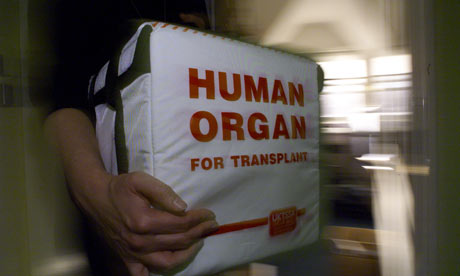
The Welsh Government's white paper on organ donation

Wales currently has high rates of organ donation, but 51
people still died waiting for a transplant in the last year.
(Pic : The Guardian)
It's been a rough week for them, so I think it's time I cut the Welsh Government some slack and focus on one of their boldest (and potentially controversial) moves - probably in the history of devolved government in Wales.

The Welsh Government published a white paper on Tuesday outlining their plans for a new law on organ donation. They are seeking views in a consultation that will end on January 31st 2012.


Background

51 people died waiting for an organ transplant in Wales for 2010/11. Although record numbers of people in Wales donated organs last year (83), the Welsh Government hopes that a presumed consent law would boost organ donation rates by as much as 25% and reduce unnecessary suffering.

In a rare bit of good news in the Western Mail, Wales currently has the highest organ donation rate of the home nations and one of the highest organ donation rates in Europe (behind the likes of Spain). However donation rates for hearts in particular have fallen consistently over the last 20 years.

What's proposed?

A "soft opt out system" – whereby consent for organ donation would be presumed upon death unless the person opted out of the organ donation register when alive.

Doctors would still look at the organ donor register (options listed below) to see if the deceased has wished to donate their organs, and would still seek the family views. The wishes of the deceased would be the overriding consideration. Consulting the family would make the families and medical professionals aware of unregistered objections and possible problems with transplanted organs (i.e lifestyle/behaviour issues).

The law would apply to:
  • Anyone over 18 who lives and dies in Wales.
  • Anyone over 18 who has lived in Wales for a certain length of time (the length of which is to be consulted).

The law would not apply to:
  • Anyone under 18.
  • Anyone over 18 who lives in Wales but dies elsewhere.
  • Anyone over 18 who doesn't have the capacity to understand the donation law or make a decision
  • Tourists and other visitors (anyone who doesn't ordinarily live in Wales).
  • Unidentified bodies

There are four proposed options for the new organ donor register:
  1. Separate registers for objectors and non-objectors
  2. A register only of those who have not objected
  3. A register of only whose who have objected
  4. No register, but an objection listed via the person's GP

A person would be able to opt out:

..........by "any and all methods put in place to enable an individual to make a confidential objection to donation in an easy and accessible manner". It would also "enable an individual to opt-out of donating all organs and tissues, or to opt-out of donating some organs or tissues."

Myths and rumours


It's time a few myths and rumours were scotched now. There won't be:


  • State ownership of the body – relatives would still be consulted as currently.
  • Organ harvesting – the transplantation procedures would remain exactly the same, donated organs would go to those who need them not automatically taken from every single dead person in Wales.
  • Sale of organs by the NHS – to suggest such is undeniably crass but I've already heard it/read it. Lesley Griffiths should stamp this ugly one out right now.
  • Donation to science – donated organs/tissues would only be used in transplant not stored for dissection, teaching or research. The dead won't end up in a Gunter von Hagens exhibition. The new law wouldn't change the procedures for donating bodies/organs/tissues to science either.

What are the arguments against?

There's clearly a liberty issue here – should the state have rights over the body after death? The good work to boost organ donation rates in Wales might be undermined if the system loses public confidence or makes people uncomfortable.

There are also moral and ethical questions – should organ donation be purely a gift? Would presumed consent violate religious beliefs about what should be done after death?

In my personal opinion because of the "soft opt-out" system proposed, controversy will be limited as long as the system for "opting-out" is well publicised and transparent.

If the Welsh Government had gone for a "hard opt-out" system – where consent would be presumed without consulting with relatives (unless the deceased had opted out) – then even liberal-minded people like myself would likely oppose the new law and it would be even more controversial.

No other pitfalls in sight?


On paper there shouldn't be any major constitutional or legal issues arising from this, though Alan Trench at Devolution Matters explores it in a bit more detail. Things are clearly a lot more complicated than appear.

Only xenotransplantation (transplantation between different species) is a reserved matter to Westminster if you go by the Scotland Act.

Transplantation requires consent as stipulated in the Human Tissues Act 2004, and under the proposed "soft" opt out system consent would still be sought.

Also, there's no sign that presumed consent would violate the Human Rights Act 1998 or the European Convention of Human Rights. Considering presumed consent is already used in several mainland European nations already, this was a given.

The only issues I can see arising are religious and ethical listed earlier, but the white paper does indicate that the Welsh Government would take personal/religious beliefs into account and are actively seeking such views for the consultation.

For students of politics, medicine or law, the Senedd debates in plenary and committee on this one could be worth watching....

Friday, 4 November 2011

Together for Health - Labour's latest 5-year plan for the Welsh NHS

This isn't the first time a Welsh Government has promised a "world class" NHS and Health Minister, Lesley Griffiths (Lab, Wrexham), unveiled the latest five-year plan/vision to boost NHS performance.

To call it a "plan" is over-egging it a little. It's more like a rallying call or a rather grand ministerial statement. There's more promises of "delivery" that Carwyn Jones has said would be at the heart of his government. There's more promises of "sustainability" too, while accepting there are clear problems down the line such as an aging population, budget pressures and difficulties in recruiting the right staff.

There's an acknowledgement that the general public need to take better care of themselves and that some specialist services need to be centralised.

Lesley Griffiths accused Elin Jones (Plaid, Ceredigion) and Plaid Cymru of scaremongering over "downgrading hospitals", but Lesley's trying to dodge the issue. If services are to be centralised from several hospitals to one or two then the services at those several hospitals have clearly been downgraded in most people's definitions. Elin Jones is correct and isn't scaremongering at all, just telling the truth.

Before I'm accused of being partisan, in my opinion the Welsh Government's policy on centralisation is correct too. This blog isn't a criticism of Lesley Griffiths, the new vision, or trumpeting Elin Jones or Plaid in any way shape or form – quite the opposite.

Centralisation makes sense in many cases. There's nothing fundamentally wrong with "downgrading" certain functions at district hospitals, or redefining district hospitals role, or providing more care at (or closer to) home instead of general hospitals - if it can improve the quality of patient care and patient outcomes.

Wales is overly reliant on hospitals to provide rudimentary and long-term care (like managing illnesses such as diabetes and arthritis) at the expense of district hospitals and primary care centres. If we really want a world class NHS, we're going to need world class centres of excellence. This means that our larger hospitals are going to have to focus more on highly specialist, critical and expert care, while our district hospitals might lose such services but in turn become far more important in managing treatment and recovery.

"None (district hospitals) will be downgraded" is bollocks. There'll be clear "winners and losers" from this process, but in the end, I don't believe patients will be losers - despite the inevitable psychological threat "downgrading" poses.

She doesn't need to shirk debate to justify it, as long as she puts across a good enough case. She can call it what it is – downgrading - she's in charge after all.

Lesley Griffiths has arguably the toughest job in Welsh politics. As soon as "downgrading" is out in the public domain by any means other than her own mouth - and local councillors start getting in on the action - she's toast. She needs to be honest and up front now, not when the first services are centralised. Being Health Minister isn't one of these roles where you can pretend to be everybody's friend.

The general public rightly criticise politicians for not telling it like it is. Why are the Welsh Government afraid of defending their own policies properly?