
This site is no longer updated

Please use the links in the sidebar to visit the new sites!

Thursday, 1 December 2011

Senedd Watch - November 2011

  • Business Minister, Edwina Hart (Lab, Gower), confirmed there will be no public money used to establish a Welsh internet domain name. Two not-for-profit companies : Nominet based in Oxford and Welsh company dotCYM are both seeking to create the new domain name.
  • Health Minister, Lesley Griffiths (Lab, Wrexham), set our her five-year plan for the Welsh NHS. She also rejected accusations by Plaid Cymru that hospitals were set to be "downgraded", however, the new plan does include the centralisation of certain services. She later warned NHS managers at their conference in Cardiff to meet stricter targets without a "margin for error".
  • The First Minister - after facing criticism from Plaid leader Ieuan Wyn Jones - has promised "substantial" new spending on capital projects, particularly in health. He did, however, admit that some projects could be "re-examined" in the face of spending cuts. Conservative leader Andrew Davies drew attention to the frustration in the small business community that not enough was being done to help win public sector contracts.
  • Carbon Monoxide – Be Alarmed, a lobbying organisation, met with Gwyn Price AM (Lab, Islwyn) to discuss the possibility of amending Welsh building regulations to ensure carbon monoxide detectors are installed in new homes.
  • The Welsh Government have been asked to justify spending £42million on consultants, IT and marketing in the current financial year. BBC Wales found the figures after the Welsh Government began producing figures for spending over £25,000.
  • A white paper outlining plans for an opt-out system of organ donation was published by the Welsh Governmentm and a consultation process - due to end in January 2012 - has begun. The plans could affect anyone over 18 who lives and dies in Wales, including those who move to and live in Wales for a certain length of time.
  • Environment Minister, John Griffiths (Lab, Newport East), announced a new Flood and Coastal Erosion Strategy in the aftermath of a cliff collapse near Rhoose in the Vale of Glamorgan. The new strategy will include a prioritisation of measures at areas most at risk as well as raising awareness of coastal flooding risks.
  • The First Minister was attacked by Plaid leader Ieuan Wyn Jones for "sitting back and allowing the economic crisis to do its worse" to "blame the Tories". He also said that many of the capital schemes listed by the Welsh Government had been completed or were already underway by the previous Welsh Government. The First Minister hit back by saying that Plaid had written the "shortest suicide note in history" in the May elections and that they didn't offer a "wealth of ideas" to protect the economy.
  • Leader of the Opposition, Andrew Davies (Con, South Wales Central), accused the First Minister of being "flippant" for not listening to concerns from nurses who felt overstressed and of whom 60% considered quitting according to a Royal College of Nursing report.
  • Former transport minister Ieuan Wyn Jones (Plaid, Ynys Mon) criticised the current £170million Welsh rail franchise, held by Arriva Trains Wales, and has called for it to be radically overhauled when the franchise is up for renewal in 2018. He criticised overcrowding on certain services and the contract that meant Arriva was under no obligation to provide additional services.
  • Bethan Jenkins AM (Plaid, South Wales West) has called for broadcasting to be devolved to the National Assembly, to "take oversight of S4C from a disinterested Department of Culture, Media & Sport".
  • Welsh Labour have said they would oppose plans to change the electoral system for the National Assembly off the back of proposed electoral boundary changes for Westminster elections. The First Minister has appealed directly to UK Prime Minister David Cameron to keep the current voting system. Welsh Labour have been criticised by the Electoral Reform Society for their "preferred change" to 2 candidates elected by first past the post.
  • The chief constable of South Wales Police, Peter Vaughan, has said he does not back the UK Government's proposal to raise the motorway speed limit to 80mph. He also called for the devolution of policing to the Welsh Assembly.
  • Network Rail has created a new Welsh division which will bring investment decisions closer to the Welsh Government, where railways are partially devolved. The budget however will still be within the remit of the UK Department for Transport.
  • Opposition AMs criticised the Welsh Government's policy on tuition fees, with Angela Burns AM (Con, Carmarthen West & South Pembs.) claiming that the expected £3.6billion cost of the policy put "Wales's finances at risk". Both Plaid Cymru and the Liberal Democrats also questioned the sustainability of the policy, however Plaid Cymru said they support the proposals in principle.
  • The First Minister gave a lecture at Aberystwyth University on the future of devolution. He said that in the event of  Scottish independence or devo-max, Wales would require additional powers and a "radical reconsideration" of it's relationship with the rest of the UK. He added, however, that these powers shouldn't be for their own sake, and outlines three key conditions which - in his mind - should be key considerations when devolving powers.
  • The Welsh Government's draft budget, and a united opposition motion, both failed to pass the Assembly, resulting in a budget deadlock. A deal was agreed between Labour and the Liberal Democrats on November 25th which will include increased spending on poor pupil grants and a £40million capital investment programme on schools, skills and energy efficiency.
  • Unemployment in Wales rose by 14,000 to stand at 9.3%, matching it's peak during the recession and 1% higher than the UK average.
  • The Conservatives have accused the Welsh Government of being "wasteful" after "excessive" spending on refurbishing the Cathays Park office complex – around £4million per year. The Welsh Government responded by saying that it's future estate plans would lead to cumulative savings of £18million.
  • Mick Antoniw AM (Lab, Pontypridd) and Byron Davies AM (Con, South Wales West) both criticised the Welsh Government and Abertis for the continuing decline in passenger numbers and fortunes at Cardiff Airport. The Welsh Government responded by saying they are looking at alternative ownership models, including a partial stake, which would enable greater state assistance to be provided.
  • Local Government and Communities Minister Carl Sargeant (Lab, Alyn & Deeside)  said that Wales is better prepared than ever for potential severe winter weather having based Welsh Government preparations on a "worse case scenario".
  • People across Wales and the football world have reacted with shock to the sudden death of Welsh national football team manager Gary Speed in an apparent suicide at the age of 42. The First Minister said that it was "devastating news and that our thoughts are with his friends and family at this time."
  • Environment Minister, John Griffiths (Lab, Newport East),  confirmed that three environment bodies in Wales will merge in 2013, despite concerns that the move might impact the economy - particularly the timber/wood industries.
  • Millions of public sector workers across the UK took part in a one day strike on November 30th due to the failure of the UK Government and trade unions to be able to reach an agreement on public sector pension reforms.

Projects announced in November include : the reinstatement of a bus link between Rogerstone railway station and Newport, a £13.5million business park at Cross Hands in Carmarthenshire, a £1.4million investment for Wales Rally GB, a £2.5million improvement scheme to Aberystwyth rail and bus stations, a £55million expansion of the Flying Start pre-school scheme and a £90million Capital Investment Package.
Tuesday, 29 November 2011

Saving the Welsh press

(Owen: I have to say my heart isn't in it to write new blogs at the moment, but due to some of the content I have to make it clear that this was written before Sunday's news.)

I've been critical of the Western Mail in the past, but it's still the best source of detailed Welsh political and economic news. It's closure or "downgrade" would be a sad loss to Welsh civic life.

However, the print media as a whole is in decline and it's an even worse situation for (so-called) "regional" and local titles. Even the Scottish print press - which Wales has often looked enviously at - has seen significant circulation falls. News is now instant and online. Consumers no longer have the patience to make do with a single source produced once a day - and in many cases - don't want to pay for it either.

Many may point the finger at blogs, but all bloggers do is provide commentary on what the "old media" report. Blogs are no substitute for quality journalism. I don't believe bloggers are trying to muscle in on that territory, or plagiarise journalists work, just provide alternative viewpoints, analysis and - ideally - provide extra exposure for journalists stories.

In Wales the situation is typically grim. Wales has always lacked a proper "national" media unlike Scotland, and attempts to create such usually end in failure for a number of reasons. Sometimes commercial, like losing the independent ITV licence or job cuts at Media Wales. Sometimes political and cultural, like a national media that is largely Welsh medium in focus and people simply voting with their wallets.

News on Welsh NHS changes might be important to the Welsh public, but you can't beat a two page spread of Kim Kardashian's arse in the Daily Mail to turn heads. The only way you can get Welsh news high up in the "British" press is either a human tragedy, a story along the lines of "those wacky Welsh and their foreign ways" or something far more banal.

Andrew RT Davies growing a dodgy mullet, Kirsty Williams getting flesh tube earrings or a Labour backbencher grinning through the stages of putrefaction at a really bad Carwyn Jones quip and nobody noticing until the following Tuesday. That sort of thing.

What can we do about it?

Bethan Jenkins AM (Plaid, South Wales West) - who's a member of the Assembly's task and finish group on the future of the Welsh media - suggested on Wales Home a few days ago that one possible "radical" solution would be to take Media Wales into public ownership, before handing it over to a not-for-profit journalist co-op.

A not-for-profit/co-op model for Media Wales? A good idea that's definitely worthy of investigation. However, evidence submitted to the group showed that Media Wales was making a tidy profit for Trinity Mirror despite the plunging circulation. A co-op type model is usually wheeled out only when a business is commercially unsustainable or unviable. But in this case, it might be a necessity.

Some sort of state subsidy is also worthy of discussing. I'll look at that further down.


Public ownership of a newspaper? No. No. No.

I don't want to go off on a tangent, but this is a perfect illustration of the Plaid Paradox. A perfectly reasonable solution to a problem becomes overshadowed by a suggestion that sounds "radical" but in reality is ill thought through. Electable, then unelectable, at the same time.

Wales might be left-leaning, but if a certain tendency within Plaid think that we want to live like The Smurfs, they need to loosen the keffiyah, put down the bong and Zillah Eisenstein and actually take a look around.

We like buying pointless crap. We generally like choice. We're some of the worst when it comes to conspicuous consumption. We're fine with publicly owned services, but I think most of us will draw the line at a publicly owned newspaper – even if it's temporary.

Surely it's easy to understand why a suggestion that the main newspaper holding the Welsh Government to account should be owned by the Welsh Government isn't going down too well.

At least Bethan Jenkins has stood up and said something about the market failing the Welsh media and prompted some debate. Perhaps good can come out of it after all.

The state can help – but how?

I might not - personally - believe that the state should be within bargepole distance of the print media, but there are certainly ways the state can help without needing to take over newspapers.

Norway is ranked joint number 1 in the Worldwide Press Freedom Index, yet it operates a form of subsidy for its press managed by the Norwegian Media Authority. It was introduced in the 1960s after fears the Norwegian press was going through such a decline that freedom of speech and institutional accountability were at risk. Subsidy is given to newspapers that don't have the largest circulation in their respective areas, but also for press research and minority languages like Sami.

Technically the Welsh Government already does something similar to this.

Suzy Davies AM (Con, South Wales West) asked a question to Housing and Heritage Minister Huw Lewis (Lab, Merthyr Tydfil & Rhymney) a few weeks ago about Golwg 360.

Golwg360 is an online Welsh language "newspaper" subsidised indirectly via the Welsh Books Council to the tune of £200,000. It's attracting approximately 1million page visits a year. Golwg 360 is owned by private company Golwg Newydd - its sister company producing the Golwg magazine.

Some ideas for strengthening the Welsh press

General:
  • Use the Welsh Books Council as a conduit for government press support. It would be independent of government interference and could have a new remit similar to that of the Norwegian Media Authority.
  • Use subsidy (via the "beefed up" Welsh Books Council) to increase the plurality of Welsh media online and via mobile devices – including the creation of new English-language and bilingual "online newspapers".
  • Start a round of "bidding" , and grant subsidy to (for arguments sake, an initial four) bids with the best case – the criteria can be decided independently by a panel of media experts. These new outlets should be expected to be run on a commercial basis and wean themselves off the subsidy as much as possible.
  • The Welsh Government can help with publicity, but that should be the extent of their involvement. For example, giving these new "publications" preferential access to ministers, AMs and news briefings.
  • Make new media and social media a key part of the curriculum at Cardiff School of Journalism.

Specifically relating to Media Wales and other existing print media:
  • Encourage a new model of ownership for Media Wales. Options on the table should include cooperative and not-for-profit status to ensure Media Wales can survive as a stand-alone business.
  • Work with Media Wales and Trinity Mirror to massively overhaul and update their online and mobile presence. The Walesonline website is incredibly dated and difficult to navigate for example.
  • The Western Mail and Wales on Sunday should become a high-quality "broadsheets", perhaps justifying a very high quality – on a par with the Observer or The Times - weekly edition.
  • Media Wales should consider launching a national free-sheet or national tabloid perhaps based on the South Wales Echo or Daily Post "brands".
  • At least one of the bigger non-Trinity Mirror owned Welsh publications (i.e. The Western Telegraph, South Wales Evening Post, South Wales Argus) should be encouraged to "go national" – either online or in print form (see general ideas above) to encourage competition and plurality.

Sunday, 27 November 2011

Gary Speed 1969-2011

I was going to post an "Independence Minutiae" blog today but that can wait due to the - to be frank - utterly devastating and shocking news that Wales football manager and Premier League legend Gary Speed has died.

I'm not going to speculate on how or why.

Utterly shocking. I'm speechless. He was only 42.

=======================================================

UPDATE 29/11/2011

S4C's Sgorio tribute to Gary Speed is now on Clic for the next few weeks. English subtitles are available by clicking the "S" in the player.

Friday, 25 November 2011

Labour and Lib Dems agree budget deal

As I predicted last week, Labour and the Lib Dems have broken the deadlock to agree a budget that will now surely pass the Assembly.

The deal includes:


  • An extra £20million for the "Pupil Deprivation Grant".
  • A £38.9million economic stimulus package over the next two years to be spent on capital investment in schools, skills, and an increase in funding for the Arbed energy efficiency scheme.
  • Any consequentials resulting from the UK Government's Autumn Statement will be discussed between the two leaders.

On the surface of it, it looks as though Kirsty Williams has sold herself short. It will only become interesting if we know the scale of any of those possible consequentials from the Chancellor next week. Carwyn Jones and Kirsty Williams really must be hoping for something significant.

If there are substantial sums of money involved, particularly capital investment, then it might be enough to stave off the inevitable backlash on the economy from Plaid Cymru. Ieuan Wyn Jones has an open goal here.

If the Welsh Government think this tinkering really will "ensure jobs and growth can be delivered" then we're in deeper trouble than I thought.

Tuesday, 22 November 2011

At last! The sensible argument against Team GB

At least it's a Welshman that's come out and said it.......

World hurdling champion Dai Greene is quoted on BBC Wales as saying:
"I don't think the football team should be there in the first place. I hope that those big names don't overshadow those people who have trained for four years to be there for that one moment. These guys have four to five weeks off in the summer then become an Olympian. It does seem a little bit out of place.
These guys want to win Premierships, Champions League trophies and World Cup medals. They don't grow up wanting to be an Olympic champion, they want to be the best in football. The crowning glory in football isn't being Olympic champion so I don't think their sport should necessarily be involved - or at least at a professional level."

Thank you Dai.

The "threat" to national teams independent status is the eye-catching reason for opposition to Team GB, but the best reason against it is far simpler.

The Olympics are about "being the best". It's supposed to be the pinnacle for sports that don't have an important or clearly defined World Championship. It's something those pushing Team GB have conveniently forgotten.

Olympic football is a redundant sideshow that players like Gareth Bale and Aaron Ramsey are far too good to play in. It's an under-23 competition that only South American and African countries have ever put any hard effort into trying to win in modern Olympics, and will be completely overshadowed by the European Championships. I'd be surprised if either Tottenham or Arsenal even release Bale and Ramsey, in what will be the late preparation period for the 2012-13 Premier League season.

There are several Olympic sports that the UK has never competed competitively in. Team GB have cobbled together makeshift teams for sports like basketball, handball and of course football, because they don't want to "lose face" as hosts.

If I were - for example, a German - I'd consider playing against a British handball team on the biggest sporting stage an insult.

I'd also be furious if I were a British athlete, whose silver medal has been taken off the back pages, because Team GB have drawn with Cameroon Under-23s thanks to a David Beckham assist.

Obviously from my perspective, it would be ideal if there were a Welsh Olympic team. However, I don't begrudge Welsh athletes competing under the Union flag in events like athletics or cycling. That's the way they've always done it (Commonwealth games aside) and for them it's the highlight of their career.

Let's not take anything away from them for the sake of saving Seb Coe's blushes.


Saturday, 19 November 2011

Back on track - Network Rail's long overdue "devolution" to Wales

Network Rail, the company responsible for rail infrastructure in England, Scotland and Wales, has finally created a new all-Wales division. They announced the move many months ago off the back of the Department for Transport's McNulty Report, which suggested "devolution and decentralisation" to improve efficiency. This week, the First Minister formally launched their new operation near Cardiff Central station.

Why is this such an important development?

Railways have been partially devolved to the Assembly since 2005. Network Rail decisions - like those relating to station refurbishments or other major railway improvements - were still made on an EnglandandWales basis. The Assembly did have some influence over the railways, such as funding the Arriva Trains franchise and providing money to "improve services."

In all honesty, it was a bit of a dog's dinner. The Third Assembly's Enterprise & Learning Committee report into future railway infrastructure in Wales found:
  • Stations like Cardiff Central were not being prioritised in a way that acknowledged their "major role" or passenger numbers.
  • Network Rail had no idea how much they actually spent on railways in Wales - only estimates.
  • The UK Government thought it was "unacceptable" to devolve Network Rail to Wales because too many services shared infrastructure and cross-border services. Transport Scotland didn't see this as an issue in their own arrangement.
  • The majority of witnesses to the inquiry supported further devolution of the railways to the Assembly.
  • Scotland was able to spend "several hundred million pounds" on rail infrastructure because of it's block grant allocation and rail devolution, Wales "didn't have that luxury".

Now that Network Rail will make decisions in Wales, it gives the Assembly much greater clout in prioritising schemes. It also means that there is - at last - a joined up system for running Welsh railway infrastructure. Hopefully, it'll lead to many big improvements in the next few years a lot quicker than they otherwise would have on an EnglandandWales basis such as:
  • Station improvements to Cardiff Central and Queen Street Stations
  • Electrification of the south Wales main line to Swansea
  • Possible future electrification of the Valley Lines and north wales mainline
  • Capacity improvements around Cardiff & Newport
  • A rail service between Ebbw Vale and Newport
  • Reopening the Aberdare-Hirwaun line and line from Gaerwen to Llangefni (or Amlwch) to passengers
  • Redoubling of track between Llanelli and Swansea
  • More frequent services in west Wales

There is, however, a big catch. Although the decision making is now devolved, the Network Rail budget isn't, and currently, around 3% of Network Rail funding is spent on the Welsh rail network (which includes a chunk of England's) - around 2% lower than the Welsh UK population share. Scotland, however, does receive it's population share, and has used the money to carry out some significant improvements to the Scottish rail network.

Part of that "missing" 2% will be used by the UK Government to fund projects like Crossrail, Reading Station redevelopment and electrifying rail lines to Blackpool (while electification to Swansea is moving at a slow pace).

I believe that this could be because within EnglandandWales funding has been dependant on the length on the network/route miles and not on passenger numbers or national/regional population share. With Network Rail devolved, the next piece in the puzzle is to devolve the budget in line with Scotland.

Welsh railways are back on track perhaps, but not going anywhere fast just yet.

Saturday, 12 November 2011

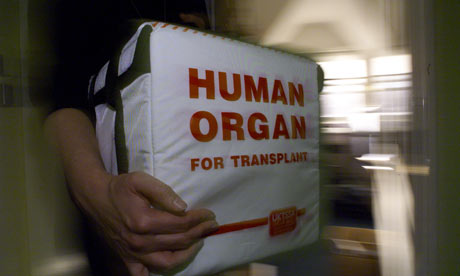
The Welsh Government's white paper on organ donation

Wales currently has high rates of organ donation, but 51
people still died waiting for a transplant in the last year.
(Pic : The Guardian)
It's been a rough week for them, so I think it's time I cut the Welsh Government some slack and focus on one of their boldest (and potentially controversial) moves - probably in the history of devolved government in Wales.

The Welsh Government published a white paper on Tuesday outlining their plans for a new law on organ donation. They are seeking views in a consultation that will end on January 31st 2012.


Background

51 people died waiting for an organ transplant in Wales for 2010/11. Although record numbers of people in Wales donated organs last year (83), the Welsh Government hopes that a presumed consent law would boost organ donation rates by as much as 25% and reduce unnecessary suffering.

In a rare bit of good news in the Western Mail, Wales currently has the highest organ donation rate of the home nations and one of the highest organ donation rates in Europe (behind the likes of Spain). However donation rates for hearts in particular have fallen consistently over the last 20 years.

What's proposed?

A "soft opt out system" – whereby consent for organ donation would be presumed upon death unless the person opted out of the organ donation register when alive.

Doctors would still look at the organ donor register (options listed below) to see if the deceased has wished to donate their organs, and would still seek the family views. The wishes of the deceased would be the overriding consideration. Consulting the family would make the families and medical professionals aware of unregistered objections and possible problems with transplanted organs (i.e lifestyle/behaviour issues).

The law would apply to:
  • Anyone over 18 who lives and dies in Wales.
  • Anyone over 18 who has lived in Wales for a certain length of time (the length of which is to be consulted).

The law would not apply to:
  • Anyone under 18.
  • Anyone over 18 who lives in Wales but dies elsewhere.
  • Anyone over 18 who doesn't have the capacity to understand the donation law or make a decision
  • Tourists and other visitors (anyone who doesn't ordinarily live in Wales).
  • Unidentified bodies

There are four proposed options for the new organ donor register:
  1. Separate registers for objectors and non-objectors
  2. A register only of those who have not objected
  3. A register of only whose who have objected
  4. No register, but an objection listed via the person's GP

A person would be able to opt out:

..........by "any and all methods put in place to enable an individual to make a confidential objection to donation in an easy and accessible manner". It would also "enable an individual to opt-out of donating all organs and tissues, or to opt-out of donating some organs or tissues."

Myths and rumours


It's time a few myths and rumours were scotched now. There won't be:


  • State ownership of the body – relatives would still be consulted as currently.
  • Organ harvesting – the transplantation procedures would remain exactly the same, donated organs would go to those who need them not automatically taken from every single dead person in Wales.
  • Sale of organs by the NHS – to suggest such is undeniably crass but I've already heard it/read it. Lesley Griffiths should stamp this ugly one out right now.
  • Donation to science – donated organs/tissues would only be used in transplant not stored for dissection, teaching or research. The dead won't end up in a Gunter von Hagens exhibition. The new law wouldn't change the procedures for donating bodies/organs/tissues to science either.

What are the arguments against?

There's clearly a liberty issue here – should the state have rights over the body after death? The good work to boost organ donation rates in Wales might be undermined if the system loses public confidence or makes people uncomfortable.

There are also moral and ethical questions – should organ donation be purely a gift? Would presumed consent violate religious beliefs about what should be done after death?

In my personal opinion because of the "soft opt-out" system proposed, controversy will be limited as long as the system for "opting-out" is well publicised and transparent.

If the Welsh Government had gone for a "hard opt-out" system – where consent would be presumed without consulting with relatives (unless the deceased had opted out) – then even liberal-minded people like myself would likely oppose the new law and it would be even more controversial.

No other pitfalls in sight?


On paper there shouldn't be any major constitutional or legal issues arising from this, though Alan Trench at Devolution Matters explores it in a bit more detail. Things are clearly a lot more complicated than appear.

Only xenotransplantation (transplantation between different species) is a reserved matter to Westminster if you go by the Scotland Act.

Transplantation requires consent as stipulated in the Human Tissues Act 2004, and under the proposed "soft" opt out system consent would still be sought.

Also, there's no sign that presumed consent would violate the Human Rights Act 1998 or the European Convention of Human Rights. Considering presumed consent is already used in several mainland European nations already, this was a given.

The only issues I can see arising are religious and ethical listed earlier, but the white paper does indicate that the Welsh Government would take personal/religious beliefs into account and are actively seeking such views for the consultation.

For students of politics, medicine or law, the Senedd debates in plenary and committee on this one could be worth watching....

Friday, 4 November 2011

Together for Health - Labour's latest 5-year plan for the Welsh NHS

This isn't the first time a Welsh Government has promised a "world class" NHS and Health Minister, Lesley Griffiths (Lab, Wrexham), unveiled the latest five-year plan/vision to boost NHS performance.

To call it a "plan" is over-egging it a little. It's more like a rallying call or a rather grand ministerial statement. There's more promises of "delivery" that Carwyn Jones has said would be at the heart of his government. There's more promises of "sustainability" too, while accepting there are clear problems down the line such as an aging population, budget pressures and difficulties in recruiting the right staff.

There's an acknowledgement that the general public need to take better care of themselves and that some specialist services need to be centralised.

Lesley Griffiths accused Elin Jones (Plaid, Ceredigion) and Plaid Cymru of scaremongering over "downgrading hospitals", but Lesley's trying to dodge the issue. If services are to be centralised from several hospitals to one or two then the services at those several hospitals have clearly been downgraded in most people's definitions. Elin Jones is correct and isn't scaremongering at all, just telling the truth.

Before I'm accused of being partisan, in my opinion the Welsh Government's policy on centralisation is correct too. This blog isn't a criticism of Lesley Griffiths, the new vision, or trumpeting Elin Jones or Plaid in any way shape or form – quite the opposite.

Centralisation makes sense in many cases. There's nothing fundamentally wrong with "downgrading" certain functions at district hospitals, or redefining district hospitals role, or providing more care at (or closer to) home instead of general hospitals - if it can improve the quality of patient care and patient outcomes.

Wales is overly reliant on hospitals to provide rudimentary and long-term care (like managing illnesses such as diabetes and arthritis) at the expense of district hospitals and primary care centres. If we really want a world class NHS, we're going to need world class centres of excellence. This means that our larger hospitals are going to have to focus more on highly specialist, critical and expert care, while our district hospitals might lose such services but in turn become far more important in managing treatment and recovery.

"None (district hospitals) will be downgraded" is bollocks. There'll be clear "winners and losers" from this process, but in the end, I don't believe patients will be losers - despite the inevitable psychological threat "downgrading" poses.

She doesn't need to shirk debate to justify it, as long as she puts across a good enough case. She can call it what it is – downgrading - she's in charge after all.

Lesley Griffiths has arguably the toughest job in Welsh politics. As soon as "downgrading" is out in the public domain by any means other than her own mouth - and local councillors start getting in on the action - she's toast. She needs to be honest and up front now, not when the first services are centralised. Being Health Minister isn't one of these roles where you can pretend to be everybody's friend.

The general public rightly criticise politicians for not telling it like it is. Why are the Welsh Government afraid of defending their own policies properly?

Monday, 31 October 2011

Senedd Watch - October 2011

  • A 5p charge for single-use carrier bags came into force in Wales on October 1st. The money collected by the charge will be donated to charities that work in Wales. Business groups raised concerns that many traders are still confused about the scheme. Exemptions to the charge include bags used for medicines and some foods.
  • The National Farmers Union of Wales has said that farmers on lower quality land will miss out on subsidies under changes made to the Welsh Government's Glastir programme. NFU Wales President Ed Bailey, said that farmers have been "duped". Deputy Minister for Agriculture, Alun Davies (Lab, Blaenau Gwent), responded by saying the changes were recommended by an independent review group.
  • Leader of the Opposition in the Assembly Andrew Davies gave his first speech as Welsh Conservative leader at their annual conference in Manchester. He attacked Labour's record on health, saying Aneurin Bevan would be "turning in his grave" at planned £1billion cuts to health spending in Wales. He also criticised "freebies", called for a Cancer Drugs Fund and said that the Welsh Conservatives would support "sensible ideas" that boost the Welsh economy. Welsh Secretary Cheryl Gillan also attacked Labour in Wales, calling them "timid" and accusing them of "foot-dragging" over issues such as enterprise zones.
  • A Welsh language "virtual" university has launched to increase the number of students studying in Cymraeg at higher education. Coleg Gymraeg Cenedlaethol, which will work through existing universities, will offer a variety of different modules through the medium of Welsh, and hopes to have 100 lecturers on board by 2015.
  • Finance Minister Jane Hutt (Lab, Vale of Glamorgan) presented the Welsh Government's draft budget to the Senedd on October 4th. Health and Education have seen increases in their budgets while Housing & Heritage, Business and Environment have seen modest budget decreases. Five key Labour election pledges have been kept as part of the budget - including a Jobs Fund, and extra 500 PCSO's and the protection of universal benefits such as free prescriptions.
  • In response to the draft budget Plaid Cymru leader Ieuan Wyn Jones accused Labour of "raiding" the Assembly's reserves to meet manifesto commitments, leaving less money available for emergencies. Peter Black (Lib Dem, South Wales West) said the draft budget was "bare minimum" and "timid" while Paul Davies (Con, Preseli Prembrokeshire) said that the budget was "smoke and mirrors".
  • Meri Huws was named the first Welsh Language Commissioner by the Welsh Government - a role which will see the Welsh Language Board wound up as the result of the Welsh Language Measure passed in the 3rd Assembly. Bethan Jenkins AM (Plaid, South Wales West) raised concerns about how Meri - a former chair of Cymdeithas yr Iaith - will transition to her new role from the WLB.
  • BBC Wales outlined how they will save £10.7million as part of a UK-wide spending review by the BBC in London. There will be no cuts to news output, but some changes to political and radio coverage. Coverage of live events and sports with "high value" will be maintained. 100 jobs are expected to be lost.
  • The numbers of pupils achieving 5 A*-C grades at GCSE in 2011 rose slightly, with 49.6% getting the grades compared with 49.4% in 2010. The numbers at ages 16 with no qualifications at all has hit an all time low at just 0.7%.
  • Health Minister Lesley Griffiths (Lab, Wrexham), launched the annual winter flu vaccine awareness campaign, which encourages "at risk" groups - such as pensioners and those with underlying health conditions - to protect themselves.
  • Exports from Wales rose in value by 31.4% over the 12 months to June 2011 to stand at just over £13bn. Exports also rose in value for the other Home Nations, but Wales saw the fastest increase in value of exports and imports (which rose in value by 26.8%) of any nation or region of the UK over the period.
  • The European Union unveiled plans for the Common Agricultural Policy (CAP) from 2013. Some £260million is paid to Welsh farmers every year, and Farmers Union of Wales president Emyr Jones said that proposed changes would "destabilise" rural Welsh communities by taking agricultural land out of food production.
  • Education Minister Leighton Andrews (Lab, Rhondda), said that the University of Wales "requires a decent burial" after a series of scandals, including links with questionable foreign colleges and concerns about degree validation. On October 21st, the University of Wales merged with Trinity St David and Swansea Metropolitan to become University of Wales Trinity St David, ending the university's 120-year history.
  • Unemployment in Wales rose sharply by 16,000 in the three months to August 2011 to stand at 9%. UK unemployment rose by 114,000 to reach the highest level in 17 years at 8.1%.
  • The latest EU Objective One figures show that West Wales & The Valleys are one of several regions of the EU that have become poorer after two rounds of funding, with GVA per capita falling from 66.8% to 64.4% of the EU average in 2008. Labour MEP Derek Vaughan believes that this is because of mismanagement of EU funding. The European Commission said that although the figures are disappointing, the geography of the area and the global economic downturn are to blame.
  • A cross-party group of AMs won a vote on a motion for the Welsh Government to introduce a ban on "smacking" children in Wales. Issues remain regarding whether the Assembly has the power to amend criminal law. Deputy Minister for Children & Social Services Gwenda Thomas (Lab, Neath) ruled out any new legislation.
  • The Welsh Government is starting consultation on a proposed law that would require under-16's to have parental permission before getting cosmetic piercings.
  • 22 Local Safeguarding Children Boards (LSCB's), responsible for the protection of vulnerable children, will be replaced with six Safeguarding and Protection Boards which will have the added responsibility of vulnerable adults. Social Services Minister Gwenda Thomas said that 22 LSCB's was "not sustainable".
  • Local Government and Communities Minister Carl Sargeant (Lab, Alun & Deeside) pleaded for local councils to take a "forensic approach to their accounting" before deciding on possible council tax rises in Wales. The Welsh Local Government Association says that local councils may struggle to balance the books off the back of the draft budget - which allocated local government a below inflation 0.24% rise in their total budget of approximately £4billion.
  • The First Minister and the mayor of Chongqing, China signed a memorandum of understanding which is hoped will lead to industrial, social and cultural exchanges. The First Minister visited the China International Garden Expo, which included a showcase garden by the National Botanical Garden of Wales.
  • A deal has been agreed between the BBC and S4C over funding until 2017. The deal will include some BBC influence over S4C's direction, with a BBC Trustee appointed to the S4C Authority. However S4C will retain it's editorial and managerial independence. Cymdeithas yr Iaith dropped their campaign to boycott the licence fee, but remained unhappy, instead calling for broadcasting to be devolved to Wales.
  • An obesity expert called for the Welsh Assembly to levy a "fat tax" to help reduce the numbers of overweight and obese people in Wales. Dr Nadim Haboudi - a gastroenterologist - added that subsidising healthy foods could also be an option. The latest figures showed that 21% of the Welsh population is obese, compared to 26% in England and 22% for the UK as a whole.
  • A ban on unmanned tanning beds in Wales came into force on October 31st, with fines of up to £20,000 against businesses that flout the new rules.

Projects announced in October include a £1.9million scheme to encourage sustainability in Welsh National Parks, a £75million jobs fund that aims to create 12,000 jobs for youngsters, a £45million reorganisation of 4 schools in Penarth, a £5million Assembly land sale that could create up to 70 logistics jobs in Holyhead, a £7.5m revamp of Port Talbot Parkway railway station and a £6million refurbishment of the Glynn Vivian Art Gallery in Swansea.

Monday, 24 October 2011

Scotland the brave, Unionists the confused, Wales the nervous

The SNP held their annual conference in Inverness over the weekend. There's a video and link to the text of Alex Salmond's keynote speech over at Syniadau.

The other parties are pushing for a clear timetable for an independence referendum and called for clarification on other independence related issues, for example defence. The Scottish Government produced a white paper in 2009 called "Your Scotland, Your Voice" which addressed many key points albeit without detailed plans for each. This white paper has been conveniently ignored.

As for a timetable, my guess is that 2012 is a no-no as "Britishness" peaks through the Olympics and Diamond Jubilee. I think the impact of these things is over inflated anyway. Apparently there was a big "British" wedding earlier in the year, but all I can remember from it is a woman's small bum becoming big news. My gut instinct says that sometime in the second half 2014, when "Scottishness" hits a peak through the Commonwealth Games in Glasgow, would be the likely time. It's entirely the Scottish Parliament's decision when a referendum is held, and if Unionists want to win, it might be a good idea not to be seen to be lecturing Scottish politicians.

Also of interest, it appears as though Alex Salmond might be considering putting a "devolution-max" option on the ballot paper. This might well cost them a yes vote for independence, but it's a canny move by Salmond. A few months ago, I wrote a piece on the parallels between Scotland and Quebec, during one of the referendums there the Canadian Prime Minister went behind the Quebec nationalists back and put forward constitutional changes. Alex Salmond has now prevented David Cameron or anyone else from controlling the agenda or making a similar offer.

The only thing I can see David Cameron doing now to claw back some influence over proceedings is try prevent a multi-option referendum and push for a straight "in or out" vote. The irony considering today's motion in Westminster would be delicious. I think though that, for sheer pragmatic reasons, the UK Government would be satisfied with devolution-max - Conservatives and the Lib Dems could even support it - as long as it keeps British nuclear weapons on the Clyde and Scottish soldiers in the army the Union intact in some form.

Jim Murphy MP has asked "what does devo-max actually mean?" I've always understood it as the devolution of everything except defence, foreign affairs, macroeconomic policies like currency and some aspects of the constitution. Pretty straight forward stuff I think and well explained before.

Now Jim Murphy has a large head. I'm sure inside it resides a large brain - he certainly comes across as intelligent and articulate. I'm sure he knows what it means. Labour in particular have reasons to be worried about "devo-max". Firstly, the Labour party's baby – the welfare state – could find itself under the control of the SNP, joining Labour's other baby under SNP control – the NHS. Labour couldfind itself marginalised on traditional "Labour issues" both north and south of the border.

Secondly, devo-max could well justify another significant reduction in the number of Scottish Westminster MPs. That would not only make it harder for ambitious Scottish Labour personalities to climb the ladder in London, but would hurt the chances of an overall UK Labour majority for obvious reasons. Gordon Brown could very well have been the last ever Scottish UK Prime Minister. Not really that good for the union in the long term.

What does all this mean for Wales?

Gareth Hughes and Welsh Ramblings have discussed the possible implications. The first is that the Silk Commission could  be pushed to devolve economic powers such as tax varying to the Assembly – powers Welsh Labour have explicitly not sought. It could also mean the end to any possible reforms to Barnett - which will no doubt dismay both Plaid Cymru and Labour - but help keep Scotland in the Union.

Handling Alex Salmond with kid gloves is going to have a "negative" impact on Wales regardless. Alex Salmond isn't there to look out for anyone else but Scotland, and that's what makes him such a brilliant politician. There isn't any sort of "Celtic solidarity" when it comes to the nitty gritty issues.


The onus will be quite firmly on the Welsh Government to improve our lot in ways that really matter, instead of twiddling their thumbs thinking of tiny "quality of life" issues to resolve. If the Silk Commission does decide to give Wales similar economic powers to Scotland under devo-max, the Welsh Government would no longer have a half-empty toolbox.

We'll only get a real taste of what our AMs are made of when they start making decisions that would affect personal or business finances. It could make or break devolution in Wales, and those of us who support independence will be hoping more than many others that they are up to the task.

Thursday, 20 October 2011

The smacking ban and devolution

As you might have heard, a cross-party Assembly group put forward a motion proposing that the Welsh Government introduce new legislation to outlaw "smacking". The vote on the motion was won 24-15, but Social Services & Children Minister Gwenda Thomas (Lab, Neath) has ruled out any legislation.

As for my personal view on any potential ban, I'm firmly on the fence.

The state shouldn't mandate how children are disciplined in the home - it's a matter for parents alone - and I consider that an overriding principle.

On the other hand, resorting to violence to get children to cooperate - in my opinion -means the parent has "lost it", not the child. Using euphemisms like "smacking" detracts from the fact that corporal punishment is an outdated Victorian concept. There's something typically British about wanting to give someone a wallop (literally or metaphorically) when they do wrong - including children.

Though there is room to define "good practice", you end up creating another 40-page Assembly circular that only bureaucrats and politicians will read. Those who should read it – parents - will ignore it or won't even know it exists. You'll also be back at the first argument, going around in circles and providing cover for those parents who would use "discipline" as an excuse for poor parenting or even child abuse.

In EnglandandWales, "reasonable chastisement" is currently legal, provided it doesn't leave a mark. As usual with common law, the definitions and legalese leave it out of the realm of public understanding, and just creates work for solicitors and legal secretaries. The Scottish Parliament debated a full ban a few years ago but passed a watered-down version.

Welsh Select Affairs Committee chair David Davies MP (Con, Monmouth) has (quite correctly) raised concerns that any ban would encroach into criminal law - which isn't devolved and is an EnglandandWales matter. His personal views on the ban notwithstanding (he opposes it, quelle surprise), the devolution settlement is starting to strain.

I don't think this Labour government, with its commitment to children's rights, would walk away from a chance to introduce a smacking ban without there being underlying issues. Could said issues have prevented Gwenda Thomas from taking the Assembly's motion forward?

The Assembly and Welsh Government have previously introduced measures and regulations that could be classed as changes to criminal law and/or enable criminal prosecutions - the ban on shock collars for instance, or the law on single use carrier bags. If these laws can't be enforced properly or can be easily overturned by the likes of the Supreme Court, then Welsh laws are effectively useless, our AMs time wasted and it makes a mockery of devolution.

We elect our AMs on the basis that "protection and well being of children" (as written in Schedule 7 of the Government of Wales Act 2006) is a devolved Wales-only matter. If the Welsh electorate don't like what AMs are proposing we can vote them out in 2016.

If the constitution is hamstringing ordinary AMs and the Welsh Government from doing their jobs as they see fit, isn't it time for David Davies and Cheryl Gillan to seriously consider devolution of criminal justice and a separate Welsh legal jurisdiction?

All I can see them doing in the future is threatening to run to the Supreme Court every time the Assembly proposes something they don't like, using EnglandandWales as a massive loophole and ensuring they (and their roles) stay relevant.

Not good for devolution, not good for the constitution and certainly not good for effective and efficient governance in Wales.

If the Welsh Government are breathing a sigh of relief that they've escaped a "constitutional confrontation", just wait until the Organ Donation Bill....

Thursday, 13 October 2011

Throwing the baby out with the bathwater


I'm often critical of what constitutes a "scandal" in Wales these days. In the past few years we've had cigar smoking, iPods, Lib Dem administrative oversights and this week a provocatively expensive table. However the goings-on at the University of Wales have "shamed" the institution to such an extent that the proverbial last rites are being administered by Leighton Andrews.

What was once a federation of all of Wales' higher education establishments has withered to a rump of its former self. Most of its work appears to be in validating qualifications for various centres around the world – this isn't as unusual or as dodgy as it sounds. The institution which kicked off the scandal back in 2008 was the venerable Trinity College of the Bible and Theological Seminary in Indiana, which had its degrees validated by the University of Wales, but was not accredited by UoW or any US university either. Oh dear.

In the last few weeks BBC Wales revealed a separate visa scandal, now being investigated by the UK Border Agency. Students at a "centre" in London were exempted from working on MBA's, enabling them to apply for visas to stay in the UK, by purchasing "advanced" diplomas and seeing UoW exam papers in advance.

Despite announcing on October 3rd that they would stop validating other institution's degrees, several universities have called for the UoW to be wound up. UWIC is already rebranding itself as Cardiff Metropolitan University, while Wrexham-based Glyndwr University is seeking degree-awarding powers. All that will be left of the UoW it seems will be a tarnished brand, ruined reputation and a largely redundant registry in Cathays Park.

However eager people are to smack down the UoW, and however convenient this all is, the University of Wales still plays a critical role in the Welsh higher education sector. The Prince of Wales Innovation Scholarships (POWIS), run by the UoW Global Academy and funded by the EU and Welsh universities and businesses, aims to fund and attract high-achieving graduates to Wales to undertake research & development at Welsh universities and Welsh companies.

Although there's certainly an argument that we should be investing in Welsh graduates to do this kind of work, with research and development an increasingly competitive and vital part of the global economy, Wales should seize any advantages and opportunities that come along.

By suspending funding and reviewing the POWIS scheme, perhaps using the scandals as a bit of cover, the Welsh Government might have created a longer-lasting negative impact on Welsh higher education than anything the University of Wales might have done. UoW claims that POWIS has brought in £12.5million of investment in two years and exceeded expectations in product development and research projects - isn't that worth a measly £400k?

There are still many unanswered questions....

Wednesday, 5 October 2011

Draft Budget announced

The draft budget for 2012-13 was announced yesterday by the Minister for Finance Jane Hutt (Lab, Vale of Glamorgan).

In her statement to the Senedd she said:
"We have a responsibility to use all the levers we have to stimulate the economy against the backdrop of failing economic performance, with the UK Government having no credible plan for long term growth. Our vision for Wales is for a more prosperous economy with better, more efficient public services that equip people to fulfil their potential and maximise their contribution to society and the economy. "

Draft Total Departmental Budget Allocations   
(Change on 2011-12 Supplementary Budget)
  • Health & Social Services                                £6.47bn          (+£48m)
  • Local Government & Communities                £5.17bn          (+£15.8m)
  • Education & Skills                                           £1.96bn          (+£34.6m)
  • Housing, Regeneration & Heritage                 £514m            (-£16.7m)
  • Central Administration                                    £349m            (-£13.4m)
  • Environment & Sustainable Development     £327m            (-£2.9m)
  • Business, Enterprise, Technology, Science   £313m            (-£8.9m)

In the Draft Budget Narrative Jane Hutt also:
  • Says that in real terms the Welsh Budget will be £1.95bn lower in 2014-15 than in 2010-11, with a fall of £430m for 2012-13. It will also be £1.3bn lower on 2014-15 than the Welsh budget "peak" of 2009-10.
  • Says that capital spending will fall by 9.9% in 2012-13 - lower than the 28.6% fall in 2011-12. In real terms capital spending will be 50% less in 2014-15 than in 2009-10.
  • Accuses the UK Government of cuts that "go too far, too fast". However says that the Welsh Government is acting responsibly and will play it's role in deficit reduction.
  • Calls for borrowing powers for the Welsh Government and a "funding floor" as the first step towards a fairer funding model for Wales.
  • Presses the UK Government to modify their proposals to change End Year Flexibility.
  • Commits £25m per annum to create 4,000 jobs for 16-24 year olds (Jobs Growth Wales), part funded by Welsh and EU structural funds.
  • Commits to increased GP access measures such as Saturday opening.
  • Commits to the pledge to increase spending on schools by 1% above overall changes to the Welsh Budget, committing £27million for schools in 2014-15. Cash budgets for schools will grow by more than 5% over the budget period.
  • Commits £5million in 2013-14 and 2014-15 to Local Government and Communities to fund an extra 500 PCSO's.
  • Allocates an additional £5m (2012-13), £20m (2013-14), £30m (2014-15) to double the number of children in Flying Start.
  • Allocates an extra £287.5m over the next three years to the Welsh NHS but also says that the NHS needs to find savings of up to £250m a year, which has been done efficiently to date with saving of up to £300m found in both 2010-11 and 2011-12.
  • Protects universal benefits (free prescriptions, free school breakfasts, concessionary bus fares, free swimming schemes).
  • Says the Local Government and Communities Department will undertake a prioritisation exercise for National Transport Plan projects.
  • Will invest £89.4m in targeted support for business, £14.4m in youth entrepreneurship and start-ups, £18.1m for tourism marketing and £3.9m for "major events" - including a feasibility study for a Cardiff 2026 Commonwealth Games bid.
  • Commits £26.4m on "Welsh Learning" and establishing a Welsh Language Commissioner.
  • Says that staffing costs at the Assembly will fall by £20million by 2014-15 and the number of staff overall will fall over the period.

Nothing too exciting or overly dramatic there, some questionable decisions (like cutting the Business budget) but it's a difficult, if not a harsh, settlement. Whisper it quietly, but Jane Hutt's quite good at this....

Saturday, 1 October 2011

Senedd Watch - September 2011

  • The Welsh Government has unveiled a new blueprint for local government in Wales. The 22 local authorities will be placed in 6 "regional groups" with the intention of increased cooperation in the delivery of local government services. There will be no reduction in the number of councils or councillors. Peter Black AM (Lib Dem, South Wales West) has described this new blueprint as "reorganisation via the back door".
  • Former Rural Affairs minister Elin Jones AM (Plaid, Ceredigion) has announced she will run for the leadership of Plaid Cymru next year.
  • Every single local authority in Wales met tough waste guidelines for 2010-2011. Wales used less than 75% of it's landfill quota, with the aim of sending less than 50% of waste to landfill by 2013 compared to 1995.
  • Wales has reduced its greenhouse gas emissions by 23.3% since 1995 according to new figures. Environment Minister John Griffiths, (Lab, Newport East), noted that carbon emissions fell significantly in 2009, acknowledging that "the UK economic downturn was a major factor in driving down emissions during this period." Wales produced 7.6% of the UK's greenhouse gas emissions in 2009, significantly higher than its population share.
  • The Welsh NHS will be given the go ahead to use private hospitals to reduce waiting lists, with the Welsh Government saying that local health boards should "explore every option" to reduce them. Cardiff and Vale NHS trust is believed to be exploring plans for orthopaedic patients to be sent to private hospitals due to capacity issues. The previous Welsh Government ruled out the use of the private sector in the Welsh NHS.
  • Health Minister Lesley Griffiths, (Lab, Wrexham), hit back at the claims, saying that private hospitals would only be used as a "last resort" and that she "completely rejected the privatisation of NHS services."
  • Plaid Cymru held their annual conference in Llandudno. The party delegates voted to amend Plaid's constitution to explicitly support independence, support a moratorium on shale gas exploration as well as support non-payment of TV Licences in protest against changes to S4C's funding. Plaid's outgoing leader Ieuan Wyn Jones criticised Labour's record in Wales in his conference speech, saying Welsh Labour were "timid and unambitious" but adding that Plaid shouldn't turn down the chance to return to coalition government in the future. Former Llanelli AM Helen Mary Jones was elected party chair.
  • The First Minister travelled to New Zealand and met business leaders to highlight Wales as a place to invest, citing Pingar (Swansea) and Xero (various south Wales) as New Zealand businesses who are working in Wales. He also visited a Maori cultural centre in Auckland and received a traditional Maori welcome. The trip coincided with the start of the 2011 Rugby World Cup, being hosted by New Zealand.
  • Unemployment in Wales rose by 7,000 in the three months to September, though the unemployment rate remained unchanged at 8.4% compared to the UK average of 7.9%. Across the UK unemployment rose by 80,000, the sharpest rise for two years.
  • Four miners were killed in an accident at the Gleision Colliery near Pontardawe. Welsh Secretary Cheryl Gillan has promised a full investigation into the causes of the accident. The First Minister, who oversaw a round-the-clock rescue attempt, said "my heartfelt sympathy goes out to their families and friends in a community united in grief". Local MP, and Shadow Welsh Secretary, Peter Hain has set up a fund in the miner's memory.
  • The Assembly reconvened after the summer recess on September 20th and began with tributes to the victims, families and rescue workers involved in the Gleison Colliery accident.
  • The Welsh Government has announced five "enterprise zones" at Anglesey, Ebbw Vale, Deeside, St Athan and Cardiff. The zones will have business rate relief and possible tax breaks to expand in the future. Each zone will also be targeted at specific industrial sectors. The Minister for Business, Edwina Hart (Lab, Gower) also announced the creation of three new "sectors" in addition to six imposed by the Economic Renewal Plan. The new sectors are Farming & Food, Construction and Tourism.
  • Welsh Liberal Democrat leader Kirsty Williams launched an attack on Welsh Labour at the Lib Dem conference in Birmingham, accusing them of "frittering money away like a wayward teenager". She also criticised Labour's record on health, education and the economy.
  • Health Minister Lesley Griffiths unveiled her plans for the Welsh NHS, including a new strategy for maternity services and the creation of an independent group of experts to examine changes by local health boards. Opposition health spokesman Darren Millar (Con, Clwyd West) claimed that the latter is an attempt by the Health Minister to "shirk responsibility". This comes as Assembly statistics reveal that there were just under 9,000 complaints about health services in Wales in 2010-11, a rise of 10% on the previous year.
  • The UK Government is to centralise veterinary science testing services, which may result in the closure of laboratories at Carmarthen and Aberystwyth. This would leave Wales the only UK nation without a veterinary science testing lab.
  • The First Minister addressed the Labour Party conference in Liverpool, saying that Labour's success in Wales showed the party was "back in the saddle". He also defended free prescriptions and attacked the UK Government's austerity measures.
  • The First Minister unveiled Labour's Programme of Government for the term which includes new laws, extra PCSO's, extra apprenticeships, a new five-year Welsh language strategy and various measures to combat poverty and social injustices. Opposition leaders have been critical that the programme lacks set targets to measure success.
  • Deputy Minister for Skills Jeff Cuthbert (Lab, Caerphilly) is to lead a review into 14-19 year old qualifications in Wales, focusing on their value to employers and on vocational qualifications in particular.

Projects announced in September include : a UK Government proposal for a £500million rail link to/from Heathrow Airport which would enable direct rail services from south Wales, a £4million joint scheme between the Welsh Government and Sustrans for personalised travel plans in the Cardiff area, a £12million European research project into the bio energy applications of algae at Swansea University, a £12million public-private scheme to meet social housing needs, a biomass plant on Anglesey that will create up to 600 jobs, the £102million second phase of Morriston Hospital redevelopment in Swansea and a £15million joint EU-Welsh Government scheme to help 14-19 year olds with learning disabilities make the transition between education and employment.

Monday, 26 September 2011

Should a second language be compulsory at GCSE?

The Western Mail is reporting that CILT Cymru - the body for language teaching in Wales - believes that Welsh schoolchildren are falling behind their mainland European peers when it comes to learning a foreign language. They cite the number of pupils taking a full foreign language GCSE have fallen from 55% in 1995 to 29.6% in 2008.

As you might expect, some of the mouthbreathers that skulk around the Walesonline comments sections are pointing the finger at Welsh - probably because it's being taught at all rather than a compulsory subject at GCSE level.

For the record, I don't believe that Welsh should be compulsory post-14 in English-medium secondary schools
. I'll expand on my reasoning later in this post.

Mastering a Language

(For related and more in-depth look at the figures behind this, I seriously recommend this and other posts on Syniadau.)

It's said that it takes 10,000 hours to master a skill. There's no reason why this cannot include second languages. Also, some people will be naturally adept at picking up languages or linguistic skills in general, which may reduce the time. The reason people become fluent in a language is because they're immersed in it. All lessons in English-medium schools are as much English lessons as the subject being taught - and they certainly add up to 10,000 hours.

It's the same situation in Welsh-medium schools with regard Welsh, except these children (in many cases) are as likely to use English outside the classroom. That's true bilingualism.

At the moment, the Welsh GCSE short course - which the majority of GCSE students take to meet their "compulsory Welsh" requirement - consists of one or two hours of contact time A WEEK (not including homework). Welsh is compulsory in the same manner as Religious Education and PE are. It's something to fill a gap in the timetable, not a serious attempt at bilingualism.

Likewise, the full GCSE might be only be 3 or 4 hours of contact time a week.

This applies as much to modern foreign languages (MFL) as it does to Welsh. The way we teach children languages - except English - doesn't prepare them for fluency. Unless students take a MFL to A-Level or beyond, it's highly unlikely that they'll have anything other than a passing familiarity with the language.

My German GCSE would probably enable me to cope on a short trip, or even pick up a little bit extra from a phrase book or quick course, but it would never prepare me for business or to live there.

Bonjour, Guten Tag, Shwmae butt

Let's look at how languages are taught in outward looking internationalist countries mainland Europe.

France – A first and second foreign language are core compulsory parts of the French curriculum at all levels. A first foreign language (usually English or Spanish) is introduced in primary schools. Some schools still have Latin and Greek as optional subjects.

Germany – A foreign language is taught at every level in the German education system - usually English. Students choose from a wider variety of second languages at secondary level, and a second language is most times mandatory - sometimes even a third language - studied to the German equivalent of A-Level. Some German gymnasium (grammar schools) still teach Latin.

Netherlands – Schools teach English from between their equivalent of Years 3 and 6. Language education is a core - usually compulsory - part of the Dutch curriculum at all levels.

Finland
– Pupils are expected to learn two languages other than Finnish from age 7 right the way through the school system. There's a strong emphasis on reading (for pleasure) and communication skills from the outset.

The English Problem

There is no question, English is the international lingua franca (for now). Welsh students have an advantage of being able to speak it natively.

The - not necessarily arrogant - assumption that all you need is a good command of English to succeed internationally has helped create a blasé
attitude to foreign languages (including Welsh, which is a foreign language from a non-Welsh perspective). Why go through the hard graft learning a second language when you can take an "easier" GCSE instead?

In a way, the fact that many European nations choose English as the first foreign language to introduce to students has created this problem. This isn't because of the UK (with the exception of London), but the United States. How else would teenagers in Germany and France consume the latest Hollywood blockbuster or RnB hit without a decent grasp of English? Of course, they have dubbing and subtitle but it's not the same. English-language culture still has a big pull.

If foreign languages are ever going to take off in Wales - or indeed, the rest of the UK - these languages also need that pull. Welsh already has it to a certain extent, though you don't need to be a fluent Welsh speaker to enjoy the latest Welsh language music or watch S4C.

What can we do?
  • Introduce a third language at a much earlier age (around year 4), presumably a Romance language like French or Spanish due to the similarities with Welsh.
  • Teach Welsh, the "third language" and English along side each other in some lessons - especially those focusing on grammar and comprehension.
  • Introduce other foreign languages in Geography and History lessons in primary school. At least one of Arabic, Mandarin or Japanese should be explored.
  • Use sports stars, especially Premier League, La Liga footballers and French-based Welsh rugby internationals, to boost language uptake amongst boys in particular. Efforts to do this so far have been half-hearted.
  • A second (or third in the case of Welsh Medium schools) language should be a compulsory full GCSE choice - but this shouldn't have to be Welsh in English medium schools. English Literature, Religious Education (except faith schools), IT and PE should be dropped as a compulsory GCSE's to compensate.
  • Widen the choice of languages available at GCSE (i.e Mandarin, Portuguese, Japanese, Russian, Arabic, Hindi).

Proposed GCSE subject structure


Compulsory:

Mathematics
Double Award Science (or Separate Sciences)
English Language
Welsh First Language (WM Schools only)
Religious Studies (Faith Schools only)
Personal & Social Education (Not Examined)

Electives (Depending on facilities available to schools)

  • One Language other than Native Language(s)
Welsh, French, German, Spanish, Mandarin, Arabic, Hindi

  • One Technical, Scientific or Numerate Subject
Information Technology, Separate Sciences, Design & Technology, Textiles, Engineering, Business Studies, Accountancy, Economics, Electronics, Automotive Engineering & Design, Construction, Plumbing, Carpentry, Food Science

  • One Humanities Subject
Geography, History, Business Studies, Psychology, Sociology, Law, Politics, Philosophy, Economics, Classical Studies, Media Studies, Religious Studies, Physical Education, Care & Health, Tourism & Hospitality, Food Science

  • One Creative Arts Subject
English Literature, Welsh Literature (WM Schools), Art, Graphic Design, Music, Drama, Physical Education, Design & Technology, Media Studies, Food Science

  • First Free Choice

  • Second Free Choice (English Medium non-faith Schools Only)