This site is no longer updated

Please use the links in the sidebar to visit the new sites!

Tuesday, 30 September 2014

Senedd Watch - September 2014

  • The Wales Audit Office (WAO) launched a critical report into Labour-run Cardiff Council, suggesting the local authority suffered from a “fragmented leadership” and ineffectual planning. Consideration was reportedly given to placing the authority in special measures. Council Leader, Phil Bale, described the report as a “sobering read”.
    • The WAO also investigated a speculative £2.6million grant from Carmarthenshire Council to a dormant company, which was approved by a single councillor – Cllr. Meryl Gravell – in a 15 minutes behind closed door meeting.
    • A WAO report on the Glastir land management scheme found significant flaws in how payments were managed. The expected numbers of farmers signing-up to the scheme were also significantly lower than expected, with £22million in subsidies administered compared to a target of £119million.
  • Wales TUC figures suggest that the number of “under-employed” workers in Wales has risen by 21% since 2010, to just under 150,000 people. They said this was due to the creation of more temporary, part-time jobs and involuntary part-time work to meet rising household bills.
  • Ambulance staff of the GMB union voted in favour of a principle of industrial action, with 63% favouring actions that fall short of a full strike. They also supported a no confidence motion in the Wales Ambulance Trust. Shadow Health Minister, Darren Millar AM (Con, Clwyd West), described it as “a scathing verdict” on the way the service is run, while Welsh Lib Dems called for a speedy resolution to the dispute. On 19th September, the head of the Wales Ambulance Trust resigned on health grounds. On September 24th, the ambulance service failed to meet its response times targets again.
  • Delegates from more than 60 nations attended the NATO summit at Newport's Celtic Manor Resort on 4-5 September – including the first ever visit of an incumbent US President to Wales. The summit was described as a “massive showcase for Wales”, while the First Minister described it as “a fantastic week”, praising traders' tolerance of some “inevitable disruption”.
    • Plaid Cymru, the EnglandandWales Green Party, peace campaigners and far-left groups opposed the summit, with Plaid leader Leanne Wood saying Wales should play a role “in furthering the cause of peace” and “ridding the world of weapons of mass destruction”. Veteran peace campaigner, Paul Flynn MP (Lab, Newport West), criticised the protests as anincoherent, self-lacerating, incompetent failure". 31 arrests were made during the summit.
  • Concerns were raised that Welsh universities were accepting more students with lower grades than elsewhere in the UK, with a 27 point gap between Wales and the UK average offer. Shadow Education Minister, Angela Burns (Con, Cars W. & S. Pembs.), said the Welsh Government should end tuition fee subsidies and invest in teaching and research.
  • Council leaders in Wales signed a letter to Assembly Members, Welsh Ministers, House of Commons and European Parliament calling for an urgent debate on budget cuts to local authorities. The WLGA estimates Welsh councils will need to collectively save £900million by 2018, saying a "tipping point" will soon be reached.
    • The WLGA also launched a discussion paper proposing that four regional authorities modelled on Greater Manchester – with powers over strategic planning, transport and social services – be used as an alternative to council mergers as outlined in the Williams Commission.
  • A report from Public Health Wales revealed that poverty was a significant causal factor in child deaths, with child death rates 70% higher in Wales' most deprived areas. However, the child death rate has remained stable for the past decade.
  • The Royal College of General Practitioner warned that Welsh GP surgeries were "buckling under the pressure of rising workloads", with 650,000 people having difficulty booking a GP appointment in 2013. Recruitment of replacement GPs is also said to be difficult, while 23% of Welsh GPs are aged 55+. The Welsh Government said the analysis was "flawed" and that they had invested an extra £150million in general practice over the last decade.
  • The First Minister reshuffled his cabinet on September 11th. Leighton Andrews AM (Lab, Rhondda) re-entered cabinet as Public Services Minister in order to deliver the Williams Commission proposals for local government. Carl Sargeant (Lab, Alyn & Deeside) was moved to Natural Resources Minister, while Lesley Griffiths (Lab, Wrexham) was made Minister for Communities & Tackling Poverty. Julie James AM (Lab, Swansea West) was promoted to Deputy Minister for Skills & Technology.
    • Jeff Cuthbert AM (Lab, Caerphilly), Gwenda Thomas AM (Lab, Neath) and John Griffiths AM (Lab, Newport East) all left their cabinet or ministerial positions. Jeff Cuthbert announced he would stand down as an Assembly Member in 2016, later joined by Sandy Mewies AM (Lab, Delyn).
  • Pembrokeshire Council passed a motion of no-confidence in chief executive Bryn Parry-Jones on September 12th based on his personal conduct. Disciplinary proceedings have since begun. Council Leader, Jamie Adams, survived a no-confidence vote by 29 votes to 20.
  • The National Training Federation warned that a £7million cut to apprenticeship schemes will result in 9,000 fewer places by the end of 2015. The Welsh Government said their apprenticeship schemes had “exceeded expectations” and said cuts “would not be across the board”.
  • An independent review into the Jobs Growth Wales scheme found that as many as 73% of its 12,000 participants didn't need the scheme to find a job. The Welsh Government said it was still “immensely proud” of the scheme, while Eluned Parrott AM (Lib Dem, South Wales Central) described the report as “damning”, and the scheme as “wasting precious money” that has “entrenched low wage levels amongst young people”.
  • The British Medical Association (BMA) called for a full independent investigation into health services in Wales, warning that the Welsh NHS faced “imminent meltdown”. The BMA also called for Health Inspectorate Wales to be separated from the Welsh NHS and Welsh Government, and said the Welsh Government were “in denial” over recruitment problems.
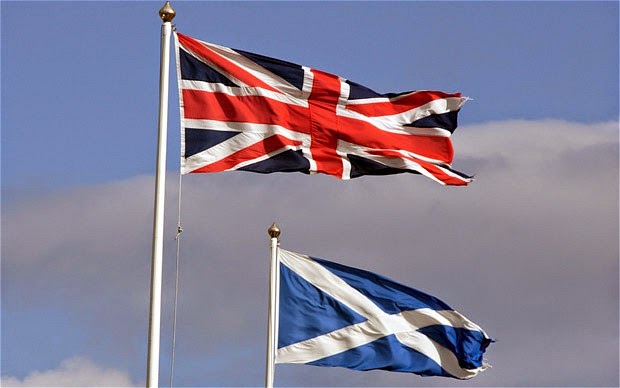
  • Scotland voted “no” in its independence referendum on September 18th by 55.3% to 44.7%. Scottish First Minister, Alex Salmond, announced he would stand down from his position in November 2014. There were widespread calls for constitutional change in the aftermath, with the First Minister saying “the old Union is dead”, repeating calls for fair-funding and a UK constitutional convention.
    • In a National Assembly debate on September 23rd, the First Minister said there could be “no sticking plaster solutions” to UK constitutional reform, calling for an equal voice for each nation. Plaid Cymru published their proposals for further devolution, which would ensure “sovereignty rests with the people of Wales”.
  • Plaid Cymru accused the Welsh Government of secrecy over the number of jobs created in enterprise zones, with a complaint made to the Information Commissioner over a lack of disclosure. Rhun ap Iorwerth AM (Plaid, Ynys Môn) said the Welsh Government were “preventing scrutiny”.
  • Assembly Commissioner, Peter Black AM (Lib Dem, South Wales West), told the Assembly's Public Accounts Committee that more than £100,000 had been paid to a fraudulent bank account following a “phishing” scam, and it was unlikely to ever be returned. An arrest has been made, but the Assembly Commission refused to comment further.
  • Finance Minister, Jane Hutt (Lab, Vale of Glamorgan), published a white paper for a Welsh Revenue Authority, which will start collecting devolved taxes like stamp duty and landfill tax from 2018 – the first Wales-only taxes since the 13th century. The paper outlines possible tax collection methods, managing tax avoidance and administration.
  • The Welsh Government announced that the existing school banding system will be replaced by a simplified “traffic light” system - that measures school performance over three years - from January 2015. Teaching unions described the change as “a far more intelligent accountability system”, after heavily criticising school banding since its inception.
  • The National Assembly's Business & Enterprise Committee inquiry into science, maths and technology (STEM) skills recommended that priority be given to making STEM subjects more attractive, targeted interventions from Year 7 (and amongst girls in particular), improvements to professional development of STEM subject teachers and addressing shortages of STEM subject materials in Welsh.
  • Children's Commissioner, Keith Towler, warned that the withdrawal of free school transport for sixth-formers by Welsh local authorities could force deprived pupils to leave education at 16. He said charging sixth-formers “flies in the face of Welsh Government ambitions” to reduce “NEETS” and eliminate child poverty by 2020.
    • The Commissioner also said that plans to reduce the voting age to 16 – following its use in the Scottish referendum – required necessary preparation to ensure young people understand the decisions, with possible changes to the school curriculum. A Lib Dem National Assembly motion on 24th September, supporting a reduction in the voting age, was approved by 31 votes to 11.

Projects announced in September include : The launch of a £4million wound treatment research centre in Llantrisant, a public consultation on proposed legislation to introduce a £50 fine for smoking in cars when under-18s are present, £1.7million to two specialist advice lines on debt and education, a new 10-year plan for early years education, plans for a £20million expansion of Coleg Menai's Llangefni campus to include an energy research centre and a £5million capital investment in a “flying doctors” service in partnership with the Wales Air Ambulance.

Monday, 29 September 2014

Science skills under the microscope

We do what we must because we can.
(Pic : wallpaperbeautiful.com)

The National Assembly's Enterprise & Business Committee recently reported back on their follow-up inquiry into science, technology, engineering and mathematics (STEM) skills (pdf).

They made 14 recommendations, broadly summarised as :
  • Continue to prioritise promotion of STEM subjects through the National Science Academy, using early interventions to inspire Welsh schoolchildren into STEM subjects and careers (especially from year 7 onwards).
  • Change the computing curriculum to ensure Wales can produce those with the right ICT skills in the future.
  • Ensure the Welsh Baccalaureate provides higher-quality STEM work experience placements.
  • Improve teacher training : providing primary school teachers who possess weak science skills with training, and providing secondary school teachers and lecturers with experience of what STEM businesses and industries do.
  • Target interventions at girls so they can "achieve their full potential in STEM subjects" and also work with STEM employers to create more family-friendly working environments.
  • Address lack of STEM teaching materials in Welsh.
Background to the Inquiry
Demand for science and technology graduates is set to explode over the
coming decade, but Wales - as usual - is struggling to keep up.
(Pic : Cranfield University)
Get used to hearing about the "knowledge-based economy". Demand for biological science graduates is expected to rise by 122% between now and 2022, matched with demand for graduates in engineering (+56%), maths and computer science (+96%), medicine (+36%), environmental science (+48%) and technology (+80%).

It's absolutely essential that Wales starts to value STEM subjects for the sake of our economy, but "progress....has been slow".

With the Donaldson curriculum review ongoing, the Committee decided this was a good time to revisit how STEM is approached in Wales following a previous inquiry in 2011, and determine what improvements are necessary. The Committee also conducted web chats with STEM students and academics in Wales.

Perceptions of STEM subjects remain poor – "geeky", "a subject for boys". This needs to be changed into a more positive, gender-neutral portrayal, alongside improvements to how STEM subjects are taught to both pupils and teachers.

Dr Tom Crick - a computing expert from Cardiff Metropolitan University and science communication campaigner – said there was a "push-pull problem" in that Wales lacks high-skilled graduates, but at the same time the industry isn't here to attract them so any STEM graduates we do produce move elsewhere. Lack of STEM job opportunities were picked up by students on the web chats, who said it puts peers off pursuing STEM careers.

It's not only sciences and engineering where STEM skills are essential. Dr. Crick points out that the "technology" part is very sought after in the creative industries (another "key growth sector") – whether that's television production or gaming.

Sêr Cymru & The National Science Academy
Sêr Cymru is a £50million fund to attract and retain science talent at Welsh universities. Higher Education Wales (HEW) couldn't praise it enough, saying it was, "bold....big" and "challenged us (HEW) to do things we would not be doing on our own." However, they had concerns that there wasn't enough outreach work through the National Science Academy (NSA).

The NSA isn't a bricks and mortar science academy. It's a Welsh Government initiative set up in 2010 to co-ordinate STEM outreach programmes in hubs across Wales, which includes organisations like Cardiff-based Techniquest, the Machynlleth-based Centre for Alternative Technology and the National Botanic Gardens in Carmarthenshire.

There was confusion about what the hubs are supposed to do. The Higher Education Funding Council for Wales (HEFCW) said NSA hub meetings hadn't been held for a long time, and they wondered if it was really meeting the objectives laid out in government science strategy.

The Welsh Government's Chief Scientific Adviser is Alzheimer's disease researcher, Prof. Julie Williams. She told the Committee she was reviewing the future role of the NSA – which she says is "to enthuse (about science)" – and the Welsh Government said that the NSA will soon,"have a new lease of life."

STEM in Schools
Science does have a (sometimes well-deserved) reputation of
being a stuffy, dangerous and boring subject.

The web chats provided the Committee with an insight into issues facing STEM students. Most said they chose to study their subjects because of an interest in the subject itself rather than job prospects. However, perceptions that STEM subjects are "hard" and "geeky" remain, though female students, at least, said schools encouraged them to do what they liked without any hint of gender bias.

It was said pupils should be encouraged to look at STEM subjects and careers as early as Foundation Phase. The students agreed, saying that there needed to be an "innovative, practical and thought-provoking curriculum" – possibly making use of inspirational guest speakers at all levels of education. Education Minister, Huw Lewis (Lab, Merthyr Tydfil & Rhymney), agreed that students should engage with STEM as "early as possible".

Although he said computing was often overlooked in the STEM agenda, Dr Tom Crick said the Technocamps project – in partnership with three Welsh universities – has made "a profound effect in addressing attitudes towards computing in the convergence (Objective One) area for pupils aged 11-19". He said it was one of the most successful European Social Fund projects and increased the potential for STEM subjects to be studied at school in deprived areas.

He played a part in a review of the ICT curriculum, and the recommendations included separating computing as a subject and embedding computer literacy into the curriculum in the same way as literacy and numeracy. Huw Lewis said he was wary of making "hasty decisions" on the future of computing as a school subject.

There are specific problems with recruitment and retention of physics teachers in Wales, as highlighted by the Institute of Physics.

The numbers of teachers registered with the General Teaching Council for Wales who aren't trained in the subject they're teaching are shocking – 51% for physics, 45% chemistry, 37% biology, 90% engineering.

Maths does better, with the figure at just over 16%. There were concerns though that the creation of an extra maths GCSE in Wales could lead to a shortage of specialist subject teachers.

The solutions include improved Continuing Personal Development (CPD), but Techinquest raised concerns that there's not enough cover to allow teachers to attend CPD courses. The web chat students also indicated that they would prefer to be taught by teachers who have practical experience in their field of study.

STEM Careers

Careers Wales has been absorbed into the Welsh Government. It's now purely an advice service and no longer sets up work experience placements. The students said finding appropriate STEM work experience placements is "problematic" – especially in fields like medicine, usually organised by students themselves.

There was plenty of criticism of STEM careers advice, which never fully explores career opportunities in maths and physics, and reduces biological sciences to medicine and dentistry - whilst ignoring research. Perceptions that construction was a low-skill profession needed to be changed too.

Careers Wales defended itself by saying it's supposed to be "independent and impartial" and not favour one sector over another. However, they accept that they have some weaknesses and that careers advice should be offered sooner – as early as year 7.

Industry bodies weren't complimentary about skill gaps, especially numeracy. HEW said there was a "poverty of ambition" in some schools as they don't follow the full syllabus in the double science GCSE, meaning separate science students have a clear advantage at A-Level. They even described not offering double mathematics at A-Level as "criminal".

Many students meet the entry requirements to study subjects like physics but often lack the mathematical skills - even when the subject is intensely maths-based. Some witnesses believed this was because pupils were being taught to pass exams not acquire knowledge. However, Aberystwyth University said the numbers applying to study maths and physics are increasing, with no drop in the quality of students.

STEM in Further & Higher Education

Lab-based science courses are very expensive to provide, and changes
to university funding arrangements are said to "disincentivise" providing them.
(Pic : Cardiff University)

Science courses are very technology-dependent and more expensive to provide than the liberal arts. Colleges Wales say they need continued capital investment in modern laboratories, while Aberystwyth University expressed concern at funding gaps between Wales and the rest of the UK.

HEFCW said current funding arrangements are a "disincentive" to provide STEM courses. They cite figures which say it costs £10,000 to put a student through an engineering or laboratory science degree, compared to the £7,500 universities receive. The Welsh Government say they'll put an extra £200million into STEM over the course of the Fourth Assembly compared to the previous funding arrangements.

HEW believe they're receiving "mixed messages" from the Welsh Government who, on the one hand, want to increase the number of STEM students and graduates, but at the same time are incentivising low-cost courses.

Also, student debt and fee changes are making it much more difficult to fill postgraduate course places – which industry say they need, but students and universities increasingly can't afford. HEFCW say that decision-makers are spending too much time worrying about undergraduate tuition fees, when the economy's future relies more on postgraduates and doctorates.

Gender & Language

As I've pointed out previously (link above), women and girls are under-represented in STEM subjects. Although girls and young women take life sciences in near enough the same - or greater - numbers as boys, in physical sciences and computing, boys and men significantly outnumber girls.

In 2013, only 18% of A-Level physics and 12% of A-Level computing entries were from girls. This continues into higher education with 81% of veterinary medicine and 82% of medicine-related entries from women, yet they make up just 22% of computing entries and 13% for engineering & technology. In 2013, just 11.6% of people employed in STEM-related fields were women.

Chwarae Teg believe a lack of self-confidence is holding women back in STEM fields. They say the equality argument won't necessarily work here, and therefore the impact on the economy (which is what I said in my last post) is the better argument : why are the 50% of the population who statistically do better in education not making up the numbers in academically-rigorous disciplines?

The Institute of Physics research pointed out gender stereotyping where girls don't take subjects dominated by boys (and vice versa). Some female students in the web chats described physics as "boring" and "more interesting to boys as they're more interested in engineering careers".

The key overarching recommendation here is early intervention to make sure younger girls know they have the same opportunities for a STEM career as boys, and this could be done through female mentors and increasing the number of women lecturers.

Turning to the language issue, the establishment of Coleg Cenedlaethol Cymru has been "an unqualified success", but they said they had no input into science strategy or the NSA.

Limited progress has been made in providing teaching materials for STEM subjects through the medium of Welsh, while Colleges Wales said there was a lack of lecturers with both professional STEM qualifications and Welsh fluency. Huw Lewis underlined a shortage of Welsh-medium physics teachers in particular.

I'm making a note here : HUGE SUCCESS
This never gets me out of trouble.
I've shown blatant favouritism towards this Assembly committee in the past, but this inquiry's directly relevant to me for once.I have to say it though, it's another excellent inquiry from the galacticos of the Assembly committee system.

STEM subjects are "hard" and "geeky" and there's absolutely no way in hell that's ever going to change. You need a certain personality to go far in the sciences, and it's not for everyone, even as it becomes more economically important. If you're good at what you do though, science and engineering can be very meritocratic.

As I've said previously, I can vouch for the fact that life sciences are dominated by women. I've been taught by brilliant women science teachers and lecturers who are as enthused and knowledgeable about their subject area as any man. Any suggestion that women "can't do science" is - in the correct terminology - absolute bollocks. Girls are holding themselves back, but that's their choice.

I have personal experience of lack of STEM job opportunities in Wales, despite it constantly being held up as a key growth sector. There's a dearth of trainee graduate level roles, and most science positions are either entry-level or require postgraduate qualifications. So it's often a choice between being an under-employed lab technician or a blue chip researcher - no in between. Until masters degrees and doctorates become more affordable and more widely available, Muggins here, and many others like me, will be stuck in purgatory.

Science, computing and engineering careers often pay relatively badly for the level of skills and qualifications required, so it's no wonder many kids might turn their noses up. You can earn more as an estate agent or recruitment consultant with school leaver qualifications than you ever would with a doctorate in particle physics. The cake is a lie.

Sêr Cymru is probably one of the best policies from the Welsh Government during the Fourth Assembly. The jobs are there and starting to come through – local examples include stem-cell company ReNeuron, Adam Price's specialist search engine Ideoba (both in Pencoed), alongside the Wales Wound Innovation Centre in Llantrisant. But they're not being created in the sorts of numbers that'll make a truly significant economic impact for a while yet.

The teaching figures shocked me. I always thought to be a secondary school science teacher you had to have a science degree full stop. In some cases it's probably very easy to teach more than one subject as long as you have enough grounding in the cross-curricular basics – maths & physics, biology & geography, for example. But I never knew Welsh schools were flying by the seat of their pants to this extent. It's probably the most worrying finding from this inquiry.

Thursday, 25 September 2014

M4 Newport : Edwina's Response

With Edwina Hart responding to Assembly committee concerns and a legal
challenge imminent, it's worth drawing a picture of where the battle lines are.
(Pic : South Wales Argus)


There's been a bit more news on the £1billion Newport bypass front. As some of you will remember, the National Assembly's Environment & Sustainability Committee wrote to the minister in charge, Edwina Hart (Lab, Gower), back in July setting out a number of concerns.

In the last week or so, Edwina has responded to the Committee (pdf).

In the interests of balance - and to ensure that everyone can go into this fully informed - it's worth taking a look at what the Minister said in response to the Committee's letter, and how she came to justify the decision on the Welsh Government's behalf.

Additionally, Friends of the Earth Cymru officially launched their legal challenge – via a judicial review – on Tuesday (23rd September).

The route selection process

Committee : In the first consultation (2011-12 M4CEM), a completely new motorway wasn't included as an option. The change in heart since suggests the Strategic Environmental Assessment (SEA) process hasn't been followed correctly.


Edwina Hart : The Welsh Government used their "appropriate and recognised" WelTAG guidance process (pdf - large file). What's considered a reasonable alternative route under the SEA process is down to the decision-maker, but the SEA also allows a choice based on the objectives the decision-maker wants to meet. The Minister admits that the new fiscal powers offered by Westminster prompted a revisit to a full M4 bypass of Newport as an option.

The choice of route

Committee : The route choices for an M4 bypass were too similar to each other to "allow a meaningful comparison as required by the SEA directive". It also hasn't been made clear whether the Blue Route has been fully assessed by the Welsh Government to SEA standards.


Edwina Hart : None of the alternatives were considered "reasonable alternatives" in line with SEA regulations. She says the Blue Route wouldn't have been "sufficiently attractive to relieve M4 traffic", would cost £600million (rather than the £380million estimate) and would cause problems at connecting roads. It would also require significant land acquisition, and wouldn't meet the strategic objectives.

The environmental report

Committee : Natural Resources Wales (NRW) say some of the concerns they raised weren't included in the final environment report. NRW flatly disagree with many of the conclusions in said report, which underplayed the impact on biodiversity, and provided incomplete assessments of greenhouse gas emissions, water quality, landscape and town scape impacts.

Edwina Hart : Environmental concerns and possible mitigation measures have been taken into account during the Environmental Impact Assessment process. NRW's comments were taken into consideration during the drafting of the environmental report.

Consideration of public transport

Committee : Possible public transport options and the South Wales Metro scheme haven't been given full consideration. They should've been weighted directly alongside the M4 proposals as they could have a big impact on the underlying case for a bypass.

Edwina Hart : The M4 bypass will complement the South Wales Metro scheme, but increased public transport use won't solve the problems on the M4. Studies undertaken during the planning process showed that even if public transport use increased by 100%, it would only reduce Newport M4 traffic by 5% (Owen : I'm presuming this is because of the number of lorries using the M4).

Validity of traffic forecasts

Committee : Traffic forecasts on the M4 are produced using the UK's Department for Transport (DfT) forecasting methodology, but this methodology has – according to leading academics – predicted big growths in traffic volumes and car ownership when levels have actually remained flat. If traffic growth doesn't match the DfT's unreliable forecasts then the M4 bypass will be a waste of money. So the case for a bypass is partly reliant on traffic increasing.

Edwina Hart : Traffic volumes have returned to pre-recession levels after levelling off during the recesson itself. A new report on the traffic projection figures has been included on the Newport M4 website (pdf). She believes claims that current traffic projections mean a bypass won't improve traffic flows are "incorrect", and the plans are a "sustainable, long-term solution to the problems."

Costs

Committee : The proposed capital borrowing limit as set out in the Wales Bill (£500million) is only half the estimated total cost of the scheme. Therefore, there's a lack of clarity on how future borrowing powers would be used, and the impact the bypass would have on finances available for transport projects like the Metro. The Committee say it's "difficult to conclude....that a convincing case for the long-term value for money of this investment has been made".

Edwina Hart : The £1billion price tag includes the costs of environmental mitigation measures. Before the Welsh Government commits to construction, the cost estimates will be carefully managed, and the aim will be to reduce costs wherever possible. It's claimed every £1 spent will result in a £2.29 economic return. The Welsh Government won't be committing all of their borrowing powers to the scheme, as they'll use block grant/capital funding too; though it's too early to say precisely how the scheme would be financed, as it depends on the final cost.

I think it's safe to say that we now have a more complete picture of both sides of the argument.

The minister has given some concise and assured answers to the Committee's questions, with the exception of her response to the traffic projection figures.

Those figures are the statistical case for the bypass, and although Edwina linked to the figures themselves, the fact she brushed the issue off with a political back swing (talk of "long term solutions" and "sustainability") tells me that's where the big weakness is in the case, and will probably be one part of Friends of the Earth Cymru's legal line of attack.

I'll let you make your own mind up.

Wednesday, 24 September 2014

Indyref - The National Assembly Reacts

(Pic : preventdisease.com)

There's been a lot of discussion from the Bay Bubble (too much in my opinion) on what last week's Scottish independence referendum, and its result, "means for Wales" .

I consider yesterday's statement from the First Minister (and debate) the "official" National Assembly and Welsh Government response. Until Westminster decides to put something on paper, everything else is constitutional nut-busting and bean-flicking.

I should take this opportunity to highlight some new features on the National Assembly's website(s) which myself and others played a minor role in helping to develop.

The web pages have been made mobile/tablet-friendly, while the search function has been revamped to make it easier to find specifics in the Assembly's archives; whether that's in the record of proceedings, by committee topic, location, AM etc.

Senedd TV – which was crap – has been radically overhauled. The picture quality's now high-definition, which is better than that provided by BBC's Democracy Live (plus it covers all Assembly meetings, which includes the committees and Assembly-related events).

Senedd TV now has a live rewind and pause facility, a much simpler way of embedding videos in third-party websites with the ability to create clips (unfortunately they always autostart, which created a wall of noise when I attempted it here - hence the slight delay to posting this blog FIXED), and will eventually put transcripts alongside the video to act as de-facto subtitling.

I suppose the time's come to test this out....

The Assembly Indyref Debate


The First Minister started off (clip) by saying that he spoke with the Prime Minister last Friday, and he would hold David Cameron to his promise that Wales would be "at the heart of the debate". Despite Scotland's "positive choice to remain in the UK", he said the status quo was gone and there was no going back to the way things were.

The future of the UK needs to be decided by the whole UK, and we need to move on from "short-term sticking plaster solutions", as "change in one part of the UK should mean change in the others". He plugged Silk I, and called for the "swift implementation of Silk II" – as long as any extra powers considered for Scotland are considered for Wales too.

Leader of the Opposition, Andrew Davies (Con, South Wales Central) said (clip) that the constitution needed to be looked at as a whole, with no nations in isolation – including England. He said there was no automatic need for powers that might be going to Scotland to come to Wales due to the closer interconnection with England in terms of public services. He asked how the Welsh Government would take this forward, and whether the role and number of MPs from the devolved nations needed to be looked at?

The First Minister said the response from the UK Government and Prime Minister was "woefully inadequate", believing a Westminster cabinet sub-committee isn't suitable, with the solution requiring involvement from all of the UK's governments – including on the issue of MPs.

He said English votes for English laws (EV4EL) wouldn't work, citing an example where privatising parts of the English NHS would impact spending in the devolved administrations. He added that each of the nations needed to be recognised as "different, but not second best", saying Scotland remained in the UK "by a whisker", and could still secede if the UK isn't properly rebalanced.

In response to questions from Julie Morgan AM (Lab, Cardiff North), Carwyn said that there needed to be a "sensible and calm way forward" on reform, and that "The Vow" was given in haste. He had sympathy for House of Lords reform (which Julie attempted whilst an MP), and suggested a model similar to the US Senate, where geographical regions are given equal representation. The First Minister supports the voting age being reduced to 16 across all elections - which is becoming a cross-party consensus since the Scottish referendum.

Plaid Cymru leader, Leanne Wood (Plaid, South Wales Central), said (clip) the Prime Minister was yet to elaborate on his comment that Wales would "be at the heart of the debate", and criticised the UK Government's position on the Wales Bill, which she believes is too weak. She also raised the lack of vision from the First Minister on his preferred structure for devolution.

Leanne asked whether a cross-party position would be agreed before any negotiations with the UK Government, or whether individual parties would submit their own proposals? She said Plaid would work for a common agreement if possible, and asked what the First Minister meant by "swift implementation of Silk II" and whether that meant by or during the next Assembly term? She rattled off a list of possible powers including corporation tax and the Assembly's electoral arrangements.

The First Minister expected the "lockstep" to go from the Wales Bill. He also expected the current timetable for Silk II to be adhered to, but it needs to address the £300million underfunding issue first. He said tax powers needed to be looked at across the UK as a whole, with a certain level raised UK wide with devolved top-ups – this should include the tax credit system. He agreed that electoral arrangements should be a matter for the Assembly, but that a two-thirds majority should be needed to make fundamental changes.

Welsh Lib Dem leader, Kirsty Williams (Lib Dem, Brecon & Radnor), said (clip) the status quo was never going to be an option after the referendum result. She said changes to the Welsh devolution settlement "must provide greater clarity....stability....and accountability", and that Silks I & II provided a "blueprint for Westminster negotiations".

She asked whether progress had been made on joint UK-Wales working groups? Whether extra powers beyond those in Silk would be assessed on whether they would be in the Welsh interest? And whether local councils should also have devolved powers?

The First Minister responded by saying the UK Government hadn't committed to any part of Silk II this side of the UK General Election. He said some uncontroversial parts – like reserved powers – could be visited sooner in the current Wales Bill.

He said it wasn't his decision whether powers are appropriate for Wales or not – it's a matter for the Assembly as a whole. However, he added a cautionary note that new powers shouldn't come without financial cover. He also added that the Williams Commission provided an opportunity to devolve powers downwards from the Assembly.

In response to questions from Mick Antoniw AM (Lab, Pontypridd), Mike Hedges AM (Lab, Swansea East) and John Griffiths AM (Lab, Newport East), the First Minister said that it wasn't good enough that Westminster leads with everyone else feeding in - "those days are gone". He also pointed out the importance of redistribution of wealth, which was part of "The Vow" and – as John Griffiths pointed out – played a key part in the referendum debate.

The most interesting contribution came from Simon Thomas AM (Plaid, Mid & West Wales). He said (clip) the high turn-out showed that Scottish independence/the constitution was, "an issue people were concerned about and interested in" (we're constantly told nobody is). He pointed out that it was ironic that what was now proposed for Scotland ("Devo Max") wasn't on the ballot paper and should be proposed for Wales too.

He asked the First Minister to expand on what he means by "Home Rule", and brought up the question of the income tax referendum, and whether it would be better to have a referendum on the principle of "Home Rule" itself (something I've hinted at before too)? He also asked whether a written constitution for the UK would be appropriate?

The First Minister underlined that were "pros and cons" to having an unwritten constitution, one of the pros being the flexibility if offered. He repeated that it was important that the "lockstep" went, and described his definition of "Home Rule" as a guarantee of devolution, with powers clearly under the control of the people of Wales (reserved powers?). He said, "We're all partners in the UK" and, "not all powers under the sun should reside in Westminster."

Constitutional Vinegar Strokes

When the Welsh political class discuss the constitution, it makes me want to pant hoot my way up into the hills and forests on my knuckles never to return, a little piece of me dying each time. Once again I feel as though my soul is being slowly harvested.

Consider just how many constitutional conventions we've had in Wales since 1999. It reads like a war memorial; Richards, Holtham, Jones-Parry, Silk (I, II), Williams – that's on-off constitutional masturbation for the best part of 12 years. You can add the Institute of Welsh Affairs' well-meaning but baffling proposal for a "crowd-sourced" convention to that list too.

Every single time extra powers for the Assembly have been proposed, there's a watering down of said proposals; proposals which could settle the matter now are kicked down the road through "death by committee". 5 to 10 years later, when the political class realise they might actually need the powers they rejected in the last round of constitutional hand shandy, the process starts all over again.

The harsh fact is that while supporters of independence know what we want, and those who want to abolish the Assembly know what they want, those in Wales who fall "in between" (every single party, bubble insider and politician in Wales) don't have a f**king clue what they want - and they've lost control of the debate as events have overtaken them.

It's only now, with the Union suitably threatened, that we're starting to get some strong desire for reform. I've already lost interest.


"Home Rule" (in the Irish sense) is what we would now call "Devo Max" (devolution of all domestic/internal policies, like the Isle of Man and Channel Islands), except Welsh Labour have never wanted that. For all the harnessing of Lloyd-George's ghost, the First Minister is trying to sell Silk II as "Home Rule" as if it'll settle the matter for generations when it'll do nothing of the sort - energy powers for one.

In fairness, the Lib Dems have always supported federalism, but have never outlined what that means in practice. Plus, it's not as if they've pushed hard for that whilst in power at Westminster.

The Welsh Conservatives now appear to back federalism, but couldn't even agree on something as basic as the income tax lockstep. They appear to want all the trappings of a nation state (Treasury, "Welsh Parliament") without the nation state bit, and it looks like Carwyn is willing to go along with that too. I think that's called, "Having your cake and eating it." There are those of us who are a bit more grown up.

Plaid Cymru have launched another discussion paper, this time relating to the constitution (pdf), which is essentially a repackaging and rewording of their Silk Commission submissions (they're not going to pull one over on me that easily). This should be right up their street, but they've wrapped their latent support for independence in so many euphemisms and meaningless management-speak phrases down the years they've confused themselves and the rest of us.

They held another sodding debate on this today; "rebalancing powers between nations" and "sovereignty resting with the people of Wales" becoming the new "self-government" and "independence in Europe/Europe of the regions". The fact they've said more on Scottish independence in the last two years than they have on Welsh independence in the last ten speaks volumes.

This is a debate where Wales is quite firmly on the sidelines. That's wrong, and the First Minister spoke a lot of sense on this yesterday. But because Westminster can't see what's in front of its face constitution-wise, it's been reduced to a matter between England and Scotland.

As far as Westminster are concerned, we've had our constitutional convention – Silk I & II – and if the Welsh political class aren't satisfied with that, too bad, that's all you're getting because it's all you said you wanted. There's no point bleating for more powers (when they were rejected whilst they were on the table) just because Scotland might get them – I'm talking welfare, broadcasting etc. They blew their load too soon.

As I support independence, no tinkering with the UK's archaic constitution is going to satisfy me. Though having said that, I can live with a federal or (preferably) confederal UK, that retains some semblance of wealth redistribution, whilst giving the respective parts maximum control over what to do with those funds and policies (including England and Cornwall).

The biggest mistake Unionists in Wales are making is thinking that the UK is a partnership of equal nations when it's actually an English socio-economic hegemony. Westminster is an English Parliament controlling the whole UK's affairs despite devolution.

Once you take the economics out of the equation, perhaps they'll start to see that unless they can manufacture a working federal model for the UK, Welsh independence isn't as silly a proposition as it sounds. It's actually very practical, and it'll save me some skin on my knuckles at least.


Friday, 19 September 2014

Scots Wha Nae

"Freeman stand, or Freeman fa'"
(Pic : The Telegraph)

It's a bit strange to say this, but unfortunately I was right.

As expected, Scotland has rejected independence by 55.3% to 44.7%. I predicted a no vote of 56-44 on an 80-85% turnout (actual figure 84.5%), so I was pretty much spot on.


Why the No side won

"The Positive Case for Union" as presented by Better Together.

It's too early to offer detailed reasons why the Scots rejected independence, but there are a few things you can pick up from the campaign itself.

"Project Fear" worked – If you generate too many uncertainties in people's minds, the likelihood that they would reject a proposition will no doubt increase. A feature of other independence referendums, like Quebec, is that the closer polling day gets, the more likely people will opt for the "safest option". As I said yesterday, a lot of wavering undecideds, "soft yes" and "shy no" voters probably verged on the side of the status quo and voted no at the last minute. It looks like postal votes went heavily in the no's favour too.

There were too many questions that weren't answered by the yes campaign at the right time and to the right extent - using currency as an example. Concerns over currency might seem technocratic, but it guides absolutely everything from high end macroeconomics to daily life.

Although the position of independence and things like currency are debatable (a currency union was nailed-on despite the bluster, it's in everyone's interests), the doubts were always there. After everything people have been through since the Great Recession they were perhaps less likely to take a fiscal risk.

Yes Scotland lost women and older voters early on – I wouldn't be surprised if, when the number-crunching is done, the referendum was lost amongst middle-age women and pensioners. The polling figures have long pointed towards this being the case.

Better Together very nearly blew it with "Patronising BT Woman", but – let's face it – the archetypal small-c conservative mother wanting to "think of the children" would probably back the status quo anyway. The advert was simply preaching to the choir, and was done to stop their vote shifting yes-ward. Also, an independent Scotland shouldn't have any problem meeting its welfare obligations, but do anything to even hint at threatening pensions or elderly entitlements and you lose older voters.

Despite Alex Salmond's clear political talent, by the end, the campaign turned a bit macho and triumphalist with echos of Labour in 1992. Nicola Sturgeon and other senior women MSPs and personalities should've had a more prominent role in the yes campaign, and you've got to wonder what impact Margo MacDonald would've had if she were still with us.

Yes Scotland took a gamble, hoping there would be a similar bounce to the one the SNP enjoyed in 2011, but they didn't quite pull it off. If the referendum were a month later, or that YouGov poll were a week later....who knows?

"Astroturfing" wasn't enough
– Yes Scotland was a very well-organised, decentralised, grass-roots led campaign that crossed all sections of Scottish society. The Anglo-Scottish media and Westminster machine are still a giant though. Until the panicked last fortnight, there was latent but not outright bias by British media establishment. Then it became more obvious, and disgraceful, and should – quite rightly – damage the global and domestic reputation of the BBC.

Trying to control the debate up against such a media machine - and pretty much the entire Scottish domestic mainstream press (notable exceptions like The Sunday Herald aside) - was always going to be a struggle. To their credit, Yes Scotland very nearly pulled it off.

The internet clearly isn't the be all and end all of political debate it's being made out to be. But sites like Wings over Scotland and Bella Caledonia probably played a role is getting the yes vote to as high a position it did. The future of the Scottish blogosphere is looking very, very bright indeed to the point of becoming mainstream. The same can't be said in Wales, unfortunately.

The arguments were weak and incomplete – I've read Scotland's Future from cover to cover because it'll certainly help me build up my own Independence Index for however long I'm blogging. Despite the pdf version being more than 400+ pages long, it felt incomplete. There was minimal coverage of many of the things I've covered even on this blog like abortion (which was mentioned in passing), genetic engineering, stem cell research, net neutrality....

It would've been better to have produced separate, detailed white papers on things like defence and foreign affairs and released them gradually over the course of the campaign. It felt too much like a policy push from the SNP instead of a neutral look at the sort of (largely limitless) options independence would've brought Scotland. So although the Unionist campaign was somewhat disunited, you can say something similar of the Nationalists. I doubt Greens, republicans and socialists would've liked what was outlined in Scotland's Future.

By the end, despite the widespread public enthusiasm, the yes campaign became a competition about how many Facebook likes and retweets you can get over the quality of the argument. The big rallies and publicity stunts were mostly an mirage - it's a mistake Plaid Cymru think they'll be able to repeat in Wales. It might look good on camera, but there's not much there. You can fill a public square with hundreds, even thousands, of supporters but elections are decided by the hundreds of thousands who aren't there.

It all probably relied too much on emotional/romantic "heart" arguments and gradually neglected "head" arguments in order to whip people into a frenzy.

What happens next?

"Politicians make promise on the hoof."
Let's see where this is heading....
(Pic : BBC)
That's unclear, and in a twisted way there's perhaps more long-term uncertainty now than there would've been had Scotland voted yes. If they'd voted yes, they would've become independent circa 2016 and all the issues like currency, debt and EU membership would've been ironed out one way or another.

This isn't a crippling blow to Scottish nationalism and, if anything, if Westminster now fails to deliver on any of promises as a result of a no vote – or if there's some sort of pathetic "backlash" from the rest of the Union - all those who hesitantly voted no will vote yes in any future referendum. The momentum will still be with yes long after this vote, it'll just climb slower. With every single setback at Westminster, I fully expect  #ShouldveVotedYes to become a popular hashtag on the Scottish Twittersphere.

Now, instead of the certainty of independence, we have the uncertainty of constitutional fudging done on the back of a fag packet.

Although the UK will survive for the medium-term, Scotland's position remains awkward as it's still unclear what constitutional reforms will take place. It'll be odd if Scots have rejected the chance to control and shape things like foreign affairs, welfare and defence for the sake of controlling the "Work Programme" and rail franchises.

Westminster needs to play this carefully, and the Scottish Government still have a strong hand to get "Devo Max" out of them, which could settle the constitutional argument for several decades. Scotland could get as close to independence as possible without actually threatening the Union, like some sort of confederal arrangement.

The status quo would only have been a serious option if this had been a very strong no (70-80%) – like the 1979 devolution referendum in Wales. There's absolutely no way Westminster can roll back devolution either without prompting a serious constitutional crisis that – judging by the polarisation seen in Scotland – could turn nasty.

I suppose I've been slightly prophetic. Back in 2011, I compared the Scottish situation to Quebec, and that's precisely where were are now. The no vote wasn't a strong endorsement of the Union – but it was enough to win the day; while the yes vote was sizable enough to mean this is unlikely to be the end of the matter, despite failing.

Will we have "neverendums" in Scotland until they're ready to say yes? Alex Salmond has ruled it out for a least 18 years (not that he'll be SNP leader that long). So again, just as I said a few weeks ago – we'll probably return to this in the 2020s or 2030s. Sometimes I don't like being right.

I imagine David Cameron is a very, very relieved man. If this had been a yes vote it would've been very hard to see him continuing as Prime Minister. That doesn't let him, or the other two major Westminster parties, off the hook. Labour's campaigning was an absolute shower, while the Lib Dems were nowhere to be seen. If they don't realise how close they came to blowing it, and come to see this as a vote of confidence and not a last ditch call for radical constitutional reform, some very senior politicians need to take a long hard look at themselves. Judging by their initial reaction to the result, it looks like they realise the desire for concrete change.

To even get into a position to ask such a question is damaging to the Union. Of the officially-recognised independence referendums during the 19th and 20th centuries, most have eventually led to independence.

This will have caused no real problems for the SNP (or other parties that supported independence like the Greens and Scottish Socialists). This will go down as a glorious defeat, and they're nailed-on for a third term in government - even if they take a hit in 2016.

It's unclear what the future holds for Alex Salmond. He can, if he wants to, bow out with his head held high, or he can carry on the momentum into 2016 and beyond
. With Alex Salmond stepping down, Nicola Sturgeon is a leader in waiting but will have to be careful not to oversee a split between centrist-liberal and more socialist wings of the SNP. If Scotland had voted yes I would've expected the SNP to have disbanded anyway into two or three separate parties, or bolster what remained of Labour, Greens, Conservatives etc.

On what happens to the rest of us, I'm convinced there won't be a grand pan-UK "Constitutional Convention". It looks as though any changes are going to be fast-tracked before the Westminster elections next year and that's simply not enough time to get decent proposals on the table. There's no doubt in my mind that Wales will get further powers down the line – especially over criminal justice – but it'll be a negotiation between Cardiff and London and will be unrelated to the independence referendum. Silk (Part I, Part II) is all we're getting.

Carwyn can say what he likes but it's not as if he's been listened to so far - something I said almost a year ago to the day. I might not be a journalist or have the inside track into what's happening in Cardiff Bay, but most of the time I do know what I'm talking about. I'm getting fed up of saying things months, sometimes years, in advance that "our betters" only cotton on to at the last minute. AMs - in particular Welsh Government ministers - appear to have a very inflated sense of their impact and influence.

It'll be interesting to see what will happen in Catalonia next, who will probably have received a psychological boost due to the close(ish) result (or a hit due to the no vote), and are moving towards their own independence referendum despite constitutional interference from Madrid.

You could compare this campaign to a very bruising Rocky-style 30-round heavyweight contest. In the end, both sides are completely battered, knackered and have sustained heavy injuries. The underdog Nationalist boxer might well have collapsed at the end from a few heavy punches, but the Unionist boxer – although standing – is walking off dribbling and completely unrecognisable.

The National Assembly is due to debate Scotland's decision next week, and of course I'll cover what's said.


Thursday, 18 September 2014

Referendum Day

Decisions, decisions.....
(Pic : The Guardian)

I have an uncharacteristically short blog today.

I've tried to stay out of this as much as possible, because the Scots are perfectly capable of making a decision that suits themselves based on the evidence and information presented, and don't need to be condescendingly told what to do by outsiders.

Our media (and some of our politicians) have gone overboard with the navel-gazing "What does this mean for Wales?" guff, culminating with the largely pointless debate on Monday. I hate to break this to you, but we're on the periphery of this debate however much you would like us not to be.

I can say with confidence that - unless you have ties with, or interests in, Scotland - the result is going to have minimal impact on Wales either way. There's not going to be a surge in support for independence should Scotland vote yes, the Barnett Formula won't be reformed, while the Silk Commission is all we're getting in terms of new powers for the foreseeable future. The best we can hope for is an accelerated timetable for Silk II.

Although it should be obvious that I have a preference, there are no "right" or "wrong" answers here, just a single choice facing the Scottish people.

I've prepared two posts for tomorrow – one in the event of a yes, one if there's a no - and one of them's going to get deleted.

I suppose I have to play the predictions game, and I always let my head rule my heart. So as for what I think will happen, there'll be a wobble amongst undecideds and soft yes voters, and the recent narrowing of the polls will encourage "shy noes" to turnout.

So I predict a "no vote", 56-44 on a 80-85% turnout.

I've never wanted to be more hopelessly wrong in my life.

Sunday, 14 September 2014

And then there were four?


Implementing the Williams Commission local government reforms will be one of the stories dominating the rest of the Fourth Assembly, and will play a big role in determining if the Welsh Government have truly delivered this term.

Back in June, the former Local Government Minister, Lesley Griffiths (Lab, Wrexham), said that the proposed reforms "had to deliver profound change". The First Minister himself has spoken quite strongly in favour of mergers (down to between 10 and 12 councils from the current 22) as soon as practically possible.

It's clear though that with a few exceptions – like Denbighsire and Conwy, which are actively exploring a voluntary merger – the proposals have received a frosty reception from the Welsh local government sector. Clearly one of the major concerns are the proposed upfront costs of the reforms; the Williams Commission put the figure at £100million (saving £60-80million per year afterwards), local government put it at £200million with a potential 15,000 job losses.

The Welsh Local Government Association (WLGA) – the body that represents local authorities – recently upped the ante by producing their own discussion paper (pdf) and alternative plan.

What are the WLGA's concerns?

Firstly, that there's no political consensus on the way forward in the Assembly, and with up to £877million in savings needing to be found in total by 2018, an £80million per year saving is described as being "academic".

Secondly, they're worried there'll be a disconnect between the local and the regional. Some of the proposed new local authorities may be too large to provide smaller communities with a "connection" but too small to provide scale.

The Williams Commission weren't convinced by collaboration between local authorities. However, WLGA present evidence submitted by former adviser to Rhodri Morgan, Paul Griffiths, suggesting that it works for some local services (social care, school improvement), and that the threat of "collaborate or merge" has created a presumption in local government that mergers are inevitable, so collaboration was never properly explored.

The English Example

The WLGA cite the example of the Greater Manchester Authority (GMCA). It's a collaborative regional authority made up of ten metropolitan borough councils. Each member authority sends one member to the GMCA, contributes towards its running costs and the GMCA takes responsibility and control of the Greater Manchester Integrated Transport Authority, as well as specific powers over things like economic development.

In Wales, we're attempting something similar through city regions. However, our city regions are essentially grand committees with no real teeth.

In England, the UK Government have proposed devolving "serious powers" over economic development, strategic planning, business rates collection, housing and training to the major cities and groups of counties. Both UK Labour and Conservatives are talking this up as a model of English devolution.

What do the WLGA propose for Wales?
A presumptive map of what the WLGA propose.
(Click to enlarge)
The WLGA propose the creation of four collaborative regional bodies :
  • North Wales
  • Mid & Central Wales (sic)
  • South West Wales
  • South East Wales

The map is presumptive and the WLGA don't specifically state which local authorities would be placed where. It's based off the collaborative boards the WLGA proposed back in 2005 and also pretty much falls in line with the regional transport consortia.

The WLGA propose that the regional bodies take responsibility for :
  • Transport planning and delivery
  • Strategic land use planning
  • Economic development
  • Regional tourism promotion
  • School improvement
  • Commissioning of health and social care services
  • Waste processing and management
  • IT services, payroll, pensions and back office/HR functions

They also propose that - supported by comments made by Prof. Gerald Holtham - taxes like stamp duty and landfill tax be "devolved" to these regional bodies.

They believe this would offer greater financial security for these services, a more strategic approach to service delivery and greater scale. The WLGA do, however, accept that redundancies would be inevitable but no figures are given. No figures for the set up costs are given either.

New primary legislation might be required from the National Assembly to make this happen. Or, the appropriate Welsh Minister might be able to make use of current executive powers to push the proposal through. In both cases it would likely require full Assembly approval.

When you get to the bits about how these regional would be governed, things begin to fall apart.

Based on the examples they give from England, the membership won't be elected, but appointed by the constituent local authorities. Some regional bodies in England include non-elected members, some have a "rotation" of appointed members, some have a membership that reflects the political make-up of the respective local authorities. So it'll be another board and committee for our wonderful local councillors to join.

A real alternative?

They say a good compromise is one that dissatisfies everyone equally.
Are the Welsh Government going to listen to this, though?
(Pic : Click on Wales)
With the appointment of Leighton Andrews as the new minister with responsibility for local government, I don't see the Welsh Government changing tact. The mergers are going to be pushed through whether the WLGA like it or not.

I've said it previously, but I wouldn't be surprised if we ended up with a further compromise that leads to some local authorities remaining as-is - I don't think the 10-12 number is set in stone. Some mergers will clearly be easier to do than others, while some local authorities might have a different preferred merger partner than those outlined by the Williams Commission (Bridgend and Vale of Glamorgan; Swansea & Neath Port Talbot etc.).

Also, *AWOOGA*  THIS SOUNDS OH SO FAMILIAR!   *AWOOGA*  I'm only 18 months ahead of the curve here, but I'm just a blogger after all.

Of course, it's not identical to what I (and Lyn Thomas previously) have said. I envisaged regional government being a tier of government in itself – an unashamed return to two-tier local government.

This proposal is half-way there, makes a moderate amount of sense, and deserves to be considered and listened to. It might be too late though.

Tuesday, 9 September 2014

Is Wales a principality?

It may well be a good branding strategy or tagline, but it's wrong.
(Pic : moneymarketing.co.uk)

TL;DR version – No.

I suppose you're expecting a bit more than that.

Wales is often called a "principality", and even our great and good make that mistake. I don't think it's down to deliberate ignorance, just a result of centuries of old wives tales as well as a legacy left by Wales' own native monarchy.

Whether a country is a principality or not depends on the title of the head of state. The head of state is a different role to head of government (they're rarely combined) and is usually the highest-ranking position in a nation's constitution.

In short, a principality is a nation state where the head of state is a prince or princess. Liechtenstein, Monaco and tonight's football opponents for Wales, Andorra, are principalities. Luxembourg is a Grand Duchy because their monarch holds the title of grand duke (an old Germanic title that's more senior than a prince but less so than a king or queen).

Wales' head of state is whoever's monarch (king or queen) of the United Kingdom. Wales is no more a principality than England or Scotland are.

Wales could only ever be a principality if it were independent and the head of state were a prince or princess (see : A Welsh Monarchy). Even if Wales became independent and retained the current monarchy, it couldn't be a principality, it would be a kingdom.

As alluded to earlier, the situation in Wales is a little more complicated because a large part of Wales (what is now Gwynedd, Flintshire, Conwy, Denbighshire, Anglesey, Carmarthenshire, Powys and Ceredigion) used to be an independent state/collection of independent states ruled by a prince(s) – a true "principality".

After the Statute of Rhuddlan in 1284, the Prince of Wales retained a direct constitutional role in the governance of Wales. Wales was a semi-independent vassel state of England, and the Prince of Wales was the head of (what would eventually become) the Council of Wales and the Marches - a medieval form of devolution and a sort of "practice run" at ruling a country.

Following the Laws in Wales Acts, the principality, as a legal entity, was abolished. "Prince of Wales" became nothing more than the courtesy title given to the heir to the English throne, and the Council of Wales and the Marches was altered to be run by an appointed Lord President. Wales ceased being a principality at this point, but the name has stuck.

So Chuckles Windsor is a prince without a principality. However, as Duke of Cornwall he does enjoy some feudal rights that could be considered "constitutional" (Towards a Cornish Assembly?).

What is Wales?

What is this?
Or, perhaps more importantly, what do we want it to be?
(Pic : ITV Wales)
Some people perhaps like to think that Wales' non-status as a "principality of England" somehow undermines its nationhood. Well, as Wales isn't a principality at all it does nothing of the sort, but it is worth discussing what precisely Wales "is".
  • A nation state is internationally-recognised as the sole sovereign entity that governs a defined territory (aka. independent) with an internationally-recognised political border. The United Kingdom is a nation state; Wales, California, Catalonia and England aren't. If Scotland votes yes next week, they're due to become a nation state in 2016.
  • A region is a defined geographical area within a nation state or country, usually for administrative purposes only. It may have some level of unique identity and culture, but it's often considered a local variance of a larger one. Gwynedd is a region of Wales, the Highlands are a region of Scotland, while Greater London or the South East are regions of England.
  • A country has a level of affinity and identity above that of a region. That could included a unified culture (with regional variations) that's distinct from neighbouring countries, recognition or acknowledgement as a nationality, a language (not dialect), as well as political, legal, academic, civic and cultural institutions.

In 2011, thanks to lobbying from Leanne Wood AM (Plaid, South Wales Central), Wales was officially granted country status by the International Standards Organisation (ISO).

"Country" and "nation state" are sometimes used interchangably because countries are usually full nation states too. This doesn't mean a "country" has to be independent, as they can be part of a larger union of other countries to form a single nation state (like Spain, Russia and the UK).

So the most accurate description of what Wales is would be a country within a nation state (United Kingdom) or a "constituent country". Those of us who support Welsh independence believe Wales should become a nation state.