

 |
| Rail policy in Wales has significant cross-border impacts, and it's not expected that the franchise map would change in 2018. (Pic : Arriva Trains Wales) |
Before I wrap up for the year, it's worth returning to my "favourite Assembly committee" – Business & Enterprise – which launched their report on the future of the Wales & Borders rail franchise on Wednesday (pdf).
Rail services in Wales recently come under criticism from the Campaign for Better Transport, who claim services were poorly used compared to the rest of the UK and that Welsh rail passengers have lower service satisfaction. The franchise to run rail services in Wales and the Marches is up for renewal in 2018.
The Committee didn't come up with any recommendations as such. Instead, they produced a draft Charter for the franchise, based on an assumption that powers over the Wales & Borders franchise would be devolved.
The Current Franchise
The Wales & Borders franchise is currently run by Arriva Trains Wales (ATW), a subsidiary of Arriva UK, who are in turn owned by Deutsche Bahn. ATW was awarded a 15-year franchise in 2003, with Westminster retaining powers to award rail franchises via the Department of Transport.
The committee say most of the evidence they received was critical of ATW's performance. This includes reasons like:
- Lack of demand forecasting, provision for passenger growth and investment (by ATW).
- A failure to reflect Welsh Government priorities.
- Inadequate rolling stock, poor service standards and complex fare structures.
The Association of
Train Operating Companies (ATOC) said the franchise was awarded
during a time of increasing austerity, while the SWWITCH transport
consortium (covering south west Wales) said ATW had "performed
well given the limitations of the franchise".
ATW said the current franchise was effective, with significant passenger growth, record levels of passenger satisfaction and improvements in punctuality.
The current franchise agreement (pdf) meant ATW only had to invest £400,000 over 15-years (what numpty drew that up!?). They say they invested £30million (p3 2.7).
Passenger Focus disagreed with ATW's assessment, saying that although some aspects were "good", there was no planning for future growth and the franchise contract was "flawed from the start".
The committee took evidence from Transport Scotland (the Scottish Government's transport agency). Railways are mostly (but not 100%) devolved to Scotland, and the ScotRail franchise is up for renewal in 2015, so they're going through the same process Wales is. They're including integrated transport provisions within their next franchise agreement, including linking rail services to active travel routes.
A New Franchise
Business Minister, Edwina Hart (Lab, Gower), told the committee that discussions over devolving further rail powers to Wales are "ongoing", while the Welsh and UK Governments have made it clear there should be further devolution of rail powers in both submissions to the Silk Commission. The UK Government are, in fact, actively pressing for devolution of railways, but it's unclear if that's to the same extent as Scotland.
The franchise map is unlikely to change as including English routes improves the franchise's "financial sustainability".
In terms of timescales; the procurement notice will be published in the EU in March 2017, tenders will be published in August 2017, the contract will be awarded in June 2018 and the franchise will come into effect in October 2018. The committee believes work needs to start now "to ensure deadlines are met".
In terms of the length of the franchise, the Department of Transport said long-term franchises were "not as attractive as they had once appeared". Edwina Hart said she would, however, prefer a "long-term relationship". Meanwhile, Railfuture suggested the current franchise should be extended so to enable a move towards a not-for-dividend business model.
Service Standards and Rolling Stock
Evidence suggested there needed to be minimum service
standards as part of any new franchise in terms of facilities,
rolling stock, integrated transport and dealing with complaints.
Passenger Focus suggested there needed to be "hard measures"
to tackle overcrowding and simplified fares, but "soft measures"
when it comes to service quality.
In Scotland, stations are monitored every four weeks for things like as cleanliness, toilets, timetables and customer service. Inspectors are given laptops to instantly record reports. Respondents believe something similar should happen in Wales.
Passenger groups said there needed to be more regular contact between themselves and train operators, suggesting the creation of a "franchise panel" of rail users. ATW agreed that any new franchise needed to "ensure passengers views are at the forefront" of operations.
In terms of new routes, there was an emphasis on connectivity with England, in particular Liverpool and Manchester Aiports, Birmingham and London. Within Wales, there were calls for improved services on the Cambrian Line between Birmingham and Aberystwyth, and calls for a reopening of a "north-south" rail line between Carmarthen and Aberystwyth, electrification of the north Wales coast line and light rail in unspecified towns and cities.
I think most people using Welsh railways agree that current trains are barely suitable for modern transport. Most are 40 years old and nearing the end of their useful life. Evidence pointed to a need for Wi-Fi, improved disabled access, better refreshment and toilet facilities, and better facilities for bikes.
As to where to get the trains from, there wasn't an agreement on whether rolling stock should be "cascaded" ("hand me downs") or bought new.
Transport expert, Prof. Stuart Cole, suggested the Welsh Government should become a "rolling stock company" in its own right, owning any Wales and Borders train fleet from 2018. Leasing company, Angel Trains (and ATW), said refurbishing old trains provided better value for money than completely new rolling stock.
Edwina Hart was open minded about either option, leaning towards refurbishment. While Plaid Cymru leader, Leanne Wood, has previously called for bespoke trains post-electrification.
It was generally agreed that the issue of rolling stock needed a "long-term strategy". However, Prof. Cole said any decision to lease or purchase new trains had to be in place by the end of 2014 as it takes up to 3 years for new trains to become available.
The Business Model
Three
potential management models for a new franchise were offered.
ATW said the current franchise was effective, with significant passenger growth, record levels of passenger satisfaction and improvements in punctuality.
The current franchise agreement (pdf) meant ATW only had to invest £400,000 over 15-years (what numpty drew that up!?). They say they invested £30million (p3 2.7).
Passenger Focus disagreed with ATW's assessment, saying that although some aspects were "good", there was no planning for future growth and the franchise contract was "flawed from the start".
The committee took evidence from Transport Scotland (the Scottish Government's transport agency). Railways are mostly (but not 100%) devolved to Scotland, and the ScotRail franchise is up for renewal in 2015, so they're going through the same process Wales is. They're including integrated transport provisions within their next franchise agreement, including linking rail services to active travel routes.
A New Franchise
Business Minister, Edwina Hart (Lab, Gower), told the committee that discussions over devolving further rail powers to Wales are "ongoing", while the Welsh and UK Governments have made it clear there should be further devolution of rail powers in both submissions to the Silk Commission. The UK Government are, in fact, actively pressing for devolution of railways, but it's unclear if that's to the same extent as Scotland.
The franchise map is unlikely to change as including English routes improves the franchise's "financial sustainability".
In terms of timescales; the procurement notice will be published in the EU in March 2017, tenders will be published in August 2017, the contract will be awarded in June 2018 and the franchise will come into effect in October 2018. The committee believes work needs to start now "to ensure deadlines are met".
In terms of the length of the franchise, the Department of Transport said long-term franchises were "not as attractive as they had once appeared". Edwina Hart said she would, however, prefer a "long-term relationship". Meanwhile, Railfuture suggested the current franchise should be extended so to enable a move towards a not-for-dividend business model.
Service Standards and Rolling Stock
 |
| Minimum service standards on board trains and in stations should be part of any new franchise agreement. (Pic : Wales Online) |
In Scotland, stations are monitored every four weeks for things like as cleanliness, toilets, timetables and customer service. Inspectors are given laptops to instantly record reports. Respondents believe something similar should happen in Wales.
Passenger groups said there needed to be more regular contact between themselves and train operators, suggesting the creation of a "franchise panel" of rail users. ATW agreed that any new franchise needed to "ensure passengers views are at the forefront" of operations.
In terms of new routes, there was an emphasis on connectivity with England, in particular Liverpool and Manchester Aiports, Birmingham and London. Within Wales, there were calls for improved services on the Cambrian Line between Birmingham and Aberystwyth, and calls for a reopening of a "north-south" rail line between Carmarthen and Aberystwyth, electrification of the north Wales coast line and light rail in unspecified towns and cities.
I think most people using Welsh railways agree that current trains are barely suitable for modern transport. Most are 40 years old and nearing the end of their useful life. Evidence pointed to a need for Wi-Fi, improved disabled access, better refreshment and toilet facilities, and better facilities for bikes.
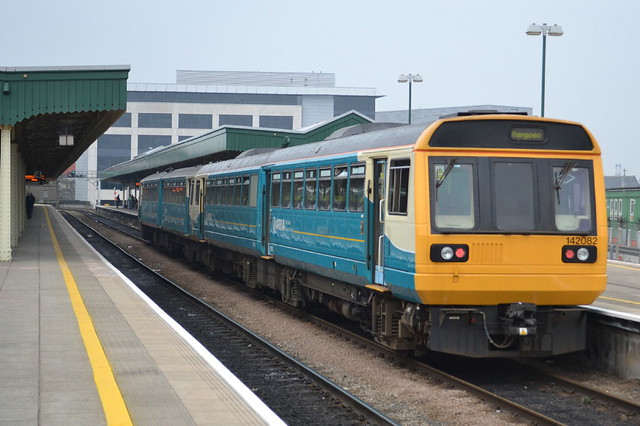 |
| There's clear need for a long-term strategy on rolling stock - whether "hand me downs" or brand new. (Pic : David Burrell via Flickr) |
As to where to get the trains from, there wasn't an agreement on whether rolling stock should be "cascaded" ("hand me downs") or bought new.
Transport expert, Prof. Stuart Cole, suggested the Welsh Government should become a "rolling stock company" in its own right, owning any Wales and Borders train fleet from 2018. Leasing company, Angel Trains (and ATW), said refurbishing old trains provided better value for money than completely new rolling stock.
Edwina Hart was open minded about either option, leaning towards refurbishment. While Plaid Cymru leader, Leanne Wood, has previously called for bespoke trains post-electrification.
It was generally agreed that the issue of rolling stock needed a "long-term strategy". However, Prof. Cole said any decision to lease or purchase new trains had to be in place by the end of 2014 as it takes up to 3 years for new trains to become available.
The Business Model
- A standard model – Train operators receive revenues and accept risks, with subsidy paid by the Welsh Government or a premium paid by the franchise holder.
- A concession model – Operators are paid a fee to run services specified by a franchise authority. Revenues are then received by that authority (similar to MerseyRail and London Buses).
- A not-for-dividend model (aka "Glas Cymru model") – This could include a state-owned, not-for-profit company operating at arms length from the Welsh Government, or a co-operative franchise.
There was no clear consensus on which
model would be best, though many respondents at a special "stakeholder event"
believed the not-for-dividend model was worthy of further
investigation. Railfuture outright supported it. Many though believed
the business model itself wasn't as important as service
delivery.
Prof. Cole believed that the traditional franchisee model would provide improvements to customers, but that the not-for-dividend model would be more popular. He also raised concerns there wasn't enough expertise within the Welsh Government to develop the franchise and procure things like rolling stock.
If the franchise moved to a not-for-dividend model, ATW say that there would be more management "by the Assembly", whereas if it's a for-profit business model, the operator takes on more of the management duties.They also believed that profit motive was essential to create economies of scale, saying that if the Welsh Government were considering a different business model, they should do so with their "eyes open to the risks".
ATOC produced evidence from KPMG that highlighted the benefits of competition between franchises, though its findings were questioned by a Leeds University study which said franchising has been "less successful, cost wise".
Edwina Hart said she was open-minded to a not-for-dividend company bidding to run the franchise, but would require the powers to enable that to happen. She did say though that "no substantial work" has been carried out by the Welsh Government to investigate a not-for-dividend model, which caused the committee concern.
There was also discussion on the benefits of integrating infrastructure (Network Rail functions) with train operations - dubbed a "deep alliance" - to help reduce costs overall. It means train operators and Network Rail could work together to improve efficiency and customer service in all aspects of rail operations.
The Draft Charter
The draft Charter (p34-36)
had 10 key points, building on the committee's integrated transport inquiry, summarised as :
Prof. Cole believed that the traditional franchisee model would provide improvements to customers, but that the not-for-dividend model would be more popular. He also raised concerns there wasn't enough expertise within the Welsh Government to develop the franchise and procure things like rolling stock.
If the franchise moved to a not-for-dividend model, ATW say that there would be more management "by the Assembly", whereas if it's a for-profit business model, the operator takes on more of the management duties.They also believed that profit motive was essential to create economies of scale, saying that if the Welsh Government were considering a different business model, they should do so with their "eyes open to the risks".
ATOC produced evidence from KPMG that highlighted the benefits of competition between franchises, though its findings were questioned by a Leeds University study which said franchising has been "less successful, cost wise".
Edwina Hart said she was open-minded to a not-for-dividend company bidding to run the franchise, but would require the powers to enable that to happen. She did say though that "no substantial work" has been carried out by the Welsh Government to investigate a not-for-dividend model, which caused the committee concern.
There was also discussion on the benefits of integrating infrastructure (Network Rail functions) with train operations - dubbed a "deep alliance" - to help reduce costs overall. It means train operators and Network Rail could work together to improve efficiency and customer service in all aspects of rail operations.
The Draft Charter
 |
| The overriding aim of the Charter is to put passengers first. Haven't we heard all that before though? (Pic : BBC Wales) |
- Lobby the UK Government for devolution of powers and funding for railways so the Welsh Government is responsible for awarding the Wales & Borders franchise.
- Ensure the Welsh Government has the right expertise and funding in place to deliver an effective franchise and necessary rolling stock. This includes developing a rolling stock strategy "as a matter of urgency", factoring in electrification programmes.
- Base new routes on a detailed understanding of rail traffic flows in the franchise area, including cross-border routes.
- Take an early decision on the management model, clearly demonstrating how it would improve passenger satisfaction, service delivery and provide value for money.
- The Welsh Government, when drawing up the franchise, should clearly :
- Put passenger needs first and foremost.
- Require significant investment by the operator.
- Enhance performance monitoring based on the Scottish example, and enhance monitoring of services and environmental impacts.
- Simplify ticketing and fares, as well as provide high standards for station facilities and effective branding.
- Integrate with other modes of transport as well as walking and cycling routes.
- Develop a closer working relationship between the franchise holder and Network Rail.
All Aboard?
It looks like they've scored a hat trick.
In all honesty, from my own experience, rail services in Wales – while they could be significantly improved – aren't that bad. I have the luxury of living in an urban area though that's well served by routes, and it's clear rural Wales has serious problems. Rail services aren't as bad or as under pressure as bus services anyway. Following Scotland's lead when it comes to monitoring and maintaining standards of service is long overdue and a necessity.
You can't really argue with the Charter as outlined. It does seem a bit aspirational for now, and will need to be backed up with something concrete when it comes to awarding the franchise itself. That is however - in political terms - a long time away.
If there's one area you would point to a not-for-dividend/not-for-profit model working, it would be the railways. The former chair of the Assembly's Cross-Party Group on Rail, now Deputy Minister for Tackling Poverty, Vaughan Gething (Lab, Cardiff S. & Penarth), has led work on that before.
It's disappointing, but not surprising, that the Welsh Government have been lazy when it comes to investigating that model further. If Edwina Hart really wants to see that happen - I suspect that deep down, she might - she'll have to get her skates on. I suspect though that the next franchise will be awarded to an established company – simply because it's less risky. Typical Wales.
The overriding fact is that absolutely none of this matters without the devolution of prerequisite rail powers. That will have to happen by the end of 2014 at the latest judging by the timescales given in the report.