
This site is no longer updated

Please use the links in the sidebar to visit the new sites!

Tuesday, 31 July 2012

Senedd Watch - July 2012


  • The head of the Welsh Local Government Association said that the devolution of council tax benefit to Wales is “a potential disaster”. The Welsh Government complained that they haven't had enough time to prepare for the changes - which are due to come into force later in 2012.
  • Communities and Local Government Minister, Carl Sargeant (Lab, Alyn & Deeside), said that plans to reduce the number of front-line police officers in Wales will have a “serious and adverse impact” on public safety. A total of £96m in savings on policing are due in Wales by 2015.
  • The Assembly's Finance Committee reported on borrowing powers, making recommendations that include : giving the Assembly the power to borrow for capital spending, controls agreed with Westminster, switching from revenue to capital spending without Treasury approval as well as taking into account similar developments and processes in Scotland.
  • GPs have been told by the Welsh Government that they will not have to open on Saturday's if there's no demand. Welsh Labour had a manifesto pledge in the 2011 election to widen access to GP's surgeries at weekends and evenings.
  • Glamorgan and Newport universities unveiled plans to merge, which is said would allow them both to compete “on the world stage”. Cardiff Metropolitan University continues to resist joining the merger.
  • Single-use carrier bag use in Wales has fallen by up to 90% since the introduction of a 5p charge in 2011. A poll suggests that 82% of shoppers now support the charge, compared to 61% before it was introduced.
  • The Assembly voted in favour of lowering the voting age to 16, with widespread support from across all parties. Darren Millar AM (Con, Clwyd West) suggested that the move would be “inconsistent” with gambling or alcohol ages. The Assembly, however, has no power to change the voting age, and the Welsh Government have instead called on the Electoral Commission to consider the move.
  • Mark Drakeford AM (Lab, Cardiff West) refused to back the First Minister's suggestion - that the UK's nuclear submarine fleet moves to Milford Haven in the event of Scottish independence -during a Plaid Cymru sponsored debate.
  • Plaid Cymru repeated calls for a not-for-profit company to take control of Welsh rail services when the Arriva Trains franchise is up for renewal in 2018, after Labour are reported to have been considering the option for English railways.
  • Deputy Minister for Agriculture, Fisheries & European Programmes, Alun Davies (Lab, Blaenau Gwent), has undertaken a “stock take” of the Glastir land management scheme, finding that there were no compelling arguments for alternatives to the scheme, initiated by the previous Welsh Government, and promising a “period of stability.”
  • Health Minister Lesley Griffiths (Lab, Wrexham) has been accused of “gagging” community health councils (CHC's) with regard reorganisations within the Welsh NHS. The Minister said that CHC's needed to consider the needs of all of Wales, and shouldn't “divulge sensitive information” from health boards. The Conservatives have described this as “oppressive”.
  • In a separate incident, Darren Millar AM accused the Health Minister of “conniving” with the authors of an “independent” report into future changes to the Welsh NHS. A series of e-mails were obtained, which suggests that parts of the report were “sexed up” to make the Welsh Government's reorganisation plans more attractive. In an urgent question, the Health Minister strongly denied this, saying that the report was “based on clinical evidence.” Lesley Griffiths survived a subsequent Liberal Democrat sponsored no-confidence motion by 29 votes to 28 on July 18th.
  • School inspectorate Esytn  said that pupils taking the Welsh Baccalaureate qualification were not “being challenged enough”. The Welsh Government have said that there are introducing grading to the Advanced Level course for 2012-13.
  • A group, led by former Labour Finance Minister Andrew Davies, called for the devolution of all income tax to Wales. It's claimed devolving the tax would “improve accountability”, and that income tax revenues represent nearly a third of the Assembly's annual budget.
  • The First Minister reiterated his calls for a “constitutional convention”, saying that England “lacks a voice on the future of the UK.”
  • The UK Government has announced plans for a £500million rail link that would allow direct trains from Wales and the south west of England to Heathrow airport in London. On July 16th, the UK Government also announced a major rail investment scheme, including electrification to Swansea and the Cardiff Valley Lines. A cross-party Assembly group, chaired by Vaughan Gething AM (Lab, Cardiff South & Penarth), successfully campaigned for the electrification programme, along with business consultant Mark Barry. It's believed it could be the first step towards the creation of a “metro system” in the south of Wales.
  • Darren Millar AM won the ballot to introduce a Bill to the Assembly, and is proposing a 5p levy on chewing gum to help pay for litter clearing.
  • An ICM opinion poll, conducted on behalf of the Silk Commission, found that two-thirds of people support the devolution of income tax, while 80% supported borrowing powers.
  • Education Minister Leighton Andrews (Lab, Rhondda) placed Pembrokeshire County Council under a special board of control, after he said he has “little confidence in certain officers” following a child abuse scandal at a Pupil Referral Unit in 2009.
  • The First Minister claimed that he has left UK Prime Minister David Cameron with “food for thought” about changes to the electoral system for the National Assembly. The First Minister reiterated his belief that changes to the electoral system for the Assembly should be decided in Wales. The UK Government earlier denied giving the First Minister “any assurances” that there would be no changes to the Assembly's electoral arrangements without the Assembly's agreement.
  • The first census data from 2011 reveals that the population of Wales has risen to 3.06million, with 90% of that growth attributed to migration, mostly from other parts of the UK.
  • Elin Jones AM (Plaid, Ceredigion) was elected Plaid Cymru's deputy leader on July 17th.
  • Dafydd Elis-Thomas AM (Plaid, Dwyfor Meirionnydd) had the party whip temporarily withdrawn, after failing to provide a “satisfactory answer” for his absence from the no-confidence motion against Lesley Griffiths on July 18th.
  • Unemployment in Wales increased by 2,000 in the three months to July 2012, to stand at 9%, while unemployment across the UK as a whole, fell to 8.1%.
  • The Assembly entered recess on July 18th, set to reconvene on September 25th.
  • Milk processors and dairy farmers agreed a draft deal at the Royal Welsh Show over milk prices. Milk producers will be given more bargaining power, in a deal Deputy Minister for Rural Affairs Alun Davies described as being able to “deliver real change.”
  • Four times as many over-50s are diagnosed with malignant melanoma in Wales compared to 30 years ago, according to Cancer Research UK.
  • According to an Office for National Statistics survey, people living in Wales were the most dissatisfied people of the Home Nations, with people in the South Wales Valleys significantly more dissatisfied with their lives than those in more rural areas.
  • Estyn recommended that Anglesey's education services be placed in special measures, after judging them to be “unsatisfactory”, citing poor attendance, poor standards and poor leadership.
  • The UK Government blocked the first Bill passed by the Assembly. The Local Government Byelaws Bill was awaiting Royal Assent, but has now been referred to the Supreme Court after - apparently - modifying the role of UK Ministers without their consent – which is outside the Assembly's competence.

Projects announced in July include : an £800million gas power station in Wrexham, an expansion of the door-to-door Bwcabus service in Carmarthenshire and a £425million deal with BT to provide “next generation broadband” to 96% of Welsh households by 2015.
Sunday, 29 July 2012

Welsh Government - End of year report

The Assembly is now in recess. How do I, personally, think
the Welsh Government (and opposition leaders) have performed
in this first year since the March 2011 referendum?
(Pic : The Guardian)

Carwyn Jones (Lab, Bridgend)
First Minister

C (D within Wales, B externally.)

Is Carwyn a good "figurehead" for Wales – someone who you would be pleased to have represent the nation – yeah. I'm quite happy with his performance there. In fact, I'd say he's perhaps better than Rhodri Morgan in that regard.

I've been fairly impressed with how Carwyn has handled relations with Westminster, his ponderings on the constitution, the relatively successful business trips and his somewhat "ambassadorial" role. Despite Dafydd-El's hissy fit recently, I agree with him that Carwyn Jones is quite the statesman, and manages to be both affable and presidential at the same time – an excellent combination for any politician.

Is Carwyn a good "First Minister" – someone who drives progress, inspires confidence and competence, and motivates their government to action. From what I've seen, it's a big no.

So that's something Carwyn Jones and David Cameron have in common then.

With regard the government side of things, I've seen little to be impressed with. In the first half of the Assembly year there was near paralysis. Since then, we've had a lacklustre legislative programme (with a few exceptions), reannouncements and relaunches, fiascos like the Green Investment Bank Bid, AWEMA, that nuclear weapons "brain fart" and the spin surrounding future health service reforms in Wales. He's been unusually combative in FMQ's, in many cases asking more questions instead of answering them. Personally, I think he's been coming off worse for it too, though others will disagree and question the standard of the opposition.

Not good enough, really.

Jane Hutt (Lab, Vale of Glamorgan)
Finance Minister, Leader of the House

C+

I've said before that this is Jane Hutt's niche, and she's doing well. It can't be easy for any Labour politician to be in charge of making cuts of any kind, but Jane's budgeting has been relatively fair, with the "pain" spread evenly. The score would've been higher had the Infrastructure Plan not been, largely, made up of re-announcements and over-promising with regard capital spending on health.

Edwina Hart (Lab, Gower)
Minister for Business, Enterprise, Technology & Science

C-

This score will no doubt surprise a few of you. I've been heavily critical of things Edwina's been involved in, but there are several glimmers of hope : the continuation of the Economic Renewal Plan, the new science strategy, a few early successes with regard enterprise zones and the new innovation strategy currently under consultation.

She's a hard-worker, but I think it's the people around her that need to buck their ideas up. Nowhere near good enough considering the challenges facing the Welsh economy, but I'll give her credit for trying. For now that's all we can ask of her. Results can't come quickly enough though.

Leighton Andrews (Lab, Rhondda)
Minister for Education & Skills

B

Leighton's consistently one of the Welsh Government's better performers (on paper at least). Ultimately, his legacy is going to be one based on delivery. If all the new strategies and initiatives fail to produce tangible results in education, then his record will be tarnished. Marks have been taken off for his aggressive approach to higher education mergers.

He has an iron-will determination about him - perhaps a little too heavy-handed - but maybe that's what we need in Welsh schools. I'm not sure how long his more "shoot first, ask questions later" approach will last before he angers the wrong interest group.

Carwyn is in the First Minister's job until he gets bored or he/Labour are voted out of office. Even though the chance of the latter occuring is less likely than Elvis crashing a Tardis into Cardiff Bay, if there were an opening at the top, from what I've seen so far, Leighton is probably the only candidate from the front benches that can step up to it in any meaningful way. That should worry Welsh Labour, really.

John Griffiths (Lab, Newport East)
Minister for the Environment & Sustainable Development

C+

Would've been higher had he not made a u-turn on the badger cull. The rights and wrongs of it are up for debate, but it doesn't look good when a decision like that was dragged on for so long.

However, he's one of the cabinet members I've been relatively impressed with. John seems keen to get his hands dirty, and isn't afraid of making big decisions. He had big shoes to fill since Jane Davidson left, but he's acclimatised pretty well. He'll have a lot of work to do in coming years with the environment bodies merger, changes to planning in Wales and Sustainable Development Bill. I'm convinced he's up to that. Not bad.

It would be a travesty if he were shunted aside in the future for someone with a bigger mouth and a bigger head.

Lesley Griffiths (Lab, Wrexham)
Minister for Health & Social Services

D-

Lesley is in serious danger of losing control of the health agenda.

Marks are taken off for telling fibs about bail outs, and the recent issue regarding that "independent report" (perhaps unfairly). That's not to say she hasn't done some things well – reforms are the "right thing". Also, Lesley is delivering some major investments in hospitals (albeit ones re-announced for the umpteenth time), the Organ Donation Bill and overseeing really tough financial decisions in the NHS - which no Labour minister really wants to be doing.

I think Lesley should be given more free reign in how she's allowed to present the case for hospital reorganisation. Health is always going to be one of the more difficult portfolios to have in Wales, but I've got the impression that Lesley might have been pressured to present things in a certain way. I'm not sure how long we can wait for her to grown into the role, or how long she'll be given. There are echos of Jane Hutt circa 1999-2005 here.
She narrowly survived a no-confidence vote (that should never really have been called in the first place), however if the subject of that vote had been exclusively on her performance to date (which would be slightly unfair, I'd admit) she would be a goner.

Huw Lewis (Lab, Merthyr Tydfil & Rhymney)
Minister for Housing, Heritage & Regeneration

C+

Huw might not be as high-profile as he'd like, but at least he's been busy. He's made some good contributions to the report on the future of the Welsh media, leading to several of his recommendations being taken up. He's also produced a very comprehensive white paper on housing - albeit with some fairly unambitious targets in some respects. On the heritage side of things, there's a new development at St Fagans carried over from the last government, but I imagine, at heart, he'll be more concerned with the regeneration aspect of his portfolio.

Carl Sargeant (Lab, Alyn & Deeside)
Minister for Local Government & Communities

C

It's been a quiet year for Carl. He's finally got around to lifting the veil hanging over Anglesey Council, but hasn't announced any major transport projects of any note as far as I can remember. The M4 Newport issues will finally be addressed - as many a Welsh Government has aspired to - but I don't see anything actually happening on the ground for a while. I think once more substantial local government reforms are announced we'll hear more from him. Not bad, but not exactly blow your socks off stuff from him either.

Theodore Huckle QC
Counsel General

B

Should Wales have a separate legal jurisdiction? We're finally being asked that question, and I'm sure both Carwyn and Theodore played a part in that. Creating a separate Welsh legal jurisdiction would be historic because it would effectively consign the "official" EnglandandWales to the history books and the cricket pitch. Most of the high score is for getting the ball rolling on that alone, however from what I've seen he comes across as a very astute individual who has the confidence of the Assembly. Not sure about all this nonsense regarding a silver badge though.

Junior Ministers

Gwenda Thomas (Lab, Neath)
Deputy Minister for Children & Social Services

C

Gwenda's introduced a comprehensive draft bill on social services, which, even if it is above the level of understanding for the general public and only really of concern to care professionals, will hopefully lead to much improved social services. Gwenda is a friendly, familiar face, but it's been a relatively quiet year for her.

Jeff Cuthbert (Lab, Caerphilly)
Deputy Minister for Skills

D

This is through no fault of his own, and not really a criticism, but he doesn't appear to have done very much. All deputy ministers risk becoming anonymous, and considering his portfolio, he's likely to be in the shadow of Leighton Andrews a lot of the time. However, he is leading a review into qualifications which, in the medium-term, will hopefully deliver better results and improve education standards. I'm looking forward to seeing what ideas this comes up with.

Alun Davies (Lab, Blaenau Gwent)
Deputy Minister for Agriculture, Food, Fisheries & European Programmes

C+
This role - which really deserves to be a full-time cabinet position - is one that requires a lot of travelling and a lot of hard graft. He doesn't appear to have the complete confidence of the farming community - they're always a hard bunch to please, perhaps with good reason - but as far as I can see he hasn't done much wrong. He takes the role incredibly seriously by all accounts, despite representing an urban constituency.

He's going to have a far more important role if Wales secures (unfortunately) another round of Objective One funding. I hope he can lead an investigation into whether the EU funds are being spent in the right way.

An unsung hero, but his occasional snide remarks against his predecessor are completely uncalled for. He's no Elin Jones.

Opposition Leaders

Andrew Davies (Con, South Wales Central)

D

I like "RT" - seriously. For some reason, he hasn't been able to set out a stall for himself. The Tories have become very disorganised since the loss of Nick Bourne, seeming to be in retreat when they really should be on the front foot off the back of 2011's good Assembly results. Though to his credit he's overseen the positive development of "Your Voice" – a new Welsh Tory "superblog".

Andrew needs to get a grip on things and work out what's wrong – it's not him, really – and sort it before someone decides to put a knife in his back. That would be a shame, because he comes across as one of the few AMs with any life and character to him.

Leanne Wood (Plaid, South Wales Central)

N/A – Too soon

It's far too early to make a proper judgement on Leanne's leadership. Yes, the local election results will have been a disappointment, but losses were expected. Yes, Plaid's membership increased in the run up to her election, but I haven't really seen anything that hints at a significant departure or alternative to Labour's hegemony (with a few notable exceptions).

I've neither been blown away, nor disappointed so far, but there's been some progress. I think most Plaid members and supporters would say the same thing. Her excellent contribution to the Diamond Jubilee debate and motion a few weeks ago - despite it arguably being laid as a "trap" - builds on her credentials as someone to take seriously, dare I say it - "stateswomanlike". Aside from the embarrassment caused by nursing a teething Dafydd Elis-Thomas in public, it's been a good start.

Kirsty Williams
(Lib Dem, Brecon & Radnor)

C+


Poor, poor, Kirsty. Perhaps an undeserving victim of UK politics and the Lib Dem's unpopularity. The Lib Dems have always been one of the most capable opposition groups in the Assembly since its creation. That's their trump card - holding Labour to account – but Kirsty seems to have lost her rhythm, when on her best days she shows a certain gravitas.

Her first task in turning things around, is to stop Peter Black from becoming some sort of Lord Haw-Haw for Westminster in Wales. Her second, and far more trickier task, is to distance the Welsh Lib Dems from the UK Coalition. She's managed to get Lib Dem policy through due to the budget deal with Labour, but she - and her party - should fully expect Labour to take all the credit (and all the headlines) should it be a success.

Saturday, 21 July 2012

Ultra Light Rail - Another transport option?

Ultra Light Rail - Wildly idealistic, or sustainable way to keep open/
re-open lesser used branch lines in Wales?
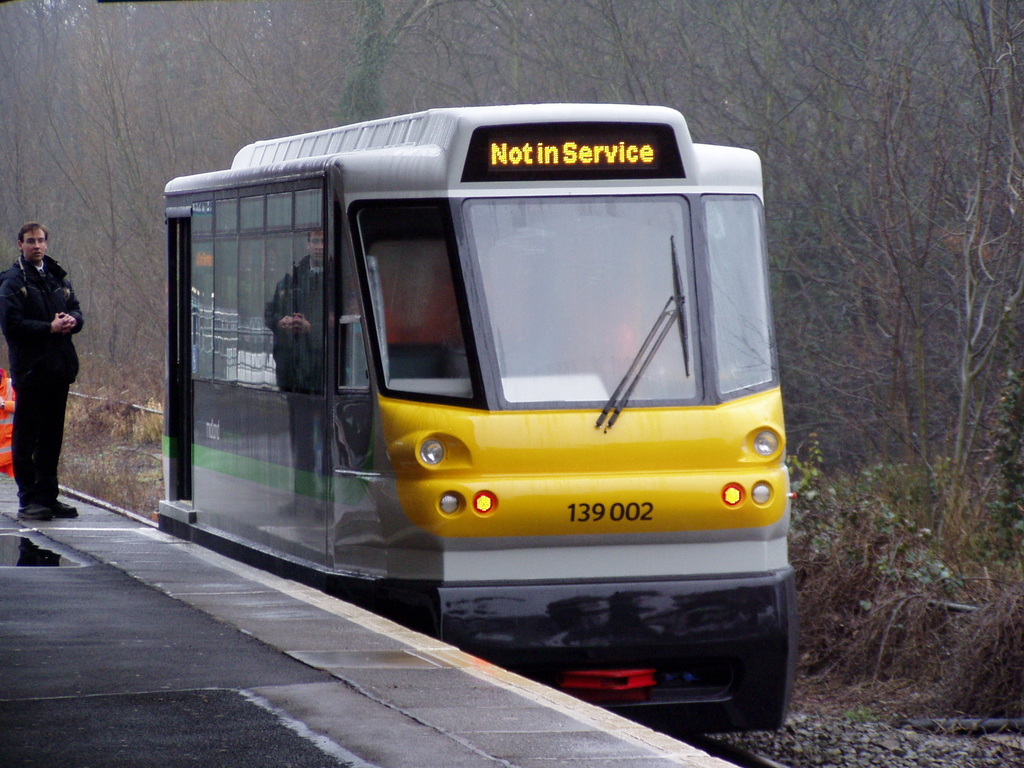
(Pic : Wikipedia)

When you think of "railway", you probably think of the standard heavy rail network between major population centres. You probably won't include trams under the same umbrella, and will write-off the narrow gauge railways as "something for tourists".

Are we too hung up on our railways meeting a certain standard to be categorised as such? Is there an opportunity for Wales to take a different path in the future?

Swiss railways, for example, consists of standard gauge, narrow gauge and tram railways - all part of an interconnected network, with each part serving its own function in its respective community.

What is "Ultra Light Rail"?

The Sustainable Travel Company and Parry People Movers Ltd have carved out niches for themselves by developing a series of lightweight self-propelled "tram trains", dubbed "Ultra Light Rail".

They are designed to run either on their own track (like trams) or even on standard heavy rail. Some of these vehicles are being used on parts of the UK rail network - in Stourbridge for example (photo above). They can even - possibly - be adapted to street-running.

They're designed to carry generally the same number of passengers as a small tram, but not as many as a mainline train or a tram system in a major built up area. It could be considered – in shorthand – a light rail system for rural areas and smaller towns.

Where could Ultra Light Rail (ULR) fit in?

Wales has three different types of railway, as I can see:
  • CoreMainline services (north Wales, south Wales mainline) and heavily-used commuter services (Valley Lines).
  • Branch – Connecting, lesser used and community/rural services (for example Llandudno-Blaenau Ffestiniog, Heart of Wales Line)
  • Mothballed – Freight-only and disused lines that could be reopened (i.e. Pontyclun-Beddau, Aberdare-Hirwaun, Llangefni)

ULR could become a new category for railways – a halfway house between traditional heavy rail and tram-based light rail. To do something like that though would either require the devolution of rail regulatory powers, or independence. It would have its advantages and disadvantages.

For example, ultra light rail could have relaxed regulations for track and station standards, which could help keep maintenance and running costs down – and more crucially help keep some lesser-used branch lines open.

However, that could also be considered a safety risk or lead to poorer standards of service than normal railways.


These could be the main features:
  • Self-propelled vehicles – Fuel cells, flywheels etc. No need for large-scale electrification.
  • Modular stations – Which could consist of a very basic platform, with DDA access wherever necessary.
  • Simpler signalling systems – In some cases perhaps reduced to a simple "stop" or "go", but this would likely mean slower permissible line speeds.
  • Only used on connecting branch railways - To free up space for extra mainline services
  • Street-running adaption – Becoming a more formal "tram train".

How could these systems be run?

Financial viability is a key consideration for any project like this, and for now, none of these are likely to be viable by themselves. However, there are alternatives:
  • Municipal-owned/partnered transport companies – A return to regulated public transport in local authorities/regions, with bus, light rail and ultra light rail services coming under the control of arms-length companies, possibly run on a not-for-profit model.
  • Community rail partnerships – Just like existing schemes, but with some of the functions (track maintenance etc.) being run by volunteers and apprentices.
  • Subsidised through general taxation – Many of the communities that would benefit from this are distant, and fixed transport connections would provide greater social and employment opportunities.
  • Subsidised through hypothecated taxation – Congestion charges, car parking levies, emissions charges, a precept on Council Tax (like a police or fire authority would).
  • Voluntary contribution – For example, retail parks, business parks, voluntarily contributing towards the costs of building stations for/near their premises.

An exemplar ULR network

Like my look at cycling, I've decided to look at a possible ULR network for Bridgend. This isn't a serious proposal, just an example of how it might work. Here's a schematic for a potential ULR system, based on the existing Maesteg branch line, and the disused Garw and Ogwr valley lines.

A theoretical Ultra Light Rail network for Bridgend county -
not to be taken too seriously, just to illustrate the potential.
(Click to enlarge)


This network uses the existing Maesteg branch, extended northwards to Caerau (it would now be impossible to send it through to Cymer and Glyncorrwg, which is a shame), alongside the partially disused Garw branch (currently earmarked for development as a heritage railway), and the completely removed Ogwr valley branch. The Ogwr branch is now a cycle path, but it should be pretty easy to rebuild cycle paths next to the rails, separated by a robust fence, and continuing to encourage cycling and walking.

As a "money no object/not serious" idea, if it were possible, the ULR network could be extended south of Bridgend, momentarily sharing the Vale of Glamorgan line, then swinging outwards, south of Island Farm and Broadlands, before joining the Porthcawl road, and becoming a street-running service into the centre of Porthcawl. The cost and environmental implications of such a thing are likely to be prohibitive - even for wildly idealistic people like myself.

This wouldn't be designed to replace mainline services, just provide a lightweight, low-cost way of feeding into mainline services, as well as maintaining local, lesser-used community railways. If anything, it would supplement = and possibly be an eventual replacement for - existing bus services.

For example, any Bridgend network would free-up space on the South Wales Mainline for additional services in place of the current Cheltenham-Maesteg service. Passengers from the Bridgend Valleys would (ideally) be able to buy through-tickets (or use pre-paid cards, harking back to my post The Welsh Metro last year), changing at Bridgend station.

There are possible other places in Wales this approach could be used:
  • Pontyclun to Beddau (and possibly Ely Valley)
  • Swansea to Onllwyn & Blaengrawch
  • Llandudno to Blaenau Ffestiniog
  • Wrexham to Mold
  • Bangor to Caernarfon

This won't be an ideal solution for every situation, but if it allows greater connectivity between some of our more isolated communities – as it has done for the Swiss – then perhaps it's worth keeping it as an option on the table for the future.

Tuesday, 17 July 2012

No confidence - Case for Change Round 2

Lesley Griffiths is due to face a grilling over the Case for Change report debacle,
but is she being treated fairly here? Is a no-confidence vote an over-reaction?
(Pic : New York Daily News)

Tomorrow, Health Minister Lesley Griffiths (Lab, Wrexham) faces a no confidence vote in the Senedd over the row last week with regard the independence of an academic report on changes to the Welsh NHS.

It's going to be a rough day for her, but I'm fully expecting Lesley to survive, even in the (unlikely) event of her losing the no confidence vote. As Gareth Hughes has pointed out, she's in the job until Carwyn Jones decides otherwise.

If you have the time actually look the report summary for yourselves. It's a highly readable piece of work that presents its case effectively and conclusively. There's very little in there that we can't all agree on. The issue is whether things have been put in there to make the case - as the e-mails revealed - "more persuasive".

That's the damaging thing as far as I see it. Any "independent" report from now on will have question marks around it. For example, the recent report about university mergers in south east Wales - which just so happens to echo Welsh Government policy very closely too.

I don't think we've seen enough grounds for a no-confidence vote. A committee session to get answers (which will happen tomorrow morning), a warning to civil servants to prevent something like this happening again and an apology in the Senedd. Case closed, wrists slapped, a red-faced minister and then, hopefully, we can get back to the matter at hand.

However, we live in Wales. We don't do things like that, do we?

The vote and the implications

People have asked me why I haven't "got off the fence" and joined a political party, whether Plaid or anyone else. If they wanted a specific example, this is it.

It's probably obvious to most of you that I consider myself a Plaid Cymru "supporter", but that doesn't mean I support everything the party says or does, including this no-confidence motion. In fact, take away my support for independence, I'm probably one of those rare creatures - a "natural Liberal Democrat", who has a love-hate relationship with Labour, and thinks that the Tories and Greens occasionally talk sense. If you're confused right now, imagine what it's like for me.

I said in my last post on the issue, that "ministerial scalps" should be reserved for obvious examples of incompetence or corruption. Alun Michael went honourably, but should never have been there in the first place. Christine Gwyther couldn't do her job properly - perhaps based on her conscience and personal beliefs - but those motions failed.

I'm not sure if it's good or bad that these mistakes get picked up much better at a devolved level than in Westminster, as devolution tends to amplify them.

Lesley Griffiths has been a poor Health Minister - I make no bones about it. However, I've seen nothing in this "scandal" that warrants a call for her head. You could argue Lesley has "misled the Senedd" by presenting an "independent" report that was leaned on to support a pre-determined conclusion. That's serious, but not sackable in this particular case.

This no-confidence motion is slightly childish and attention-seeking. I suspect this has been driven by Plaid (who've made good use of FOI requests down the years), but taken up with aplomb by the Conservatives and Liberal Democrats.

It's the Conservatives who have been the most vocal in calling for a scalp, with Plaid and the Lib Dems taking a back seat, egging them on. That's smart. The Tories have been played very well by an increasingly shrewd Leanne Wood (or maybe in this case Elin Jones), who you've got to say is the de-facto leader of the opposition at the moment, with Kirsty Williams being - as always - an exceptional stateswoman compared to her peers.

So, are the opposition to put up, shut up, and form a governing rainbow coalition that can put their own health reforms through. No? Then what's the point of this?

Is it worth humiliating a government minister so they might cause future embarrassment to the likes of Keith Davies (Lab, Llanelli)?

The job of an opposition is to "oppose" (well, herp-de Mr Derp) – fair enough. This could be a case of the wrong action being taken for the right reasons. You can only play the no confidence card so many times until you look like the boy (or girl) crying wolf.

Don't think I'm going to let Labour off the hook. Their handling of NHS reforms has been a disgrace. They've managed to turn reasonable proposals most of us would agree to, into a political football that's probably put people off the idea.

Instead of trying to win hearts and minds, they took the Welsh Labour path of obfuscation, finger-pointing, accusations of scaremongering and top-down over-management. They probably thought we (the public) were too ill-informed, or hysterical, about NHS changes - because Labour would be in the same position - to have a rational debate. So they had to step in forcefully to press the issue. Wrong move.

An anonymous commentator left a comment on my last post earlier today, that harks back to the claims that Community Health Council's (CHC's) have been "bullied into silence" from the centre (reported recently elsewhere), as well as accusations of nepotistic appointments and being denied their say on the reforms. Sadly, even if it is true, I'm not shocked by stuff like that any more. If there's proof of that, I think it would be far more serious matter than the credibility of the report.

By underplaying the seriousness of this blunder, Labour have given the opposition more ammunition that they originally had, dragging a respected academic's name through the mud as deflection from weaknesses closer to home. They should have been upfront on this a long, long time ago.

These reforms are urgently needed. Like it or not, Labour have to be given the opportunity to deliver them as they are the ones in power. Someone is going to have to bite the bullet and see things through. For now that person is Lesley Griffiths.

She deserves a chance to turn things around. Being Health Minister is - as Betsan Powys has often described it - "the toughest job in Welsh politics". Only the economy brief deserves as large a "period of grace".

If we're still in this position 6-12 months from now, or if something far more serious emerges, a no-confidence vote would be justified. Until then, AMs need to put the toys back in the box and get their umbrellas ready for the summer recess.

There's schadenfreude in seeing government ministers done up like a kipper - but only when they really deserve it. Based on the arguments and evidence presented so far, this isn't one of those occasions.

The case for change in that regard, is pretty flimsy.

------------------------------------------------------------------------------------

UPDATE : 18/7/2012


After one of the most cringe-worthy debates I've seen in the Assembly chamber - and some incredibly nauseating spin and counter-spin on Twitter - I'm really glad I can't be bothered to do a full follow up right now. This was a serious issue, reduced to arguments over wording, while missing the bigger issue of Lesley Griffiths' performance as Health Minister and NHS reform.

Lesley Griffiths subsequently survived the no-confidence vote by 29 votes to 28. 


Tuesday, 10 July 2012

Dodgy Dossiers & The Case for Change

Oh, God! Here we go again!
(Pic : Kitchagogo)

The "Dodgy Dossier"

As you probably already know, a major row has erupted over e-mails between the author of reports into NHS reorganisation in Wales - entitled under the umbrella The National Case for Change - and senior Welsh Government officials.

ITV Wales, The Western Mail and Betsan Powys give glimpses into what was written. The full e-mails are available here.

A Welsh civil servant is reported as suggesting that the report needs to:
"....be more positive if possible i.e describing a persuasive vision of how things could be better."

While the author of the report asks for:
"killer facts....the evidence as presented does not seem to be as incisive as we might have hoped."

There were further suggestions that desirable new services, and ways of delivering them, could be included.

So, were the Welsh Government actually writing this "independent" report - used as justification for the Welsh Government's own NHS reforms? Or was the "independent expert"?

None of this means that the report itself was biased/a PR exercise, but its validity has now been thrown into doubt. Darren Millar AM (Con, Clwyd West) has gone so far as to call for Health Minister Lesley Griffiths' (Lab, Wrexham) resignation if she had knowledge of the e-mails.

Smooth move – not. Nobody was calling for Edwina Hart's resignation over the Green Investment Bank bid, which was probably a far more serious blunder than this.

Elin Jones AM (Plaid, Ceredigion) took a slightly more measured approach by saying that, "a conclusion was decided on up front and that the correspondence illustrates a desperate search for the evidence to back it up." Kirsty Williams AM (Lib Dem, Brecon & Radnor) has said (quoted via Valleys Mam) that this, "clearly contradicts the Health Minister's statements that the case for change report was an independent assessment."

There have also been calls for a no-confidence vote - as reported in the Evening Post - coming from Mid & West Wales AMs, whose patch is on the front lines of Labour's NHS reorganisation.

I don't think that will happen either. It would really put Keith Davies AM (Lab, Llanelli) in a bind. He's going to wish Helen Mary Jones had knocked on a few dozen more doors when this kicks into top gear.

Lesley Griffiths herself issued a pretty strong rebuttal to the accusations in an urgent Q&A session earlier today, and maintains that the report's contents were "independent" and based upon "clinical evidence". That's the party line sorted, but she's probably right too.

The Case for Change

AWEMA was strike one. The Green Investment Bank was strike two. I said back in March that the "third dropped bollock" was forthcoming. This, ladies and gentlemen, is strike three.

Carwyn Jones has to do something to restore credibility to his government, but calls for resignations and votes of no-confidence are premature. Ministerial "scalps" should only be used for gross incompetence and corruption. That isn't evident today, but this is yet another big bungle for the Welsh Government.

The response probably means revisiting the NHS reorganisation, making significant changes, but patience and time are in short supply.

If Lesley Griffiths told the civil servant, in person, to offer "tips" to the report author, then her position will be untenable. Try proving that. Accuse me of being naive all you want, but I doubt that's the case. I'd hate to think our ministers would be that dim. Heh.

Lesley Griffiths hasn't really done anything wrong. There's no evidence (so far) that indicates she knew about the e-mails - even if she couldn't avoid them in her capacity as Health Minister. It's her word against Darren's.

Like the Green Investment Bank Bid, I'm going to have to return to the civil service issue again.

Can any of the people reading this, who don't work in the NHS, name the chief executive of their Local Health Board without looking it up? Who actually governs Wales? Who are the people actually making these decisions?

Lesley Griffiths is a patsy. Any NHS changes in Wales are going to have her face and name next to them – especially those changes which are "too radical and wide ranging" for the electorate. That's not entirely fair on her, or us.

This is a major problem. We should expect our ministers to be able to make decisions autonomously. All the civil service has to do is provide impartial advice. They shouldn't have been able to offer "tips" to someone writing an "independent" report without fear of being found out and sacked.
What's becoming clear, is that the relationship is the other way around. "Officers" make the decisions, Welsh Government ministers rubber stamp them, AMs debate those rubber stamps.

Wales is currently being run like a county council, not a nation.


On the NHS reforms themselves - we don't like being lied to.

That's what we've had for some time now. Lie, after lie, after lie. We've had obfuscation on "downgrading", cover ups on health board bailouts and we still haven't had the plans properly debated yet - only a glorified ministerial statement.

Now we have an "independent" report, that might've been leaned on by civil servants, possibly with the Health Minister's knowledge. That's another potential lie, and a pretty serious one. If it were true, it would mean Lesley might have "misled the Assembly". That's something you shouldn't be able get away with.

The NHS – which should've been Welsh Labour's strong point considering what's happening in England - is now becoming their Achilles heel.

Labour can accuse opposition parties of "destabilising key NHS reforms" all they want, but they're doing a pretty good job of that themselves. I say that as someone who supports the creation of "centres of excellence". If they've had that effect on me, I can't imagine what effect they've had on those who oppose it.

The opposition parties, meanwhile, are either going to have to offer an alternative, or try to influence decisions, because changes are absolutely vital.

With improvements in emergency care, in many cases, it's no longer critical to have full-time A&E departments in every major population centre.

With more expensive treatments, keeping people in hospital is becoming more costly. Wales can't continue to rely on our bigger hospitals to deliver basic/routine services, or act as a hotel for the elderly.

With more innovative treatments, not every single hospital in Wales will be able to offer them – they will need to be centralised near areas with good medical research and teaching facilities. In most cases that means Cardiff, Swansea or the big north Wales hospitals.

I think the only option now, is to rip up Case for Change and present a brand new one, in full consultation with the public and ideally with cross-party support. That might be a delay the Welsh Government can't afford, but they've lead to this situation through their own bungling.

Local Health Boards and the Welsh Government are also going to have to treat the public with a bit more respect. I don't think we'll stand for changes forced through because Labour, or civil servants, have decided that's what's best for us. Present your case, be honest and present all the alternatives.

We need a rational debate on the future of the NHS, even if the Assembly doesn't seem able to provide that at the moment.

The romanticised NHS of Nye Bevan is dead. Wales has to let go of it. I don't envy Welsh Labour's task in doing that, but that's no excuse for making such a ham-fist of it.

Sunday, 1 July 2012

Senedd Watch - June 2012


For those of you who don't already know, I've now created a Facebook page, which should make it easier to keep up to date with the latest blog posts, as well as links elsewhere. Don't forget to seek it out and  "like" it. :)

  • The First Minister paid tribute to Elizabeth II to mark her Diamond Jubilee celebrations by saying she has offered a “steadfast support to Wales over the last 60 years”. In Wales some 300 street parties took place, and 200 beacons lit, to mark the occasion.
  • The new Older People's Commissioner, Sarah Rochira,  said that it's “vital” to act on issues raised by elderly people. Sarah said she had a clear focus on what needs to be done, saying that “We need to move on action that makes a real difference to lives of older people.
  • The Welsh Government have been accused by Eluned Parrott AM (Lib Dem, South Wales Central) of “skewing” cancer funding figures. The Welsh Government says it spends £4.50 more per person on cancer treatments than England. However, once England's Cancer Fund is taken into account, the figure is 47p and £300 less per cancer patient.
  • Plaid Cymru expressed concerns that new, stricter, visa rules could hit Welsh university funding plans. Simon Thomas AM (Plaid, Mid & West Wales) said overseas students pay more for their education here, and are a “crucial funding stream for universities.” The Welsh Government responded by saying that they have made their concerns known to the UK Government.
  • Business Minister Edwina Hart (Lab, Gower) welcomed the news of an exports rise in Wales - the only UK nation to see a rise. Exports rose from £3.298bn in Q4 2011 to £3.312bn in Q1 2012, meaning Wales continues to run a trade surplus in goods.
  • A party divide has opened up in the Liberal Democrats over regional pay proposals. Welsh Leader Kirsty Williams continues to “strongly and firmly oppose” regional pay, while UK Treasury Minister, Liberal Democrat Danny Alexander is keen to “see local, market-facing pay introduced across the UK.
  • A rescue operation was undertaken in parts of Ceredigion and Powys following heavy rain and gale force winds on 8th/9th June, which led to substantial flooding. The Environment Agency said up to five inches of rain fell in 24 hours in the area. Later this month, the Assembly's environment committee was told by Environment Minister John Griffiths (Lab, Newport East) that the budget for flood defences was to be cut by £30million over the next four years.
  • The NSPCC has said that child neglect referrals have risen by 67% between April 2011 and March 2012. In a separate report, it has been suggested that Wales is “lagging behind” the rest of the UK in child accident prevention, while “good progress” is being made.
  • A report from a Task & Finish Group, led by Prof. Brian Morgan of Cardiff Metropolitan University, suggested that business rates should be devolved to the Assembly and that local authorities should be able to retain more of their business rate income.
  • Pembrokeshire Council have been given a final warning by the Welsh Government to improve child protection after special experts were sent in 2011 after reports of serious problems with regard child abuse in schools.
  • Health Minister Lesley Griffiths (Lab, Wrexham) launched a new five year cancer plan, which will “focus on early diagnosis” and ensure more cooperation between different care providers in the health service. The minister did, however, rule out an English-style Cancer Drugs Fund, saying that there was no evidence it could improve or extend quality of life.
  • The Assembly's Standards Commission is to launch an investigation into AMs dealings with lobbyists following UK Government proposals for a statutory register of lobbyists.
  • Child poverty rates - excluding housing costs - fell by 3% in Wales over the last three years, from 26% to 23%, but remain higher than overall UK figures (20%).
  • The UK Deputy Prime Minister Nick Clegg, accused Welsh Labour of playing a “blame game” and said that the Welsh Government should take more fiscal responsibility.
  • The Welsh Government revealed its proposed “opt out” organ donation bill. The draft Human Transplantation Bill is out for consultation until September. If the Bill is passed it will come into effect in 2015.
  • The UK Government reaffirmed its commitment to building a new nuclear power station at Wylfa on Anglesey. The existing power station is due to stop generating in 2014.
  • The Permanent Secretary to the Welsh Government, Dame Gillian Morgan, announced her retirement after four years in the post. She said it was “a great honour for me to lead an organisation that is committed to supporting ministers to improve the lives of the people of Wales.” Peter Black AM (Lib Dem, South Wales West) called for an “independent” civil service, answerable to the Assembly.
  • Unemployment in Wales fell by 2,000 compared to the previous quarter, with unemployment at 132,000 or 9% - the fifth highest rate of the 12 nations and regions of the UK.
  • The First Minister said that there would be “more than a welcome” to the UK's nuclear submarine fleet in Pembrokeshire, should they move from their current base in Scotland. Plaid Cymru criticised the statement, with Simon Thomas AM saying the First Minister “has no grip on reality if he believes that the people of Wales want nuclear weapons stored in Milford Haven.” Rhodri Glyn Thomas AM (Plaid, Carmarthen East & Dinefwr) suggested that such a move would jeopardise the existing jobs at the oil and gas works in the vicinity.
  • Doctors across the UK took part in industrial action on June 21st in protest against the UK Government's proposed reforms to their pension scheme. Routine and non-emergency appointments were affected.
  • Education Minister Leighton Andrews (Lab, Rhondda)  ruled out re-introducing “O-Levels” in Wales following an announcement by England's Education Secretary Michael Gove that he was considering replacing GCSEs with the new exams, along with other reforms. The Welsh Government are currently undertaking their own review of qualifications.
  • A cross-party group of AMs have delivered, what has been described as, a “last ditch push” to the UK Government to secure funding for electrification for the Valley Line network in south Wales and main line to Swansea.
  • Bethan Jenkins AM (Plaid, South Wales West) temporarily left social networking site Twitter, after coming under attack for describing a handshake between the Queen and former IRA commander, and Northern Ireland's Deputy First Minister, Martin McGuinness, as “naive”.
  • Plans to create marine conservation zones should be restarted according to Dr Dylan Evans, who believes they “cannot work without the support of local communities”. Environment Minister John Griffiths said the plans were still in an early stage.
  • The Welsh Government have accused the UK Government of “confusion” over a proposed introduction of regional rates of welfare payments. The Welsh Government vowed to “resist” any such move.
  • Welsh Secretary Cheryl Gillan cancelled a debate on changes to the Assembly election arrangements. Shadow Welsh Secretary Owen Smith claimed that the 11:30am start time was too early for many MPs, who would not have returned from their constituencies before then.
  • Education Minister Leighton Andrews unveiled plans to fine parents of persistent truants up to £120. In 2004 the Welsh Government refused to follow the UK Government in instituting the fines. The number of unauthorised absences in Wales fell slightly from 1.6% in 2002-03 to 1.5% in 2010-11. The First Minister later added that fines would only be used as a “last resort”.
  • The First Minister launched an appeal for a National Mining Memorial at the site of the Senghenydd disaster in Caerphilly county. The appeal aims to raise something in the region of £200,000.
  • The Welsh Conservatives said that as many as 10,000 people are waiting longer than 12 hours in Welsh accident & emergency departments, and around 840 longer than 24 hours. The party have called on the Welsh Government to publish statistics on longer waits.
  • CBI Wales are claiming that firms are losing out of “up to £2billion” in public contracts because the Welsh Government is “ideologically against private firms delivering public services.”
  • Plaid Cymru leader Leanne Wood said in an article for The Scotsman that Wales will be independent “within a generation” and part of a “British neighbourhood of nations”.
  • Cardiff has been announced as the host of the 2014 UEFA Super Cup Final. It will be held at the Cardiff City Stadium. The First Minister welcomed the announcement, saying it “confirms once again how our capital is in the champions league itself when it comes to hosting major sporting events.”

Projects announced in June 2012 include : A £100million mixed-use development at Holyhead harbour, a £50million “super school” in Aberdare, a £500k scheme to boost exports in the Welsh biotechnology sector and a scheme to regenerate two open cast mines in Neath Port Talbot post-2018.