This site is no longer updated

Please use the links in the sidebar to visit the new sites!

Tuesday, 11 September 2012

Wales : An Economic Profile IV - Public Sector & Universities


You can't have any discussion on the Welsh economy without mentioning the influence of the public sector. Firstly though, you have to define what the "public sector" is.

The Role of the Public Sector in Wales


The public sector, in general, consists of services commissioned (directly or indirectly) by the state. This includes : health, education, welfare services, local services like waste collection and state-run enterprises.

Bodies such as universities and the "third sector" straddle the definition between public and private, as they are mostly run as private businesses, but a large chunk of their income comes from a mix of the private sector and public sector. Even if they are well dodgy. Universities aren't officially counted as part of the public sector by the Office of National Statistics.


Those on the left generally view the public sector as a form of public ownership, and a way to ensure that public services are delivered evenly on a basis of need, not ability to pay, or profitability. The problems with this are that it's generally paid for via increasing levels of taxation (which is claimed stifles economic performance), can lead to the creation of overbearing bureaucracies/"empire building", a top-down "targets culture" that stifles creativity and innovation and it doesn't always offer the best value for money, or highest standards of service.

Those on the right - while not openly hostile to the public sector - consider value for (taxpayer's) money a key consideration. They're less opposed to private companies providing public services, or competition in public services to ensure the best quality of service. However, this doesn't ensure the same levels of investment from the government, it can burden the state with debt (via PFI-style schemes) and competition can lead to poorer areas being left with an ongoing legacy of poor-performing public services.

Wales, Northern Ireland and Scotland – generally - follow the "left wing" model. England however, through both the previous Labour administrations and the current Coalition, are experimenting with a mix "right-wing" policies : free schools, city academies, PFI, NHS foundation trusts etc.

Some of these reforms would be impractical in Wales, but England's public services generally perform better across a wider range of indicators. However, there are gaps appearing in service performance between different areas, dubbed a "Postcode Lottery". Wales isn't immune from this either it has to be said, but the focus here is more towards providing an even service across the board, though services in rural parts of Wales are coming under the most pressure.

More than 300,000 people in Wales are employed in the
public sector, and more than half had some sort of higher
education qualification in 2007.
(Pic : Lewis & Lewis Ltd)

When it comes to the economy, the Welsh public sector:
  • Is a major employer. More than 300,000 people in Wales are employed in "the public sector".
  • Employs more graduates. In 2007, more than 50% of public sector employees had a higher education qualification or above, compared to 22.9% in the private sector. (Table 9)
  • Generally pays more than the private sector. In 2007, the public sector paid £70 per week more on average (Table 10) than the private sector. This trend appears to have continued since across the UK, but the private sector paid more to those without qualifications and school-leavers.
  • Is female-dominated. 63.7% of public sector employees in Wales were women in 2011.
  • Procures between £4-5billion in services from the private sector every year – for example, building a new school or hospital, catering services, IT contracts.

Health

NHS Wales is Wales' single largest employer, with approximately 84,800 members of staff in 2011. Of these, 32,800 were employed in nursing or related roles (i.e. Midwives). There are seven local health boards that run the NHS in Wales, in addition to a separate all-Wales Ambulance Trust, the Welsh Blood Service (based in Llantrisant) and the cancer-specialist Velindre NHS Trust based in Cardiff.

There are currently 14 major general hospitals (with A&E units) in Wales, and 2 minor general hospitals. This is in addition to 13 community hospitals with minor injury units (varying part-time and 24 hour) and numerous supporting clinics, community hospitals, psychiatric hospitals and a specialist children's hospital in Cardiff.

The Welsh NHS is Wales' single largest employer,
and around £6billion is spend on health and social services
by the Welsh Government every year.
(Pic : BBC Wales)

The Welsh NHS has its own logistics and procurement service (Welsh Health Supplies, now called Shared Services Partnership) with bases across Wales. A surgical materials testing laboratory is also based at the Princess of Wales Hospital in Bridgend.

Local Health Boards and the Welsh Government are leading a (controversial) reorganisation of hospital services in Wales, centralising services at some hospitals, while downgrading or removing services at others, being replaced with more flexible community-oriented services.

The Welsh Government currently spends around £6billion on health & social services from its allocated budget every year – the single largest expenditure group - and approximately 40-45% of the total devolved budget.

Local Government

The single biggest sector within the Welsh public sector are our 22 local authorities. There were 177,000 people employed in local government in 2011, but this is a fall of 7,000 on 2010 as public sector cuts make an impact, and local authorities are encouraged to collaborate in providing services.

Local authorities (including police authorities, national park authorities and fire authorities) were responsible for up to £7.8billion of public spending in Wales in 2012-13 on rudimentary local services such as : education, social services, policing, fire services, waste collection, planning and highways maintenance. Local authorities are provided with around £4billion from the Welsh Government directly annually, topped up by some UK Government direct and indirect grants (i.e. Policing).

Local government employed more than half of all
public sector workers in 2011.
(Pic : BBC Wales)

Local Government has the power to levy taxes, which has its own economic impact, raising around £2billion per year in Council Tax and Non-Domestic Rates on businesses. The Welsh Government recently carried out a review of Non-Domestic (Business) Rates, suggesting that local authorities might be able to keep more of this money for themselves in the future.


Central Government

The Welsh Assembly and Government are not huge employers by themselves. Approximately 5,100 people are employed by the Welsh Government directly, and around 300 by the Assembly legislature. Some of these jobs have been spread around Wales – to Llandudno Junction in Conwy and Merthyr Tydfil for example, though most Welsh Government jobs are in Cardiff.


Wales hosts a few major UK public bodies spun-out from the centre : Companies House in Cardiff, the DVLA and Land Registry in Swansea, the Office for National Statistics and Patent Office in Newport. It's also important to note that pan-UK institutions, like defence, are likely to employ large numbers of Welsh people who are based outside Wales, whilst employing very few directly within Wales.

Taxes are non-devolved. The major fiscal levers - including monetary policy, employment law, regulation of financial services, industrial relations, consumer protection and general fiscal policy - are reserved to the UK Government. The Silk Commission is currently investigating whether some tax-varying powers could be devolved to the Welsh Government in the future.

Education & The Role of Universities

In 2012, there were 1,696 maintained schools (221 of them secondary schools) and 66 independent schools in Wales, serving 474,800 pupils (just under 9,000 of them attending the independent schools). There were 28,153 qualified teachers.

There are currently 18 further education colleges - some of which are undergoing mergers - serving around 184,000 students in 2009. These offer vocational and technical courses in a wide variety of subjects. In some local authorities – Neath Port Talbot and quite possibly in future Merthyr Tydfil and Blaenau Gwent – post-16 education (including A-Levels etc.) is provided exclusively by FE colleges.

Neath Port Talbot provides almost all post-16 education
in the county, with around 15,000 students.
(Pic : Bailey Partnership)

At higher education level, Wales has 11 universities, but like the further education sector, are undergoing a restructuring process led by the Welsh Government, which is proving controversial in some cases. Newport University and the University of Glamorgan are due to merge, but it remains to be seen whether Cardiff Metropolitan University will join them.

In 2010/11 there were more than 140,000 enrolments to Welsh higher education courses, and around 10% of these were overseas students. Of these enrolments, some 30,000 will be postgraduates. It's estimated that the university sector contributes up to £1billion to the Welsh economy.

30.6% of the working age population in Wales held a higher education qualification (Level 4) or above in 2011, although this is below the UK average (33.6%). As a percentage of working age people completing tertiary education (including further education) Wales (33.8%) is competitive compared to the EU27 average (26.8%)

The Welsh university sector has had some considerable success in:
  • Spin-outs and business start ups (10% of the UK's graduate businesses and 9% of university spin outs surviving more than three-years are Welsh )
  • Software licences (11% of the UK's total)
  • Income from research (7%)
  • Income from regeneration and development (11%)
  • Attendees at "chargeable performance arts events" (17%)

Most, if not all, Welsh universities offer some sort of support for "spin out" companies launched from within universities, in partnership with the likes of Venture Wales and graduate employment scheme, Go Wales.


AIM-listed Fusion IP - part-based in Cardiff - holds rights to research produced by Cardiff and Sheffield Universities, focusing on science, engineering and energy research, and assists in attempting to turn research into marketable products and patents.

The likes of the Cardiff Partnership Fund and Finance Wales have also helped pump investment in start-up companies, while Ser Cymru (mentioned in Part II) was recently launched by the Welsh Government to help attract and retain more world-class scientific research in Wales.

Some prominent Welsh "spin outs" and graduate companies include:
  • Mesuro (Cardiff) – Radio frequency & microwave testing equipment
  • MedaPhor (Cardiff) – Medical training/simulations
  • Asalus (Cardiff) – Laparoscopic ("keyhole") surgical devices
  • Q-Chip (Cardiff) – Drug delivery methods
  • Nanotether (Cardiff) – Biochemical assays (speed up drug discovery)
  • Rocktails (Cardiff) – Frozen cocktails for retail market
  • Forensic Resources (Cardiff) – Forensic science consultancy
  • Placements UK & India (Cardiff Met) – MBA recruitment
  • Promedical Innovations (Cardiff Met) – Obstetrics medical devices
  • Cymtec (Glamorgan) – Optronics/LED's
  • Rumm (Glamorgan) – Utilities data analysis
  • Allerna Therapeutics (Swansea) – Allergy therapies (i.e. Asthma)
  • Haemair (Swansea) – Respiratory disease treatments
  • Enfis (Swansea) – Optronics. Now Photonstar, mentioned in Part II
  • Innovis (Aberystwyth) – Agricultural breeding technology
  • Optical Reference Systems (Bangor) - Optronics
  • Food Dudes (Bangor) – Social enterprise encouraging healthy eating

Although Cardiff University may be Wales' largest university, with around 30,000 students, it's events further down the M4 that I believe (and have mentioned before) could totally transform the economy of Wales.

Swansea University are currently planning a new campus to the east of the city at Crymlyn Burrows. BP, regeneration experts St Modwen and the Welsh Government are backing the scheme on the site, which was once part of BP's operations in the area. The first £200million phase is due in the next few years. It'll host Swansea University's engineering, computer science, maths, business and economic departments.

Swansea University are planning a new technology-related
campus, which could boost the local economy by as much as £3billion
(Pic : Swansea University)

This is significant as it would provide modern, world-class facilities for high value-added research & development as well as teaching – and all outside Cardiff.

It's been estimated that it could be worth £3billion to the south west Wales economy. If all of that passed onto Swansea's population alone (239,000 in 2011), it would almost double Swansea's GVA, making it Wales' most prosperous local authority in terms of GVA per capita by some distance (~£27,000 or ~134% of the UK average based on 2010 figures).

Though, technically speaking, the new campus would be in Neath Port Talbot, I won't let minor details like that get in the way.

Despite these positive developments, in 2009 Wales attracted £530million in research and development funding - just 2% of the UK's total R&D funding that year. Compare that to Scotland (£1.91bn) and Northern Ireland (£478million).

Is Wales "reliant" on the public sector?

Around £12.15billion, or 27.3% of Welsh GVA in 2011, was "the public sector" compared to 20.3% for the UK as a whole. The UK (non public) service sector was 13% larger (58.2% of GVA) than Wales (45.2%) - a large chunk of that being the difference in financial services. Wales has a proportionally larger secondary/manufacturing sector (Part II) than the UK as a whole, which makes up for the shortfall.

The public sector in Wales & UK expressed as % of GVA
(Click to enlarge)

Next, it's worth looking at where the public sector jobs are.

The density of public sector jobs in Wales by local authority
(Click to enlarge)


There's no set pattern across Wales.

  • Cardiff has the second highest percentage, yet is also home to more large private sector and fast-growing companies (more on that in Part V).
  • Flintshire is a populous local authority, yet has a small public sector by Welsh standards. Rhondda Cynon Taf and Carmarthenshire are populous areas with large public sectors.
  • There's no difference between Y Fro and the rest of Wales, and the two local authorities with the highest percentage of Welsh speakers (Anglesey and Gwynedd) have mid-table levels of public sector workers. Ceredigion and Carmarthenshire are the opposite.
  • Urban authorities tend to have more public sector workers than rural ones (the likes of Ceredigion and Carmarthenshire excepted). The highest percentages appear to be in south and south west Wales.

You can't really set an "ideal" percentage of public sector workers, and the definition of "public sector" is rather fluid. It depends on the situation you find yourselves in, political ideology, as well as the public's demands.

There's also what I'm dubbing a "monolith effect".

Ceredigion had the highest percentage of workers in the public sector in March 2012 - at 37%. Ceredigion also has a population of just over 75,000 (around half the population of Newport). Within its boundaries, they have a major general hospital, is its own local authority (justifiable due to its size) and Aberystwyth is host to a Welsh Government outpost. The county also has two universities which would, unofficially at least, boost numbers of workers paid directly or indirectly by the state, but not actually officially working for the state.

Number of jobs in the public and private sector in Wales
(Click to enlarge)

Can you see why having large public sector employers in such a small (in population terms) local authority is going to affect public sector employment levels? This is ofset by a similar local authorities - Powys and Pembrokeshire for example - having the complete opposite, so it balances itself out across Wales.

There are other situations too:
  • Areas with higher numbers of elderly people will, as a consequence, require more healthcare staff and general care staff – but some of these in turn could be working for private companies.
  • Areas with high levels of deprivation will probably, as a result, require a higher than average number of social workers, government scheme coordinators etc.
  • Areas with a smaller private jobs market (i.e. Valley authorities) will have disproportionately larger public sector. Public services are still needed there even if there's economic problems.
  • Increased investment in capital projects might lead to extra public sector recruitment (i.e a new school, hospital, college)
  • Job security in the private sector is influenced by the state of economy, while the public sector is "shielded" somewhat, so private sector jobs are shed quicker in times of crisis.

Public sector workers as a % of workforce Wales v UK
(Click to enlarge)

From 1999 to 2011, public sector employment in Wales (as a percentage of all people in employment) rose by 1.7% - from 24.2% to 25.9%. This is exactly the same rise as the UK as a whole (19.2% to 20.9%) over the same period.

The difference could be accounted for by the Welsh private service sector being "too small" (Part III), as well as the loss of manufacturing jobs in Wales - for example, the steel industry in the 00s - which Wales is proportionally more reliant on (Part II).

This isn't that much of a problem. Judging by this report from the Scottish Government (Chart A2.3), though public sector employment rates in Wales are high by European standards, they're not that different from Scandinavian nations.

Once you adjust the figures to a whole population figure (Table 1) - not just those in work - there's only a 1% difference in public sector employment rates between Wales and the rest of the UK. If private sector employment - and economic growth - had matched pace with the rest of the UK, you would expect Wales to have a similar level to the rest of the UK too.

The "problem" in relation to the public sector, as I see it, are levels of public spending compared to GVA.

Levels of public spending compared to Welsh gross value added
(Click to enlarge)

Identifiable public spending to GVA per capita rates have risen from 54.2% (£6,515) in 2002-03 to 66.1% (£10,017) in 2010-11. Once you add all the non-identifiable stuff (defence, foreign affairs) you could be looking at a ratio in the mid 70s.

There's a real possibility that Wales could, at some point in the future, have as much spent on it as the economy produces
– a public spending to GVA ratio of 90%+.

Think about that for a second. That's North Korea territory. Would you want to invest in a country like that? Am I the only person concerned about it? The moment you reach numbers like that you cease having, not just a functioning economy - you cease having an economy full-stop.

The fact it might happen here, whilst being a part of one of the richest nation states in the world, despite having a large private sector (as I've demonstrated in previous parts) and excellent exports record (Part V), is an absolutely ridiculous situation to be in.

On paper, only nationalists need to be worried about it, as it makes independence "unaffordable". Based on Wales' tax income alone, the public spending to GVA ratio would be around 40%, or £6,016 per head – a drop in public spending of £4,001 per head (not including all the "non-identifiable stuff").

You can argue, and I have done before (The Big Independence Question), that not all of this public spending has a beneficial effect. A large chunk of it might not even be spent in Wales, and there could be differences between actual outlay expenditure and Treasury estimates. For example, £560 per head is currently spent on defence in Wales on our behalf.

Now, could Wales spend that £6,000 per head better as an independent, but sparsely populated nation of 3 million people?

Or, will the "drop in living standards" (as if living standards have improved by having the equivalent of 66% of our GVA spent on us) be too great a risk?

It's such a broad-ranging argument, it's going to have to be left for another day and for people who  get paid to think about such things.

So, you could conclude that:
  • The public sector is a major employer in Wales, but tends to cluster itself in very few areas, or on very large single sites ("monolith effect" i.e. a major hospital, outsourced UK government body or local government HQ in small towns).
  • Some parts of Wales are – statistically – more reliant on public sector jobs because of this "monolith effect", or a smaller working-age population (i.e. Valley authorities with higher levels of disabled, retiree magnet authorities).
  • Wales isn't "reliant" on public sector employment. With very few exceptions, between three quarters and two thirds of Welsh people work in the private sector. Wales has a market economy with a bit more government intervention than other parts of the UK.
  • On a "whole population" basis there's little difference in public sector employment between Wales and the rest of the UK .
  • Wales is disproportionately reliant on public spending, perhaps explained by : increases in public spending from the centre (proportional shares of "big UK projects") being accounted to Wales, higher than average spending on social protection and Wales' GVA failing to keep pace with the rest of the UK (Offa's Gap) over several decades.

Part V in this series will look at the economic geography of Wales, where we stand in relation to the UK, EU and global economy, as well as answering the question - where do Welsh exports go?

Saturday, 8 September 2012

Wales : An Economic Profile III - Services

The Welsh service sector (not including the public sector) is much smaller than the UK as a whole.
What's the Welsh service sector's make up? Where are the Welsh success stories of the future?
(Pic : Webaviation.co.uk)

Financial Services

Wales doesn't have a massive financial/professional service industry that stands shoulder to shoulder with what London, Edinburgh - or even Belfast - have. We all know that. Maybe this is a leading reason as to why Welsh GVA is sluggish. The nature of financial services means billions of pounds churn around every single day, it's a high-value global business and it's incredibly well remunerated.

The (non-public) service sector by percent of GVA (2009)
Wales compared to the UK as a whole
(Click to enlarge)

Financial, professional, real estate and scientific services made up 16.7% of the Welsh economy in 2009 (~£7.45bn), compared to 25.1% for the UK as a whole.

Financial and insurance services made up £2.3billion of that – just 5.2% of the Welsh economy, compared to 10.3% for the UK.

Our largest high street financial service company is Principality Building Society, which is still small by UK standards - roughly the 7th/8th largest building society. Principality is a big player within Wales, with a turnover of £222million in 2011, and assets totalling £6billion. Other major Welsh building societies include Swansea Building Society (assets £183million) and Monmouthshire Building Society (assets ~ £700million), based in Newport.

Principality Building Society are Wales' only significant  "high street"
financial service company, with around £6billion in assets.
(Pic : BBC Wales)

In terms of banking, there are no Welsh high street banks. Julian Hodge Bank, based in Cardiff, is Wales' only commercial bank as far as I know. There was once a "Bank of Wales", also founded by Julian Hodge. It was taken over by Royal Bank of Scotland in 1988, managing to build £460million in assets.

In terms of banking operations in Wales, ING, RBS and Lloyds TSB have significant operations, mostly based in and around Cardiff and Newport. This doesn't include the traditional high street bank branches, which, although being closed in some parts of Wales, are still quite prominent in most town and city centres. GMAC, based in Cardiff, provides wholesale and retail car finance, with a turnover of £122million in 2011, employing more than 300 people.

In Wales, we also, quite excitingly, have a rapidly expanding network of credit unions. Credit unions offer banking services like loans and savings – some even offer current accounts and insurance. The different is that they're owned by members, usually invest in their local communities and are run on a not-for-profit basis. North Wales Credit Union, with centres across the region, are Wales' largest such business, forming from a merger of several smaller credit unions in 2011.

Wales' Top 10 Financial & Professional Service companies (2011)
(Click to enlarge)
Credit Unions (and cooperatives) enjoy a healthy level of political support from the Welsh Government, and most parties - in particular Labour and Plaid Cymru (See also : The Collective Entrepreneur and Leanne's Greenprint for the Valleys).

One of my first blog posts back last year was about insurer Admiral Group, based in Cardiff. They are arguably the crowning business success story in Wales in the last decade. Admiral are Wales' second largest company by turnover (£1.58bn in 2011), and Wales' only FTSE-100 listed company. The company spread out across south Wales down the years to open regional centres in Newport and Swansea, both of which are due for expansion. Admiral are also currently constructing a brand new headquarters in the centre of Cardiff.

Admiral Group have several brand/subsidiaries, including : Elephant.co.uk, Diamond (specialising in women's car insurance), Gladiator (commercial vehicle insurance) and price comparison website Confused.com. They've expanded abroad to run several online car insurance/price comparison services in France, Spain, Italy as well as an IT support company in India.

Admiral Group are the major Welsh success story of the
last decade, but there are other home-grown insurance firms
making a name for themselves.
(Pic : South Wales Evening Post)

Other major insurers that have a Welsh base include Zurich, Black Horse (part of Lloyd Group) and Legal & General.

Although Admiral are the largest, Wales also has several up-and-coming "home-grown" insurers, such as Motaquote, based in Williamstown, Rhondda Cynon Taf, who employ more than 100 people and had a turnover just under £50million in 2009.

Moorhouse, based in Caerphilly, have made numerous appearances on the Fast Growth 50 list in the 00s by specialising in business and professional indemnity insurance. Insurance brokers Thomas Carroll, also headquartered in Caerphilly, employ more than 100 people and recently celebrated their 40th birthday.

Professional Services

The professional service that Wales has probably become most associated with in the last decade or so has been the "customer contact centre". There are probably too many to mention here, but they include contracted operations, like those from shadowy uber-conglomerate, Serco, to established companies like Lloyds TSB and British Gas. Directory enquiries company The Number (118 118) are based in Cardiff, employ more than 350 people and had a turnover of £115.7million in 2011.

It's become a trope for these jobs to be "outsourced to India", but in recent times, we've started to see some of these jobs come back. Indian company, Firstsource, are opening a new call centre in Cardiff Bay. However, despite the First Minister's excitement at announcing it, it appears most jobs will simply be transferring from existing sites in Cardiff.


The recruitment industry in Wales has seen some significant growth and expansion in recent years, and Wales punches above its weight. Acorn Group, based in Newport, part of the French conglomerate, Synergie, train or place up to 8,500 people every year. They had a turnover approaching £100million in 2011. They have branches across the UK, but most of them are based in south Wales and south west England.

24/7 Recruitment, based in Wrexham, were large enough to make the top 10 companies in this section, with a turnover of £73.6million in 2011. Gap Personnel, also based in Wrexham, had a turnover of £60million in 2011, with ambitions of reaching £100million by 2015.

Further down the "food chain", the recruitment industry has a healthy presence amongst professional companies in the Fast Growth 50 list, with several names popping up in recent years. For example, Bridgend-based Smart Solutions topped the list in 2009 (600+% increase in turnover). Cardiff-based Linea Resourcing and Cardiff/Bristol based CPS Group have also appeared, but there does seem to be a trend that recruitment firms only make one appearance in the Fast Growth 50 then disappear.

Training companies have also been a mainstay of the Fast Growth 50. There are obvious reasons for the growth in this niche – a way for the unemployed and employed to attain new skills, with contracts from state agencies as well as private companies. Tydfil Training Consortium have centres throughout south Wales, while Abercynon-based Educ8 provide training for health and social care workers, as well as general training.

Service-related exports (2005-2011)
Basically all the figures that didn't fit  in previous parts.
(Click to enlarge)

In terms of service-related exports, it's generally accepted that Wales is likely to import more of these than export, unlike the other sectors, or it's simply to hard to determine or define.

One other "growth" niche here are price comparison websites. Three of the biggest in the UK – Moneysupermarket.com, Confused.com (part of Admiral Group) and GoCompare.com are based in Wales.

Flintshire-based Moneysupermarket.com are the largest, with a turnover approaching £150million in 2011. Newport-based Gocompare.com, founded by former Admiral emplyoee, Hayley Parsons, has experienced tremendous growth with turnover passing the £100million mark in 2011.

I'm sure Wynne Evans is a decent enough bloke
out of character, and however annoying "Gio Compario" is,
Gocompare.com are one in a line of Welsh
price comparison success stories.
(Pic : Arronchild's Blog)

French insurance group, Covea, are seeking to launch a new price comparison operation near Llantrisant, utilising expertise and former employees that had built up from existing price comparison sites in Wales.

Public relations have also been another growth industry in recent years. Cardiff-based Freshwater have expanded to include offices across the UK.  Public affairs consultancies (aka. "lobbyists") and think-tanks have sprung up since the advent of devolution - trying to link various interested parties/people to the Assembly and the Welsh Government. Positif Politics are probably the most prominent, but there's also Good Relations Wales, Welsh-branches of major lobbyists like the CBI, British Medical Association and Federation of Small Businesses, and more recent introductions like Deryn Consulting. Almost all of them, as you might expect, are based in Cardiff.

Legal services are another, rather overlooked, sector. Most of these are, again unsurprisingly, based in Cardiff – Eversheds, New Law, Capital Law and Hugh James for example.  Hugh James are by some way the largest independent legal firm in Wales, with a turnover of just under £30million in 2011. Personal injury specialists, New Law, have experienced rapid growth, and made the Fast Growth 50 list in 2010 by increasing their turnover by more than 300%. The Welsh Government are actively trying to encourage London law-firms to open back-office functions in Wales.


The possible development of a separate Welsh legal jurisdiction, and the future devolution of criminal justice powers at some point in the future, might provide a boost for this sector in Wales. Any legal work in Wales would need to be carried out by Welsh legal firms who specialise in "Welsh law" – they would also (initially) have the additional advantage of having a full understanding of English law.

Retail

The £650million St Davids 2 development in Cardiff, briefly pushed
the city into the top 10 retail destinations in the UK.
(Pic : UKS Group)

Retail is proportionally as important to the Welsh economy as the UK as a whole, making up 11% (£4.9bn) of GVA in 2009. In the last decade or so, the consumer-led boom resulted in several major retail scheme investments in Wales such as : the £650m+ St Davids 2 development in Cardiff, McArthur Glen Designer Outler in Bridgend, St Catherine's Walk in Carmarthen, Eagle's Meadow in Wrexham and - in future - Friar's Walk in Newport and Talbot Green Town Centre.

At the end of 2010, there were 97,800 people employed in "sale and customer service operations" in Wales, with just under 70% of these being women.

Iceland, based in Flintshire, is Wales' largest company, with a turnover of close to £2.4billion in 2011, employing 22,900 people across the UK. Probably because they specialise solely in frozen food, Iceland only have a 2.1% share of the wider UK grocery market. Also in the grocery sector, Filco Foods, based in Llantwit Major, run several stores across south Welsh Wales as part of the Nisa brand.

UK chains are major employers in some areas, in particular major supermarkets like Tesco. Independent stores are said to have come under increasing strain because of this. The Welsh Government recently carried out a review of non-domestic rates, and one suggestion raised was to create special "business improvement districts" in town centres, which could benefit smaller retailers.

In the convenience sector, Pontyclun-based Capper & Co run/ran the Spar franchise in Wales, and had a turnover of £289million in 2011, employing well over 2,000 people. They were recently taken over by England-based Blackmore Wholesale, in a move that consolidates Spar franchises in England and Wales.

Wales' Top 10 retailers (2011)
(Click to enlarge)

High street fashion retailer Peacocks, based in Cardiff, were saved from liquidation by Edinburgh Woollen Mill earlier this year. Peacocks is another major Welsh retailer, specialising in value-end high street fashion, with a turnover of £526.6million in 2011. Employment numbers will have changed since then though, and Peacocks is a best-case exemplar of the phrase "turnover is vanity, profit is sanity" having built up large debts due to private equity investments. In recent days it's been announced that the fashion chain Jane Norman - also part of the Edinburgh Wollen Mill group - will move its headquarters to Cardiff.

A large chunk of Welsh retail is dominated by major car dealerships – such as Swansea's Day's Motor Group, Mon Motors of Cwmbran and Sinclair's of Port Talbot. Many of these have exclusive/authorised deals with major car brands, and run franchises across Wales. This is in addition include single "car megastores" like Trade Centre Wales and The Car Shop.

One of Wales' fastest growing retail "brands" is children's/maternity fashion retailer JoJo Maman BĂ©bĂ© , based in Newport, which had a turnover pushing £30million in 2011, and employs more than 300 people.

Logistics & Distribution

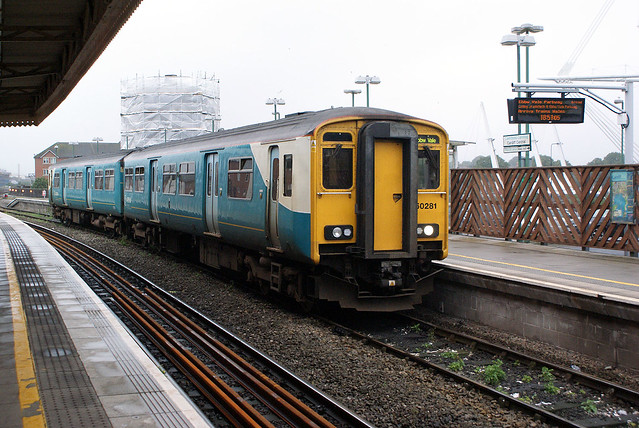
Arriva Trains Wales are Wales' largest logistics/transport
company, with a turnover of more than £250million in 2011
(Pic : Via Flickr)
Wales has, perhaps unfairly, been seen as somewhere you pass through on the way between England and Ireland. However, there are several significant Welsh haulage companies, such as Owen's Road Services, based in Llanelli are probably the largest independent haulage firm. They have depots across Wales and England, and more than 200 vehicles, with a turnover of more than £32million in mid-2011.

There are several other independent haulage firms, too many to mention, as well as major distribution centres for international logistics companies. Internet retailer, Amazon, has a major distribution centre in Swansea, which opened in 2008 and employs around 1,000 people, though many of these jobs are likely to be seasonal/Christmas rush. German grocery retailers, Lidl and Aldi, have major regional distribution centres in Bridgend and Cardiff respectively.

Arriva Trains Wales, based in Cardiff but with maintenance centres/depots around Wales, operate the all-Wales passenger rail franchise, and some services in the Welsh Marches. Sunderland-based Arriva were taken over by Deutche Bahn in 2010. They employ around 2,000 people, and posted a turnover of £258.6million in 2011, making them the largest transport company in Wales. Arriva Trains Wales receive around £170million annually from the Welsh Government to run the rail franchise.

First Great Western run intercity services between Swansea and London, and have a major train maintenance depot in Swansea, which is due to be upgraded with rail electrification. Freightliner have a major inter modal rail freight terminal in Cardiff.

Cardiff Airport is Wales' only airport scheduled offering scheduled international and internal flights. The airport is owned and operated by Catalan company, Abertis. Concerns have been raised following the failure to attract a low-cost airline, competition from Bristol Airport, the withdrawal of several airlines and a major decline in passenger numbers - from 1.9 million in 2004, to just 1.2million in 2011.

Recently, the airport operated at a half-year loss due to another significant fall in passenger numbers, with the airport on course to serve fewer than 1million passengers in 2012. The Welsh Government have set up a Airport Taskforce to look at the issues, but is this too little, too late?

Catalan-owned Cardiff Airport has come under heavy
criticism recently, due to rapidly falling passenger numbers.
(Pic : Holidayextras.co.uk)

There are no Welsh airlines (a peculiarity in the UK - even the Isle of Man has an airline), despite previous attempts at creating and sustaining them. Cambrian Airways were incorporated into British Airways in the 1970s, while Air Wales operated scheduled services between Cardiff and several destinations between 2000 and 2006. There have been rumours that a Welsh-based low-cost airline, "Flyforbeans", would base itself out of Cardiff Airport, but information has been scant and the project - for now - appears to be dead.

In terms of ports, as mentioned in Part II, Milford Haven is the UK's fourth largest port in terms of tonnage handled. The Port of Port Talbot is capable of handling ships of up to 170,000 metric tonnes, and for obvious reasons is a major port for ores. The Port of Cardiff handles around 2million tonnes annually – a far cry from its heyday during the "coal era". The Port of Newport handles around 1.5million tonnes of metals, recycling and general cargo every year. Other smaller commercial ports (in terms of tonnage) include Barry and Swansea.

Holyhead, Fishguard (and until recently, Swansea) are key ferry terminals between the Republic of Ireland and Wales. The Port of Holyhead alone handles around 2million passengers per year.

Transportation and storage made up 4% of the Welsh economy in 2009, less than the UK as a whole (5%), worth around £1.78billion.

Tourism, Leisure & Hospitality

There were 33million visitor trips to Wales
from the rest of the UK in 2010
(Pic : Meetup.com)
Accommodation and food services made up 3.3% (£1.5billion) of Welsh GVA in 2011, a higher proportion than the UK as a whole (2.9%). Recreation and leisure exports were worth £96million. The Welsh Tourism Alliance quotes a report by Oxford Economics, that tourism directly supported 86,000 jobs in Wales, and indirectly supported up to 172,000 jobs.

Visit Wales are the Welsh Government arm responsible for tourism promotion, running a network of up to 80 full and part-time tourist information centres across the country.
In 2010, there were 33million UK domestic tourist trips to Wales, with visitors spending £1.45billion. In addition, the same year, there were 890,000 visitors from outside the UK - with most of them (647,000) coming from Europe and 116,000 from North America.

By hosting the 2010 Ryder Cup, it's believed that Celtic Manor resort generated up to £42million in golf-related tourism, and a total of £82.4million in "economic impact" for Wales. The Welsh Government has its own "major events" strategy, which includes an ambition to bid to host the Commonwealth Games at some point in the future.

Oakwood, based in Pembrokeshire, is Wales' largest theme park, and attracts around 400,000 visitors per year between March and November. The £60million Bluestone holiday village, located nearby, is made up of around 300 holiday chalets, hosting around 65,000 guests in 2011, with a further expansion being mooted.

It's been estimated that Swansea City's promotion
to the English Premier League is worth around £30million
to the city's economy.
(Pic : BBC)

Sport and leisure have other economic benefits. The Welsh Rugby Union, by itself, had a turnover of £54.2million in 2011, and it's been estimated that the Grand Slam match in March 2012 attracted 250,000 people and boosted the Cardiff economy by up to £10million. It's been estimated that the Scarlets, based in Llanelli, will be worth £32million annually to the local economy by 2016, while Swansea City's promotion to the English Premier League in 2011, was estimated to be worth between £30-40million to the city. In terms of more traditional leisure, Bingo hall chain Castle Leisure, had a turnover of over £20million in 2011, and employ more than 500 people.

SA Brains is Wales' largest hospitality business, with a turnover of just under £100million in 2011, employing 1,907 people across it's chain of pubs and restaurants. The company has also recently launched a high-street coffee chain "Coffee #1", which intends to expand to 30 outlets by 2015.

If there's one weakness in the hospitality industry in Wales, it's so-called haute cuisine. Despite having fine produce on land and at sea (Part I), and seeing increases in food exports to mainland Europe and beyond, there are only four Michelin Star restaurants in Wales – two in Monmouthshire, one in Powys and one in Denbighshire - and none in Cardiff. Edinburgh alone has 5.

However, in some good news, 81 Welsh restaurants made the coveted Good Food Guide 2012, and there were a record number of new entries.

Media & Creative Industries


Creative Industries have been highlighted the Economic Renewal Plan as a special/growth sector. The Welsh Government and regeneration specialists, Igloo, are currently developing a new creative industries "hub" at Porth Teigr in Cardiff Bay, which is now home to a new BBC drama studio. Broadcasting and media regulation are not devolved to the Welsh Assembly.

There are three major television broadcasters based in Wales. BBC Wales, based mostly in Cardiff, with satellite studios elsewhere, who provide public service radio and television programmes as part of the UK-wide BBC. In addition to this, they employ the National Orchestra of Wales. In recent years, they've become a centre of excellence for drama, producing major UK network shows like Dr Who, Torchwood and Casualty. They employ around 1,000 people directly, and are rumoured to be looking to build a new headquarters somewhere in Cardiff in the next few years.

Welsh language broadcasting commissioning body, S4C, are will be funded (from 2013) by a combination of the licence fee and direct grants from the UK Government. As S4C are a commissioning body, they only employ around 150 people directly. Most of their productions are made independent television companies (as well as statutory obligations by the likes of the BBC and ITV Wales). A report for the UK Government in 2010, suggested that S4C supports around 2,100 jobs.

Despite derisory comments about "zero viewers",
many S4C-commissioned children's programmes - like
Meees - have been picked up by larger markets.
(Pic : S4C)

S4C have produced marketable children's programming in particular, such as Superted, Fireman Sam, Meees and Sali Mali. 1992 biopic Hedd Wyn - distributed by S4C - was nominated for Best Foreign Language film at the Academy Awards.

Independent television producer, ITV Wales, are based just outside Cardiff. Though technically there's only a single "ITV", ITV Wales (formerly HTV) provide national opt-out programming. This includes national news, as well as public service programmes like The Ferret, Sharp End and Wales this Week.

Tinopolis, based in Llanelli, are Wales' largest (independent) media company, with a turnover of £71.3million in 2011. They produce countless hours of television, and cover live events - for numerous broadcasters - with several subsidiaries as part of the Tinopolis Group.

AIM-listed Boomerang+ (now Boom Pictures), a TV production company also based in Cardiff, is a regular feature in the Fast Growth 50 list, and had a turnover of £21.5million in 2011.

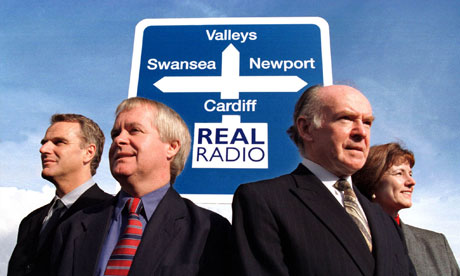
Real Radio have become another Welsh media company
absorbed into a larger one with a decrease in
distinctively "Welsh" output as a result - even sports coverage.
(Pic : The Guardian)


There are several Welsh commercial radio stations, both national and local, and of all shapes and sizes. Real Radio – arguably the largest independent radio group based in Wales - were recently taken over by Global Radio, after owners Guardian Media sold their radio businesses. Town & Country Broadcasting, based in Cardiff, run a network of local radio stations across Wales. UTV Radio operate The Wave and Swansea Sound in the Swansea, Neath Port Talbot and Carmarthenshire areas.

The circulation of local and national newspapers in Wales has been in a persistent decline, however traditional journalism still makes an impact on the Welsh economy. Media Wales - whose larger publicatrions include The Western Mail, Wales on Sunday and South Wales Echo - are the pre-eminent newspaper publisher in Wales, with a turnover of £32.3million in 2011. However, the company have seen turnover and the number of employees fall, despite posting pre-tax profits of £5.81million. Media Wales are part of the Trinity Mirror group, based in London. The Daily Post, sold in north Wales, is produced by Liverpool-based Trinity Mirror subsidiary Post & Echo.

South West Wales Publications, based in Swansea and part of Northcliffe Media, produce several local and regional newspapers in the Swansea region, including The South Wales Evening Post, which is Wales' best selling "Welsh" newspaper in terms of circulation.

Major studios have used Wales as a location, but despite
developing creative industry skills,  the Welsh film, and
gaming, industries are practically non-existant.
(Pic : The Film Review)

Wales has been used as a filming location for major studios in the last few years (Ironclad at Llanilid, and Robin Hood in Pembrokeshire), but the Welsh film industry borders in inconsequential, employing around 200 people. This could change in the future with investment in things like the University of Glamorgan's Atrium campus in Cardiff.

Big companies like Tinopolis aside, the creative industries sector is growing, but is still very, very small. It's been estimated that there are as many as 600 creative sector companies in Wales, employing up to 13,000 people, and a combined turnover of £350million. However, only 50 people are estimated to be working in computer games, while the vast bulk are employed in facilities, television, interactive media, photography and publishing.

There is an issue here about media ownership (more, in relation to the Real Radio issue above, by Marc Webber) and the direction of the Welsh creative industries - especially the domestic media. Media guides and shapes public opinion of various things, including sport, politics and culture. This isn't an independence issue really, but about having a media that reflects Welsh life, not something a company based far away decides we want to hear.

Lady Justice is sometimes portrayed as blindfolded, representing
objectivity. However, are we all blindfolded by simply not having
the media capacity to properly scrutinise Welsh politics?
(Pic : Via fotothing)

Most Welsh people read newspapers that barely cover Welsh issues. They probably listen to radio stations that are part of faceless conglomerates, focused on expansion and balance sheets instead of providing a good national service in Wales. And they also probably prefer Hollyoaks to Wales Today - nothing you can do about that really, people have a choice.

The Welsh public probably hear more about Michael Gove than Leighton Andrews, despite the former having very little influence on Welsh education. I doubt many people outside of the Rhondda, anoraksphere or the Bay Bubble know who Leighton Andrews is, what he does, or what he proposes to do.

I don't want to drag politics into an economic piece, but we really need to get a grip on this or we have a serious problem. How can we hold local councils and the Assembly to account properly if we don't hear about them? How can there be the prospect of tax powers - for example - if the public at large don't know what's on the table?

Part IV, which will be posted on Tuesday, will look at the public sector, public spending and a glance at the role universities play in the Welsh economy.

Thursday, 6 September 2012

Wales : An Economic Profile II - Manufacturing & Technology


Manufacturing is far from dead in Wales. In fact, manufacturing makes up a greater share of the Welsh economy compared to the other Home Nations – 15.2% in 2009 compared to 10.3% for the UK as a whole – the equivalent of around £6.8billion every year.

"Production" jobs in Wales from 2001-2010
(Click to enlarge)
In 2010, there were just over 147,000 people employed in, what Stats Wales describes as "production" (mining, manufacturing, energy and construction). The vast bulk of these are in straight-up manufacturing, but the numbers employed have fallen from 210,000 in 2001, and saw a very sharp fall during the first dip of the current double-dip recession.

The most annoying thing is that between 2007-2008, the numbers employed in production in Wales - especially manufacturing and construction - rose.

Gee, thanks "masters of the universe."

Heavy Industries

Port Talbot steelworks is not only a major landmark, but likely to
be Wales' single largest company by itself.
(Pic : BBC Wales)
The decline in Welsh heavy industry is often linked to the overall decline of the Welsh economy. Although coal mining in Wales is critically endangered - albeit still ongoing in different forms - Wales continues to be a major player in the heavy industries. The smokestacks are still here, perhaps most famously exemplified by TATA's Port Talbot and Llanwern steelworks.

In 2010, Wales produced 52% of the UK's iron (3.79m tonnes) and 51% of the UK's steel (4.92m tonnes).
Metal exports from Wales were worth £1.71billion in 2011 (12.7% of Wales' total exports in goods), recovering well from the recession dip, but sharply down on the pre-recession total of £2.42billion.

Although not listed in the 2011 Top 300, in previous years, TATA's (and before them, Corus) operations in Wales were worth a considerable amount by themselves – estimated turnover was around £2.5billion in 2008. If that trend continued down the years, then it's likely that they would be the largest company based in Wales. However, figures for Corus/TATA stopped in subsequent editions, so it's hard to quantify.

Earlier in 2012, TATA announced an £800million investment in their Port Talbot works, with a commitment of at least £240million – including the re-commissioning of number 4 blast furnace (but ignition has been delayed) and a new medical/administration/training centre. The previous Welsh Government invested £100million to complete the Port Talbot distributor road near the steelworks, which is due for completion sometime in 2013.

Although TATA may be the pre-eminent metals company, there are smaller metal producers like Llanelli-based Dyfed Steel and Celsa UK in Cardiff. Llanelli is still home to a major tin-plating works, while Swansea-based Timet provides titanium for the aerospace industry.

Despite this, the numbers employed in the Welsh iron and steel industries have fallen sharply - from 63,000 in 1996 to just over 8,000 in 2010 – a fall of 87% in just 14 years.

Exports from heavy industries, engineering and building (2005-2011)
(Click to enlarge)

There have also been other blows to the Welsh metals industry. Pre-eminently, the mothballing of Llanwern blast furnaces, closure of Ebbw Vale steelworks, and the mothballing of Anglesey Aluminium in 2009 due to the termination of an energy contract (aluminium smelting is an incredibly energy-intensive process) – one of Anglesey's largest employers. Anglesey Aluminium may recommence smelting by 2016 once a biomass plant is constructed (more on that in Part I).

Chemicals are another "big Welsh product", with exports valued at around £1.07billion in 2011.

Most of that is likely to be from Dow Corning's plant in Barry, which specialises in silicones (used in gums, lubricants, sealants and medical applications). Solutia UK, in Cefn Mawr near Wrexham, produces rubber industry chemicals, but the plant is due to close completely by 2015.

Dow Corning's plant at Barry. Chemical exports from
Wales were worth over £1billion in 2011.
(Pic : Penarth Times)

There'll also be significant petrochemical and related goods, such as liquefied gas, exported/imported from/to Wales - via the likes of Milford Haven, the UK's fourth largest port in terms of tonnage handled.

Rockwool, based near Bridgend since the late 1970s, are a major insulation manufacturer, while Pontypridd-based Harp International are a major producer of aerosols, propellants and refrigerants.

The Royal Mint, based in Llantrisant, has a highly-skilled metallurgical-oriented workforce, with a turnover of £215million in 2011. It's a private company owned by HM Treasury, and has an exclusive contract to produce coinage for the UK, as well as produce coins for other nations, commemorative coins/medallions and - more recently - Olympic medals.

Construction & Property Development

Flintshire based housebuilder, Redrow, are
Wales' largest construction company.
(Pic : Lindstrand.co.uk)
In 2009, 93,200 people were employed in the construction sector in Wales, contributing 7.7% of total GVA the same year (approximately £3.39billion). Construction output in Wales fell sharply at the start of 2012, falling to 88.7 (2009 = 100) in the first quarter.


The single largest Welsh construction company is house builder Redrow, based in Flintshire, and listed on the FTSE 250. Redrow had a turnover of just over £450million in 2011, and was the ninth largest company by turnover in Wales the same year, making pre-tax profits of around £25million. Redrow is currently subject to a management buy-out by chairman, Steve Morgan.

Between roughly 5,000 and 6,000 new homes constructed every year in Wales. There are major urban regeneration schemes taking place on brownfield sites, such as Coed Darcy near Swansea, Glan Llyn near Newport and new urban villages being created at Parc Derwen in Bridgend and Llanilid, Rhonnda Cynon Taf. Redrow isn't the only prominent Welsh house builder, there's also Bangor-based Watkin Jones, and Llantrisant-based Llanmoor Homes.

In terms of general construction and civil engineering, most Welsh companies are in the mid to small range but still pack a punch. Award-winning Cardiff-based JR Smart are currently developing a mixed-use "Capital Quarter" near Cardiff City centre, while PMG estates constructed the Cardiff City Stadium and retail park.

Other prominent Welsh civil engineering/construction companies include : Ruthin-based Jones Brothers (who constructed the Porthmadog bypass), Newport-based structural steel experts Rowecord Engineering, in addition to Bridgend-based Jehu Project Services (a group of four companies covering contracting, energy and property development) and Cardiff-based Macob Holdings. These four companies have a combined turnover of approximately £230million.


Wales is also base to of one of the UK's leading architectural companies – Holder Mathias, based in Cardiff – who have designed schemes across the UK and Europe, including retail, healthcare, masterplanning, residential/regeneration schemes and mixed-use developments.

Cardiff University is also one of the UK's leading centres for architecture and has a genuinely "world-class" school for city/regional planning.

The Welsh Government has focused on "up-skilling" the construction sector, developing a new construction academy at Bridgend College as well as creating pathways for building/construction apprenticeships. Local and national government are also a significant commissioner of major infrastructure projects – more on that in Part IV.

General Manufacturing & Engineering

Manufacturing remains an important part of the Welsh economy, and can punch
above its weight on the European and world stage in certain sectors.
(Pic : BBC Wales)

There are two general manufacturing/engineering sectors Wales performs notably well in.

Firstly, aerospace. There's a significant global aerospace manufacturing facility at Broughton, Flintshire, which manufactures wings for Airbus aircraft. Broughton has been a base for aerospace manufacturing for some considerable time, and is not only home to Airbus, but many other supporting companies – for example, defence aviation specialist Raytheon. It's unclear how much the Airbus factory contributes to the Welsh economy, but it's likely to be a significant figure - I'd guess easily in the hundreds of millions of pounds, if not more.


General Electric Aircraft Services - based in Nantgarw, Caerphilly - is one of Wales' few £1billion companies, with a turnover of £1.2billion in 2011, and employing more than 1,000, in what is a highly-skilled, high value-added business in the maintenance of aircraft engines. Considering it's several miles from an airport, this is quite the achievement, and proves that nowhere should be written off for this kind of industry.

Below this, you have several moderate-sized players in aircraft engineering : Cwmbran-based Contour Premier Seating (their expertise is obvious), Bridgend-based aircraft technical management company TES Aviation (who recently attracted investment from Japan), TB Davies and Aircraft Maintenance Support Services (also near Bridgend), who manufacture aircraft support equipment.

St Athan was, until recently, part of the Defence Aviation Repair Agency (DARA), maintaining the Royal Air Forces' fast jets. The UK Government moved maintenance of Tornado aircraft "in house" in 2007, while plans for a £14billion defence academy at the site never materialised. The WDA invested £113million in a "super-hanger" at the site (Project Red Dragon) before the UK Government took those decisions.

Wales' Top 20 manufacturing and engineering companies
(Click to enlarge)

St Athan was recently been designated an aerospace enterprise zone by the Welsh Government, making good use of the former DARA base there, and has already attracted interest. Iron Maiden singer, Bruce Dickinson, recently launched an aircraft maintenance company at the site – Cardiff Aviation – which is aimed at maintaining Airbus and Boeing aircraft, hoping to create up to 1,000 jobs.

British Airways have a significant maintenance facility at Cardiff Airport, which is capable of servicing large passenger aircraft such as the Boeing 747 – and are considering expansion. Nearby Cardiff and Vale College, as well as most Welsh universities, offer specialist courses in aerospace engineering.

Next, there's the automotive sector. Although there've been significant job-losses and plant closures here in recent years (TSW in Resolven, Visteon in Swansea), automotive exports were worth £566million in 2011 - which is almost double biotechnology and pharmaceutical exports. However, exports in this sector have declined significantly since 2005.

Wales has attracted significant foreign direct investment
in the automotive sector down the years.
(Pic : Bridgend Council)

Like TATA and Airbus, it's unclear how much Bridgend's Ford engine plant and Deeside's Toyota plant contribute to the Welsh economy. Again it's likely to be very significant, and again likely to be in the hundreds of millions of pounds range.

Those plants aside, Wales' largest automotive company is Calsonic Kansei Europe, based in Llanelli, who manufacture various components. After this, the second (verifiable) automotive "giant" is Yuasa Battery Europe, based in Ebbw Vale. The combined turnover of both companies is around £720million, both employing a combined workforce of more than 2,000.

The exotic names shouldn't surprise you. The automotive sector benefited heavily from foreign inward investment through the 1970s and 1980s, leaving Wales with a strong automotive supply chain. The total value of the automotive sector - and its supply chain - to the Welsh economy has been estimated to be £3billion.

Ebbw Vale has been selected to be an automotive enterprise zone by the Welsh Government, and has also been put forward as site for a £250million motorsports circuit and business park. The automotive sector clearly has something of a future in Wales, but what will they be doing? Will there be a move to hydrogen vehicles? Electric vehicles?

General manufacturing exports 2005-2011
(Click to enlarge)

We shouldn't ignore "low-tech" manufacturers that form the backbone of Welsh industry. For example: packaging companies, general machinery, bulky goods, vehicle repair, household goods, other components.

Most of the Welsh secondary sector will be this – "big box" manufacturers on large industrial estates on the outskirts of major settlements. They might not feature heavily in the list I've given, but they have strength in numbers and form a backbone of companies in the Top 300 list, and probably a bulk of those outside it too.

The top four "general manufacturing" companies in the Top 300 list (Kronospan, Kingspan, International Greetings, Artenius PET Packaging) had a combined turnover of £882million, and employed more than 4,400 people. General "engineering" exports were also worth £3.82billion in 2011.

Food & Drink

There are three sides to the food and drink sector in my opinion:
  • Primary – Including crop and meat processing.
  • Processing – Turning primary products into other foods (i.e. Baking).
  • Service - Hospitality, fast food/food sales/restaurants and food marketing.

The primary part was touched on in Part I. For this section, I'm looking a the "processing" role. I'll look at the service side of things in Part III.

Although only two food and drink "manufacturers" made my list of the top 20 Welsh industrial companies (Finsbury Food Group of Cardiff and First Milk Co-op of Wrexham), there are also prominent Welsh companies below this.


SA Brain are primarily involved in hospitality, but still has the iconic brewery in the centre of Cardiff, more on them in Part III. They've launches several new draught and bottled beers in recent years - including Brains Black (stout) and Brains 45 (a premium lager that's been discontinued) as well as continuing their traditional ales.

There's a fairly active Welsh independent brewery scene – (the famous) Otley Brewery in Pontypridd, Swansea-based Tomos Watkin (who make ales and ciders like "Taffy Apples"). Wrexham Lager has a long and noble history, and has been resurrected (of sorts) despite the original company closing in 2000. Penderyn produce a Welsh whiskey, though the Welsh whisky industry has a long way to go to be on a par with Scotland and Ireland. I'm was surprised by the number of commercial vineyards in Wales – despite the fact vines have been grown in Wales, especially the Monmouthshire, Powys and Vale of Glamorgan areas, since Roman times.

Where are the next Welsh "brands" going to
come from?
(Pic : Via Amazon)
Finsbury Foods – based in Cardiff - oversee several subsidiaries, such as Memory Lane Cakes, United Central Bakeries, Livwell and Nicholas and Harris. They're also listed on the FTSE 250.

Wales also has large and medium size companies such as Global Foods and Euro Foods (both Cardiff) and Peter's Food Services, based in Caerphilly (perhaps most famous for its pies). Brace's bakery are a major employer in the Newport area, and an important Welsh commercial "brand", employing some 330 people and a turnover of £30.4million in 2011.


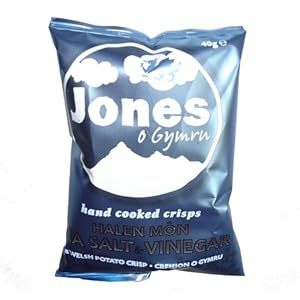
Real Crisps, based in Newport, are owned by the Northern Irish crisp manufacturer Tayto. Bon Bon Buddies, based in Blackwood, are a major supplier of branded confectionery, and  experienced significant growth in Europe in recent years. In recent times, Anglesey-based crisp manufacturer Jones o Gymru (who source all their ingredients locally), sealed a deal to supply crisps to Tesco's 40 Welsh stores.

Harking back to Part I, Wales has a pretty active meat export market and meat processing industry. But alongside this, as exemplified above, Wales does relatively well above its weight in the the more "industrial"/"convenience food" sector of the market. Ultimately though, with a few exceptions, these are still mostly branch factories.

Could Wales produce a new generation of popular, marketable food brands? The manufacturing base is certainly there. What's becoming clear though, is that despite having all the things necessary to upscale and turn raw materials/processed goods into high-value products and services, there might be a "ceiling" as to how far Welsh businesses can go along this road.

Breach it, and I'm think it could help the Welsh economy will start to grow. If we can make crisps, cakes and other foods, then we should be able to put Welsh "brands" on supermarket shelves, attract the high-paid jobs in marketing these brands - and all the corporate stuff that underpins it - that are currently based elsewhere.

Electronics & IT

Wales had an enviable track record in attracting electronics inward investment – in particular branch factories from global brands like Sony, Panasonic etc. This is on the wane. Exports in machinery and household goods are in a steady decline, while as noted earlier, general engineering exports have experienced big increases in value in recent years to make up for this.

The days of big Japanese electronics companies
plonking a factory anywhere are over.
(Pic : BBC Wales)

One sector that has seen a noticeable, possibly terminal, decline in exports is telecomms. Despite this sector producing one of Wales' greatest business minds (Terry Matthews), exports have fallen in value from £259million in 2005 to just £53million in 2011. But these figures could be misleading.

Cassidian, based in Newport, are a major defence and security telecommunications company. One of Terry Matthew's companies, Mittal Networks, also based in Newport, had a turnover of just under £100million in 2011. Big companies don't necessarily mean big exports, especially if most of their business is done within the UK, or if there isn't anything tangibly "exported" – like data.

Although IT has been selected as a special sector in the Economic Renewal Plan, IT plays a much more significant role further down the "food chain" that at the top. IT companies are a perennial mainstay of the Fast Growth 50 list, rather than the Top 300. This is a good sign, as it means Wales is beginning to develop a solid, indigenous base in IT.

I'll give you some examples. Swansea-based IT sales specialist, Flashpoint Technologies, saw turnover rise from £7.8m to £54.8m between 2008 & 2010. Cardiff-based data applications specialist Excelerate increased their turnover by more than 200%. Education IT specialist, Gaia Technologies, based in Bangor, almost doubled their turnover to more than £10million.

Bangor-based educational IT company, Gaia Technologies, are
just oneof a number of rapidly-growing Welsh IT companies.
(Pic : Gaia Technologies)

Like Terry Matthews, our other great business mind, Michael Moritz, made a significant fortune in internet/IT investments – including the likes of Google, PayPal and Youtube.

Alongside Cassidian mentioned earlier, Reading-HQd Logica are a significant employer in Bridgend, providing services in outsourcing, management consultancy and general IT consultancy. They were recently taken over by Canadian IT services company, CGI, in a deal worth £1.7billion.

I've mentioned before that there are some weaknesses here - in particular the games industry - but steps have been taken to develop things like mobile applications, via the establishment of specialist centres like those at Glamorgan University. Price comparison websites would probably come under this too, but more on them in Part III.

Sciences


Wales has a "blind-spot" when it comes to cutting-edge science and technology. Most of our science industry is dominated by the medical devices and pharmaceuticals industry - usually subsidiaries of larger multi-nationals. For example: Ortho-clinical Diagnostics, near Pencoed, Biomet in Bridgend, Ipsen Biopharm near Wrexham, Siemens in Caernarfon and Convatec in Flintshire.

Before we consider the future of life sciences in particular (picked as a growth sector in the Economic Renewal Plan), we need to accept the fact that there are very few indiginous life science/science companies coming through. Very few make the Fast Growth 50 list, for example. A point I've raised before.

Wales' top 10 "high tech" companies
(Click to enlarge)

There are exceptions to this. Biotec Services International, based in Bridgend, specialises in clinical and pharmaceutical supplies and are an example of an indigenous science company experiencing rapid growth. British Biocell International, based in Cardiff but with centres all around the world, manufacture assay & immunoassay equipment for diagnostic and labelling purposes.

Williams Medical Supplies are the only "Welsh" company to make my list of the Top 10 high-tech companies. They're a successful, highly-skilled, pharmaceuticals supply company based in Rhymney of all places, and are a leading supplier to the primary care sector in particular. Once again – you shouldn't completely write off certain areas because of their economic history.

Our weakness, as far as I see it, is Wales' inability (so far) to come up with a large number of patent-protected, innovative technologies. This is starting to change though. Wales is developing niches in areas such as:
  • Optronics (lighting/scanning/processing/laser technology) – There are a cluster of companies based in and around north east Wales, plus Photonstar (formerly Enfis, based in Swansea, listed on the AIM).
  • Silicon Wafers – Cardiff-based, AIM-listed, IQE are the most obvious example. They are now one of the world's leading suppliers of silicon wafers (used in solar panels, semiconductors) and expended to include manufacturing facilities in mainland Europe, the US and Asia. Swansea-based Pure Wafer are a leading recycler of silicon wafers.
  • Diagnostic/medical equipment – Wales already manufactures them, but is starting to develop new ones too. EKF Diagnostics – founded in Germany originally, but now based in Penarth – have developed new diabetes diagnostic equipment, as well as special "biomarker" based testing equipment. It made a loss recently, but only because it was rapidly expanding and taking over subsidiaries. Swansea's Energist provide laser-based technology to the medical and cosmetics industry. There are numerous others - particularly university spin-outs - but too many to mention here.

In recent times, Business Minister, Edwina Hart (Lab, Gower) and Welsh biotechnology entrepreneur, Christopher Evans, launched Ser Cymru – a university-based science initiative – as well as a biotechnology fund worth £100million, with the hope of attracting a further £200million. The aim is to generate up to £1billion for the Welsh economy over the next decade.

I'll be looking in more detail at the economic role of Welsh universities in relation to the national economy in Part IV next week.

See, it isn't all bad news. Wales can still make things with the best of them.

Part III, focusing on the service sector (finance, retail, hospitality/tourism) and the creative industries/media , will be posted in a few days time.